Oh National Film Registry, I wish I knew how to quit you.
My early Christmas gift arrived this morning when the National Film Registry made its annual announcement of 25 American films deemed “culturally, historically, or aesthetically significant”. These 25 bring the official total to 750 movies. Here, in chronological order, are the 25. Films with * denote a movie I submitted to the list this year. Honorable Mention goes to “Rebecca” and “My Fair Lady”, which I submitted last year, but didn’t make my cut this time. Ah well, they did just fine without me.
Something Good – Negro Kiss (1898)
Dixon-Wanamaker Expedition to Crow Agency (1908)
The Girl Without a Soul (1917)
The Navigator (1924)
The Informer (1935)
Rebecca (1940)
Leave Her to Heaven (1945)
The Lady from Shanghai (1947)
On the Town (1949)*
Cinderella (1950)*
Pickup on South Street (1953)
Bad Day at Black Rock (1955)
One-Eyed Jacks (1961)
Days of Wine and Roses (1962)
Hud (1963)
My Fair Lady (1964)
Monterey Pop (1968)
Hearts and Minds (1974)
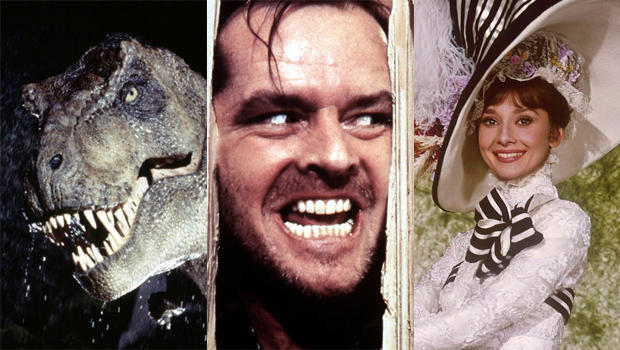
The Shining (1980)*
Hair Piece: A Film for Nappy-Headed People (1984)
Broadcast News (1987)
Jurassic Park (1993)*
Eve’s Bayou (1997)
Smoke Signals (1998)
Brokeback Mountain (2005)
For the second year in a row, four of my picks made the final roster. Not bad says I. The 2018 inductees will be added to my rotation, with the first write-up appearing in February 2019. To quote another of this year’s entries, hold on to your butts.
OR “Jim Jarmusch Jim Jarmusch Will You Do the Fandango?”
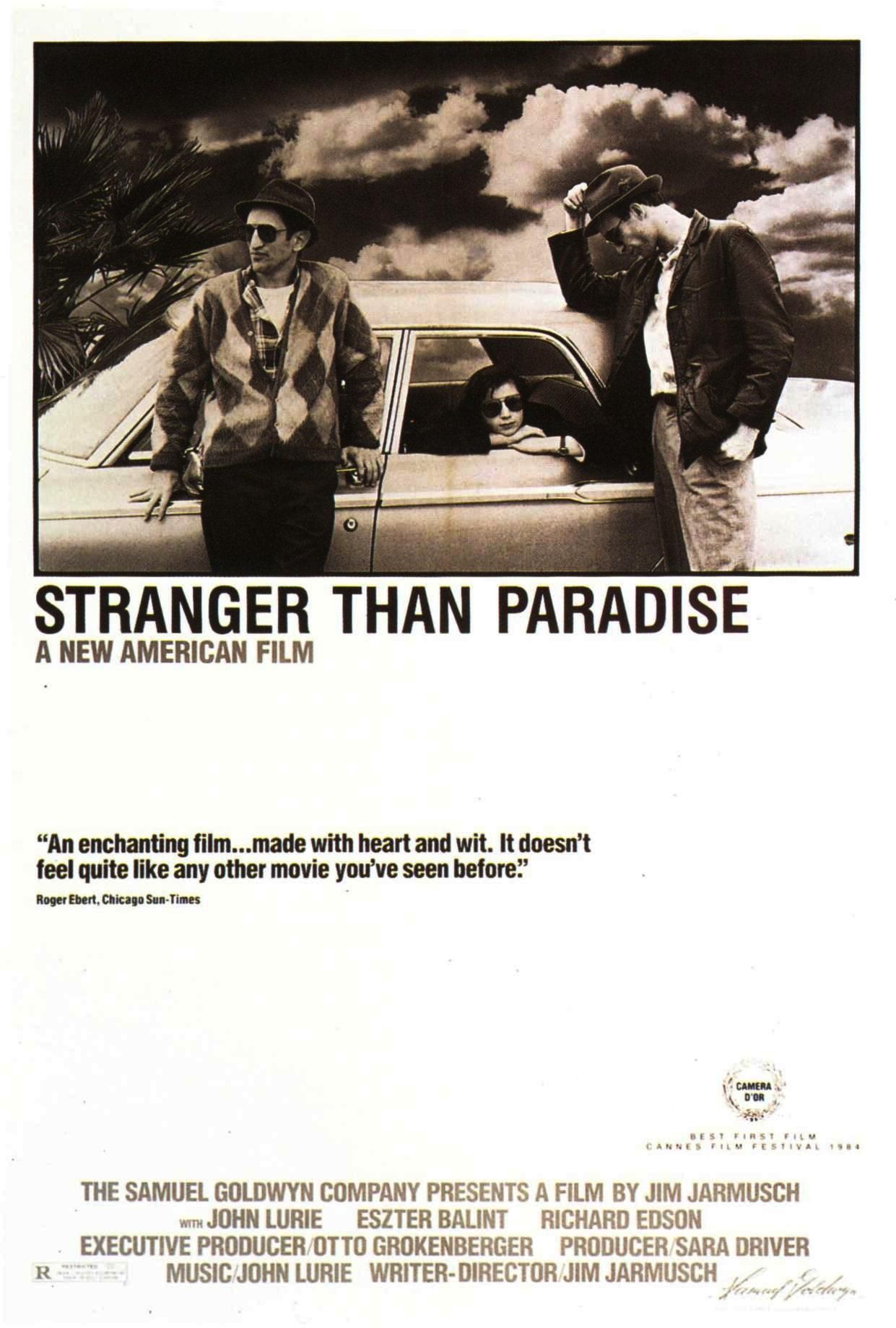
Directed & Written by Jim Jarmusch
Class of 2002
The Plot: It’s Jarmusch, there ain’t no plot. “Stranger Than Paradise” is three acts of Jarmusch’s trademark black and white minimalist realism. The first act (“The New World”) sees Willie (John Lurie) playing host to his Hungarian cousin Eva (Eszter Balint) in his New York City apartment. Willie does not want Eva around, but with the help of his friend Eddie (Richard Edson), finally warms up to her. In the second act (“One Year Later”), Willie and Eddie travel to a very cold Cleveland to visit Eva and Aunt Lottie (Cecillia Stark). The final act (“Paradise”) is Willie, Eddie and Eva traveling to Florida, where they experience the closest thing this film has to a plot.
Why It Matters: The NFR calls Jarmusch “a leading figure in independent cinema” and states that this film “reflects his non-traditional style.”
But Does It Really?: Oh sure. Jarmusch isn’t for everyone, and while it took me a bit to get into this movie, ultimately I dug it. His movies are very thin slices of life that, while seemingly uneventful, capture a lot about human condition and the small “in-between” moments in life. Heck, “Stranger Than Paradise” is so minimalist you can read practically anything you want into it. I’m not familiar with the oeuvre of Jim Jarmusch, and I’m not in any immediate rush to watch his other films, but “Stranger Than Paradise” is a perfect representation of his work, and quite deserving of a place on the Registry.
Shout Outs: You can hear snippets of “Forbidden Planet” when Willie and Eva are watching TV.
Everybody Gets One: While studying to be a poet at Columbia University, Jim Jarmusch went to Paris as an exchange student and wound up seeing a bevy of landmark European films at the Cinémathèque Française. After Columbia, Jarmusch studied film at New York University’s Tisch School of the Arts, under the tutelage of film noir legend Nicholas Ray. Although he ultimately didn’t graduate from Tisch, Jarmusch’s final school project evolved into his first feature film: 1980’s “Permanent Vacation”.
Wow, That’s Dated: Landlines, and the world of early computers.
Seriously, Oscars?: Despite a heap of critical praise (and a Best Picture win from the National Society of Film Critics), “Stranger Than Paradise” received zero Oscar nominations. O Independent Spirit Awards, where art thou?
Other notes
All three of the film’s leads are primarily musicians: Lurie with the jazz group The Lounge Lizards, Edson as Sonic Youth’s original drummer, and Balint as a violinist in her native Hungary. Luckily, all three hold their own as actors, though it helps that there’s no heavy emotional lifting required for any of them.
How can I hate any movie in which Screamin’ Jay Hawkins’ “I Put a Spell on You” is prominently featured?
A foreigner coming to America and crashing at their cousin’s apartment. Oh my god, did this movie inspire “Perfect Strangers”?
Shoutout to cinematographer Tom DiCillo. The cinematography takes some getting used to, but once you do it sets up the world quite well. Each scene is one continues take, with minimal, clean camera movements. They are well-crafted compositions that never take you out of the film. Fun Fact: DiCillo is also the airport ticket agent at the end of the film.
What’s with Willie and Eddie’s fedoras? This film is so minimalist I can’t tell if it’s a period piece or not. WHAT YEAR IS IT!?
Eszter Balint is so close to being Juliette Lewis.
The further along we go, the less I think this film will end with a car chase or a Bollywood-style musical number.
The “One Year Later” segment isn’t exactly a video from Destination Cleveland, is it? Jarmusch grew up in Cuyahoga Falls, Ohio (about 35 miles south of the Cleve) and once told the New York Times, “Growing up in Ohio was just planning to get out.” Woof.
I will admit that it’s always deceivingly difficult to capture realism on film, especially minimalist realism. If I’m a little bored, does that mean Jarmusch is doing his job?
Every time there’s a blackout in this film I instinctively think, “Is that it? Is the movie over?”
Old people cursing will never not be funny.
I rarely read other people’s reviews while I’m writing these posts, but I stumbled upon a line in Roger Ebert’s original review of “Stranger Than Paradise” that tickled me: “Aunt Lottie turns out to make Clara Peller look like Dame Peggy Ashcroft.” That sentence could only have been written in 1984.
Why is the Florida section called “Paradise”? Is Florida Paradise? And if so, what could possibly be stranger than Florida?
Black and white always seems like a gimmick, but in this case, I get it. With three diverse locations, “Stranger Than Paradise” would look like a travelogue in color.
Hey hey hey, we’re 75 minutes in; it’s too late to add any drama.
This is one of the rare movies with a Junkie Ex Machina.
What do you suppose this movie’s blooper reel looks like?
If this film is going to be about three people sitting around talking about nothing, their wacky neighbor Kramer better show up soon.
Legacy
Jarmusch still cranks out a movie every few years. Highlights include “Mystery Train”, “Coffee and Cigarettes”, and that one where Kylo Ren’s a bus driver.
Unlike other indie filmmakers, Jim Jarmusch seems game to poke fun at himself, as evidenced in these clips from “The Simpsons” and “Bored to Death”.
Every indie film that’s shot in black and white where seemingly nothing happens owes its existence to “Stranger Than Paradise”.
Of the three leads, Richard Edson has continued acting, and even has two other NFR entries: “Do the Right Thing”, and his memorable turn as the parking garage attendant in “Ferris Bueller’s Day Off”.
And of course, this movie’s drastic departure of a sequel: 2006’s “Stranger Than Fiction”.
Here’s the key to the longevity of “The Sound of Music”: All the songs had to be written simple enough to be sung by children ranging from 5 to 16, so all the music is easy to sing, and therefore effective earworms.
“Climb Ev’ry Mountain” is quite stirring, although it’s pretty obvious Mother Superior is dubbed. Peggy Wood was an accomplished singer in her early stage career, but at age 73 she was not up to the song’s higher notes, and studio singer Margery MacKay dubbed Wood. This may be the only part of the movie the live TV remake improved upon.
I also really like the film’s other simple, beautiful song: “Something Good”. It was written by Richard Rodgers alone (Hammerstein passed away in 1960) to replace the song “An Ordinary Couple”, and it’s stayed with the show ever since. Man, there really isn’t a clunker in this whole score.
“How Do You Solve a Problem Like Maria?” is a weird choice to walk down the aisle to.
Though not mentioned in the film, Herr Zeller was promoted because Hitler’s best men were killed during the Ark of the Covenant incident.
You didn’t think the Nazi politics plotline would make a comeback in your lifetime, did you?
Does every song in this movie get a reprise?
All I need from this concert is one cutaway shot of Hitler in the audience, listening to the von Trapp’s with a single tear rolling down his cheek.
Richard Dawson: THAT’S who Max looks like!
And for those of you who found the love story and the kids too syrupy, please enjoy the suspenseful finale of our characters hiding from Nazis.
I didn’t delve into it here, but this movie takes some extreme liberties with the real von Trapp family’s story. I’ll get the ball rolling with the fact that Captain Georg von Trapp was 25 years older than Maria. And they married more for convenience than for love. Have fun trying to watch the movie now!
Legacy
“The Sound of Music” was a runaway hit and single-handedly saved 20th Century Fox from bankruptcy following the disaster that was 1963’s “Cleopatra”. Unfortunately Fox learned the wrong lesson, and doubled down on big-budget musicals. Titles such as “Doctor Dolittle”, “Hello, Dolly!” and “Star!” (also with Julie Andrews) failed to match the success of “Sound”, and Fox had to wait until 1977 for “Star Wars” to save them again.
Austria doesn’t really care for “The Sound of Music” (they prefer the German “Trapp-Familie” films), but they know a cash cow when they see it, and there are several “Sound of Music” tours throughout Salzburg.
This is one of the rare movies that cost a film critic their job. Pauline Kael’s write-up of “the sugar-coated lie people seem to want to eat” led to her dismissal as McCall’s film critic. She landed at the New Yorker, where her legendary dislike of anything commercial continued for the next 20 years.
The film is so popular (and untouchable) that there has been only one Broadway revival of the stage version. Subsequent stage versions have altered the score to better reflect the film’s song list.
The only other American remake of “The Sound of Music” was a live TV broadcast in 2013. Hewing closer to the original stage version, this production starred Carrie Underwood and a bevy of Broadway actors doing their damnedest while Craig Zadan and Neil Meron worked out the kinks of live TV musicals.
A slight improvement came from the Brits, with their own live version on ITV two years later.
Back to the original film, that’s where this gif comes from!
“The Sound of Music” not only has generations of fans, but quite the cult following as well. Sing-along screenings of the movie started in London in 1999, and came stateside shortly thereafter. Audience members come dressed as their favorite characters, from Maria to the nuns, and even the hills themselves!
Every song from this film has become a standard. There are a lot of covers out there, but for now let’s single out Julia Louis-Dreyfus singing a duet of “Sixteen Going on Seventeen” with a surprise partner.
Remember that time the internet went insane when Lady Gaga sang “Sound of Music” at the Oscars? Good times.
Seth MacFarlane has spoofed “Sound of Music” several times over the years on “Family Guy”, and a quick parody was the rare bright spot in his misguided stint hosting the Oscars.
And like any family, the cast of “The Sound of Music” gets together every few years to reminisce about their time making the film. Even the especially critical Christopher Plummer has softened in his older age.
Further Viewing: The real Maria von Trapp made a special appearance on the short-lived ‘70s variety show “The Julie Andrews Hour”. I can’t find the clip of them singing “Edelweiss” together, but here they are yodeling.
Listen to This: The “Sound of Music” soundtrack was added to the National Recording Registry in 2018, and their write-up is far more loving than the NFR’s. For starters, they call the movie “a beloved, multi-generational cornerstone of American life”, and go on to praise Julie Andrews, orchestrator Irwin Kostal, and musical supervisor Saul Chaplin. The soundtrack gets not one, but two expanded essays.
Written by Ernest Lehman. Based on the stage play by Howard Lindsay and Russel Crouse. Music and Lyrics by Richard Rodgers & Oscar Hammerstein II.
Class of 2001
Thanks, Neil
We have one of the all-time classics on this list, so buckle down: it’s a two-parter.
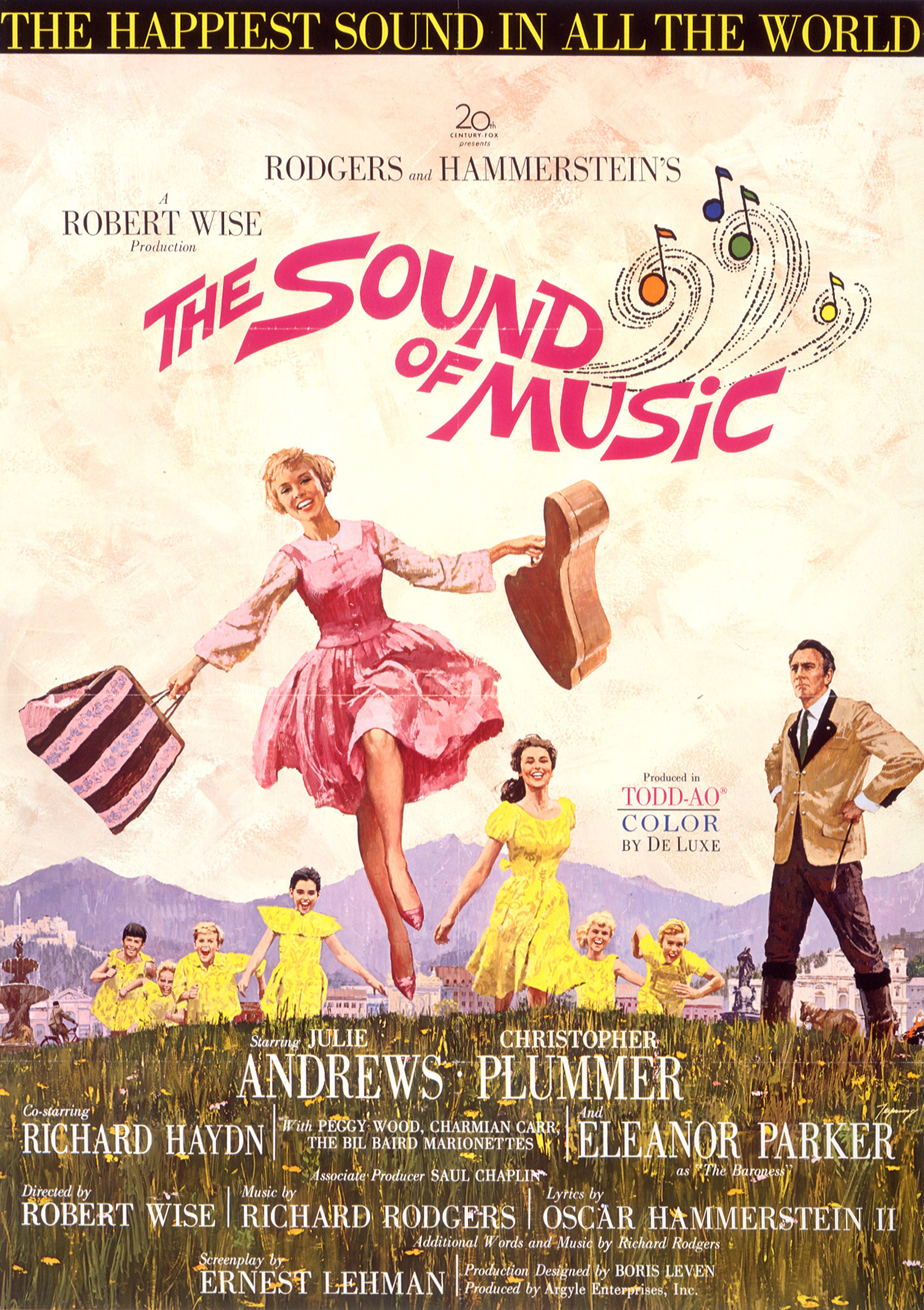
The Plot: Based on some parts of a true story, Maria Rainer (Julie Andrews) is a postulant at Nonnberg Abbey in Salzburg during the late ‘30s. Deemed too free-spirited by the nuns, the Mother Abbess (Peggy Wood) sends Maria to be governess for the children of naval Captain Georg von Trapp (Christopher Plummer). A widower with seven children, Captain von Trapp runs his house with firm discipline, a style that clashes with Maria’s sunny Julie Andrews-ness. But the children love her, and Georg eventually warms up to Maria. With a possible marriage to the Baroness Elsa von Schraeder (Eleanor Parker), and the Third Reich invading/annexing Austria, the Captain must stand by his ideals and his homeland, and falls for Maria in the process. Oh, and it’s a musical.
Why It Matters: The NFR calls it “[o]ne of the most popular movie musicals of all time” and then gives a detailed plot summary.
But Does It Really?: Well I see why this movie is so popular. “The Sound of Music” is not only one of the most delightful musicals ever, but one of the most delightful movies, period. The film is infectiously joyous, with a never-better Julie Andrews leading the way. Robert Wise and Ernest Lehman make one intelligent decision after another, and transform a good play into an excellent film. Time has only aided this film’s popularity, and “The Sound of Music” continues to be entertaining, warm, and uncomfortably relevant in these Nazi-reboot times we live in. “The Sound of Music” is a near-perfect movie, and the NFR should be ashamed it took 12 years to add it to the Registry.
Everybody Gets One: Most of the supporting cast, notably three-time Oscar nominee Eleanor Parker and longtime stage and film veteran Peggy Wood.
Take a Shot: Man oh man, do we have a title number for you.
Seriously, Oscars?: By the time the Oscar nominations rolled around, “The Sound of Music” had surpassed “Gone with the Wind” as the highest grossing movie of all time. “Sound of Music” tied for the most Oscar nominations of 1965 (10) with another epic blockbuster: David Lean’s “Doctor Zhivago”. The two films were neck-and-neck, ultimately winning five apiece, but “Sound of Music” took home Best Picture and Director. Julie Andrews, the previous year’s Best Actress winner for “Mary Poppins”, lost to another Julie – Christie for “Darling”. The only part that baffles me is how Ernest Lehman didn’t get an Adapted Screenplay nomination.
Other notes
Though based on a true story, several details were altered when creating the original stage version, hence why Maria von Trapp’s original memoir is not cited in the credits. There are, however, a few ideas lifted from the 1956 West German film “Die Trapp-Familie”, whose screenwriter George Hurdalek gets a special thanks in the opening credits.
Now this is how you open up a play! That’s not an opening number, that’s an IMAX movie!
Shoutout to Marni Nixon, dubbing artist to the stars, finally getting some on-camera time as Sister Sophia.
How can you not love Julie Andrews? If she didn’t blow you away with the title number, “I Have Confidence” will put you in Maria’s corner for the rest of the film. Speaking of, look out for the real Maria von Trapp as Julie Andrews approaches the von Trapp manor.
I get it, Christopher Plummer: You want everyone to know you are so much more than Captain von Trapp. A stage veteran with a handful of film credits, Plummer only accepted the role if he was allowed to make the Captain more dimensional. And so he did: Plummer is giving a wonderfully subtle performance under the character’s limited range.
This must be the part of Austria where no one has accents.
Here’s how good this movie is: There’s a plotline involving Nazis and it’s still a perennial family classic.
Like “West Side Story”, Lehman and Wise knew that adapting a musical to a film requires changes. A few songs were deleted, while others were moved to different scenes. An example of the latter: “My Favorite Things” is now what Maria sings to calm the children during the thunderstorm, which is a more natural fit than “The Lonely Goatherd”. All of Lehman’s alterations make for a stronger musical.
I’m glad Maria didn’t listen to her friend Carol Burnett when she made clothing out of the curtains.
Even the brilliant songwriting team of Rodgers & Hammerstein couldn’t come up with a more clever way to describe “la”, other than “a note to follow so”.
During the “Do Re Mi” montage, Julie Andrews sings while pedaling a bike. Someone didn’t skip leg day.
Eleanor Parker never gets the credit she deserves with the Baroness. Her performance makes the character flawed, but not evil. Well, except for the boarding school part. That’s Evil Stepmother 101.
Was Tony Randall unavailable to play Max? Richard Hayden finds the right decibel level with a character you could very easily play over-the-top.
I got genuine chills when the children sing the “Sound of Music” reprise.
“The Lonely Goatherd” is the closest this film gets to a superfluous number, but Bil Baird’s puppetry spices things up. I just want to know how much furniture Maria cannibalized to make those marionettes.
“Edelweiss” is my favorite song in the score. Simple, beautiful, powerful, and the last song Rodgers & Hammerstein wrote together. Special mention to Bill Lee, dubbing Christopher Plummer.
First rule of adapting a stage musical to film: If you cut a song, put it in the underscore. Robert Wise decreed that Max and the Baroness would not sing in the film, so their duet, “How Can Love Survive?” appears only as an instrumental during the Captain’s party.
And just like in the film, here is where we take our act break. Part 2 coming soon. In fact, right now.



 The Horse's Head