#297) The Fall of the House of Usher (1928)

The-Fall-of-the-House-of-Usher-1928

#297) The Fall of the House of Usher (1928)

OR “Pardon the Expressionism”

Directed by J.S. Watson Jr. and Melville Webber

Based on the short story by Edgar Allan Poe

Class of 2000

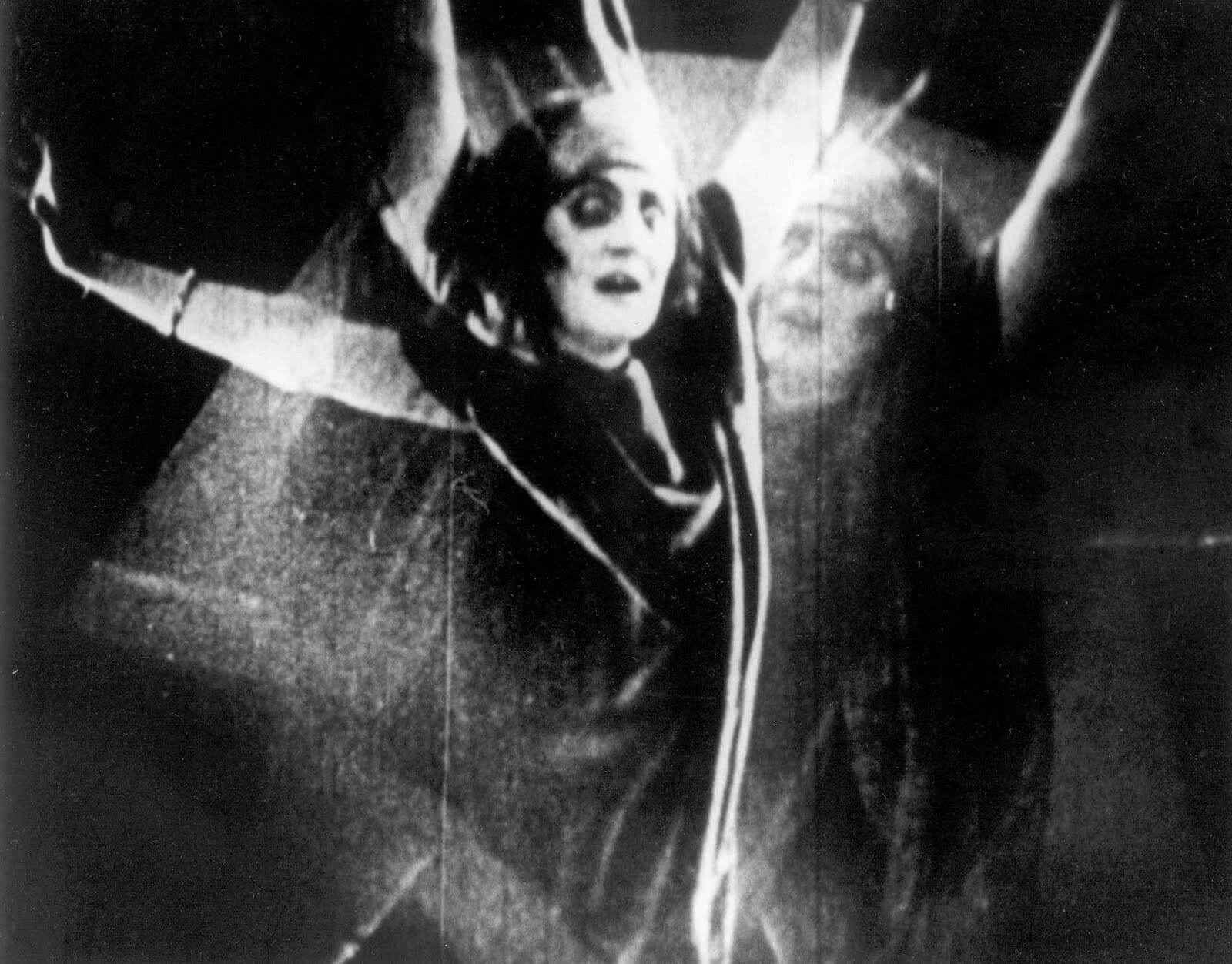
The Plot: Are you vaguely familiar with Poe’s “Fall of the House of Usher”? Great, because this movie is one loose adaptation. This silent short takes the overall themes of “Usher” and presents them in some purely visual storytelling. It’s still about Roderick Usher (Herbert Stern), his mysterious ailment, his catatonic sister Madeline (Hildegarde Watson), a visitor (Melville Webber), and a decaying manor, but all of this is conveyed using some really out-there camera effects.

Why It Matters: The NFR praises this “startlingly stylized” film, though accidentally calls it “avant-arde”. So close. There’s also an essay by silent film expert/NFR go-to Scott Simmon.

But Does It Really?: Sure, why not? I give this film a pass for its representation of its filmmakers, and a reminder that not all film adaptations of books need to follow the text too faithfully, or at all. This is a true adaptation of a story from written text into visual images. If you want Poe’s detailed, macabre text, there’s always the book. If you want a fascinating visual variation on the story’s themes, this is your movie.

Everybody Gets One: Part of the film’s unique style comes from the fact that neither of the directors were filmmakers. James Sibley Watson was a medical doctor and editor of “The Dial”; Melville Webber was an art historian. The two became friends while at Harvard, and developed a fascination of experimental films. They selected “House of Usher” as their film project because neither had read it in a long time, and therefore wouldn’t be slavish to the text.

Other notes

  • First thing you’ll notice about this film: no intertitles. The entire film is expressed visually. Pretty gutsy move, but they pull it off.
  • Nice zig-zag optical effect. In fact, all the effects in this movie are really great. Like, surprisingly great considering this was a low-budget experimental film. Well done, everyone.
  • In one of the tried-and-true Hollywood casting procedures, Madeline is played by James Watson’s wife Hildegarde.
  • Are the stairs just being shot artistically or does this house have escalators?
  • The only text in the film (aside from an opening shot of the book) is a series of one-word effects pertaining to Madeline in her tomb. Think ‘60s “Batman” meets alphabet soup.
  • Thanks for showing up, alleged narrator character. Where the hell have you been?
  • Not being familiar with the source material, I made it a point to actually read “House of Usher” prior to my viewing of this film. And thank God I did, otherwise I would have been so lost.

Legacy

  • Watson and Webber only made two other films, but one of them is called “Lot in Sodom”, so have fun with that.
  • There have been several adaptions of “The Fall of the House of Usher” over the years, including the Roger Corman feature-length “House of Usher”, which would find its own place on the NFR. A feature-length adaptation of a short story: what could possibly go wrong?
  • For those looking for a more faithful version of “Usher”, look no further than this 2012 animated version, narrated by Christopher Lee.

Further Viewing: The other 1928 “Fall of the House of Usher” silent film adaptation. A French film directed by Jean Epstein, and co-written by future director Luis Buñuel. Apparently it’s pretty great too.

#296) Roman Holiday (1953)

MV5BMTE2MDM4MTMtZmNkZC00Y2QyLWE0YjUtMTAxZGJmODMxMDM0XkEyXkFqcGdeQXVyNjc1NTYyMjg@._V1_SY1000_CR0,0,671,1000_AL_

#296) Roman Holiday (1953)

OR “Veni Vidi Vespa”

Directed by William Wyler

Written by Ian McLellan Hunter and John Dighton (and Dalton Trumbo). Story by Hunter Trumbo.

Class of 1999

The Plot: Princess Ann’s (Audrey Hepburn) goodwill tour of Europe culminates in Rome, where she has a breakdown of physical exhaustion. When she is told she must keep to her relentless itinerary, Ann sneaks out of the embassy at night, and has a chance encounter with American reporter Joe Bradley (Gregory Peck). Only after they part ways does Joe realize she is the princess everyone is trying to interview. With the help of his wisecracking photographer friend Irving (Eddie Albert), Joe attempts to get an exclusive interview with Ann without her finding out who he is. There’s laughs and love aplenty in Rome’s unofficial tourist video.

Why It Matters: The NFR calls it “a quick pace, light-hearted comedy” and praises Trumbo, Hepburn, and Albert.

But Does It Really?: “Roman Holiday” won me over pretty quickly. Trumbo’s well-crafted script is further boosted by the star power and chemistry of Hepburn and Peck. Hepburn is confident and radiant in her first leading role; Peck is charming and funny in his rare excursion outside of heavy drama. Throw in the polished storytelling skills of William Wyler and some beautiful and expertly chosen locales, and you have two of the most enjoyable hours in film history.

Everybody Gets One: Although there were many writers and various drafts, the final credit for the “Roman Holiday” screenplay goes to screenwriter Ian McLellan Hunter and playwright John Dighton. The story, while credited to Hunter, was written entirely by the infamously blacklisted Dalton Trumbo. Hunter agreed to be a front and gave Trumbo his salary for the project. Trumbo, Hunter, and Dighton all passed away before Trumbo could receive proper recognition for his work on “Roman Holiday”.

Wow, That’s Dated: The film starts with a meta-reference to the long-gone Paramount newsreels. Also, can you imagine Princess Ann trying to go incognito amidst TMZ and smartphones?

Seriously, Oscars?: One of the biggest hits of 1953, “Roman Holiday” received 10 Oscar nominations, including Best Picture. The film lost several awards to the unstoppable “From Here to Eternity”, but did manage to pick up three: Best Actress for newcomer Audrey Hepburn, Best Costume Design for Edith Head, and Best Story for credited writer Ian McLellan Hunter. 40 years later, Dalton Trumbo received a posthumous Oscar, as well as a proper listing in the film’s opening credits.

Other notes

  • “Roman Holiday” was the first Hollywood movie shot entirely in Rome. This made a sizeable dent in the film’s already tight budget, forcing Wyler to shoot “Roman Holiday” in black and white. In addition, Wyler had to cast an unknown as Ann, rather than a preferred star such as Elizabeth Taylor or Jean Simmons.
  • I do love me some non-verbal character development. Never has so much been said about a character by one shoe.
  • The film makes a point to never say which European nation Princess Ann hails from. My guess: West Dakotastan.
  • I love Audrey Hepburn, but playing hysterics isn’t necessarily her strong suit, at least not at this point in her career. Thankfully it’s only for one scene early on.
  • Shoutout to Hartley Power as Joe’s editor Hennessey. The scene where he calls Joe’s bluff is the funniest in the movie.
  • Before we go any further, a readout from the Michael Douglas Scale. Gregory Peck is 13 years Audrey Hepburn’s senior. Charming as they both are, I’m going to have to give “Roman Holiday” a written warning. I don’t make the laws, I just enforce them.
  • This movie really takes its time (Ann doesn’t actually explore Rome until about an hour in), but Hepburn and Peck are so appealing you really don’t mind. The two-hour running time goes by faster than some shorter movies.
  • Those are two of William Wyler’s daughters – Cathy and Judy – as the children Joe tries to steal a camera from.
  • Eddie Albert is a lot of fun in the standard “rom-com best friend” role, but an Oscar nomination? That’s a bit much, don’t you think?
  • The Vespa ride is justifiably iconic, and one of many fun sequences during the actual “holiday” part of the film. I am, however, very disappointed that it doesn’t end with Ann and Joe crashing into either a fruit stand or two guys carrying plate-glass.
  • Surprise cameo by Olmec from “Legends of the Hidden Temple”. But seriously, the Mouth of Truth scene is just delightful. Hepburn allegedly didn’t know what Peck was going to do, and the result is one of the most endearing moments in this or any movie.
  • The most impressive thing about “Roman Holiday” is how good the actual storytelling is. There’s not a lot of dialogue, and much of the story is told visually. I suspect that if it had been made 30 years earlier, “Roman Holiday” would have been an equally enjoyable silent movie.
  • Audrey’s performance is definitely not the flashiest to ever win an Oscar, but she’s just so effortlessly alluring. Is it any wonder generations of filmgoers have fallen in love with her?
  • I was steeling myself for the film’s inevitable Hollywood ending, and was pleasantly surprised when it didn’t happen. “Roman Holiday” opts for a realistic ending that, while it denies its audience a traditional happy ending, does manage to conclude on a satisfying note.

Legacy

  • Although not her film debut, “Roman Holiday” is the film that turned Audrey Hepburn into a bona-fide movie star. She would reunite with William Wyler for the underrated “How to Steal a Million”.
  • Practically every romantic comedy has been influenced by “Roman Holiday”, some right down to the Vespa ride.
  • “I’m also just a girl, standing in front of a boy, asking him to acknowledge what a blatant rip-off this movie is of ‘Roman Holiday’.”
  • Rumors of Peck and Hepburn reuniting for a sequel in the ‘70s never amounted to anything. Still, part of me is intrigued by the squandered potential of a “Before Sunset”-esque follow-up.
  • Don’t worry, they remade “Roman Holiday” for TV in 1987, starring Tom Conti and “Dynasty” star/daughter of an actual princess Catherine Oxenberg.
  • There’s been a stage musical floating around for a while with a score of repurposed Cole Porter tunes. I just…why?

Further Viewing: Audrey Hepburn’s now-famous screen test. Wyler discreetly told the camera and sound technicians to keep rolling after he called “Cut”, and Hepburn’s ensuing spontaneity won her the role of Ann.

#295) Easy Rider (1969)

MV5BMTc2MjI2NDc4Ml5BMl5BanBnXkFtZTgwODI4NzU0MTI@._V1_

#295) Easy Rider (1969)

OR “From L.A. to LA”

Directed by Dennis Hopper

Written by Hopper & Peter Fonda & Terry Southern

Class of 1998

The Plot: Los Angeles motorcyclists Wyatt, aka “Captain America” (Peter Fonda), and Billy (Dennis Hopper) use their money from a drug deal to fund a trip to New Orleans to celebrate Mardi Gras. With custom-built choppers and a well-chosen soundtrack, the two ride across the country, taking in the sights and a lot of marijuana. Among those the two meet along the way are a hitchhiker/commune inhabitant (Luke Askew), ACLU lawyer George Hanson (Jack Nicholson), prostitutes Karen and Mary (Karen Black and Toni Basil), and a string of locals who clearly don’t approve of their lifestyle. It’s the road trip movie on LSD, perhaps literally.

Why It Matters: The NFR calls it “a fascinating time capsule”, and praises Nicholson, cinematographer László Kovács, and the score. The write-up does, however, take the time to call the film “[o]casionally banal and dated”. Come on, NFR, it’s your pick! The essay by film critic William Wolf is only slightly more supportive.

But Does It Really?: “Easy Rider” is to film what “Hair” is to musical theater: the Generation Gap from the younger perspective, with the creative freedom to show the world their viewpoint. As a viewing experience almost 50 years later, “Easy Rider” is very much of its time, but still accessible. At times it feels like a documentary. “Easy Rider” isn’t a great film, and the culture it showcases may be lost on those who weren’t there, but this is the right film at the right time, and its historical impact (and therefore its NFR induction) cannot be denied.

Everybody Gets One: Son of Henry and younger brother of Jane, Peter Fonda found his motorcycle-riding counterculture persona thanks to Roger Corman’s “The Wild Angels”. Fonda next appeared in “The Trip”, a B-Movie about LSD featuring Dennis Hopper and a screenplay by Jack Nicholson. The germs of what would become “Easy Rider” started on the set of “The Trip”.

Wow, That’s Dated: Ev-er-y-thing. If you want to distill the counterculture movement of the late ‘60s into 95 minutes, “Easy Rider” is your movie.

Take a Shot: After allowing “It’s Alright Ma (I’m Only Bleeding)” to be featured in the film, Bob Dylan wrote the first verse of “The Ballad of Easy Rider” before handing it off to the song’s eventual composer/performer Roger McGuinn.

Seriously, Oscars?: “Easy Rider” was one of the biggest hits of 1969 and solidified New Hollywood’s standing as the status quo, but Old Hollywood still dominated the Academy, so the film only received two Oscar nominations. The writing team lost Original Screenplay to “Butch Cassidy and the Sundance Kid”, and breakout star Jack Nicholson lost Supporting Actor to overdue veteran Gig Young for “They Shoot Horses, Don’t They?”

Other notes

  • Some films on this list are known for their difficult or troublesome production, but “Easy Rider” takes the cake. Dennis Hopper and Peter Fonda fought constantly on the set, to the point that Fonda tried to use his producer status to kick Hopper off the film, and both of them – as well as Terry Southern – all have differing stories over who actually wrote the script (or if there even was a script). And the alleged amount of drug intake both on-and-off-camera begs the question: Does anyone involved actually remember this shoot?
  • Coincidentally, Terry Southern also wrote Jane Fonda’s counterculture movie: “Barbarella”.
  • Are we starting in the middle of the film? Apparently Dennis Hopper’s original cut was three times longer, and among the trims was an entire opening sequence showing Wyatt and Billy at their day job: L.A. stunt riders.
  • Who better to lead the Hollywood revolution than Henry Fonda’s son? Wyatt and Billy even ride through Monument Valley at one point.
  • Before They Were Infamous: That’s legendary record producer/future murderer Phil Spector as The Connection.
  • Four words: “Born to Be Wild”. At a time when films rarely used popular music, this film’s needle-drop of the Steppenwolf song set the mood of not only this film, but also of many films to follow.
  • Whoa, these transitions are a trip. Shoutout to editor Donn Cambern and whoever was supplying the drugs that week.
  • Be on the lookout for Peter’s daughter Bridget Fonda as one of the children in the commune.
  • Jack Nicholson was fresh off his stints with Roger Corman and “The Andy Griffith Show” when Dennis Hopper asked him to play George after Rip Torn dropped out (but that’s another story). It’s great to see Jack in a performance before he became a self-parody, and George helps add a bit of dimension to the proceedings.
  • Hey no fair, you can’t change songs mid-montage! You damn hippies and your flouting of conventions!
  • If the Mardi Gras footage seems out-of-place, it is. The sequence was shot before principal photography began, on 16mm (rather than the higher quality 35mm) and with a different crew than the rest of the shoot.
  • So many Catholic overtones in this movie, especially once Wyatt and Billy are on their bad trip. Which one of the screenwriters was Catholic?
  • I know a lot of locals were cast in smaller roles for authenticity, but the two truck drivers at the end are not actors.
  • Well that’s a real downer of an ending. What point were Hopper et al trying to make exactly?

Legacy

  • Bonnie and Clyde” and “The Graduate” loaded the bases, but “Easy Rider” was the home run that proved New Hollywood was here to stay. The big studios spent most of the ‘70s trying to make another “Easy Rider”.
  • Dennis Hopper was given free rein on his next movie: long-time passion project “The Last Movie”. The film was a flop, and Hopper’s directing career was essentially over.
  • Jack Nicholson became the breakout performer of “Easy Rider”, and his leading role in 1970’s “Five Easy Pieces” solidified his standing as a movie star.
  • Peter Fonda would go on to star in the motorcycle safety film “Not So Easy” (get it?).
  • Thanks to some computer wizardry, Dennis Hopper appeared in this 1998 Ford Cougar ad with…Dennis Hopper from “Easy Rider”!
  • Filmmaker Phil Pitzer somehow obtained the sequel rights and, along with Dustin Rikert, created the completely unnecessary (and illogical) sequel “Easy Rider: The Ride Back”. Honestly I’m doing everyone a disservice by mentioning this film even exists.
  • I can’t end on that note: how about “Born to Be Wild” again?

#294) The Life and Death of 9413: A Hollywood Extra (1927)

MV5BYjBmMWQ5ZjctYjhlNS00NzUwLWE4NDktNGFlNzk5ODRmMDkzXkEyXkFqcGdeQXVyMDgyNjA5MA@@._V1_

#294) The Life and Death of 9413: A Hollywood Extra (1927)

OR “Walk-On, Bye”

Directed & Written by Robert Florey and Slavko Vorkapić

Class of 1997

The Plot: Mr. Jones (Jules Raucourt) arrives in Hollywood with dreams of making it big as an actor. When he meets with the studio, he has the number 9413 written on his forehead and is designated an extra. Endless casting calls always end with rejection, even though seemingly everyone around Jones has found success, including one actor (Voya George) with a drawing of a star on his forehead. There’s plenty of symbolism and visual treats in one of the earliest experimental films to come out of Hollywood.

Why It Matters: The NFR calls it “one of the most creative…and bleakest of the early avant-garde films.” There’s an all-encompassing essay by Library of Congress archivist Brian Taves.

But Does It Really?: Yeah, I dig it. “9413” has carved out a niche for itself in film history as the rare mainstream experimental film, and a silent one at that. The whole film is wonderfully stylized – from the art direction to the acting – and I can only imagine what a revolutionary viewing experience this must have been in its day. There’s a lot of symbolism going on in the film, but Florey and Vorkapić make it all accessible enough that even the casual viewer can make their own interpretation. “9413” never gets the attention of other movies (avant-garde or otherwise), but it’s definitely worthy of preservation, as well as a viewing or two.

Everybody Gets One: Robert Florey came to Hollywood from his native France in 1921 as a film journalist. He had an idea for a film about a struggling actor in Hollywood, but it never came to anything until he was inspired by a performance of Gershwin’s “Rhapsody in Blue”. He pitched the idea to cinematographer Slavko Vorkapić, who used his connections to get a camera and film for the production. How much Vorkapić ultimately contributed to “9413” is still up for debate.

Wow, That’s Dated: As longtime readers know, I love adjusting prices in movies for inflation. I find it helps make these older movies a bit more accessible, and the realization of just how awful the inflation rate has skyrocketed over the years gives you a good cathartic cry. Anyway, food in “9413” goes for anywhere from five to fifteen cents ($0.73 to $2.18 today), and Jones’ rent is $49 ($710.89 today).

Other notes

  • The film got a general release thanks to Charlie Chaplin. Chaplin was friends with Robert Florey, and was so impressed with “9413” that he held a private screening at his house for such Hollywood heavyweights as Douglas Fairbanks, Mary Pickford, D.W. Griffith, and producer Joseph M. Schenck, who got the film screened at the United Artitsts Theater in New York. While there, the film was picked up by the Film Booking Offices of America (aka FBO Pictures) and shown in 700 theaters in North America and Europe.
  • The film’s co-cinematographer is credited simply as “Gregg”. My instinct was correct: it’s Gregg Toland, then working as an assistant cinematographer at Samuel Goldwyn Studio, and a few short years away from his own legendary run of classics (see “Legacy” below).
  • Both directors make cameo appearances in the film. Florey is the casting director, and Vorkapić is the man walking up the never-ending stairway to Success (get it?).
  • The trees shown during Jones’ breakdown look an awful lot like the Spiral Hill from “Nightmare Before Christmas” (yep, that’s the official name of that thing).
  • How different would this whole film be if SAG had been a thing back then?
  • It’s not a spoiler if it’s in the title. Does Jones actually die at the end, or is he just dead in Hollywood? Heaven might not be literal heaven, but rather the world outside of show business, where Jones is no longer identified by a number. I’ve yet to see that interpretation anywhere online, so what do you eggheads think of that?

Legacy

  • Robert Florey was able to parlay the positive reception “9413” received into a steady job directing B-movies for the next 25 years. Among his accomplishments were “The Cocoanuts” (the first feature starring the Marx Brothers), and future NFR entry “Daughter of Shanghai”.
  • Slavko Vorkapić was offered a job with Paramount’s special effects department shortly after “9413” was released. He then became a freelance montage editor, whose work includes the montages in “David Copperfield” and “Mr. Smith Goes to Washington”.
  • The Radio Corporation of America (RCA) bought out FBO in October 1928. That same month, RCA merged FBO with motion picture chain Keith-Albee-Orpheum to form a new movie studio: Radio-Keith-Orpehum, better known as RKO Pictures.
  • Robert Florey expanded the original short into the feature-length comedy “Hollywood Boulevard” in 1936. While also visually impressive, the general consensus is to stick with the original.

#293) The Outlaw Josey Wales (1976)

3c9955f57b466210fdfe01fe3099b172

#293) The Outlaw Josey Wales (1976)

OR “Union Buster”

Directed by Philip Kaufman Clint Eastwood

Written by Philip Kaufman and Sonia Chernus. Based on the novel “The Rebel Outlaw: Josey Wales” (aka “Gone to Texas”) by Forrest Carter.

Class of 1996

The Plot: Following the murder of his wife and son by pro-Union redlegs, Josey Wales (Clint Eastwood) joins pro-Confederate Bushwhackers and fights in the Civil War. When the war ends, Josey is the only one of the guerrillas not to surrender, and is subsequently one of the few survivors of the ensuing massacre. With his former leader Captain Fletcher (John Vernon) and Union Captain Terrill (Bill McKinney) on his trail, Josey rides out of town with a bounty on his head. As he escapes from Missouri to Texas, he is joined by a ragtag group of outsiders, among them: fellow Bushwhacker survivor Jamie (Sam Bottoms), wise Cherokee Lone Watie (Chief Dan George), young Navajo Little Moonlight (Geraldine Keams), Kansas transplants Laura Lee (Sondra Locke) and her grandma Sarah (Paula Trueman), and an assortment of character actors from every Western you’ve ever seen. They arrive in Texas, where a final showdown awaits.

Why It Matters: The NFR praises Eastwood the director, Eastwood the actor, and Chief Dan George…the actor.

But Does It Really?: If you’re going to pick a Clint Eastwood movie for the Registry, and “Unforgiven” isn’t eligible until 2002, “Josey Wales” is the natural choice. I’m still not entirely sold on its cultural significance, but overall it’s a well-made, entertaining western. The anti-Vietnam parallels aren’t too obvious, and the inherent episodic nature gives the film a nice variety. Even more impressive, the film’s vision isn’t muddled by its well-known production setbacks (more on those later). I give “Josey Wales” a “minor classic” designation among the NFR entries: This isn’t the definitive Clint Eastwood movie, but it’s a well-crafted encapsulation of the man’s strengths as actor and director.

Everybody Gets One: Screenwriter Sonia Chernus was a story assistant on “Rawhide”, the TV western that gave Eastwood his big break. Eastwood and producer Robert Daley hired Chernus to pen the first draft of “Josey Wales” before Philip Kaufman came along. And shoutout to Cissy Wellman and Kyle Eastwood as “the vics”.

Wow, That’s Dated: As is often the case with period pieces, the hairstyles can be a giveaway of the times. Sondra Locke’s in particular looks downright Farrah Fawcett-ian.

Seriously, Oscars?: Despite mixed critical reception, “The Outlaw Josey Wales” became the first Eastwood-directed film to be nominated for an Oscar. Jerry Fielding was up for Best Original Score, losing to Jerry Goldsmith’s work in “The Omen”. Eastwood movies wouldn’t become automatic Oscar bait until “Unforgiven”.

Other notes

  • The big story behind this film: original director Philip Kaufman was fired by Robert Daley during production at the insistence of Clint Eastwood, who frequently clashed with Kaufman on set. Eastwood took over production, alienating crewmembers and infuriating the Directors Guild of America (see “Legacy” below).
  • It’s still unclear what parts of the final cut Kaufman directed, but that pre-credits scene is pretty great. Minimal dialogue, maximum storytelling; we are in for quite a ride.
  • That’s the richly voiced John Vernon as Fletcher. He was no doubt cast in part because of his previous experience with Eastwood on “Dirty Harry”, and was a few years away from his most famous role: Dean Wormer in “Animal House”.
  • So much mistreatment of horses; I’m gonna need to see this movie’s PETA disclaimer.
  • This film has all kinds of character actors roaming around. Keep an eye out for Len Lesser (aka Uncle Leo from “Seinfeld”), Royal Dano (aka Mr. Lincoln), and Matt Clark (aka that guy who’s in everything).
  • This movie really is a testament to Clint’s star power. I don’t care for Clint’s somewhat conservative film persona, but I was rooting for Josey Wales the whole time.
  • How much tobacco juice does Josey go through? Does he have an unlimited supply just off-camera?
  • I was not expecting this film to have such a dark sense of humor, most of it stoically delivered by Chief Dan George.
  • I guess there was too much gunplay in this film, so let’s move on to attempted rape. Critics at the time said this film tested the limits of the PG rating, and they were right.
  • I wouldn’t necessarily call what Josey and Laura Lee have “chemistry”, but there’s enough sparks there to hint at things to come. Sondra Locke’s naturally expressive eyes help sell it.
  • Were Helen Hayes and Jeanette Nolan unavailable to play Grandma Sarah?
  • One last cameo from a recognizable character actor: Will Sampson (aka Chief Bromden from “Cuckoo’s Nest”) as real-life Commanche leader Ten Bears, despite the fact that the real Ten Bears would have been in his mid-70s right after the Civil War.
  • I’m still holding out for one final twist: They were all Civil War reenactors this whole time.

Legacy

  • Shortly after production wrapped, the Directors Guild of America fined Clint Eastwood $60,000 for firing/replacing Philip Kaufman. The DGA also passed new legislation, stating that no actor or producer can fire a director and take over filming themselves, and that if a director is fired during production, the position will be filled by someone from outside said production. This legislation is still commonly referred to as “The Eastwood Rule”.
  • Philip Kaufman may have been kicked off of “Josey Wales”, but his film career remained steadfast for the next 35 years. Highlights include the “Invasion of the Body Snatchers” remake, future NFR entry “The Right Stuff”, and the original treatment for “Raiders of the Lost Ark” with George Lucas.
  • Clint Eastwood and Sondra Locke started their relationship during production, and stayed together until a very public separation in 1989. They made six films together, including “Sudden Impact” and “Every Which Way But Loose”.
  • Original author Forrest Carter penned a second book: “The Vengeance Trail of Josey Wales”, which saw our hero heading down to Mexico to avenge the death of his friends. The book was turned into the film “The Return of Josey Wales”, starring and directed by…Michael Parks?