Directed by Bob Dickson, Alan Gorg, Trevor Greenwood
Class of 2014
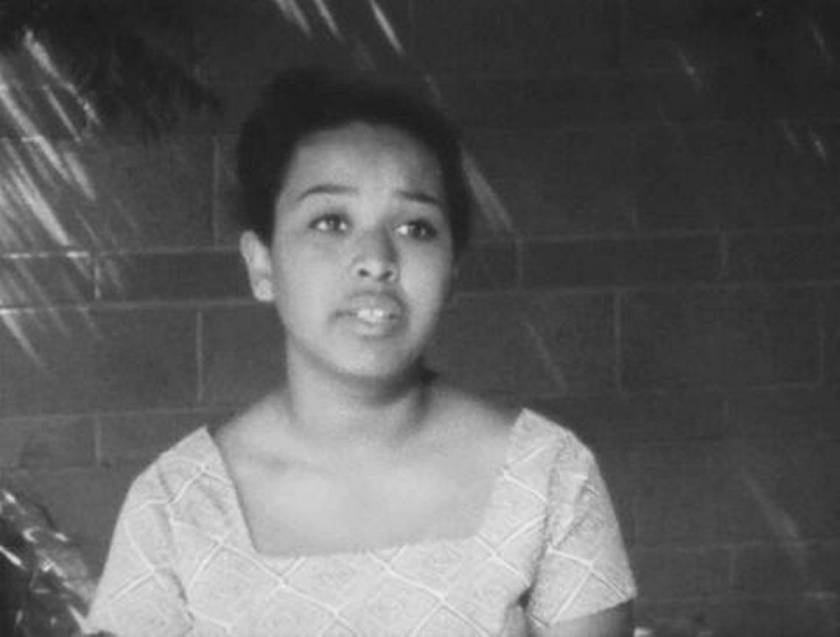
In 1965, UCLA students Bob Dickson, Alan Gorg, and Trevor Greenwood were all active in the civil rights movements of the time; Gorg in particular was a member of the Congress of Racial Equality (CORE). It was through CORE that he met a teacher at Jordan High School who introduced him to Felicia Bragg, a 15-year-old student living with her mother and her siblings in Los Angeles’ Watts neighborhood. In an attempt to show white audiences that African-Americans were not the stereotypes they had been portrayed as in film and TV, the three filmmakers chose Felicia as their subject for a documentary.
“Felicia” is a short chronicling an average day in Felicia’s life. She talks candidly about her family’s daily struggles, her experience at the predominantly African-American Jordan High, and her belief that Watts can only improve if people stay and “build it up”. Felicia herself is remarkably mature and composed for a teenager, with an optimistic outlook on her future that makes her wise beyond her years. This look at 1965 Watts had an unexpected layer added when the Watts riots occurred shortly after filming. It was the largest civil unrest in L.A. until the Rodney King verdict 25 years later, and “Felicia” is a reflective counterpoint to those events.
Over the last 50 years, “Felicia” has been shown in schools across the country not only as a time capsule of 1965 L.A., but also as a demonstration of effective documentary film making. For these reasons, “Felicia” is a welcome addition to the National Film Registry.
P.S.: To the best of my knowledge Felicia Bragg is still alive and living in Los Angeles. Does anyone know anything else about her? There’s very little information out there, though I suspect that if Ms. Bragg wanted to publicly talk about the film, she would have by now.
Written by Charles Brackett and Billy Wilder. Based on a story by Edwin Justus Mayer and Franz Schulz.
Class of 2013
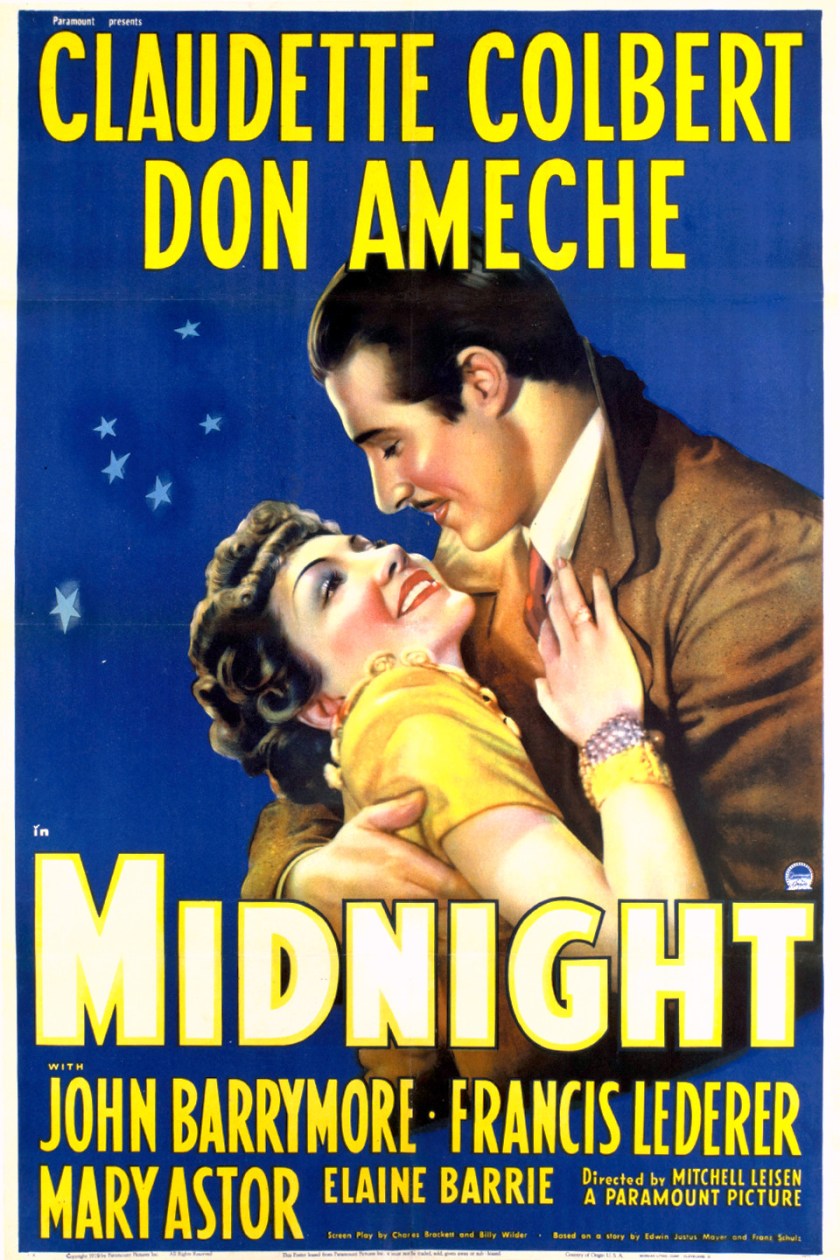
The Plot: Eve Peabody (Claudette Colbert), a showgirl from New York, ends up in Paris with only an evening gown and an empty purse. She becomes chummy with taxi driver Tibor Czerny (Don Ameche), and although there is a mutual attraction, Eve runs out on him. She ends up crashing a black tie affair, posing as “Baroness Czerny”. Only Georges Flammarion (John Barrymore) catches on, but is willing to keep Eve’s cover if she helps break up the affair between Georges’ wife Helene (Mary Astor) and the charming Jacques Picot (Francis Lederer). A weekend at the Flammarion estate goes well until Tibor shows up as “Baron” Czerny and all kinds of hilarity ensues.
Why It Matters: Both the NFR write-up and the expanded essay by film expert Kyle Westphal praise underrated director Mitchell Leisen, and, when they get around to it, mention the cast and screenplay.
But Does It Really?: Where has this movie been all my life? Buried under all the other great movies from 1939 is this charming, funny update of Cinderella. Colbert expertly leads a very fun cast, with Ameche and Barrymore in fine support. Yes, the unsung Leisen expertly navigates this ship, but it helps when you’ve got a well-structured Billy Wilder/Charles Brackett screenplay to work with. “Midnight” is tough to track down, but it is worth it if you love well-crafted farce.
Everybody Gets One: Alright, I’ll give the man his due. Though largely forgotten today, Mitchell Leisen rose to the rank of director after being a costumer and art director for the likes of Cecil B. DeMille. Leisen primarily succeeded helming light, pleasant-looking screwball comedies like “Midnight”. This is also the only NFR appearance for actor Monty Woolley, best known for his role as “The Man Who Came to Dinner”.
Wow, That’s Dated: Taxi drivers on every corner, that’s the big one. If this film was made today, Tibor would be a Lyft driver, and I don’t see them organizing anytime soon.
Take a Shot: Eve says the title once about an hour into the film, stating, “Every Cinderella has her midnight.”
Seriously, Oscars?: Oh, if only “Midnight” hadn’t been released in 1939, the undisputed “greatest year of movies”. Like its long-delayed NFR induction, there were just too many other films from that year worthy of recognition, and “Midnight” received zero Oscar nominations.
Other notes
Claudette Colbert has a lovely handle on Wilder/Brackett dialogue. It usually comes off best when uttered by smart-alecky characters like Ameche’s, but Colbert elevates the material, which is hard to do with writing that’s already this solid.
Don Ameche had to wait another 47 years before finally winning an Oscar for “Cocoon”. Isn’t that nuts?
I love Claudette Colbert, but Eve is from the Bronx? Please. It may be the only aspect of the part that first choice Barbara Stanwyck could have improved upon.
Almost didn’t recognize Hedda Hopper without one of her giant hats. Hedda had been a Hollywood actor for over 20 years by the time she appeared in “Midnight”. It was around the time of this film’s release that Hedda’s gossip column started to take off.
I can’t tell if this movie is leisurely paced or if it just got much bigger laughs in the ‘30s.
So John Barrymore is capable of giving a non-theatrical performance. The story goes that Barrymore was in decline from years of heavy drinking (he died three years after “Midnight”) and relied on cue cards for his lines. Any struggles Barrymore had off-camera are undetectable in the final film.
How does anyone in France take the police seriously when they’re wearing those little capes?
I’ll guess that no one suspected Eve was the imposter because Zoltan Karpathy had the night off.
Not surprising for a Wilder/Brackett screenplay, there are a lot of gems in the dialogue. Two of my favorites: “My mother taught me a few things, too” and “Let’s wait for the cognac”.
Eve has a pretty sweet set-up at the Ritz. It’s like “Home Alone 2”, except there’s no egomaniacal loser telling her where the lobby is.
Only in a Wilder screenplay would a character be knowledgeable about the Hungarian subway system.
Tibor got 1600 cab drivers to help him find one woman? Forget Missed Connections; French taxis are the way to go!
Why is Mary Astor always involved in a love triangle in these movies?
Shout out to Rex O’Malley as Marcel, Helene’s gay bestie.
Coincidentally, “Midnight” was added to the NFR the same year as another modern take on Cinderella: “Ella Cinders”.
The single funniest shot in the movie involves Tibor driving up to the Flammarion estate. “Park it!”
One line with a whole different meaning nowadays: “You have such a gay wife.”
And then Tibor and Eve embellish their charade by inventing a daughter named Francie. DON’T TALK ABOUT OUR CHILD, TIBOR!
You may need a refresher course on French divorce proceedings of the ‘30s before watching this film’s third act.
A society that approves of a husband spanking his wife with no hesitation; that’s why you’ve never seen this movie.
Legacy
The production of “Midnight” made Billy Wilder seriously consider directing to ensure that his writing wasn’t touched. I believe the only actor from “Midnight” Wilder used in one of his films was Hedda Hopper in “Sunset Boulevard“.
Leisen would go to direct another Wilder/Brackett screenplay: 1941’s “Hold Back the Dawn”. Wilder was a year away from directing his first Hollywood movie; I presume he took good notes during production of “Dawn”.
Like “Ball of Fire”, “Midnight” was remade only a few years later with the same director. Mitchell Leisen helmed 1945’s “Masquerade in Mexico”, with Dorothy Lamour in the lead.
Mitchell Leisen may have gotten the last laugh on Billy Wilder. Towards the end of his career Leisen directed a few episodes of “The Twilight Zone”, including obvious “Sunset Boulevard” knock-off “The Sixteen-Millimeter Shrine”.
The Plot: It’s Linklater, there ain’t no plot. “Slacker” is a single day in 1989 Texas that goes from one group of Gen X misfits to another. Among them, a taxi passenger (Richard Linklater) who contemplates his alternate universe options, a conspiracy theorist (Jerry Deloney) who claims we’ve “been on the moon since the ‘50s”, the film’s literal poster child (Teresa Taylor) pushing a sample of Madonna’s pap smear, a smattering of young filmmakers and artists, and more discussions of presidential assassinations than should be allowed in any movie.
Why It Matters: The NFR hails “Slacker” as “a touchstone in the blossoming of American independent cinema during the 1990s” and says the film has a “considerable quirky charm that has influenced a whole generation of independent filmmakers.”
But Does It Really?: Linklater has done better movies, but “Slacker” is the one that started it all. “Slacker” isn’t just a representation of one director’s work; it expands beyond that to a representation of a whole new genre: the Generation X indie. Using the thread of loosely connected vignettes, Linklater not only shows us a slice of life, but an entire community of modern bohemians. After watching “Slacker” I feel like I have a better understanding of what Richard Linklater was like in his ‘20s, as well as his environment and lifestyle in 1980s Houston. “Slacker” is an engaging film, and I’m glad there’s room for it on the NFR.
Everybody Gets One: Born in Houston, Richard Linklater didn’t get into filmmaking until he was a young adult, when a viewing of “Raging Bull” showed him that film could be an expression of one’s self. Linklater founded the Austin Film Society (which is still going) and honed his craft on short experimental films before making “Slacker” on a budget of $23,000. Also making their sole NFR appearance: literally everyone else in this movie.
Wow, That’s Dated: This may be the definitive Gen X movie. Everyone is fresh out of college, struggling to pay rent, and having philosophical conversations about “Scooby-Doo” and “The Smurfs”. Also on display are an ad for Ron Paul’s 1988 presidential bid, and a slam on then-president George H.W. Bush.
Seriously, Oscars?: No Oscar love for “Slacker”, but the film did receive two Independent Spirit Award nominations: Best First Feature (losing to “Straight Out of Brooklyn”) and Best Director (losing to Martha Coolidge for “Rambling Rose”). The Best Director category also included such future Oscars staples as Todd Haynes and Gus Van Zant.
Other notes
This is what I call a “French Braid Movie”: each scene loops into the next. Some of the connective tissue is a stretch, but for this movie it works.
Richard Linklater is Owen Wilson-ing so hard in his scene. He’s even got the same haircut.
Wow, this movie predicted global warming. We really need to stop ignoring the warning signs.
One of the postcards left behind in the co-op features Uncle Fester from “The Addams Family”, as played by Jackie Coogan who, and I can’t stress this enough, was also the kid in “The Kid”.
We have a boom mike! Even the greats mess up in the beginning.
For those of you like me with zero street cred, Teresa Taylor is the drummer for Butthole Surfers.
There’s a lot of mental illness in this film. What was going on in 1989 Texas?
I’m just amazed Linklater was able to get this many actors for his first movie. More amazing, none of them are Ethan Hawke, Julie Delpy or Matthew McConaughey.
Promotional consideration for “Slacker” provided by Coca-Cola. Can’t beat the feeling!
And then we get an extended monologue from the JFK assassination conspiracist. You can practically see the MAGA hat on this guy.
I think the alternate title of this movie was “People Getting Out of Awkward Conversations: The Motion Picture”.
The Funeral Hitchhiker guy is giving me a real Billy Bob Thornton vibe.
In addition to the “Conspiracy-a-Go-Go” discussion, the Old Anarchist mentions the Lincoln and McKinley assassinations. Is anyone else concerned about young Linklater’s mental well being?
And now a Hinckley reference? Is this an adaptation of “Catcher in the Rye”?
AND footage of the Challenger disaster? You got some issues, Linklater. I know we’re all a little morbid in our ‘20s, but Jesus.
Shoutout to cinematographer/editor Lee Daniel (no, not that one). As longtime readers are aware, I’m a sucker for one-take scenes.
Uggggh, white dreadlocks. I would not have done well in 1989 Bohemian culture.
Can’t you just imagine Quentin Tarantino watching this film in the early ‘90s and saying, “A movie where people over-analyze pop culture references? Hold my beer.”
The Anti-Artist admits that all he does is “sleep and eat and watch movies”. And now you understand the life of someone who cranks out three movie blog posts a week.
We leave you now with footage of an 8mm camera being thrown off a cliff.
“This story was based on fact. Any similarity with fictional events or characters is entirely coincidental.” Nice one, Linklater.
Legacy
“Slacker” launched the film career of Richard Linklater. His immediate follow-up was another slice of life called “Dazed and Confused”, and he’s been off and running ever since. My personal favorites of Linklater are “School of Rock” and “Boyhood”.
This is the movie that inspired Kevin Smith to become a filmmaker, so that’s something we have to live with.
“Slacker” is also responsible for popularizing the term “slacker”, though I believe Principal Strickland was the first person to use the phrase. Regardless, Linklater had hoped that slacker would take on a more positive connotation.
Easily one of the best “Simpsons” episodes, “22 Short Films About Springfield” takes its general premise from this film. Mmmmm…steamed hams.
And of course, the uninspired drastic departure of a sequel: 2002’s “Slackers”. Oh Jason Schwartzman, how could you?
For the better part of a year I’ve been telling people how I could not possibly do this blog without my subscription to the TCM/Criterion Collection streaming service FilmStruck. And now it looks like I’ll have to find a way.
Earlier this morning, FilmStruck announced that on November 29th they will be going the way of Yahoo! Screen. I am, of course, deeply saddened by this news, but also grateful for the time I’ve had with FilmStruck. As of this writing, 46 of the films covered on this blog were viewed using FilmStruck, with a few more coming down the pike in the weeks to come. FilmStruck was a monumental help to me when it came to tracking down some of the NFR’s more obscure entries (Thank god they had “Decasia”), and was an indispensable library of popular titles I’ve just never gotten around to watching (“My Favorite Year”? Fucking hilarious).
So thank you, FilmStruck. Safe travels, and may we film geeks one day get the online platform we so desperately desire. In the interim, I have a month to cram in as many FilmStruck titles as possible! Tell the office I’m dead for a few weeks!
On a related note: anyone got any Criterion DVDs they can loan me? I promise I’ll give them back.
#279) Crisis: Behind a Presidential Commitment (1963)
Directed by Robert Drew
Class of 2011
Having effectively covered John F. Kennedy’s 1960 campaign with “Primary”, Robert Drew was granted full access by the Kennedy White House to cover one of the president’s crucial defining moments in “Crisis: Behind a Presidential Commitment”.
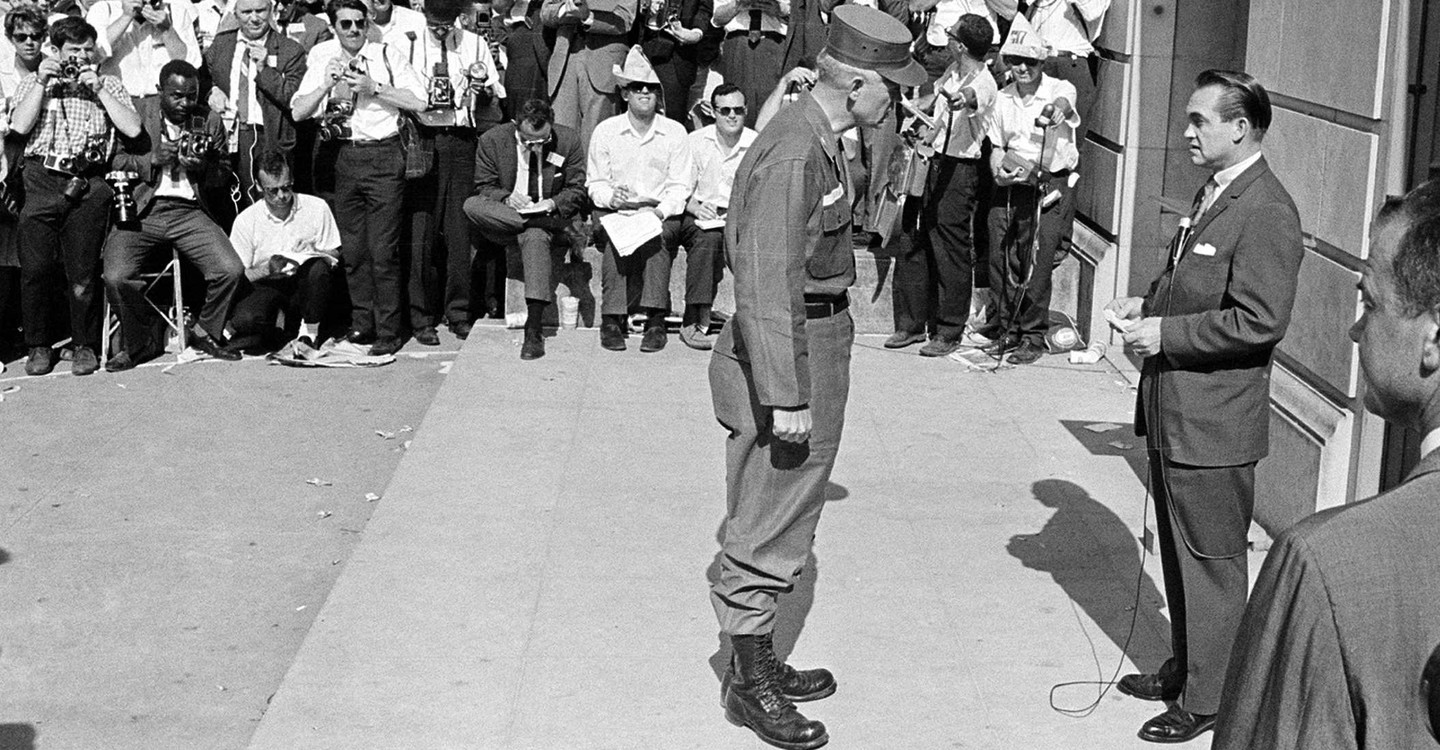
By June 1963 it had been almost a full decade since “Brown v. Board of Education of Topeka, Kansas” declared segregated schools for African-Americans unconstitutional, but that didn’t stop the likes of Alabama and other southern states from denying entry for prospective students. The key holdout was George Wallace, the recently elected Democratic governor of Alabama, who was willing to stand in front of the University of Alabama’s main entrance to prevent Vivian Malone and James Hood from entering the school, and thereby desegregating it. John Kennedy had promoted civil rights during his campaign but, now two years into his presidency, had done very little to keep his promise. Working with his brother, Attorney General Robert Kennedy, the President and his team were faced with the daunting task of finding a solution that would allow Malone and Hood to enter the school without resorting to violence or adding fuel to Wallace’s segregationist fire.
With the aid of Deputy Attorney General Nicholas Katzenbach, a two-fold solution was reached. With federal marshals on site, and with Malone and Hood safely inside a nearby car, Katzenbach gave Wallace one final chance to peacefully step aside and allow entrance for the students (a presidential proclamation calling for Wallace not to interfere had already been issued, Wallace was breaking the law by standing in the doorway). Wallace refused, prompting phase two of the plan: an executive order from President Kennedy that federalized the Alabama National Guard, taking control of the Guard out of Wallace’s jurisdiction and into Kennedy’s. After a reluctant command from Guard General Henry Graham and a face-saving speech from Wallace, the Governor stepped aside, and Malone and Hood entered the University of Alabama without incident. Later that evening, President Kennedy delivered his Civil Rights address on television, and proposed what would eventually become the Civil Rights Act of 1964.
Like many a historical document on this list, it is fascinating to be in “the room where it happens”. To watch Kennedy and his team behind closed doors making the tough calls is a riveting viewing experience, as is watching Wallace’s unwavering determination to maintain his vow of “segregation forever”. Films that capture their specific moment in history are unquestionably worthy of preservation, but can also be depressing given how seemingly small progress has been made in the ensuing years (sure, African-Americans can go to any school in the south, but can they vote?).
Why It Matters: The NFR salutes Drew and calls the film “a uniquely revealing complement to written histories of the period, providing viewers the rare opportunity to witness historical events from an insider’s perspective.”
Seriously, Emmys?: Originally produced for ABC News, “Crisis” was completely snubbed at the 1964 Emmys (ABC was third among the broadcast networks’ news departments at the time). Coincidentally, the winner for Best Documentary was another look at the Kennedy presidency: “The Making of the President, 1960”. The Emmy ceremony was six months after Kennedy’s assassination, and the Television Academy was definitely in the mood to honor the late president, which makes the absence of “Crisis” even more conspicuous.
Other notes
For those of you obsessed with timelines, the events of “Crisis” occurred roughly 2 ½ months before the events of “The March”. Summer 1963 must have been unusually tense for America.
When your documentary begins with the song “Dixie” and footage of Governor George Wallace, you already know you’re in trouble.
There are many fascinating aspects of “Crisis”, one being the rare opportunity to see JFK when he wasn’t “on”. The charm and charisma is gone, but the commitment you expect from a president remains.
I was also fascinated with Vivian Malone and James Hood. They are polished and prepared (with help from Katzenbach and the local NAACP chapter), but you never forget that they are both 20 years old. These two are ordinary young adults thrown into an unordinary experience, but their fear is controlled by their determination. They even manage to crack a joke or two the night before. I wish Drew et al devoted more screentime to these two.
Robert Drew is smart enough to know that even in direct cinema, sometimes you need a narrator to clear up a few things. That narrator, by the way, is “Crisis” cameraman James Lipscomb, who went on to film a slew of National Geographic specials.
In an adorable moment of levity, Robert Kennedy’s three-year-old daughter Kerry runs through Dad’s office, and takes a phone call with Nicholas Katzenbach. Kerry has continued her father’s legacy and today is a human rights activist.
Hats off to Katzenbach. Not only did he help come up with the solution, but he’s also the one who had to tell Wallace to stand down. And talk about grace under pressure; if that were me I would have had a full-Kavanaugh meltdown.
It is inconceivable to me that the Attorney General of the United States had these events relayed to him through telephone. I truly don’t understand how our top government officials did anything without cell phones or C-SPAN.
Wallace finally acquiesces, but with warning that this will effect the next election. “Whoever the South votes for will be the president.” In 1964, the South voted for Barry Goldwater, and they were pretty much the only ones who did in Lyndon Johnson’s landslide victory.
In a final bit of optimism, the last shot of “Crisis” is of Dave McGlathery, the University of Alabama’s third African-American student, who enters the building with no protest or fanfare (albeit with a handful of National Guardsmen in the vicinity).
As in “Primary”, future “Dont Look Back” director D.A. Pennebaker is credited here amongst the camera crew.
Having now watched the events surrounding the “schoolhouse” incident for the first time, I am really concerned that Robert Zemeckis thought it was funny to have Forrest Gump stumbling around in the background.
Speaking of, a more serious recreation of these events is depicted in the 1997 TV movie “George Wallace”, starring “Forrest Gump” alum Gary Sinise.



 The Horse's Head