#89) An American in Paris (1951)

american_in_paris_xlg

#89) An American in Paris (1951)

OR “Song & France”

Directed by Vincente Minnelli

Written by Alan Jay Lerner

Class of 1993

The Plot: Jerry Mulligan (Gene Kelly) is a former GI now living in Paris as a struggling painter. He falls for lovely young French woman Lise (Leslie Caron) who it turns out is dating his mutual friend, performer Henri Baurel (Georges Guétary). At the same time heiress Milo Roberts (Nina Foch) takes interest in Jerry’s art, and possibly a whole lot more. But all of this is just the wall from which to hang some classic Gershwin tunes and some of the best dance numbers captured on film.

Why It Matters: I get the feeling whoever had to do the “American in Paris” NFR write-up didn’t like the film. They call the plot “thinnish”, point out that George Guétary didn’t become the film’s break-out star, and highlight the two numbers that Gene Kelly isn’t in. Was no one else in the office that day?

But Does It Really?: By comparison my thoughts are practically gushing. It may fall apart under scrutiny, but “An American in Paris” is one of the most romantic, feel-good musicals ever made. I dare you to not grin from ear to ear while watching it. This is the film in which Gene Kelly finally broke through as a true artist, and everything around him from the songs to the set help amplify that artistry. If forced to choose I’d still say “Singin’ in the Rain” is the quintessential Gene Kelly film, but “An American in Paris” is a worthy close second.

Everybody Gets One: Of the credited cast, Georges Guétary is the only actor with one film on the Registry. Among the uncredited masses is Noel “Lois Lane” Neill**.

Wow, That’s Dated: A quick shout-out to Hopalong Cassidy, plus some very obvious Chroma key outlining during any scene in a car.

Seriously, Oscars?: “An American in Paris” won six Oscars, including a surprise win for Best Picture (most people were backing either “A Streetcar Named Desire” or “A Place in the Sun”). Despite not being nominated for Best Actor, Gene Kelly did take home an honorary Oscar for his contributions as a choreographer. It was Kelly’s only Oscar during his 50-year showbiz career.

Other notes

  • This was Leslie Caron’s first film. Like her character, Leslie was 19 when she filmed this. Gene Kelly was literally twice her age during filming.
  • Hope you enjoyed those establishing shots, because that’s all you’re seeing of the real Paris for the next two hours!
  • Five minutes in and we get three different narrators, a device we never see or hear again. What gives?
  • A bed that hangs from the ceiling. That’s what I need!
  • Yes, modern girls were definitely still doing The Charleston in 1951.
  • Among the great things about this film is that many of the scenes (musical or otherwise) are presented in just a handful of continuous takes. It gives the whole film a wonderful energy about it.
  • By many accounts he was a taskmaster and not the nicest person, but on screen Gene Kelly is effortlessly charming. And he’s great with kids, that’s always a plus.
  • Having never seen this film before, I was not expecting it to be so funny. Kudos to Alan Jay Lerner, and special kudos to actor Oscar Levant, who hits most of those lines out of the park.
  • Always great to see Dr. Bellows in a movie.
  • Oh I really like Nina Foch in this film. It’s a character we don’t get in a musical too often and she nails it. I wish she could’ve gotten an Oscar nomination.
  • Ah yes, that classic movie romance where he’s aggressive and a borderline stalker but she’s okay with it because it’s…charming?
  • How come the only thing Adam can compose are Gershwin songs?
  • Nice split-screen work during Adam’s dream number. Very “Parent Trap”.
  • Ooh, a joke about Hitler only six years after the war. Quite ballsy.
  • The lead-up to “’S Wonderful” is brilliant. There are three different narratives happening in the same shot, and two of them continue into the song. Perfect.
  • So if my math is right, Lise was 8 to 13 years old when she stayed with Henri during the war. And now they’re engaged. …Okay then.
  • Seeing Gene Kelly in those tight pants I suddenly understand why every woman I’ve ever met wants to climb him like a tree.
  • That ending ballet is great and all, but isn’t it just a rip-off of the ending of “La La Land”?

Legacy

  • Boy, when Gene Kelly does an encore…
  • Many of the artists involved in “An American in Paris” would continue their collaboration throughout the ‘50s musicals that comprise MGM’s “Freed Unit”. This era hit its peak with 1958’s similarly veined “Gigi”.
  • “Love Is Here To Stay” went from second-tier Gershwin to American standard thanks to this film.
  • We get a “new” Gershwin musical every decade or so, so it was only a matter of time before “An American in Paris” made its way to Broadway. Thankfully, it’s a perfect match.

Listen to This: The best Gershwin composition not in this film, George’s “Rhapsody in Blue” was first recorded in 1924. George played piano with Paul Whiteman as conductor. The recording was among the first 50 in the NRR’s inaugural class of 2002.

** 2017 Update: Speaking of, Ms. Neill has a cameo in new NFR entry “Superman”.

#88) Annie Hall (1977)

untitled-2

#88) Annie Hall (1977)

OR “What’s It All About, Alvy?”

Directed by Woody Allen

Written by Allen and Marshall Brickman

Class of 1992

The Plot: Woody Allen-esque comedian Alvy Singer (Woody Allen) has just turned 40 and is starting to wonder where his life went wrong. Most especially, he is trying to pinpoint why his relationship with aspiring singer Annie Hall (Diane Keaton) eventually broke down. Through comic analysis and plenty of Fourth Wall breaking, Alvy looks at his unhappy childhood, his two previous marriages, and his love of New York vs. his hatred of L.A., but he ultimately keeps coming back to everything he had with Annie. Oh, and there’s a large vibrating egg at one point.

Why It Matters: The NFR calls it “Allen’s most mature and personal film” and includes an essay by Boston Globe film critic Jay Carr.

But Does It Really?: As difficult as it is for me to separate the art from the artist, I have always thought that “Annie Hall” is a great film. It may in fact be Woody’s best film, the perfect melding of his “early, funny” films and his later, more sophisticated films. It is an artist’s self-analysis without being egotistic, and a romantic comedy without being sappy or predictable. Keaton and Allen anchor the film with their performances; she is endearing, he is surprisingly charming, and you never lose sight of why these two love each other. Woody has done some bad things in his day, but “Annie Hall” is not one of them.

Shout Outs: Quick references to “The Godfather” and “The Wizard of Oz”, plus an animated parody of “Snow White and the Seven Dwarfs” (though I don’t recall the Evil Queen having see-through nipples).

Everybody Gets One: Legendary stage actor Colleen Dewhurst, as well as fellow theater people Tony Roberts, Janet Margolin and John Glover. And of course, Marshall McLuhan.

Wow, That’s Dated: Such ‘70s things as EST, Uri Geller, and casual coke habits. Plus a joke about Annie’s rent being an astronomical $400 definitely doesn’t land today.

Seriously, Oscars?: In a head-to-head competition with “Star Wars”, “Annie Hall” took home four Oscars in four major categories; Best Picture, Director, Original Screenplay, and Actress for Keaton. The only category they lost was Best Actor for Woody, who still won two Oscars he couldn’t care less about. The film received no technical nominations, meaning no love for editor Ralph Rosenblum and (of course) cinematographer Gordon Willis.

Other notes

  • First off, a shout-out to the great film editor Ralph Rosenblum. If you can track it down I recommend his book “When the Shooting Stops…The Cutting Begins: A Film Editor’s Story”. Rosenblum relates the individual challenges that he encountered while editing such films as “The Pawnbroker”, “A Thousand Clowns” and many of Woody’s early films. Most of what we know now as “Annie Hall” was found in the cutting room.
  • This is one of the first films to include the standard “Woody Allen Opening Credits”: white Windsor typeface against a black backdrop. Later films will include the now-required ‘40s mood music.
  • No Alvy, the worst thing I can say about you isn’t “balding”.
  • For the record, everything said by the man on line at the movie theater is everything this blog is against. No film snobbery or mansplaining here, I can promise you that.
  • It’s fun to see Carol Kane in a role as far removed from “Unbreakable Kimmy Schmidt” as possible. Run Lillian!
  • Oh, Janet Margolin. She was Woody’s leading lady in “Take the Money and Run” and is seen here as Alvy’s second wife. She is best remembered for her brief role as the prosecuting attorney in “Ghostbusters II”. She left us much too soon.
  • But seriously, how could you not fall in love with Annie Hall? Diane Keaton’s performance is pretty damn flawless in this film.
  • I’ve gotten a lot of mileage out of the line “That’s okay, we can walk to the curb from here.” I am also 12 and greatly enjoy the phrase “quietly humping”.
  • Can anyone confirm that that really is Truman Capote?
  • For those of you unfamiliar with Diane Keaton’s actual singing abilities, she was in the original Broadway cast of “Hair”.
  • Christopher Walken man. Christopher Walken. To see the birth of his film persona is always a thing of beauty. And to think they almost cut this scene.
  • Geez, even in people’s dreams Sinatra is a jerk to women. Are we sure that this wasn’t the dream of Sinatra ex/future Woody ex Mia Farrow?
  • Did Paul Simon just name drop Jack Nicholson and Anjelica Huston?
  • This film accurately portrays what Christmastime is like in Southern California.
  • So Rob acts and produces this sitcom? I guess they never explicitly say what he does out in L.A.
  • Quick shout out to Masters and Johnson before they were Michael Sheen and Lizzy Caplan.
  • That “dead shark” line man. Woody was right on the money with that one. I’m surprised that’s not the line people quote from “Annie Hall”.
  • Rob is upset because he was going to make it with two 16 year-olds. WOODY WAS TRYING TO WARN US THIS WHOLE TIME!
  • This film is a buffet of “Before They Were Famous”. Jeff Goldblum is the partygoer who forgets his mantra, Beverly D’Angelo is the actress in Rob’s sitcom, and Sigourney Weaver is Alvy’s date at the very end. And THAT’S why the Oscars should have a Casting category.

Legacy

  • Diane Keaton (and possibly Ralph Lauren) created a late ‘70s fashion trend with Annie Hall’s clothing.
  • “When Harry Met Sally…”: Homage, disciple or carbon copy? You be the judge.
  • And of course, every Woody Allen film since this one. Most notably, the one where Woody and Diane get back together to solve a murder!

#87) The Battle of San Pietro (1945)

bsp4

#87) The Battle of San Pietro (1945)

Directed & Written by John Huston

Class of 1991

This film is also available on the National Film Preservation Foundation website.

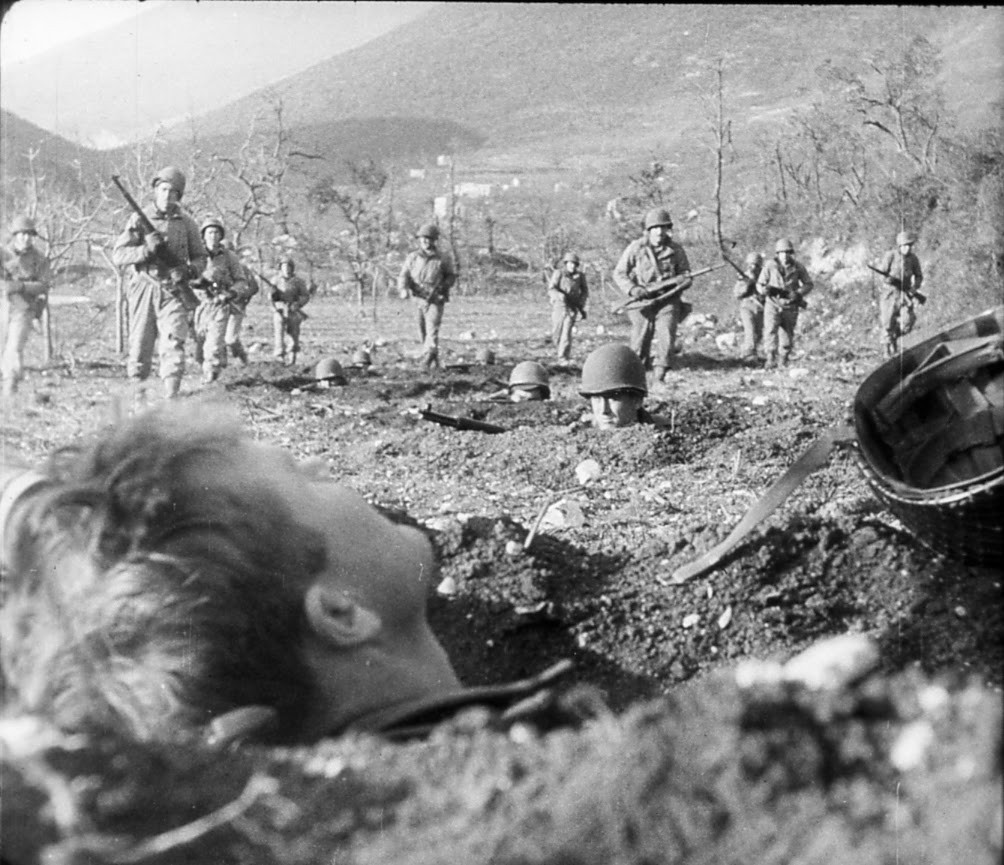
After being enlisted in the army during World War II, John Huston was put to work making documentaries for the Signal Corps. Following the success of his Oscar nominated “Report from the Aleutians”, Huston was sent to film the Allied Forces’ Italian Campaign in San Pietro. What Huston produced (after some laborious editing at the behest of the Army) is an unflinching look at war and its aftermath. The bulk of the film was staged after the fact and Huston’s anti-war sentiments were all but eliminated, but “The Battle of San Pietro” still manages to create some jaw-dropping moments during a major turning point in the war. Despite its neutering, this film does not shy away from such sobering visuals as the fresh corpses of soldiers being carted away, or the comune of San Pietro Infine reduced to rubble and ruins. “The Battle of San Pietro” was the first World War II documentary to be included in the National Film Registry, and its frank visuals are still a tough act to follow.

Read more about the film and its history in this essay from the NFR by documentary historian Ed Carter.

#86) The Freshman (1925)

Poster_-_Freshman,_The_(1925)_01.jpg

#86) The Freshman (1925)

OR “The New College Try”

Directed by Fred Newmeyer and Sam Taylor

Written by Taylor & Ted Wilde & John Grey & Tim Whelan

Class of 1990

The Plot: Harold Lamb (Harold Lloyd) is about to start his freshman year at Tate University and is determined to be Big Man on Campus. He emulates his favorite movie character – The College Hero – and ends up becoming the oblivious butt of many jokes. Peggy (Jobyna Ralston), his landlady’s daughter, is the only person who shows genuine kindness to him. The film culminates in the big football game, where Harold dreams of scoring the winning touchdown, despite not knowing he is only the team’s waterboy.

Why It Matters: The NFR calls it “the perfect showcase for Lloyd’s ingenious gags, physical humor and tender pathos”. Also included is an essay by unrelated Harold Lloyd expert Annette D’Agostino Lloyd and her website devoted to the man.

But Does It Really?: Equal parts funny and endearing, “The Freshman” is still an enjoyable comedy over 90 years later. Lloyd is very engaging and the theme of acceptance set against the hectic college lifestyle still rings true today. Though I am surprised that “The Freshman” made it onto the NFR list on only the second round, while the Harold Lloyd film – “Safety Last!” – had to wait another four years.

Wow, That’s Dated: All kinds of ‘20s slang in this one, including but not limited to “stand treat”, “dubs” and “petting party” (the last one sounding like a lot of fun). In addition we get a reference to Simon Legree, the slave owner from “Uncle Tom’s Cabin”. Yeesh.

Other notes

  • While he produced all of his pictures and was definitely “the muscle” behind them, Harold Lloyd was rarely credited as director or writer. This film is no exception.
  • Harold Lamb may be the first movie character to idolize another (albeit fictional) movie character. If he had waited a few years he could have had a Paul Muni “Scarface” poster in his room.
  • Nice use of animated title cards for Harold’s college cheers.
  • How can this be a ‘20s college picture when no one tries phone booth stuffing or flagpole sitting?
  • The version I watched featured the 2002 re-orchestration by Robert Israel. It includes the “Oriental Riff” you are required to sample when China is mentioned, as well as college campus staple “Gaudeamus igitur”.
  • So even back then movies had crotchety old deans?
  • James Anderson (Chet) was 22 when filming began, making him the only major cast member who was actually the correct age to play a college student. By comparison, Harold Lloyd was 31.
  • At one point Harold stuffs a cat in his sweater, and then at a later point holds a baby between his legs. W.C. Fields must have loved this film.
  • Lloyd loves the gag of thinking someone else goosed you and then slapping the wrong person.
  • Ah, America’s proud heritage of male cheerleaders. You are this nation’s true heroes.
  • I don’t know much about college football, but I feel like Harold violates a lot of rules during the big game.
  • Speaking of, that’s the lowest scoring football game I’ve ever seen. For god sake I’ve been to soccer games with higher scores!

Legacy

  • This film was inspired by (and helped continue) the college craze that was going through movies at the time. 23 Skidoo and whatnot I guess.
  • Footage from the big football game was repurposed in Lloyd’s final star vehicle, “The Sin of Harold Diddlebock”.
  • Hmmm…a lovable social misfit goes to college and becomes the football team’s waterb-OH GOD NO!

[Side note: Lloyd’s granddaughter Suzanne Lloyd Hayes tried to sue Disney and “The Waterboy” for plagiarism. I admit there are some similarities, but not enough to warrant any legal action. In the “Sentences I Never Thought I’d Write” department; the court ruled in favor of “The Waterboy”.]

[Side side note: Ironically, “The Freshman” itself was sued for plagiarism by author H.C. Witmer in 1929, claiming the film was similar to his short story “The Emancipation of Rodney”. The original case ruled for Witmer, which required all prints of “The Freshman” to be destroyed. This ruling was overturned on appeal, and a classic was saved.]

Further Viewing: Completely unrelated to this film, “The Freshman” is also the name of a 1990 Matthew Broderick/Marlon Brando comedy that I can’t believe I neglected to mention in my “Godfather” write-up.

#85) The Learning Tree (1969)

learning_tree

#85) The Learning Tree (1969)

OR “Summer of ‘22”

Directed & Written by Gordon Parks. Based on his novel.

Class of 1989

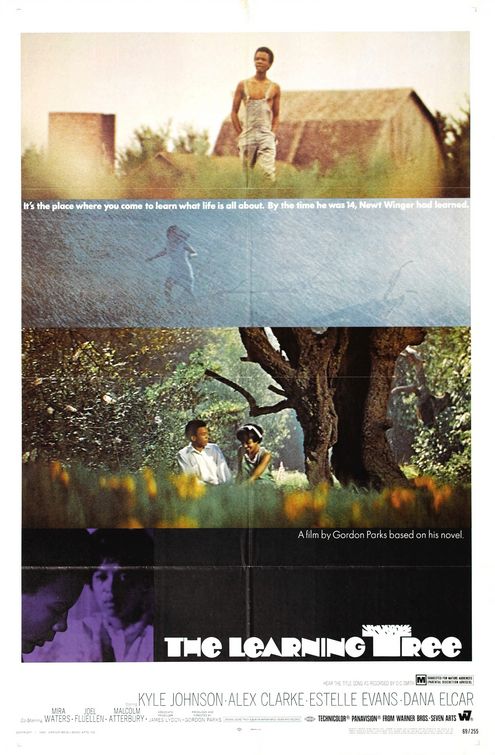
The Plot: “The Learning Tree” is Gordon Parks’ semi-autobiographical slice of life and coming of age in rural 1920s Kansas. Young African-American Newt Taylor (Kyle Johnson) discovers life and love amongst the seething racial intolerance of his town’s white community. Newt dreams of growing up and getting out of Kansas, but his steadfast mother Sarah (Estelle Evans) reminds him to use his time here as a way of understanding the world around him (his “learning tree” if you will). Newt’s positive outlook is contrasted by the more jaded views of his childhood friend Marcus (Alex Clarke), who is constantly harassed by the town’s racist Sheriff Kirky (Dana Eclar).

Why It Matters: The NFR cites the film’s historical significance as the first studio-backed film to be directed by an African-American. The write-up also calls the film “visually beautiful and moving, if somewhat sentimentally melodramatic”. An essay by Maurice Berger discusses the film, as well as Parks’ work to achieve racial tolerance throughout his life.

But Does It Really?: Historically, of course. The film itself is not perfect, but it’s an important stepping-stone for depicting African-Americans on screen with more complexity and diversity than before. I don’t know if “The Learning Tree” would make my list of the first 25 films to be inducted into the NFR, but it deserves a place on the list; not only for its historical merits, but also for being an introduction to the work of Gordon Parks.

Everybody Gets One: Though not his only film on the Registry (See “Legacy” below), I’ll take this opportunity to highlight the amazing life of Gordon Parks. His brief tenure as a filmmaker is just one chapter in a life that had already included being a photojournalist, author/poet and composer. Kyle Johnson is known for two things: being the lead in this film, and being Nichelle Nichols’ son.

Wow, That’s Dated: Through no fault of its own, the whole film has the vibe of an Old Hollywood studio film that had not yet embraced New Hollywood’s way of making movies.

Title Track: Sarah says “learning tree” once about a half hour into the film. In addition, we get a title song.

Seriously, Oscars?: Sure it was groundbreaking and well-received in 1969, but how could you give any Oscar nominations to “The Learning Tree” when “Hello, Dolly!” came out in the same year? (That was sarcasm. The film version of “Hello, Dolly!” sucks on toast.)

Other notes

  • Much of this film was shot on location in Gordon Parks’ hometown of Fort Scott, Kansas.
  • For those of you paying attention, this is the second film from the NFR’s inaugural class of 1989 that takes place in Kansas and prominently features a tornado.
  • Finally, someone named “Newt” who isn’t repulsive beyond belief.
  • Surprising no one, a film directed by a photojournalist has excellent cinematography. Shout-out to Burnett Guffey, quite an accomplished cinematographer himself, though I’m sure Gordon had plenty to say about the film’s compositions.
  • He wrote it, directed it, and produced it, but Gordon Parks’ score is the only part of his multi-hyphenate I have a problem with. It’s just a little too intrusive; at times it sounds like everyone’s going to break out into song.
  • Sarah is played by Estelle Evans, whose sisters were fellow actors Rosanna Carter and Esther Rolle (aka Florida from “Good Times”). Esther is the only one of the three who didn’t change her name for showbiz.
  • Warner Bros.’ stance on post-code nudity? Butts and plenty of ‘em!
  • No matter what your creed or color, we can all agree that potato sack races are stupid.
  • I appreciate the complexity in which the film presents the town’s racism and bigotry, except for the scene with the principal. A little too “white savior” for my taste.
  • Uncle Rob’s wish for a world filled with multi-colored people would eventually come true with “Doug”.
  • The film takes its time meandering from one episode to another, but the last third of the film involving the courtroom brings it all together. It’s especially heartbreaking once you start to figure out where it’s all leading. 

Legacy

  • Gordon Parks’ next picture? “Shaft”.

Further Viewing: Produced by Denzel Washington and narrated by Alfre Woodard, “Half Past Autumn: The Life and Work of Gordon Parks” is a wonderful overview of Gordon Parks’ astounding life, as told by the man himself.