Written by John Landis & Michael Jackson. The song “Thriller” written by Rod Temperton.
Class of 2009
Watch the entire video here.
The Plot: Michael (Michael Jackson) and his girlfriend (Ola Ray) walk home from seeing a scary movie (starring themselves?). As they pass a graveyard with its own fog machine, Vincent Price reads some scary narration as zombies rise from the graves. The couple tries to escape, but it’s too late; Michael is a zombie, and boy can he dance.
Why It Matters: The NFR calls it “the most famous of music videos” and acknowledges the film’s production values as far more elaborate than the standard for music videos of the time.
But Does It Really?: Well, if you’re going to put one music video on the Registry, this is the one. Here’s how big the impact of “Thriller” is; I have never actually seen the film in its entirety until now, but I somehow already knew the entire choreography. We’re still not too far removed from Jackson’s…let’s say interesting time on Earth, but where it counts, Jackson knew how to entertain, and “Thriller” is the perfect embodiment of an artist in peak form.
Shout Outs: A “House of Wax” poster appears in the movie theater lobby.
Everybody Gets One: Ola Ray is possibly the only Playboy Playmate to make it on the Registry.
Wow, That’s Dated: I mean, if you want to know what 1983 looked and sounded like, this video is a good place to start.
Seriously, Oscars?: To qualify for the 1983 Oscars, “Thriller” played a short run in a Westwood, Los Angeles theater. It didn’t help. The film did, however, win a Grammy and three MTV Awards.
Other notes
The film that “Thriller” played before to qualify for the Oscars? A re-release of “Fantasia”. Now THAT’S a double feature!
I try not to pick the viewing order for this blog too far out in advance – or with any rhyme or reason – but I was not expecting John Landis to be my first repeat director on the list. Take that, Hitchcock.
Speaking of Landis, I hear you, guy who says, “See You Next Wednesday”.
Does MJ turn into a muskrat at the beginning?
Shout-out to makeup legend Rick Baker for his work on this film. Gotta love a tangible monster effect without a single frame of CG.
How did the zombies sneak up on Michael and Ola? I feel like the undead make their presence known far in advance.
Vincent Price is listed in the end credits as performing the ‘Rap’. Now I know I’m as white as they come, but that ain’t rap.
This has got to be the only film whose “Making Of” special is longer than the film itself.
Legacy
Well, every music video with a story since then, but let’s focus on the one where Michael Jackson turns into a car.
Written by J. Clarkson Miller. Adaptation by Howard Emmett Rogers. Based on the story “Mr. Bisbee’s Princess” by Julian Street.
Class of 2008
Here’s the whole thing!
The Plot: Sam Bisbee (W.C. Fields) is an unsuccessful inventor with a long-suffering wife (Marcia Harris) and a daughter (Kittens Reichert) who is trying to marry into high society. After a failed demonstration of his unbreakable windshield, he contemplates suicide on the train ride home. He thinks better of it and befriends a suicidal woman (Alice Joyce) who turns out to be a runaway princess. Bisbee’s small town is turned upside down when the Princess Lescaboura arrives and tries to help Sam out.
Why It Matters: The NFR points out that while Fields’ verbal talents were better suited for sound films, his training as a juggler and the direction by La Cava help make “So’s Your Old Man” Fields’ most memorable silent film. An essay by silent film expert Steve Massa is mostly a Fields biography.
But Does It Really?: While I agree with the NFR that Mr. Fields’ best work was in the sound era, I don’t agree that this film belongs on the Registry. We have two W.C. Fields sound pictures coming up on this list – “It’s a Gift” and “The Bank Dick” – and I think that’s all we need from Mr. Fields. My favorite parts of “So’s Your Old Man” are the verbal jokes, but who wants to read a funny movie? Sorry William Claude, but this spot could have gone to someone else.
Everybody Gets One: Unfortunately W.C. Fields is pretty much the only actor in this film who survived the transition from silent pictures to talkies. Special mention to William “Shorty” Blanche, Fields’ vaudeville partner who reprises his role as the caddy for the film’s golf routine.
Wow, That’s Dated: Kenneth is described as being in “the ukulele stage of calf love”, which may be the most ‘20s thing I’ve ever heard. Also dated are cars that were built to take multiple rams into a tree, and references to veterans of the Spanish-American War. Also, the title.
Take a Shot: The phrase “So’s your old man” is said three times in the film; twice via title card, and once mouthed by Bisbee.
Other notes
Maybe it’s Fields’ strength as a writer, but this film has a lot of title cards.
What part of any of this requires Bisbee to not wear a shirt?
Geez, these silent films really love suicide as a comic device.
Why the contraction of princess to “pr’ncess”? You’re not saving any time with that one.
Bisbee’s golf game is a recreation of one of Fields’ best-known vaudeville routine. It’s funny, but it takes longer than an Art Carney bit.
When all is said and done, the final chase scene is under-cranked to perfection. Take note, Benny Hill.
While I’m researching W.C. Fields, does anyone know if he actually said “Never work with animals or children”? He struggles with a mare in this film, and I wonder if this is where he came up with the phrase.
Legacy/Further Viewing
W. C. Fields starred in a sound remake of “So’s Your Old Man” eight years later called “You’re Telling Me!”
Written by Andrew Solt. Adaptation by Edmund H. North. Based on the story by Dorothy B. Hughes.
Class of 2007
Before we begin, special thanks to Kevin at the public library; who spoke to me about his appreciation for underrated Bogart films when I checked out this DVD from him. Thank you for sharing.
The Plot: Humphrey Bogart is Dixon Steele, an over-the-hill Hollywood screenwriter with a bit of an anger issue. Hired to adapt a bad novel into a movie, he brings home a hat-check girl named Mildred (Martha Stewart – not that one) to tell him the plot. The next morning Dixon awakes to learn that after Mildred left his place she was murdered, and he’s a prime suspect. While the cops try to solve the case, Dixon gets involved with his neighbor Laurel (Gloria Grahame), an aspiring actress who supported his alibi. Their relationship becomes very intense as Laurel begins to see Dixon’s darker side.
Why It Matters: The NFR praises Bogart’s performance, as well as a script that “marries film-noir themes with doomed romance”. And if you want to learn about the film’s 2002 restoration by Sony Pictures, too bad: it’s a dead link. You had one job, Sony.
But Does It Really?: Oh yes. There’s a lot of cliché in film-noir, but you won’t find any of them here. Like many underrated gems of the era, this film has a lot going on beneath the surface, and Bogart and Grahame play that subtext beautifully. The biggest mystery of this film isn’t the murder that brought these two together, but rather the mystery of whether or not you can trust either lead character.
Everybody Gets One: Most of the supporting cast members were familiar film and TV actors. Like his character, Robert Warwick (Charlie) was an ex-silent film star. Frank Lovejoy (Det. Nicolai) was no stranger to film-noir, even starring in a TV remake of “Double Indemnity”. Art Smith (Mel) was a long-time stage and film star before unfortunately being victimized by the Hollywood Blacklist. And special mention to Martha Stewart as Mildred, aka “The vic”. Ironically, she is the last surviving member of the credited cast.
Wow, That’s Dated: Taxi stands, looking up actors in a physical directory, references to Emily Post, the phrase “sex murder”.
Take a Shot: Amazingly, no one says the phrase “In a lonely place” in this film.
Seriously, Oscars?: Not a single nomination – from the Oscars or from anyone. Perhaps the major studios felt threatened that an actor’s production company could make a good film.
Other notes
While the film follows the main plot of the original story, there are enough differences, particularly with the character of Dix, to call this a loose adaptation.
This is one of the few films produced by Humphrey Bogart’s production company, Santana Productions. Santana was the name of his yacht.
You know this has got to be a work of fiction within the first minute. He’s a tough-guy screenwriter? And an actress recognizes him on sight? Please.
I think we shall have to make the Horse’s Neck the official drink of The Horse’s Head (Please drink responsibly).
If CliffsNotes had existed back in the ‘50s this whole film would never have happened.
I really like Gloria Grahame/Laurel in this film. The performance is even more layered when you learn that her marriage to director Nicholas Ray was falling apart during filming. You can learn more in a very good episode of the “You Must Remember This” podcast (I’m sure I’ll reference this podcast again for this blog).
The only problem with naming your character Dixon and then having everyone call him Dix is that it makes me giggle like a moron when the characters say things like “I love Dix” and “There is something strange about Dix”.
I love that even when she is in the passenger seat of a speeding car being driven by a man prone to rage, Laurel still has time for a cigarette.
This film contains one of my favorite old movie tropes; a character tossing in bed while superimposed images of the other characters hover above them and say lines from the film.
Legacy
Director Curtis Hanson loved this film and shows up on many of the film’s DVD extras. Hanson also cited “In a Lonely Place” as one of the main influences behind his 1997 film (and future NFR entry) “L.A. Confidential”.
“In a Lonely Place” gives us a line many associate with film noir; “I was born when she kissed me. I died when she left me. I lived a few weeks while she loved me.”
A brief clip of Bogie’s performance is one of many spliced into the Steve Martin spoof “Dead Men Don’t Wear Plaid”.
Bogie and Grahame also show up via archival footage in Michael Jackson’s “This Is It”.
Filmed by Helen Levitt, Janice Loeb, and James Agee
Class of 2006
Here’s the whole thing
The Plot: Discreetly filmed with 16mm cameras, “In the Street” showcases brief moments on the streets of mid-40s Spanish Harlem. Children play in the streets while adults sit on the stoops and yell at them. All set to the piano accompaniment of Arthur Kleiner.
Why It Matters: The NFR calls it a “lyrical, slice-of-life documentary” and cites “In the Street” as one of many post-war children’s documentaries that juxtapose the human condition with their less than ideal living situations.
But Does It Really?: Sure. I appreciate any documentary that is just reportage. At no point does anyone tell you what to think of what you’re seeing. You the viewer can draw your own conclusions. The film succeeds in highlighting what it calls “a theater and a battleground”. A unique collaboration between three people who, as far as I know, had never made a movie prior to this.
Everybody Gets One: Helen Levitt was known primarily for her street photography in her native New York. Some have called this film an extension of her photography. James Agee would go on the write the screenplays for fellow NFR entries “The African Queen” and “The Night of the Hunter”, as well as the celebrated novel “A Death in the Family”. Unfortunately, virtually nothing is known about Janice Loeb.
Wow, That’s Dated: Cigarettes are only 17 cents! Also very dated is the concept of kids playing outside, what with their Pokemon Go-Go and their Instant SnapGrams and their ahhhhh forget it.
Seriously, Oscars?: Sadly, no nomination for Documentary Short Subject. Instead they gave the award that year to some army film.
Other notes
The kids in this movie would be in their mid-to-late 70s if they were still alive today.
I’m pretty sure this is the same street where Sonny beat up Carlo in “The Godfather”.
What is with tying a bag of flour to a stick and then beating each other up with it? Was that a thing back then?
In one shot there’s several flyers for people running for Justice of the Municipal Court. I caught only one name; Davila. Does anyone know anything about this election or who these guys were?
Obviously filmed during Halloween, a few of the kids are dressed with white hoods on their heads. Please tell me they’re supposed to be ghosts.
My favorite shot in the movie is when the children discover the camera and start standing in front of each other to be on film. Kids have not changed much since then.
Legacy/Further Viewing
Levitt, Loeb, and Agee would all collaborate again on the similarly themed documentary “The Quiet One”.

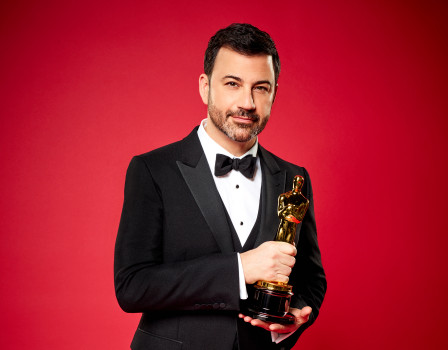
 #21) Michael Jackson’s Thriller (1983)
 #20) So’s Your Old Man (1926)
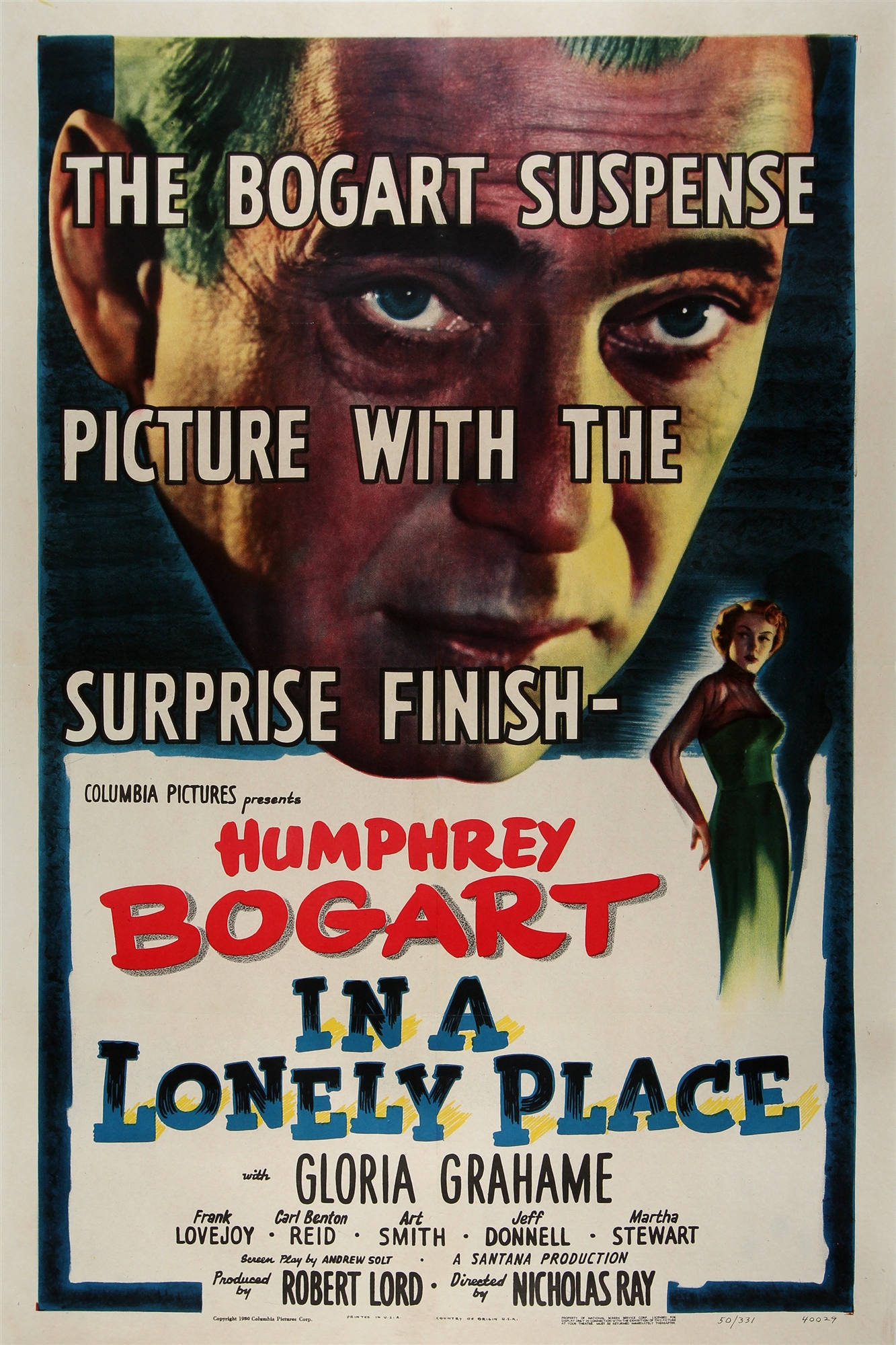 #19) In a Lonely Place (1950)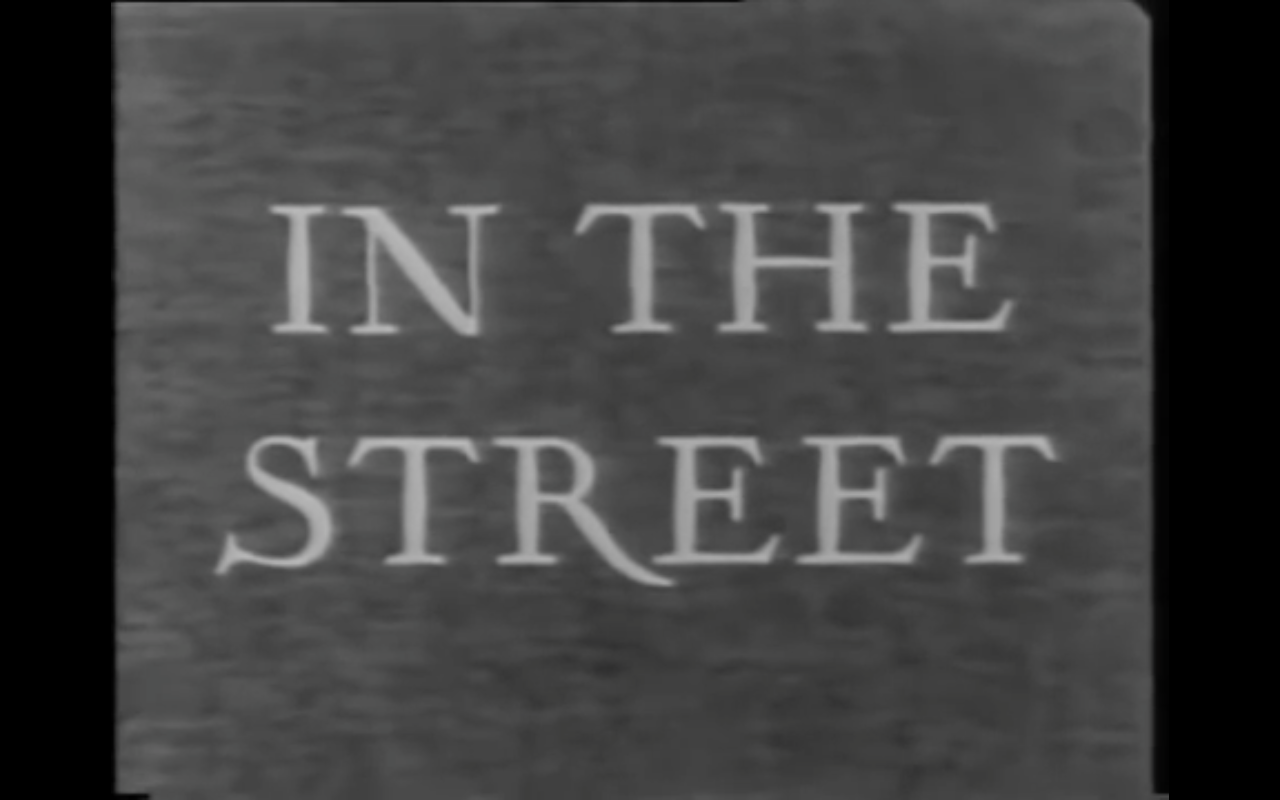
 The Horse's Head