This is the revised and expanded version of my original “Gertie the Dinosaur” post, which you can read here.
The Plot: While visiting the American Museum of Natural History, cartoonist Winsor McCay bets his colleague George McManus that he can bring a dinosaur back to life using 10,000 drawings. McManus takes the bet, and a few months later McCay presents his finished film to their friends over dinner. Through the magic of animation, Gertie the dinosaur appears to peek her head out of a cave, perform a few tricks, and do a little dance. That’s about it plot-wise, but it turns out Gertie and her antics are some of the most influential film animation of all time.
Why It Matters: The NFR gives a rundown of McCay’s “greatly advanced techniques of movement in animation”. An essay by film expert and NFR author Daniel Eagan is an overview of McCay’s career.
But Does It Really?: While easily eclipsed by the more evolved cartoon mice and bunnies we’d get in the ensuing decades, none of modern animation would be possible without Gertie the Dinosaur and Winsor McCay. Even with its crude animation, Gertie’s personality comes through, making for an endearing viewing experience over a century later. A definite yes for “Gertie the Dinosaur”; the benchmark of American animation.
Shout Outs: McCay references his comics “Dream of a Rarebit Fiend” and “Little Nemo“, which had both already become short films at this point.
Wow, That’s Dated: Our knowledge of dinosaurs has evolved quite a bit in the last century-plus, but “Gertie” captured our initial fascination with these creatures following the discovery of dinosaur bones in 1905. Also, there’s something about the term “dinosaurus” that tickles me just right.
Title Track: McCay’s leading dinosaur was originally named Jessie, but the story goes that one day he overheard someone talking to their colleague Bertie, and McCay liked the name, changing it to the feminine sounding Gertie.
Other notes
Winsor McCay had been experimenting with animation in the early 1910s, including an animated version of his “Little Nemo” comic strip. His 1912 short “How a Mosquito Operates” was particularly popular, with animation so realistic that critics at the time insisted he must have traced over photographs of actual mosquitos. To prove he had achieved that naturalism by himself, McCay vowed to make his next animation about a creature that couldn’t be photographed. One meeting with the American Historical Society later, and McCay settled on a dinosaur, a number of which had appeared in his earlier comics.
As the intertitles are happy to inform you, “Gertie the Dinosaur” is comprised of 10,000 drawings! Among the innovations of Gertie’s animation is the use of key frame animation: the drawing of a character’s main poses first to refine the timing, with the “in-between” action being drawn in later. “Gertie” also includes one of the first instance of animation loops; a cycle of drawings that could be easily repeated to save time and money. In this case, it’s Gertie’s swaying movements as she pauses for McCay to give her instructions.
Another interesting note about “Gertie” is that the background is animated by hand for each individual frame! Cel animation on painted backgrounds was still a few years away, so McCay and his assistants had to draw a new background with every new drawing of Gertie. This is also why McCay’s trademark is at the bottom corner of the screen; to help keep the background consistent in every frame.
Apparently the four-winged lizard is there to distract you from the animation of Gertie standing up. No historian that McCay consulted with could confirm how exactly a dinosaur would stand up from a lying down position, so McCay inserted that bizarre looking lizard flying across the screen. I have to admit, it worked for me.
Gertie is so adorable in this, she’s like a puppy; doing tricks and getting easily distracted. It’s endearing. And look her cute little dance! I wouldn’t mind seeing an animation loop of that.
Legacy
“Gertie the Dinosaur” premiered as part of Winsor McCay’s vaudeville performance in early 1914. The original “Gertie” was just the animation, with McCay appearing live on stage and seemingly interacting with his creation (going so far as taming her with a whip!). While this segment was very popular with audiences, McCay’s boss – William Randolph Hearst – didn’t like how much time McCay’s touring was taking away from his job as cartoonist for Heart’s New York American. Although nothing contractually barred McCay from performing, Hearst strong-armed McCay into discontinuing his vaudeville act. Following this setback, McCay filmed the live-action wraparounds of the bet with his friends and released “Gertie” as a standalone feature that could play in theaters across the country.
McCay worked on a sequel around 1921 – “Gertie on Tour” – which saw our heroine wandering around modern cities and being as cute as ever. He completed roughly one minute of animation before William Randolph Hearst put the kibosh on his animation to focus on his newspaper work.
Winsor McCay and “Gertie” were an influence on what is considered the first generation of film animators. Among those influenced was Walt Disney, who many years later invited McCay’s son Robert to re-enact his father’s “Gertie” routine on an episode of the “Disneyland” anthology series. While walking around the studio lot with Robert, Walt allegedly told him “Bob, all this should be your father’s.”
Another Gertie-Disney connection: Gertie has an ice cream shop named in her honor at Disney’s Hollywood Studios in Florida.
An interesting development since the last time we covered “Gertie”: In 2018, animation historians David L. Nathan and Donald Crafton reconstructed the vaudeville version of “Gertie”, recreating the live performance at that year’s Annecy Film Festival in France. I also found this adorable reenactment from the 2014 Annie Awards with Bill Farmer, aka the voice of Goofy.
But of course, Gertie’s biggest influence is on practically every animated animal with a personality we’ve seen since then, to say nothing of her influence on how dinosaurs are portrayed in film. Clever girl, Gertie. Clever girl.
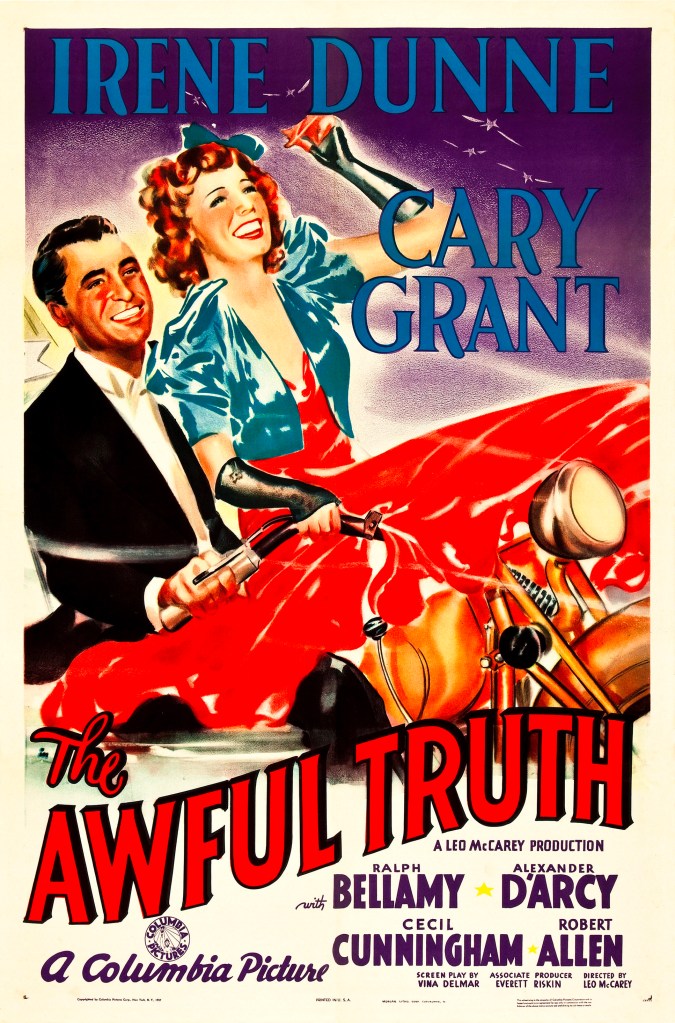
Written by Viña Delmar. Based on the play by Arthur Richman.
Class of 1996
The Plot: Jerry and Lucy Warriner (Cary Grant and Irene Dunne) are a sophisticated, urbane married couple with increasing paranoia about the other’s infidelities. Having enough, the two file for divorce, only fighting for custody of their dog, Mr. Smith (Skippy). A 90-day interlocutory period is enforced before the divorce is finalized, and the Warriners begin seeing other people. Lucy starts a courtship with Midwest oilman Dan Leeson (Ralph Bellamy), while Jerry finds himself in a whirlwind romance with heiress Barbara Vance (Molly Lamont). But of course Lucy and Jerry can’t help but interfere in each other’s business, with plenty of antics and mishaps until these two realize the awful truth.
Why It Matters: The NFR calls it “one of the funniest of the screwball comedies”, and gives a quick overview of its plot and production history.
But Does It Really?: Oh sure. “The Awful Truth” isn’t the definitive screwball comedy, but it’s certainly up there. The film holds up surprisingly well for an 86 year old movie, still packing in plenty of laugh-out-loud moments thanks in part to the undeniable chemistry of its two leads (and their dog). While most of this film’s contemporaries are becoming historic artifacts, “The Awful Truth” remains an entertaining rom-com and a prime example of Classic Hollywood filmmaking.
Wow, That’s Dated: The big one is the interlocutory period for the Warriner’s divorce. While some states still require a “cooling-off” period, most states have done away with interlocutory periods as they rarely helped with a couple’s reconciliation and wasted everyone’s time. That being said, my research found this recent article about how hard/dangerous it is for women to get divorced in America. Perhaps we haven’t progressed as much as we would like to think we have.
Seriously, Oscars?: One of Columbia’s biggest hits of the year, “The Awful Truth” received six Oscar nominations, including Best Picture. The film lost most of its noms to “The Life of Emile Zola“, but took home one trophy: Best Director for Leo McCarey (who allegedly told the crowd that he won for the wrong movie). Irene Dunne’s Best Actress nomination was the third of her eventual five losses in the category, and Ralph Bellamy’s Best Supporting Actor nomination was the only one of his career (Bellamy would eventually receive an honorary Oscar 49 years later).
Other notes
The stage version of “The Awful Truth” premiered on Broadway in 1922 and was an immediate hit. Two film versions followed; a 1925 silent film and a 1929 talkie. The film rights found their way over to Columbia by the late 1930s, and Harry Cohn assigned directing duties of another remake to Leo McCarey – freshly hired at Columbia after being freshly fired from Paramount. McCarey hated the script and previous film versions, but felt the concept had potential to be a hit with Depression era audiences. The script had multiple rewrites (including one by Dorothy Parker), but in the end McCarey threw out practically every draft and created the final film through extensive improvisation with his actors. Cary Grant initially balked at the idea of ad-libbing and pleaded to be taken off the picture, but he eventually warmed up to the idea, quickly becoming by many accounts the cast’s quickest and funniest improviser. “The Awful Truth” was filmed over six weeks in summer 1937 and released that October.
As previously mentioned, the film’s biggest selling point is its stars. Cary Grant is, of course, very Cary Grant in this movie, but it still feels organic and befitting the character. This is my first time covering Irene Dunne for the blog and I was thoroughly charmed by her. Like Cary Grant, Dunne seems so comfortable in this role, gamely tossing out her one-liners and not afraid to be the clown when the scene calls for it. Their talents complement each other on screen, which leads to their believable relationship and therefore a believable movie.
I never realized how much of this movie revolves around the dog. That’s Skippy, better known as Asta in the “Thin Man” film series, and he is being put to work playing some very specific sight gags (I noticed the “hide and seek” shot gets reused a couple times in that scene). During production Skippy was owned/trained by Gale Henry East, a former silent comedy star who spent her later years training dogs with her husband Henry East.
One familiar looking character to me was Armand, Lucy’s voice teacher and possible lover played by Alexander D’Arcy. His suave looks and stiff acting reminded me of the guy who played Gary in the schlocky ’50s movie “Horrors of Spider Island”. Further research concluded that Alexander D’Arcy IS the guy who played Gary in “Horrors of Spider Island”. It amazes me how many people on the NFR have a connection to at least one “Mystery Science Theater 3000” movie.
Ralph Bellamy is the perfect third wheel; his Dan is different enough from Jerry to be a believable alternative for Lucy, but never quite charming enough to be a serious threat. Bellamy will continue his character work as the amiable fiancé of Cary Grant’s ex in another classic of the era: “His Girl Friday“.
My favorite scene in the film hands-down is when Jerry and Lucy run into each other at the nightclub. Jerry has the upper hand for most of the scene, and is delightfully dickish, literally waltzing into frame to ruin Lucy’s night out with Dan. His final line to the waiter may be my favorite in the whole movie. The only part of the scene that didn’t work for me was the shoehorned musical number: “My Dreams Are Gone With the Wind”, an obvious reference to the then-wildly popular novel, soon to be a major motion picture.
It’s always fun watching Cary Grant do his own stunts. Grant started off his showbiz career as a tumbler with an acrobatic troupe, so the pratfalls Jerry does while at Lucy’s recital came naturally to Grant.
Movies from the ’30s always feel like they were filmed in an alternate dimension: everything appears normal, but the attitudes of the day are foreign to a modern audience. “Awful Truth” shows how different courtship was back then: Dan’s been dating Lucy for a few months and they haven’t even kissed yet? Hard to believe there was a time in this country when we were even more prudish.
The last comic highlight for me was Lucy showing up as Jerry’s sister to ruin his engagement. After that the movie runs out of steam as they wreck his car, get involved with the police, and spend the night at her Aunt Patsy’s cabin. We know these two are going to end up back together, but it feels weirdly unfulfilling. And what is the deal with that clock? Why did they use real people instead of just making an actual clock? Did Columbia force this movie to use their Effects department?
Legacy
“The Awful Truth” was both a financial and critical success upon release, and easily made the transition from hit movie to classic. Although “Awful Truth” still gets mentioned in any rundown of screwball comedies, it rarely gets singled out for any specific line or moment, other than its title, which still gets alluded to in pop culture (notably as the title of many a TV episode).
Leo McCarey’s next movie was another classic: 1939’s “Love Affair” (which still somehow hasn’t made the NFR). McCarey would win his second Best Director Oscar in 1944 for another NFR movie: “Going My Way“.
Cary Grant and Irene Dunne got along famously during filming and would reunite for two more movies: 1940’s screwball “My Favorite Wife” and 1941’s melodrama “Penny Serenade”, the later earning Grant his first Oscar nomination. The pair would reprise their roles from “The Awful Truth” one more time for a 1955 episode of Lux Radio Theatre.
“The Awful Truth” got one more film adaptation: the 1953 musical “Let’s Do It Again” starring Ray Milland and Jane Wyman. Not a remarkable film, but a bit in which Milland puts on the wrong hat (also done by Cary Grant in the ’37 version) inspired writer Richard Matheson to write his novel “The Shrinking Man”, which shortly thereafter became fellow NFR movie “The Incredible Shrinking Man“.
Perhaps the biggest influence “The Awful Truth” had on film history was the solidification of Cary Grant’s screen persona. Grant had been coming into his own as a film actor over the previous five years, but “Awful Truth” brings it all together in one performance: sophisticated and charming, while simultaneously funny and physical. Aside from less stunt work, Grant rarely strayed from this persona for the rest of his career.
Today’s oversimplified history lesson: The Attica prison riots. As always, I’m just here to watch the movie, but I encourage all of you to delve deeper into this pivotal moment in American history.
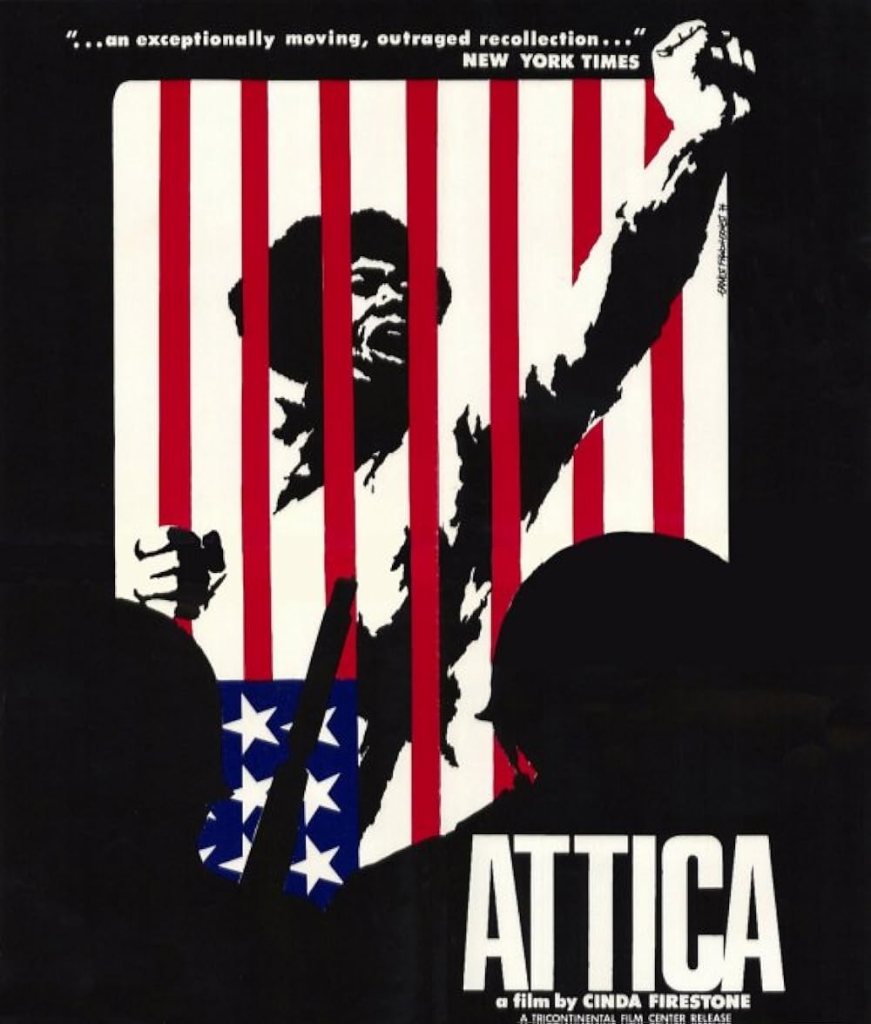
The Plot: By 1971, the Attica Correctional Facility in Attica, New York was overcrowded and subjecting its prisoners to an inhumane and racially discriminatory environment. Following the death of George Jackson, a prominent Black Panther member serving in San Quentin, the Attica inmates gave a list of demands for better living conditions to State Commissioner of Corrections Russell Oswald and New York Governor Nelson Rockefeller. When these demands – pertaining primarily to improved rehabilitation and education for inmates – were not met or even acknowledged, over 1200 inmates revolted and took control of half of the facility, holding 42 officers and employees hostage. From September 9th through 12th, 1971, negotiations between the inmates and Commissioner Oswald progressed, but ultimately reached a stalemate when authorities would not grant the inmates amnesty over the riot. On the morning of September 13th, armed local and state police took control of the facility, opening fire and killing 39 people: 29 inmates and 10 hostages. The story behind these events, as well as the aftermath, are chronicled by journalist/filmmaker Cinda Williams utilizing footage taken during the riots, as well as new interviews with the inmates who were there.
Why It Matters: The NFR write-up is mostly an abbreviated account of the Attica revolt, but Firestone’s “outstanding investigation of the tragedy” is praised.
But Does It Really?: “Attica” is part of a subset of NFR movies that, while not eye witness accounts of historic events, are a succinct encapsulation and reflection (“Point of Order” and “Freedom Riders” are of this ilk). If you’re like me and only know the barebones summary of what happened at Attica, this film is an eye-opener. Firestone chronicles this story while the wounds are still fresh, treating her subjects with respect and making the whole event seem vividly alive. An appreciative pass for “Attica”; not a landmark in documentary filmmaking, but an effective reportage of a current (and ultimately historic) event.
Everybody Gets One: A lifelong advocate, Cinda Firestone began her career as a journalist for independent paper Liberation News Service. Firestone became interested in film while interviewing director Emile de Antonio (of the aforementioned “Point of Order”) and learning he was looking for an assistant. Shortly after seeing news coverage of the Attica riots, Firestone decided to interview the subjects and make a 15-minute documentary about it. Once she learned of color news footage shot during the takeover, Firestone’s film quickly evolved into a feature-length documentary. And yes, that’s Firestone of tires fame. Her grandfather Harvey Firestone founded the company some 75 years before “Attica” was released, and this film allegedly cost Cinda her inheritance.
Seriously, Oscars?: As best I can tell, “Attica” did not play an Oscar-qualifying run, but 1974’s Best Documentary winner was another NFR entry about a controversial political event: “Hearts and Minds“.
Other notes
My first thought in regards to the extensive prison footage in this movie was “How did they film inside a prison?”. It turns out one of the inmates’ demands was that their activities be recorded, so that the outside world could see how things really happened. You have to appreciate the foresight these inmates had. Roland Barnes and Jay Lamarch were camera operators from a local TV station in Buffalo (about a 45 minute drive from Attica), and their footage has been used in many pieces of media about the riots.
The other major component of this film is footage from the McKay Commission; a 10-month investigation into the Attica riots that was ultimately very critical of the state’s handling of the situation. Since almost every non-inmate involved at Attica refused to be interviewed by Firestone for this film (and some were allegedly bullied into not speaking to her), this is the closest we get to hearing their side of the story, albeit the delicately worded version for a court investigation. Most of the interviews from the McKay Commission are intercut with the speakers’ oft-contradictory actions during the actual riot.
Easily the most disturbing footage in this movie comes from right before the police assault and -as described on-screen – “Filmed Through Scope of State Troopers Rifle”. Christ almighty. This footage was intended for a police training film, but was subpoenaed by the McKay Commission and rebroadcast on WNET (New York’s PBS affiliate). Firestone has stated that one of the biggest hurdles of making this film was getting WNET to grant permission for her to use the scope footage.
Ultimately, my takeaway from this movie is that it made me reflect (for the first time, frankly) about our prison system and the people inside it. Like any good movie, “Attica” made me look at an all-too-often marginalized group of people and see their humanity. These inmates are people forced to reside in an oppressive system that treats them like animals and doesn’t do all it can to truly rehabilitate them for their re-entry into society. There is of course an endless amount of nuance that I don’t have the space to engage with here (prison reform, systemic racism, etc.), but in the end I’m grateful to Cinda Firestone and the opportunity to really think about what it was (and probably still is) like to live within the American prison system.
The last line of the movie comes from Frank Smith, Attica inmate and one of the revolt’s leaders, encouraging others to stay alert and active within their society: “Nothing come to a sleeper but a dream.”
Legacy
“Attica” premiered at New York City’s First Avenue Screening Room on April 11th 1974, with proceeds from ticket sales going to the Attica Legal Defense Fund. The film played in a few more major cities before more or less disappearing, although in 2007 it was restored by the New York Women in Film & Television’s Film Preservation Fund and received a small re-release.
Cinda Firestone made three more documentaries throughout the ’70s before pivoting to theater, writing several children’s musicals. Information on what Firestone is currently up to is scarce, but one article mentions her penning a memoir provocatively titled “Debutante to Attica”.
There have been two TV movie adaptations of the Attica riots, both coincidentally earning their directors Emmys: Marvin J. Chomsky’s “Attica”, and John Frankenheimer’s “Against the Wall”.
The Attica riots still get referenced every so often (most often around national conversations about prison reform), but when most people think Attica, they think Al Pacino’s famous improvised outburst during “Dog Day Afternoon“.
There is another documentary about Attica – also titled “Attica” – released in 2021 to coincide with the event’s 50th anniversary. Like the 1974 film, this 2021 version also utilizes footage from the uprising, as well as present-day interviews from those involved. The film earned its director – fellow NFR filmmaker Stanley Nelson – his first Oscar nomination, which was quickly overshadowed by that category’s presentation by Chris Rock and an unscripted appearance by Will Smith.
While there was an improvement in prison conditions in Attica in the immediate aftermath of the riots, many of these new policies were reversed in the ’80s and ’90s following various political “Hard on Crime” campaigns. In an interview in conjunction with the re-release of “Attica” in 2007, Cinda Firestone believed that the present prison conditions were worse than they had been in 1971.
Further Activism: There is so much more information out there about the Attica uprising, and plenty of ways to support its survivors and their families. I recommend checking out the Attica Brothers Foundation, which not only gives financial aid to survivors, but also archives documents and interviews pertaining to the riots.
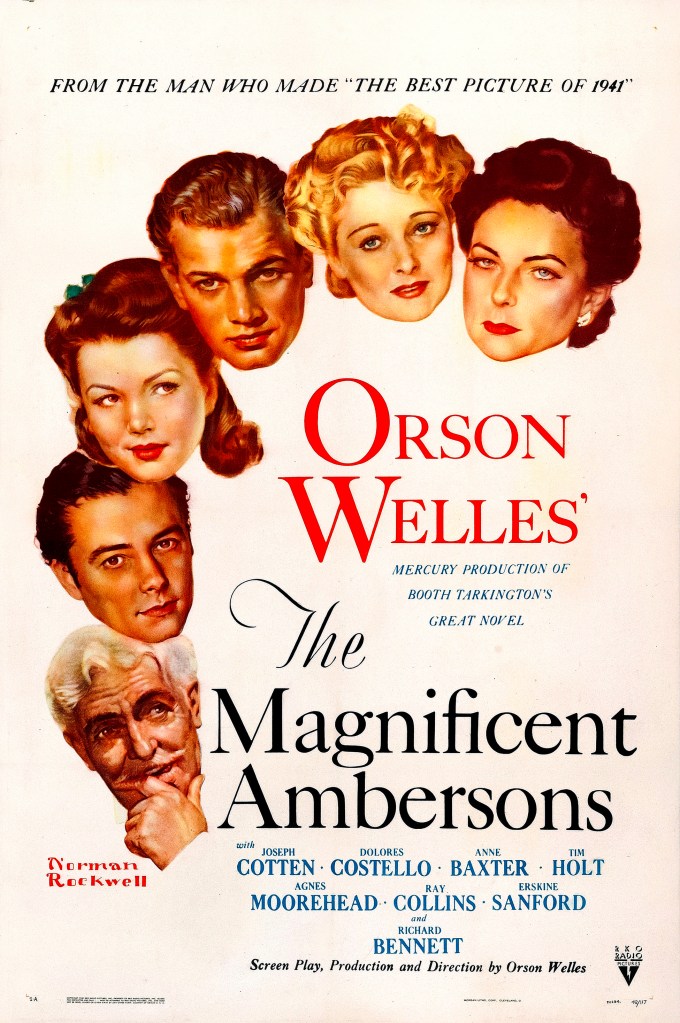
Directed and Written by Orson Welles. Based on the novel by Booth Tarkington.
Class of 1991
The Plot: In a Midwestern town around the turn of the century, the Ambersons are the wealthiest family with the most expensive mansion. In her youth, Isabel Amberson (Dolores Costello) was courted by Eugene Morgan (Joseph Cotten), but she rejected his advances and married Wilbur Minafer (Don Dillaway). Stuck in a loveless marriage, Isabel chose to spoil their son George (Tim Holt!), who grew up to be an arrogant mama’s boy. 20 years later, Eugene returns to town with his daughter Lucy (Anne Baxter), who George takes a liking to, unaware of their parents’ past. Eugene is now a successful automobile manufacturer, and George becomes increasingly agitated by Eugene’s attempts to rekindle things with Isabel. It’s a multi-generational family drama with meditations of how future technology corrupts past innocence, brought to nuanced life by the director of “Citizen Kane“, and completely botched by RKO’s subsequent tampering.
Why It Matters: The NFR write-up calls the film Welles’ “most personal and most impressive”, hailing the “stylish mastery” of the creative team and states that the ensemble includes “some of the best acting…to be found in American movies.”
But Does It Really?: Something had to follow “Citizen Kane”, which I guess makes “The Magnificent Ambersons” the greatest sophomore slump in movie history. Like “Kane”, “Ambersons” is a technically impressive movie that film students and historians love analyzing shot by shot. Unfortunately for Welles, you can only have one breakthrough, and “Ambersons” has enough shared DNA with “Kane” to make comparison unavoidable. Ultimately, I didn’t care for the film: too dense and complex for a first viewing, and not engaging enough to warrant a second. Each individual scene is well-crafted (and beautifully shot), but strung together they don’t make a cohesive movie. Obviously, the studio’s extensive retooling doesn’t help matters at all, which makes “Ambersons” infamously flawed; the ultimate “What If?” of American film. “Ambersons” earns its NFR standing on its reputation, but this one is reserved solely for film buffs enticed into exploring Welles’ filmography.
Shout Outs: An homage that made me laugh out loud; one of the film’s major events is announced on the front page of the Indianapolis Daily Inquirer, the fictional newspaper from “Citizen Kane”. There’s even a column by Jed Leland, Joseph Cotten’s “Kane” counterpart; no doubt a write-up on “dramatic crimiticism”.
Everybody Gets One: Dolores Costello was the best-known of the film’s stars at the time of release, with a film career that spanned over 30 years. Costello was primarily a silent film actor (dubbed “the Goddess of the Silent Screen”), and made the transition to sound film. “Ambersons” was one of her last movies before she retired from show business to focus on her family. Fun Fact: Dolores was married to John Barrymore, and is the grandmother of Drew Barrymore.
Seriously, Oscars?: Despite its troubled production and mixed reception, “Magnificent Ambersons” received four Oscar nominations. The film lost Picture, Supporting Actress, and Cinematography to that year’s juggernaut “Mrs. Miniver” (not to be confused with this movie’s Minifers), and lost Art Direction to another wartime drama: “This Above All”.
Other notes
How did all this trouble start for Orson Welles and his “Magnificent Ambersons”? When Welles signed with RKO in 1939, his initial contract was a two-picture deal that gave him total creative freedom, including final cut. After a few false starts with other projects, Welles’ first film – “Citizen Kane” – was released in May 1941, but by then his contract had lapsed, and he had to renegotiate. Exasperated by his work ethic during “Kane” (and the ongoing controversy with William Randolph Hearst), RKO wrote up a new contract that gave Welles significantly less freedom, including the removal of his final cut privileges. Put a pin in this: It will definitely come back later.
Right out the gate, you can’t help but make “Kane” comparisons. Both movies begin with a silent title card, which goes straight into the movie. It’s a bad idea to start any movie in a way that makes an audience think, “Hey that’s just like in ‘Citizen Kane’.” You’re just setting yourself up for disappointment.
The opening prologue is verbatim the opening passages from the book: a description of the by-gone simplicity of 1870s American life. This sequence does, however, go on for a while. We get it, the past was better! Move on! Also, the whole opening is filmed with a fuzzy haze around the edges, kinda like when I do a bad job of cleaning my glasses.
As expected, Welles excels at economic storytelling, especially in these opening scenes, packing in a lot of character detail and world building in a few choice compositions. Perhaps he packs a little too much in; I don’t know if all this upfront exposition makes the film too top-heavy, or if a 1942 audience was just more literate than me and could follow all of this.
There’s a lot of great dialogue in this movie, but my favorite is George explaining to Lucy his Uncle Jack’s political status: “The family always likes to have someone in Congress.”
I was ready to once again tip my hat to “Kane” cinematographer Gregg Toland and his masterful work filming “Ambersons”, but it turns out he wasn’t this movie’s cinematographer! Toland was unavailable, so Welles selected Stanley Cortez, known for his efficient, economic style, on loan from Universal (while utilizing many of Toland’s assistant camera team). Welles allegedly found Cortez so difficult to communicate with he demoted Cortez to second-unit photographer, letting his assistant Harry Wild preside over the remainder of the shoot.
Tim Holt is obviously the Orson Welles stand-in as George, a spoiled rich kid not-unlike Charles Foster Kane. He’s very good in this, with significantly more screen time than his otherNFRentries, but he lacks the charisma and star power Welles used in “Kane” to successfully engage an audience with his unappealing character. Welles had played George in a “Campbell Playhouse” radio adaptation a few years earlier, and as good as Tim Holt is, you do wish that Welles had taken on the part himself. Coincidentally, Orson’s real first name was George; Orson was his middle name.
Why does George pronounce it “autoMObile”? It’s weird, especially considering that everyone else in the movie says “AUTomobile”. And if he hates cars now, wait until he sees “Two-Lane Blacktop“.
So much of the attention in this film goes to the technical side that I don’t have a lot to say about this cast. Joseph Cotten and Dolores Costello are both good, but also just kinda there. And while Lucy is your standard ingénue part, it’s nice seeing Anne Baxter play something other than Eve Harrington. And she’s a lot better here than she is in “The Ten Commandments“, that’s for sure.
So Orson loves big sprawling mansions and innocent scenes of playing in the snow. Got it. Perhaps Welles’ own Rosebud isn’t too far off from Kane’s.
Longtime readers know I love me a one-take scene, and this movie has plenty of them. “Ambersons” uses a similar technique used later in “The Heiress“: plant the camera and let the characters move around. It prevents scenes from becoming stagnant while retaining the energy of a single take.
Everybody loves Agnes Moorehead as George’s Aunt Fanny, and her character is certainly the most sympathetic of the bunch. Personally, I found her performance too theatrical, but then again most of Ms. Moorehead’s best performances were. Fanny’s famous water heater breakdown scene is especially scenery-chewing, but I’m willing to admit that I wasn’t too invested in the movie by the time that scene came along. Ah well, Moorehead did quite alright without hearing my dramatic crimiticisms.
I went into this viewing knowing of the film’s troubles, most notably the alternate “happy” ending. You can almost pinpoint the exact moment where Welles’ film ends and the studio sanctioned ending begins. It’s not a total 180 from the rest of the movie, but you can sense that things are different. Everyone becomes a little too conveniently optimistic as the film segues into an upbeat conclusion. Somewhat ironically, this new ending is closer to the novel’s ending than Welles’ adaptation.
The end credits are unique in that in lieu of on-screen titles they are all narrated by Orson Welles with visuals matching each craft (a camera for cinematography, etc.) This is very similar to how Welles would narrate the credits at the end of his radio programs. Conspicuously absent is any credit for a film score: Bernard Herrmann requested his credit be removed after most of his score was trimmed by the studio. Also, I noticed the “all persons fictitious” disclaimer at the very end. This had been around in movies for a while at this point, but I suspect its prominent inclusion here is a conscious effort by RKO to avoid another Hearst-esque headache.
Legacy
When “Magnificent Ambersons” finished filming in January 1942, Welles flew to Brazil to work on his next movie “It’s All True”. By February, editor Robert Wise finished a rough cut and sent it to Brazil for Welles’ feedback (Wise wasn’t able to fly there himself due to wartime travel restrictions). This cut ran roughly 132 minutes, with Welles intending to do some trimming after a pair of sneak previews in March. The audience reception at both previews were extremely mixed (RKO president George Schaefer called it the worst screening he had ever been to) and a nervous RKO, too impatient to wait for Welles to return from Brazil, exercised their contractual right to cut the final film. Over 40 minutes of footage was deleted (up to 50 by some accounts), surviving sequences were trimmed and re-ordered, and multiple scenes were re-shot that April without Welles’ involvement or approval, including the aforementioned new ending. The final film was released in July 1942, and while it did okay with critics and audiences, it failed to recoup its investment, and Welles was unceremoniously fired from RKO.
The only good thing to come out of the “Ambersons” re-shoots is that it was the first directorial work for Robert Wise, who would shortly thereafter pivot to directing, with such classics as “West Side Story” and “The Sound of Music” in his future. Welles felt betrayed by Wise filming the re-shoots, and the two did not speak to each other for 40 years, only reconciling shortly before Welles’ death.
As Orson Welles started to get a reappraisal from the film world in the 1950s, so did “Magnificent Ambersons”, with some scholars even declaring it better than “Citizen Kane”. Although he always resented what RKO did to “Ambersons”, Welles eventually came around to accepting the final film, even tearing up when watching it on TV. In the early 1960s, Welles attempted to film an epilogue with the surviving cast, but the project fell through.
The deleted portions of “Magnificent Ambersons” have been declared the “holy grail” of lost film footage. All signs point to the scrapped footage being destroyed by RKO to free up space in their vaults, but rumors of a surviving rough cut in Brazil still persist. There have been multiple efforts over the decades to find the missing footage, and even a few attempts at recreating the lost footage using the film’s continuity script, but so far nothing has come up. I’m surprised there hasn’t been a #ReleaseTheWellesCut campaign, though I guess first there needs to be a #FindTheWellesCut campaign.
The closest we’ve ever gotten to the original cut of this film is a 2002 TV movie using Orson Welles’ original screenplay. Directed by “Like Water for Chocolate” helmer Alfonso Arau, this “Ambersons” still manage to deviate from both of its source materials and was quickly forgotten.
And finally: the only reference to “Magnificent Ambersons” in pop culture that I can think of off-hand is an episode of “Mystery Science Theater 3000” where Tom Servo convinces himself he’s watching “Ambersons” to get through the bad movie they’re riffing on. “I don’t even like ‘The Magnificent Ambersons’!” You and me both, Servo.
Further Viewing: This is not the first time “The Magnificent Ambersons” was adapted for film. 1925’s “Pampered Youth” was an earlier stab at a film version, and like Welles’ later incarnation, most of this film’s footage is lost. I’m beginning to think this book is cursed or something.
The Plot: Scott Nixon is an insurance salesman and amateur filmmaker hailing from Augusta, Georgia chronicling a specific element of his travels across America. Filmed over the course of 20 years, “The Augustas” is Nixon’s recording of over 30 towns across the country – all of them named Augusta. With quick peeks at various small towns and a wry sense of humor throughout, “The Augustas” goes beyond its gimmicky premise to become a window into an all-but-forgotten slice of American life.
Why It Matters: The NFR gives a rundown of Scott Nixon and the film, calling Nixon an “amateur auteur” that brings these cities “together under the umbrella of Americana.”
But Does It Really?: Man, the NFR loves their amatuer filmmakers. I enjoyed “The Augustas” as a fun, breezy travelogue; a vacation to both place and time. But what I found especially fascinating in my research were historians trying to find a deeper meaning to all of this; the subconscious connective threads Nixon is trying to show us by highlighting these Augustas. Here’s my hot take: Maybe the man just liked the name Augusta and was amused by how many other towns shared the name. I’m all for preserving someone’s art, but don’t overthink it, especially when it’s a hobby. I can give “The Augustas” a pass for NFR inclusion as a creative twist on the standard home movie, as well as recognition of someone spending their free time documenting a niche that makes them happy: something I can definitely relate to.
Everybody Gets One: As always, my thanks to the Center for Home Movies, especially an essay Heidi Rae Cooley which rounds up the little information that’s out there about Scott Nixon. As previously mentioned, Nixon was a traveling insurance salesman from Augusta, Georgia, and a member of the Amateur Cinema League (like fellow NFR artists Mary Marvin Breckinridge and Miriam Bennett). According to his son Cobbs Nixon, Scott was so fond of the name Augusta he wanted to name his daughter Augusta Georgia Nixon, but was talked out of it. Side note: Scott Nixon was of no relation to Richard Nixon, nor did he ever suspiciously delete any of his recordings to avoid criminal charges.
Title Track: During my viewing I began to wonder if all of these Augustas are named after the same person, but it turns out Augusta was a much more common name 300 years ago. Augusta, Georgia was named for Princess Augusta of Saxe-Gotha, the Princess of Wales who married Prince Frederick in 1736, the same year her Georigan namesake was established. Many of the other stateside Augustas are named after family members of their founders, typically their wife or daughter. Interestingly enough, Augusta, Illinois was named after Augusta, Georgia because co-founder Joel Catlin had a memorable trip there! Now we’re getting meta.
Other notes
Right out of the gate, you know that Nixon has a creative side to him. The first shot of “The Augustas” is a silent movie-era intertitle reminding men not to smoke, spit, or use profane language during the feature. A good sign that this won’t be your ordinary vacation film.
My main takeaway is that in the early 20th century all Augustas were small towns, with the possible exception of Augusta, Maine; the state’s capital and the only Augusta I could have named before this viewing. So much of what Nixon chronicles in the Augustas are farms and main streets and local businesses. I suspect a modern remake wouldn’t be as quaint, and because most of these Augustas are on the east coast there would be far more Dunkin’ Donuts.
As technology changed over Nixon’s two-decade shoot, different types of film stock crop up in this movie: 8mm, 16mm, black-and-white, color. They appear somewhat randomly throughout, which makes for an exciting watch. I don’t know what kind of color film stock Nixon was using, but it’s beautiful to look at. There’s a vividness to the color, yet it still feels realistic. You get the sense that this is what these towns actually looked like. On a similar note: The back and forth between black-and-white and color is fun. It’s like if Dorothy took home movies of both Kansas and Oz.
A few of the Augustas on the list are represented either by an image of its spot on a map, or its name on a train schedule. I guess that counts. It’s like a placeholder shot; as if Nixon is saying “Take my word for it, I was there.”
Those train schedules lead me to believe that this was Nixon’s main mode of transportation. Some of these shots feel like Nixon got off the train, took a few shots of nearby buildings, and then hopped back on before his train left the station.
About halfway through, Nixon starts getting flexible with what counts as an “Augusta”. We get Fort Augusta, North Augusta, South Augusta, New Augusta, Augusta Springs, and Augusta County. My favorite is West Augusta, Virginia, followed somewhat confusingly by Augusta, West Virginia.
I imagine it was fun to watch this with Scott Nixon providing the color commentary. Obviously I did not know the man, but I bet he had a few well-crafted one-liners to toss off during a screening.
Scott Nixon saves the best Augusta for last: a shot of a hardy phlox augusta, seemingly a cross-breed of two different genera of flower. I’ll admit I didn’t get the joke on first viewing, but then again I’m not a plant person. I had to look up each individual word in the phrase “hardy phlox augusta”.
Legacy
Scott Nixon continued making films for the rest of his life, including a few about his other passion: trains. When he died in 1980, his films were donated to the Augusta Museum before becoming part of the University of South Carolina’s Moving Image Research in 2000. “The Augustas” appears to be a favorite among historians and amateur film enthusiasts, receiving a restoration in 2008 thanks to Colorlab and a grant from the National Film Preservation Fund.



 The Horse's Head