Directed by Louis J. Gasnier, George B. Seitz, Leopold Wharton, and Theodore Wharton
Written by Seitz, Charles W. Goddard, Basil Dickey, and Arthur B. Reeve. Based on the “Craig Kennedy” stories by Reeve.
Class of 1994
Today’s post is perhaps the biggest placeholder post I’ve ever written. Of this serial’s 14 episodes, I was only able to track down four online. As always, if and when the other 10 episodes show up, I’ll update this post.
The Plot: Elaine Dodge (Pearl White) is an amateur sleuth who teams up with scientific detective Craig Kennedy (Arnold Daly) to find out the real identity of The Clutching Hand, a mysterious masked man who killed her father. Both Kennedy and the Clutching Hand have state-of-the-art gadgetry at their disposal; Kennedy has such things as the Detectascope and the Telegraphone to help solve the case, while the Clutching Hand has things like the Death Ray for…death. Can Elaine solve the case without becoming the Clutching Hand’s next victim? I genuinely don’t know, because most of this serial is not readily available online.
Why It Matters: The NFR gives the usual rundown, and calls the serial “superior” to its predecessor “The Perils of Pauline”, citing its “sophisticated camera work and production values.” An essay by silent film expert Margaret Hennefeld gives a more thorough synopsis, which is very helpful in this case.
But Does It Really?: We have a rarity on the blog: my judgment on this film’s NFR standing is inconclusive. I do not have enough available footage for me to make the call. This is not helped by my decision to watch this so shortly after “The Perils of Pauline“, giving this serial a feeling of sameness. Befitting a placeholder post, I’ll give “Exploits of Elaine” a placeholder pass: I’m sure it has enough value to warrant its early spot on the NFR, but only watching the rest of this will tell me for sure.
Everybody Gets One: Although all but forgotten today, Arthur B. Reeve was a celebrated mystery writer in his day, with Craig Kennedy being hailed as “the American Sherlock Holmes”. Reeve wrote the Craig Kennedy short stories from 1910 to his death in 1936. “Elaine” was one of Reeve’s first film projects, and he concurrently wrote a book adaptation to coincide with the release of the serial. While filmmaking was on the move from New York to Hollywood, Reeve opted to stay behind in New Jersey, pivoting to anti-racketing campaigns and covering such news events as the murder of William Desmond Taylor.
Other notes
The four episodes I was able to track down for this viewing were “Chapter Two: The Twilight Sleep”, “Chapter Nine: The Death Ray”, “Chapter Ten: The Life Current”, and “Chapter Fourteen: The Reckoning”. This means that I wasn’t able to watch the first episode, so I don’t get any of the proper setup to fully enjoy this serial.
Also not helping is that three of these episodes are only available online via a French print, meaning that all intertitles and exposition are in a language I can only comprehend on a rudimentary level. It’s times like this I wish I had paid more attention in my high school French class. The one episode that was in English was in such poor quality that I couldn’t read much of those intertitles either. Given the lack of visual storytelling in early film, you can imagine how frustrating this whole experience was for me.
“Elaine” has at least one improvement over “Pauline” in that the cliffhangers are actual cliffhangers, with Elaine still in peril at the end of each episode. The final shot of every episode is a close-up of the Clutching Hand’s clutching hand; which looks remarkably like the hand on the “Greed” poster.
Chapter 10 is noteworthy because Elaine actually dies at the end! Though she is brought back to life in Chapter 11, or so I’m told.
I gotta say, from what I’m seeing, very few of these exploits are Elaine’s. I would argue they belong more to Craig, with Elaine being a passive “damsel-in-distress”. But then again, that is to be expected in a 1910s serial.
In Chapter 14 we at last learn the identity of the Clutching Hand when his mask is taken off and he is revealed to be…who is this guy? I assume it’s someone who was in an earlier episode, but without the right context I don’t know who this is or why he’s the bad guy.
Legacy
“Elaine” was a hit with audiences, prompting two sequel serials in 1915: “The New Exploits of Elaine” and “The Romance of Elaine”.
Will the missing episodes ever be uploaded online? And if so, will they be in English? Tune in next time for what I’m calling “The Lost Exploits of Elaine”!
It’s the copper anniversary! Why are these always so creepy looking?
Today marks the 7th anniversary of the Horse’s Head blog (or maybe it’s tomorrow, I genuinely don’t remember anymore). For seven years, I have not only chronicled my attempt to watch every movie on the National Film Registry, but I’ve also submitted my own nominations for films I believe should be on the list. So far, 36 films I have submitted have been inducted (23 of them inducted in the year I nominated them). Most of my selections are iconic films that I’m sure would have made it on without my help, but there are two that haven’t made the cut yet that I feel need a little extra endorsement. These two movies are far from the greatest movies of all time, but they are personal favorites that I feel are worthy of a place in the Registry. For your NFR consideration I give you “It’s a Mad, Mad, Mad, Mad World” and “Original Cast Album: Company”.
By 1963, director Stanley Kramer was Hollywood’s king of the Important Movie, with “The Defiant Ones”, “Inherit the Wind”, and “Judgment at Nuremberg” under his belt (plus he produced “High Noon“). When New York Times critic Bosley Crowther challenged the serious-minded Kramer to make a comedy, Kramer accepted the challenge, and vowed to make the film comedy to end all film comedy. The result was “It’s a Mad, Mad, Mad, Mad World”, an epic in which an old man’s dying words about a hidden fortune spark a race across California to find $350,000. Everything about “Mad World” is big: the cast is packed with the most famous comedians of the 20th century (everyone from Buster Keaton to Jerry Lewis), the action contains some of the most impressive stunt work in movie history, and the film’s widescreen Ultra Panavision 70 was so wide Hollywood’s Cinerama Dome was built specifically to show the film. “Mad World” may not get as many laughs at it did 60 years ago, but it is still an impressive undertaking that deserves to be preserved and enjoyed.
By its very nature, theater is hard to document. No recording can replicate the feeling of watching a live performance, and while the NFR has plenty of film adaptations of plays and musicals on the list, it doesn’t have anything that documents the kinetic energy of American theater. That’s why I always push for 1970’s “Original Cast Album: Company”. Legendary documentarian D.A. Pennebaker takes his camera into New York’s Columbia 30th Street Studio to witness the cast album recording for Stephen Sondheim’s latest Broadway musical “Company”. Originally filmed as the pilot for a proposed TV series, “Original Cast Album: Company” chronicles the marathon 14-hour recording session of the entire album, complete with in-the-moment adjustments from Sondheim himself as well as record producer Thomas Z. Shepard. The climax of the movie is performer Elaine Stritch trying and failing to nail her signature song “Ladies Who Lunch” in one take. A cult classic among theater fans, “Original Cast Album: Company” is a rare glimpse into part of the creative process of putting on a Broadway musical, the kind of “lightning in a bottle” preservation that every documentary on this list strives for.
Both “It’s a Mad, Mad, Mad, Mad World” and “Original Cast Album: Company” stand on their own singular piece of ground, and are therefore worthy of inclusion in the National Film Registry. I will keep pushing for these movies every year until that December morning when I read that the NFR finally made the right decision. As always, you the reader can nominate any American movie you want for NFR consideration. Just head over to the NFR’s official nomination page, and be sure to check out their list of movies not on the Registry for reference. And if I may, please also visit my own For Your Consideration page for the countless other movies and stars I have lobbied for over the years.
OR “Nope, Definitely Not Doing a Pun-Based Subtitle for ’12 Years a Slave’. There’s No Way I Can Thread That Needle.”
Directed by Steve McQueen
Written by John Ridley. Based on the memoir by Solomon Northup.
Class of 2023
The Plot: Solomon Northup (Chiwetel Ejiofor) is a free Black man living in Saratoga Springs, New York with his family in 1841. An accomplished violinist, Northup is hired by two men (Scoot McNairy & Taran Killam) to play for their circus in Washington D.C., but the men are con artists who drug Northup and sell him into slavery. Shipped to New Orleans and forced to take the name “Platt”, Northup is sold to plantation owner William Ford (Benedict Cumberbatch). While Ford is a benevolent slave owner (if such a thing is possible), Northup’s frequent clashes with his White overseers leads to a near-lynching. Northup is sold to Edwin Epps (Michael Fassbender), another plantation owner who is more abusive to his slaves, particularly his top cotton picker Patsey (Lupita Nyong’o). Despite the horrors he experiences on a daily basis, Solomon never gives up hope that he will regain his freedom.
Why It Matters: Weirdly enough, the NFR’s official write-up is just a rehash of the movie’s plot and Oscar tally. The blurb on the NFR’s Class of 2023 press release, however, calls the film “raw, visceral” and “[o]ne of the key films of the 2000s”.
But Does It Really?: I never got around to seeing “12 Years a Slave” during its original run, but I have to say it was worth the wait. Slavery is always a difficult subject matter to create art from, but in the hands of Steve McQueen “12 Years a Slave” is a gripping, honest depiction of slavery that never shies away from the horrific elements but also never sensationalizes them. Aided by McQueen’s direction, a terrific cast, and some beautiful cinematography, “12 Years a Slave” – for better or worse – hasn’t aged a day, and will be an important viewing for any film lover for years to come.
Everybody Gets One: Born and raised in London, Steve McQueen became interested in film while studying at University of London’s Goldsmiths College. His early works were experimental shorts, including 1997’s “Deadpan”, in which he recreated Buster Keaton’s famous house-falling-around-him stunt. McQueen started gaining attention with his first feature, 2008’s “Hunger” about the Irish hunger strike of 1981. It was at a screening of “Hunger” where he met writer John Ridley, and the two began collaborating on a screenplay about American slavery, a topic they both felt was underrepresented in films. It was McQueen’s partner Bianca Stigter who suggested they adapt “12 Years a Slave”. And for the record: No, Steve McQueen was not named after the popular movie star with the same name. In fact, McQueen rarely acknowledges the connection in interviews, though he admitted recently that he likes “The Magnificent Seven“.
Title Track: It’s worth noting here that while there may have been some embellishment in Solomon Northup’s memoir (attributed to Northup’s copyist David Wilson), research has shown that the book “12 Years a Slave” is historically accurate. The film itself is a faithful adaptation, and considered by historians one of the most accurate portrayals of slavery in film.
Seriously, Oscars?: Going into the Oscar race, “12 Years a Slave” received nine nominations, one behind “American Hustle” and “Gravity”. Although “Gravity” swept the tech awards, “12 Years” prevailed with three important wins: Best Picture, Adapted Screenplay, and Supporting Actress for Lupita Nyong’o. With its win, “12 Years” became the first movie by a Black filmmaker to win the Best Picture Oscar. Ceremony host Ellen DeGeneres summed up the film’s frontrunner status in her opening monologue: “So many different possibilities. Possibility number one: ’12 Years a Slave’ wins Best Picture. Possibility number two: You’re all racists.”
Other notes
“12 Years a Slave” was filmed over the course of six weeks in and around New Orleans in summer 2012. To keep costs down, the film was shot with only one camera, forcing McQueen and cinematographer Sean Bobbitt to be more decisive with their compositions, rather than just figuring it out in the edit.
I have to mention that screenwriter John Ridley got his start writing for such sitcoms as “Martin” and “The Fresh Prince of Bel-Air”, and he co-wrote the screenplay for underrated blaxploitation parody “Undercover Brother”. Proof that every artist is one good movie away from winning an Oscar.
Man, what a cast. Of course, it all begins and ends with Chiwetel Ejiofor, who quietly holds the film together with an impressively subtle performance. There’s a lot of the movie where Solomon is sidelined by bigger, flashier performances, but thanks to Ejiofor you know that it’s a deliberate choice; Solomon is always observing, choosing his words and actions very carefully.
The run of “Who isn’t in this movie?” continues with SNL cast member Taran Killam (giving me some Jebidiah Atkinson vibes), followed by an all-too-brief appearance by the late great Michael K. Williams. Also, blink and you’ll miss Quvenzhané Wallis as Solomon’s daughter Margaret. By the time “12 Years” was released, Wallis had become the youngest Best Actress Oscar nominee in history with “Beasts of the Southern Wild”.
Maybe I’ve just become desensitized to movie violence over the years, but while the abuse directed towards the slaves in “12 Years” is severe (and at times very hard to watch), I feel like it was restrained compared to other films. Even in its most intense moments, “12 Years” strives for a grounded reality. Compare that to a movie like “Django Unchained”, which goes for an amplified, cinematic version of slavery that turns into a full-on revenge fantasy. Obviously “12 Years” isn’t going for that, but if you were able to stomach the violence of “Django”, you can handle “12 Years”. On a similar note, while the n word is thrown around quite a bit here, it is nowhere near the amount in “Django”.
We get another batch of familiar faces once Solomon is sold to the Ford plantation. There’s Paul Giamatti, Benedict Cumberbatch, and Paul Dano, but I was pleasantly surprised by seeing Adepero Oduye, aka Lee from “Pariah“. It’s been a full year since I watched “Pariah” for the blog, and I was genuinely happy to see Oduye again. Her time in “12 Years” as fellow slave Eliza is brief but impactful, and I’m glad she now has two movies on the NFR. Side Note: Adepero’s on-screen daughter is played by Storm Reid, who while I was writing this won an Emmy for her performance on “The Last of Us”. This cast is on a roll!
Between this and “There Will Be Blood”, there was a point in time when the movies loved beating the shit out of Paul Dano.
The scene where Solomon is almost lynched and left hanging from a noose for hours is definitely an indelible moment. If one image from this movie stays with me, it will surely be Solomon trying to reach the ground with his tiptoes while he goes unnoticed and unassisted by the rest of the plantation.
Another round of familiar faces once we arrive at the Epps plantation. There’s of course Michael Fassbender, giving as much nuance as you can to a Simon Legree-type. Side note: Fassbender looks here like if Joaquin Phoenix played Vincent Van Gough. I’m also a fan of the brief supporting turns by Sarah Paulson and Alfre Woodard, Woodard in particular nailing her one scene as a preferred “house slave”. Also, shout out to Ryan Murphy, who rearranged the production schedule of “American Horror Story: Asylum” so Sarah Paulson could be in this movie.
This is the feature film debut of Lupita Nyong’o! It’s incredible to think about the amazing film career she has already racked up in only the last ten years. It’s easy to see how Nyong’o won the Oscar for this: Her Patsey is the soul of the movie, somehow maintaining her optimism and faith in humanity despite all the cruelty around her. In both this film and in real life, what happened to Patsey after the events of “12 Years a Slave” is unknown.
The other aspect that struck me about the film is the aura of immediacy about it. So many films dealing with America’s racist history present it as “that was then”; something that has already been overcome. Somehow in McQueen’s direction there is a sense of urgency: this is then and now. I don’t know how, but while obviously a period piece, the film contains a modern sensibility, making the viewer aware that while legalized slavery is long gone, the horrible treatment of our Black citizens prevails.
The scene where Northup is forced to whip Patsey is easily the most intense in the movie, captured brilliantly in one seemingly uninterrupted take. Watching Patsey’s spirit finally get broken is just as distressing as the physical violence she endures.
My one complaint about this movie is the same as everyone else’s: Brad Pitt. To be fair, Solomon Northup’s freedom was obtained as seen in the film: He got Canadian abolitionist Samuel Bass to deliver letters to his family giving his whereabouts, and local authorities arrived to free Northup. Within a film, however, this plays out as a White savior deus ex machina, especially when that savior is Brad Pitt, the only bona fide movie star in the cast. Pitt (a producer of the film under his “Plan B” company) has stated that he didn’t want to act in “12 Years”, but played the part in order to help secure more funding; making this ending one of the unfortunate casualties in the never-ending battle of art vs. commerce.
This is one of the rare movies based on real events in which I appreciated the obligatory epilogue text. Without it, the film has a happy ending wrapped in a bow, but the text about Northup’s unsuccessful suit against those who kidnapped him reminds us that real-life evil rarely gets punished.
“12 Years a Slave” is dedicated to Philbert John McQueen, Steve’s late father.
Legacy
“12 Years a Slave” was a success upon its release in 2013, receiving critical praise, a strong box office, and the aforementioned Oscars. In the decade since, the film is routinely lauded as one of the best films of the 21st century (so far). “12 Years” has also joined the ranks of films inducted into the NFR in their first year of eligibility.
Steve McQueen’s follow-up to “12 Years a Slave” was 2018’s “Widows”, based on the 1980s British crime series. He also directed the anthology series “Small Axe”, and his next film – “Blitz” – will be about the bombings in London during World War II.
Further Viewing: “Solomon Northup’s Odyssey”, a 1984 TV movie also based on “12 Years a Slave”, directed by fellow NFR filmmaker Gordon Parks.
National Film Registry day is seriously becoming more and more like Christmas morning for me. I’ve been up since about 4:30 this morning because, to quote a very niche Disney World commercial, I was too excited to sleep. This year’s selections for the Registry definitely did not disappoint, and I’ve enjoyed spending time today learning about each film while injecting emergency caffeine into my system. Here at last is the NFR Class of 2023 in chronological order:
A Movie Trip Through Filmland (1921)
Dinner at Eight (1933)+
Bohulano Family Film Collection (1950s-1970s)
Helen Keller: In Her Story (1954)
Lady and the Tramp (1955)+
Edge of the City (1957)
We’re Alive (1974)
Cruisin’ J-Town (1975)
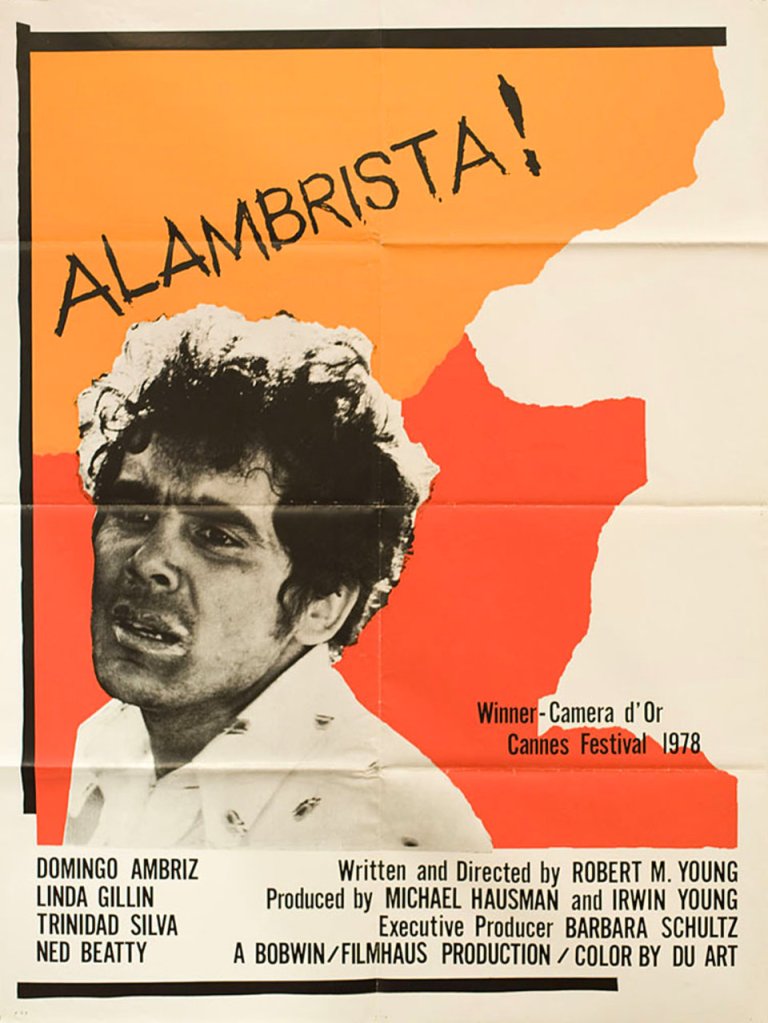
¡Alambrista! (1977)
Passing Through (1977)
Fame (1980)+
Desperately Seeking Susan (1985)
The Lighted Field (1987)
Matewan (1987)
Home Alone (1990)*
Queen of Diamonds (1991)
Terminator 2: Judgment Day (1991)+
The Nightmare Before Christmas (1993)*
The Wedding Banquet (1993)
Maya Lin: A Strong Clear Vision (1994)
Apollo 13 (1995)
Bamboozled (2000)
Love & Basketball (2000)
12 Years a Slave (2013)*
20 Feet from Stardom (2013)
* Movies I nominated this year
+ Movies I have nominated in previous years
Other notes
Three of my 50 nominated movies made the cut this year, a step up from last year’s two, and more or less my yearly average. According to the NFR press release, 6,875 titles were submitted by the public this year, so getting three on there is pretty damn good.
Maybe I’ve just been doing this for too long, but I look at this year’s crop and I think “Yep, that’s an NFR list”. As usual, the board makes an eclectic selection of list-worthy movies, but nothing really sticks out to me as a surprise. These are all movies that are either justifiably iconic, made by filmmakers with previous entries, or highlight independent and experimental work. The only one that surprised me in a good way was “20 Feet from Stardom”, a movie I enjoyed when I saw it 10 years ago and look forward to revisiting.
Of the less-familiar titles, the one that intrigues me the most is the “Bohulano Family Film Collection”, filmed by a family from my hometown of Stockton, California. I’m genuinely curious to see what Stockton looked like before my time (my family moved there in the late ’80s), and equally curious to find out if I have any six-degrees-of-separation from this family. It’s astonishing to me that my hometown is getting some recognition on this list beyond “Cool Hand Luke” and that one shot in “Raiders of the Lost Ark“.
Also noteworthy is “¡Alambrista!” the only one of Representative Joaquin Castro’s 27 submissions to make the cut. I don’t know how I feel about getting more of my submissions on this list than Representative Castro’s much more publicized selection.
It’s nice to see Helen Keller represented via her Oscar-winning documentary, though I worry this really messes up my chances of getting “The Miracle Worker” on this list. I’ll keep fighting for you, Patty Duke!
As best I can tell, the only double-dippers from these movies are actors Catherine O’Hara and Alfre Woodard. Amazingly, this is the first NFR representation for either of them. Welcome to the club!
Congratulations to Damon Wayans, the first Wayans brother on the NFR (although his sister Kim made the cut last year). And apologies to Marlon Wayans, who I predicted would be the first Wayans brother to make the list. Clearly, no one on the NFR board is ready to re-watch “Requiem for a Dream”.
Not to gripe too much about what didn’t make the cut, but the NFR has once again excluded any of Jane Fonda’s filmography, and her current NFR total remains at 0. I’m beginning to think there’s a conspiracy behind all of this. Is she being kept off the list because she was married to Ted Turner? Hasn’t she atoned for that yet?
And finally, I know that in the grand scheme of things with all of the horrible atrocities happening in the world right now, my little movie blog “don’t amount to a hill of beans”. That being said, if reading any of my posts has given you even a moment of respite or happiness, I’m grateful to have added a little bit of good into the world. Thanks for your continued support, and my wish for 2024 is peace and freedom.
Written by Mark Fergus & Hawk Ostby and Art Marcum & Matt Holloway. Based on the Marvel Comics characters created by Stan Lee, Don Heck, Larry Lieber, and Jack Kirby.
Class of 2022
The Plot: Tony Stark (Robert Downey Jr.) is a billionaire weapons manufacturer for the US military, equally famous for his genius inventions and playboy lifestyle. While in Afghanistan to demonstrate his latest missiles with his friend Lt. Col. James Rhodes (Terrence Howard, for now), Stark is injured in an attack and captured by a terrorist group that wants him to build one of his missiles for them. Supported by fellow captive Dr. Ho Yinsen (Shaun Toub), Stark instead designs a technologically advanced suit of armor to escape. The experience is a life-changer for Stark, who vows that Stark Industries will cease making weapons, much to the dismay of company manager Obadiah Stane (Jeff Bridges). With the help of his assistant Pepper Potts (Gwyneth Paltrow), Stark continues to refine the suit, with an aim at using it to help civilians. The press dubs this mysterious new superhero Iron Man, a name – and a franchise – that sticks.
Why It Matters: The NFR calls the film “a superhero film that transcends and elevates the genre”, praising the work of Favreau, Downey, and the effects and production design teams. The write-up also includes a quote from Marvel Studios president Kevin Feige, who declares that the movie’s NFR standing proves that “it has stood the test of time”. Dude, it’s only been 15 years. Cool your jets.
But Does It Really?: It was only a matter of time before the Marvel Cinematic Universe (MCU) made the National Film Registry (NFR), and as the one that started it all, “Iron Man” is a natural choice. I saw “Iron Man” for the first time in 2012, and it was odd all these years later re-watching this movie under the lens of “significant American film”, and equally weird trying to treat this as the stand-alone movie it would have been in 2008, rather than as a small part of a larger movie experience. That is, however, a point in favor of this film’s legacy: It changed how we watch movies, especially big potential franchises. On its own, “Iron Man” is a fun outing boosted by Robert Downey Jr.’s immediately likable performance. The film can be a bit slow-going at times, but ultimately its emphasis on Tony Stark rather than excessive world-building makes it more palatable for a wider audience (including this one with only a passing knowledge of Marvel). “Iron Man” succeeds at being a superhero origins movie that puts its characters first, and its inclusion in the NFR is – to quote another undying franchise – the first step into a larger world.
Shout Outs: Look closely when Pepper downloads the files from Tony’s computer: a document pertaining to Obadiah Stane is labeled “MSC Lebowski“.
Everybody Gets One: A USC film graduate and a lifelong Marvel fan, Kevin Feige joined Marvel Studios in 2000 and quickly rose in rank from associate producer to co-producer to President of production in 2007. During the early to mid-2000s Marvel had licensed out the film rights to its various characters to other studios (X-Men to Fox, Spider-Man to Sony, etc.) and wanted to make its own movies. Recognizing that Marvel still owned the film rights to its Avengers characters, Feige pitched an ambitious film project: multiple stand-alone films starring individual characters that would culminate in an Avengers film with everyone, creating a shared universe akin to the Marvel comics of the ’60s. Iron Man was selected first because Marvel had just gotten the film rights back from New Line Cinema. Also making their NFR debuts are director Jon Favreau (another self-professed Marvel geek), and actors Robert Downey Jr., Gwyneth Paltrow, and Terrence Howard.
Wow, That’s Dated: All of Iron Man’s Vietnam origins of the 1960s were transplanted to 2000s Afghanistan. Plus a reference to MySpace and a cameo by Jim Cramer of “Mad Money”.
Title Track: The Black Sabbath metal classic “Iron Man” plays during the end credits of this movie. For the record, the song had nothing to do with the character, as no one in the band had any knowledge of American comic books. Plus keep an ear out for the “Iron Man” animated series theme song a few times in the film.
Seriously, Oscars?: Second only to “The Dark Knight” at the box office, “Iron Man” received two Oscar nominations: Sound Editing and Visual Effects, losing to, respectively, “Dark Knight” and “The Curious Case of Benjamin Button”. Also worth noting that Robert Downey Jr. received an Oscar nomination that year not as Tony Stark, but rather for his supporting turn in “Tropic Thunder”; a performance that I assume hasn’t aged well at all.
Other notes
Ultimately this movie succeeds due to Robert Downey Jr.’s charming performance. Tony Stark is a womanizing asshole, but Downey manages to keep the character endearing and fun to be around. At this point in his career Downey was more famous for his very public struggles with drug addiction than any of his on-screen performances. Casting Downey as Iron Man was a huge leap of faith, but Favreau stood by his choice, feeling that Downey’s real-life struggles mirrored Tony’s perfectly. The result is a character that fits the performer like a glove, and one you instinctively root for to succeed. Side note: Downey has been sober since 2003.
A reminder that Jon Favreau also directed “Elf”, and cast himself here in the supporting role of Tony’s bodyguard Happy Hogan.
It’s so weird seeing Gwyneth Paltrow in this movie. Known for awards-bait period pieces in the ’90s, Paltrow seems out of her element playing a less-dimensional character in a modern superhero movie and being forced to keep up with Downey’s ad-libbing. On the plus side, Paltrow reportedly took the role because it filmed 15 minutes from her home, meaning she could be with her kids during the shoot. And I’m sure those paychecks helped get Goop off the ground.
Shaun Toub doesn’t get the credit he deserves for his performance as Yinsen, the man that helps Tony Stark create the Iron Man suit and basically motivates Stark’s 180 towards good. In a movie with flashy effects and a big movie star at its core, Yinsen/Toub injects some much needed calmness into the proceedings.
Funny to think of Tony Stark as essentially a modern-day Scrooge; the heartless businessman who has a revelation that leads to a life of do-gooding. I’m sure if Dickins had lived long enough he would have turned Scrooge into some sort of superhero with an expanded universe and a cool suit.
This character evolution/denouncement of war profiteering brought to you by Burger King: Have It Your Way.
Jeff Bridges’ overall filmography tends to get overshadowed by The Dude, but you forget what range the man has. As Obadiah Stane, Bridges reminds us he can play both the warm father figure and the ruthless villain just as well as a stoner detective. I also love that the photo of younger Stane during the opening montage is Bridges from “Tucker: The Man and His Dream“; the closest that movie is ever getting to the NFR.
Here’s how good Downey is: the man has great chemistry with robots. Watching Tony Stark have endearing banter with a silent mechanical arm is like watching Fred Astaire dance with a hat rack. His talent elevates everyone (and everything) around him.
Shoutout to Paul Bettany as the voice of JARVIS, Tony’s AI butler. I don’t think anyone could have predicted that a two-hour recording session Bettany did as a favor for Jon Favreau would one day lead to his performance in Marvel’s surprisingly touching meditation on grief.
Of course it isn’t a Marvel movie without a Stan Lee cameo. Marvel’s creator and public figurehead makes his NFR debut being mistaken for Hugh Hefner at a Stark Industries function.
Everyone’s favorite ironic-in-hindsight line: Rhodes, upon seeing that Tony made an extra suit; “Next time, baby.” No offense to Terrence Howard, who I respect for stepping away from the sequels when offered a pay cut, but any role gets an upgrade when played by Don Cheadle.
Stane’s Iron Monger is basically an evil version of The Iron Giant. Fun Fact: For most of the climactic fight sequence the Iron Monger suit is an actual suit! The legendary Stan Winston helped create the physical Iron Monger suit, one of his final film projects before his death in June 2008.
In the end, “Iron Man” is basically the pilot episode for all that will come later. They’re still working out the kinks of a “Marvel movie”, but you see the potential. Oh, and there’s a S.H.I.E.L.D. reference at the end for anyone who cares about that.
Legacy
“Iron Man” marked the beginning of what is now called Phase One of the MCU. Over the next four years audiences got “The Incredible Hulk”, “Iron Man 2”, “Thor”, and “Captain America: The First Avenger”, with all of them (plus Black Widow and Hawkeye) teaming up to fight evil in 2012’s “The Avengers”. While the MCU is still going strong over a decade later, it’s maybe going a little too strong, as the increasingly complicated mythology and abundance of media has caused a bit of viewer fatigue. Personally I tapped out sometime after “Civil War”, though I remember liking “Black Panther”.
Further Viewing: The other 2008 Marvel movie: “The Incredible Hulk”…the Edward Norton one, not the Ang Lee one. Released one month after “Iron Man”, the film features a cameo by Robert Downey Jr. as Tony Stark, the first bit of connective tissue to the MCU. It’s never explained, however, why Edward Norton turns into Mark Ruffalo after this movie.
And with that unnecessarily condescending Edward Norton reference (déjà vu), we round out Year Seven of The Horse’s Head. We’ll be taking a breather for the holidays, but there will be an update once the Class of 2023 is announced, with new posts resuming in January. As always, thank you for continuing to check out this blog and- wait there’s another scene after the credits? Is that Samuel L. Jackson? OH MY GOD HE’S NICK FURY THEY’RE DOING THE AVENGERS THEY’RE DOING THE AVENGERS AAAAAHHHHH!!!!!!