#648) Life of an American Fireman (1903)

#648) Life of an American Fireman (1903)

OR “The Editing Inferno”

Directed by Edwin S. Porter

Class of 2016

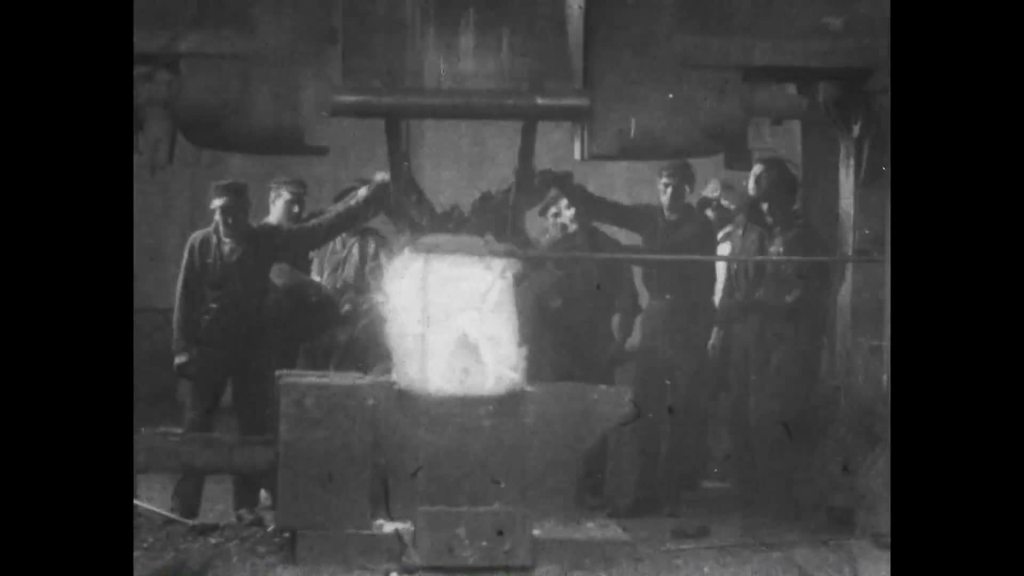
The Plot: A fire chief (James H. White) has a vision of a woman and her child (Unknown Actor and Vivian Vaughan) in danger when their house catches on fire. Almost immediately afterwards, that vision becomes a reality, and we follow the firefighters as they hurry to the house. A fireman (Arthur White) rescues the two in one of the first American films to feature intercutting as a form of storytelling. Or…maybe not.

Why It Matters: The NFR calls it “among the most innovative in terms of editing, storytelling and the relationship between shots.” The film’s status as a “controversial topic in American film historiography” is also highlighted.

But Does It Really?: This one is tricky. On the one hand, the NFR is understandably quick to induct and preserve these early attempts at narrative film, especially with heavy-hitters like Thomas Edison and Edwin Porter attached to it. On the other hand, it seems like this film’s historical significance comes from a later cut of the film with more advanced cross-cutting that was erroneously accepted as the original. This feels like if 100 years from now the NFR inducted “The Phantom Menace” only to realize the film they really wanted was “The Phantom Edit”. I can give “Life of an American Firefighter” a pass as a “stepping stone” movie: the missing link between the actuality films of early cinema and the first narrative stories like “The Great Train Robbery“. Plus its “controversy” among film historians puts it in the rare “Manhattan” category of NFR films in which their controversy is also their legacy.

Before we go any further, you may be wondering what exactly is this editing controversy I keep referencing. I’m glad you asked: it’s time to break down this film’s editing history, aka Life of “Life of an American Fireman”.

As presented in 1903 the final two shots of “American Fireman” were presented as seen in the video embedded above: The first of the two is an 81 second shot inside the woman’s bedroom in which she wakes up, discovers the fire, and is rescued along with her daughter by a fireman via a ladder outside her window. This is followed by an 85 second shot of these events from outside the house in which we see the firefighters prop the ladder under the woman’s bedroom window and rescue her and her daughter.

At some point, an unknown editor (potentially history’s first fan editor) recut these two shots so that the action intercut between inside and outside the house. In 1944, this recut version ended up at the Museum of Modern Art who, naturally, assumed it was the original, leading to a decades-long evaluation of Edwin Porter as an innovative editor. Around the 1960s, the original paper print (the film’s positive print submitted on paper for copyright purposes) was rediscovered within the Library of Congress with the original uncut takes, and a debate began among film historians about the validity of both versions. An original 1903 print of “American Fireman” was discovered by the American Film Institute in the late 1970s, proving that the MoMA print was a re-edit. And so from all of this we get an NFR film whose historical significance is one big misunderstanding. It’s the “Three’s Company” of NFR movies!

Wow, That’s Dated: Primarily the technology being used by the firefighters. The one that was the most intriguing to watch in action were the horse-drawn fire engines. Steam-pumped engines had been around for a while but hadn’t caught on, and the first motorized fire engine was invented in 1897 (six years before “American Fireman”), only becoming a serious contender to replace horses around 1905.

Other notes 

  • So the fire chief has a vision of the fire and then it happens? When did firefighters stop being Precogs?
  • Total tangent, but worth mentioning: For years my closest polling place was a fire station, and every time I voted I would ask if I could slide down the pole and the answer was always no. Understandable, but I bet voter turnout would be a lot better if you let people slide down the pole.
  • All this talk about firefighters got me thinking about the future of the profession; specifically if AI could ever replace human firefighters. The answer, for the time being, is a surprising no. My research shows that while AI is currently being used to help firefighters respond faster to fires and save more lives, they are only being used to aid humans rather than replace them. Which makes sense: I imagine an AI firefighter calendar wouldn’t sell as well.
  • The version I watched of “American Fireman” was from a 2004 DVD release that includes a piano score and a song! Definitely wasn’t expecting to hear an actual voice during my viewing. I cannot for the life of me find out the name of the song, but I suspect it is of the era (it has a Gilbert-and-Sullivan vibe to it). I typed in practically every intelligible lyric of this song into my search engine and couldn’t get a single lead on a name or a composer. WHO ARE YOU!?

Legacy

  • Sure, Edwin Porter can’t put “Revolutionary Film Editor” on his resume, but he still made “The Great Train Robbery”, so there.
  • Firefighters have continued to be a source of dramatic storytelling in the last century-plus of filmmaking. I’ve never seen “Backdraft”, but I did see the special effects show at Universal Studios. That counts, right?

Further Viewing: “Fire!” the 1901 British film by James Williamson that many film historians cite as an influence on “Life of an American Fireman”. I assume being a British firefighter is a lot like being an American one, except they spell it with an extra “u” for some reason.

#647) 3:10 to Yuma (1957)

#647) 3:10 to Yuma (1957)

OR “Van Transit Ford”

Directed by Delmer Daves

Written by Halsted Welles. Based on the short story “Three-Ten to Yuma” by Elmore Leonard.

Class of 2012 

The Plot: Dan Evans (Van Heflin) is a rancher in the Arizona Territory whose finances have taken a turn due to an ongoing drought. One day Evans witnesses a stagecoach robbery by a gang of bandits led by the infamous Ben Wade (Glenn Ford). When Wade and his gang arrive in the nearby town of Bisbee, Wade is arrested, and the stagecoach’s owner Mr. Butterfield (Robert Emhardt) offers $200 to anyone who volunteers to escort Wade to Contention City and make him board the 3:10 to Yuma, home of the territory’s main prison. Typically averse to confrontation or risk-taking, Evans volunteers because the money would get him out of debt. As the pair get closer to the train’s departure, Wade and Evans play a psychological cat-and-mouse game more dangerous than any shots fired along the way.

Why It Matters: The NFR calls the film “one of the best westerns of the 1950s”, praising its “progressive insight”, as well as the “innovative” work of Delmer Daves.

But Does It Really?: We have a rarity on this list: a Western I actually liked. “3:10 to Yuma” has a lot going for it; a solid storyline that cuts down on the genre’s mythologizing and focuses more on character, two great lead performances (especially Glenn Ford), wonderful cinematography, and if nothing else a runtime of only 92 minutes. “3:10” is not the first movie people think of when they think great westerns, but in many ways the film’s underratedness proved to be an asset in my viewing: no major plot points were spoiled for me beforehand, so I was able to experience the film’s tension effectively. I’ll put “3:10 to Yuma” in the “minor classic” category: Not the most important western ever made, but still entertaining enough (and referenced enough thanks to its remake) for me not to question its NFR standing.

Everybody Gets One: Delmer Daves started out in the film industry as a prop boy for 1923’s “The Covered Wagon”. By the 1930s Daves was a screenwriter, most notably co-writing the original 1939 “Love Affair”. His directorial debut was 1943’s “Destination Tokyo”, but he quickly found his niche helming Westerns that subverted the genre’s tropes (1950’s “Broken Arrow” featured one of the first Indigenous protagonists). Daves liked using the same roster of actors in his movies, and “3:10” includes Daves regulars Glenn Ford and Felicia Farr.

Title Track: In the aftermath of “High Noon“, “3:10” is another Western on this list with a title number. Composed by George Duning and Ned Washington, “The 3:10 to Yuma” is sung by Frankie Laine in what I consider his second-best title song performance. Shoutout to Washington for rhyming “Yuma” with “rumor”. [Chef’s kiss]

Seriously, Oscars?: No Oscar love for “3:10 to Yuma”, but the film received a handful of precursor nods, including a BAFTA nomination for Best Film from any Source, losing to “The Bridge on the River Kwai“.

Other notes 

  • I definitely got the sense that “3:10 to Yuma” was based on a short story, but the film’s padding didn’t bother me as much as it has with similar NFR films. The original Elmore Leonard story constitutes the second half of this film, with the first half being an appropriate amount of setup and expansion of everyone’s motives.
  • We’ve covered three other Glenn Ford movies on this list, and this is the first performance of his that impressed me. Ford was originally offered the role of Dan (more in line with previous Ford roles), but he requested to play against type as Ben instead. I gotta say, maybe this should have been Ford’s type to begin with. Ben Wade has a Hannibal Lecter thing going: as a prisoner, he should have the lowest status of any character, but he manages to keep control with his low-key charm and his ability to exploit people’s psychological weaknesses. Ford is clearly having a field day playing the heavy, inviting you to sympathize with a character that would be villainized in any other Western.
  • If I’m going to go on and on about how great Glenn Ford is in this, I gotta give Van Heflin his due. Heflin’s only other NFR appearance is as a co-lead in “Shane“, so it’s nice seeing him take center stage here, with his restrained, conflicted performance meshing well with Ford’s showier part. Also is it just me or does Van Heflin kinda sound like Buster Keaton in his later years? There’s a gravely quality to both their voices that I associate with the vice-filled lifestyles of your Classic Hollywood stars.
  • I have no idea why the character of Emmy the saloon girl is here other than to pad the story and be “the girl” in the picture. Don’t get me wrong, Felicia Farr’s not bad, and she conveys a lot of character with her subtle glances, but Emmy doesn’t really add much and we never see her again once the plot kicks in. Farr also must have had a great agent, getting equal billing with Heflin and Ford despite having maybe 10 minutes of screentime. Fun Fact: Felicia Farr was married to Jack Lemmon!
  • I do love how much time Ben focuses on the color of Emmy’s eyes. It’s a black and white movie: Who cares? Also, how does Emmy fall for Ben’s creepy come-ons? Maybe I don’t understand how flirting work.
  • Robert Emhardt is giving me a sort of Sydney Greenstreet/Burl Ives-without-a-goatee vibe.
  • I love that the amount Mr. Butterfield offers Evans is the exact amount he needs to get out of debt. It’s like that Talent Show trope where the grand prize is the exact amount the gang needs to save the rec center. Wow, I don’t know what surprises me more: The fact that I just made a “Breakin’ 2: Electric Boogaloo” reference on this blog, or that it took me six years to do so.
  • Shoutout to Charles Lawton Jr., longtime Columbia cinematographer who shoots the hell out of the Arizona landscape and injects a surprising amount of noir-esque shadows into this western. We’ll see more of Lawton’s impressive cinematography when I finally get around to covering “The Lady from Shanghai”.
  • Henry Jones gives as much heft as he can to Alex Potter, the movie’s resident redemptive drunk. And every time the kids call him Mr. Potter I flash on Lionel Barrymore.
  • Man, Evans’ kids are annoying as hell. The younger one in particular is like a western Dennis the Menace. I laughed pretty hard at the mom’s added prayer to “give us the wisdom that comes with silence.”
  • The scenes in the Contention City hotel room (aka where the original short story begins) are understandably the best. Van and Glenn play their respective sides of the scenes with such impressive subtlety that I genuinely didn’t know how the scene would play out. Proof that a scene with just two people talking can be as thrilling as any action scene.
  • I’m confused by Alex’s line “I’m a family man in a way.” Is that a euphemism for something?
  • That’s an interesting ending. Not bad, but it just kind of happens. The climactic moment might be too obscured by the surrounding elements, but I do love the final shots as the end theme swells.

Legacy 

  • “3:10 to Yuma” was released in August 1957, and was a hit with critics and audiences. Even Elmore Leonard considered it one of the better film adaptations of his work. You know who didn’t like this movie? Howard Hawks. Between this and “High Noon”, Hawks hated how philosophical and metaphorical Westerns were becoming, which inspired him to make his own Western in response, fellow NFR entry “Rio Bravo”.
  • Delmer Daves continued making westerns throughout the ’50s (most notably “The Hanging Tree”), but his weakening heart condition led him to withdraw from the on-location hazards of westerns for a safer in-studio climate. Daves’ later films include “Spencer’s Mountain” and “A Summer Place”, the latter of which has a theme song that I now have stuck in my head for the rest of the day.
  • This is one of those movies that tends to be referenced in pop culture mainly for its title. Someone will refer to a train (or any other important mode of transportation) as “the 3:10 to Yuma”, but that’s about it.
  • Did you know that Elmore Leonard wrote the books and short stories that would become the films “Get Shorty”, “Jackie Brown”, and the TV series “Justified”? If I knew any of that, I defintely forgot.
  • After a bit of development turnaround, a remake of “3:10 to Yuma” hit theaters in fall 2007. Directed by James Mangold and starring Russell Crowe and Christian Bale, this “3:10” is on the list of rare remakes of classics that are as good as the original. When I told people I was covering “3:10” for the blog, a lot of them assumed it was the remake.
  • Perhaps the film’s most enduring legacy happened in another country. “3:10 to Yuma” was one of the last films released in pre-revolution Cuba and citizens used the film’s title as slang for Americans: “yumas” (a variation on “La Yunay”, their term for the United States). After the revolution, American pop culture was banned, but a wave of nostalgia for these old movies hit Cuba in the late 1970s, and some US titles started to make the rounds again. “3:10” returned to Cuban culture, as did the term “yumas”.

Bonus Clip: The theme from “A Summer Place”, so that we can all suffer this earworm together.

#646) Ninotchka (1939)

#646) Ninotchka (1939)

OR “Commie Dearest”

Directed by Ernst Lubitsch

Written by Charles Brackett & Billy Wilder and Walter Reisch. Based on an original story by Melchior Lengyel.

Class of 1990

The Plot: Sure I could give a detailed plot description of “Ninotchka”, but I will never be able to top Melchior Lengyel’s initial pitch for the film: “Russian girl [Greta Garbo] saturated with Bolshevist ideals goes to fearful, capitalistic, monopolistic Paris. She meets romance and has uproarious good time. Capitalism not so bad, after all.”

Why It Matters: The NFR calls the film a “sparkling romantic comedy”, praising the work of Garbo, Lubitsch, Wilder, and Brackett.

But Does It Really?: Oh yes. I had a good time watching “Ninotchka”. So many great films of the studio system are the magical combination of a solid script and the right star power, and “Ninotchka” has both in spades. “Ninotchka” holds up better than most romantic comedies because its core concept isn’t a battle of the sexes, it’s a battle of the ideals. Both Greta Garbo and Melvyn Douglas play their sides of the Communism vs. Capitalism debate quite well, Garbo in particular is giving her most human performance here. On top of the solid love story is the assured direction of Ernst Lubitsch and the expected brilliance of a Billy Wilder/Charles Brackett screenplay. “Ninotchka” is one of the jewels in the 1939 Classic Hollywood Crown, and while the film may not be as well remembered today, its NFR induction is certainly warranted.

Shout Outs: Garbo comes very close to quoting her famous “I vant to be alone” line from “Grand Hotel“, giving us such near-misses as “We want to be alone”. Such a tease.

Wow, That’s Dated: You should probably brush-up on your 1930s Communism in order to fully appreciate the film’s political commentary. For instance: I didn’t realize the Soviets had a five-year plan. Is this what they’re asking about in job interviews?

Seriously, Oscars?: A hit upon release, “Ninotchka” received four Oscar nominations: Best Picture, Actress, Story, and Screenplay. In another year “Ninotchka” would have had a legitimate shot at winning one or two of these categories, but unfortunately it was 1939, aka The Greatest Year for Movies, and the film lost three of these categories to “Gone with the Wind” and the fourth to “Mr. Smith Goes to Washington“.

Other notes 

  • Melchior Lengyel conceived “Ninotchka” during a conference to come up with star vehicles for Greta Garbo, whose film career took a hit when she was labeled “Box Office Poison” by the Independent Theater Owners Association in 1938 . Originally, Ernst Lubitsch was only meant to produce this film, with George Cukor set to direct. Once Cukor left the project in favor of “Gone with the Wind”, Lubitsch agreed to direct, as long as MGM allowed his next project to be “The Shop Around the Corner“. Lubitsch ordered a re-write, and apparently made enough contributions to the script that Wilder & Brackett unsuccessfully lobbied the Writers Guild to give Lubitsch a credit.
  • That Wilder/Brackett dialogue comes at you fast and furious in the opening scenes. Lubitsch handles the screenwriters’ trademark repartee with the delicate touch synonymous with his movies. The pacing is quick enough to keep the momentum going, with time to let the dialogue sink in without feeling tossed off a la “Ball of Fire“.
  • This is my first experience with young Melvyn Douglas, being more accustomed to his later career as an Oscar winning elder statesman. Here Douglas is quite charming as Count Leon, the kind of romantic cad you would expect to see Don Ameche play (apparently Cary Grant and William Powell were in consideration).
  • Wasn’t Garbo in this? Seriously, it is a very long twenty minutes before she shows up. In the meantime there’s a lot of plot setup, plus some comic interludes with the three Russian Board of Trade agents (Sig Ruman, Felix Bressart, and Alexander Granach). There’s also a running gag about the agents ordering French maid/cigarette girls to come up to their hotel room. This is of course back when French maids still dressed like…well, French maids.
  • The best exchange in the movie: Ninotchka, upon learning that a porter’s job is to take her bag, “That’s no business, that’s a social injustice.” The Porter: “That depends on the tip.”
  • We have previously covered Garbo’s other two NFR films on this blog, and yet have never really talked about the woman herself. Garbo’s work in “Flesh and the Devil” and “Grand Hotel” plays to her established screen persona, the stoic woman caught in a forbidden and/or doomed romance, and I had nothing substantial to say about either other than “Yep, that’s a Garbo performance.” With “Ninotchka” Garbo still plays to type, but also gets the chance to be funny while doing it. Having Garbo play the first half of the movie with a total stone-face is the right choice; milking every laugh out of how thoroughly unamused Ninotchka is by her surroundings. It makes her eventual warming up all the more satisfying. This is the first Garbo performance I actually enjoyed watching; her statuesque exterior giving way to her proverbial feet of clay.
  • The scene in the cafe when Leon finally gets Ninotchka to laugh is worth the wait. Side note: The film’s tagline “Garbo Laughs!” is a play on “Garbo Talks!”, the tagline for Garbo’s first sound picture “Anna Christie”.
  • I like that Ninotchka is a little awkward upon being with Leon when she buys the hat. Again, it goes with letting Garbo actually play a nuanced character rather than her persona. It’s more entertaining to watch, and helps the film age better.
  • Garbo drinks! Apparently Garbo had misgivings about playing a scene where Ninotchka gets drunk on champagne, which she consider vulgar. Lubitsch himself expressed his frustration in the press, calling Garbo “the most inhibited person I have ever worked with.”
  • Wow, even Vladimir Lenin gets a laugh in this. There’s your Lubitsch Touch!
  • Shoutout to Ina Claire, a stage actress making one of her rare film appearances as the Grand Duchess Swana, the woman Count Leon has a casual dalliance with. Unlike other rom-com third wheels, Grand Duchess Swana is more like 2E from “Breakfast at Tiffany’s“: yes she’s the other woman, but she’s holding all the cards. Claire doesn’t have much to do until the Grand Duchess’ confrontation with Ninotchka at the end, but she nails the scene, making us understand that this woman does not live or die by the love of one man. Interestingly enough, Ina Claire was briefly married to John Gilbert after his famous love affair with Garbo, so I can imagine there was a little extra friction behind the scenes that day.
  • Wow, the last chunk of the movie when Ninotchka returns to Russia really drags. I don’t care about how bleak communist Russia is or what happened to the three agents, I just want to know how Ninotchka and Leon get back together.
  • During the lulls of the final half hour, I thought, “Didn’t I see Bela Lugosi’s name in the opening credits? Did I miss him?” Turns out Lugosi only has one scene, right before the finale as Commissar Razinin, his only non-vampire NFR appearance. “Ninotchka” was one of Lugosi’s last forays into an A picture before being permanently typecast by his work with Universal monsters. Despite his brief screentime here, Lugosi receives 4th billing for his performance. Either someone at MGM really liked Lugosi or he had a great agent.
  • And then we get a weird tag after Ninotchka and Leon’s “happily ever after”: a throwaway gag about the agents and their restaurant business. Once again, I don’t care about these subplots, just end the movie!

Legacy 

  • “Ninotchka” was the hit Garbo needed to combat her “Box Office Poison” label. MGM immediately re-teamed her with Melvyn Douglas for another rom-com, 1941’s “Two-Faced Woman”. The film was not well-received by critics, and while it did okay at the box office, didn’t make its money back and became one of many reasons Garbo left MGM. Garbo had every intention of returning to film after World War II, but every opportunity that arose either fell through or was rejected by Garbo, until eventually she opted for retirement. “Ninotchka” proved to be the penultimate film of Garbo’s career, and her last hit.
  • Unsurprisingly, “Ninotchka” did not go over well with Soviet Russia, and an attempt to release the film in Vienna after the war was met with controversy. Vienna finally played “Ninotchka” in 1951 after the city reclaimed its full sovereignty from Russia.
  • A musical adaptation by Cole Porter called “Silk Stockings” played Broadway in 1955 staring German actress Hildegard Knef and Don Ameche (I told you he’d be good in that part). The inevitable film adaptation came in 1957, starring Cyd Charisse and Fred Astaire, and was one of the last MGM musicals under the fabled “Freed Unit”.
  • Other movies that share a bit of “Ninotchka” DNA include 1940’s “Comrade X” and 1956’s “The Iron Petticoat”.
  • But the person who got the biggest career boost from “Ninotchka” was one of its screenwriters. “Ninotchka” was the first major hit for Billy Wilder, who would be directing his first Hollywood movie within three years of this film’s release, paving the way for his nearly 30 year run as one of Hollywood’s most celebrated writer/directors.

#645) Ringling Brothers Parade Film (1902)

#645) Ringling Brothers Parade Film (1902)

OR “The Greatest Show Unearthed”

Produced by the Selig Polyscope Company

Class of 2021

The full film, with a delightful introduction from film historian David Kiehn.

The Plot: As per the Selig Polyscope Company’s listing, “Ringling Brothers Parade Film” is “the finest circus parade caught by a moving picture camera.” Filmed on May 12th, 1902, the film documents the Ringling Brothers Circus parading down Capital Avenue in downtown Indianapolis, Indiana ahead of their performance in town later that day. In three minutes we see all the sights (but not sounds -it’s a silent film) of the fabled Ringling Brothers Circus: cages of wild animals, riders on horseback, a marching band, clowns, camels, and a finale of elephants! The Selig Company calls it “the greatest and grandest circus parade ever seen on a motion picture film”, though to be fair in 1902 it was probably the only circus parade ever seen on film.

Why It Matters: The NFR calls the short a “delightful gem” and highlights the film’s “rare glimpse of a prosperous northern Black community” at a time when African-Americans were rarely seen on film.

But Does It Really?: Yes, because why the hell not? “Ringling Brothers Parade Film” is not the most important or significant movie on the list, but you know what: it’s fun. While I never went to the circus as a kid, I enjoyed watching this footage of a circus in its prime, and equally enjoyed hearing David Kiehn talk about the film’s rediscovery in the video embedded above. The NFR’s spin about the film’s depiction of a Black community is commendable, but it strikes me as an attempt to justify the inclusion of this film on a list of more diverse selections (this is the year of “Selena” and “The Watermelon Woman” after all). Yes, there are Black people in this film, but in terms of representation this ain’t exactly the “Solomon Sir Jones Films“. Overall, “Ringling Brothers Parade Film” delivers what the title suggests, and I’m glad this little oddity has found its way onto the Registry.

Everybody Gets One: Albert, Otto, Alfred, Charles, and John Ringling started performing their juggling act together around 1882 in their hometown of Baraboo, Wisconsin (there were two additional brothers – Gus and Henry – who weren’t part of the act). Once the boys started touring, the act continued to expand, officially becoming a circus in 1884 with their purchase of the Yankee Robinson Circus. Over the next thirty years, the Ringling Brothers Circus traveled the country, keeping tabs on their main competition, Barnum and Bailey’s. With declining attendance and the death of co-founder Jonathan Bailey, the Ringlings officially merged with Barnum and Bailey in 1919, and toured for the next 98 years as “The Greatest Show on Earth”.

Wow, That’s Dated: I was ready to add “circuses in general” to the list, but I guess they’re back? While Ringling Brothers and Barnum & Bailey Circus closed in May 2017, Feld Entertainment (the circus’ operating company) announced recently that Ringling will resume touring in September 2023, sans animal acts. Feld, if you really love circuses, let them go.

Other notes 

  • First and foremost, a shoutout to David Kiehn and the Niles Essanay Silent Film Museum in Fremont, California. All information we have about this film stems from Kiehn’s research. Side note: Like myself, David Kiehn is an alumni of SFSU! What’s up, fellow Gator?
  • Among the details Kiehn used to determine the film’s identity: background signs for “Park Theatre” and “Cleveland Club” (what the latter was doing in Indianapolis I have no idea), the carvings on the wagons (unique to Ringling Brothers), and a trolley car labeled “Blake”. This is the kind of deep-dive researching that makes me love film history. It’s amazing what you can figure out with internet access and a thirst for knowledge. By the way, one of the resources Kiehn used was the Internet Archive. If you love any sort of film history research projects like this one, please donate anything you can to them.
  • The Polyscope description says the parade is lead by “Mr. Ringling”, though it never specifies which one. They were all still alive in 1902, so it’s anyone’s guess.
  • I love the little moment where a female onlooker is tapped on the shoulder and asked to stand back. I wonder if they knew she was partially blocking the shot. “Would you step back miss? You’re obstructing the posterity.”
  • There are several parade watchers holding umbrellas. Turns out Indianapolis was unusually hot that day, with a high of 85 degrees! And everyone’s wearing suits and dresses! I would not have survived back then.
  • Yes, there are lions and tigers and bears in the parade, but their cages are so dark you can barely see them. I’ll take your word for it, movie.
  • Wait, are the clowns the guys on top of the wagon playing instruments? Either that or the bit of film with the clowns is missing from this reel. Regardless, those of you with a fear of clowns should be able to watch this with no problem.
  • Everyone in this movie is dressed like they’re in “The Man Who Would Be King“.
  • After seeing all the horses in this parade, I have come to the conclusion that circuses smelled awful.
  • And there’s elephants too? Yeah, nothing about this experience smelled good. The people of Indianapolis must have been really starved for entertainment in 1902. Thank god the Motor Speedway was only a few years away.
  • Did you know that David Letterman, Brendan Fraser, Jane Pauley, Madam C.J. Walker, and John Dillinger are all from Indianapolis? And so is “Double Dare” host Marc Summers! Sorry; I’ve fallen into a research rabbit hole, where were we? Oh right, the circus.

Legacy 

  • “Ringling Brothers Parade Film” was released in July 1902, and was available for purchase to be screened at your exhibition hall for $18 (over $600 in today’s money!). The film was still advertised by the Selig Company as late as 1908, but seemingly disappeared after the company folded in 1918. Cut to the Niles Essany Silent Film Museum in 2011, when an elderly couple from Oakland donated an unmarked reel of film they discovered in their home in 1969 (you may be thinking, “Why did they wait 42 years before turning it in?” but don’t we all have items on our To Do list that we keep putting off?) Thanks to the detective work of David Kiehn, the unmarked reel was identified as “Ringling Brothers Parade Film” and received a 5K restoration. The restored film was uploaded onto the Niles’ YouTube channel in October 2020, and made the NFR 14 months later.

Further Viewing: This viewing made me realize how few circus movies are on the Registry (the only other ones I can think of offhand are “Dumbo” and “HE Who Gets Slapped“). As for possible future entries, I suppose DeMille’s “The Greatest Show on Earth” has a shot. Sure, it routinely ranks among the worst Oscar Best Picture winners of all time, but as I recently learned from “The Fabelmans”, it’s the film that gave young Steven Spielberg his love/fear of the movies. That’s a legacy!

#644) Naughty Marietta (1935)

#644) Naughty Marietta (1935)

OR “The French Maid’s Tale”

Directed by W.S. Van Dyke

Written by John Lee Mahin & Frances Goodrich and Albert Hackett. Based on the operetta by Victor Herbert and Rida Johnson Young.

Class of 2003

The Plot: In 18th century France, the Princess Marie (Jeanette MacDonald) is unhappy with her arranged marriage to Don Carlos (Walter Kingsford). Wanting to find true love, she disguises herself as her servant Marietta (Helen Shipman) and takes her place on a ship bound for New Orleans with casquette girls sent to marry the French colonists. After their ship is overtaken by pirates, the women are rescued by Captain Richard Warrington (Nelson Eddy) and his band of mercenaries. Marie initially is unimpressed by Warrington’s boasting, but eventually the two warm up to each other. Marie’s arrival in New Orleans leads to more romance, mistaken identity, and a whole bunch of songs.

Why It Matters: No real superlatives in the NFR write-up, other than that MacDonald and Eddy are a “sensational singing duo”. The films production and Oscar stats are also mentioned.

But Does It Really?:  The early 2000s was the NFR’s “What haven’t we gotten to yet?” era: checking off major movie series and performers that were so far unrepresented on the NFR (We get Our Gang, the Three Stooges, and Elvis on the list during this period). Among those pieces of movie culture is a Jeanette MacDonald/Nelson Eddy MGM operetta, and “Naughty Marietta” fits the bill. On its own “Naughty Marietta” is a fun, enjoyable musical; not outstanding, but a pleasant enough viewing experience. “Naughty Marietta” is on the list for what it is as much as for what it represents: the kind of escapist romantic movie musicals that delighted Depression-era audiences. An indifferent but understanding pass for its NFR inclusion.

Everybody Gets One: Born into a musical family, Nelson Eddy got his start singing in the church choir, eventually performing with the Philadelphia Civic Opera Company. A last minute booking in Los Angeles earned him acclaim, as well as the attention of several studios. Eddy signed with MGM, and was shortly thereafter assigned the leading role opposite Jeanette MacDonald in “Naughty Marietta” when MacDonald’s first choice Allan Jones was unavailable (he was filming “A Night at the Opera“).

Everybody Almost Gets One: “Naughty Marietta” was originally to be directed by Robert Z. Leonard, known for helming MGM’s more sophisticated fare like “Strange Interlude” and “A Tale of Two Cities”. After one day of filming, Leonard asked to be taken off the project. His reason for leaving remains unknown, as does whether any of his day’s footage is in the final film.

Title Track: Once again we have a Lebowski situation, as the real title role is the minor character Marietta, played by Helen Shipman during her brief tenure at MGM. Sadly we never learn what makes Marietta so naughty.

Seriously, Oscars?: A hit upon release, “Naughty Marietta” received two Oscar nominations. The film lost Best Picture to fellow MGM release “Mutiny on the Bounty”, but prevailed in the category Best Sound Recording, with the statuette going to sound engineer Douglas (older brother of Norma) Shearer.

Other notes 

  • Not a lot of info about the original operetta “Naughty Marietta” or how it became a film, but we know that MGM purchased the film rights originally as a vehicle for Marion Davies. The film follows the overall plot of the musical, omitting a few subplots and streamlining the story.
  • I’m only a few minutes in and I already have no idea what is happening or what anyone is singing. In retrospect the plot doesn’t really get going until about 10 minutes in, and the first numbers are just table dressing reiterating how nice Marie is.
  • Jeanette MacDonald seems to be having a good time playing Marie. There’s a sense of fun in her performance, especially her first few scenes posing as Marietta; a chance to play a “character” rather than her screen persona. Also wow what a voice. If Jeanette sings any higher she’s gonna start setting off car alarms.
  • I assume the boat set and all its colonial aesthetics are holdovers from “Mutiny on the Bounty”, later to be redecorated for “Captains Courageous”. Also, jeez Louise this boat farewell number is so long. Stop singing about leaving and just go already!
  • I appreciate that Marie’s uncle figures out the Marietta switch almost immediately, with only the lengthy voyage to America delaying his pursuit of her. It becomes the movie’s ticking time bomb; we’re always worried for Marie because we know her uncle is on the way.
  • For whatever reason I wasn’t expecting this film to have pirates. The lead pirate Bras Pique (French for “Spade Arm”) had a much more pivotal role in the operetta, trimmed to a minor role in the film for time and possibly censorship (he was a bit effeminate, a “Be Careful” in the Production Code handbook).
  • Nelson Eddy IS Davy Crockett. Much like MacDonald, Eddy seems to be enjoying himself in this film, and has a voice that packs a wallop. The relationship between Warrington and Marie is very much “He’s a jerk but she’s okay with it”.
  • We arrive in New Orleans and are greeted by Governor and Madame d’Annard, played by Frank Morgan and Elsa Lanchester, aka the Wizard and the Bride. Morgan’s performance is about 90% stammering, but his timing is flawless. Lanchester is stuck in the thankless role of nagging wife, but it’s always nice seeing her in a movie, especially one where she has actual dialogue.
  • The whole casquette girl thing is a trip. Good thing we don’t commodify women in any way, shape, or form nowadays, right? ….Right?
  • Question: Are these songs diegetic? I get the sense that everyone in this movie is aware that other characters are singing; the songs are being “performed” for other characters’ amusement. I wonder if ’30s audiences weren’t ready to make that suspension of disbelief just yet.
  • Ah yes, that time in American movies when we conflated the Italians and Romani for the “gypsy” stereotype. That being said, this movie has more Italians in the cast than any movie this side of “The Godfather“. One of the young Italian women is Adrianna Caselotti, making her film debut in a rare on-screen appearance before becoming the voice of Snow White. Sadly, her operatic voice is not on display here.
  • I assume Douglas Shearer’s Oscar win was for the overall recording of the songs, especially those extended high notes. I detect some audio doctoring.
  • The marionette theater number “Ship Ahoy” is truly bizarre. I never expected to see Jeannette MacDonald doing a “Weinerville” style puppet show. Man, remember “Weinerville”? I loved that show.
  • For those of you playing along, this is the second Jeanette MacDonald movie on the NFR in which a description of medical symptoms turns into rhyming couplets and then a song.
  • I assume Walter Kingsford was cast as stuffy betrothed Don Carlos because Edward Everett Horton was unavailable.
  • Oh my god, Frank Morgan is just full on stammering in lieu of actual dialogue. He’s like a proto-Goldblum. Did preview audiences demand more stammering? This all being said, Morgan gives some great double takes throughout, as well as a spit take!
  • After being teased as a leitmotif throughout, “Ah! Sweet Mystery of Life” gets a full number at the film’s climax. It’s the only time MacDonald and Eddy share a duet, and it’s worth the wait. I understand why they held off having these two sing directly at each other. Their voices are so strong I was expecting a tornado to start forming between them.
  • Marie’s uncle after her duet with Warrington: “That’s the most disgusting exhibition I’ve ever seen in my life.” Clearly the man has never seen “Pink Flamingos“.
  • What a cute ending. Of course MacDonald and Eddy get together, and they travel west, the reality of which was do doubt a full one 180 from this rose-colored happy ending. Somebody in that group died of dysentery that’s for sure.

Legacy 

  • “Naughty Marietta” was a surprise hit upon release, earning a healthy profit at the box office and eventually receiving a reissue (the reissue’s trailer is embedded above). From 1936 to 1942, Jeanette MacDonald and Nelson Eddy made seven more films together, three of which were directed by Robert Z. Leonard, who apparently stuck around for the whole shoot this time.
  • Although both of their film careers peaked with their collaborations, both MacDonald and Eddy continued to perform on radio, records, and the stage for the rest of their lives. I remember Eddy best from his performance as every character in “Willie the Operatic Whale”, the best short not on Disney+.
  • The stage version of “Naughty Marietta” has rarely been seen since its original staging in 1910, and the only other major adaptation was as a TV special in 1955 with Alfred Drake and Patrice Munsel.
  • The legacy of both the operetta and film is “Ah! Sweet Mystery of Life”, which gets referenced every so often in pop culture, especially in the decades immediately following the film. I can just imagine nine year old Melvin Kaminsky sitting in the balcony of some Brooklyn movie house watching “Naughty Marietta” and filing away “Ah! Sweet Mystery of Life” for later use.

Further Viewing: Victor Herbert’s other major contribution to pop culture was the 1903 operetta “Babes in Toyland”. There have been several film adaptations over the years, each straying further and further from the source material. Still, you got to love the variety of performers these films have attracted: Laurel & Hardy, Annette Funicello, Drew Barrymore.

Listen to This: Victor Herbert and his “Naughty Marietta” score are on the National Recording Registry by virtue of a 1911 Edison cylinder recording of “Ah! Sweet Mystery of Life”, added to the Registry in 2017. Herbert expert Alyce Mott guest writes an essay about the recording.