
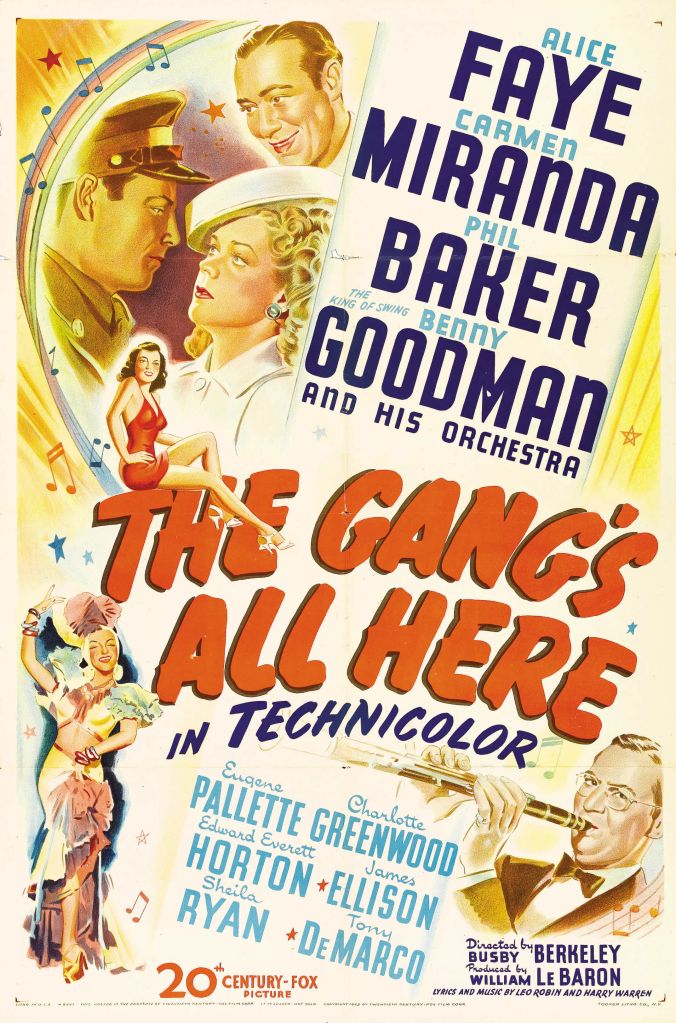
#494) The Gang’s All Here (1943)

#494) The Gang’s All Here (1943)

OR “Bananas”

Directed by Busby Berkeley

Written by Walter Bullock. Original Songs by Leo Robin and Harry Warren.

Class of 2014 

The Plot: The night before he reports for duty in the Army, Andy Mason Jr. (James Ellison) meets nightclub singer Eadie Allen (Alice Faye). The two hit it off, but Andy is already involved with Vivian (Sheila Ryan), so he gives Eadie the fake name “Sgt. Pat Casey”. But no one actually cares about the love triangle; this movie is all about Busby Berkeley’s trademark dance numbers, and performances by Carmen Miranda, Phil Baker, Tony DeMarco, and Benny Goodman and his Orchestra!

Why It Matters: The NFR gives mention to Berkeley and Miranda, as well as the “Tutti-Frutti Hat” number, though admits that the musical is “not remembered as well today as those put out by MGM”.

But Does It Really?: Longtime readers know that I will give a slight pass to any NFR film with even the flimsiest justification, but I don’t see how “The Gang’s All Here” made the cut. There are other Busby Berkeley musicals on the list, other WWII propaganda; heck there’s even another Carmen Miranda movie (also inducted in 2014, weirdly enough). “Gang’s” is by no means a bad movie, it’s just not essential to the history of American film. There’s some visually interesting production numbers, but the whole film has a sameness to it that constantly reminds you of all the better movie musicals you could be watching instead. “Gang’s” is another movie I would reserve for pure film buffs only, and its NFR designation is still a head-scratcher.

Everybody Gets One: Dubbed “The Queen of Fox”, Alice Faye was one of the studio’s biggest stars in the ’30s and ’40s. Although primarily successful in big splashy musicals, Faye was able to turn in the occasional dramatic role, such as “In Old Chicago”. “The Gang’s All Here” was Faye’s last big musical for Fox before ending her film career to focus on her family (she was pregnant with her second daughter Phyllis during production). Faye was married for 54 years to singer/comedian Phil Harris, and theirs is still considered one of the most successful marriages in show business history.

Wow, That’s Dated: This has all the dated hallmarks of your standard WWII movie (“Buy your war bonds in this theatre”), plus the added racial insensitivity of a ’40s “Good Neighbor” movie. Side note: With Disney’s Fox acquisition, I guess the name 20th Century Fox is now dated as well.

Title Track: Even this movie’s title is unnecessarily weird! The original title was “The Girls He Left Behind” but was inexplicably changed. The song “Hail, Hail the Gang’s All Here” plays in the first moments of the opening credits, and is never heard or referenced in the film proper.

Seriously, Oscars?: Despite some critical misgivings, “The Gang’s All Here” was a hit with audiences, and received an Oscar nomination for its Art Direction. Despite some genuinely impressive set pieces, the production design team lost to Universal’s color remake of “Phantom of the Opera“.

Other notes 

  • The one thing that this movie has over other NFR films is that it was solely directed by Busby Berkeley (he choreographed, but not direct, “42nd Street” and “Footlight Parade“). This is a point in “Gang’s” favor, but if that’s your criteria, why not induct “Babes in Arms” or “For Me and My Gal” instead?
  • This all being said, Berkeley is definitely cutting loose with the camera on this movie. We get his trademark overhead dance formations, plus all kinds of crazy angles and dolly shots. Shoutout to cinematographer Edward Cronjager for going along for the ride. Side Note: Cronjager was Oscar-nominated that year for his work on Ernst Lubitsch’s “Heaven Can Wait” (no relation to the 1941 or 1978 films).
  • After being nightclub-bound in “Down Argentine Way”, Carmen Miranda actually gets to interact with people in this movie! She’s having fun, but Carmen is clearly no actor, and her dialogue consists entirely of broken English and malapropisms. There’s something unjust about the likes of Lauren Bacall, Shirley Temple, and Gloria Swanson each having one NFR entry apiece, yet Carmen Miranda is on here twice.
  • Ah yes, back when the hippest musician on the scene was a 34-year-old clarinetist named Benny. Goodman must have been pissed when rock ‘n’ roll became a thing.
  • “The Lady in the Tutti-Frutti Hat” is fun, and features Miranda in a hat made of bananas, but it never quite matches the big musical numbers of other ’40s movies. Although this is the first film in which Miranda is wearing a banana hat, she had previously donned a fruit hat in 1941’s “That Night in Rio“.
  • Most meta-moment: Alice Faye tells James Ellison to “Stop acting like Don Ameche”. I’m sure Ellison was well aware he was not anyone’s first choice for this movie.
  • I know the Andy/Eadie love story is supposed to be cute, but HE HAS A GIRLFRIEND. It all works out in the end, but he is definitely two-timing Vivien.
  • Alice Faye is more of a sultry leading lady than her ingenue contemporaries, a little more jaded. Plus she’s a contralto! I can sing along with her!
  • Even the reliable comedy and high-kicking of Charlotte Greenwood can’t save this movie. I enjoyed the pairing of her with the always funny Edward Everett Horton, but this movie’s weirdness overshadows any positive qualities.
  • Speaking of character actors, this movie features Eugene Pallette, who has popped up quite a bit on this list. Most remember him for his unique bullfrog voice, but I always remember him as a Nazi sympathizer who got fired from Otto Preminger’s “In the Meantime, Darling” because he refused to do a scene with African-American actor Clarence Muse where they were treated as equals. Fuck you, Pallette!
  • Weirdly enough, the camera gets very static during the “book” scenes. It’s like Busby can only be creative during the musicals numbers.
  • The “Polka-Dot Polka” finale is quite the trip. We get kids dubbed by adults, women dressed like they’re in “TRON” holding neon rings, and the floating, singing heads of our main cast members. Oh, and the resolution of the main plot is implied, and not actually addressed. I’ve said it before and I’ll say it again: WHAT IS HAPPENING!?

Legacy 

  • The film’s only lasting point of reference is Carmen Miranda’s banana hat. It’s no coincidence that less than a year after “Gang’s” release, The United Fruit company unveiled their new mascot: Chiquita Banana.

Listen to This: The two biggest names in the movie also have tracks in the National Recording Registry: Carmen Miranda with “O Que É Que A Baiana Tem?” and Benny Goodman with his album “Carnegie Hall Jazz Concert”.
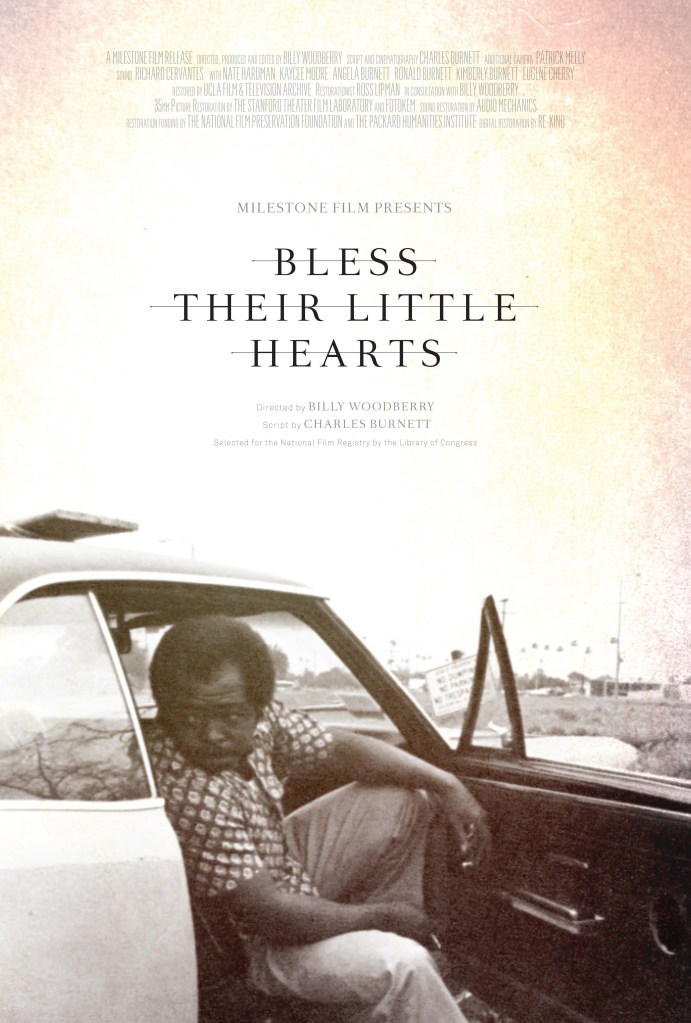
#493) Bless Their Little Hearts (1983)

#493) Bless Their Little Hearts (1983)

OR “Saving Mr. Banks”

Directed by Billy Woodberry

Written by Charles Burnett

Class of 2013 

The Plot: “Bless Their Little Hearts” chronicles Charlie Banks (Nate Hardman) and his wife Andais (Kaycee Moore) as they struggle to raise a family and make ends meet in Watts, Los Angeles. The chronically unemployed Charlie tries to find day labor, while Andais manages to work while raising their three kids (Angela, Ronald, and Kimberly Burnett). The daily frustrations of the Banks’ life reaches a boiling point in this representation of an under appreciated group of influential filmmakers.

Why It Matters: The NFR calls the film a “spare, emotionally resonant portrait of family life during times of struggle” and calls Woodberry “a key figure” in the L.A. Rebellion movement of the late ’70s/early ’80s. The NFR blurb also quotes Jim Ridley’s review from the “Village Voice”: “Its poetry lies in the exaltation of ordinary detail”.

But Does It Really?: “Bless Their Little Hearts” holds up remarkably well, and while not an essential American film, represents an important generation of African-American filmmakers on a mission to tell their stories as honestly as possible. “Bless” can be a bit difficult to track down (Thanks, Criterion Channel!), but thanks to the dedicated vision of Billy Woodberry and Charles Burnett, it is well worth seeking out.

Everybody Gets One: While studying at UCLA, Billy Woodberry became part of the L.A. Rebellion, a film movement consisting of such notable African-American filmmakers as Woodberry, Charles Burnett, and Julie Dash. These filmmakers were influenced by the turbulent politics of 1960s America, and sought to make films that more accurately portrayed the struggles of African-Americans. Burnett strongly encouraged Woodberry to become a film director, and offered him his screenplay for “Bless”. Burnett even went as far as connecting Woodberry with cast members from his previous film “Killer of Sheep“, including this film’s leading lady Kaycee Moore.

Wow, That’s Dated: Besides the kids using knobs to change the TV channel, this movie is not very dated. This, of course, means that the film’s dissection of socio-economic hardships for people of color hasn’t aged either.

Seriously, Oscars?: No Oscar love for “Bless Their Little Hearts” or Billy Woodberry. The film did, however, take home some prizes from the Berlin and Amiens International Film Festivals.

Other notes

  • “Bless Their Little Hearts” was Woodberry’s master thesis at UCLA, a fact that a surprisingly large number of NFR entries have in common. This always begs the question: What grade did Woodberry get on this? Anything short of an A- and I will need to speak to his professor.
  • Many of the L.A. Movement filmmakers helped each other make their movies at UCLA. Here, Charles Burnett is both screenwriter and cameraman. On the flip side, Woodberry acted in 1982’s “Ashes and Embers” by Haile Gerima.
  • Though never mentioned by any of the characters, “Bless Their Little Hearts” is set and filmed in the Watts neighborhood in Los Angeles. Charles Burnett grew up in Watts, and this (as well as his directorial debut “Killer of Sheep”) is set in Watts. Did he ever cross paths with the kids from “Felicia“?
  • One thing “Bless” does really well is capture the sort of meaningless meandering that life seems to consist of when one has no real prospects on the horizon. On the surface, this is a movie where “nothing happens”, but Woodberry is setting his scenes very carefully for Charlie’s inevitable breakdown. In the hands of a lesser filmmaker, these early scenes would be quite boring, but Woodberry manages to hold your interest.
  • The $125 Charlie makes every week is about $320 today. This has been an episode of “We Suck at Inflation”, as well as an episode of “We Suck at Financially Supporting our Working Class Citizens”.
  • Like many a great filmmaker, Woodberry knows the power of the close-up. Andais’ breakdown scene is played out in a wide shot of her and the kids, saving the crucial close-up for the exact moment when she snaps. It’s riveting.
  • Equally riveting is the major argument between Charlie and Andais, covered in one uninterrupted take. It’s a testament to Woodberry’s direction, Nate Hardman and Kaycee Moore’s committed performances, and Charles Burnett’s cinematography.
  • Another brilliant piece of camerawork from Woodberry and Burnett: After their argument, Charlie and Andais are only shown in separate close-ups when they share a scene. They do not occupy the same shot until they reconcile.
  • “Bless Their Little Hearts” was restored in 2017 by UCLA. Billy Woodberry took the opportunity to credit some cast and crew members who went uncredited for their work in the original print. There is also a special thanks section that acknowledges, among others, Julie Dash and Edward Olmos.

Legacy 

  • Although Billy Woodberry’s film career never rose to the same heights as his contemporaries Charles Burnett and Julie Dash, he is still making movies; his most recent being 2015’s “And when I die, I won’t stay dead”, a documentary about poet and activist Bob Kaufman. Woodberry has also narrated films from fellow NFR directors Thom Andersen (“Red Hollywood”) and James Benning (“Four Corners”).
  • In addition to his film work, Billy Woodberry has been teaching film at CalArts since 1989.
  • Charles Burnett has also continued directing. In addition to the aforementioned “Killer of Sheep”, Burnett would go on to helm another NFR entry: 1990’s “To Sleep with Anger”.

#492) Two-Color Kodachrome Test Shots No. III (1922)

#492) Two-Color Kodachrome Test Shots No. III (1922)

OR “Color Me Impressed”

Directed by John Capstaff

Class of 2012 

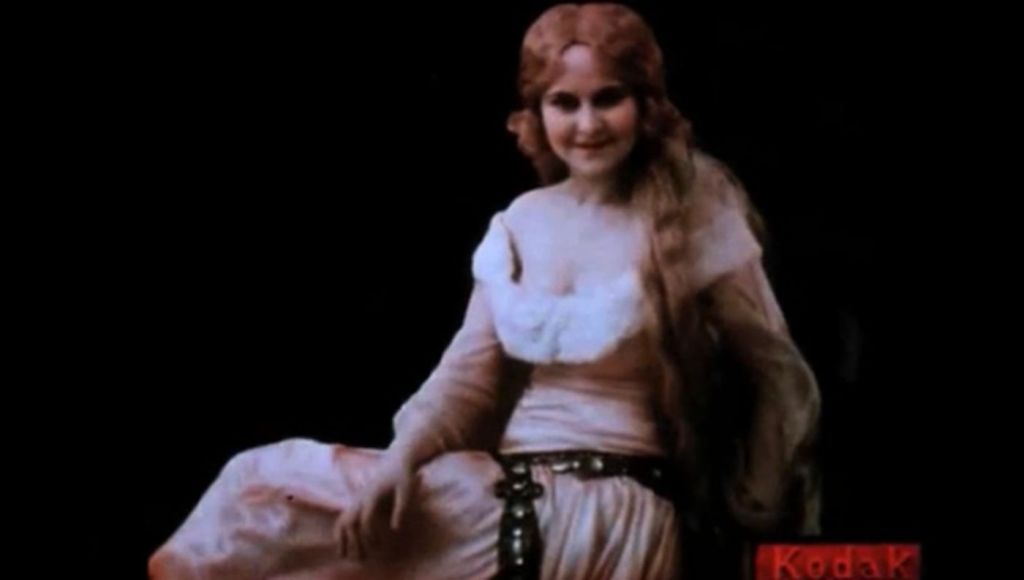
The Plot: It’s 1922 and after over a decade of experimentation, American film is very close to perfecting a color film process. George Eastman and his Eastman Kodak Company develop Kodachrome, a two-color process originally developed for their still photography. Kodachrome creator John Capstaff is commissioned to shoot a series of test films: simple shots showcasing such glamorous movie stars as Mae Murray, Mary Eaton, and Hope Hampton. The results are admirable, but will it surpass the rival Technicolor process? We’ve done almost 500 of these and it’s the first time I’ve mentioned Kodachrome: what do you think?

Why It Matters: Both the NFR write-up and the accompanying essay by film historian James Layton give detailed insight on this film and the Kodachrome process.

But Does It Really?: Well this one’s easy: It’s one of the earliest surviving color tests, and it’s a demonstration of a color film process that isn’t Technicolor. Done and done. Welcome to the NFR.

Everybody Gets One: John Capstaff invented the Kodachrome color process in 1913, and while it was perfected a few years later, development was put on hold until after WWI. Producer Jules Brulator was a friend and business associate of George Eastman, and these tests were filmed at Brulator’s Paragon Studios in Fort Lee, New Jersey. A year after the Kodachrome tests, Brulator married his long-time mistress Hope Hampton, one of the three models seen in this film.

Other notes 

  • First off, a major thanks to the aforementioned Layton essay, which contains most of the information in this post. Turns out a large majority of the internet isn’t interested in Kodachrome.
  • So how did the Kodachrome color process work exactly? Good question. The Kodachrome camera had two lenses – one red-orange, one blue-green – that captured both images onto the same black and white negative. The red and green combination made certain colors appear quite realistically on film (especially skin tones). Because the two lenses were on top of each other, the slight angle difference did lead to some discrepancies, which had to be corrected by hand. The black screen used in these test was a way to avoid any noticeable emulsions appearing in the final print.
  • Of the three performers, Hope Hampton and Mae Murray were film stars, while Mary Eaton was primarily known for her work in the Ziegfeld Follies.
  • As the title suggests, this is one in a series of film tests (possibly as many as 30). Apparently the other test reels filmed actors at the Famous Players-Lasky Studio in Hollywood, with Gloria Swanson being one of the test subjects.
  • Either Kodachrome didn’t quite master skin tones, or Mary Eaton is quite pale, because she looks like a ghost! OooooOOOOOOoooooo….
  • Some interesting speculation from the Layton essay: Test No. III may be outtakes! That would explain how natural and relaxed everyone looks, quite a departure from the poised presentation expected of movie stars of the day. None of the other tests are known to exist, so this is anyone’s guess.
  • My main takeaway from this film is the same as most of the internet: it looks so realistic. Black and white films automatically create a divide between the film and the viewer: we instantly perceive that what we are watching happened “a long time ago”, but even in this primitive form the people in the Kodachrome tests look as vivid and alive as anything you could film today.

Legacy 

  • The Kodachrome test films premiered at the opening of the Eastman Theatre in Rochester, New York on Labor Day weekend 1922. Reception was enthusiastic, though the film’s expensive process limited their showings exclusively to the Eastman Theatre.
  • The Kodachrome process continued to be perfected throughout the ’20s, and in 1928 was in the early stages of becoming the official color film of the Fox Film Corporation. Shortly thereafter, the deal fell through, and Technicolor’s more advanced three-strip color process made Kodachrome the Betamax of its day.
  • Kodak did eventually develop color photographic film called Kodachrome in the 1930s, but this process was related to the Capstaff Kodachrome in name only. This Kodachrome remained popular throughout the 20th century, but like so many other film processes, Kodachrome was discontinued in the early 2000s following the rise of digital photography.
  • In 2009, “Two-Color Kodachrome Test Shots No. III” received a restoration by the George Eastman House, and was posted on Kodak’s YouTube page. As a result, interest in the film skyrocketed (it has over one million hits), and was added to the NFR two years after being posted.

#491) Norma Rae (1979)

#491) Norma Rae (1979)

OR “Field Day”

Directed by Martin Ritt

Written by Irving Ravetch and Harriet Frank Jr. Based on the book “Crystal Lee, a Woman of Inheritance” by Henry P. Leifermann.

Class of 2011

The Plot: Legally not based on a true story, “Norma Rae” is the fictionalized account of a woman who bares some resemblance to real-life union advocate Crystal Lee Sutton. Norma Rae Webster (Sally Field) is tired of the unfair working conditions at her job at a North Carolina cotton mill. When labor union organizer Reuben Warshowsky (Ron Leibman) comes to town, Norma Rae becomes interested in the idea of unionizing the textile mill workers. It is an uphill battle for Norma Rae, fighting antagonistic management, an unsupportive town, and her husband Sonny (Beau Bridges), who feels she should be at home with the kids more often. Despite these adversities, Norma Rae refuses to quit until she and her co-workers are treated fairly, even if it means iconically holding up a sign that reads “Union”.

Why It Matters: The NFR calls the film “less a polemical pro-union statement than a treatise about maturation, personal willpower, fairness and the empowerment of women.” In a confusing bit of irony, the accompanying essay by author Gabriel Miller focuses on the film’s male director Martin Ritt.

But Does It Really?: “Norma Rae” is primarily remembered today for the aforementioned shot of Sally Field standing on a table holding up a handmade “Union” sign. It’s a powerful moment, and while the rest of the film never matches this scene, it does hold together well. “Norma Rae” is not an untouchable film essential, but Field’s exceptional work, mixed with Ritt’s confident direction, makes for a memorable, empowering film with enough of a cultural legacy to warrant an NFR induction.

Shout Outs: At one point Reuben states, “I thought everybody down south was Ashley Wilkes.” No, real southerners have accents.

Seriously, Oscars?: A hit with critics and audiences alike, “Norma Rae” entered the 1979 Oscar race with four nominations, including Best Picture. While “Kramer vs. Kramer” was the big winner that night, “Norma Rae” took home two wins: Actress for Sally Field, and Original Song for “It Goes Like It Goes”. Don’t get me wrong: I love that song, but is it really better than fellow nominee “The Rainbow Connection“?

Other notes 

  • Martin Ritt became interested in the story of Crystal Lee Sutton after reading a profile about her in a 1973 New York Times article. When author Henry P. Leifermann expanded his article to a book in 1975, Ritt immediately bought the film rights. Getting Sutton to sign a release form proved difficult; Sutton wanted script approval, as well as the removal of all references to her promiscuity. Ritt refused (he felt her promiscuity would highlight the character’s eventual growth), and Sutton’s attorney turned down all offers. While the final film stays true to the real story, this behind-the-scenes impasse led to Crystal Lee becoming Norma Rae.
  • 20th Century Fox had little faith in “Norma Rae”, and gave it a budget of $4 million (by comparison, “Kramer vs. Kramer” had an $8 million budget). Martin Ritt helped keep costs down by using handheld cameras (no time wasted on complex dolly shots). Many of the shorter scenes are filmed in one uninterrupted take, and Ritt estimated that 70% of the final film is comprised of first takes. The efficiency of both cast and crew helped production wrap on “Norma Rae” 17 days ahead of schedule.
  • One of my favorite parts of this blog is discovering great performances by actors before they became self-caricatures. As Norma Rae, Sally Field is giving a dynamite performance free of the flustered quirkiness I associate with her later work. Field is also aided by a screenplay that allows Norma Rae to be a dimensional and flawed human who naturally evolves, rather than a preordained lionized hero.
  • I’m enjoying Ron Leibman in his only notable film role, but he’s leaning pretty hard into the New York Jewish stereotypes. Or maybe it just stands out more in a movie full of “rednecks”.
  • Beau Bridges doesn’t get much to do as Norma’s husband (apparently most of his scenes were either cut or not filmed), but his work here is good enough to stand alongside Lloyd and Jeff as part of the Bridges acting dynasty.
  • Perhaps the film’s most mature aspect is the relationship between Norma Rae and Reuben. There’s definitely an attraction (and a skinny-dipping scene!), but the two never “hook up”. In a post #MeToo world, it’s comforting to see a respectful, platonic male-female relationship in a movie, especially in a ’70s movie.
  • Norma Rae’s first big moment of defiance is transcribing an anti-union (and racist) flyer posted by management on a bulletin board. If only smart phones had been a thing back then: one snap and you’re done.
  • And now the climax of the movie: Norma Rae refusing to leave the mill, standing on a table, holding a piece of cardboard with the word “Union” written on it. Despite it being a cultural touchstone for 40 years, that shot is still powerful and impactful in its original context. Watching Norma Rae tear up as each machine is shut down is one of those perfect movie moments. The best thing about this whole scene is that it all actually happened to Crystal Lee Sutton.
  • It’s a good thing this is all a work of fiction and managers are never this openly hostile towards labor unions in real life, right? ….Right?

Legacy 

  • While the real Crystal Lee Sutton appreciated the pro-union stance of “Norma Rae”, she was displeased with the film’s emphasis on Norma while ignoring the contributions of others. And due to the negotiation breakdown between her and Ritt, Crystal Lee Sutton received zero money from the film. Sutton considered a lawsuit, but she thought better of it, opting to focus on union organizing rather than “personal compensation”.
  • Unsurprisingly, union organizers were quick to hold screenings of “Norma Rae” to promote labor campaigns. These screenings were instrumental in the 1980 public boycott of J.P. Stevens Textile products, a boycott which ended when their workers unionized. An L.A. fundraiser for the boycott in March 1980 led to the first meeting of Sally Field and Crystal Lee Sutton, one full year after the release of “Norma Rae”.
  • Primarily known for her television work at the time, Sally Field became a bonafide movie star thanks to “Norma Rae”. Side note: While Field did win an Oscar for “Norma Rae”, it was her second win for “Places in the Heart” that spawned her infamous “You like me!” speech.
  • While “Norma Rae” still gets referenced from time to time, it’s usually as a short hand for someone’s vocal activism (“She’s a regular Norma Rae”). And the clip of the “Union” sign shows up in a many a Great Movie Moments/Great Movie Heroes clip package.

#490) Let There Be Light (1946)

#490) Let There Be Light (1946)

Directed & Written by John Huston

Class of 2010

Shortly after completing his first film (“The Maltese Falcon“), director John Huston was enlisted into the army to make documentaries for their film unit. His WWII trilogy consists of the Oscar nominated “Report from the Aleutians”, fellow NFR inductee “The Battle of San Pietro“, and 1946’s “Let There Be Light”.

Narrated by John’s father Walter Huston, “Light” is a raw look at Edgewood State Hospital in Long Island, New York. At the time, Edgewood was run by the US Army, and treated soldiers returning from the war. The soldiers admitted to Edgewood were all suffering from some form of war-related Post Traumatic Stress Disorder, manifesting itself as stammering or amnesia or various other impairments (according to this film’s prologue, one out of every five soldiers has a war-induced mental illness). “Light” utilizes real patients and real treatments to illustrate the recovery process; everything from group therapy to hypnosis is used to help these men cope with their “nervous conditions”. Huston’s overall mission with “Light” is to show the American public that these mens’ mental illness is no different from the more visible physical injuries endured by other men during the war, and that they are still capable of holding jobs and being productive members of society.

Despite this important message, the US Army had the film banned for almost 35 years (see “Legacy” below). Thankfully, the film is now readily available for viewing, and is definitely worth a watch. Huston was among the first to highlight the mental anguish of war and the difficulties of returning to civilian life, and the first to do so in a documentary format rather than a fictional narrative. Like so many of the great NFR entries, “Let There Be Light” stands on its own unique piece of ground, with its innovative presentation and controversial status cementing its legacy as an important American film.

Why It Matters: The NFR gives a rundown of the film’s production history, adding only that it is one of John Huston’s “classic war documentaries”. There’s also an informative essay by archivist Bryce Lowe, who helped with the film’s 2012 restoration.

Other notes 

  • “Light” was produced by the Army’s Professional Medical Film unit, established in 1945 to document soldiers returning home. Noticing that many discharged soldiers weren’t being hired for jobs, the PMF approached John Huston about making a film highlighting these soldiers’ mental conditions. Huston was interested in making the film after suffering from anxiety and recurring nightmares following his combat experience while filming “San Pietro”.
  • The first noticeable element of the film is the hospital’s integration. Both Black and White soldiers are treated side by side with no documentation of racial discrimination. Desegregated hospitals would not become common until 1948.
  • Cinéma vérité was still a decade away from breaking into American films, which aids in the unique presentation of “Light”. These men are obviously not actors, but the film still has the slick camera moves associated with the Hollywood studio system, making a modern viewing appear stilted and staged.
  • “A display of emotions is sometimes very helpful”. Oh boy, it’s going to take a long time to break down this kind of toxic masculinity.
  • Perhaps the most obvious example of our limited vocabulary regarding mental illness in the 1940s: the phrase “mixed-up” is used by the doctors.
  • I was most intrigued by the hospital’s various uses of hypnosis as treatment. One soldier is given sodium amytal to address the mental block preventing him from walking, while another is hypnotized to overcome his amnesia brought on by his experience in Okinawa. Both procedures are run by the same doctor (Col. Benjamin Simon), and he’s so effective I think I got hypnotized at one point.
  • The film’s third usage of hypnosis is the most memorable, when Col. Simon uses the treatment to cure a man of his stammering. The soldier’s elation at finally being able to speak is amplified by Dimitri Tiomkin’s score. Despite all these success stories, the film’s opening prologue points out that these extreme treatments work best in “acute cases” and aren’t recommended for “dealing with peacetime neuroses”.
  • Also dated: the idea that young men can very easily start their own business. Ha!
  • “Light” ends with several before and after shots of the soldiers we have been following. We see them in their initial interviews discussing their traumas and suicidal thoughts, followed by them eight weeks later playing baseball and well on their way to recovery. Huston later stated that the men documented in the film recovered at a higher rate than the men not documented, making “Light” an example of the Hawthorne effect.

Legacy 

  • Following completion of the film – and a less than enthusiastic screening at the Pentagon – the Army banned “Let There Be Light”, fearing it would harm their recruitment numbers. Huston was told that the film was shelved because it was an invasion of the soldiers’ privacy. When Huston countered that each of the soldiers signed a release form, he was told these forms had “disappeared”. Huston always theorized that the film was banned to protect the Army’s “warrior myth”: soldiers are strengthened by their war experience, not weakened. Although Huston did receive a print of the final film, his attempts to publicly screen “Light” were always shut down by the Army.
  • “Let There Be Light” successfully received an unauthorized screening at the Los Angeles County Museum of Art in November 1980. Among those in attendance was MPAA president Jack Valenti, who used his Washington connections to get the film’s ban lifted. “Light” had its official premiere at New York’s Thalia Theatre in January 1981, and went on to play at that year’s Cannes Film Festival.

Further Viewing: 1948’s “Shades of Gray”, the film the War Department commissioned to replace “Let There Be Light”. “Gray” opts for dramatic recreations of real cases over actual documentation, and suggests that these soldiers’ mental traumas were pre-existing conditions before the war. Thanks for setting the movement back at least 35 years, US Army!