#407) High Noon (1952)

MV5BOWIzZGUxZmItOThkMS00Y2QxLTg0MTYtMDdhMjRlNTNlYTI3L2ltYWdlXkEyXkFqcGdeQXVyNjc1NTYyMjg@._V1_

#407) High Noon (1952)

OR “Twelve O’Clock Nigh”

Directed by Fred Zinnemann

Written by Carl Foreman. Kinda sorta but not really based on the short story “The Tin Star” by John W. Cunningham.

Class of 1989

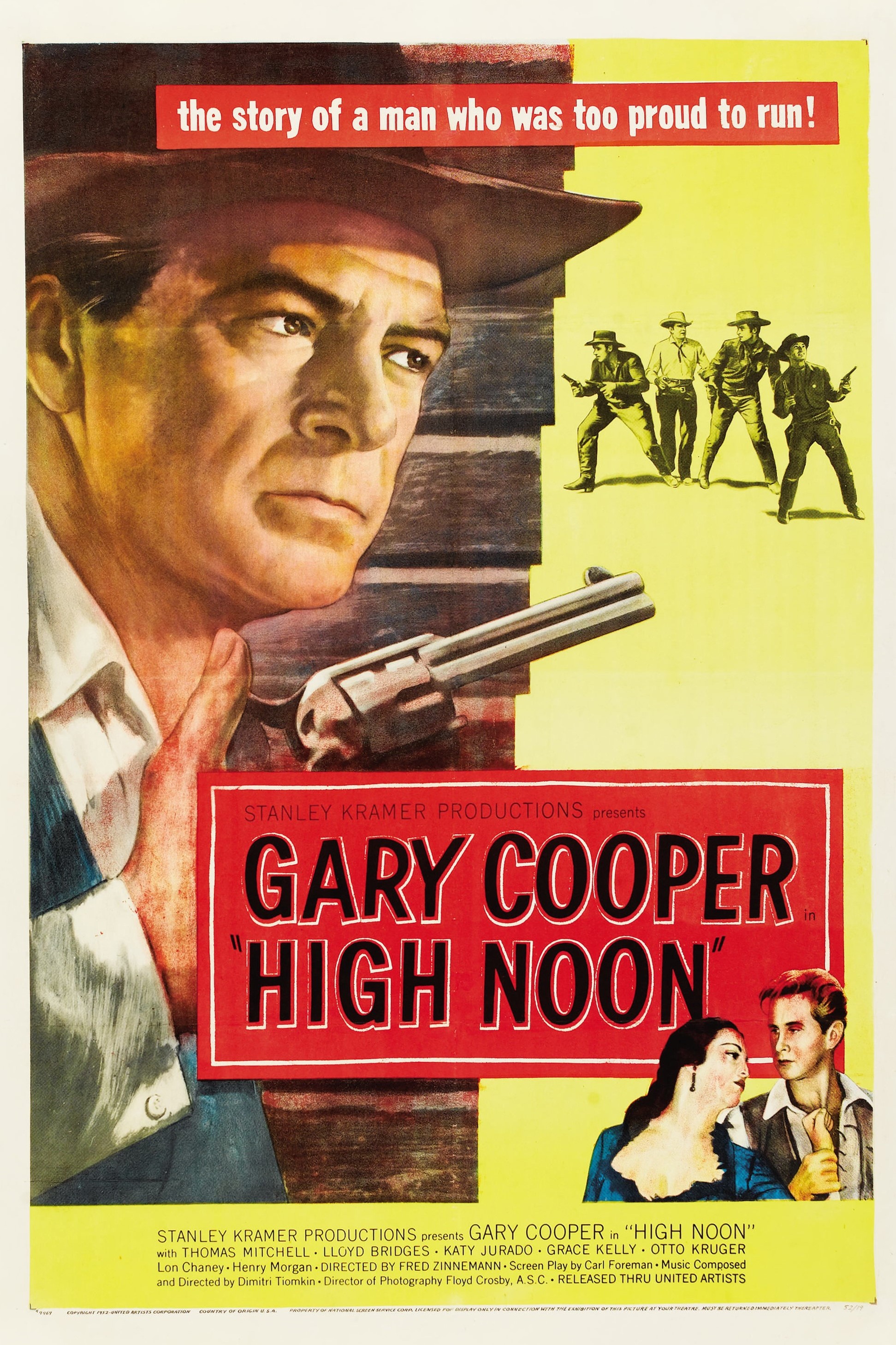
The Plot: Marshall Will Kane (Gary Cooper) is ready to retire and move to another town with his new wife Amy (Grace Kelly). Shortly after the wedding, Kane learns that Frank Miller (Ian MacDonald), a criminal he convicted five years prior, has been released from prison and vows revenge. With less than 85 minutes before Frank’s train arrives, Will opts to stay and face his foe, despite protests from his wife, his Deputy Marshall Harvey Pell (Lloyd Bridges), and his fellow townspeople. Can Kane convince the town to help him, or will he stand alone when Frank comes at…high noon?

Why It Matters: The NFR gives a brief overview, praises Gary Cooper’s “taut” performance, and suggests that the film’s “most unforgettable element” is the title song. Umm…no?

But Does It Really?: I’m afraid this film’s reputation as one of the indisputable classics has built it up too much for me. I liked “High Noon”, but wasn’t blown away by it. It’s a well-crafted Western with an emphasis on brain over brawn, and Cooper is giving the best performance of his career, but overall “High Noon” didn’t connect with me. Perhaps the film’s political subtext is a requirement to fully understand the film. Regardless, “High Noon” has had enough of a cultural impact for me to not question its NFR inclusion, but I’ll be curious to see how well “High Noon” holds up to future film buffs.

Title Track: “The Ballad of High Noon” (aka “Do Not Forsake Me, O My Darling”) is sung over the opening credits by Tex (father of John) Ritter. The theme appears throughout Dimitri Tiomkin’s score as a motif for Will Kane. It also has to be one of the rare movie title songs that references specific plot points in its lyrics (Frank Miller gets two mentions).

Seriously, Oscars?: In a very packed year for nominees, “High Noon” tied “The Quiet Man” and “Moulin Rouge” (not that one) for most Oscar nominations of the year: seven. “Noon” took home four: Score, Song, Editing, and a second Best Actor prize for Gary Cooper. Perhaps due to the film’s political controversy, Carl Foreman’s screenplay lost to “The Bad and the Beautiful”, while the film lost Best Picture to the more conventional “The Greatest Show on Earth” by Hollywood veteran Cecil B. DeMille.

Other notes

  • The real star of this movie is screenwriter Carl Foreman. First off, after Foreman finished his initial four-page outline, he learned it was very similar to the John Cunningham short story “The Tin Star”. In order to avoid the inevitable cries of plagiarism, Foreman bought the film rights to “Tin Star”. But the main story is Foreman being blacklisted during production. A former member of the Communist party in the late ‘30s, Foreman was summoned to testify in front of HUAC. His refusal to name names led to him being blacklisted from working in Hollywood. As a result, many critics – then and now – view “High Noon” as a parable for standing up against the Red Scare. Ironically, Gary Cooper had been a “friendly witness” for HUAC, though he too did not name names.
  • We have a major readout on the Michael Douglas scale. Cooper was 50 during filming, Grace Kelly was 21. Sure that kind of age gap was period appropriate, but still. And while we’re on the subject, rumors of Cooper and Kelly having an affair during filming are unsupported.
  • Another victim of the Hollywood blacklist was co-star Lloyd Bridges, who was “graylisted” for being a member of the Communist-adjacent Actors’ Laboratory Theatre. Looks like he picked the wrong week to join a politically progressive theater troupe.
  • As I’ve said before, Cooper’s very good in this. Will Kane is the perfect combination of Cooper’s established screen personas: rugged cowboy and heroic everyman. You buy Kane’s convictions immediately. Like Fonda in “12 Angry Men”, this man will stand steadfast for his beliefs even when everyone around him tells him otherwise.
  • Shoutout to Katy Jurado, a Mexican-born actor playing a Mexican-born character who is devoid of stereotypes and actually influences the plot of the movie. We won’t see their likes again until “Stand and Deliver”.
  • My favorite shot in the entire movie is when the children are asked to leave the church, and they all very excitedly run outside and play in the field. It’s a lovely moment of levity in an otherwise very serious film.
  • Speaking of the church scene, I’m pretty sure this is the scene “Blazing Saddles” is riffing on for their “Howard Johnson is right!” sequence.
  • When Kane goes to the stable as he considers leaving town, a chicken can be heard clucking in the background. Get it?
  • Fun Fact: The fight between Will and Harvey had to be reshot because Lloyd’s son/future actor Beau Bridges was hiding in the hayloft watching the shoot, and couldn’t stop laughing when his father was doused with water.
  • If you’ve seen any shot from “High Noon”, it’s the shot of Will Kane standing alone as the camera pans back to reveal a deserted town. It’s still a very powerful moment almost 70 years later.
  • No spoilers, but the final shootout (as well as the denouement) does not disappoint. Though now that I think about it, “Dirty Harry” totally rips off this ending.

Legacy

  • Every movie, western or otherwise, that involves a showdown between two characters at high noon is taking their cue from this movie. Now that’s a legacy.
  • Everyone’s career benefited from the success of “High Noon”. Fred Zinnemann followed up with “From Here to Eternity”, Gary Cooper’s career got a resurgence, and Grace Kelly became…Grace Kelly. Although Carl Foreman moved to England to avoid the blacklist, he maintained a successful career as a screenwriter/producer, penning a draft of “The Bridge on the River Kwai”.
  • “High Noon” received the unnecessary sequel treatment twice! 1966’s “High Noon: The Clock Strikes Noon Again” starred Peter Fonda as Will Kane Jr. and Katy Jurado returning as Helen Ramirez. 1980’s “High Noon, Part II: The Return of Will Kane” ignored the previous sequel’s continuity and featured Lee Majors as Will Kane, but this time better than he was before: better, stronger, faster…
  • Adding insult to injury, “High Noon” got the unnecessary remake treatment in 2000 with a TV Movie for TBS starring Tom Skerritt.
  • 1981’s “Outland” starring Sean Connery might as well be called “High Noon…In…Spaaaaaace”.
  • “Well this time John Wayne does not walk off into the sunset with Grace Kelly.” “That’s Gary Cooper, asshole.”
  • And finally, 1989 was a good year for “High Noon”. Three months before making the inaugural roster of NFR films, the film’s Polish poster was modified to promote the Solidarity party in Poland’s first partially free elections under Communist rule. Looks like “High Noon” helped fight Communism after all!
lowHighNoon1

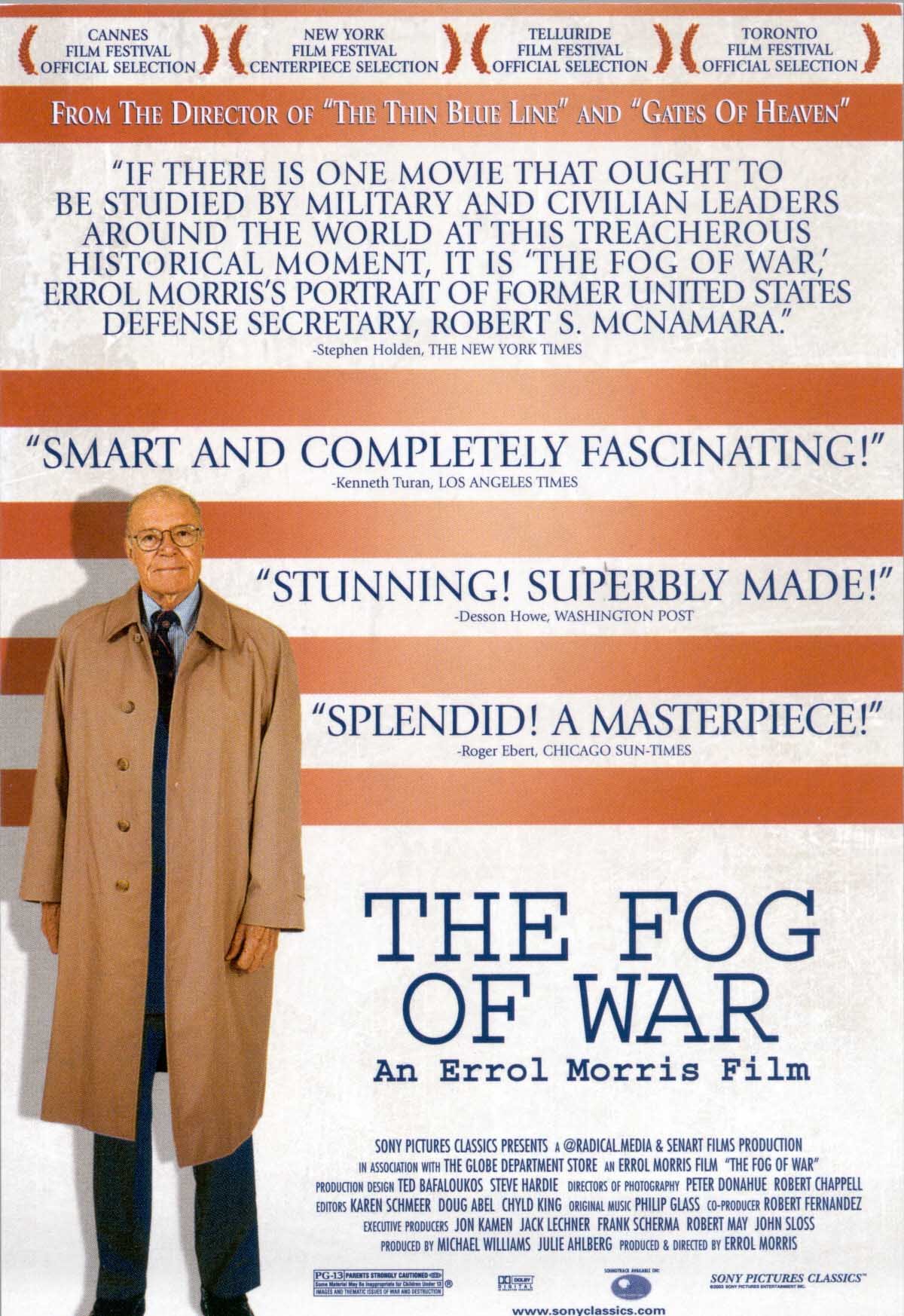
#406) The Fog of War (2003)

MV5BMTc3MTA4NDgzNl5BMl5BanBnXkFtZTcwOTAxNTQyMQ@@._V1_

#406) The Fog of War (2003)

OR “What About Bob?”

Directed by Errol Morris

Class of 2019

Robert McNamara is a very complex figure in U.S. history, as are the wars he participated in. A short write-up about a 2 hour movie can only scratch the surface, so please don’t let this post be your only resource on any of these topics.

The Plot: Controversial political figure Robert McNamara looks directly into Errol Morris’ camera to discuss his life and career, specifically his time as Secretary of Defense under Presidents Kennedy and Johnson. Topics covered include his data analysis for the Air Force during World War II, his tenure as one of the Ford Motor Company’s “Whiz Kids”, his resolution to John Kennedy’s Cuban Missile Crisis, and his clashes with Lyndon Johnson over the Vietnam War. Errol Morris centers his conversations with McNamara around 11 “lessons” that could be applied to, hypothetically speaking, an unpopular war in Iraq we may or may not have been engaging in during the film’s production.

Why It Matters: The NFR gives a thorough rundown of McNamara, and calls Errol Morris an “idiosyncratic documentary filmmaker”. The write-up highlights reviewers who find the film “riveting”, as well as those who are critical of the film’s “selective presentation” of events.

But Does It Really?: As the man who broke the mold of modern documentary, Errol Morris is allowed more than one NFR entry. “Fog of War” covers a lot of the same ground as other films on this list (WWII, the Kennedy presidency, the Vietnam War), but it does so from the perspective of someone who was there. It also discusses these events with the added subtext of the impending Iraq War, an era we are unfortunately reflecting upon quite a bit these days. McNamara is an engaging subject (even when you completely disagree with his motives), and Morris keeps the pace up to prevent this from becoming 110 minutes of an 85-year-old man talking at you. It’s a little too early to call “Fog of War” a classic, but I welcome its inclusion on the list.

Title Track: McNamara defines “fog of war” near the end of the film: “War is so complex it’s beyond the ability of the human mind to comprehend all the variables. Our judgment, our understanding, are not adequate.”

Seriously Oscars?: “Fog of War” did something no Errol Morris movie has done before or since: it won an Oscar. Morris thanked the Academy “for finally recognizing my films”, and pleaded with Americans to “reflect on some of the ideas and issues in this movie” in order to avoid another war. Host Billy Crystal responded with “I can’t wait for his tax audit. Scary times.”

Other notes

  • For starters, shoutout to me! In my “Thin Blue Line” write-up, I predicted that “Fog of War” would make the National Film Registry “eventually”. Granted I have made such predictions for many NFR hopefuls in the last three years, but damn it, this time I was right!
  • Errol Morris became interested in interviewing Robert McNamara after reading his 2001 book “Wilson’s Ghost: Reducing the Risk of Conflict, Killing, and Catastrophe in the 21st Century”. McNamara’s interview was originally intended to be an episode of Morris’ PBS series “First Person”, but after several days of interviews and 20 hours of footage, Morris realized he had enough material for a feature-length documentary.
  • Though not invented for “Fog of War”, the film utilizes Errol Morris’ Interrotron. Much like how a teleprompter displays words in front of a camera lens, the Interrotron displays a live feed of the interviewer, so that the interviewee can respond to the questions while looking directly into the camera. Morris pioneered this interviewing tactic for what he calls “true first person”. The name came from Morris’ wife Julia Sheehan, by jokingly combining the words “interview” and “terror”.
  • The most challenging part of this movie is watching someone enthusiastically talk about their problem solving skills when the result was the death of millions of innocent civilians. Sure, McNamara stopped World War Three from happening by empathizing with Castro, but he also awkwardly sidesteps his involvement in the Tokyo Bombings of 1945. This movie is challenging you to see the complexities of a man you can easily write off as a war criminal.
  • The bombing sequence includes the names of Japanese cities being replaced by comparable American cities to give a context to just how massive this destruction was. It made me feel the weight of what we did in WWII more effectively than almost any other movie on the subject.
  • All this devastation AND he helped invent the seat belt? What won’t you let me just hate this guy?
  • Like “Thin Blue Line”, Morris utilizes a variety of visual aids to punch up subject matter that is more verbal than visual. Throughout the film Morris illustrates his points with newspaper headlines, graphs, data; he even shows dominoes falling over a map of Asia to visualize the “domino theory” of Communism.
  • Wait, McNamara used the phrase “hearts and minds” too? I thought LBJ said it first. Whose talking point is it?
  • Interestingly enough, once the movie focuses on the Vietnam War, McNamara’s presence is covered primarily by archival interviews and footage. Where’d you go, 2003 Bob? That being said, McNamara wrote an entire book pointing out in great detail how the US mishandled Vietnam and its people.
  • “Answer the question you wished had been asked.” If that’s not Politics 101, I don’t know what is.
  • This movie’s big question is, of course, should we sympathize with McNamara? On one hand, he seems genuinely sorrowful while discussing some of the more fatal aspects of his career. On the other hand, he’s had 35 years and countless interviews to hone his responses. Even at 85, McNamara seems to still be grappling with some of it, straight up refusing to answer some of Morris’ questions (“You don’t know what I know”).

Legacy

  • While being interviewed for the film’s release, McNamara refused to apply his 11 lessons to Iraq, stating they were meant in general terms and not in reference to a specific war. As the war progressed, however, McNamara became more candid about his disapproval, and met with George W. Bush (along with other former Secretaries of Defense) in 2006 to discuss the war. McNamara died in 2009 at the age of 93.
  • Errol Morris is still cranking out a new documentary every few years. His most recent is “American Dharma”, a film centered around another controversial political figure…gah! Steve Bannon! Hide the kids!

Further Viewing: The early 2000s inadvertently gave us a Robert McNamara Double Feature. 2001’s “Thirteen Days” tackled the Cuban Missile Crisis, while the 2002 TV Movie “Path to War” chronicled Johnson’s escalation of the Vietnam War. McNamara is played in the former by Dylan Baker and the latter by Alec Baldwin.

#405) Something Good – Negro Kiss (1898)

kiss1380

#405) Something Good – Negro Kiss (1898)

OR “The Windy City Turns Up the Heat”

Directed by William Selig

Class of 2018

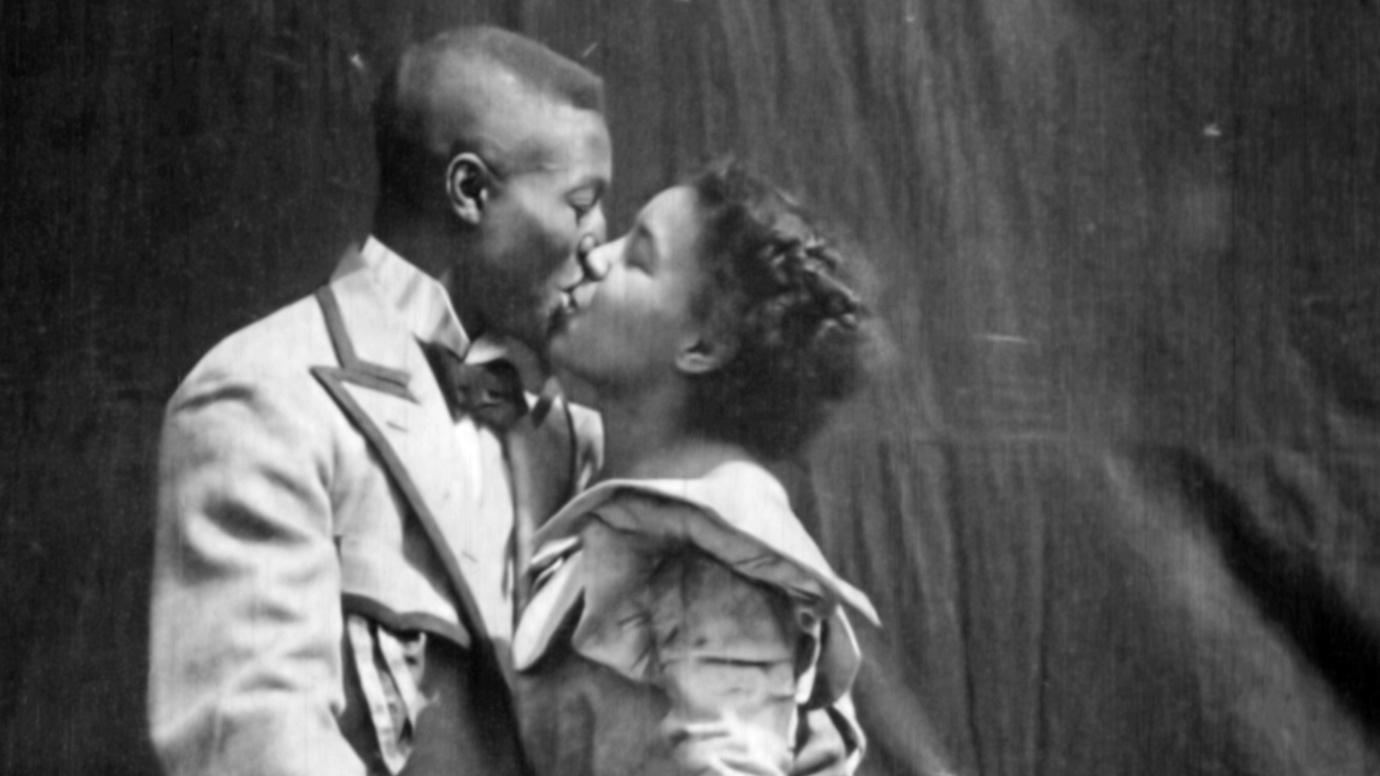
The Plot: Chicago stage performers Saint Suttle and Gertie Brown kiss several times. It’s not this intimate moment that’s groundbreaking, but rather the fact that Suttle and Brown are African-American, showing affection openly and without any reference to minstrel shows or the negative racial stereotypes of the day.

Why It Matters: The NFR’s extended writeup gives a brief overview of the Selig Polyscope Company, the trend of “kissing films” in the late 1890s, and the discovery and restoration of “Something Good”. Dr. Allyson Nadia Field from the University of Chicago calls the short “a landmark of early film history”.

But Does It Really?: Why does the NFR need to oversell me on “Something Good”? In a few brief moments we get quite possibly the first film recording of African-American intimacy in which neither of the participants resort to gross stereotypes. That’s enough for me. Welcome to the NFR!

Shout Outs: As best we know, “Something Good” is intentionally spoofing “The Kiss”, the popular film that spawned the “kissing films” craze.

Everybody Gets One: First of all, shoutout to the aforementioned Dr. Field; everything we know about this movie comes from her research. William Selig was a former vaudeville/minstrel show performer who shifted to producing upon seeing a demonstration of Edison’s Kinetoscope in 1894. He founded the Selig Polyscope Company (one of the first film studios) in Chicago and started filming any local acts he could persuade to appear on camera. Among those performers were Saint Suttle and Gertie Brown, two dancers who may have been at Selig’s studio to perform the then-popular cakewalk dance. It is theorized that Suttle and Brown’s recorded kiss was an afterthought following their dance routine.

Other notes

  • All I can add is a corroboration of the palpable chemistry between Suttle and Brown. These two are all over each other. Get a room, why don’t ya!

Legacy

  • Following “Something Good”, William Selig moved his production company to Los Angeles, and did okay until the film industry switched from novelty shorts to full-length features. Selig lost most of his fortune in the Great Depression, but four months before his death in 1948, he was given an honorary Academy Award in recognition of his pioneering film efforts.
  • Both Saint Suttle and Gertie Brown died in the early 1930s, their vaudeville careers long behind them.
  • “Something Good” disappeared seemingly forever, until it was obtained by USC archivist Dino Everett from a private film collection in New Orleans in the mid 2010s. Everett immediately contacted Dr. Allyson Nadia Field, and thanks to their extensive efforts, “Something Good” has been recognized for its historical significance and added to the NFR. Unsurprisingly, online viewing of the short skyrocketed upon its NFR designation.
  • Not really connected, but now I have “Something Good” from “Sound of Music” stuck in my head, which occasionally segues into “I’m into Something Good” by Herman’s Hermits. It’s a rich and full day of earworms for me.

And with that Herman’s Hermits reference, we wrap up Year Three. We’ll be taking a break for the holidays, but we’ll return in 2020 with Year Four and the first of the NFR Class of 2019.

Happy Viewing,

Tony

#404) Wanda (1970)

event-poster-9575182

#404) Wanda (1970)

OR “Blondie and Clyde”

Directed & Written by Barbara Loden

Class of 2017

A modern trailer for the film’s restoration.

The Plot: Wanda Goronski (Barbara Loden) is an aimless woman, newly divorced and newly unemployed. Her endless days of milling about movie theaters and sleeping with any man who’s willing leads to her meeting Norman (Michael Higgins) in a bar. Wanda finds out later that Norman was in fact robbing the bar and is a wanted criminal. With no money or better options, Wanda continues to aid Norman with his crimes while taking his verbal and physical abuse. Not very appealing for sure, but what if I told you this movie was directed and written by its lead actress? How do you like them apples?

Why It Matters: The NFR calls the film an “affecting and insightful character study” and considers it “one of the finest works of independent cinema during the 1970s.”

But Does It Really?: “Wanda” is one of those largely forgotten films that I’m glad the NFR can find space for. It’s by no means a perfect movie, and at times can be downright unpleasant, but “Wanda” possesses the kind of uniqueness I’m looking for in an NFR entry. The film centers around an indifferent, unintelligent character whose flaws are neither condemned nor glorified, in a production whose financial setbacks manage to feel more like cinema-verite than low-budget shlock. And on top of all that, at the helm we have a female independent auteur at a time when that was unheard of. Thanks to Barbara Loden’s distinctive voice, “Wanda” stands out amongst other films of the era and is a harbinger of things to come for both independent movies and female filmmakers.

Everybody Gets One: Barbara Loden started her career as a model, eventually becoming a TV and film actor, appearing in, among others, 1960’s “Wild River” where she met director/future husband Elia Kazan. Loden was often typecast as the blonde bombshell, including in Arthur Miller’s “After the Fall”, for which she won a Tony for playing a Marilyn Monroe-type. Inspired by a “Daily News” article about a woman who was an accomplice in a botched bank robbery, Loden wrote the screenplay for “Wanda”, securing backing from producer Harry Shuster, and a budget of $100,000. Loden directed the film herself because every director offered the film passed, including her husband!

Wow, That’s Dated: Primarily this film’s abusive attitude towards women. Despite being filmed at the very beginning of the Women’s Lib era, Barbara Loden always refuted claims that the film was a feminist piece, considering it a film “about the oppression of women, of people”.

Seriously, Oscars?: “Wanda” never played an Oscar eligible run, but it did, however, play the festival circuit, and won Best Foreign Film at the 1970 Venice International Film Festival (“Wanda” was the only American film in competition).

Other notes

  • Yes, “Wanda” can be a bit divisive for an audience (Exhibit A: the extended opening sequence of a crying baby), but despite its less appealing qualities, this film immediately communicated to me that Loden has a vision. I was willing to overlook the obviously amateur actors and the extended scenes where “nothing happens” because Loden’s direction instantly conveyed to me that she has a story to tell. Rare is the film that can message that so clearly.
  • With the exception of Loden and Higgins, every actor in the film is a nonprofessional whose performance comes from a series of loose improvisations. Loden treated her screenplay as a launching pad for whatever she and her fellow actors discovered on the day.
  • “No smoking in the courtroom.” What? It’s 1970; you can smoke anywhere!
  • Man, Wanda’s job at the sewing factory dropped her without warning. Where’s Norma Rae when you need her?
  • The movie Wanda naps through is “El Golfo”, a musical starring Raphael and Shirley Jones. Gotta love a movie that takes a break to watch another movie.
  • Michael Higgins was a longtime stage actor, best known for his role as the father in the original cast of “Equus”. He continued acting up until his death in 2008, appearing in such films as “The Savages” and “Synecdoche, New York”. This all being said, I never needed to see him in tighty whities.
  • “Wanda” takes a while to get used to, but ultimately I was fascinated by a movie whose lead character is so passive and a co-lead so abusive. Kudos to both Loden and Higgins for keeping these characters reprehensible but never unwatchable.
  • Shoutout to the gone but not forgotten religious theme park Holy Land U.S.A.
  • Ultimately, I think I respect this movie more than I enjoy it. Loden’s confident grip on filmmaking (in her directorial debut, no less) is commendable, but I was reminded of the Gene Siskel quote “Is this film more interesting than a documentary of the same actors having lunch?” In the case of “Wanda”, my answer is “I’ll have what Barbara’s having.”
  • This all being said, I greatly appreciate that in the end, Wanda doesn’t really learn anything and ends up right where she started. It’s a downer and not very exciting, but hey, that’s life.

Legacy

  • While “Wanda” was not a success in its day, Barbara Loden continued to direct both short films and Off-Broadway plays throughout the ‘70s. Loden was preparing a film adaptation of the novel “The Awakening” when she was diagnosed with breast cancer, which took her life in 1980 at the age of 48.
  • “Wanda” stayed in relative obscurity for the next 30 years, but a restoration by UCLA in 2010 led to newfound recognition. Among the film’s supporters are director John Waters and actor Isabelle Huppert.
  • Not really related, but a sign of our times I felt needed a mention: Number of female directors in this week’s write-ups: 1. Number of female director nominees at this year’s Golden Globes: 0.

#403) Who Framed Roger Rabbit (1988)

MV5BMDhiOTM2OTctODk3Ny00NWI4LThhZDgtNGQ4NjRiYjFkZGQzXkEyXkFqcGdeQXVyMTA0MjU0Ng@@._V1_

#403) Who Framed Roger Rabbit (1988)

OR “Name That Toon”

Directed by Robert Zemeckis. Animation directed by Richard Williams.

Written by Jeffrey Price & Peter S. Seaman. Based on the novel “Who Censored Roger Rabbit?” by Gary K. Wolf.

Class of 2016

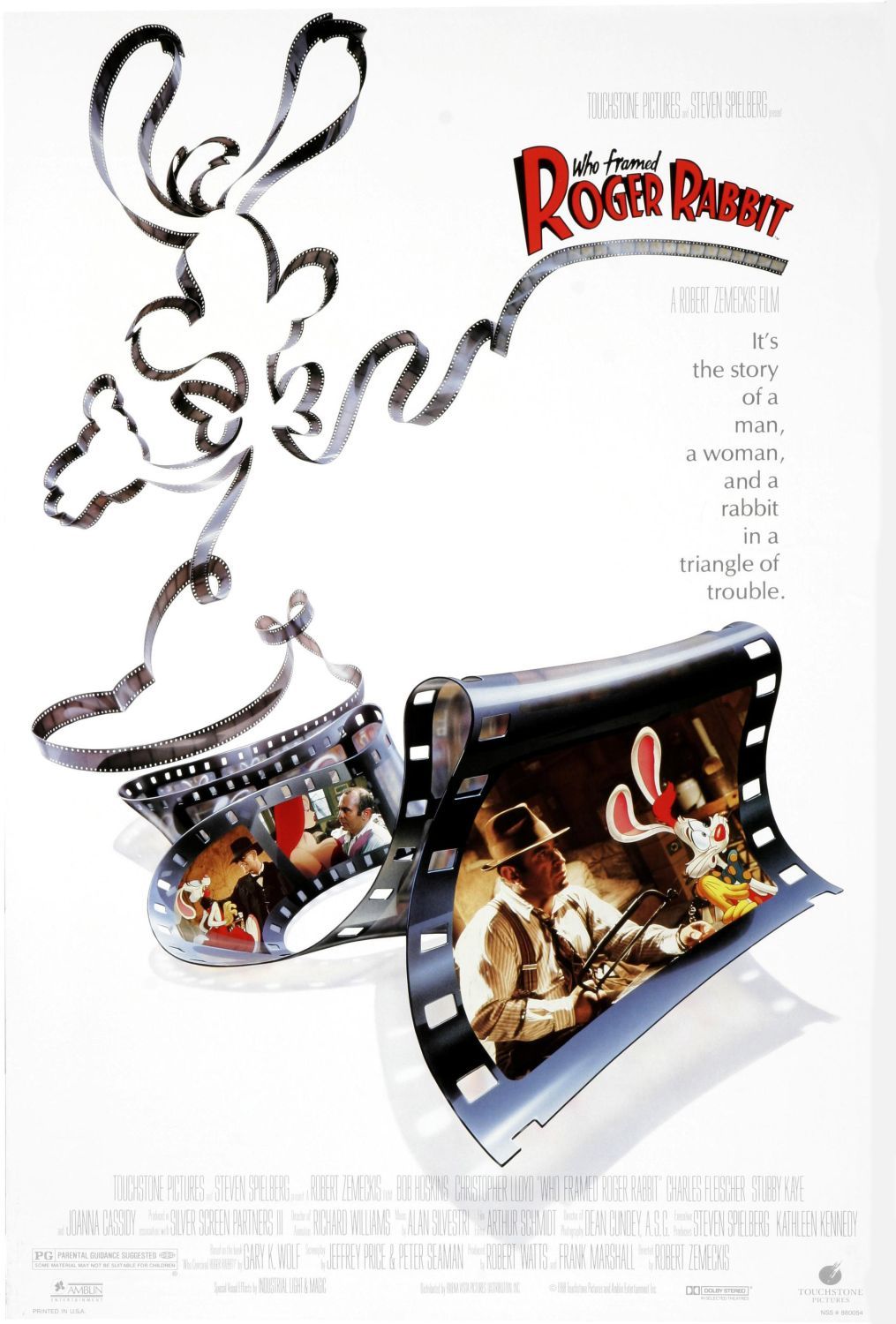
The Plot: In a version of 1947 Hollywood where people and cartoon characters co-exist, detective Eddie Valliant (Bob Hoskins) is hired by cartoon mogul R.K. Maroon (Alan Tilvern) to spy on Jessica Rabbit (voiced by Kathleen Turner), the wife of cartoon star Roger Rabbit (voiced by Charles Fleischer). Valliant takes pictures of Jessica with Toontown owner Marvin Acme (Stubby Kaye), much to Roger’s dismay. The following morning, Acme is found dead, and Roger’s the number one suspect. With Toontown’s new superior court Judge Doom (Christopher Lloyd) hot on their trail, Valliant investigates both Hollywood and Toontown to discover who framed…his client.

Why It Matters: The NFR praises the film for introducing “a new sense of realism into the interactions between cartoons and live-action characters on screen.” There’s also an essay by Library of Congress employee/Bob Hoskins fan Alexis Ainsworth.

But Does It Really?: “Who Framed Roger Rabbit” is a truly unique movie, from its melding of screwball cartoon and film noir, to its breathtaking special effects and once-in-a-lifetime meeting of Golden Age animation characters. Kudos to Zemeckis and Williams for pulling it off, as well as executive producer Steven Spielberg for getting everyone together. “Rabbit” is still a joy to watch 30 years later, and a no-brainer for NFR inclusion.

Shout Outs: Toontown is populated with characters from such Disney NFR titles as “Three Little Pigs”, “Snow White”, “Pinocchio”, “Fantasia”, “Dumbo”, “Bambi”, “Sleeping Beauty” and “Mary Poppins”. References are also made to “Wizard of Oz”, “Maltese Falcon”, “Gilda”, and “Chinatown”.

Everybody Gets One: Actors Bob Hoskins and Charles Fleischer, voice over legends Wayne Allwine, Russi Taylor, and Nancy Cartwright, animation director Richard Williams, and most surprisingly, Kathleen Turner. And Shoutout to veteran Broadway performer Stubby Kaye as Marvin Acme, aka “the vic”.

Everybody Gets One – Toon Edition: “Who Framed Roger Rabbit” is currently the only NFR appearance for such notable cartoon characters as Donald Duck, Goofy, Sylvester & Tweety, Woody Woodpecker, Droopy, Yosemite Sam, Foghorn Leghorn, Road Runner, and Br’er Bear, which is presumably the closest “Song of the South” will ever get to this list.

Seriously, Oscars?: Second only to “Rain Man” at the box office, “Who Framed Roger Rabbit” received six Oscar nominations, and walked away with three: Editing, Sound Editing, and Visual Effects. In addition, the Academy bestowed a Special Achievement Oscar to Richard Williams for his animation direction.

Other notes

  • The biggest similarities between the film and the novel are three quarters of the title. In the novel, the toons were from comic strips, not movies, and the murder plotline involved dopplegangers and a genie. The film’s plotline is an original story taken directly from the real-life business plot to eliminate L.A.’s public transport to increase car sales.
  • Oh Bob Hoskins, you are missed. Who would have guessed that a guy from West Suffolk would be such a great American private eye?
  • This post could just be me praising the animation and special effects team. The animation grounds itself into the reality of its live-action surroundings so effectively you buy into this world instantly. There’s a point where you stop trying to guess how the effects were done, and just sit back in awe of what you are witnessing. That’s real movie magic.
  • “Who needs a car in L.A.? We have the best public transportation system in the world.” I bet that line always gets a laugh at L.A. screenings.
  • Donald and Daffy playing “Hungarian Rhapsody” is a highlight, storyboarded by Richard Williams and the legendary Chuck Jones (who renounced his participation after seeing the final film). Side note: Donald says, “You doggone stubborn little…” Nothing else. Moving on.
  • Shoutout to Mae Questel, reprising her role as Betty Boop for the first time in almost 50 years. She’s still got it, Eddie!
  • Speaking of, this film is notable for being Mel Blanc’s last performance as many of his iconic Looney Tunes characters.
  • If anyone tells you that they find Jessica Rabbit sexually attractive, do not let them into your home.
  • It’s a shame Christopher Lloyd doesn’t get to play the bad guy more often, because he’s perfect as Judge Doom. I’m always amazed when someone who conveys as much warmth as Lloyd does on screen can be equally chilling when the role requires it.
  • The line “I’m not bad, I’m just drawn that way” is one of a handful of lines that comes directly from the novel.
  • Kudos to both Bob Hoskins and Joanna Cassidy. Despite being surrounded by wacky cartoons and special effects, these two always play it straight. Both actors take Eddie’s tragic (and ridiculous) backstory and make it sound plausible and heartbreaking. Not an easy task.
  • My favorite sequence is Eddie’s trip to Toontown, where he must adhere to the logic of the toon world. You get a great cameo by Droopy, fun voice work from the celebrated June Foray, and all the recycled Disney animation you can handle.
  • Yes yes, there’s a bit of crude animation drawn on Jessica Rabbit for a few frames. Move along, you pervs.
  • [Spoilers] The movie tries to give a few red herrings, but of course Judge Doom is the bad guy. Sadly, Doom suffers from the standard bad guy defect of holding off on killing the hero for obligatory reasons, allowing the hero extra time to defeat the villain.
  • The story goes that Tinker Bell flies in at the very end because studio execs refused to release a Disney film where the last line is Porky Pig’s “That’s all, folks!”

Legacy

  • “Who Framed Roger Rabbit” was a blockbuster hit, and helped revive public interest in animation, inadvertently paving the way for the Disney Renaissance of the 1990s. It’s also directly responsible for [shudders] “Cool World”.
  • A sequel was in development at Disney for years, but budget concerns, as well as Disney’s intention to replace the hand drawn animation with computer graphics, led to the film’s cancellation. As of 2018, Robert Zemeckis says that there is a script for a sequel, but highly doubts that Disney would ever greenlight the project.
  • Following the film, Disney really tried to make Roger Rabbit a major character; from the follow-up theatrical shorts to his very own dark ride in the theme parks.
  • Does anyone remember the Roger Rabbit dance move? How many NFR movies have a dance move named after them?

Further Viewing: Despite his dislike of animation/live-action hybrids, Richard Williams agreed to direct the animation for “Roger Rabbit” on the condition that Disney help distribute his long-gestating animated film “The Thief and the Cobbler”. Disney fell through, and the film was sold to Warner Bros., re-edited without Williams’ involvement, and released as “The Princess and the Cobbler”. Williams disowned the released cut, but a bootleg of his original version is a favorite amongst die-hard animation fans.