
#402) Eadweard Muybridge, Zoopraxographer (1975)

eadweard-muybridge-zoopraxographer

#402) Eadweard Muybridge, Zoopraxographer (1975)

OR “History’s First GIF”

Directed by Thom Andersen

Written by Andersen and Fay Andersen and Morgan Fisher

Class of 2015

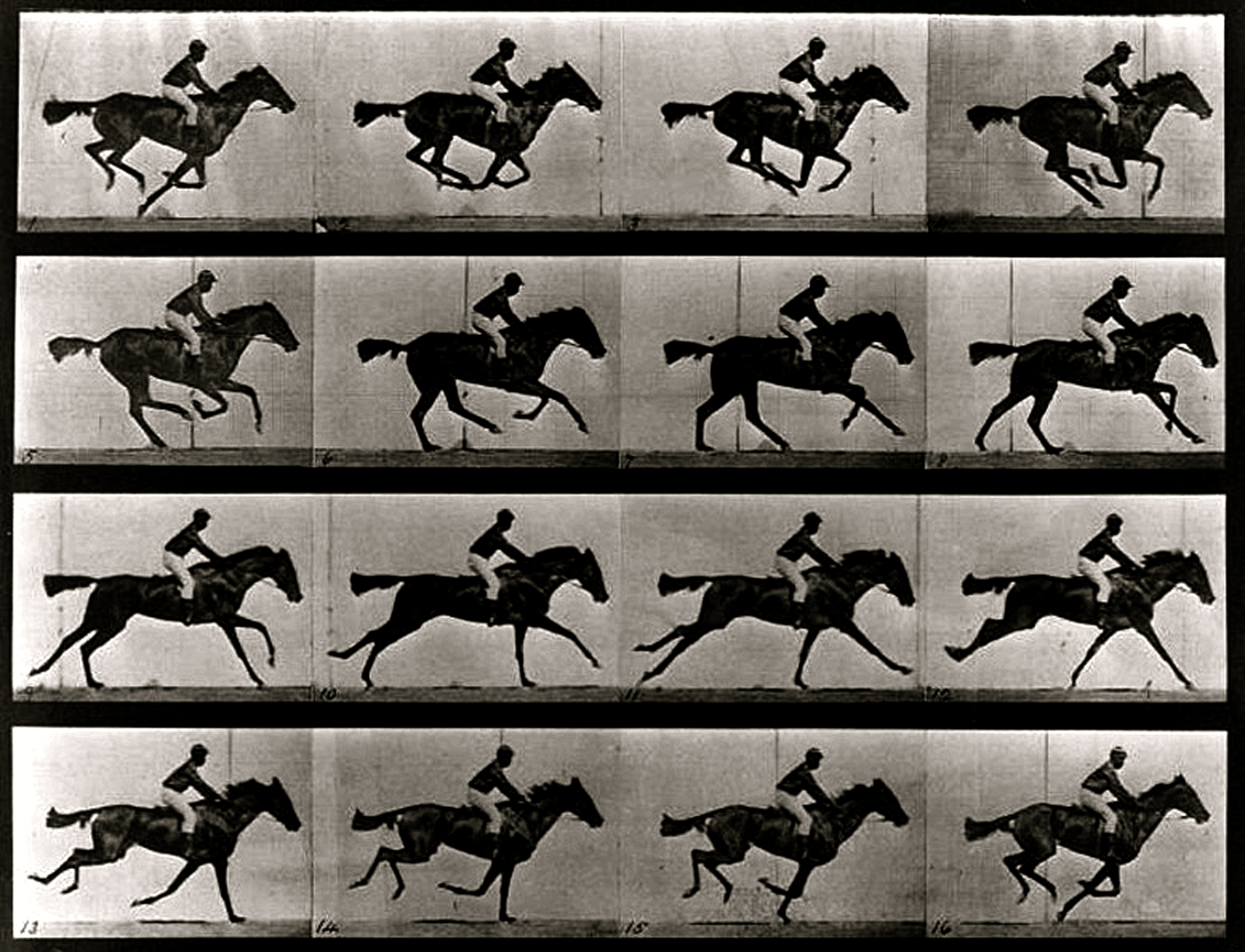
The Plot: Narrated by veteran actor Dean Stockwell, “Eadweard Muybridge, Zoopraxographer” highlights the innovations of Eadweard Muybridge, who, while not the direct inventor of motion pictures, paved the way for the creation of the medium. Throughout the late 1800s, Muybridge took countless stop-motion photos of both animal and human movement, capturing nuances naked to the human eye for the first time (you’re most likely familiar with his “Horse in Motion” series). He displayed his findings on his zoopraxiscope, a spinning disc that was forerunner to the film projector. Director Thom Andersen knows not to get in the way of his subject, and let the man’s life and photos speak for themselves.

Why It Matters: The NFR gives a brief rundown, and charts the film’s path from student film to unaired PBS special to NFR inductee. They also quote film critic Jonathan Rosenbaum’s critique of the film as “[o]ne of the best essay films ever made on a cinematic subject.” Well I’m glad he likes something.

But Does It Really?: Okay, I see what this is: the NFR is killing two birds with one stone. “Muybridge” is not only your standard “Film School Master Thesis” NFR entry, it’s also a way to celebrate Eadweard Muybridge, whose pioneering photography isn’t NFR eligible, but deserves to be mentioned in the history of film. Pretty sneaky, NFR.

Everybody Gets One: A native of Los Angeles, Thom Andersen studied film at both USC and UCLA. “Muybridge” was Andersen’s final project for his Masters’ degree, and when UCLA’s resources ran out (animating Muybridge’s photos maximized his allotted time in UCLA’s processing lab), Andersen got additional funding from LA’s PBS affiliate. When PBS ultimately passed on airing the film, Andersen found a distributor in the now defunct New Yorker Films.

Seriously, Oscars?: No clue if New Yorker Films distributed the film for Oscar eligibility, but for the record: 1975’s Best Documentary winner was “The Man Who Skied Down Everest”. If only PBS had aired “Muybridge”, then we could have done a “Seriously, Emmys?” segment.

Other notes

  • Fun Fact about Eadweard Muybridge: his birth name is the less complicated Edward Muggeridge. Edward used many variations of his name throughout his career, but settled on Muybridge (pronounced “my-bridge”) around 1867. In 1882, Muybridge returned to his native England and adopted the Old English spelling of his first name. As a testament to his numerous monikers, his tombstone erroneously bares the name “Eadweard Maybridge”.
  • At this point in Dean Stockwell’s career, his days as a child actor were long over, and he was making the TV guest star rounds and appearing in B-movies like “The Werewolf of Washington”, so narrating a documentary must have been a step up.
  • Before seeing this documentary, I could not tell you one thing about Muybridge, but it turns out he lived quite an interesting life, and the film spends time on the highlights: from his time photographing the natural wonders of California, to that time he shot and killed his wife’s paramour, and was acquitted on grounds of “justifiable homicide”. Did not see any of that coming.
  • Muybridge’s famous “Horse in Motion” study came about when railroad magnate Leland Stanford commissioned a study to prove that at some point in its trot, a horse has all four of its hooves off the ground, a belief contrary to the popular opinion of the time. Muybridge set up 12 cameras in a row, each one timed to capture a successive movement in the horse’s trot. Lo and behold, Stanford’s theory was correct.
  • The bulk of this film is devoted to studying a selection of the literally hundreds of thousands of photos Muybridge took as part of his motion studies. In a complete reversal of the Victorian era customs of the day, almost all of Eadweard’s human models performed their motions in the nude. I guess they all agreed to do it for science, and were confident that these images would not be preserved and reviewed 130 years later. That being said, this film has more full-frontal nudity than any other movie on this list. But it’s tasteful, so they get away with it.
  • For this film, Thom Andersen uses Muybridge’s notes on camera speed to showcase his motion studies in real time. There’s a significant amount of shuttering during these recreations, leading to an effect akin to a strobe light, but for a fleeting moment you actually feel like you are in the moment with Muybridge and these models. It’s a surprisingly astonishing moment.
  • Although most of the models featured have remained anonymous over the years, Muybridge did notate details on a few of them, particularly the marital status of his younger female subjects. Gross gross gross.
  • Turns out Eadweard Muybridge was one of his own motion studies subjects…and was nude for his movement. Did not need to see any of that.
  • The film ends with the only footage shot specifically for this documentary, a modern recreation of one of Edweard’s motion studies. And of course it’s the one of two nude female models greeting each other and kissing. There’s not a lot of information out there about the models themselves, other than Anje Bos has a few costume design credits to her name, and Sharon Hagen had a brief career as a script supervisor.

Legacy

  • While Eadweard Muybridge didn’t invent motion pictures, he is certainly an influential figure in their history nonetheless. Without Muybridge’s zoopraxiscope, we wouldn’t have Edison’s Kinetoscope. And without Muybridge’s multi-camera set-up, we wouldn’t have the “Bullet Time” scene from “The Matrix”.
  • Thom Andersen only has a handful of other film titles to his name, but one of them is cinephile favorite “Los Angeles Plays Itself”. Andersen currently teaches film history at CalArts.

The Horse’s Head: Class of 2019

national-film-registry

And here comes the next 25!

The Library of Congress announced today the 25 films selected this year for the National Film Registry. They are listed chronologically below:

  • Emigrants Landing at Ellis Island (1903)
  • Body and Soul (1925)
  • Employees Entrance (1933)
  • Becky Sharp (1935)
  • George Washington Carver at Tuskegee Institute (1937)
  • Gaslight (1944)
  • The Phenix City Story (1955)
  • Old Yeller (1957)
  • Sleeping Beauty (1959)
  • My Name Is Oona (1969)
  • I Am Somebody (1970)
  • A New Leaf (1971)
  • Girlfriends (1978)
  • The Last Waltz (1978)
  • Coal Miner’s Daughter (1980)
  • Zoot Suit (1981)
  • Amadeus (1984)
  • Before Stonewall (1984)
  • Purple Rain (1984)
  • Platoon (1986)
  • She’s Gotta Have It (1986)
  • Clerks (1994)
  • Boys Don’t Cry (1999)
  • Real Women Have Curves (2002)
  • The Fog of War (2003)

Devoted readers may notice that something is missing from this list, and that something is ANY of the 50 movies I submitted this year. In fact, only one movie on this list has ever been one of my 50 submissions: “Gaslight” (which I nominated in 2018). As always, the class of 2019 is an excellent mix of classics I look forward to finally watching, favorites I’m delighted to be able to re-watch, and movies I have never even heard of, but will enjoy figuring out what makes them so special. The first post from one of these movies will make its Horse’s Head debut shortly after the New Year. Until then, Happy Viewing.

…Oh for the love of — who put Kevin Smith on the list?

#401) Shoes (1916)

MV5BMTAxNjU3NTI5MTBeQTJeQWpwZ15BbWU4MDU0NDYyNTQx._V1_

#401) Shoes (1916) 

OR “The Agony of the Feet”

Directed & Written by Lois Weber. Based on the short story by Stella Wynne Herron, and the novel “A New Conscience and an Ancient Evil” by Jane Addams.

Class of 2014

No trailer, but here’s a clip

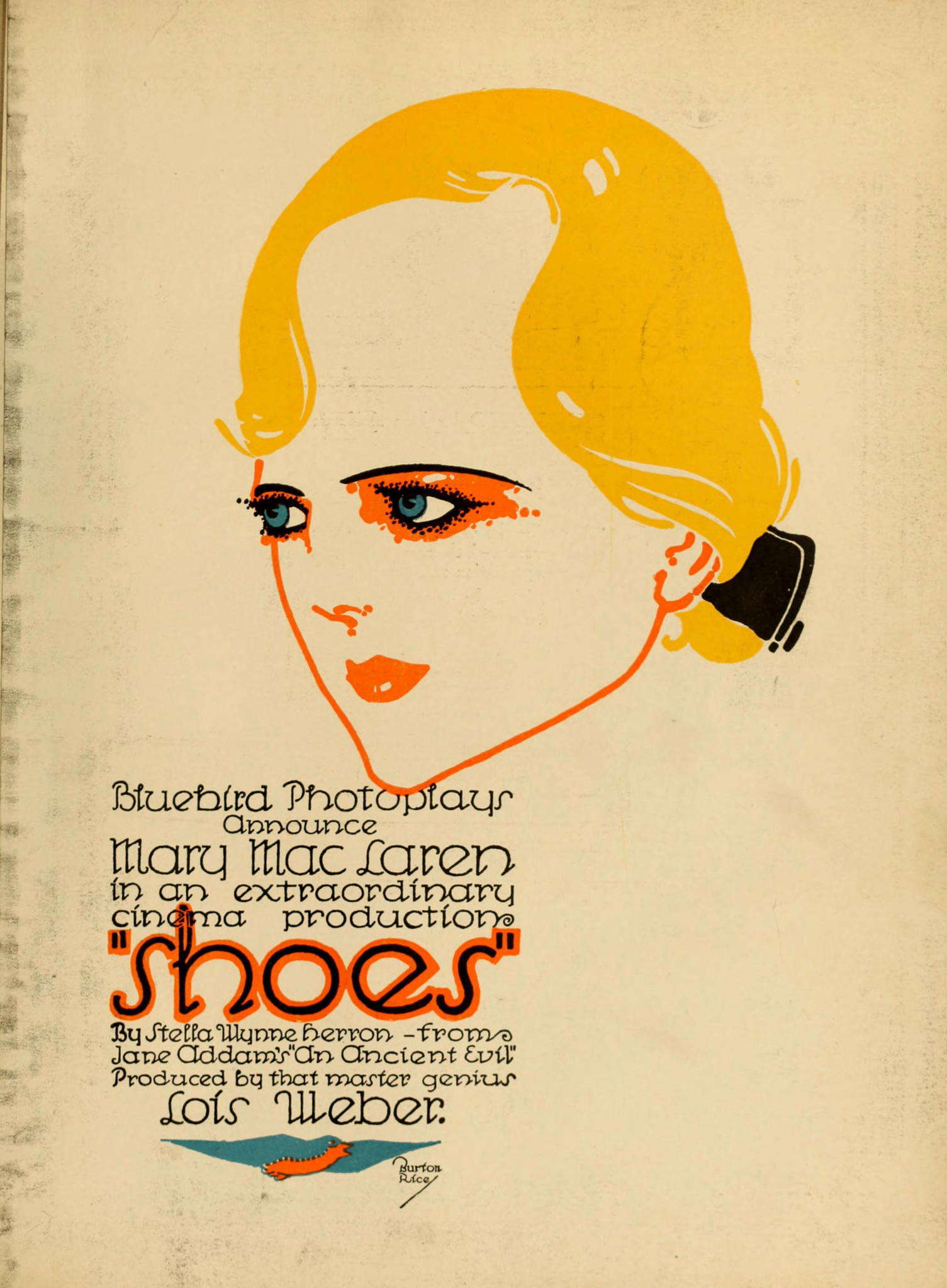
The Plot: Eva (Mary McLaren) is a poor shop girl who works to support her parents and siblings. She tries to save up money for a much-needed new pair of shoes, but her paycheck always ends up going to back rent or debts owed to local businesses. Day after day of standing on her feet and walking through the rain has made Eva’s current shoes damaged beyond repair, but a proposition from “Cabaret” Charlie (William V. Mong) might solve her problems. How much is Eva willing to do for a pair of…shoes?

Why It Matters: The NFR calls the film “a masterfully crafted melodrama” and praises Lois Weber to the hilt. There’s also a detailed essay by film professor/Lois Weber expert Shelley Stamp.

But Does It Really?: Sure, “Shoes” is preachy and its pacing is glacially slow by today’s standards, but it represents one of Hollywood’s few female directors, as well as a prominent social issue of the day. We have another Lois Weber movie on the list – 1916’s “Where Are My Children” – but given her limited surviving filmography, as well as her importance to the early days of Hollywood, there’s plenty of room on this list for another well-made morally-strong Lois Weber film.

Everybody Gets One: Born to a family of evangelical Christians, Lois Weber was a child prodigy on the piano, and quickly turned to performing. Weber and her husband, Phillips Smalley, found work at the Rex Motion Picture Company in New York, which merged with several studios in 1912 to become Universal Studios. Following a move to Hollywood, Weber found herself directing, writing, and acting in her own movies. With this level of creative control, Lois Weber felt that movies were “an outlet for my emotions and my ideals”. “Shoes” was influenced by Weber’s days as a missionary on the streets of New York, and the poverty-stricken living conditions she witnessed.

Wow, That’s Dated: “Shoes” is firmly steeped in its 1910s Progressive Era setting, but there’s still a lot of the film’s depiction of living below the poverty line that rings true today. Also dated: Five and Dime stores where items actually cost five and ten cents.

Other notes

  • “Shoes” begins with a direct passage from “A New Conscience and an Ancient Evil”, which ends with the infamous words about the woman who “sold herself for a pair of shoes”.
  • Poverty stricken family, a father who refuses to work: depressed yet?
  • Silent movies are always a good source for words and phrases that are no longer commonplace. Example: Lil mentions to Eva that “Cabaret” Charlie is the man who “rubbered at us” on the street the previous day. In this case, “rubbered” is a verb meaning to rubberneck. That’s far less filthy than what I originally imagined.
  • Mary McLaren kinda looks like Amy Schumer. What’s she up to these days?
  • And then we get to the shot in which Eva’s shoes are so worn, a nail pierces her exposed sole. We get a very close, albeit not graphic, shot of Eva’s foot. Somewhere Quentin Tarantino is taking notes.
  • I must admit, the performances in this film are uniformly good. There’s none of the “back of the house” theatrics I’ve come to expect from silent film acting; everyone plays it naturally. It’s a refreshing change of pace.
  • There is no worse feeling on God’s green Earth than when you get rainwater in your shoes.
  • This may be the only movie I’ve ever seen that makes my feet sore just from watching it. I assume that’s what Lois Weber was going for, so mission accomplished.
  • Weber shows her experimental side with a superimposed hand labeled “POVERTY” reaching out for Eva while she struggles to sleep. It’s way too on-the-nose, but you can’t spell “poverty” without “overt”.
  • Despite the film’s very impressive restoration by the EYE Film Institute Netherlands, that last reel is damaged beyond repair. Certain shots look like they were filmed during a sandstorm.
  • When Eva decides to sleep with “Cabaret” Charlie, she looks at her reflection in a cracked mirror. Get it?
  • Oooh, Eva’s showing off some of her undergarments. It’s 1916: we could all go to jail just for looking at this!
  • It definitely took me a minute to realize what was happening when Eva meets with “Cabaret” Charlie and suddenly we shift to Eva’s dreams of a better life for herself. This is how the movie implies sex without showing billowing curtains or a train speeding into a tunnel. It’s the cinematic equivalent of “close your eyes and think of England”.
  • Ultimately, “Shoes” holds up quite well, but even at less than 50 minutes in length, it still feels incredibly padded and is marred with slow (by modern standards) pacing. Perhaps Lois Weber’s original intent of a two-reeler (rather than the final five) would have been more effective.

Legacy

  • Lois Weber’s star continued to rise throughout the 1910s, to the point of forming her own studio: Lois Weber Productions. She continued to crank out hit after hit, but once the roaring ‘20s came along, audiences found her moral crusading tame and boring. After a hiatus, Weber spent the last 15 years of her life going from studio to studio, but nothing ever stuck. Her death in 1939 was largely ignored by Hollywood, and of her hundreds of movies, less than 20 are known to survive.
  • Thankfully, Lois Weber’s place in film history has been revisited and praised, starting with a posthumous star on the Hollywood Walk of Fame in 1960.
  • “Shoes” was a big hit for Universal, so technically “Shoes” is one of the reasons that we have movies like “Fast & Furious Presents: Hobbs & Shaw”.

#400) Judgment at Nuremberg (1961)

71UYvc5TCOL._SL1469_

#400) Judgment at Nuremberg (1961)

OR “The Tribunal Has Spoken”

Directed by Stanley Kramer

Written by Abby Mann. Based on his teleplay.

Class of 2013

As always, I am not your definitive guide to world history, in this case the Nuremberg trials and the aftermath of World War II. I’m just here to watch the movie, but I encourage you to learn more about what some have called “the greatest trial in history”.

The Plot: “Judgment at Nuremberg” is a fictional account of the Nuremberg trials, specifically the Judges’ trials that charged the officials who upheld Hitler’s eugenics practice in Nazi Germany. American Judge Dan Haywood (Spencer Tracy) is brought in as chief judge for the case, which prosecutor Col. Lawson (Richard Widmark) considers open-and-shut. German defense attorney Hans Rolfe (Maximilian Schell) makes the argument that the rest of the world is equally guilty of ignoring Hitler’s rise, and accused judge Ernst Janning (Burt Lancaster) maintains that the Germans went along with Hitler out of fear and patriotism. There’s many a complex shade of gray in this courtroom drama, but Stanley Kramer gets his message across in the end.

Why It Matters: The NFR highlights the film’s message regarding “the value of a single human being”, and details the film’s Oscar wins. The only superlative states that the film boasts “fine performances from its all-star cast.”

But Does It Really?: I’m surprised it took 25 years for a Stanley Kramer “message picture” to make the list (“Guess Who’s Coming to Dinner” arrived four years later). “Judgment at Nuremberg” has aged well, and is a well-crafted drama with an outstanding ensemble of actors, but after 60 years the film still hasn’t graduated from “great movie” to “classic”, and tends to be remembered as an “Important Movie” of its time. “Judgment” is a fine example of the dramas Stanley Kramer was known for, and is a worthy, but not essential, NFR entry.

Everybody Gets One: Maximilian Schell played Hans Rolfe in the original “Playhouse 90” production, and so impressed Abby Mann and Stanley Kramer that they both insisted on Schell reprising his role for the film, even when bigger names like Marlon Brando expressed interest. Also along for the ride are two unknown actors who would become TV stars by decade’s end: William Shatner and Werner Klemperer, aka Kirk and Klink.

Seriously, Oscars?: “Judgment at Nuremberg” tied “West Side Story” with 11 Oscar nominations, the most for any movie that year. “Nuremberg” ended up losing most of its categories to “West Side Story” (and a few to “The Hustler”), but still snagged two important wins. Abby Mann won for his Adapted Screenplay (the only category “West Side” lost), and Maximilian Schell beat out co-star Spencer Tracy for Best Actor.

Other notes

  • Prior to my viewing, I screened the original “Playhouse 90” production of “Judgment at Nuremberg”. The teleplay obviously lacks the star power and overall scope of the film, but there’s something to be said about a show that covers the same material in half the time. And you could not get two more drastically different interpretations of Judge Haywood than Claude Rains’ elegance and Spencer Tracy’s realism.
  • As with his work in the original teleplay, Maximilian Schell wipes the floor with his co-stars. It helps that the role is far more challenging and flashy than his counterpart Richard Widmark, but Schell helps you see a man whose vow to “do the right thing” is always a struggle. Side note: Schell’s role is not a lead one, but the cast is an ensemble with enough co-lead roles that the argument can be made.
  • The only major player whose performance sticks out in a bad way is Burt Lancaster as Ernst Janning. Lancaster’s about 15 years too young for the part, and while he is quite effective in the role, it’s still a Hollywood leading man overtly playing against type. First choice Laurence Olivier would have been a stronger choice, but his days of playing disgraced ex-Nazis weren’t too far away.
  • Marlene Dietrich’s subplot as Frau Bertholt was written specifically for the movie. A real-life German expat and prominent humanitarian for the American war effort, Dietrich had great difficulty saying some of her character’s dialogue about not all Germans being aware of Hitler’s intentions.
  • This movie has a lot of distracting zooms and 360-degree camera movements. Stanley Kramer later admitted he included these to spice up a potentially monotonous courtroom drama, and in hindsight considered them “a little indulgent”.
  • And then we get Montgomery Clift’s cameo as the sterilized Rudolph Peterson. You can’t help but consider the parallels between the aftermath of Rudolph’s sterilization and the aftermath of Clift’s car accident. Both are men who are a tormented shell of what they once were, which aids in sympathizing with Clift’s character.
  • Speaking of star cameos: Judy Garland is not the first person you think of when you think “German hausfrau”, but boy does she deliver on the character’s pain and vulnerability. Kudos to Kramer for the unconventional casting, and kudos to Judy for pulling it off so effortlessly.
  • As dramatic and impactful as this film can be at times, nothing compares to the sequence that utilizes actual footage from the concentration camps. It is a sobering, haunting moment in the film. Despite the film’s best efforts, this is the imagery that will stay with me from “Judgment at Nuremberg”.
  • Janning’s testimony contends that most Germans did nothing to stop Hitler because they knew it was just a phase the country was going through. Sound familiar?
  • The film ends with a major continuity error that I’m surprised no one has mentioned: The film has the German characters speaking English for obvious pacing/dramatic reasons, but stresses that everyone in the trial has a translator. At the end of the film, Haywood meets with both Rolfe and Janning outside of the courtroom, and everyone understands each other perfectly, even though it is never established that either Rolfe or Janning speak English. How did no one catch that?

Legacy

  • After the success of “Judgment at Nuremberg” (and fresh off his other dramas “On the Beach” and “Inherit the Wind”), Stanley Kramer challenged himself to make “something a little less serious”. The result: 1963’s “It’s a Mad, Mad, Mad, Mad World”, an epic comedy about as far away from Nuremberg as you can get.
  • Abby Mann adapted “Judgment at Nuremberg” once again for the theater, and this version played Broadway in the spring of 2001. Maximilian Schell returned, only this time as Ernst Janning, which he always felt was the best role in the show.

400 Movies! I can’t believe it either! Thanks for sticking it out with me for so long. Onto the next 400. 

Happy Viewing,

Tony

#399) Samsara: Death and Rebirth in Cambodia (1989)

1127900_landscape

#399) Samsara: Death and Rebirth in Cambodia (1989)

Directed & Written by Ellen Bruno

Class of 2012

DISCLAIMER: I am in no way shape or form an expert on Cambodia, its people, or its complex history, especially the era covered in this movie. I highly recommend researching the Khmer Rouge reign of Cambodia before watching “Samsara”.

In 1975, Cambodia’s communist party the Khmer Rouge (led by Pol Pot) overthrew the government and took command. Pol Pot ordered any who opposed him to be executed, resulting in the Cambodian genocide with a death toll anywhere from 1.5 to 3 million people. In 1979, Vietnamese soldiers invaded Cambodia and ended the Khmer Rouge’s reign. “Samsara” documents the struggles of Cambodian citizens in the immediate aftermath of these events. The Cambodians in the film are shown trying to return to normalcy while wrestling with the massive loss they have experienced, as well as being caught between the new self-appointed Vietnamese rulers and the remnants of the Khmer Rouge. Coming from the Sanskrit for “world”, Samsara refers to the inevitable rebirth that comes from death, and this film emphasizes that Cambodia will be reborn following these traumatic times.

Like many of the documentaries on this list, “Samsara” does not interfere with its subjects, allowing them to tell their own story. Those interviewed discuss their deep state of mourning, their survivor’s guilt, but ultimately their hope for the future of Cambodia. The film opened my eyes to a culture and history I only knew in passing, and gave me a better understanding on a deeper, more emotional level. In less than 30 minutes “Samsara” helps you begin to comprehend the atrocities Cambodia has faced, and still manages to resonate after 30 years and a completely overhauled Cambodia. No argument here for NFR inclusion.

Why It Matters: The NFR describes the film as “poetic, heartbreaking and evocative”. They also crib some of their text from the “Samsara” write-up found on Ellen Bruno’s official website.

Everybody Gets One: Not a lot of info out there about Ellen Bruno, other than she started out as an international relief worker in many of the countries she would later document in her films. Frustrated with direct service work, she got an MA in film at Stanford. “Samsara” was Ellen’s master thesis project.

Seriously, Oscars?: “Samsara” won in the Documentary category at the Student Academy Awards, but didn’t make it to the big room. Coincidentally, one of the other Student Academy Award winners that night was fellow future NFR entry “The Lunch Date”. For the record: the Documentary Short winner at that year’s Oscars was “Days of Waiting”, Estelle Ishigo’s account of her time in a Japanese internment camp.

Legacy

  • Ellen Bruno continues to make films, most of which are about oppressed people in such Asian countries as Tibet and Burma. Her most recent film, 2013’s “Split”, tackles divorce from a child’s perspective.
  • Shortly after the release of this film, the United Nations started overseeing peace talks, and in 1991, the Vietnamese withdrew their troops from Cambodia. The Cambodian People’s Party replaced its Communist ideologies with a combination of a monarchy and free market economy, which are still in effect to this day.

Further Activism: The Bruno Films’ website includes a page on how to take action and raise funds for the social issues chronicled in Ellen’s movies. Check it out here.