#354) West Side Story (1961)

71IZw0kAFAL._SL1226_

#354) West Side Story (1961)

OR “Sang Warfare”

Directed by Robert Wise and Jerome Robbins

Written by Ernest Lehman. Based on the play by Arthur Laurents. Music by Leonard Bernstein, Lyrics by Stephen Sondheim.

Class of 1997

The Plot: “Romeo and Juliet” gets a modern retelling in the 1950s urban jungle of New York’s Upper West Side. There’s an escalating turf war between two gangs of juvenile delinquents: the Puerto Rican Sharks and the all-white Jets. At a local dance, former Jets leader Tony (Richard Beymer) meets Maria (Natalie Wood) – sister of Sharks leader Bernardo (George Chakiris)- and the two immediately fall for each other. Both parties are warned about seeing “one of them”, but the two continue to meet in secret, unaware of their love’s inevitable tragic conclusion. Oh, and it’s a musical.

Why It Matters: Though the NFR’s write-up praises the film for being “even bigger and more elaborate” than the stage production, it points out that both Natalie Wood and Richard Beymer are dubbed and miscast.

But Does It Really?: The original Broadway production of “West Side Story” was a watershed moment for theater, and the film has left a lasting ripple effect on American pop culture, but…it didn’t do much for me. The dance numbers are still electrifying and are matched by Bernstein & Sondheim’s untouchable score, but I couldn’t get into this film beyond its technical achievement. Ultimately, the miscasting of Natalie Wood is the film’s downfall, as is the then-common studio practice of dubbing all of the principles’ singing. “West Side Story” will always have a place in film history, but overall I don’t know if it holds up as well as people claim it does.

Everybody Gets One: Jerome Robbins was already a celebrated Broadway director/choreographer when he staged the original “West Side Story”. When approached by producer Walter Mirisch to choreograph the film, Robbins refused unless he could also direct. A compromise was reached: Robbins would direct the songs and dances, and the more experienced Robert Wise would handle the “book scenes”. Robbins’ extensive retakes led to the film going over-budget and behind schedule, and he was dismissed. “West Side Story” is his only film as a director.

Wow, That’s Dated: Of the main Sharks, Rita Moreno is the only one who is actually Puerto Rican; Natalie Wood is Russian, George Chakiris is Greek, and Jose de Vega is Fillipino. To make matters worse, Natalie Wood talks in a stereotypical Puerto Rican accent, and all of them wore dark makeup so that their skin tones matched.

Seriously, Oscars?: “West Side Story” tied “Judgment at Nuremberg” with 11 Oscar nominations and won 10, including Picture, the Supporting trophies for Chakiris and Moreno, and Director for Wise and Robbins – the first time that prize was shared. Robbins also received an honorary Oscar for his choreography. That’s all well and good, but what about “The Hustler”?

Other notes

  • The stage cast of “West Side Story” were bypassed for the film; deemed too old to convincingly play youths. Natalie Wood was cast for her star power, Richard Beymer for his all-American looks. Although both could sing, neither was up to the demands of the score, and were dubbed by, respectively, Marni Nixon and Jimmy Bryant.
  • One question about the overture: What am I looking at? I feel like Saul Bass phoned this one in.
  • The opening ballet is an exhilarating introduction to this movie’s world, but once we get to Riff and Tony (and an obvious jump from on-location to in-studio) the film loses some of its energy.
  • The real star of this movie is Jerome Robbins. His style has been parodied to death, and it doesn’t make sense for gang members to excel at ballet, but his choreography highlights the emotions and tensions of each scene. It is still exciting to watch almost 60 years later.
  • The problem with an HD transfer of an old movie is that you can see the process shots coming a mile away. The transition from the dance hall to the streets in “Maria” sticks out with great clarity.
  • “America” is the best number, led by charismatic turns from Chakiris and Moreno. Good thing the subject matter is no longer relevant and we acknowledge Puerto Ricans for the American citizens they are, right? …Right? [Nervous laughter, followed by loud sobbing]
  • Nice workaround using a fire escape for the balcony scene. In fact, the whole film follows “Romeo and Juliet” quite faithfully, but the updates are so natural you don’t notice.
  • “Gee, Officer Krupke” was in the second act of the play, but was swapped with “Cool” for the film. “Krupke” becomes especially superfluous in its earlier placing, but it’s a nice showcase of Russ Tamblyn’s acrobatics.
  • As Maria, Natalie Wood is her usual charming screen persona, but it’s impossible for me to get past her accent and dubbed singing. “I Feel Pretty” should be a lovely highlight of the film, but it comes off as an uncomfortable missed opportunity. Catchy song, though.
  • I know they’re just going off of “Romeo and Juliet”, but Tony and Maria need to slow their respective rolls. It has been less than a day!
  • The “Tonight Quintet” gets back to the film’s emotional core, and demonstrates how to successfully film a song that covers several characters at once. Thomas Stanford earned that editing Oscar.
  • As previously mentioned, “Cool” is now placed after the rumble, and makes for a better choice to relieve the tension of the previous scene. Between the famous opening riff and the finger snapping, this is the number that has become our cultural shorthand for “West Side Story”.
  • Man, we spend a lot of time with the Jets towards the end of the film. Wasn’t Natalie Wood in this at some point?
  • Rare for the early 1960s, the credits don’t appear until after the movie ends, preserving the film’s dramatic tension. Okay Saul Bass, you win this round.

Legacy

  • “West Side Story” is one of those movies where the cultural impact is an aesthetic rather than a specific moment. I suspect most people aren’t even aware they’re referencing the movie when they snap their fingers and emulate the choreography.
  • Wise and Lehman would reunite to adapt another acclaimed musical for the screen: “The Sound of Music”.
  • As of this writing, production is set to begin on a Steven Spielberg directed remake of “West Side Story”. The cast looks promising, and the creatives have a high pedigree, so I’m hopeful.
  • “West Side Story” had filmdom’s definitive finger snap for decades. If only Thanos hadn’t gotten the Mind Stone.
  • The stage version of “West Side Story” has played around the world in the last 60 years, but you’ll be hard-pressed to find a production that eschews Jerome Robbins’ choreography or Joseph Caroff’s poster art.
  • Most notable of the film’s parodies is the Oscar-winning 2005 short film “West Bank Story”, which transplanted the rivalry to Israel and Palestine.
  • And of course, this is the breakthrough movie for the legendary, EGOT-winning, unstoppable Rita Moreno.

Listen to This: The “unequaled” original Broadway recording of “West Side Story” made the NRR in 2008. Cary O’Dell is once again on hand with a historical essay, as is a 2017 interview with Stephen Sondheim about all his NRR entries.
#353) Mildred Pierce (1945)

MV5BNzljY2U2MDItYWE3Yi00OWE3LWEyMjQtMGNkZmJjNDE0NDJjXkEyXkFqcGdeQXVyNjc1NTYyMjg@._V1_

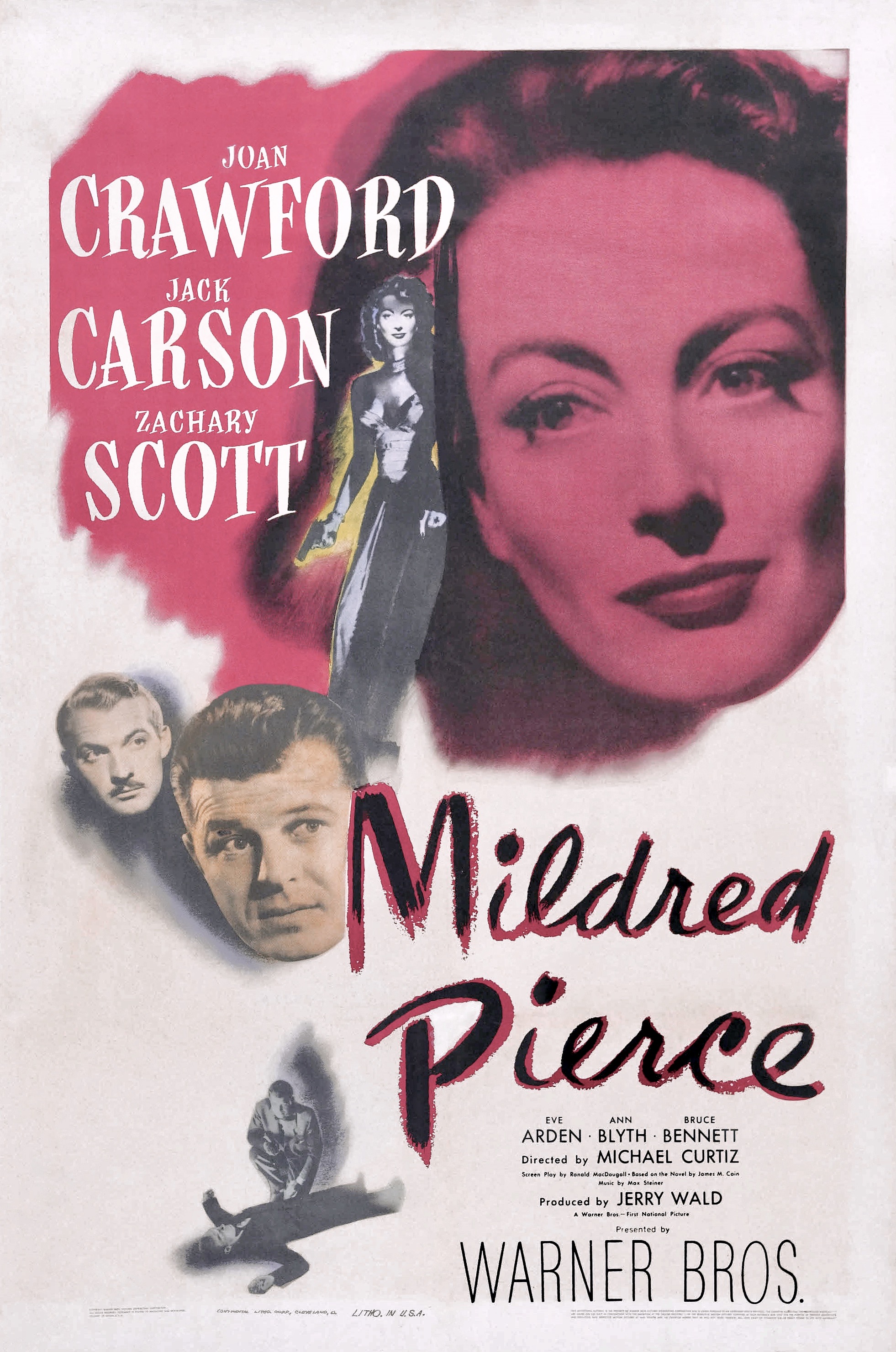
#353) Mildred Pierce (1945)

OR “Bridge over Troubled Daughter”

Directed by Michael Curtiz

Written by Ranald MacDougall. Based on the novel by James M. Cain.

Class of 1996

The Plot: Late one night, Mildred Pierce (Joan Crawford) discovers the dead body of her husband Monte Beragon (Zachary Scott) in their beach house. At the police station, Mildred dismisses the notion that he was shot by her first husband Bert (Bruce Bennett), and a flashback tells us how this all started. After she and Bert divorce, Mildred works as a waitress to support her daughters Veda and Kay (Ann Blyth and Jo Ann Marlow). With support from Bert’s former business partner Wally (Jack Carson), Mildred purchases a building from playboy Monte and converts it into a restaurant. Assisted by the wisecracking Ida Corwin (Eve Arden), Mildred becomes a successful entrepreneur, but her relationship with a spoiled, ungrateful Veda has become damaged beyond repair. There’s loads of double-crossing and emotional manipulation in one of Hollywood’s most iconic melodramas.

Why It Matters: The NFR calls it the “quintessential Joan Crawford film” and praises the work of Crawford, Blyth, Arden, and Carson. An essay by NFR-staple Charlie Achuff helps separate fact from fiction regarding the mythos of Joan Crawford.

But Does It Really?: I’ll label this one as “historically significant/a minor classic”. “Mildred Pierce” is not one of the essentials, but overall it is still a pretty damn good film. They sanitized the novel, but this story still has some bite to it, and a confident Crawford leads a strong ensemble. “Mildred Pierce” isn’t the Important Film it was in 1945, but it’s still an entertaining example of what was coming out of the Hollywood studio system, and holds up far better than most films of the era.

Shout Outs: Max Steiner’s score contains a brief reprise of his theme from “Now, Voyager”.

Everybody Gets One: Ann Blyth started acting at the age of five and got her professional start in the original Broadway cast of “Watch on the Rhine”. Shortly thereafter, she signed a film contract with Universal, and was loaned out to Warner Bros. after a successful screen test for Veda Pierce. Blyth’s career never replicated her “Pierce” success, but she’s still going strong at 90, speaking fondly of both the film and Joan Crawford.

Wow, That’s Dated: 1945 was an interesting year for women in America. The war was ending, and the same women who were asked to replace men in the workforce at the start of the war were now being told to go back to being housewives. “Mildred Pierce” was noteworthy for suggesting that women could be productive members of society outside of the kitchen.

Seriously, Oscars?: One of the biggest hits of 1945, “Mildred Pierce” received six Oscar nominations, including Best Picture. The film lost to fellow NFR entry “The Lost Weekend”, but it won the category that mattered most: Best Actress. Joan Crawford was home with pneumonia (allegedly; some claim she opted to stay home rather than risk embarrassment) and director Michael Curtiz presented her the statuette at her bedside.

Other notes

  • Joan Crawford spent the ‘20s and ‘30s at MGM playing a high society flapper-type. When those roles no longer satisfied her, Crawford and MGM amicably parted ways in 1942. Crawford was immediately snatched up by Warner Bros., and rejected every script that came her way. Once she learned “Mildred Pierce” had been optioned, she lobbied hard for the role of a hard-working, middle class mother (a full 180 from her previous characters). Michael Curtiz did not want her for Mildred, but relented after she agreed to do a screen test. Curtiz and Crawford clashed often on set, but both praised the other in subsequent interviews.
  • The MPAA essentially forbid “Mildred Pierce” from being adapted to film, due to its many “sordid and repellent elements”. As a result, many liberties are taken with the source material. The primary change for the film is the Code’s insistence that these morally complex characters be punished for their actions, hence the addition of the murder subplot, which does not exist in the book.
  • I believe these opening credits are just upshore from Deborah Kerr & Burt Lancaster.
  • Shoutout to cinematographer Ernest Haller. He’s clearly enjoying the opportunity to mix film noir elements into each shot. Lots of unnecessary shadows in this one.
  • Wally is a walking encyclopedia of ‘40s slang (Presumably the “Ball of Fire” edition).
  • Did Bert and Mildred ever debate which side of the family Veda’s “evil gene” is from?
  • Bruce Bennett was an Olympic shot putter and actor…in that order.
  • Does the Chekhov’s gun principle still apply if the gun is fired at the beginning of the movie, and then discovered in a flashback? Discuss with your group.
  • Wow, Ann Blyth is stealing this movie right from under Joan. It helps that Veda is the flashier part, and Ann is having a field day playing the bad seed. You earn that Oscar nomination!
  • I love me some young, sassy Eve Arden. You earn that Oscar nomination too!
  • The movie’s other comic relief, Butterfly McQueen as scatterbrained maid Lottie, does not age as well. Surely Lottie knows which end of the phone receiver you talk into.
  • This movie also features the “Chekhov’s Cough” trope. That character is not long for this world.
  • The movie loves its extended takes roaming through the restaurant. Is this where “Goodfellas” got it from?
  • Even in 1945 the age of consent in California was 18, so knock it off Monte!
  • Michael Curtiz is another director who knew the power of the close-up. There are only a handful in this film, but they’re always for something important, and pack the appropriate wallop.
  • What could have possibly attracted Joan Crawford to a script about a strained mother daughter relationship? Hmmm…
  • I must admit I didn’t take a lot of notes for the film’s second half, primarily because I was just watching the movie. I wasn’t necessarily rooting for Mildred, but I enjoyed being taken along for the ride.
  • The ending is completely different from the book, but it’s still a fun noir-ish twist.

Legacy

  • “Mildred Pierce” (and her subsequent Oscar win) cemented Joan Crawford’s comeback and solidified her new pubic image as a respected actor rather than a sex symbol. Crawford spent the next decade in prestigious dramas (picking up two more Oscar nominations) and eventually re-invented herself again for “What Ever Happened to Baby Jane?”.
  • The image of Joan Crawford with thick eyebrows and even thicker shoulder pads comes from “Mildred Pierce”. But you weren’t a ‘40s superstar unless you got spoofed by Carol Burnett 30 years later, and here is “Mildred Fierce”.
  • The original novel of “Mildred Pierce” was remade in 2011 as an HBO miniseries starring Kate Winslet. Modern melodrama master Todd Haynes directed, and the series is a significantly more faithful adaptation of the source material. For starters, they acknowledge the book’s Depression-era setting!

#352) Rip Van Winkle (1896/1903)

Screen Shot 2019-05-06 at 2.55.43 PM

#352) Rip Van Winkle (1896/1903)

OR “The Big Sleep”

Directed by William K.L. Dickson

Based on the story by Washington Irving and the play by Joseph Jefferson and Dion Boucicault

Class of 1995

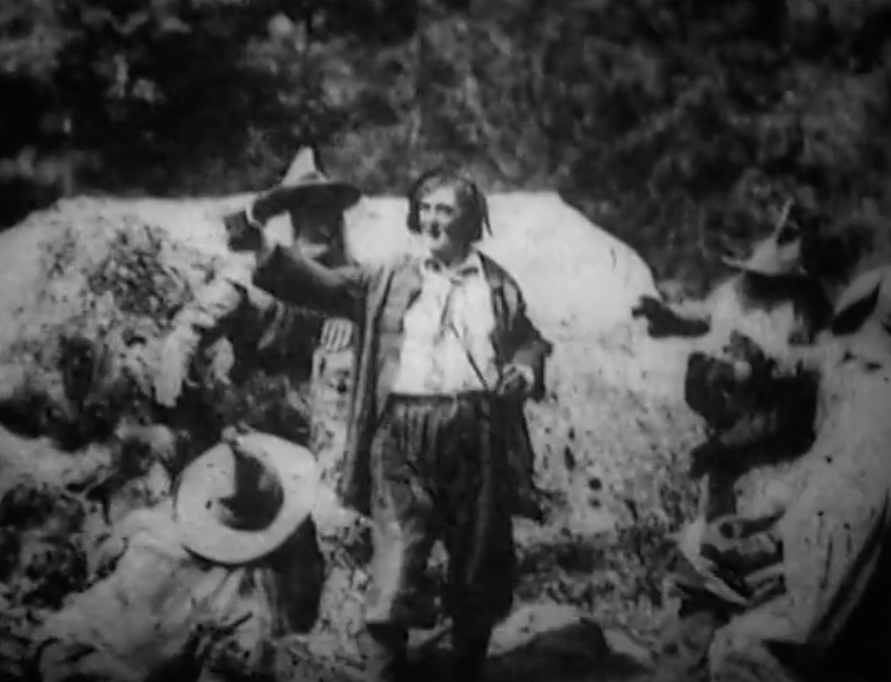
The Plot: The “Rip Van Winkle” film is comprised of eight short scenes from a popular stage version of the Washington Irving classic. The selected moments consist of Rip Van Winkle (Joseph Jefferson) wandering up the Catskill Mountains, meeting a group of dwarfs, consuming a lot of alcohol, and going to sleep. He awakens 20 years later to find himself an old man. And that’s all this version crams into its 4 ½ minute runtime.

Why It Matters: The NFR doesn’t give specific superlatives to “Rip Van Winkle”, just a general overview of the film’s history.

But Does It Really?: The NFR makes the case for “Rip Van Winkle” as the film that put Biograph Studios on the map, which, while completely forgotten today, is an important stepping stone to the movies as we know them. The film’s historical relevance is enough to get a pass from me, while the film’s presentation makes for an entertaining (albeit not intentionally so) viewing experience.

Everybody Gets One: Born to a set designer and an actress, Joseph Jefferson got a taste for the theater after appearing in a few “babe in arms” roles. At the age of 30, Jefferson, by then an established actor, played Rip Van Winkle in a successful 1859 production. While appearing in London, Jefferson met Irish playwright Dion Boucicault, who helped revise and rewrite the show. Jefferson toured with this version of “Rip Van Winkle” for the rest of his life, rarely performing any other play.

Wow, That’s Dated: Mainly the idea that a few static shots of a play was enough to make a hit movie. What a time to be a pioneer filmmaker.

Other notes

  • Although the film of “Rip Van Winkle” is based on the Jefferson/Boucicault play, Jefferson didn’t perform the dialogue, opting to pantomime his actions so Dickson didn’t have to use intertitles.
  • According to surviving records from the American Mutoscope and Biograph Company, you can read Jefferson’s lips and figure out Rip’s toast: “Here’s to your health and your family’s, may they live long and prosper.” Is this where “Star Trek” got it?
  • This film has one of the best unintentionally funny moments in any film ever. Rip meets the Dwarf, who is just a regular sized person crouching close to the ground. He’s not even attempting a Dorf maneuver; he’s just crouching. Was film still such a novelty that they thought no one would notice?
  • I dunno, I guess I was expecting the Catskill Mountains to be funnier. And where’s the borscht?
  • How come the dwarfs don’t play ninepins in this version? Also, why are they dwarfs? In the original story they are just old bearded men dressed like Dutch settlers. One of them is described as “short”, but that’s it. Where is this coming from?
  • And we have another unintentionally funny moment involving the dwarfs. Once Rip falls asleep, the dwarfs start to leave, and one of the actors starts taking off his hat and fake beard, assuming the take is over. Little did he realize this one mistake would be preserved for future generations to judge.
  • My first guess was that “Rip Van Winkle” was filmed at some park near the studio, but it turns out shooting happened at Joseph Jefferson’s summer home in Buzzards Bay, Massachusetts. He must have loved that commute.
  • The only appropriate response after a 20-year slumber is “WHAT YEAR IS IT?
  • For those of you who don’t know the rest of “Rip Van Winkle”, Rip’s sleep made him miss the entire American Revolution, and his talk of King George is mistaken for treason. Thankfully, his adult children recognize him, and he moves in with his daughter, continuing his life of sleeping and drinking without actually learning anything or changing as a human.

Legacy

  • “Rip Van Winkle” was originally sent to distributors as eight individual films, with exhibitors being allowed to show however many of them they chose. They were popular enough that in 1903 Biograph re-released the shorts as one complete film.
  • Dickson’s Biograph film company got off the ground thanks to “Rip Van Winkle”, and was one of the biggest film studios for the next 20 years.
  • Chicago has acknowledged Joseph Jefferson’s contributions to the theater by naming their annual theater award after him. The Joseph Jefferson Award (or “The Jeff Award” for short) has been honoring the best of Chicago theater since 1968 (“Best” unless you read Time Out Chicago). Jefferson became the award’s namesake because he had appeared in Chicago’s first theater troupe as a child.
  • Joseph Jefferson’s son Thomas was also an accomplished actor, playing the role of Rip Van Winkle after his father’s passing, both on stage and in a few silent films.
  • “Rip Van Winkle” has been adapted to film a few more times over the years, though it is getting harder to sell a story about a man who would rather drink with strangers than listen to his shrewish wife. As best I can tell, the most recent version is the 1987 episode of “Faerie Tale Theatre” starring Harry Dean Stanton and directed by…Francis Ford Coppola?
  • The Van Winkle dynasty continues to this day with Robert Van Winkle, aka Vanilla Ice.

#351) Marty (1955)

marty_xlg

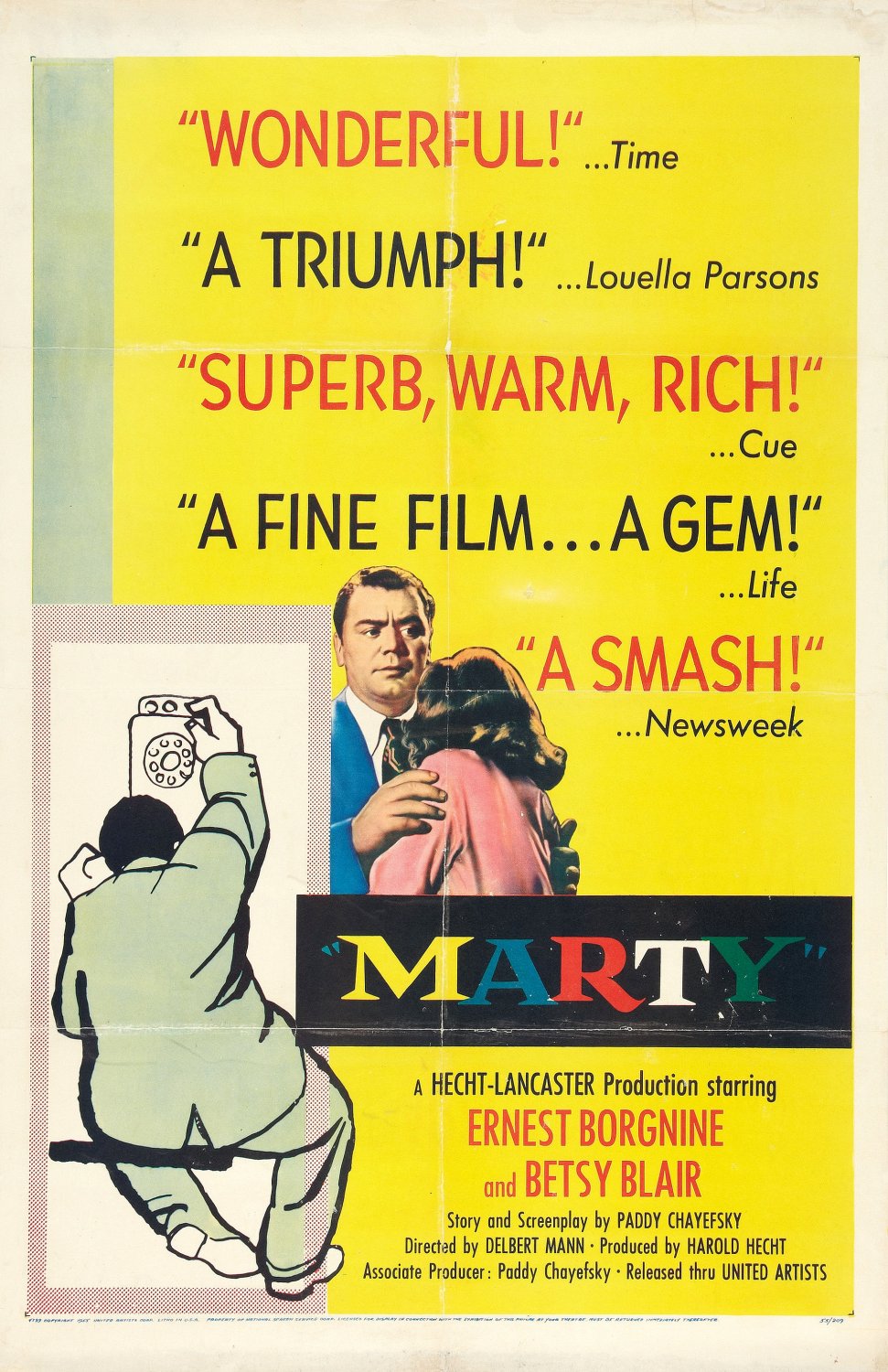
#351) Marty (1955)

OR “King of the Stardust Ballroom”

Directed by Delbert Mann

Written by Paddy Chayefsky. Based on his teleplay.

Class of 1994

Here’s the original trailer, introduced by the film’s producer Burt Lancaster!

The Plot: Marty Piletti (Ernest Borgnine) is a lovable Bronx butcher, a self-proclaimed “fat, ugly man”, and a 34-year-old bachelor. After encouragement from his mother (Esther Minciotti), Marty reluctantly goes to the Stardust Ballroom on a Saturday night. He has some initial difficulty meeting women, but soon hits it off with Clara (Betsy Blair) a homely schoolteacher stood up by her blind date. The two begin to bond, but is ‘50s America ready to see two regular, unconventional looking people find love?

Why It Matters: The NFR praises the “touching realism” of Mann’s direction and the “nuanced dialogue” of Chayefsky’s script.

But Does It Really?: “Marty” was the first mainstream romantic film that wasn’t glamorous. This isn’t Gregory Peck and Audrey Hepburn in Rome, these are two plain looking people falling in love in a neighborhood not unlike your own. It is this breakthrough that has kept “Marty” relatable to generations of filmgoers. The film still gets its annual shoutout as a Best Picture winner, but “Marty” holds up far better than its contemporaries, thanks primarily to Chayefsky, Mann, and especially Borgnine’s star turn. “Marty” isn’t a bona-fide film great, but it’s the little movie that could, and still can.

Everybody Gets One: Delbert Mann directed over 100 live teleplays throughout the ‘50s (including the original “Marty” teleplay) and Paddy Chayefsky insisted that Mann return to direct the film version. Actor Betsy Blair lobbied hard to play Clara, but United Artists was wary of casting someone on the blacklist. Her then-husband, Gene Kelly, used his Hollywood clout to get Blair the part. Not the best way to land a role, but Blair’s performance helps temper this incongruous start.

Wow, That’s Dated: Such ‘50s things as bathroom attendants, and phone booths in every bar! On a sadder note, most of Marty’s Bronx no longer exists (the RKO Chester referenced in the film was demolished in 2010).

Take a Shot: We have a title song!

Seriously, Oscars?: “Marty” opened in limited release, but reviews were strong enough that a wider release was immediately planned. Production company Hecht-Lancaster went all out on their Oscar campaign; spending more on the Oscars than the actual film ($400,000 vs. $343,000). The gambit worked, and “Marty” won four Oscars: Best Picture, Director, Actor, and Adapted Screenplay.

Other notes

  • Prior to this viewing, I screened the original 1953 teleplay of “Marty” starring Rod Steiger. The key to the film’s success (and superiority over the teleplay) is the casting of Ernest Borgnine over Rod Steiger. Steiger’s Marty is primarily a pitiable figure; sulking and mumbling his way throughout. Borgnine keeps the sadness, but also highlights the incredible person hiding underneath the pained surface. His is a Marty to root for.
  • Joe Mantell, Esther Minciotti, and Augusta Ciolli all reprise their roles from the original teleplay. Minciotti in particular does a good job of reining in her more theatrical teleplay performance for the big screen.
  • The key to any quotable line is how many times they say it during the actual movie. There’s a reason everyone remembers “Marty, when are you gonna get married?” and “What do you feel like doing tonight, Ang?”
  • The Pilettis are close to being – but aren’t quite – broad Italian stereotypes. We never cross that line, but we do approach it.
  • The ‘50s slang used in “Marty” is sparse, and used in a context that a modern audience can understand. It’s pretty easy to figure out what a “dog” and a “tomato” are.
  • Apparently a young Jerry Orbach makes his film debut as an extra at the Ballroom. Anyone know which one is Young Lennie?
  • The best thing about “Marty” is that it isn’t love at first sight for these two. They meet primarily because Marty pities Clara, but once that actually get to know one another, then the sparks fly. “Marty” takes the bold step of suggesting you should be with someone based on substance rather than purely on looks.
  • Word-vomiting on a first date: Been there.
  • Marty correctly predicts the rise of supermarkets in the near future. Between this and “Network”, Paddy Chayefsky was a modern Nostradamus.
  • Speaking of, it’s crazy to think that the man who wrote the deceivingly simple dialogue in this movie also wrote the verbose monologues of “Network”. Now that’s a guy who can…um…words…good.
  • Joe Mantell doesn’t get much to do as Angie (and I don’t understand his Oscar nod), but he would eventually achieve film immortality with five words: “Forget it Jake, it’s Chinatown.
  • Watch closely for Paddy Chayefsky’s brief appearance as Marty’s friend Leo.
  • The one rough spot is the scene where Marty tries to kiss Clara even though she clearly doesn’t want to. Chayefsky does his best to justify each character’s actions, but I’ll be curious to see if this scene gets any flak from future generations.
  • Some resources say the film is 90 minutes, others 93. The reason for this discrepancy is the exclusion of a scene in which Clara returns home and tells her parents about Marty. Luckily the print I saw had this scene restored, and it’s a lovely coda to Blair’s performance.
  • The family drama subplot with Tommy, Virginia, and Aunt Catherine felt like padding in the teleplay and definitely feels like padding here. I appreciate that Chayefsky opted to expand Marty and Clara’s scenes rather than this nonsense.
  • I gotta say this ending is a bit of a letdown. “Marty” doesn’t strike me as a movie that needs a cliffhanger, but here we are. I am choosing to believe that Marty and Clara end up together, because that’s how this should have ended!

Legacy

  • “Marty” was a launching pad for everyone involved. Ernest Borgnine spent the rest of his career as an in-demand character actor, while Delbert Mann continued directing such films as “Separate Tables” (also for Hecht-Lancaster) and the TV movie version of “Heidi”, aka “The Heidi Bowl”.
  • Paddy Chayefsky’s screenwriting career also took off, and his disappointment with what television devolved into by the early ‘70s served as the basis for “Network”.
  • Mann and Chayefsky reunited for another adaptation of a Chayefsky teleplay: “The Bachelor Party”. It treads a lot of the same ground as “Marty”.
  • Most of Hecht-Lancaster’s productions were Burt Lancaster vanity projects, but we got another NFR entry out of it: “Sweet Smell of Success”.
  • Hollywood studios, already on the decline in the mid-50s, took notice when a studio-financed independent project made a ton of money AND won all the Oscars. Studios started getting into the independent distribution game, a strategy that has continued to this day.
  • There has been no direct remake of “Marty”, but John Hughes’ “Only the Lonely” is a spiritual successor, and Jeff Garlin’s “I Want Someone to Eat Cheese With” features a remake with a miscast Aaron Carter.

#350) It Happened One Night (1934)

9e5170b8bed6df5b5a54f84e5353e787

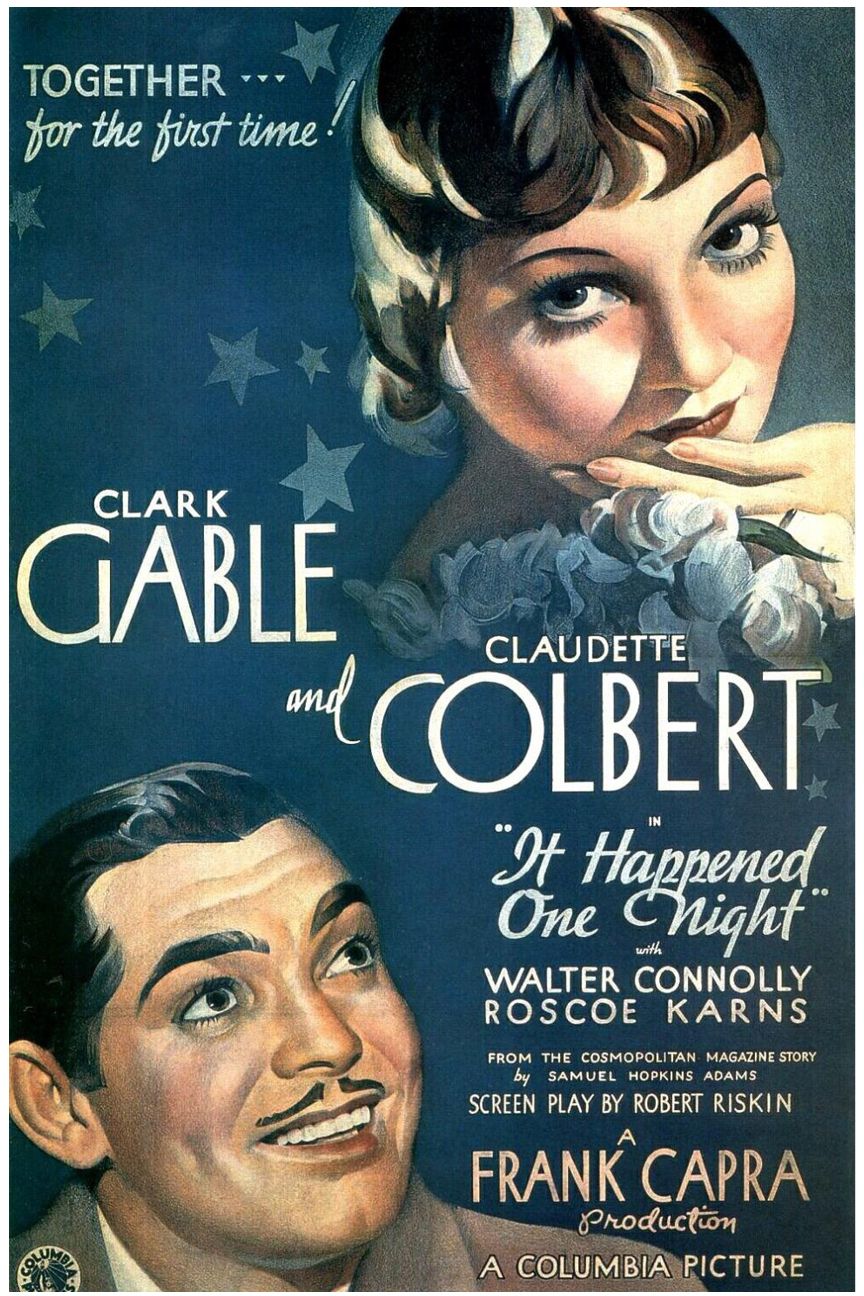
#350) It Happened One Night (1934)

OR “Bus the Two of Us”

Directed by Frank Capra

Written by Robert Riskin (with an assist from Myles Connolly). Based on the short story “Night Bus” by Samuel Hopkins Adams.

Class of 1993


The Plot: Heiress Ellie Andrews (Claudette Colbert) has eloped with social climber King Westley (Jameson Thomas), despite the objections of her father (Walter Connolly). After Dad insists on the marriage being annulled, Ellie jumps ship (literally) and boards a Greyhound bus for New York, where King awaits. Also on the bus is recently unemployed reporter Peter Warne (Clark Gable), who recognizes Ellie when her disappearance makes headlines. After their bus leaves them behind, Peter agrees to help Ellie get to New York if he can have an exclusive interview. The two bus and hitchhike their way across the country, and while there is some initial friction, you won’t believe this, they start to fall for each other.

Why It Matters: The NFR calls the film “a classic” and gives a rundown of the film’s rocky production and eventual Oscar sweep. There’s also an essay by Ian Scott, who wrote a biography on screenwriter Robert Riskin, because someone had to.

But Does It Really?: “It Happened One Night” is an undisputed film classic, but some of its luster has worn off over the years. For the seminal romantic comedy, “It Happened One Night” isn’t as romantic or as hilarious as it used to be, but it still made me laugh quite a bit, and it set the template for practically every romantic comedy since then. The film’s simple premise helps it age well, as do committed performances from both Gable and Colbert (Well, seemingly committed. More on that later). It’s not one of the NFR’s untouchables, but “It Happened One Night” is more than deserving of its place among the best films.

Shout Outs: Peter briefly sings “Who’s Afraid of the Big Bad Wolf?

Wow, That’s Dated: I have been on a charter bus, and there is no singing or selling of candy and cigarettes. Also dated: telegrams, and not being able to instantly access your money.

Take a Shot: Not to split hairs, but “It” actually happens over the course of several nights. This of course all depends on your definition of “It”.

Seriously, Oscars?: At the 7thAnnual Oscars, “It Happened One Night” was nominated in five major categories, and was the first to win all five: Best Picture, Director, Actor, Actress, and Screenplay. Claudette Colbert was so convinced she would lose Best Actress to write-in candidate Bette Davis she arranged to leave town the night of the ceremony for a long vacation. When Colbert was declared the winner, her train was delayed so she could run to the Biltmore and grab her Oscar.


Other notes

  • “It Happened One Night” is just as famous for who ISN’T in the cast. First choice Robert Montgomery passed on Peter, while Ellie was rejected by no less than Myrna Loy, Carole Lombard, and Miriam Hopkins. This led to some retooling of the screenplay by Capra and screenwriter Myles Connolly, making the lead roles more sympathetic.
  • Both Clark Gable and Claudette Colbert were on loan to Columbia from their respective studios: MGM and Paramount. Neither particularly wanted to make the film; Colbert often clashed with Capra (they had worked together before) and Gable’s alleged words on the first day of shooting were “Let’s get this over with.”
  • One of the reasons for this film’s longevity: they’re both smart-asses, yet still relatable. It’s a testament to the work of Gable and Colbert; they help make sure these characters maintain their humanity amidst the one-liners.
  • The character of Shapeley is a series of ‘30s jargon disguised as a human.
  • During the scene where Peter demonstrates his undressing technique, Gable had difficulty getting the rhythm down. To help speed up the scene, Capra suggested that Gable not wear an undershirt. Film lore has claimed that this led to a steep decline in undershirt sales, but no one has ever been able to back up this story. No “Legacy” section for you, urban myth!


  • Several scenes in this movie are downright Seinfeldian in their observations of everyday life. Can’t you imagine Jerry and George debating the correct way to dunk a donut? “It’s one move, George! You don’t double dip!”
  • Best scene in the movie is Peter and Ellie pretending to be a squabbling couple to evade the detectives. They are both ridiculously over-the-top. Second favorite is a similar scene where Peter scares away Shapeley by posing as a gangster.


  • Like many of the greats, Capra knew the power of the close-up. Here he only uses them during choice moments of intimacy between Peter and Ellie to highlight their budding romance.
  • This movie is trying to do for carrots what “E.T.” did for Reese’s Pieces.
  • The hitchhiking scene is a classic for a reason. It’s two well-defined characters playing off each other, turning a mundane situation into something special. And check out the gams on Colbert!


  • Why is Ellie’s story front-page news? Was it a slow week? I feel like “America Still in Depression” should be your opener in 1934.
  • I didn’t realize that Peter and Ellie never kiss in this movie. You don’t even see them on screen together after they part ways during the third act. Not a very satisfying payoff if you ask me.

Legacy

  • “It Happened One Night” opened to mixed reviews and mild box office. Once the film was released in secondary movie houses, positive word-of-mouth spread, and the film became Columbia’s biggest hit, putting the fledgling studio on the map.
  • As previously stated, this film is responsible for every romantic comedy you’ve seen that involves two people from “opposite sides of the tracks” that are forced together and eventually fall in love. It’s a tale as old as at least 1934.
  • In addition to its influence on the romantic comedy genre, “It Happened One Night” is considered among the first “screwball comedies”, even though that phrase wouldn’t be coined until a few years later.
  • There have been two remakes of “It Happened One Night”, and interestingly enough, they’re both musicals. 1945’s “Eve Knew Her Apples” starred Ann Miller, while 1956’s “You Can’t Run Away from It” starred Jack Lemmon and June Allyson. I have tried – and failed – to watch the latter.


  • Perhaps the film’s most substantial legacy is its influence on one of filmdom’s most iconic characters. According to animators Friz Freleng and Bob Clampett, elements from Peter Warne and Shapeley were combined to create Bugs Bunny: from his smart-alecky demeanor to calling everyone “Doc”.