#363) Traffic in Souls (1913)

traffic-in-souls_movie-poster

#363) Traffic in Souls (1913)

OR “Ms. Barton’s Profession”

Directed by George Loane Tucker

Written by Tucker and Walter MacNamara

Class of 2006

The Plot: “Traffic in Souls” is a melodramatic account of the modern crime of forced prostitution (aka “white slavery”). Young Lorna Barton (Ethel Grandin) is abducted by a New York prostitution ring run by well-known reformist William Trubus (William Welsh). Lorna’s sister Mary (Jane Gail) and Mary’s fiancé Officer Burke (Matt Moore) investigate Lorna’s disappearance, leading to their discovery of the prostitution ring, which also recruits naïve immigrants fresh off the boat from Ellis Island. The plot gets increasingly convoluted from here, suffice it to say that this film is staunchly anti-white slavery, and that we’re all going to Hell.

Why It Matters: The NFR praises the film’s “verve” and “riveting sociology”, while also claiming that it “presaged the Hollywood narrative film”. There’s also an essay by film critic Marilyn Ferdinand.

But Does It Really?: Sure, I’m feeling generous. “Traffic in Souls” can be a heavy-handed, oft-confusing film, but it encapsulates (and sensationalizes) America’s fear of a social issue of the day, and helped establish then unknown film company Universal Studios. I’ll give “Traffic in Souls” a pass, but this movie may just be for the nuts like me determined to watch every movie on an arbitrary list of quote-unquote significant films.

Everybody Gets One: Information is scarce for pretty much everyone involved in this film. Like many silent film cast and crews I’ve researched, the creatives of “Traffic in Souls” did 1,000 movies every year in the 1910s and 1920s, and then disappeared after sound. Many cast members, including leading lady Jane Gail, would appear in another Universal picture/NFR entry: 1916’s “Twenty Thousand Leagues Under the Sea”.

Wow, That’s Dated: This film was a response to the widespread scare in America about “white slavery”, particularly a 1910 story about Chicago brothels with abducted immigrants. This movie also features the silent movie trope of the social worker as hypocritical villain.

Title Track: It wasn’t until I actually watched the film that I realized that in this context, traffic is a verb, not a noun. As in “those who traffic in souls”. That makes a lot more sense.

Other notes

  • First off, a confession: I didn’t do a lot of research for this post, and there are two primary reasons for this. 1) As previously mentioned, there’s very little out there about the film itself and 2) I don’t feel like investigating the history of forced prostitution in America. That being said, it’s still very much happening in the world today, and is a complex, disturbing subject, but you didn’t come here to read about sexual slavery from the guy who over-simplified the Vietnam War.
  • Universal Studios began the way so many other major studios began: with producers tired of the monopoly Thomas Edison had on filmmaking in the early 1900s. Turns out he was from the David Merrick school of thought: It wasn’t enough for him to be successful, others had to fail.
  • I love the film’s subtitle: “A Photodrama of Today”. Seems like 1913 speak for “Ripped from today’s headlines!”
  • This movie is already irritating me because each intertitle is numbered at the bottom left-hand corner. At least if I’m bored I can count the intertitles.
  • There was no censor board in 1913, but the film opts to skirt around the word “prostitution”, going with euphemisms instead. My favorite is referring to the whorehouse as a “den of iniquity”. Also, and this should go without saying, you don’t see anything. Showing an ankle back then would have had the Catholic Church on your butt so fast.
  • There are too many damn characters in this movie. Is the whole film just introductions?
  • Side note: Edison refused to credit his actors, so having the cast listed throughout the film was revolutionary, and helped propel what became the studio star system. Man, fuck you, Edison.
  • The 1910s were into unnecessary abbreviations for names, like Wm. or Robt., which I presume are short for William and Robot.
  • I’m gonna assume the two actresses playing the Swedish immigrants don’t know a word of Swedish. Probably never been to Sweden. Probably never even had Swedish Fish.
  • Also dated: the pre-Miranda Rights days when a cop could beat up their suspect.
  • There’s a lot of intercutting in this movie, to the point of distraction. I think the editor was ADD.W. Griffith. Thank you and good night!
  • One of the prostitutes goes for $500 in 1913 money. That’s almost $13,000 today! That’s “disgraced Senator” money!
  • I know this is a serious drama, but you can’t show a bunch of police officers cramming into one car and not make me laugh.
  • The ending lays it all on pretty thick, with one character literally dying of shame from this experience.
  • 92! 92 intertitles! Ah ah ah!

Legacy

  • The success of “Traffic in Souls” put Universal on the map as a major film studio, and they’re still going strong 100 years later. It’s amazing to think that the likes of “E.T.”, “Jurassic Park”, “Frankenstein”, and the “Fast and the Furious” franchise all owe their existence in part to a film about forced prostitution.

#362) Imitation of Life (1934)

MV5BZGExYWRjMWEtNWZkNC00MzMwLTkwMjEtNmIzYTlhMDMzYTZlXkEyXkFqcGdeQXVyNjc0MzMzNjA@._V1_

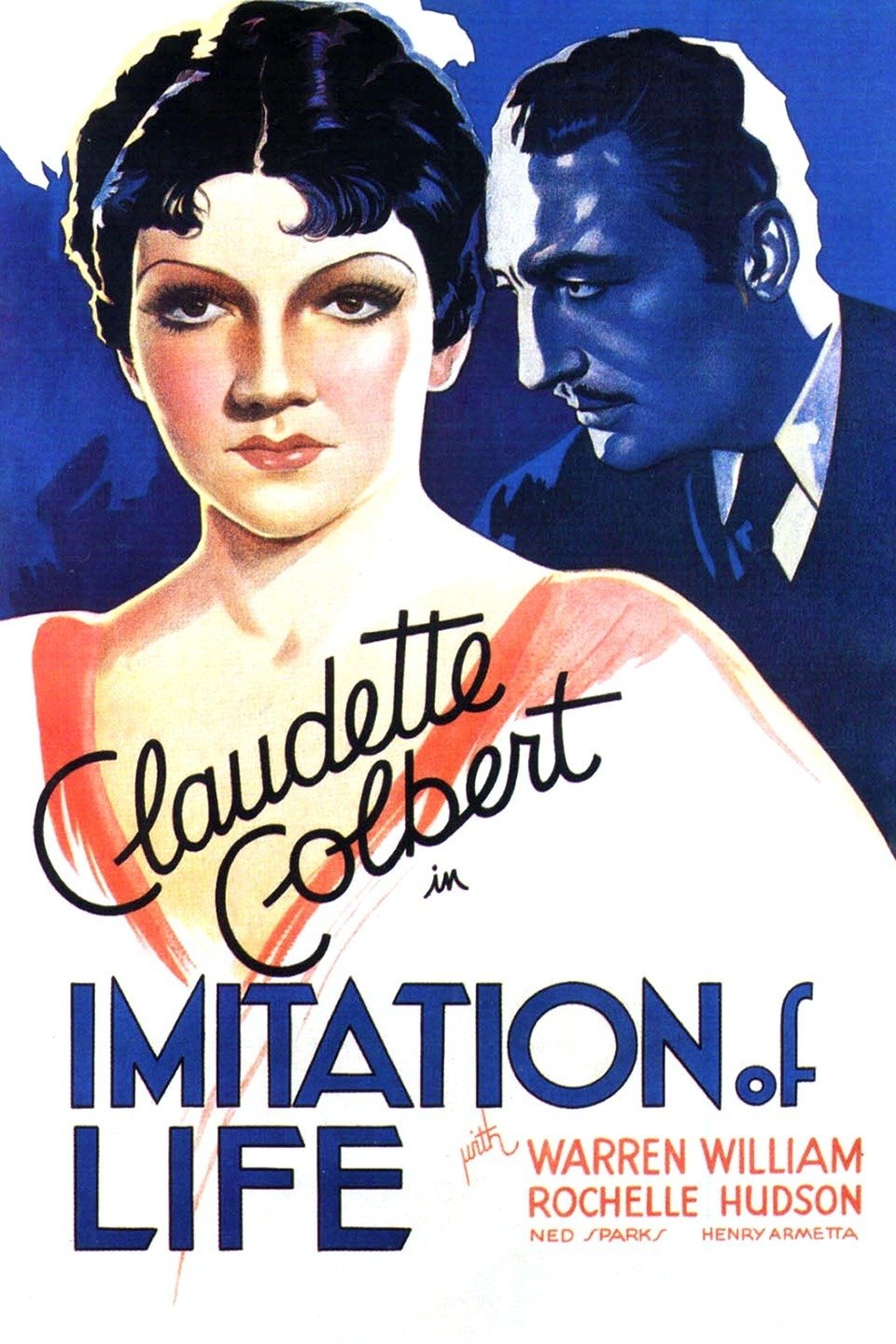
#362) Imitation of Life (1934)

OR “The First Pancake is Always Spoiled”

Directed by John M. Stahl

Written by William Hurlbut. Based on the novel by Fannie Hurst.

Class of 2005

The Plot: Bea Pullman (Claudette Colbert) is trying to maintain her late husband’s maple syrup business while simultaneously raising her daughter Jessie (Juanita Quigley). She hires Delilah Johnson (Louise Beavers) as her housekeeper, who agrees to work for free on the condition that Bea provide housing for her and her mixed-race daughter Peola (Dorothy Black). Bea successfully turns Delilah’s family recipe for pancakes into a profitable business, and despite their new wealth, Delilah insists on her continued employment for Bea. 10 years later, Bea finds herself in an unknowing love triangle with her fiancé Stephen (Warren William) and the now grown up Jessie (Rochelle Hudson). But the film’s emotional core comes from adult Peola (Fredi Washington), embarrassed by her heritage, passing for white and cutting off ties with her mother. It’s a controversial subject, but I’m sure 1934 Hollywood’s take on it will age well, right? …Right?

Why It Matters: The NFR singles out the film’s status among melodramas and “woman’s pictures”, and suggests it is “arguably the first Hollywood studio film to treat African-American characters in a dignified fashion”. An essay by film preservationist/cat person Ariel Schudson is primarily about the novel’s author, Fannie Hurst.

But Does It Really?: “Imitation of Life” was quite the daring project in its day, but thanks to some highly restrictive censorship, the complexity of “Imitation of Life” couldn’t be captured on film in 1934. This film is a baby step towards breaking down racial barriers in film, but the handling of its subject matter makes for a cringe-worthy watch today. I can definitely give “Imitation of Life” a pass on “historical significance”, but this is another movie that may just be for film buffs.

Everybody Gets One: Louise Beavers didn’t aim to be an actor, but a performance in her church choir caught the attention of a Central Casting agent and she landed her first audition. Beavers was always cast as the “Mammy” character subservient to a film’s white leads, but as she once said, “I’m only playing the parts. I don’t live them.” With support from the NAACP, Louise Beavers successfully persuaded Universal to delete some of the more offensive slurs from the “Imitation of Life” screenplay.

Wow, That’s Dated: Yeah, this is a tough one to watch through a modern lens. With the start of the Civil Rights movie still 20 years away, Hollywood’s answer to racial intolerance in 1934 was to just shrug it off and go about your business. Bea always treats Delilah and Peola respectfully, but any acknowledgment of systemic racism is stated matter-of-factly with no thought of challenging it. And despite the film’s progressive views, Delilah is still the warm, uneducated “Mammy” stereotype.

Title Track: Does anyone know the significance of the title? Originally titled “Sugar House”, Fannie Hurst changed the name just before publication. Is she commenting on how this story is a reflection of what’s going on in America? Is Hurst tooting her own horn?

Seriously, Oscars?: “Imitation of Life” received three Oscar nominations: Best Picture, Sound, and the now-defunct Assistant Director category. The only reason Claudette Colbert wasn’t nominated for Best Actress was because she was already a nominee (and winner) for “It Happened One Night”.  And had Best Supporting Actress existed back then, I’m sure Louise Beavers and Fredi Washington still wouldn’t have been nominated.

Other notes

  • The Motion Picture Association of America (MPAA) was newly formed in 1934, and “Imitation of Life” was one of their first major challenges. Miscegenation was forbidden under the new production code, and the MPAA fought Universal on turning “Imitation of Life” into a film, to the point of possibly shutting down production. After much back and forth, the MPAA approved “Imitation of Life”, two weeks after shooting had already started. Suffice it to say that a lot of liberties are taken with the source material.
  • How did they work around having a mixed-race character in a movie? The script states that Peola’s father was “a very light colored man”. In addition, the MPAA insisted that nothing work out for Delilah and Peola, thus highlighting the “definite connection with the problem of miscegenation”. Oy.
  • A single woman raising her daughter and opening her own restaurant? Bea must have gone to the Mildred Pierce Academy of Entrepreneurship and Family Therapy.
  • I get the feeling Walter Matthau saw Ned Sparks’ performance in this movie and decided to base his entire screen persona on it. But hey, it’s a nice change of pace to see someone other than the black maid be the comic relief in a ‘30s movie.
  • And then this movie very clumsily tries to tackle societal racism, with Delilah saying she “don’t know rightly where the blame lies” while looking almost directly into the camera. Real subtle everyone.
  • Longtime readers might recognize Fredi Washington from “Black and Tan” and “The Emperor Jones”. Washington was one of the first successful light-skinned African Americans in show business, and her casting as Peola was quite controversial. Up until then, light-skinned African Americans were portrayed by white actors in makeup. If nothing else, “Imitation of Life” busted down one of filmdom’s strongest taboos.
  • Is it just me, or is there no chemistry between Bea and Stephen? Both Colbert and William are charming, but together something doesn’t click.
  • How did Bea not figure out that Jessie had the hots for Stephen? They’re practically all over each other. Wake up, Mom!
  • This movie has its share of problems, and it is an unapologetic melodrama, but I’ll be damned if Peola didn’t make me tear up at the end. Even the most troublesome films can have effective emotional moments.
  • When it comes to curtain lines, “I want my quack-quack” is one of the weirder ones. The film tries to bring things full circle with Bea and her daughter, but at the end of the day, that’s not the plotline we care about.

Legacy

  • With a somewhat looser censor board in 1959, Douglas Sirk worked his melodrama magic on a remake of “Imitation of Life”. The remake found its own place on the National Film Registry, though is still plagued by some of the same problems its predecessor faced.
  • Many assumed that Fredi Washington, like her character, wished to pass for white in real life. Washington was always quick to shoot down this assumption, stating on several occasions, “I am a Negro and I am proud of it.” Her film career ended shortly after “Imitation of Life” (producers felt casting her was too risky), and like Louise Beavers, Ms. Washington spent the rest of her life as a vocal civil rights activist.

#361) OffOn (1968)

MV5BMjYwMmY4YmItNjEwZS00YjkxLTgyYTAtMDliMTJiZTRkMGY3XkEyXkFqcGdeQXVyNjUzNTQ3NDA@._V1_UY1200_CR135,0,630,1200_AL_

#361) OffOn (1968)

OR “There Is Nothing Wrong With Your Television Set”

Directed by Scott Bartlett

Class of 2004

The Plot: Film and video come together for the first time in the experimental “OffOn”. Have your recreational drug of choice at the ready and figure out the tracking on your VCR, because this is a hell of a trip.

Why It Matters: The NFR calls the film a “landmark” and “the first avant-garde title to fully marry video with film.” There’s also a brief yet informative essay by film professor/NFR staple Scott Simmon.

But Does It Really?: Well someone had to combine film and video, and shouldn’t that someone have a place in the NFR? “OffOn” gets a pass for its representation of Scott Bartlett, and its merging of two eras of filmmaking. And as always, I’ll give a pass to anything that’s short.

Everybody Gets One: Born and raised in San Francisco, Scott Bartlett was part of the experimental film scene of the late ‘60s/early ‘70s, eventually becoming part of Francis Ford Coppola’s band of filmmakers at American Zoetrope. With videotape on the rise, Bartlett was inspired to marry videotape and film in one short. He took some film he and Tom DeWitt had made for a light show, and recorded the projection with a video camera. He mixed the two mediums in real time, oversaturated the film in some places, and added food coloring to some frames to spice up the imagery.

Seriously, Oscars?: Oh, there is no way “OffOn” came even close to an Oscar nomination. That year’s winner for Live Action Short was the more conventional (and culturally relevant) “Robert Kennedy Remembered”.

I’m always wary of trying to decipher these experimental films beyond what they actually are, so once again we present “Things I Thought I Saw in ‘OffOn’”.

Legacy

  • Scott Bartlett continued making experimental films for the rest of his life, including a collaboration with his wife, fellow filmmaker Freude Solomon-Bartlett. Among his other accomplishments was as a technical supervisor on “Altered States” (another film that definitely came to mind during “OffOn”).

#360) Atlantic City (1980)

MV5BNjc0NzMzY2MtZTY2Yy00N2Q3LWEwZjMtZTUxYzZjYWJlYzkwXkEyXkFqcGdeQXVyNzc5MjA3OA@@._V1_

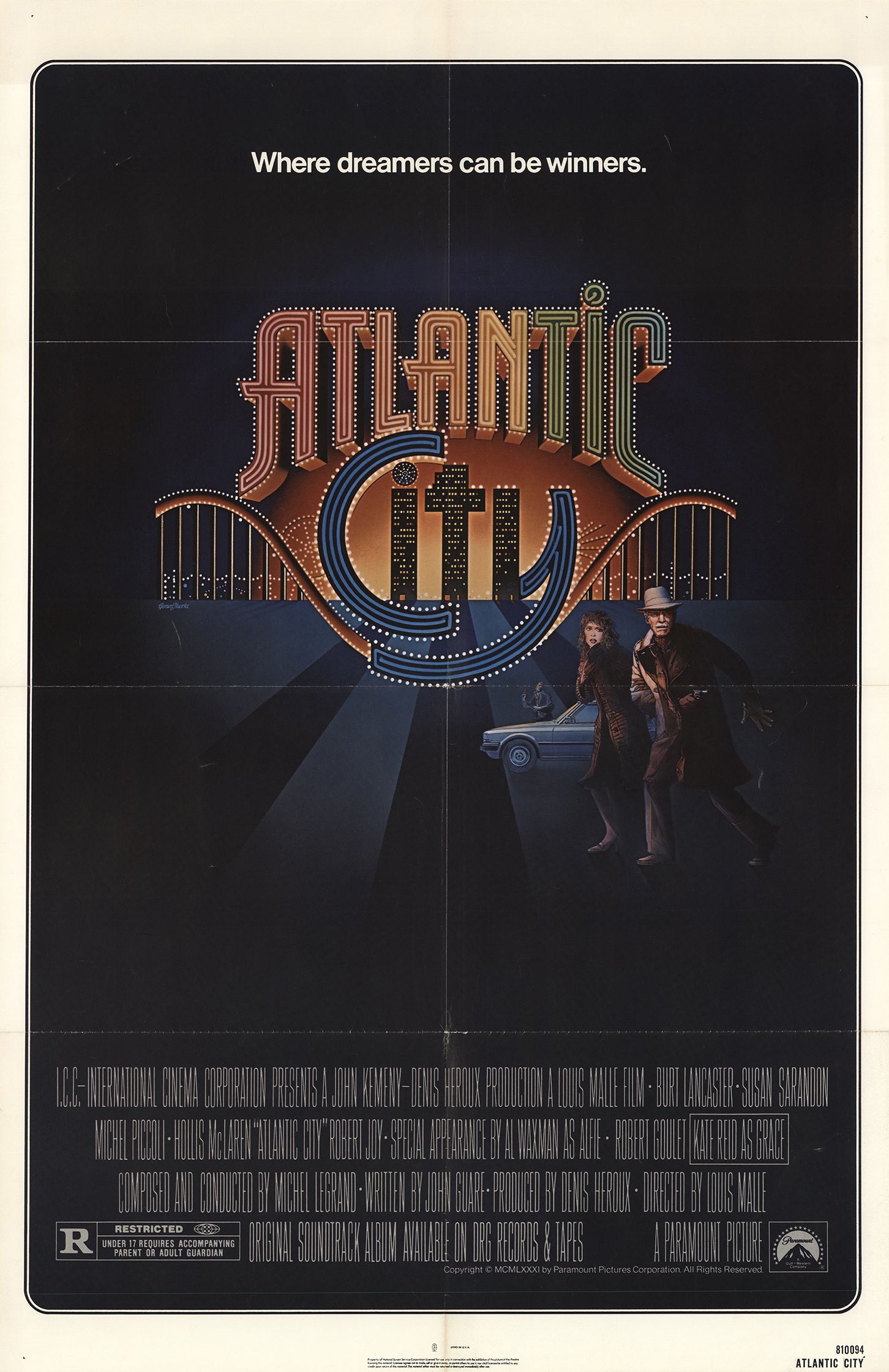
#360) Atlantic City (1980)

OR “Deal or No Deal”

Directed by Louis Malle

Written by John Guare. Based on the novel “The Neighbor” by Laird Koenig.

Class of 2003

The Plot: The lives of two neighbors in a dilapidated Atlantic City apartment unexpectedly intersect in this acclaimed crime drama. Aspiring casino dealer Sally Matthews (Susan Sarandon) is blindsided when her estranged husband Dave (Robert Joy) and his pregnant girlfriend/Sally’s sister Chrissie (Hollis McLaren) arrive unannounced. A chance run-in with Sally’s neighbor – washed up gangster Lou (Burt Lancaster)– leads to Lou assisting Dave in a business transaction involving stolen cocaine. As this unfolds, so does an unexpected bond between Lou and Sally. But the pull of Atlantic City’s corrupt underbelly may be too strong for these two.

Why It Matters: The NFR praises Lancaster’s “masterful performance”, Guare’s “taut script”, and Malle’s “European sensibilities”, whatever that means.

But Does It Really?: This is a tough one. On the one hand, I’m a sucker for a well-acted character study, and “Atlantic City” still delivers on that front almost 40 years later. On the other hand, you don’t hear “Atlantic City” mentioned often among the great films. Throw in another nationality dispute (see “Other notes”) and I have to question the film’s NFR inclusion. Still, I liked this film quite a bit, which is definitely a point in its favor. A slight pass/“minor classic” designation for “Atlantic City”.

Everybody Gets One: Legendary French director Louis Malle had been making movies for 20 years when he made his first American film, 1978’s “Pretty Baby”. When he was approached by International Cinema Corp. to direct a script based on a novel by Laird Koenig, Malle hired playwright John Guare to do a rewrite. Guare (best known today for “Six Degrees of Separation”) opted to write an original story also set in Atlantic City and, at Malle’s request, featured a prominent role for Malle’s then-girlfriend Susan Sarandon.

Wow, That’s Dated: “Atlantic City” is a very specific moment in the history of the Monopoly City. The hottest tourist spot on the East Coast during Prohibition, “The World’s Famous Playground” fell on hard times after WWII, and by the early ‘70s, many of the city’s hotels were either converted to apartments or demolished entirely. In a last-ditch effort to bring back tourism, New Jersey voted to legalize casino gambling in Atlantic City in 1976. The demolition happening throughout the film is real, and many of those sites are now the home of casinos and luxury hotels.

Seriously, Oscars?: After a successful run in Canada and France in 1980, “Atlantic City” saw its American release in 1981. While not a box-office success, the film was nominated in the Oscars’ “Big Five” categories. “Atlantic City” was the only Best Picture nominee to go home empty handed, losing to favored films “Chariots of Fire”, “Reds”, and “On Golden Pond”. “Atlantic City” did, however, sweep Canada’s Genie Awards.

Other notes

  • Another nationality dispute! “Atlantic City” is primarily a co-production between Canada and France, but one of the Canadian studios that financed the film was Famous Players Limited, a division of Paramount Pictures, who distributed the film in the United States. It’s a real stretch by NFR standards, but it helps that the film was shot in America and features two American leads.
  • That opening shot definitely gets your attention. Susan Sarandon has stated that for years fans would send her lemons, jokingly wishing they had filmed the scene with $100 bills instead.
  • Shoutout to Lucy the Elephant.
  • I’m sure Susan Sarandon relished the opportunity to play something that wasn’t “Rocky Horror Picture Show”. Sally gets to be dimensional and flawed, still a rarity for female leads.
  • Also dated: Susan Sarandon’s mammoth cassette player (on loan from Joe Gideon, I presume).
  • Surprisingly for a movie written by a playwright, there’s a restraint on spoken dialogue in this movie. There’s still some clunky exposition near the beginning, but most of the characterizations happen through actions and facial expressions.
  • The film has not one, but two Canadian acting legends. Kate Reid was a mainstay of Canada’s theater scene, and got the role of Grace after Ginger Rogers soundly turned it down. Al Waxman (Alfie), best known as Lt. Bert Samuels on “Cagney & Lacey”, was a respected actor and humanitarian in his native Canada. He even has a statue in Toronto!
  • The $4000 Dave says he can get for the cocaine would be $14,000 in today’s money.
  • Is automated parking still a thing?
  • Special Guest Star Robert Goulet! I’m sure Goulet was fully aware of the ironic counterpoint his appearance is meant to provide. I wonder how John Guare feels about being able to connect Goulet to Burt Lancaster with only one movie.
  • Oh the irony of Wallace Shawn playing a waiter in a Louis Malle film.
  • You can’t imagine anyone other than Burt Lancaster playing Lou. His studio system acting style plays nicely into a character that is stuck in the past.
  • And then we get to the scene where Lou tells Sally about his voyeurism and she finds it romantic. Good luck getting that in a movie today.
  • Once again, I found myself not taking a lot of notes, mainly because I was just enjoying the movie. Also this movie is just subtle enough I thought I’d miss something.
  • “I don’t believe in gravity.” Let me guess: Chrissie doesn’t vaccinate her kid.
  • And yet, despite the gloomy situation the characters find themselves in, and the overarching theme of corruption, the film manages to end on an optimistic note. It’s the “flower growing in a parking lot” metaphor from “The Office” on full display.

Legacy

  • Everyone’s career benefited from “Atlantic City” and its post-Oscar bump. Louis Malle’s next movie was his iconic “My Dinner with Andre”, Burt Lancaster reinvented himself as a character actor (see “Field of Dreams”), and Susan Sarandon has been a Hollywood mainstay/political activist ever since.
  • As for Atlantic City itself, the gambling revitalization helped the city immensely, with the ‘80s being another boom period for the town. While still popular, Atlantic City just isn’t what it used to be. I blame a certain President of the United States who shall remain nameless.

Further Viewing: “Boardwalk Empire” was a fictionalization of Atlantic City’s heyday, with Steve Buscemi’s Nucky Thompson being a stand-in for the real Nucky Johnson. This is the Atlantic City Lou is referring to when he says, “it used to be beautiful, what with the rackets, whoring, guns…”

#359) La Perla [The Pearl] (1947)

1000002957-size-original

#359) La Perla [The Pearl] (1947)

OR “South of Eden”

Directed by Emilio Fernández

Written by John Steinbeck & Emilio Fernández and Jack Wagner. Based on the novella by Steinbeck.

Class of 2002

NOTE: “La Perla” was filmed simultaneously in both English and Spanish. For this post I watched the Spanish version (mainly because I didn’t realize there was an English version).

The Plot: Quino (Pedro Armendáriz) lives in poverty in the La Paz, Mexico of the 1940s with his wife Juana (Maria Elena Marqués) and their infant son Juanito. Their luck changes when Quino finds an oyster on the ocean floor that contains a large pearl. The town celebrates Quino’s newfound fortune, and Quino dreams of a better life for his son. But when an influential dealer (Fernando Wagner) attempts to buy the pearl from Quino, the greed that comes from fast money appears, and Quino puts his family and himself in danger in this modern day parable.

Why It Matters: The NFR calls the film “a landmark among English-language films released for Hispanic audiences in the United States.”

But Does It Really?: I knew nothing about “La Perla” prior to this viewing, and given its obvious Mexican pedigree I was skeptical about its inclusion in a registry of American films. Further research shows this film to be a joint production between American studio RKO and Mexico’s Águila Films, so “La Perla” is, in fact, eligible. As for the film itself, “La Perla” is a well-made, straightforward adaptation of the novella. Not a classic, but not a relic of its time either. Thanks to its American financing, “La Perla” gets a pass for its then uncommon practice of international studios co-producing a movie, which helps “La Perla” stand out from so many of the other movies on this list.

Everybody Gets One: Practically everyone involved in this film is from Mexico’s Golden Age of Cinema, in which Mexico focused on producing commercial films while the rest of the world was making WWII propaganda. Director Emilio Fernández and cinematographer Gabriel Figueroa were both primarily responsible for some of the era’s most iconic films. Much of the same team that made “La Perla” had worked together on Fernández’s previous films “Wild Flower” and “María Candelaria”, both considered landmarks of early Mexican cinema.

Seriously, Oscars?: No Oscar love for “La Perla” (RKO’s big contender that year was “I Remember Mama”), but Gabriel Figueroa did win the Golden Globe for Cinematography. In addition, “La Perla” swept the Mexican Academy’s Ariel Awards, winning five, including Best Picture.

Other notes

  • Was mine the only high school where “The Pearl” wasn’t required reading? Everything I’ve read about “The Pearl” mentions its status as a high school English mainstay. My Steinbeck required reading was “Of Mice and Men”, which I may or may not have read…
  • The story of how the novella “The Pearl” came to be is connected to the film. Steinbeck originally started writing the story as a screenplay, but converted it into a short story for “Woman’s Home Companion” in 1945. RKO optioned the film rights, and Steinbeck wrote the screenplay, while simultaneously expanding the story into a novella. The novella and film came out within months of each other.
  • The most amazing thing about the two versions of “La Perla” is that it’s the same cast for both the Spanish and English versions. These actors performed all of their scenes twice! It’s hard enough to carry a movie, but Pedro Armendáriz and Maria Elena Marqués successfully do so in two different languages!
  • While we’re on the subject, both versions of “La Perla” are nearly identical, but the English version is about eight minutes shorter than the Spanish version. This is due to the removal of certain sequences that were too risqué for the American censors. Stick with the Spanish version.
  • I believe the film’s opening sequence is just south of the “Mildred Pierce” credits.
  • So healthcare in 1940s Mexico is not too different from healthcare in modern day America. Got it.
  • The underwater sequence has some lovely tension to it, and Quino has the most impressive breath support in film history.
  • Shoutout to Gabriel Figueroa; he deserves every award he got for this movie’s cinematography. There’s not a lot of story to film, but Figueroa manages to convey a lot of character in his compositions.
  • The film’s extended dance number, which has little if anything to do with the plot, was my first clue that the source material may have been a short story.
  • In addition to the aforementioned storytelling in camera, there’s also a lovely restraint on dialogue in this movie. Characters speak when they have to, but a lot is conveyed non-verbally. I’m sure that saved the studios a fortune in retakes for the alternate language version.
  • The Dealer’s offer of 900 pesos for the pearl would have been the equivalent to 50 cents in 1947 US money. I know The Dealer is trying to downplay the pearl’s value, but it really takes the sting out of this whole thing.
  • If the actor playing Godfather looks familiar, he’s Alfonso Bedoya, best known for uttering the immortal line: “I don’t have to show you any stinkin’ badges!
  • Well that ending is a real downer. But then again, I should have seen that coming from Steinbeck. Surely there are other ways Quino could have learned that lesson.
  • Because of this film’s co-production status, does that mean “Roma” will be eligible for NFR consideration in 2028? I don’t mind waiting to find out; I’m still scarred from the childbirth scene.

Legacy

  • Emilio Fernández directed a handful of Mexican-American collaborations throughout the next decade, including 1950’s “The Torch”. His directing career waned in the ‘50s, but he continued acting for the next decade, including in fellow NFR entry “The Wild Bunch”.
  • Like Hollywood, Mexican cinema faced stiff competition from television, and started to decline in popularity. Coupled with ongoing union disputes and the death of legendary actor Pedro Infante, the late ‘50s marked the end of Mexican Cinema’s Golden Age.
  • John Steinbeck has had two other films based on his work make the NFR: “East of Eden” and, of course, “The Grapes of Wrath”.