#534) The Italian (1915)

#534) The Italian (1915)

OR “The Least Happy Fella”

Directed by Reginald Barker

Written by Thomas H. Ince and C. Gardner Sullivan

Class of 1991

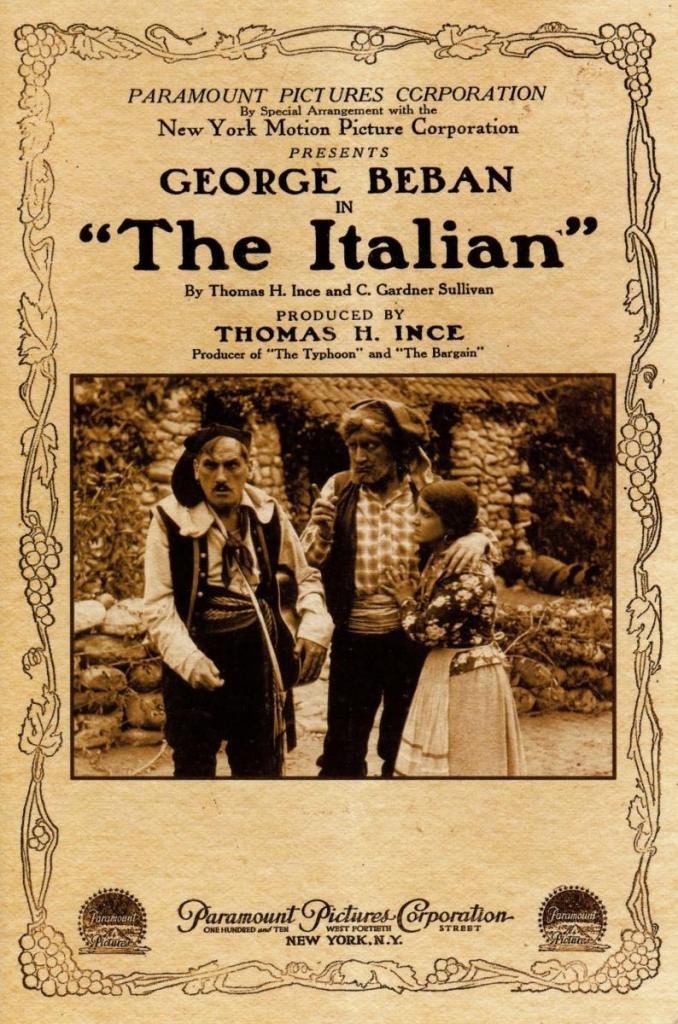
The Plot: In Venice, Italy, Pietro “Beppo” Donetti (George Beban) is a lowly gondolier who pines for the beautiful Annette Ancello (Clara Williams). Her father (J. Frank Burke) wants Annette to marry someone with money, but gives Beppo one year to earn a decent wage and marry his daughter. Beppo heads to America and while working as a shoeshine, gets enough money from politician Bill Corrigan (Leo Willis) to send for Annette. But their happy life in America doesn’t last long, and things take a surprisingly dark turn.

Why It Matters: The NFR praises George Beban, saying that the stage actor “mastered the nuances of film acting better than many of his contemporaries”. The write-up also highlights the Ince style of filmmaking, contrasting its “less structured, less rigid technique” to that of D.W. Griffith.

But Does It Really?: “The Italian” is not without its cultural misrepresentation, but the film holds up far better than you’d expect from a 106-year-old movie. The Ince/Barker/Sullivan collaborations are highlighted elsewhere on the NFR, but I’m willing to give a slight pass to “The Italian” for, if nothing else, a representation of the Immigrant Boom of the 1910s.

Everybody Gets One: San Francisco native George Beban was one of the big names in theater and vaudeville, specializing in…ethnic caricatures. After being pigeonholed for his French characters, he branched out by playing an Italian in “The Sign of the Rose”, a vaudeville sketch that evolved into a full play. “The Italian” was Beban’s film debut.

Wow, That’s Dated: It should go without saying that no one in this 1915 movie about Italians is actually Italian. For example, George Beban was of Irish and Dalmatian descent (Dalmatian as in from the Dalmatia region of Croatia; he was not part dog).

Title Track: Because of course it was: this movie’s working title was “The Dago”, but changed at the request of George Beban.

Other notes 

  • Despite having four of his movies on this list, we’ve never really talked about Thomas H. Ince. Largely overshadowed today by the scandal surrounding his death (more on that later), Ince was a major figure in early Hollywood. His “Inceville” was the first major Hollywood studio facility, and he streamlined the filmmaking process by creating something akin to Henry Ford’s assembly line manufacturing, a process that stayed the industry norm for over 50 years. Ince could be, however, a bit of an attention hog: in early prints of “The Italian”, while Ince’s name is all over the credits, director Reginald Barker’s was removed.
  • This is a very meta opening: A curtain parts to reveal George Beban (playing himself?) in a smoking jacket settling down to read “The Italian”, authored by this film’s screenwriters (there’s Ince’s name again!). What a weird way to bookend your movie. It’s like if “The Wizard of Oz” began with Judy Garland reading the book in her dressing room.
  • Every intertitle features the heading “George Beban In The Italian” at the very top. He must have had a great agent.
  • Watching Beppo navigate a gondola and talk with his hands, I have to ask as a person of Italian descent: Are we better off being stereotyped as mobsters and thugs?
  • Most of the film was shot on location in San Francisco (the city’s immigrant neighborhoods doubled for Manhattan’s Lower East Side), but apparently the crew actually traveled to Italy to film the scenes of Beppo and the gondola. Seems excessive, did Ince take pointers from Erich von Stroheim?
  • I feel like a 1915 audience would respond well to this movie: Many of them would have been part of the Immigrant Boom depicted in this movie. Speaking of, did Beppo skip Ellis Island when he got to America? There’s a whole process…
  • Despite the movie’s inherent insensitivity, there’s only one instance where a character refers to Beppo as a “wop”, and I ain’t talking about Cardi B featuring Megan Thee Stallion.
  • When Beppo and Annette get married, the film turns a little slapstick-y with Beppo running around trying to find a wedding ring.
  • The version of “The Italian” I watched was restored from three different surviving prints. It’s obvious what parts of the film came from which prints, a reminder of just how fragile tangible film is. Also a reminder of how lucky we are that so many of these silent films have enough surviving elements to reconstruct them to their entirety.
  • When Beppo finds the two men who robbed him, we get what may be film history’s first extreme close-up. Cameras were still pretty rudimentary, and the close-up is achieved when Beban walks right up to the camera lens.
  • It took us most of the movie, but at last we get an intertitle that simulates an Italian accent: “I must get-a-de milk or my babee is die.” Mamma Mia indeed.
  • This movie loves shots of people in moving vehicles that clearly aren’t moving. At least rear-projection shots have some sort of background movement.
  • Side note: George Beban is apparently doing his own stunts in this film, including being pushed out of a car onto the busy street. After a near-brush with death involving Beban and a streetcar, Thomas Ince had Beban insured for $25,000.
  • So even back then politicians would go back on their promises? Can we all just admit this is a systemic issue and not a case of a few bad apples?
  • [Spoilers] The third act of “The Italian” veers quickly into melodrama territory, including the death of Beppo’s child Tony. I cannot in good faith endorse a movie where they kill off a character named Tony.
  • One character in this movie succumbs to “brain fever”, a medical condition that seemed to exist only in the Victorian era. Modern day equivalents would be meningitis and scarlet fever, among others.
  • Wow, this got very dark very fast. There’s a little bit of redeeming humanity in the proceedings, but ultimately this is a typical melodrama. I guess the moral is “Never come to America”? I mean, that’s not wrong.

Legacy 

  • “The Italian” was well-received in its day, and George Beban’s next film was an adaptation of his play “The Sign of the Rose”, now retitled “The Alien”.
  • Many of the creatives behind “The Italian” pop up elsewhere on the NFR with their films “The Bargain“, “Civilization“, and “Hell’s Hinges“.
  • Of course the most infamous story to come from this creative team was the death of Thomas Ince at age 44 aboard William Randolph Hearst’s private yacht. Could it have been….murder!? …No. It was heart failure.

#536) One Flew Over the Cuckoo’s Nest (1975)

#536) One Flew Over the Cuckoo’s Nest (1975)

OR “Cool Hand Jack”

Directed by Miloš Forman

Written by Lawrence Hauben and Bo Goldman. Based on the novel by Ken Kesey, and the stage adaptation by Dale Wasserman.

Class of 1993

The Plot: A mental institution in 1963 Oregon welcomes new patient Randle P. McMurphy (Jack Nicholson), a statutory rapist faking insanity to avoid penal labor. Used to defying authority, McMurphy meets his match with Nurse Ratched (Louise Fletcher), who runs the ward with an iron fist. Despite his anarchic energy, McMurphy actually makes a positive impact on his fellow patients, including Chief Bromden (Will Sampson), the deaf-mute Native American that the staff has given up on.

Why It Matters: The NFR lauds director Forman, the cast’s “outstanding performances” and the “masterfully adapted” screenplay. The write-up also describes the film as “a hard-hitting and wry condemnation of the Establishment and its ethos of conformity.”

But Does It Really?: Hmm…good question. “Cuckoo’s Nest” is revered by many film groups as one of the best movies of all time, and it’s very good, but maybe there’s a little overhyping going on? Don’t get me wrong, everything about this movie is solid, from the pitch-perfect ensemble to Forman’s naturalistic directing, but it didn’t wow me at the level I hoped it would. “Cuckoo’s Nest” is a great movie with a legacy more than deserving of NFR recognition, but maybe I just need to be in a better mood before calling it an untouchable classic.

Everybody Gets One: Despite not actually appearing in this movie (and being the namesake of my oft-mentioned age gap scale), this is the only NFR representation for movie star/“Cuckoo’s” producer Michael Douglas. Michael’s father Kirk Douglas bought the film rights to “Cuckoo’s” in the early ’60s, and starred in the stage version on Broadway. After spending a decade unable to secure a studio backer, and realizing he was too old to play McMurphy himself, Kirk sold the film rights to Michael, who co-produced this movie with Saul Zaentz’s Fantasy Films. “Cuckoo’s” is also the only NFR appearance for the majority of the cast, including Louise Fletcher and Brad Dourif.

Wow, That’s Dated: Unfortunately we don’t have time to throughly delve into the complex issue of mental health in America. Suffice it to say that while the kind of mental institutions seen in this film have given way to more humane mental health centers, we still have a long way to go to efficiently and effectively handle our country’s ongoing health crises.

Title Track: The film’s title is derived from the children’s folk rhyme “Vintery, Mintery, Cutery, Corn”, a counting rhyme a la “Eeny Meeny Miney Moe”. Coincidentally, in some versions the last line is “Make your way home, Jack”.

Seriously, Oscars?: Second only to “Jaws” at the box office (albeit a distant second), “Cuckoo’s Nest” led the Oscar pack with nine nominations. Despite heavy competition from “Jaws”, “Nashville” and “Dog Day Afternoon“, “Cuckoo’s” became the first movie since “It Happened One Night” to sweep the Oscar’s Big Five categories: Picture, Director, Actor, Actress, and Screenplay. Nicholson’s Best Actor win was his first after five nominations in six years.

Other notes 

  • Turns out this was a particularly tense production. In addition to the inherent hassles of on-location shooting (in this case Oregon State Hospital), cinematographer Haskell Wexler was fired halfway through production over creative differences with Miloš Forman. Wexler’s replacement, Bill Butler, ended up serving as the middleman between Forman and Jack Nicholson when they stopped speaking to each other. These and other delays caused the film to go over-schedule and to double its budget.
  • This is the film debut for much of the cast, many of whom were either stage actors or actual citizens and hospital employees in Salem, Oregon. Among the professional actors, Danny DeVito and Christopher Lloyd. Was anyone in this movie not on “Taxi“?
  • As always with older movies, my apologies to Native Americans everywhere. At least Will Sampson was actually Native American (Muscogee). And a shoutout to the Kalapuya people of Salem, Oregon, because why not?
  • While not his crowning achievement as an actor, Nicholson is very good in this; a fine balance of his trademark lunacy (for lack of a better term) and a more sincere leader for this group. Like many of Jack’s bad boys, you root for McMurphy, even though you really shouldn’t. Plus this has got to be Jack’s last somewhat restrained performance before veering off into caricature territory. Next stop, “The Shining“!
  • Wow Louise Fletcher is on fire here. Her Ratched is manipulative without being a cartoon villain, with some nice subtleties to question the character’s motives. Plus Fletcher says more with one icy stare than most actors do with their entire body. I’m still not sure Ratched is a “lead” performance, but Fletcher definitely deserves all the accolades she got.
  • The fishing scene is a highlight; it’s fun watching all of these characters out in the “real” world. Side note: Blink and you’ll miss Nicholson’s then-partner Anjelica Huston as one of the extras watching the boat return to the dock.
  • Another highlight for me is the basketball game with Chief as your MVP. Looks like all those Lakers games are finally paying off for Jack.
  • The scene where McMurphy and Chief get electroconvulsive therapy is a bit intense. Not “Exorcist” angiography intense, but up there.
  • Here’s a question: It’s established that part of the film occurs in October 1963 when McMurphy listens to the World Series. Later on, Christmas decorations are set up in the hospital. This begs the question: did they gloss over the Kennedy assassination? Did anyone tell them?
  • Speaking of, here’s another movie for my “Die Hard” Not-Christmas list.
  • Scatman Crothers makes a fun contrast as the night shift aide, taking a bribe from McMurphy in exchange for booze and female companionship. But hey, at least this went better than that other time Nicholson and Crothers tried to work together.
  • Billy Bibbit doesn’t get a lot of screentime, but his final showdown with Ratched and subsequent breakdown is worth the trip out. Brad Dourif knocks it out of the park in his film debut, and he received an Oscar nomination for Supporting Actor.
  • Despite everything that goes wrong for these characters, Chief’s ending is surprisingly uplifting, and the film is bookended by two lovely nature vistas and Jack Nitzsche’s excellent use of the band saw.

Legacy 

  • “One Flew Over the Cuckoo’s Nest” was a hit with critics, audiences, and everyone who wasn’t original author Ken Kesey. Dissatisfied with the “butchering” of his book (the novel is from Chief’s perspective, not McMurphy’s), Kesey sued Michael Douglas and Saul Zaentz for breaching their verbal agreement about the adaptation’s faithfulness. Kesey settled, and claimed he changed the channel whenever “Cuckoo’s” was on TV (a similar claim has been attributed to both Stephen King and Roald Dahl).
  • References and spoofs of “Cuckoo’s Nest” in pop culture typically center around either the title, the main characters, or the ending. As always, bonus points to a parody with an original cast member, such as Danny DeVito’s send-up in “It’s Always Sunny in Philadelphia”.
  • Because every IP needs an origin story these days, the Netflix series “Ratched” stars Sarah Paulson as a younger Nurse Ratched, delving into the character’s evil beginnings. Paulson’s always great, but I have to ask WHO IS THE AUDIENCE FOR THIS?
  • The stage version of “Cuckoo’s Nest” makes the regional theater rounds pretty regularly. A 2001 production by Chicago’s Steppenwolf Theatre made its way to Broadway, but I’m always partial to the production my high school put on my freshman year. I played Billy Bibbit, and the experience has caused me to see this dark, unsettling movie as an old, warm friend.

Further Viewing: “Cuckoo’s Nest” was filmed in Oregon during the winter/spring of 1975, meaning Jack Nicholson missed the occasional stop on his “Chinatown” awards season tour (he attended the Oscars that year sporting his semi-shaved haircut for “Cuckoo’s”). Unable to attend the BAFTA ceremony, Nicholson pre-taped an acceptance speech on the set of “Cuckoo’s”, with the rest of the cast in support.

#533) How Green Was My Valley (1941)

#533) How Green Was My Valley (1941)

OR “A Tree Grows in Wales”

Directed by John Ford

Written by Philip Dunne. Based on the novel by Richard Llewellyn.

Class of 1990 

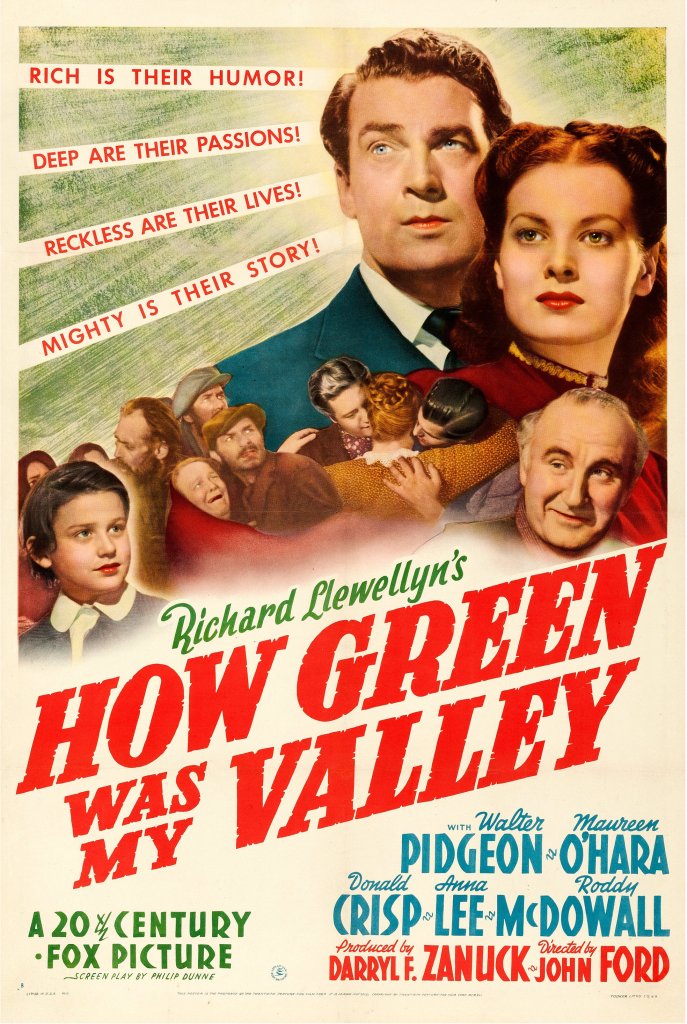
The Plot: As he prepares to leave his home in the South Wales Valleys, Huw Morgan (voiced by Irving Pichel) reflects on his upbringing. Young Huw (Roddy McDowall) is raised by his supportive parents (Donald Crisp and Sara Allgood), as well as a plethora of siblings (including Maureen O’Hara). The male family members all work for the local coal mines, which are starting to blacken the nearby valley. Over the years, the Morgan family deals with a miners strike, an unspoken affection between Angharad (O’Hara) and new pastor Mr. Gruffydd (Walter Pidgeon), and the inevitable dangers of working in a coal mine. But no matter how much the mines blacken his idyllic childhood, Huw will always remember how green was…that particular plot of land.

Why It Matters: The NFR write-up highlights the “seamless collaboration of creative talent” that contributed to the final film. No real superlatives here, just some NFR 101.

But Does It Really?: This one’s going into the “Minor Classic” pile. “How Green Was My Valley” is a well-crafted drama, but like so many other early classic films it has, through no fault of its own, been eclipsed by later movies that resonate stronger with modern audiences. On its own, “Valley” benefits from its endearing storyline, an excellent ensemble of actors, and a versatile John Ford at the helm (this viewing was a refreshing reprieve from Ford’s countless westerns on the list). While “Valley” is remembered today as a footnote to other 1941 movies (see “Seriously, Oscars?”), it’s still an engaging piece of film, and worthy of its NFR induction.

Everybody Gets One: Like many a figure covered on this blog, “Valley” screenwriter Philip Dunne was connected to the Hollywood Blacklist, but Dunne’s experience was somewhat unique. Dunne traveled to Washington D.C. with such outspoken Hollywood liberals as John Huston, Humphrey Bogart, and Lauren Bacall to condemn HUAC and their hearings. Despite his vocal objections, and despite collaborating with several known Communists in Hollywood, Dunne was never accused, subpoenaed, or blacklisted himself.

Title Track: The title is uttered by our narrator as a metaphor for the nostalgia he has for his youth. In the novel, the phrase was uttered in a later chapter after Huw’s first sexual encounter!

Seriously, Oscars?: One of the most successful movies of the year, “How Green Was My Valley” received 10 Oscar nominations, one behind pack-leader “Sergeant York“. “Valley” ended up taking home five Oscars, including Best Picture, John Ford’s third Best Director win, and Supporting Actor for silent film veteran Donald Crisp. Among the film’s fellow Best Picture nominees were “Sergeant York”, “The Maltese Falcon” and, what’s that other one? Oh yes, “CITIZEN FUCKING KANE“. “Valley” may have been the right choice at the time, but hindsight has made this win one of Oscar’s biggest head scratchers.

Other notes 

  • Fox originally bought the film rights to “How Green Was My Valley” with the intention of turning it into a four-hour epic to rival “Gone with the Wind“, including filming in Technicolor and on location in Wales. For a variety of reasons (mostly related to money and the impending war), the two-hour film was shot in black and white on a set constructed in the Santa Monica Mountains.
  • William Wyler was originally slated to direct “Valley”, but production delays caused him to depart to helm “The Little Foxes”. Wyler did, however, make an impact on the final film: he supervised the set construction, and cast Roddy McDowall as Huw.
  • For the record, supporting player Rhys Williams is the only actor in this movie who is actually Welsh. Most of the cast are either English or Irish.
  • This is Roddy McDowall’s second American film, and his first leading role. The twelve-year-old English newcomer is listed in the opening credits as “Master Roddy McDowall”.
  • Although no stranger to American films at this point (including NFR entry “Dance, Girl, Dance“), this is Maureen O’Hara’s breakout film performance. And she is quite charming, I give her that. By the way, do we know if she’s doing her own singing?
  • Another union/labor strike movie? I can’t escape them! But what do you expect when your screenwriter helped co-found the Writers Guild?
  • As always, I will listen to Walter Pidgeon say anything. And despite having a supporting role, Pidgeon manages to receive top billing over Donald Crisp and Maureen O’Hara.
  • Not to split hairs, but Huw sure is remembering a lot of events he didn’t actually witness.
  • I’m embarrassed to admit how long it took me to realize that this movie set in Wales features “God Save the Queen” in its underscore, and not “My Country, ‘Tis of Thee”. This of course led to me singing the Eddie Izzard lyrics.
  • Roddy McDowall spends part of this movie beating up other kids. Screw “Kane”, give this movie all the Oscars!
  • A surprisingly funny moment in the movie is between the boxers Dai Bando and Cyfartha: “I’m not accustomed to speaking in public.” “Only in public houses.”
  • Again with the child labor! But at least this movie is actually utilizing Roddy McDowall for its second half. He spent most of the first hour sidelined by injury.
  • Unsurprisingly, Donald Crisp’s best moments in this movie are his moments of silence. Even without speaking you sense the immense weight Gwilyn Morgan carries for his family and community.
  • Perhaps the most ironic part of this movie: Because it’s in black and white, we never actually see just how green that valley was.
  • Something that caught my eye during the end credits of the restored version: a credit mentioning the support of the AMC television channel, back when their primary focus was on American Movie Classics (yep, that’s what it actually stands for).

Legacy 

  • “How Green Was My Valley” was an instant hit, and Fox commissioned Richard Llewellyn to write a sequel novel, “Men of the Valley”, which would subsequently be adapted for film. Although this immediate follow-up never materialized, Llewellyn returned to Huw’s story twenty years later in three books: “Up Into the Singing Mountain”, “Down Where the Moon is Small”, and “Green, Green My Valley Now”. As best I can tell, none of these have become movies.
  • The BBC has adapted “How Green Was My Valley” not once, but twice. Both the 1960 and 1975 adaptations are multi-episode miniseries that retain more story elements than the film version.
  • The musical adaptation “A Time for Singing” opened on Broadway in May 1966, and closed the following month. Die-hard theater buffs still (forgive me) sing this show’s praises, and you can still listen to Bing Crosby’s recording of some of the songs.
  • “How Green Was My Valley” is another one of those classic movies where the title gets referenced a lot, but nobody could tell you what the movie is about. Hell, before this viewing, I couldn’t have told you the plot of this movie, and I actually pay attention to this stuff!

#532) Some Like It Hot (1959)

#532) Some Like It Hot (1959)

OR “Girls Gone Wilder”

Directed by Billy Wilder

Written by Wilder and I.A.L. Diamond. Based on the film “Fanfare of Love” by Robert Thoeren and Michael Logan.

Class of 1989 

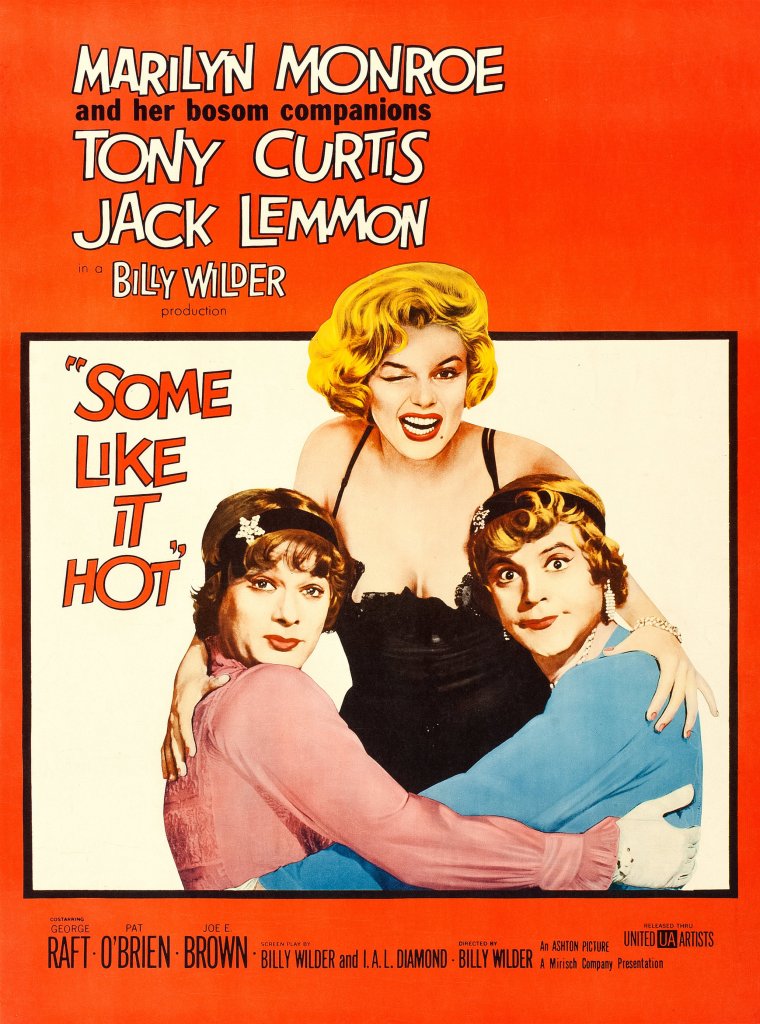
The Plot: It’s 1929 Chicago and a raid on a local speakeasy leads to wanted gangster Spats Colombo (George Raft) killing off some informants during the Saint Valentine’s Day Massacre. The murder is witnessed by jazz musicians Joe and Jerry (Tony Curtis & Jack Lemmon), who escape Spats by dressing in drag and joining an all-female band en route to Florida. As “Josephine” and “Daphne”, the two men become chummy with the band’s lead singer Sugar Kane (Marilyn Monroe). Once the band arrives in Florida, complications arise when Joe poses as a millionaire to woo Sugar, while Daphne fights off the advances of real millionaire Osgood Fielding III (Joe E. Brown). Oh, and it’s not only a comedy, but the funniest comedy ever made.

Why It Matters: The NFR attributes the film’s success to its “breakneck pacing, a touch of cynicism, and gender-bending and gender-celebrating jokes galore.” There’s also a loving essay by film censorship expert Dr. David Eldridge.

But Does It Really?: I am warning you right now: this post is gonna be one of my gush-fests. If you’re willing to forgive and accept the film’s binary gender politics, “Some Like It Hot” is still a remarkable film comedy. Beautifully structured, perfect casting, and oh yes, it’s still one of the funniest movies ever made. With a modern viewpoint of the gender spectrum, the film has unfortunately started showing its more problematic aspects, but hey, nobody’s perfect. “Some Like It Hot” is a well-oiled machine that still runs marvelously over 60 years later.

Shout Outs: Several references to ’30s gangster pics “Little Caesar“, “The Public Enemy” and “Scarface“. The latter is specifically alluded to when Spats disapproves of Bonaparte’s “cheap” coin flipping trick. He learned it from you!

Wow, That’s Dated: It’s safe to say that the “drag comedy” sub-genre is over, at least in the form seen here. Thanks to progressive leaps in acceptance of gender fluidity, drag is no longer perceived as a comic disguise, but rather an artistic and/or personal expression of one’s self. “Some Like It Hot” may have been the first drag movie to revel in its gender complications, a move that ultimately killed the genre.

Title Track: Joe actually says the phrase “some like it hot” while disguised as “Junior” talking to Sugar. In this context, “it” is jazz. Jerry also says the film’s working title within the movie: “Not Tonight, Josephine”.

Seriously, Oscars?: One of the most successful movies of 1959, “Some Like It Hot” entered the 1960 Oscars with six nominations (though missed out on a Best Picture nod). While the film lost in most categories to “Ben-Hur” and “The Diary of Anne Frank”, Orry-Kelly took home the Oscar for Black-and-White Costume Design.

Other notes 

  • Stay with me: “Some Like It Hot” is a remake of a remake. The initial story of two male musicians crossdressing for an all-female band came from the 1935 French film “Fanfare d’amour”. When Billy Wilder and I.A.L. Diamond wanted to remake the film, they couldn’t find the screenplay, so they bought the rights to the 1951 German remake “Fanfaren der Liebe” and used that script as a launching pad. Despite its lineage, “Some Like It Hot” is a mostly original story: it was Wilder’s idea to set the film in the ’20s, and added the gangsters to give Joe and Jerry a reason to stay in drag.
  • This whole post could be me gushing over this cast. Both Jack Lemmon and Tony Curtis fully commit to their characters (and their alter egos); Lemmon with his masterful comic timing and character work, Curtis with his natural movie-star charm. And while stories of Marilyn Monroe holding up production are as legendary as the movie itself, she’s put to good use here. Sugar is allowed to be charming and alluring, but the movie doesn’t rest on Monroe’s star power and sex appeal alone, which permits her to have more fun with the character.
  • In a move that predates “Airplane!” by 20 years, Wilder cast established actors known for their typecasting and dramatic work to lend authenticity to this comedy. Both George Raft and Pat O’Brien were veterans of the ’30s gangster pictures, where they typically played, respectively, a menacing criminal and a no-nonsense cop, as they do here. And shout out to longtime character actor Nehemiah Persoff (Little Bonaparte), who as of this writing is alive at age 101!
  • Bonus shout out to Paul Frees: the versatile voice actor who dubs a few minor characters in the film, and helps Tony Curtis maintain his falsetto.
  • Oh right, the sexism. “Some Like It Hot” is filled with talk of the sexes stemming from the inherently biased viewpoints of two cis-male writers, but the film’s relentlessly clever dialogue is the proverbial spoonful of sugar. Weirdly, “Some Like It Hot” is somehow less problematic than later drag comedies that attempt to address gender roles more head-on.
  • I’m sure the British film “Room at the Top” has a lovely script, but “Some Like It Hot” should have won Best Adapted Screenplay. The structure of this movie is infallible: each scene moves the story and the characters along in a beautifully orchestrated manner, but never forgets to be funny.
  • A major movie comedian of the 1930s, Joe E. Brown came out of semi-retirement to play Osgood Fielding, and he does not disappoint. Never have I been so charmed by a character who’s kinda creepy when you think about it. Maybe it’s his mile-wide smile.
  • As much fun as Tony Curtis seems to be having as Josephine, he’s having a ball when Joe poses as “Junior”. He’s so good I’m willing to forgive his anachronistic Cary Grant impression.
  • After watching him be charming (and manipulative, let’s be real), it’s fun watching Joe out of his element when he brings Sugar onto the yacht (the backwards boat trip is hilarious). The ensuing romantic moments aboard the yacht are still charming, though the manipulation being done by both parties is a bit cringe-inducing. Side note: Is this the first movie to strongly imply erectile disfunction?
  • The maraca scene is a highlight. Both Lemmon and Curtis pause for laughs, and this is one of the rare classic movie scenes in which you really need those pauses. This scene also contains one of the best exchanges in the movie: “Why would a guy want to marry a guy?” “Security.”
  • My favorite line in the entire movie comes from one of the gangsters helping an armed Little Bonaparte into a hollow cake: “And don’t mess up the cake. I promised to bring back a piece for my kids.”
  • About a year ago, I showed “Some Like It Hot” to a friend of mine unaccustomed to watching “old movies”. She laughed quite a bit during the movie, and I’m happy to report that “Nobody’s perfect” got the biggest response of all: she laughed all the way through the exit music. Not bad for a placeholder line when Wilder and Diamond couldn’t come up with something better.

Legacy 

  • “Some Like It Hot” was a hit upon its release, but had its share of controversy out the gate. While the MPAA gave its approval, the Catholic Legion of Decency declared the film “seriously offensive to Christian and traditional standards of morality and decency”, and some states refused to screen the film at all (though eventually allowed it with an “adults only” restriction). While “Some Like It Hot” is remembered today as a harmless relic, this initial back and forth with film censorship helped end the long-standing Hays Code.
  • Billy Wilder and Jack Lemmon would make six more films together over the next 20 years, including my personal favorite “The Apartment“.
  • The drag comedy genre continued along for the next 40 years, but always in the shadow of this movie (many of the lesser attempts got reviews titled “Some Like It Not”). There was the occasional “Tootsie” and “Mrs. Doubtfire”, but changing times and the perfection of “Some Like It Hot” have buried the drag comedy.
  • After the success of “Promises, Promises” (aka “The Apartment: The Musical”), “Some Like It Hot” became the next Wilder movie to become a stage musical. Bob Merrill and Jule Styne’s adaptation “Sugar” opened on Broadway in 1972, and a 2002 national tour saw Tony Curtis in the role of Osgood Fielding! [2023 Update: There is now a second “Some Like It Hot” musical currently playing Broadway which updates some of the film’s more antiquated sensibilities. Now the “It” of the title is acceptance of gender fluidity, I think.]
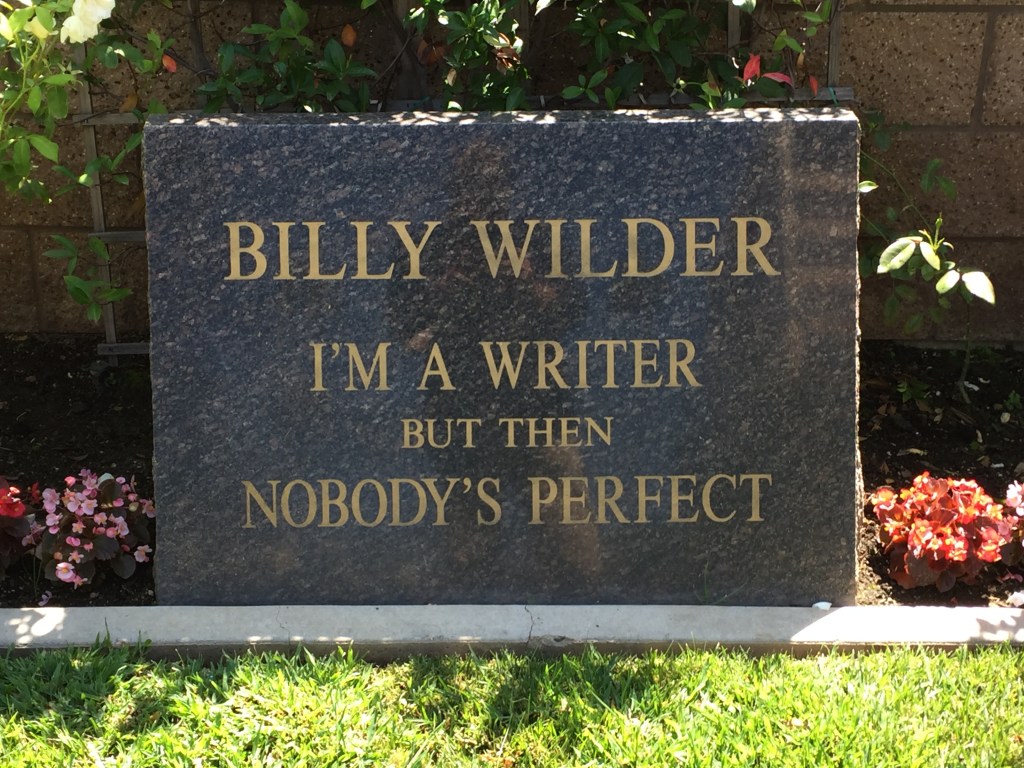
  • When Billy Wilder passed away in 2002 at age 95, he left behind a legacy of classic movies, but one line stayed with him literally to the end. His tombstone reads “I’m A Writer, But Then, Nobody’s Perfect”.

For Your Consideration: Selena

According to the Library of Congress, thousands of movies are submitted for National Film Registry consideration every year, which gets dwindled down to the final list of 25 inductees in December. The goal is always for the final list to be an eclectic group of movies, representing a wide variety of diverse films and filmmakers. Typically the movies submitted by the public receive zero fanfare, though there is the occasional campaigning from devoted fans. This year, one such campaign is being instigated by no less than the US Congress.

On January 1st, the Congressional Hispanic Caucus, headed in part by Rep. Joaquin Castro of Texas, sent a letter to Librarian of Congress Dr. Carla Hayden, requesting that the 1997 film “Selena” be considered for NFR induction for the class of 2021. The Hispanic Caucus has been making a conscious effort to encourage more Latnix films and filmmakers in mainstream media, and the induction of “Selena” into the NFR is part of this campaign. Directed by Gregory Nava (currently represented on the NFR with “El Norte“), “Selena” stars Jennifer Lopez as Selena Quintanilla, the real-life Tejano singer who became a superstar before being tragically murdered at just 24 years old. As Rep. Castro puts it in his letter, “The film has become a beloved icon of Latino culture and has found widespread mainstream success, proving once and for all that Latino stories are American stories.” The letter ends with the hope that Dr. Hayden and the National Film Preservation Board will give “careful consideration” to “Selena” when they meet later this year.

Well Rep. Castro, you got my vote. While I am aware of the film “Selena” and its importance in the Latinx community (I’ve seen the ending on VH1 more times than I can count), it never occurred to me to nominate the film for the NFR. After a little bit of research, I’ve found that “Selena” is more than qualified to be on the NFR. In addition to representing an important American artist and a specific culture, “Selena” made a movie star out of Jennifer Lopez, who continues to be a cultural icon almost 25 years later. On top of that, the recent Netflix limited series about Selena Quintanilla shows just how much her life and career still resonates within our culture. Looking at the NFR as it stands now, there are only 10 films on the list directed by Mexican, Mexican-American, or Latinx filmmakers, which accounts for 1.25% of the NFR. Plus, given all the racist and insensitive depictions of Mexicans and Mexican-Americans elsewhere on the NFR, I’m all for including a movie with a more diverse and humane representation. I am more than happy to include “Selena” as one of the 50 movies I will nominate for NFR inclusion this year.

Obviously, there is so much more work that needs to be done to make Latinx voices be heard in mainstream media (both in front of and behind the camera), but inducting “Selena” into the NFR is a start, highlighting a success from the past to encourage more in the future. Plus it’s a first step that anyone can participate in. You can nominate “Selena” right now! And while you’re there, check out this list of other movies not on the NFR, and see if there aren’t 49 more that you’d like to champion. The efforts of Rep. Castro and the entire Congressional Hispanic Caucus are commendable, and hopefully will result in “Selena” joining the ranks of preservation-worthy American films.

A bonus piece of trivia: Rep. Joaquin Castro was named after the Rodolfo Gonzales poem “I Am Joaquín”. A short film adaptation of the poem by Luis Valdez was made in 1969, and added to the National Film Registry in 2010.

2021 Update: “Selena” has made the NFR. Well that was easy. What else you got?