#322) The Adventures of Robin Hood (1938)

adventures_of_robin_hood_ver5

#322) The Adventures of Robin Hood (1938)

OR “Sherwood Flynn and the First Crusade”

Directed by Michael Curtiz and William Keighley

Written by Norman Reilly Raine and Seton I. Miller. Based on the Robin Hood legends.

Class of 1995

The Plot: In the absence of his brother Richard I (Ian Hunter), Prince John (Claude Rains) takes over as King of England and raises taxes on all Saxons. The only man who stands in his way is Sir Robin of Locklsey (Errol Flynn), who rounds up a group of Merry Men to rob from the rich and you know the rest. Along the way, Robin woos Lady Marian Fitzwalter (Olivia de Havilland), fights the evil Sir Guy of Gisbourne (Basil Rathbone), and shows off his archery skills.

Why It Matters: The NFR calls the film “[d]ashing, athletic and witty” and “[o]ne of the most spectacular adventure films of all time”. The write-up goes on to praise Flynn, Rathbone, and their climactic swordfight.

But Does It Really?: There have been more exciting adventure films since 1938, but none of them would exist without this “Robin Hood”. This movie checks off all the boxes you want from a Robin Hood movie, and Flynn leads the film in its sheer entertainment value. “The Adventures of Robin Hood” holds up reasonably well after 80 years, and is worth a watch, as well as more than deserving of it NFR inclusion.

Everybody Gets One: Director William Keighley was originally assigned to “Robin Hood” but, while shooting on-location, was replaced with Michael Curtiz (Producer Hal Wallis felt Keighley’s action sequences lacked excitement). Despite Curtiz helming a majority of the final film, both men received the director credit. Composer Erich Wolfgang Korngold was a child prodigy in his native Austria, composing several operas and ballets. Fellow countryman Max Reinhardt convinced Korngold to come to Hollywood and score Reinhardt’s film of “A Midsummer Night’s Dream”. With the Nazis on the rise in Europe, Korngold stayed in America for the rest of his life.

Wow, That’s Dated: This was Warner Bros.’ first major production in the new process of three-strip Technicolor, hence why everyone in the movie wears such vibrant colors.

Seriously, Oscars?: One of the biggest hits of 1938, “The Adventures of Robin Hood” was nominated for four Oscars, including Best Picture. The film lost Best Picture to “You Can’t Take It With You”, but did win in its other three categories: Art Direction, Film Editing, and Original Score. The film’s win for Score was most noteworthy, as it was the first year the award went to the composer, rather than the head of the studio’s music department.

Other notes

  • With real life historical figures Richard I and Prince John, this movie is technically a sequel to “The Lion in Winter”.
  • Robin’s intro is very Classic Hollywood: A close-up as he rides in on horseback as the orchestra swells. It’s great.
  • Olivia de Havilland is British, but moved to California when she was three, so she’s giving us a very watered down English accent. Also, as of this writing, Olivia de Havilland is still alive!
  • Claude Rains is clearly having a blast in his performance. Prince John is one of the rare movie villains where you get to be undeniably ruthless, yet equally foppish and cowardly.
  • “You speak treason.” “Fluently.” Quick, someone invent the microphone so Robin can drop it.
  • Apparently King Richard took all of his good men with him; these guys are your standard dumb movie henchmen. They outnumber Robin 100 to 1, yet still attack him one at a time.
  • Alan Hale Sr. (yes, father of that Alan Hale) also played Little John in the 1922 silent “Robin Hood” with Douglas Fairbanks.
  • That is some impressive archery work going on here. Apparently each stunt man was paid extra to wear padding and get shot: $150 per arrow.
  • It needs to be pointed out that the Merry Men live a forest life not too different from the Ewoks.
  • Robin and Marian have one of those “he’s a jerk but she’s okay with it” relationships, but it’s slightly more organic and nuanced than in other movies so…yay?
  • The archery tournament is definitely a highlight. Of course archery is one of the world’s more Freudian sports. That helps.
  • Marian’s plan to secretly meet the Merry Men at the tavern involves her wearing the shiniest dress she owns. She might as well have worn a cowbell.
  • This was the third pairing of Errol Flynn and Olivia de Havilland, following “Captain Blood” and “The Charge of the Light Brigade”. No wonder they have such natural chemistry. According to de Havilland, she purposefully ruined take after take of their kissing scene to prolong the experience.
  • The final sword fight between Robin and Gisbourne does not disappoint. As best I can tell, both Flynn and Rathbone did their own fighting.
  • Richard the Lionheart: History’s finest deus ex machina.

Legacy

  • “The Adventures of Robin Hood” was the most expensive Warner Bros. film to date, and their biggest hit of the year. Talk of a sequel “Sir Robin of Locksley” began immediately, but fell through.
  • “Captain Blood” set up Errol Flynn as the swashbuckling action star, and “Robin Hood” sealed the deal.
  • This is the third movie Errol Flynn and Olivia de Havilland starred in together. They did six more, though none as popular as “Robin Hood”.
  • You can see the film’s influence in the similarly themed 1940 version of “The Mark of Zorro”, right down to the swordfight between the vigilante hero and Basil Rathbone.
  • Alan Hale Jr. would play Little John again in 1950’s “Rogues of Sherwood Forest”.
  • Since Looney Tunes and “Robin Hood” are both Warner Bros. properties, Bugs and company took several turns spoofing the film. 1949’s “Rabbit Hood” even goes as far to include actual clips from the movie!
  • There have been many, MANY, retellings of Robin Hood on film over the last 100 years. The later ones usually take a thing or two from the Errol Flynn version.
  • If anyone tells you that the anthropomorphic fox in the Disney “Robin Hood” is hot, do not invite them into your home.
  • “Robin Hood: Men in Tights” owes as much to the 1938 version as it does to “Robin Hood: Prince of Thieves”. I mean, could they have done it without Cary Elwes?
  • Apparently another attempt at updating Robin Hood came and went in 2018. It did not show up on my radar until it got nominated at the Razzies.

Listen to This: Erich Wolfgang Korngold’s score for “Robin Hood” premiered before the movie was released, on a Los Angeles radio program with Basil Rathbone narrating the story of the film. The NRR inducted this program in 2005, calling it “one of Korngold’s most respected dramatic scores”. There’s also an essay by Korngold expert Brendan G. Carroll.
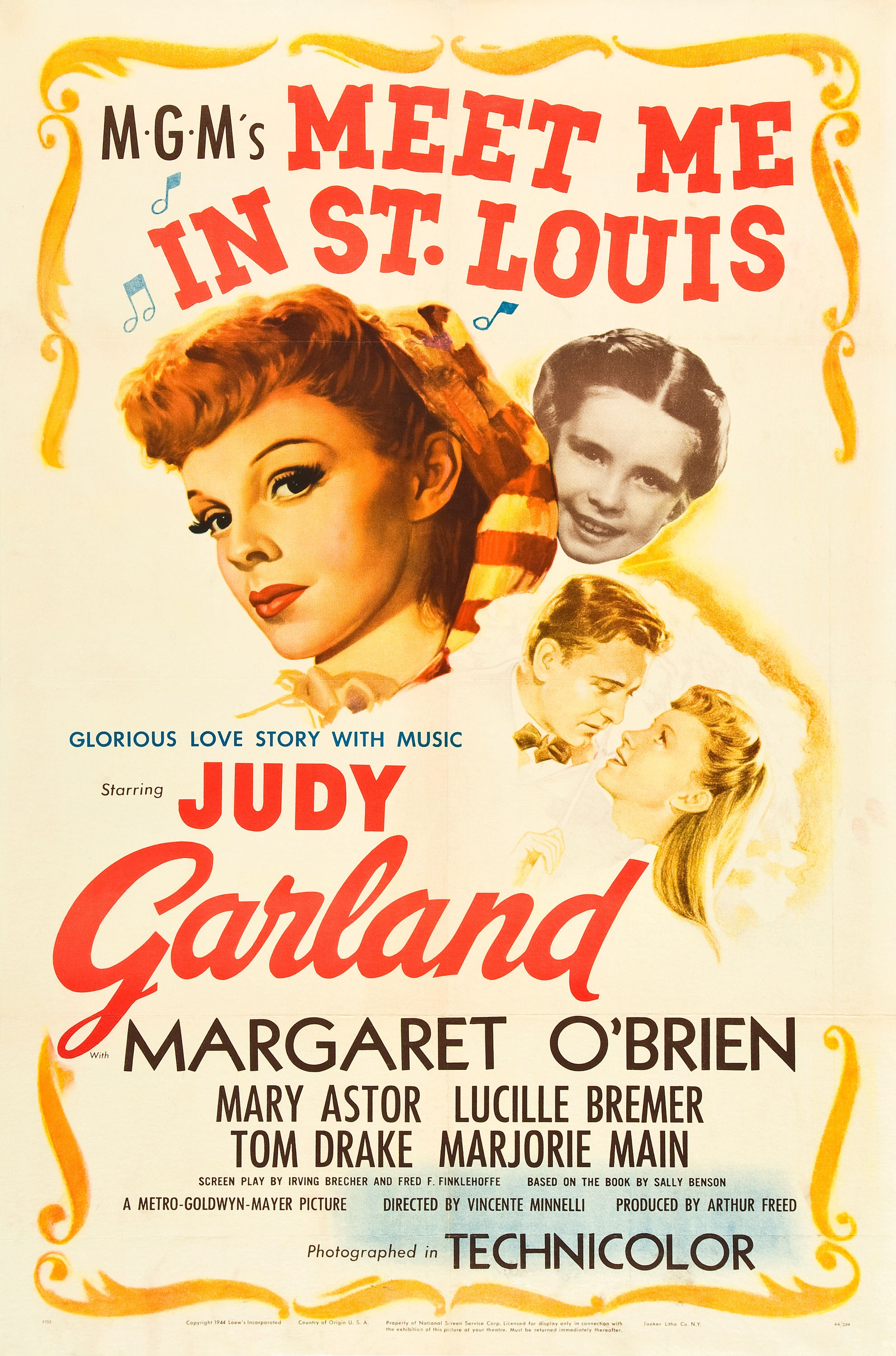
#321) Meet Me in St. Louis (1944)

MV5BZWVmZmRlNWQtYzYyMy00ZDljLWE5MjgtNDE5MGVmYTQ5NDk0XkEyXkFqcGdeQXVyNjc1NTYyMjg@._V1_

#321) Meet Me in St. Louis (1944)

OR “Pride and Prejudice – The Musical!”

Directed by Vincente Minnelli

Written by Irving Brecher and Fred F. Finklehoffe. Based on the novel by Sally Benson. Original score by Hugh Martin and Ralph Blane.

Class of 1994

The Plot:  “Meet Me in St. Louis” is a year in the life of the Smith family at the turn-of-the-century, with the construction of the 1904 World’s Fair as a backdrop. Eldest daughters Rose (Lucille Bremer) and Esther (Judy Garland) are trying to find husbands, while younger daughters Agnes (Joan Carroll) and Tootie (Margaret O’Brien) are adorable/morbid. As the seasons progress, so do Esther and Rose’s respective budding romances, until the day Father (Leon Ames) announces that the family is moving to New York. How will they have themselves a merry little Christmas now?

Why It Matters: The NFR calls the film “charming” and praises Margaret O’Brien for having “the most memorable performance”. An essay by UCLA Film and TV curator Andrea Alsberg contextualizes the film and its production.

But Does It Really?: This one gets a “minor classic” designation from me. It’s good, but something’s missing. Part of that is the absence of the wartime environment the film was produced in (which the aforementioned Alsberg essay helps illuminate), and part is that the movie assumes you know the basic social etiquettes of the early 1900s. Despite this separation, there’s still a lot going for this film. Not every song is a classic, but the standouts are renowned for a reason. Plus you get a Judy performance more mature than her previous fare. “Meet Me in St. Louis” is still enjoyable, but one wonders if future generations will love it as much.

Everybody Gets One: The daughter of a circus performer and a dancer, Margaret O’Brien made her film debut at age four in “Babes on Broadway” (also starring Judy Garland). In her eight years at MGM, O’Brien made 20 pictures, and was known as one of MGM’s “Best Cryers”, a talent she displays in full-force throughout “St. Louis”.

Wow, That’s Dated: Shoutout to cinematographer George Folsey and the Technicolor process. The film’s vibrant color palette could only exist in the ‘40s.

Take a Shot: The song “Meet Me in St. Louis, Louis” was written in 1904 for the World’s Fair. It’s also the reason everyone pronounces the city’s name “Loo-ee” as opposed to the correct “Loo-iss”.

Seriously, Oscars?: One of the biggest hits of 1944, “Meet Me in St. Louis” was nominated for four Oscars, but went home empty-handed. Most egregious was “The Trolley Song” losing Best Song to “Swinging on a Star” from “Going My Way”. A great song to be sure, but come on! The Oscars did, however, present a Juvenile Award that year to Margaret O’Brien for her performance in several films, including “Meet Me in St. Louis”.

Other notes

  • The film’s turn-of-the-century setting seems quaint, but keep in mind it was only about 40 years before the film’s release. It would be the equivalent of setting a current film in the late ‘70s.
  • Agnes colorfully describes how she’ll kill the maid? Tootie buries her dolls at the local cemetery? Meet Me in the Child Psychology Ward.
  • This was the first movie where Judy not only got to play someone on the verge of adulthood, but also was allowed to be pretty. Is it any wonder she fell for Vincente Minnelli?
  • Nothing gets a party going like “Skip to My Lou”.
  • Kudos to Judy for not overpowering Margaret O’Brien during their duet. Now that’s a scene partner!
  • “The Trolly Song” is a delight, although I’ll argue it’s not properly built up. The last we saw John (Esther’s prospective steady), he was faux pas-ing all over the place, now we’re supposed to be happy he hopped on the trolley? Judy, of course, nails the song; the majority of which is in a single take.
  • Ah yes, back when Halloween was more trick than treat. Minnelli and Folsey perfectly capture Halloween night from a child’s perspective.
  • There’s a huge chunk of the movie that Esther is absent for. This must have been during one of Judy’s infamous delays in filming.
  • Mary Astor went from leading lady/Oscar winner to a thankless mom role in less than three years. Hollywood has never been kind to women.
  • This movie is the number one entry on my “Meet Me in St. Louis” list of kinda-Christmas movies.
  • The highlight of the film is Esther singing “Have Yourself a Merry Little Christmas”. Many have covered the song over the years, but no one will top Judy’s performance. With the actual context to help, Judy’s version highlights the song’s inherent sadness.
  • Wait, was Agnes in her bed the whole time Esther was singing and Tootie was crying? Wow, she can sleep through anything.
  • Highlights of the 1904 World’s Fair included the wireless telephone, the x-ray, and a competition of flying machines, which I think is where that stock footage is from. Sadly, no cigarette-smoking robots or Barney Google at this World’s Fair.

Legacy

  • “Meet Me in St. Louis” was MGM’s biggest hit in 1944, and immediate plans were made to turn the film into another “Andy Hardy”-esque franchise. A proposed sequel, “Meet Me in New York”, never materialized.
  • Several of the film’s songs have become standards, but the real breakout was “Have Yourself a Merry Little Christmas”, although the most common version is the one with the Sinatra-mandated altered lyrics.
  • Judy Garland and Vincente Minnelli met on the set of “St. Louis” and were married in 1945. They divorced in 1951, but not before collaborating on four other films and one child: Liza (with a Z).
  • There have been a few adaptations/remakes over the years. A 1959 TV movie starring Jane Powell and Patty Duke followed the film’s screenplay, while a 1966 pilot starring Shelley Fabares never got picked up.
  • Hugh Martin and Ralph Blane composed new songs for a stage version of the film that premiered at – where else – the St. Louis Muny in 1966. This version briefly played Broadway in 1989.
  • The making of “St. Louis” is covered in the TV biopic “Life with Judy Garland: Me and My Shadows”. Judy is played by the incomparable Judy Davis, while Vincente Minnelli is played by…Hugh Laurie?

#320) Chulas Fronteras (1976)

event-poster-10148621

#320) Chulas Fronteras (1976)

OR “Walk the Line”

Directed by Les Blank

Class of 1993

The Plot: Documentarian Les Blank uses his cross-section style of filmmaking (and his eclectic love of music) to highlight the norteño and conjunto music of Mexicans on both sides of the border. Highlights include the “Tex-Mex” (Texans of Mexican descent) community, how music helped aid the migrant farmers and their attempts to unionize, the racism towards Mexicans (and Mexican-Americans) from Texans, and the performers whose music has defined the political and cultural climate for generations of Mexicans.

Why It Matters: The NFR gives a brief overview and calls the film “complex” and “insightful”. There’s also an informative essay by film expert Dr. David Wilt.

But Does It Really?: If you read my post about Les Blank’s other NFR entry, “Garlic Is as Good as Ten Mothers”, you know that I’m not sure about Les having two films on the list. Having now seen both films, I still feel that way. If forced to make a “Sophie’s Choice” (which isn’t on the list yet, BTW), I’d keep “Chulas” and toss “Garlic”. No knock against “Garlic”, it’s just too similar to “Chulas” in terms of style and presentation. “Chulas” is spared thanks to its preservation of two similar cultures separated by an invisible line. And as always with Les Blank’s films, the movie has a great soundtrack. I’m glad Les Blank is represented on the National Film Registry, but one is enough, don’t you think?

Everybody Gets One: A quick word about Les Blank; an English lit major from Phillips Academy Andover (with an MFA in theater), Les got his start making industrial films he would later describe as “insipid”. Once he made enough money from the industrials, Blank founded Flower Films and was able to stay an independent filmmaker for the rest of his life. A meeting with Airhoolie Records founder Chris Strachwitz, led to Les documenting norteño performers (a favorite of Strachwitz’s) for “Chulas Fronteras”. Strachwitz serves as the film’s producer.

Wow, That’s Dated: The fashion, that’s your giveaway. Only in the ‘70s did we think that plaid pants looked good outside of a golf course.

Seriously, Oscars?: No Best Documentary nomination for “Chulas”. The winner for 1976 was fellow NFR entry “Harlan County U.S.A.”

Other notes

  • For the record, “Chulas Fronteras” roughly translates to “Beautiful Borders”. The film begins with a car being moved across the Rio Grande/Rio Bravo. And crossing the border was never that easy ever again.
  • I did not realize that accordions made it to Mexico because of German settlers in Texas in the late 1800s. Didn’t see that coming.
  • Tex-Mex performer Lydia Mendoza is highlighted in the film, as is her recording of “Mal Hombre” (translated here as “Cold-Hearted Man”). Pay attention to those lyrics; what an intense, socially advance song that is. She tells a man how horrible he is because he “treated me like all men who are like you treat women.” It’s a surprisingly frank song.
  • Another song featured is “Los Rinches De Texas” (“The Texas Rangers”) as performed by Dueto Reynosa. It’s a fun upbeat number, until you realize that it’s a song about Texas rangers beating up members of the United Farm Workers who were attempting to unionize. Then-Governor of Texas John Connally is mentioned in the song as “an evil ruler who hates the Mexican and scorns human pain.” That must have done wonders to his approval rating.
  • The song “El Corrido de César Chávez” is a hymn to the civil rights leader. Coincidentally, my hometown of Stockton, California gets a shoutout. Like many before and after, the people in the song are just passing through Stockton to get to Sacramento.
  • The montage in which the actual making of a record was shown fascinated me. No wonder those things are so easy to break.
  • Wow, a lot of these upbeat songs are about institutional racism. That one’s on us.
  • Most of the final part of the movie is devoted to Flaco Jiménez, legendary norteño performer and second-generation accordion player. We see his son learning to play near the end. Flaco is still with us, and still performing at the age of 80!
  • Cacti growing among the barbed wired fence on the border: if that’s not this movie’s theme in a nutshell I don’t know what is.
  • Despite the recurring theme of oppression highlighted in many of the featured songs, Blank does attempt to end the film on a positive note, with a performance of “Mexico Americano” by Los Pinguinos Del Norte. At the end of the day, you have to accept where you come from and embrace it.

Legacy/Further Viewing/Listening: Les Blank and Chris Strachwitz made another documentary about Tex-Mex music, 1979’s “Del mero corazón”. A soundtrack comprised of music from both films was released in the mid-90s.

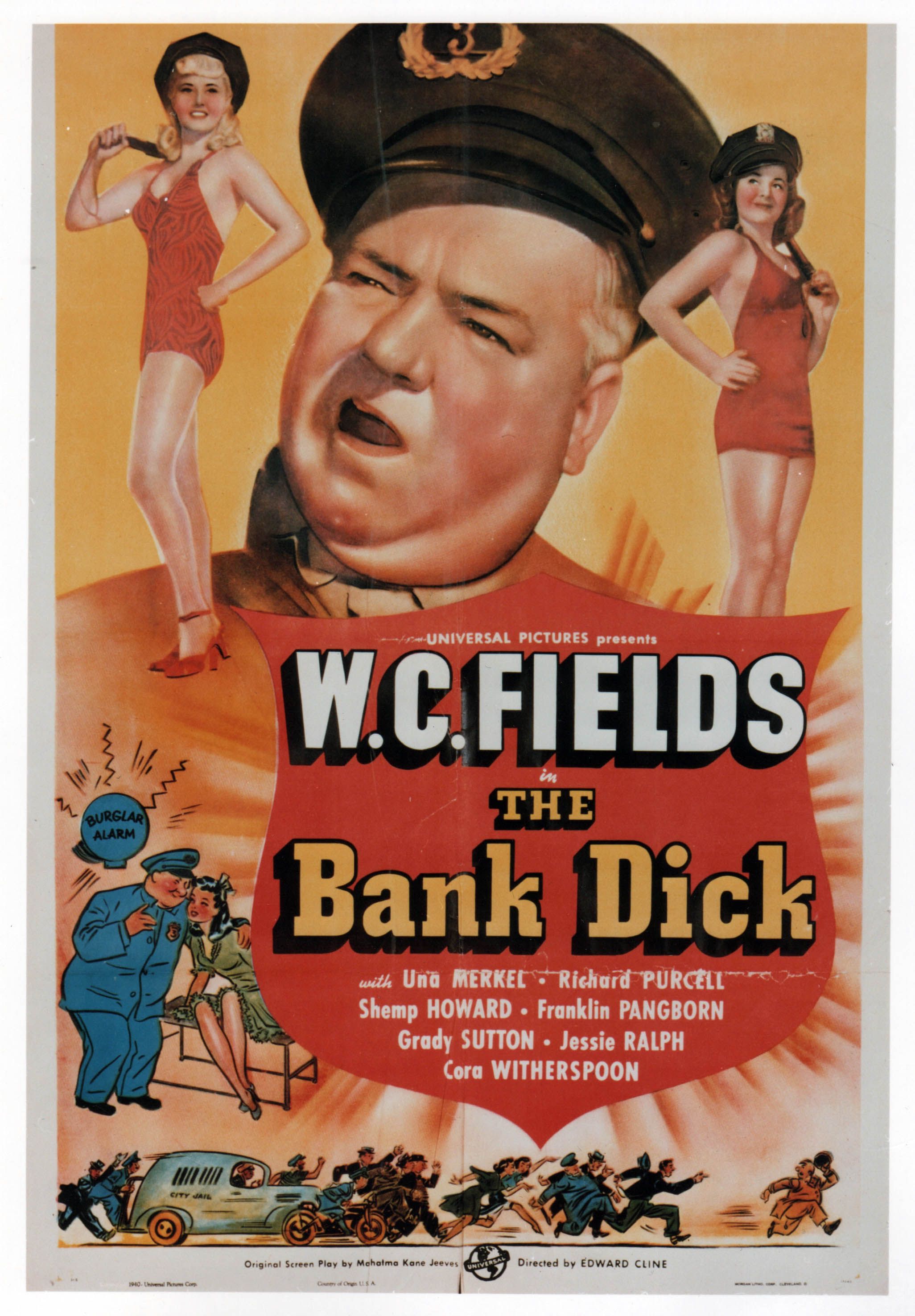
#319) The Bank Dick (1940)

5eff96235c5918d8b32479dd4d18f8b0

#319) The Bank Dick (1940)

OR “Without Interest”

Directed by Edward Cline

Written by Mahatma Kane Jeeves (aka W.C. Fields)

Class of 1992

The Plot: Egbert Sousé (W.C. Fields) is always on the lookout for the next get-rich-quick scheme, and would rather spend time at the local saloon than with his family. After conning his way onto a film shoot that has very little to do with the plot, Egbert inadvertently thwarts a bank robbery and gets a job as the bank’s security guard (a “bank dick”, if you will). After meeting a con man (Russell Hicks), Egbert convinces his future son-in-law Og Oggilby (Grady Sutton) to invest in Beefsteak Mining. Og takes out $500 from the bank with the intention of returning it once his bonus check arrives in five days, which means keeping bank auditor J. Pinkerton Snoopington (Franklin Pangborn) away for the time being. Hilary ensues…eventually.

Why It Matters: The NFR praises Fields as well as the supporting cast, and explains Fields’ longevity, though admit he is “an acquired taste”. There’s also an essay by Fields expert Randy Skretvedt.

But Does It Really?: I couldn’t have put it better than the NFR does: W.C. Fields is an acquired taste, and having now seen all three of his NFR entries, I’m just not acquiring it. Part of it is how dated Fields’ persona of a henpecked, conniving alcoholic has become, and part of it is the slower pace of his comedy style. Also keep in mind Fields was 60 when he made “The Bank Dick”, so his comic sensibilities are of a different generation than, say, Laurel & Hardy or the Marx Brothers. Of course it’s pointless for me to overanalyze a movie like “The Bank Dick” or take it too seriously. Ultimately, movies like this are here for entertainment, and I just wasn’t entertained. Fields’ work should be recognized by the NFR, and “The Bank Dick” is certainly the most polished of his three inducted films, so I’m willing to give it a pass. But do we really need the other two?

Shout Outs: Director Edward Cline restages a few bits that he co-created with his former collaborator Buster Keaton; the chase scene in particular borrows from “Sherlock Jr.” In addition, Egbert briefly references “Gone with the Wind”, not to mention the sections of dialogue lifted directly from previous Fields film “It’s a Gift”.

Everybody Gets One: Most of the supporting cast, notably Shemp Howard, six years away from re-joining the Three Stooges to replace his brother Jerry (aka Curly).

Wow, That’s Dated: Standard antiquated jokes about mother-in-laws and alcoholism, but there’s also plenty of old-timey jargon like “boondoggling”, and “jabbernowl”. But sadly, all of this takes a backseat to Egbert’s reference to “a little colored midget”. God help us all.

Seriously, Oscars?: Another busy year for the Oscars, “The Bank Dick” didn’t get a single nomination. The only Universal films that managed a nod were the forgotten “The Boys from Syracuse” and “The Invisible Man Returns”.

Other notes

  • Since completing “It’s a Gift” in 1934, Fields’ health had been in decline from years of alcoholism. When his health prevented him from making movies, he resorted to radio, trading barbs with Charlie McCarthy on “The Chase and Sanborn Hour”. Fields eventually became healthy enough to star in such films as “You Can’t Cheat an Honest Man” with McCarthy and “My Little Chickadee” with Mae West. Because of the success of those two films, Fields was given complete creative control over “The Bank Dick”.
  • Perhaps the film’s most obscure reference: W.C. Fields chose the alias “Mahatma Kane Jeeves” for his script, based on a cliché line from drawing-room plays of the day; “My hat, my cane, Jeeves.”
  • The film’s setting of Lompoc is a real town near Santa Barbara, California. The town was frustrated, however, when “The Bank Dick” was released, because it is referred throughout the movie as “Lom-puck” as opposed to “Lom-poke”.
  • Doesn’t replacing a director violate all kinds of guild regulations? Good thing Clint Eastwood isn’t around.
  • As much as I don’t care for Fields, I do admire his physical comedy. I hope I’m that coordinated when I’m 60.
  • It needs to be pointed out that one of the bank robbers’ names is “Filthy McNasty”. Carry on.
  • “I never smoked a cigarette until I was nine.” Ho boy.
  • There’s only one black person in the entire movie and he’s basically a poor-man’s Rochester?
  • The only other comedian I can think of that had a persona this unlikable without being the butt of the joke is Rodney Dangerfield. Maybe it’s the delivery.
  • The $500 loan Oggilby takes out would be roughly $9000 today. Now that’s a bonus check!
  • Shoutout to Mickey Finn, the crooked Chicago bartender in the early 1900s whom “slipping a Mickey” is named after.
  • Had Fields lived long enough, I suspect he would have successfully made the transition to television. Snoopington’s already his Mr. Mooney.
  • Snoopington’s glasses break in a bank? That’s not fair. That’s not fair at all. There was time now. There was all the time I needed…
  • I will admit that the chase finale is pretty funny. At long last Egbert is someone to sympathize with, and the physical stunts throughout (aided by an uptick in the editing tempo) help make the ending far funnier than anything else in the movie.
  • And as always, Fields’ character is saved by several Deus ex Machinas in the end. But don’t worry, there’s still one more joke about his alcoholism to keep you laughing into the end credits.

Legacy

  • “The Bank Dick” was a critical and financial success in 1940, and Fields followed-up with one final starring vehicle: 1941’s “Never Give a Sucker an Even Break”. Unfortunately, his alcoholism caused his health to deteriorate again, and his final film roles were brief cameos. W.C. Fields died of a gastric hemorrhage on Christmas Day, 1946.
  • Don’t let my dislike of Fields deter you; Fields has been the subject of tributes, homages, and several biographies over 70 years since his passing. He even has a biopic with Rod Steiger!

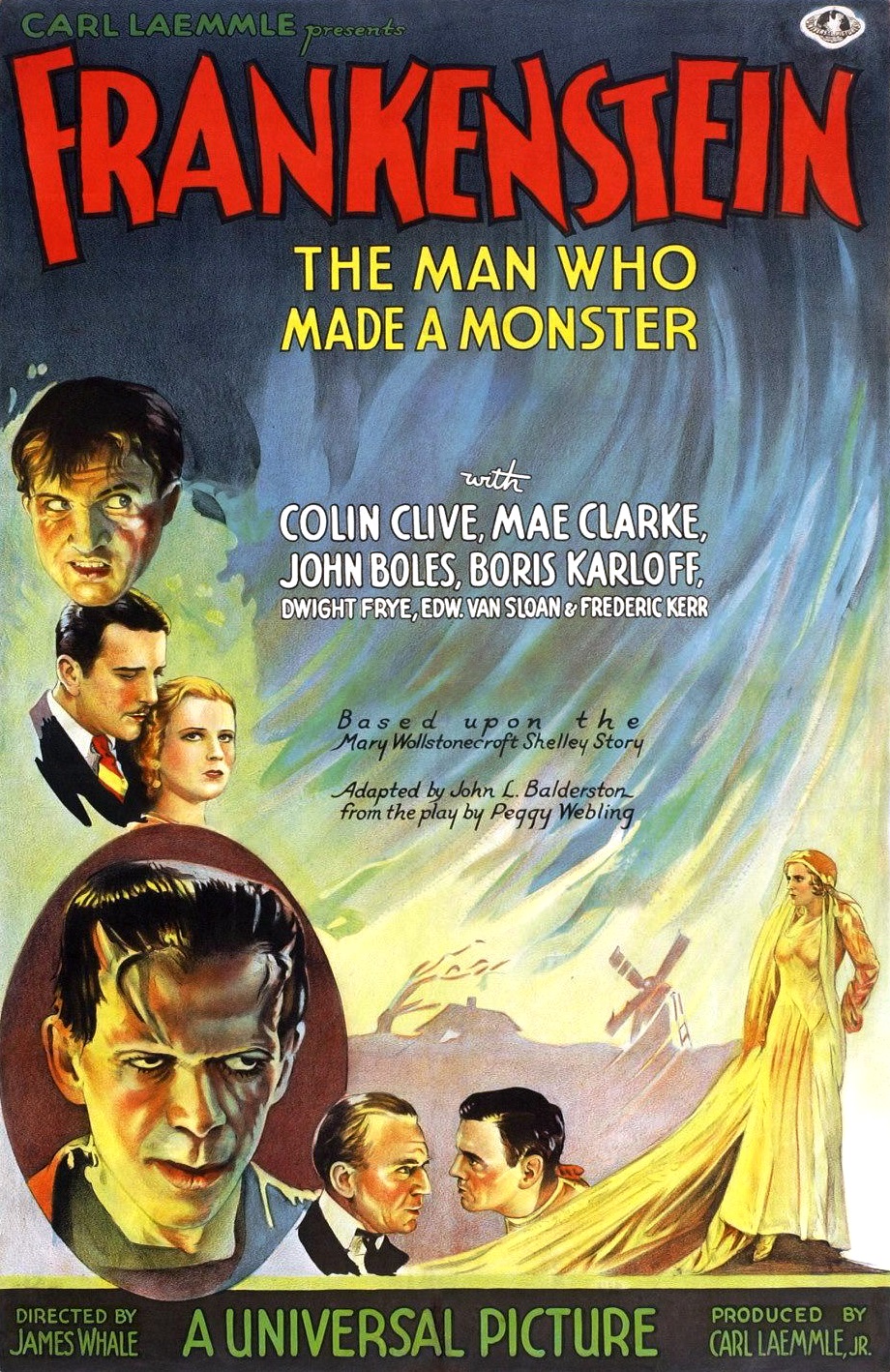
#318) Frankenstein (1931)

MV5BZGE5NWYxYzUtNjA5ZC00YzA2LWJmN2EtNGVlZmMxYmE1NzMyXkEyXkFqcGdeQXVyNDY2MTk1ODk@._V1_

#318) Frankenstein (1931)

OR “Oh Henry!”

Directed by James Whale

Written by Garrett Fort & Francis Edward Faragoh. Based on the novel by Mary Shelley, the play by Peggy Webling, and the composition by John L. Balderston.

Class of 1991

No original trailer, but here’s one from the re-release.

The Plot: Scientist Henry Frankenstein (Colin Clive) has gone nearly insane trying to create a human life by reanimating a body comprised of several stitched-together corpses. When his assistant Igor Fritz (Dwight Frye) accidentally steals the brain of a criminal, Frankenstein’s creation (Boris Karloff) becomes a hulking, violent creature. Aided by his fiancée Elizabeth (Mae Clarke) and his judgmental father the Baron (Frederick Kerr), Henry must stop the monster from wrecking havoc on the nearby village, and then the nearby villagers from wrecking havoc on the monster.

Why It Matters: The NFR calls “Frankenstein” no less than “the definitive film of its genre” and praises director James Whale and makeup designer Jack Pierce. An essay by critic Richard T. Jameson is an overview of this film and its sequel.

But Does It Really?: Oh of course. There are scarier films and more terrifying monsters, but “Frankenstein” is in a league of its own. James Whale orchestrates an effectively foreboding mood throughout, and like Lugosi’s “Dracula”, Boris Karloff is giving the definitive interpretation of the Frankenstein creature. While not as shocking as it was in 1931, “Frankenstein” is an untouchable iconic moment in American film history, and the standard-bearer of horror movies to come.

Shout Outs: The Bavarian village used in the film is a set built specifically for “All Quiet on the Western Front”.

Wow, That’s Dated: “Frankenstein” was made back when movies didn’t have musical underscoring, for fear that audiences wouldn’t understand where the music was coming from. I guess Hollywood assumed the movie-going public was the same bunch of morons who thought that train was coming right towards them.

Take a Shot: Yes, Frankenstein is the name of the doctor, not the creature. BUT, while not explicitly stated in the film, this adaptation is based on the 1927 British stage version by Peggy Webling (and its unproduced American adaptation by John L. Balderston) which gives the name Frankenstein to the doctor AND the creature. And thus the confusion begins.

Seriously, Oscars?: Not a single nomination for “Frankenstein”. In fact, none of the 37 feature films Universal released during the eligibility period were nominated at the Oscars. If only Best Makeup had been a thing back then.

Other notes

  • The beginning of the film is an introduction by Edward Van Sloan (Dr. Waldman here, Dr. Van Helsing in “Dracula”) warning that the film may be too terrifying for some. It’s a nice touch to the film’s spooky quality.
  • The Monster is credited simply as “?” Karloff doesn’t receive proper credit until the “A good cast is worth repeating” ending.
  • Speaking of weird credits, Mary Shelley is credited as “Mrs. Percy B. Shelley”. Even 100 years after their deaths, Percy was the better known of the two. Mary didn’t start getting her due until the late 1980s when her first biography was published.
  • Frankenstein’s name in the novel was Victor, but this film changes it to Henry, as Victor was deemed too “severe and unfriendly” to American audiences. The name Victor is instead given to Henry and Elizabeth’s very boring friend.
  • Kudos to cinematographer Arthur Edeson and production designer Herman Rosse; this film has a wonderfully creepy atmosphere to it. The “Young Frankenstein” team did their homework.
  • Wait, the assistant’s name is Fritz? Not Igor? Apparently, Ygor wouldn’t show up until 1939’s “Son of Frankenstein”, as played by Bela Lugosi.
  • If the creature is made from dead bodies, why is it green? Jack Pierce applied grayish-green greasepaint to Karloff so that the monster would appear gray on camera. Frankenstein didn’t start becoming full on green until sometime in the mid-80s, perhaps to avoid Universal’s copyright on the design.
  • Right after exclaiming, “It’s alive! It’s alive!” Henry proclaims, “Now I know what it’s like to be God!” This line was deemed offensive in the Code-era and was censored in subsequent re-releases.
  • Ah yes, the Bavarian village where everyone is either English or American.
  • What can I say about Boris Karloff? His monster is a confused child trying to make sense of the world. He’s an innocent surround by people who want him dead simply because he’s different. You feel for this creature right from the start.
  • Apparently the studios hadn’t perfected the camera dolly in 1931; the film’s tracking shots are quite bumpy.
  • If nothing else, the creature figured out how to solve a problem like Maria. The sequence of the monster accidentally killing the little girl was so unsettling in 1931 that it was trimmed shortly after the film’s first run, not to be seen again for over 50 years.
  • Wow, this town is easily swayed into mob mentality. I haven’t seen this many upset white men since that Gillette commercial.
  • My admiration to everyone on that set who did stuntwork near the open flame torches. That could not have been fun.
  • Well, that’s a very clear-cut ending, leaving absolutely no room for a sequel.

Legacy

  • “Frankenstein” was a hit, and talks of a sequel began immediately. Script delays (caused in part by James Whale’s perfectionism) led to a four-year gap between films, but “The Bride of Frankenstein” was worth the wait, and is considered one of the best sequels ever made.
  • After “Bride”, the law of diminishing returns set in with the remaining sequels, and soon Frankenstein joined the ranks of interchangeable Universal monsters in such films as “Abbott and Costello Meet Frankenstein”.
  • When you think of Frankenstein, you think of the flattop, electrode-wearing Frankenstein of this movie, which is a testament to the work of Karloff and Jack Pierce.
  • As previously stated, “Young Frankenstein” is a thoroughly accurate recreation of this film’s aesthetic. I laughed during several scenes of “Frankenstein” thinking of its “Young Frankenstein” counterpart.
  • Fred Gwynne’s Herman Munster definitely takes a thing or two from Boris Karloff’s interpretation of the monster.
  • In addition to the Universal-sanctioned follow-ups, there have been hundreds of “Frankenstein” adaptations over the years. Notable versions through the years include the Christopher Lee Hammer entries, Tim Burton’s “Frankenweenie” (both the short and its remake), and Kenneth Branagh’s “Mary Shelley’s Frankenstein” with Robert De Niro using sense memory to play the undead.
  • And thank goodness, we have been spared the Dark Universe take on Frankenstein, which would have been Javier Bardem apparently.

Further Viewing: The 1910 Edison version of “Frankenstein”, which was recently restored by the Library of Congress and – I’m calling it now – will make the 2019 National Film Registry inductees. (2019 update: It didn’t. Double or nothing before 2024.)