#298) The Sound of Music (1965) – Part 2!

sound_of_music_R73_original_film_art_spo_2000x

Previously on “#298) The Sound of Music (1965)”…

Other notes

  • Here’s the key to the longevity of “The Sound of Music”: All the songs had to be written simple enough to be sung by children ranging from 5 to 16, so all the music is easy to sing, and therefore effective earworms.
  • What is it you can’t face?
  • “Climb Ev’ry Mountain” is quite stirring, although it’s pretty obvious Mother Superior is dubbed. Peggy Wood was an accomplished singer in her early stage career, but at age 73 she was not up to the song’s higher notes, and studio singer Margery MacKay dubbed Wood. This may be the only part of the movie the live TV remake improved upon.
  • I also really like the film’s other simple, beautiful song: “Something Good”. It was written by Richard Rodgers alone (Hammerstein passed away in 1960) to replace the song “An Ordinary Couple”, and it’s stayed with the show ever since. Man, there really isn’t a clunker in this whole score.
  • “How Do You Solve a Problem Like Maria?” is a weird choice to walk down the aisle to.
  • Though not mentioned in the film, Herr Zeller was promoted because Hitler’s best men were killed during the Ark of the Covenant incident.
  • You didn’t think the Nazi politics plotline would make a comeback in your lifetime, did you?
  • Does every song in this movie get a reprise?
  • All I need from this concert is one cutaway shot of Hitler in the audience, listening to the von Trapp’s with a single tear rolling down his cheek.
  • Richard Dawson: THAT’S who Max looks like!
  • And for those of you who found the love story and the kids too syrupy, please enjoy the suspenseful finale of our characters hiding from Nazis.
  • I didn’t delve into it here, but this movie takes some extreme liberties with the real von Trapp family’s story. I’ll get the ball rolling with the fact that Captain Georg von Trapp was 25 years older than Maria. And they married more for convenience than for love. Have fun trying to watch the movie now!

Legacy

  • “The Sound of Music” was a runaway hit and single-handedly saved 20th Century Fox from bankruptcy following the disaster that was 1963’s “Cleopatra”. Unfortunately Fox learned the wrong lesson, and doubled down on big-budget musicals. Titles such as “Doctor Dolittle”, “Hello, Dolly!” and “Star!” (also with Julie Andrews) failed to match the success of “Sound”, and Fox had to wait until 1977 for “Star Wars” to save them again.
  • Austria doesn’t really care for “The Sound of Music” (they prefer the German “Trapp-Familie” films), but they know a cash cow when they see it, and there are several “Sound of Music” tours throughout Salzburg.
  • This is one of the rare movies that cost a film critic their job. Pauline Kael’s write-up of “the sugar-coated lie people seem to want to eat” led to her dismissal as McCall’s film critic. She landed at the New Yorker, where her legendary dislike of anything commercial continued for the next 20 years.
  • The film is so popular (and untouchable) that there has been only one Broadway revival of the stage version. Subsequent stage versions have altered the score to better reflect the film’s song list.
  • The only other American remake of “The Sound of Music” was a live TV broadcast in 2013. Hewing closer to the original stage version, this production starred Carrie Underwood and a bevy of Broadway actors doing their damnedest while Craig Zadan and Neil Meron worked out the kinks of live TV musicals.
  • A slight improvement came from the Brits, with their own live version on ITV two years later.
  • Back to the original film, that’s where this gif comes from!
  • “The Sound of Music” not only has generations of fans, but quite the cult following as well. Sing-along screenings of the movie started in London in 1999, and came stateside shortly thereafter. Audience members come dressed as their favorite characters, from Maria to the nuns, and even the hills themselves!
  • Every song from this film has become a standard. There are a lot of covers out there, but for now let’s single out Julia Louis-Dreyfus singing a duet of “Sixteen Going on Seventeen” with a surprise partner.
  • Remember that time the internet went insane when Lady Gaga sang “Sound of Music” at the Oscars? Good times.
  • Seth MacFarlane has spoofed “Sound of Music” several times over the years on “Family Guy”, and a quick parody was the rare bright spot in his misguided stint hosting the Oscars.
  • And like any family, the cast of “The Sound of Music” gets together every few years to reminisce about their time making the film. Even the especially critical Christopher Plummer has softened in his older age.

Further Viewing: The real Maria von Trapp made a special appearance on the short-lived ‘70s variety show “The Julie Andrews Hour”. I can’t find the clip of them singing “Edelweiss” together, but here they are yodeling.

Listen to This: The “Sound of Music” soundtrack was added to the National Recording Registry in 2018, and their write-up is far more loving than the NFR’s. For starters, they call the movie “a beloved, multi-generational cornerstone of American life”, and go on to praise Julie Andrews, orchestrator Irwin Kostal, and musical supervisor Saul Chaplin. The soundtrack gets not one, but two expanded essays.

And now, here are a few of My Favorite Things:

  • Pot stickers
  • Sunsets
  • Unapologetic puns
  • Being inside while it’s pouring rain
  • The “Price is Right” losing horn
  • Slow claps
  • Award show nominees who are visibly pissed when they lose
  • Disneyland during the school year
  • Thick crust pizza
  • The fact that Alex Trebek does not give a genuine damn about “Jeopardy” or its contestants
  • Friends you can pick up with after years of not seeing each other
  • Marc Shaiman parody lyrics
  • Christmas music (Yeah, I said it)
  • Trivial list making
  • Oh, and classic movies I guess

My Oscar Host 2019 Wish List

kevin-hart-variety-cover-story.jpg

Kevin Hart is out, but who is in? For the Oscars producer in a mad dash to replace this former “Undeclared” actor, here are my suggestions:

  • Tom Hanks
  • Tiffany Haddish
  • Stephen Colbert
  • Christian Bale as Bob Hope
  • Billy Eichner
  • Thanos
  • Your co-worker’s improv group that you’ve never gotten around to seeing
  • Janet from “The Good Place”
  • Faye Dunaway & Warren Beatty (zero rehearsal preferable)
  • Steve Harvey (again, zero rehearsal preferable)
  • Footage of Eddie Murphy from “Bowfinger”
  • All previous hosts in “Thunderdome”-type scenario
  • Robert Mueller
  • Any woman or person of color, I am begging you!
  • No host; Oscars presented in brief, untelevised ceremony

#298) The Sound of Music (1965) – Part 1!

P00292H.jpg

#298) The Sound of Music (1965) 

OR “Nun Better”

Directed by Robert Wise

Written by Ernest Lehman. Based on the stage play by Howard Lindsay and Russel Crouse. Music and Lyrics by Richard Rodgers & Oscar Hammerstein II.

Class of 2001

Thanks, Neil

We have one of the all-time classics on this list, so buckle down: it’s a two-parter.

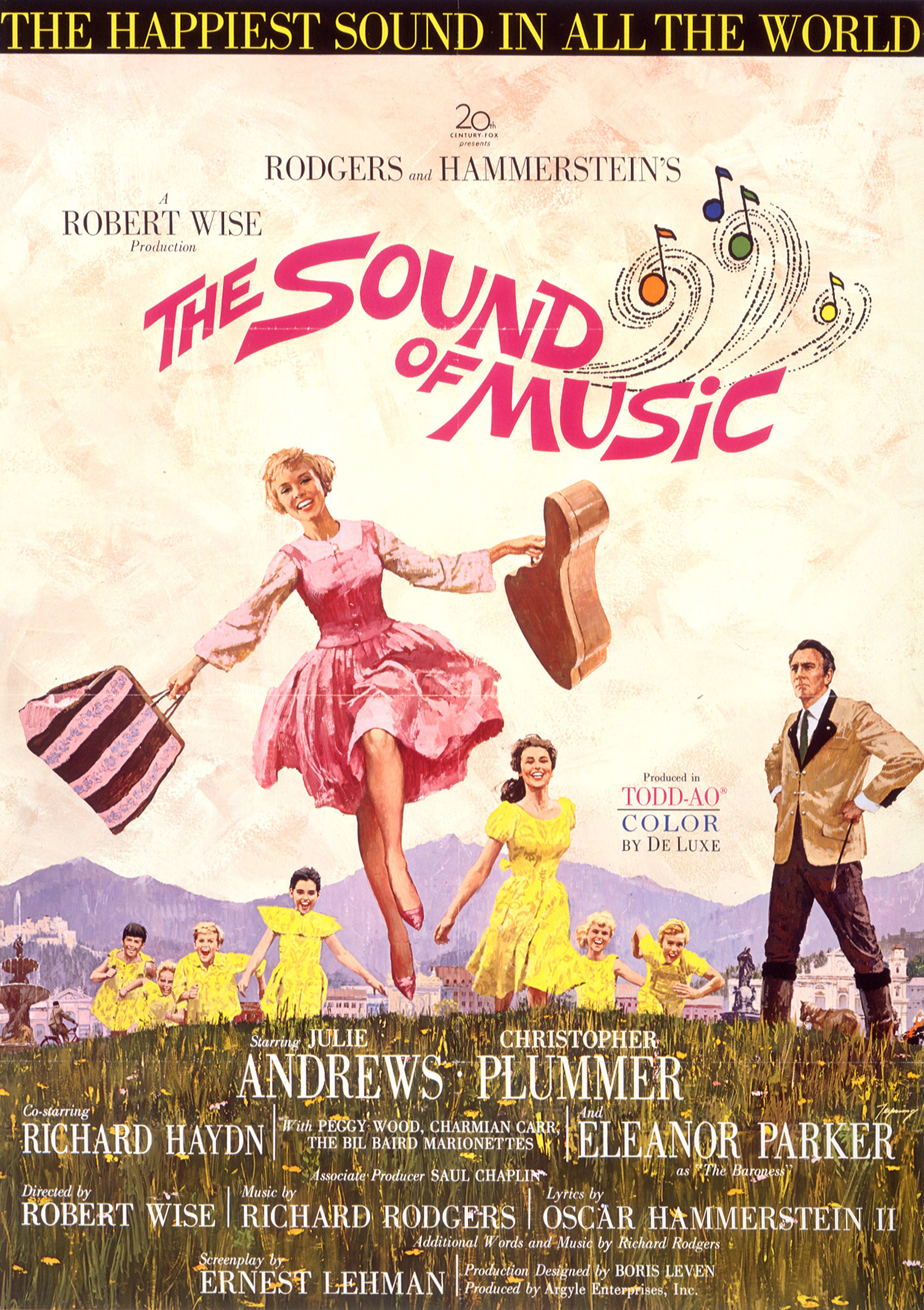
The Plot: Based on some parts of a true story, Maria Rainer (Julie Andrews) is a postulant at Nonnberg Abbey in Salzburg during the late ‘30s. Deemed too free-spirited by the nuns, the Mother Abbess (Peggy Wood) sends Maria to be governess for the children of naval Captain Georg von Trapp (Christopher Plummer). A widower with seven children, Captain von Trapp runs his house with firm discipline, a style that clashes with Maria’s sunny Julie Andrews-ness. But the children love her, and Georg eventually warms up to Maria. With a possible marriage to the Baroness Elsa von Schraeder (Eleanor Parker), and the Third Reich invading/annexing Austria, the Captain must stand by his ideals and his homeland, and falls for Maria in the process. Oh, and it’s a musical.

Why It Matters: The NFR calls it “[o]ne of the most popular movie musicals of all time” and then gives a detailed plot summary.

But Does It Really?: Well I see why this movie is so popular. “The Sound of Music” is not only one of the most delightful musicals ever, but one of the most delightful movies, period. The film is infectiously joyous, with a never-better Julie Andrews leading the way. Robert Wise and Ernest Lehman make one intelligent decision after another, and transform a good play into an excellent film. Time has only aided this film’s popularity, and “The Sound of Music” continues to be entertaining, warm, and uncomfortably relevant in these Nazi-reboot times we live in. “The Sound of Music” is a near-perfect movie, and the NFR should be ashamed it took 12 years to add it to the Registry.

Everybody Gets One: Most of the supporting cast, notably three-time Oscar nominee Eleanor Parker and longtime stage and film veteran Peggy Wood.

Take a Shot: Man oh man, do we have a title number for you.

Seriously, Oscars?: By the time the Oscar nominations rolled around, “The Sound of Music” had surpassed “Gone with the Wind” as the highest grossing movie of all time. “Sound of Music” tied for the most Oscar nominations of 1965 (10) with another epic blockbuster: David Lean’s “Doctor Zhivago”. The two films were neck-and-neck, ultimately winning five apiece, but “Sound of Music” took home Best Picture and Director. Julie Andrews, the previous year’s Best Actress winner for “Mary Poppins”, lost to another Julie – Christie for “Darling”. The only part that baffles me is how Ernest Lehman didn’t get an Adapted Screenplay nomination.

Other notes

  • Though based on a true story, several details were altered when creating the original stage version, hence why Maria von Trapp’s original memoir is not cited in the credits. There are, however, a few ideas lifted from the 1956 West German film “Die Trapp-Familie”, whose screenwriter George Hurdalek gets a special thanks in the opening credits.
  • Now this is how you open up a play! That’s not an opening number, that’s an IMAX movie!
  • Shoutout to Marni Nixon, dubbing artist to the stars, finally getting some on-camera time as Sister Sophia.
  • How can you not love Julie Andrews? If she didn’t blow you away with the title number, “I Have Confidence” will put you in Maria’s corner for the rest of the film. Speaking of, look out for the real Maria von Trapp as Julie Andrews approaches the von Trapp manor.
  • I get it, Christopher Plummer: You want everyone to know you are so much more than Captain von Trapp. A stage veteran with a handful of film credits, Plummer only accepted the role if he was allowed to make the Captain more dimensional. And so he did: Plummer is giving a wonderfully subtle performance under the character’s limited range.
  • This must be the part of Austria where no one has accents.
  • Here’s how good this movie is: There’s a plotline involving Nazis and it’s still a perennial family classic.
  • Like “West Side Story”, Lehman and Wise knew that adapting a musical to a film requires changes. A few songs were deleted, while others were moved to different scenes. An example of the latter: “My Favorite Things” is now what Maria sings to calm the children during the thunderstorm, which is a more natural fit than “The Lonely Goatherd”. All of Lehman’s alterations make for a stronger musical.
  • I’m glad Maria didn’t listen to her friend Carol Burnett when she made clothing out of the curtains.
  • Even the brilliant songwriting team of Rodgers & Hammerstein couldn’t come up with a more clever way to describe “la”, other than “a note to follow so”.
  • During the “Do Re Mi” montage, Julie Andrews sings while pedaling a bike. Someone didn’t skip leg day.
  • Eleanor Parker never gets the credit she deserves with the Baroness. Her performance makes the character flawed, but not evil. Well, except for the boarding school part. That’s Evil Stepmother 101.
  • Was Tony Randall unavailable to play Max? Richard Hayden finds the right decibel level with a character you could very easily play over-the-top.
  • I got genuine chills when the children sing the “Sound of Music” reprise.
  • “The Lonely Goatherd” is the closest this film gets to a superfluous number, but Bil Baird’s puppetry spices things up. I just want to know how much furniture Maria cannibalized to make those marionettes.
  • “Edelweiss” is my favorite song in the score. Simple, beautiful, powerful, and the last song Rodgers & Hammerstein wrote together. Special mention to Bill Lee, dubbing Christopher Plummer.
  • First rule of adapting a stage musical to film: If you cut a song, put it in the underscore. Robert Wise decreed that Max and the Baroness would not sing in the film, so their duet, “How Can Love Survive?” appears only as an instrumental during the Captain’s party.

And just like in the film, here is where we take our act break. Part 2 coming soon. In fact, right now.

#297) The Fall of the House of Usher (1928)

The-Fall-of-the-House-of-Usher-1928

#297) The Fall of the House of Usher (1928)

OR “Pardon the Expressionism”

Directed by J.S. Watson Jr. and Melville Webber

Based on the short story by Edgar Allan Poe

Class of 2000

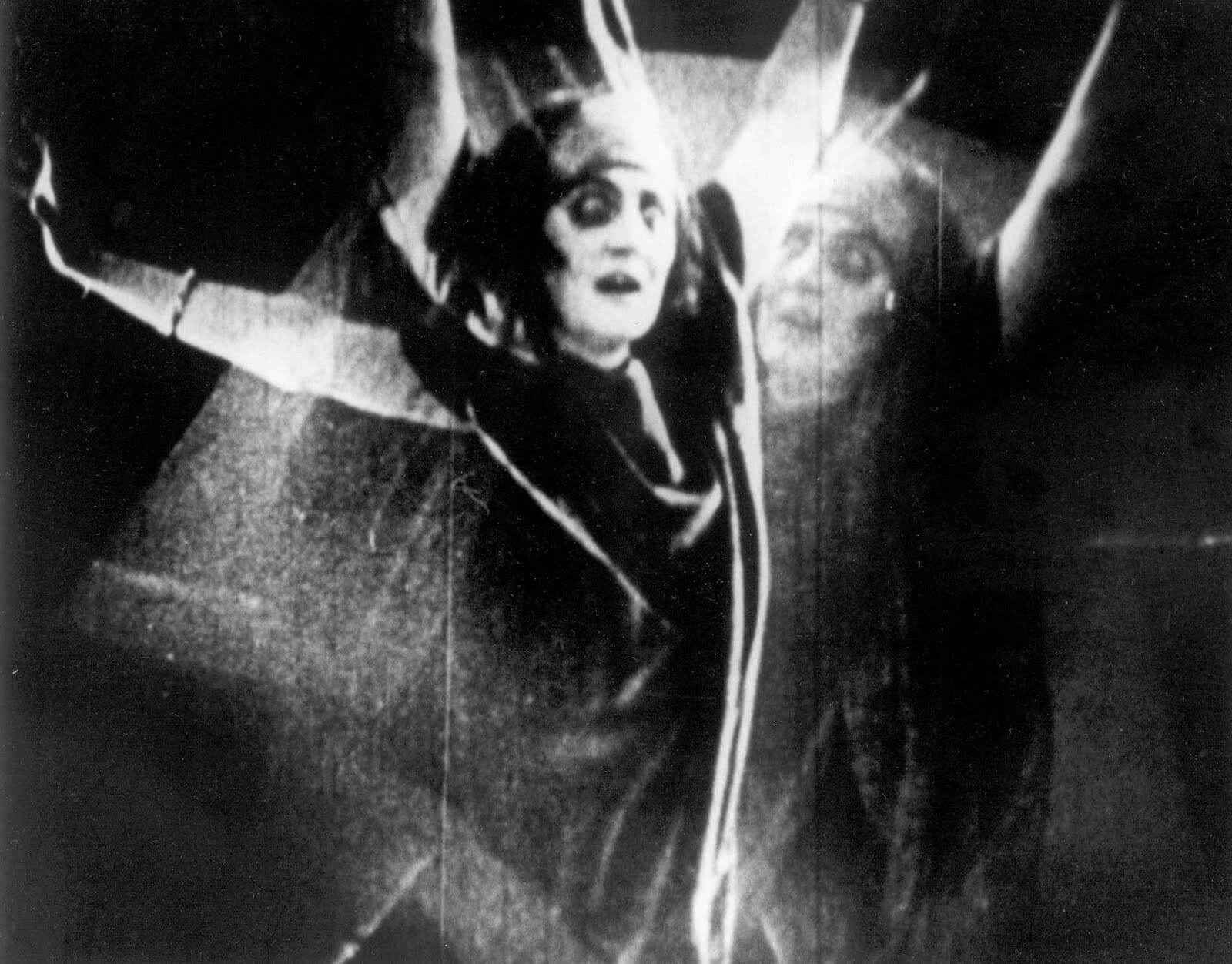
The Plot: Are you vaguely familiar with Poe’s “Fall of the House of Usher”? Great, because this movie is one loose adaptation. This silent short takes the overall themes of “Usher” and presents them in some purely visual storytelling. It’s still about Roderick Usher (Herbert Stern), his mysterious ailment, his catatonic sister Madeline (Hildegarde Watson), a visitor (Melville Webber), and a decaying manor, but all of this is conveyed using some really out-there camera effects.

Why It Matters: The NFR praises this “startlingly stylized” film, though accidentally calls it “avant-arde”. So close. There’s also an essay by silent film expert/NFR go-to Scott Simmon.

But Does It Really?: Sure, why not? I give this film a pass for its representation of its filmmakers, and a reminder that not all film adaptations of books need to follow the text too faithfully, or at all. This is a true adaptation of a story from written text into visual images. If you want Poe’s detailed, macabre text, there’s always the book. If you want a fascinating visual variation on the story’s themes, this is your movie.

Everybody Gets One: Part of the film’s unique style comes from the fact that neither of the directors were filmmakers. James Sibley Watson was a medical doctor and editor of “The Dial”; Melville Webber was an art historian. The two became friends while at Harvard, and developed a fascination of experimental films. They selected “House of Usher” as their film project because neither had read it in a long time, and therefore wouldn’t be slavish to the text.

Other notes

  • First thing you’ll notice about this film: no intertitles. The entire film is expressed visually. Pretty gutsy move, but they pull it off.
  • Nice zig-zag optical effect. In fact, all the effects in this movie are really great. Like, surprisingly great considering this was a low-budget experimental film. Well done, everyone.
  • In one of the tried-and-true Hollywood casting procedures, Madeline is played by James Watson’s wife Hildegarde.
  • Are the stairs just being shot artistically or does this house have escalators?
  • The only text in the film (aside from an opening shot of the book) is a series of one-word effects pertaining to Madeline in her tomb. Think ‘60s “Batman” meets alphabet soup.
  • Thanks for showing up, alleged narrator character. Where the hell have you been?
  • Not being familiar with the source material, I made it a point to actually read “House of Usher” prior to my viewing of this film. And thank God I did, otherwise I would have been so lost.

Legacy

  • Watson and Webber only made two other films, but one of them is called “Lot in Sodom”, so have fun with that.
  • There have been several adaptions of “The Fall of the House of Usher” over the years, including the Roger Corman feature-length “House of Usher”, which would find its own place on the NFR. A feature-length adaptation of a short story: what could possibly go wrong?
  • For those looking for a more faithful version of “Usher”, look no further than this 2012 animated version, narrated by Christopher Lee.

Further Viewing: The other 1928 “Fall of the House of Usher” silent film adaptation. A French film directed by Jean Epstein, and co-written by future director Luis Buñuel. Apparently it’s pretty great too.

#296) Roman Holiday (1953)

MV5BMTE2MDM4MTMtZmNkZC00Y2QyLWE0YjUtMTAxZGJmODMxMDM0XkEyXkFqcGdeQXVyNjc1NTYyMjg@._V1_SY1000_CR0,0,671,1000_AL_

#296) Roman Holiday (1953)

OR “Veni Vidi Vespa”

Directed by William Wyler

Written by Ian McLellan Hunter and John Dighton (and Dalton Trumbo). Story by Hunter Trumbo.

Class of 1999

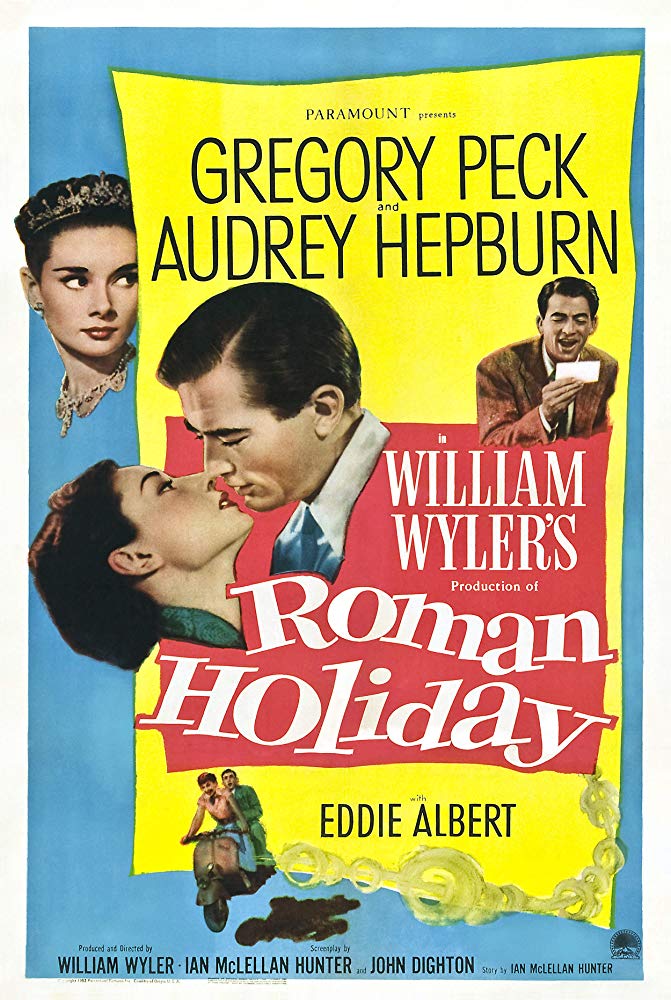
The Plot: Princess Ann’s (Audrey Hepburn) goodwill tour of Europe culminates in Rome, where she has a breakdown of physical exhaustion. When she is told she must keep to her relentless itinerary, Ann sneaks out of the embassy at night, and has a chance encounter with American reporter Joe Bradley (Gregory Peck). Only after they part ways does Joe realize she is the princess everyone is trying to interview. With the help of his wisecracking photographer friend Irving (Eddie Albert), Joe attempts to get an exclusive interview with Ann without her finding out who he is. There’s laughs and love aplenty in Rome’s unofficial tourist video.

Why It Matters: The NFR calls it “a quick pace, light-hearted comedy” and praises Trumbo, Hepburn, and Albert.

But Does It Really?: “Roman Holiday” won me over pretty quickly. Trumbo’s well-crafted script is further boosted by the star power and chemistry of Hepburn and Peck. Hepburn is confident and radiant in her first leading role; Peck is charming and funny in his rare excursion outside of heavy drama. Throw in the polished storytelling skills of William Wyler and some beautiful and expertly chosen locales, and you have two of the most enjoyable hours in film history.

Everybody Gets One: Although there were many writers and various drafts, the final credit for the “Roman Holiday” screenplay goes to screenwriter Ian McLellan Hunter and playwright John Dighton. The story, while credited to Hunter, was written entirely by the infamously blacklisted Dalton Trumbo. Hunter agreed to be a front and gave Trumbo his salary for the project. Trumbo, Hunter, and Dighton all passed away before Trumbo could receive proper recognition for his work on “Roman Holiday”.

Wow, That’s Dated: The film starts with a meta-reference to the long-gone Paramount newsreels. Also, can you imagine Princess Ann trying to go incognito amidst TMZ and smartphones?

Seriously, Oscars?: One of the biggest hits of 1953, “Roman Holiday” received 10 Oscar nominations, including Best Picture. The film lost several awards to the unstoppable “From Here to Eternity”, but did manage to pick up three: Best Actress for newcomer Audrey Hepburn, Best Costume Design for Edith Head, and Best Story for credited writer Ian McLellan Hunter. 40 years later, Dalton Trumbo received a posthumous Oscar, as well as a proper listing in the film’s opening credits.

Other notes

  • “Roman Holiday” was the first Hollywood movie shot entirely in Rome. This made a sizeable dent in the film’s already tight budget, forcing Wyler to shoot “Roman Holiday” in black and white. In addition, Wyler had to cast an unknown as Ann, rather than a preferred star such as Elizabeth Taylor or Jean Simmons.
  • I do love me some non-verbal character development. Never has so much been said about a character by one shoe.
  • The film makes a point to never say which European nation Princess Ann hails from. My guess: West Dakotastan.
  • I love Audrey Hepburn, but playing hysterics isn’t necessarily her strong suit, at least not at this point in her career. Thankfully it’s only for one scene early on.
  • Shoutout to Hartley Power as Joe’s editor Hennessey. The scene where he calls Joe’s bluff is the funniest in the movie.
  • Before we go any further, a readout from the Michael Douglas Scale. Gregory Peck is 13 years Audrey Hepburn’s senior. Charming as they both are, I’m going to have to give “Roman Holiday” a written warning. I don’t make the laws, I just enforce them.
  • This movie really takes its time (Ann doesn’t actually explore Rome until about an hour in), but Hepburn and Peck are so appealing you really don’t mind. The two-hour running time goes by faster than some shorter movies.
  • Those are two of William Wyler’s daughters – Cathy and Judy – as the children Joe tries to steal a camera from.
  • Eddie Albert is a lot of fun in the standard “rom-com best friend” role, but an Oscar nomination? That’s a bit much, don’t you think?
  • The Vespa ride is justifiably iconic, and one of many fun sequences during the actual “holiday” part of the film. I am, however, very disappointed that it doesn’t end with Ann and Joe crashing into either a fruit stand or two guys carrying plate-glass.
  • Surprise cameo by Olmec from “Legends of the Hidden Temple”. But seriously, the Mouth of Truth scene is just delightful. Hepburn allegedly didn’t know what Peck was going to do, and the result is one of the most endearing moments in this or any movie.
  • The most impressive thing about “Roman Holiday” is how good the actual storytelling is. There’s not a lot of dialogue, and much of the story is told visually. I suspect that if it had been made 30 years earlier, “Roman Holiday” would have been an equally enjoyable silent movie.
  • Audrey’s performance is definitely not the flashiest to ever win an Oscar, but she’s just so effortlessly alluring. Is it any wonder generations of filmgoers have fallen in love with her?
  • I was steeling myself for the film’s inevitable Hollywood ending, and was pleasantly surprised when it didn’t happen. “Roman Holiday” opts for a realistic ending that, while it denies its audience a traditional happy ending, does manage to conclude on a satisfying note.

Legacy

  • Although not her film debut, “Roman Holiday” is the film that turned Audrey Hepburn into a bona-fide movie star. She would reunite with William Wyler for the underrated “How to Steal a Million”.
  • Practically every romantic comedy has been influenced by “Roman Holiday”, some right down to the Vespa ride.
  • “I’m also just a girl, standing in front of a boy, asking him to acknowledge what a blatant rip-off this movie is of ‘Roman Holiday’.”
  • Rumors of Peck and Hepburn reuniting for a sequel in the ‘70s never amounted to anything. Still, part of me is intrigued by the squandered potential of a “Before Sunset”-esque follow-up.
  • Don’t worry, they remade “Roman Holiday” for TV in 1987, starring Tom Conti and “Dynasty” star/daughter of an actual princess Catherine Oxenberg.
  • There’s been a stage musical floating around for a while with a score of repurposed Cole Porter tunes. I just…why?

Further Viewing: Audrey Hepburn’s now-famous screen test. Wyler discreetly told the camera and sound technicians to keep rolling after he called “Cut”, and Hepburn’s ensuing spontaneity won her the role of Ann.