#309) They Call It Pro Football (1966)

screen shot 2019-01-24 at 9.08.40 pm

#309) They Call It Pro Football (1966)

OR “Sunday Bloody Sunday”

Directed by John Hentz

Written by Steve Sabol

Class of 2012

The Plot: With the merger between the National Football League and the American Football League on the horizon, the newly formed NFL Films presents this epic look at football. With the dramatic narration of John Facenda and a stirring score by Sam Spence, Steve Sabol highlights the gridiron game with such then-revolutionary approaches as telephoto lenses and slow-motion recaps. There are highlights from the most popular teams, players, and games of the era, and yes, instant replays.

Why It Matters: The NFR calls the film no less than “the ‘Citizen Kane’ of sports movies” and praises the creative team, especially John Facenda’s “commanding cadence”. There’s also an essay by AMPAS documentary curator (and presumably football fan) Ed Carter.

But Does It Really?: “They Call It Pro Football” definitely stands on a piece of ground no other NFR entry can claim. It’s always a treat to watch a film whose groundbreaking techniques are so commonplace today you take it for granted. With wall-to-wall coverage of every sport imaginable at our disposal, it’s fascinating to watch Sobal and company create the look of televised sporting events that is still the gold standard. With a long-lasting cultural impact to go along with its innovative aesthetic, “They Call It Pro-Football” is a natural for NFR inclusion and a cinematic home-run slam-dunk touchdown. Come on, you think the guy with the movie blog knows any of this terminology?

Everybody Gets One: Ed Sabol had just founded Blair Motion Pictures when he was hired to film the 1962 NFL Championship Game. Thanks to the persistence of NFL Commissioner Pete Rozelle, Blair Motion Pictures became NFL Films and signed an exclusive deal with the League to film all of their games. With Rozelle’s encouragement, Sabol was allowed to adopt new filming methods of covering the games (up to then football coverage was mostly newsreel-esque wide shots of the field). Sabol also called on the talents of his son Steve to write the film’s narration, inspired by Steve’s love of Rudyard Kipling.

Wow, That’s Dated: The narration mentions the NFL Championship Games, the precursor to the Super Bowl and the NFL-AFL merger of the late ‘60s.

Seriously, Emmys?: “They Call It Pro Football” premiered on TV as part of the series “NFL Action”. That episode begins with Pat Summerall listing the awards the film has won, including Grand Prize at Cortina Film Festival and First Prize at the International Short Film Festival in Oberhausen, Germany. I could find evidence of “Pro Football” competing in Oberhausen, but nothing about its wins. Seriously, Internet? For the record, televised sports didn’t have their own Emmy ceremony until 1979. Ed and Steve Sabol would both receive Lifetime Achievement Emmys in 2003.

Other notes

  • The narrator is NFL Films’ “Voice of God” John Facenda. A broadcaster and anchorman from Philadelphia, Facenda narrated practically every NFL Films production until his death in 1984. I recognized him from the industrial short “Progress Island U.S.A.” about the booming Puerto Rico economy of the early ‘70s. Progress!
  • For those of us that are a little football-challenged, the film gives a quick recap of the major positions (quarterback, wide receiver, lineman) that’s not condescending to viewers who already know these terms.
  • How are they still the Washington Redskins? Even at the time of this film’s release, there were protests from Native American communities. Didn’t “Kimmy Schmidt” solve this problem once and for all? [UPDATE: As of 2022, the team is now called the “Washington Commanders”.]
  • I was very close to listing a reference to the L.A. Rams under “Wow, That’s Dated”, knowing that they moved to St. Louis in the mid-90s, only to learn that they moved back to L.A. three years ago. Turns out even the little I do know about football is outdated.
  • Among the few players’ names I recognized were Fran Tarkenton (“That’s Incredible!”), Gale Sayers (“Brian’s Song”), Johnny Unitas (“The Simpsons”), and Bart Starr (Again, “The Simpsons”).
  • That’s Vince Lombardi going over his “Packer sweep” maneuver on the chalkboard. I didn’t recognize him without his trademark fedora.
  • You don’t need to follow football to admire the athleticism required. The highlights presented here are still fun to watch.
  • The film showcases my favorite part of football; watching the head coaches cursing on the sidelines.
  • There’s nothing like watching slow-motion instant replay injuries. The games are over 50 years old, but the assailments are still cringe-worthy.
  • While exciting to watch, all of this football seems less intense than today’s game. I wonder how much of that is the presentation rather than the actual game?
  • What is the title of this film in Europe? “They Call It Pro Pseudo-Rugby”?

Legacy

  • The work of both Ed and Steve Sabol, as well as the tireless efforts of Pete Rozelle, helped propel football to become baseball’s rival for America’s pastime. Every dramatized reference to the games and players started with “They Call It Pro Football”.
  • Ed Sabol was inducted into the NFL Hall of Fame in 2011, making him one of the rare non-athletes or coaches to do so.
  • I’m gonna trace this film’s legacy all the way to those “Bad Lip Reading” videos.
  • This film also paved the way for America to look deep within our own national conscience and ask ourselves, “ARE YOU READY FOR SOME FOOTBALL?”

#308) The Silence of the Lambs (1991)

mv5bnjnhztk0zmetnjjhmi00yzfllwe1mmetyzm1m2zmmgmwmtu4xkeyxkfqcgdeqxvynju0otq0oty@._v1_

#308) The Silence of the Lambs (1991)

OR “The Lecter Circuit”

Directed by Jonathan Demme

Written by Ted Tally. Based on the novel by Thomas Harris.

Class of 2011

The Plot: FBI trainee Clarice Starling (Jodie Foster) is assigned to the Behavioral Science Unit, under the command of Jack Crawford (Scott Glenn). Crawford enlists Starling to interview Dr. Hannibal Lecter (Anthony Hopkins), a brilliant former psychiatrist and equally brilliant cannibal, in an effort to track down wanted serial killer “Buffalo Bill” (Ted Levine). After a tense first meeting, Lecter agrees to help; on the “quid pro quo” that Clarice shares her personal information with him. As the clock ticks on saving Buffalo Bill’s most recent victim (Brooke Smith), Clarice must follow Hannibal’s increasingly cryptic clues, while confronting her own issues, specifically the screaming of a helpless lamb from her childhood.

Why It Matters: The NFR calls the film a “chilling thriller” and praises the “superb” Foster and Hopkins, as well as Demme’s “taut direction”.

But Does It Really?: One of my notes simply reads “captivating”, and that sums up “Silence of the Lambs” for me. The film’s occasionally gruesome subject matter doesn’t sound appealing on paper, but once this movie starts, I am hooked. Foster and Hopkins are giving magnificent, career-defining performances, and they along with Jonathan Demme subvert all your expectations of the crime thriller genre. The film is an irresistible roller coaster from start to finish, and I’m always glad I took the ride. “The Silence of the Lambs” is one of filmdom’s finest thrillers and a no-brainer for NFR inclusion.

Everybody Gets One: Shockingly, this is the only NFR entry for director Jonathan Demme, actor Anthony Hopkins, and most surprisingly, composer Howard Shore. Shoutouts to Brooke Smith as Catherine Martin (aka “the vic”) and Darla the dog as Precious.

Wow, That’s Dated: When “Silence” was released, there were complaints from various LGBTQ+ organizations regarding the depiction of a transsexual character as a mentally disturbed serial killer. “Silence” tries to skirt around this negative portrayal by saying that Buffalo Bill is only pretending to be transsexual due to trauma, but that definitely does more harm than help.

Seriously, Oscars?: Despite its January release and Orion Pictures declaring bankruptcy in December 1991, “Silence of the Lambs” still received seven Oscar nominations, including Best Picture. “Silence” became only the third film in Oscar history (following “It Happened One Night” and “One Flew Over the Cuckoo’s Nest”) to win the Big Five: Picture, Director, Actor, Actress, and (Adapted) Screenplay. Most surprising of these is Anthony Hopkins’ win for Lead Actor, considering that he’s only on screen for roughly 25 minutes. It’s category fraud, but hey, if Hopkins had campaigned for Supporting we would have missed out on Jack Palance’s push-ups.

Other notes

  • That’s right; even with “Dances with Wolves” winning Best Picture and “Silence” being a surprise hit, Orion Pictures still had to file for bankruptcy in 1991. I blame “She-Devil”.
  • Is Jodie Foster doing her Holly Hunter impression?
  • Anthony Hopkins, man. What can I say? His Hannibal is a master class in restraint, and brings out the best in an already great Jodie Foster. His performance seduces you into siding with Hannibal, and never fails to give me some serious chills.
  • Does liver go well with fava beans and Chianti? And isn’t it pronounced, “kee-ahn-tee”, not “kee-ann-tee”?
  • Shoutout to cinematographer Tak Fujimoto. There are plenty of Demme’s trademark head-on shots, which help with this film’s confrontational moments. I also appreciated the many hand-held shots from Clarice’s point of view, helping us sympathize with and understand a strong-willed woman’s uphill struggle in the boys club of the FBI. How Fujimoto didn’t get an Oscar nomination for this or any of his other movies is a crime.
  • And that’s why you never help anyone move furniture!
  • The last person I expected to see in this film was Bulldog from “Frasier”. He’s one of the weird butterfly experts that help Clarice.
  • FBI Director Roger Corman! This is the part of Corman’s career where his successful protégés (like Jonathan Demme) started casting him in bit roles as a thank you (see “The Godfather Part II”).
  • Anthony Heald never gets the credit he deserves as Hannibal’s insufferable warden Dr. Frederick Chilton. You know that Hannibal is going to go after him, but Heald’s performance makes sure you want Hannibal to go after him.
  • The great thing about Jodie Foster’s Clarice is that she is above all a human lead, rather than a female lead. She is not a male writer’s idealized woman; she is flawed, she is vulnerable, she is continuing to grow as a person and learning about herself in the process. It’s still a rarity in a Hollywood film.
  • Speaking of, although there are only about four women in this whole film, they are all independent, strong, intelligent, or all three. Even Catherine tries escaping on her own without waiting for Clarice to show up. No damsels in distress here.
  • It’s bad enough that the transsexual character is a serial killer, but he’s a Nazi too? No wonder the gay community was up in arms about this movie.
  • How many rooms does this basement have? Good to know Buffalo Bill’s victims are safe during a tornado.
  • The film is dedicated to the memory of actor Trey Wilson, who appeared in Demme’s previous film, “Married to the Mob”.

Legacy

  • “Silence of the Lambs” was one of the biggest hits of 1991, and talks of a sequel began immediately, with Thomas Harris releasing the much-anticipated follow-up novel “Hannibal” in 1999. The novel’s increased gore (among other things) led to Foster, Demme, and Tally all declining to participate in the film adaptation. With Hopkins still in tow, “Hannibal” the film is…increasingly gory.
  • “Silence” has had two additional film prequels: “Red Dragon” and “Hannibal Rising”, both based on Harris’ novels. The story goes that Harris only wrote “Rising” because producer/film rights holder Dino De Laurentiis informed him that a prequel would be written with or without his participation.
  • Another Hannibal prequel aired on NBC for three seasons with Mads Mikkelsen taking over the role. But show creator Bryan Fuller continued his unlucky streak with his TV endeavors, and “Hannibal” was cancelled before Fuller could explore the events of “Silence of the Lambs”.
  • As for the original film, “Silence” has endured its share of spoofs and parodies over the years. Here’s one with Dom DeLuise for some reason.
  • And here’s the parody musical that legally has to inform you it’s a parody.
  • Oh, and one more really bizarre legacy: Seth Green based the voice of “Family Guy” character Chris Griffin on Buffalo Bill. Isn’t that the weirdest?

Further Viewing: The first film adaptation of “Red Dragon”: 1986’s “Manhunter”, directed by Michael Mann and starring Brian Cox as Hannibal. After the film’s box-office failure, Dino De Laurentiis gave Orion the rights to the Hannibal Lecter character for free for “Silence”. Once that film was a hit, Dino made sure to co-produce all future Hannibal outings, including another “Red Dragon”.

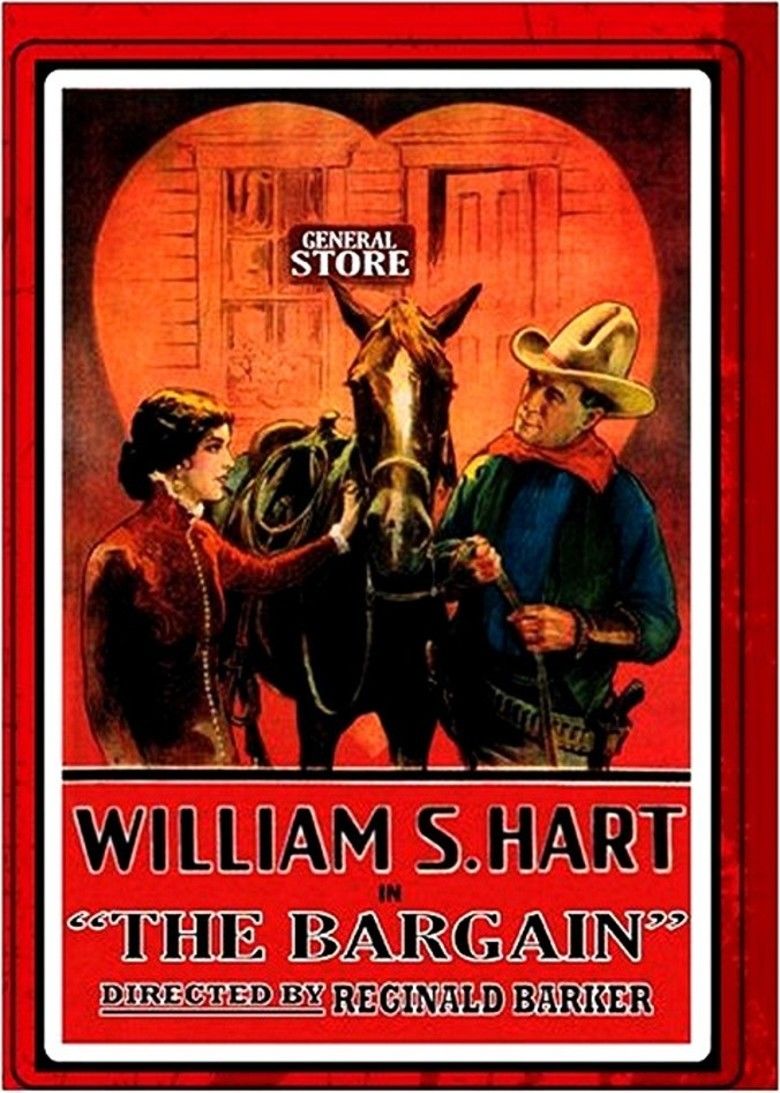
#307) The Bargain (1914)

the-bargain-1914-film-images-86bfbfa1-9db7-4327-b59c-54bf462eacc

#307) The Bargain (1914)

OR “Change of Hart”

Directed by Reginald Barker

Written by William H. Clifford and Thomas H. Ince

Class of 2010

The Plot: Bandit Jim Stokes, the two-gun man (William S. Hart) is wounded while robbing a stagecoach in 1889 Arizona. He is taken in by prospector Phil Brent (J. Barney Sherry) and his daughter Nell (Clara Williams). When Jim and Nell fall in love, Jim decides to give up his bandit ways. An attempt to return the money he stole leads to his capture by Sheriff Bud Walsh (J. Frank Burke). All is lost, unless Jim and the Sheriff can strike…the bargain!

Why It Matters: I’m just going to crib directly from the NFR’s write-up: “[“The Bargain”] was selected [for the NFR] because of Hart’s charisma, the film’s authenticity and realistic portrayal of the Western genre and the star’s good/bad man role as an outlaw attempting to go straight.” There’s also an essay by Library of Congress film archivist Brian Taves.

But Does It Really?: I’ll give “The Bargain” a pass for its historical impact. William S. Hart is mostly forgotten today, but without him we wouldn’t have the morally conflicted cowboys of every western for the next 50 years. “Hell’s Hinges” is still the definitive Hart western, but “The Bargain” is where it all began. The film is worthy of preservation, but this one may just be for the movie buffs.

Everybody Gets One: William S. Hart didn’t become a film star until he was 49 years old! After years of struggling as a stage actor, Hart convinced producer/longtime friend Thomas Ince to give him a shot at the movies. Hart started out in a few shorts before making the jump to leading man with “The Bargain”. Thomas Ince was a prolific film producer who earned the moniker “Father of the Western”. We’ll see more of his work in “Hell’s Hinges”, “The Italian”, and “Civilization”.

Other notes

  • The version of this film available on the Library of Congress’ YouTube page does not come with an accompanying soundtrack. I am not watching an 80-minute movie in complete silence. Take me away, Ennio Morricone!
  • “The Bargain” starts off with an interesting prelude. Each cast member is introduced taking a bow in formal wear, followed by a dissolve of him or her completing the bow in full costume. A unique opening to be sure, but it does eat up a lot of screentime, and I’m not quite sure what it has to do with anything.
  • This may be one of the first movies to do location shooting. The establishing shots of the expanse are from the Grand Canyon!
  • 1889 seems far away, but it was only 25 years prior to this film’s production. “The Bargain” was the “San Junipero” of its day!
  • William S. Hart kinda looks like a Baldwin brother. Somewhere between young Alec and current William.
  • I’m tickled that Jim is always addressed as “Jim Stokes, the two-gun man”. Was the concept of having two guns that revolutionary? And isn’t the title an obvious giveaway for a wanted criminal?
  • They’re near Bald Mountain? Don’t stick around at night.
  • Speaking of, I love that the filmmakers hadn’t figured out “day-for-night” shooting yet. Afternoon turns into dawn real quick around these parts.
  • I want to believe that Jim is in love with Nell, but there is zero character development between these two.
  • For a split second I thought I had spotted a boom mike dip into one shot. And then I had to remind myself that this is a silent movie and boom mikes were still about 15 years away.
  • The farewell letter Jim writes to Nell begins “Dear little woman”. Unless he’s writing to Jo March that’s a definite foul.
  • Just once I want someone in a silent western to say “Them’s fightin’ intertitles!”
  • It takes forever to get to it, but Jim’s capture at the saloon is fun to watch. The editing and cinematography suddenly stop being slavish to the rudimentary style of silent films.
  • All of the intertitles have the Paramount Pictures logo on the bottom, but Paramount wasn’t founded until 1916, two years after “The Bargain”. Is this print from a re-release?
  • And then we watch a painfully long shot of a horse tumbling down a steep hill. Can PETA retroactively fine this movie?
  • I gotta say playing random Ennio Morricone western music really did spice things up. There were even a few “Dark Side of Oz” moments of impressive synchronization.

Legacy

  • William S. Hart became a bona-fide movie star thanks to “The Bargain”. His reign continued into the mid-20s, before younger, flashier Tom Mix came along and made Hart’s slower, meditative brand of western obsolete. Hart’s last starring vehicle was 1925’s “Tumbleweeds”, though his final film appearance was a brief cameo in fellow NFR entry “Show People” in 1928.
  • Hart passed away in 1946, and left his home to Los Angeles County to be converted into a museum. The William S. Hart Ranch and Museum is still around and open to the public. Road trip, anyone?

Further Viewing: William S. Hart only made one sound film, a new prologue shot especially for a 1939 re-release of “Tumbleweeds”. He looks back on the American west and his love of making movies, knowing full well that this will be his farewell to the movie-going public that made him a star.

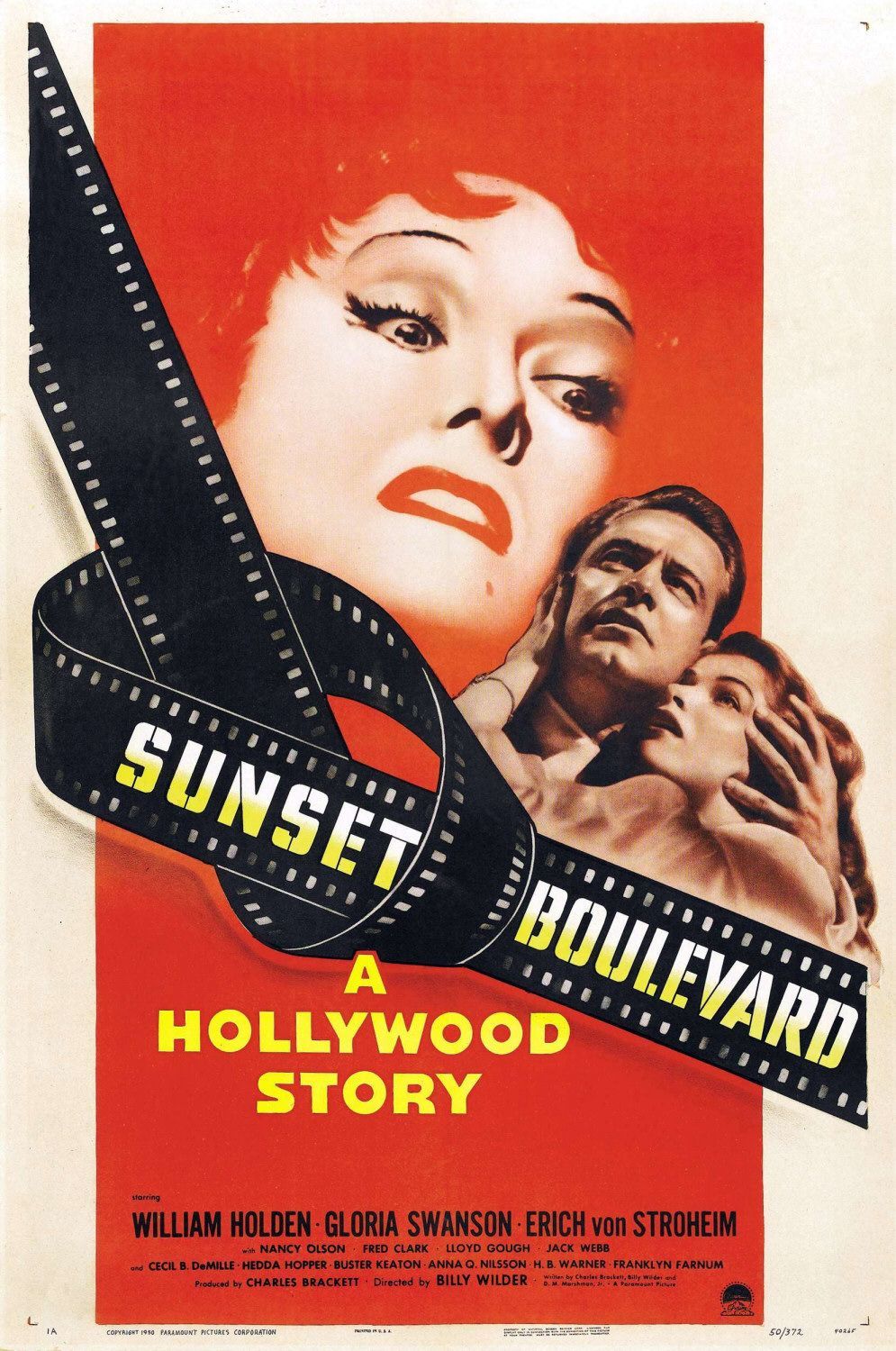
#1) Sunset Boulevard (1950)

mv5bmtu0ntkynzywmf5bml5banbnxkftztgwmdu0ndk5mti@._v1_

#1) Sunset Boulevard (1950)

OR “Under Norma Circumstances”

Directed by Billy Wilder

Written by Wilder & Charles Brackett & D.M. Marshman Jr.

Class of 1989

This is a revised and expanded version of my original “Sunset Boulevard” post, which you can read here.

The Plot: As narrated by a corpse floating in a Hollywood swimming pool, jaded screenwriter Joe Gillis (William Holden) finds himself at the mansion of former silent film star Norma Desmond (Gloria Swanson) and her devoted butler Max (Erich von Stroheim). In need of a job, Joe agrees to help Norma pen her comeback vehicle, while she regularly relives her glory days and becomes Joe’s sugar mama. Later, script girl/aspiring writer Betty Schaefer (Nancy Olsen) sees potential in one of Joe’s screenplays, and the two begin a professional and personal relationship. But is Joe in too deep with Norma’s delusions to return to the real world? What part of “narrated by a corpse” didn’t you get?

Why It Matters: The NFR calls the film “the greatest movie about Hollywood” and praises the “brilliant dialog, decadent production design and wide-ranging acting styles”.

But Does It Really?: The truly great movies defy their own genre. “Sunset Boulevard” isn’t just a drama or film noir, it’s both, plus a gothic horror film and a black comedy, and it succeeds on every front. The airtight screenplay lays a solid foundation amplified by Wilder’s polished direction and flawless performances from Holden, Swanson, and von Stroheim. Like many of the first 25 NFR films, “Sunset Boulevard” is an untouchable classic, and the epitome of greatness in film.

Shout Outs: Quick references to “Gone with the Wind” and “King Kong”, plus the Washington Square set from “The Heiress”!

Everybody Gets One: 30 years, 750 movies, and this is still Gloria Swanson’s only NFR appearance. Like Norma, Swanson was one of Hollywood’s biggest silent film stars. Unlike Norma, Swanson knew that “talkies” were here to stay, and moved to New York to work on radio and television. Her film career was long over when Wilder approached her about “Sunset Boulevard”.

Wow, That’s Dated: Shoutout to Hollywood hangout Schwab’s Pharmacy, plus “The Young Lions”, Elsa Maxwell, the song “Buttons and Bows” (sung by its composers!) and a “too soon” joke about Joe being a “Black Dhalia suspect”.

Seriously, Oscars?: “Sunset Boulevard” was an instant hit, and scored 11 Oscar nominations (including Best Picture), second to “All About Eve” and its record-breaking 14. “Eve” took home the big prizes, but “Sunset” managed three wins: Original Screenplay, Art Direction, and Score. In a fiercely competitive Best Actress category, Gloria Swanson lost to newcomer Judy Holliday for “Born Yesterday”.

Other notes

  • Is it “Sunset Boulevard” or “Sunset Blvd.”? The poster spells out the word, but the on-screen title is the abbreviation. Make up your mind, iconic classic!
  • It was a logistical nightmare to get the shot of Holden floating in the pool, but man was it worth it.
  • Of course three screenwriters would see themselves as a rugged Bill Holden type.
  • Speaking of, Wilder & Brackett were an established writing team at this point; third writer Marshman was a journalist who impressed the two with his critique of “The Emperor Waltz”. Who says filmmakers and critics can’t get along?
  • As soon as the movie gets to the mansion, we are in full haunted house mode. Kudos to everyone, especially cinematographer John F. Seitz and composer Franz Waxman. Sadly, the “Phantom House” was demolished in 1957 to make way for high-rise office buildings.
  • “I am big, it’s the pictures that got small.” Swanson nails her character right from the start. She starts off theatrical but not over-the-top (difficult to pull off), so she has somewhere to go at the end.
  • 50-year-old Norma wants to play twentysomething Salome? What’s next, directing and starring in another remake of “Gypsy”?
  • Everyone’s favorite meta-reference: the silent movie Norma screens for Joe is 1928’s “Queen Kelly”, starring Gloria Swanson and directed by Erich von Stroheim.
  • Norma’s bridge-playing waxworks are real-life silent film stars Buster Keaton, Anna Q. Nilsson, and H.B. Warner. Even with one line, Keaton’s hilarious.
  • Joe mentions that his birthday is December 21st, and he’s around to celebrate New Year’s with Norma. Was he at the mansion for his birthday? And what’s Christmas like at the Desmond residence? I hope Norma didn’t spend too much on gifts for the monkey.
  • That’s a young, surprisingly cheerful Jack Webb as Artie. I guess he knows a guy at the Bureau of Missing Persons.
  • Everyone’s great, but Nancy Olsen is the underrated gem. As a character, Betty is the polar opposite of Norma: young, practical, down-to-earth, and adaptable to the changing politics of Hollywood. Olsen nails every aspect of the character, and it’s a shame she never became a bigger name.
  • Gloria Swanson does a really good Chaplin imitation. Didn’t see that coming.
  • Legendary director Cecil B. DeMille appears as himself, on the set of his actual film “Samson and Delilah”. Riffing on his past collaborations with Swanson, DeMille turns out to be a fine actor and scene partner for Norma.
  • How does one get the nickname “Hog-Eye”?
  • Apparently von Stroheim was always dismissive of his own performance in this film. But why? Max doesn’t have a lot to do, but von Stroheim gets the character’s mystic (and ultimate sadness) down pat.
  • The shot of Norma spying on Joe as he says goodbye to Betty gives me the chills every time.
  • My one gripe with the film comes during “All right Mr. DeMille, I’m ready for my close-up.” Right after this line, they cut away from Norma to Max, and then back to Norma. I suspect this was done to piece together the best parts of two separate takes, but it does rob the final moments of their power just a little bit. Other than that, great movie.

Legacy

  • Billy Wilder and Charles Brackett parted ways after “Sunset”, following a dispute the two had during production. Wilder’s next picture was “Ace in the Hole”, but he’d have to wait until his collaboration with I.A.L. Diamond to get his next bona-fide classic: “Some Like It Hot”.
  • “Sunset Boulevard” put Gloria Swanson back in the limelight, but not for long. Swanson turned down many pictures, all of them asking her to play a Norma Desmond-type, and retired from film again. She eventually reunited with “Sunset” co-star Nancy Olsen in…“Airport 1975”?
  • Along with his work in “Born Yesterday”, William Holden also benefited from the success of “Sunset”. He would win an Oscar for another Wilder film: 1953’s “Stalag 17”.
  • The first attempt at musicalizing “Sunset” in the ‘50s (with a happy ending) fell through, but the film finally made it to the stage with the ‘90s Andrew Lloyd Webber composition. It correctly expands the material to operatic stature.
  • Half of all “Carol Burnett Show” sketches were Carol as “Nora Desmond” and Harvey Korman as “Max”.
  • David Lynch references “Sunset Boulevard” throughout his work, most notably in the similarly titled “Mulholland Dr.”.
  • Submitted for your approval, “Sunset Boulevard” inspired not one, but two episodes of…“The Twilight Zone”.
  • And of course, everyone who has told Mr. DeMille they are ready for their close-up.

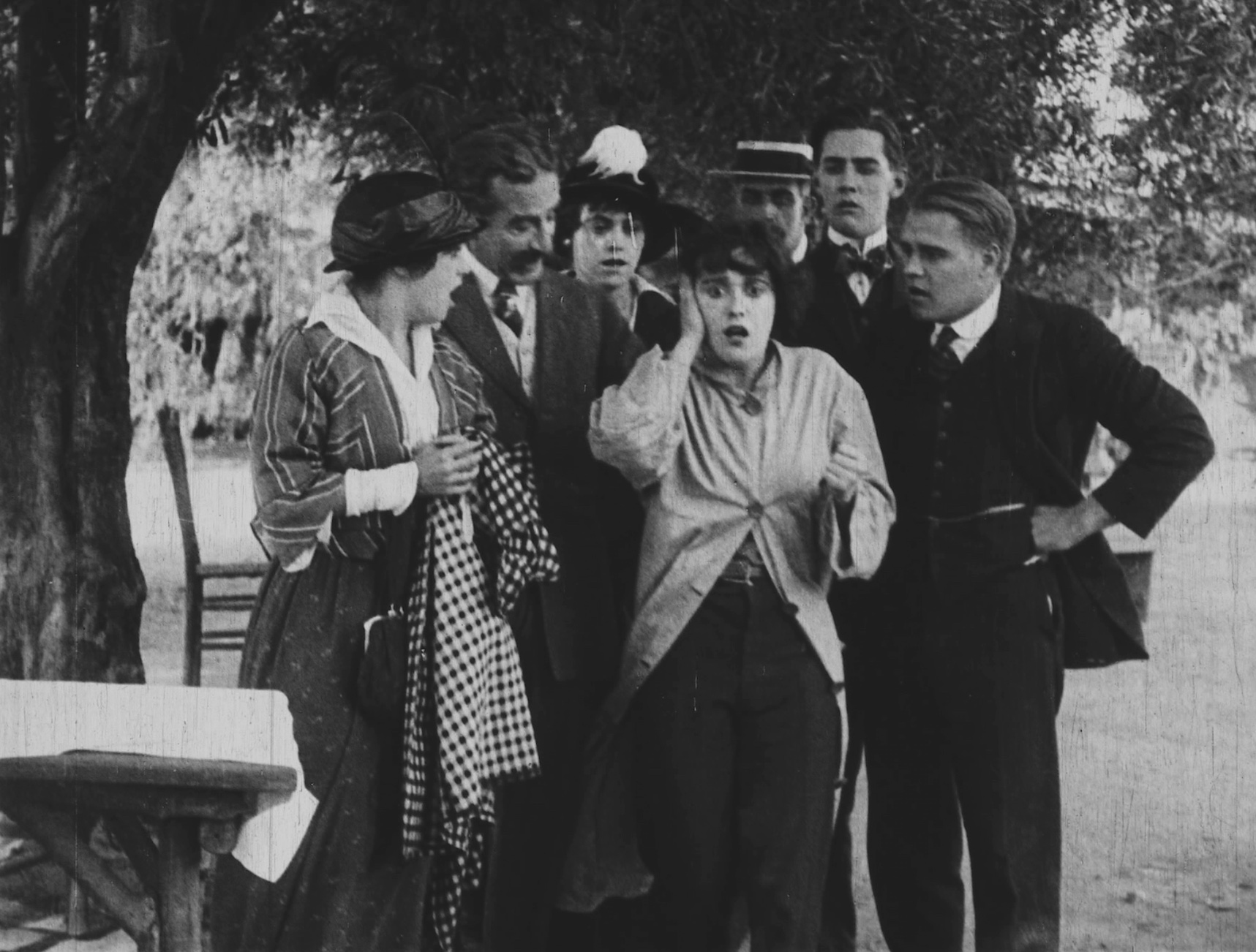
#306) Mabel’s Blunder (1914)

mabel-normand_02

#306) Mabel’s Blunder (1914)

OR “Ready, Willing, and Mabel”

Directed & Written by Mabel Normand

Class of 2009

The Plot: Mabel (Mabel Normand) is a stenographer whose boss (Charles Bennett) has a thing for her. What the boss doesn’t know is that Mabel is secretly engaged to his son Harry (Harry McCoy). When a mysterious woman (Eva Nelson) catches Harry’s eye, Mabel becomes jealous. She switches clothes with her brother (Al St. John) and poses as Harry’s chauffeur. There’s mistaken identities and hilarious misunderstandings when Mabel Normand takes the wheel and directs her own Keystone comedy.

Why It Matters: The NFR praises Normand’s “spontaneous and intuitive playfulness” as well as her ability to be “romantically appealing and boisterously funny”. An essay by Mack Sennett expert Brent E. Walker puts the film and Normand into their historical context.

But Does It Really?:This film is definitely on the list for what it represents rather than for what it is. On its own “Mabel’s Blunder” is a decently paced comedy whose jokes are very tame by today’s standards, but it’s directed and written by silent film legend Mabel Normand, and that’s all you really need. As we in the Time’s Up/Me Too era are finally starting to let women hold the reins again, it’s nice to look back over 100 years ago and see a woman who had creative control over a movie because she was, ya know, funny and talented. The NFR wouldn’t be complete without Mabel Normand, and “Mabel’s Blunder” is an excellent choice to represent her.

Everybody Gets One: After a brief stint as a Gibson Girl model, Mabel Normand found herself acting in films for the likes of D.W. Griffith. One of these early film appearances caught the eye of producer-director Mack Sennett, who persuaded Mabel to make the move with him from New York to Hollywood. Sennett founded Keystone Studios, the two started their professional and personal relationship, and Hollywood lore was made. When Keystone became a runaway success, Sennett added extra film units to the roster, and gave one to Mabel. She directed 14 shorts for Keystone, as well as co-writing several of them.

Wow, That’s Dated: I want to say the plot is dated, but then again, maybe it’s not? One thing I will ask: when did cars start getting roofs? All of these silent films have open-air cars, but convertibles existed back then. Was it still considered a bonus feature for a car to be protected from the elements? Or was this a coalition with the scarf-cap-and-goggles people?

Other notes

  • As with many a silent comedy, I suspect this plot line was recycled as an episode of “Three’s Company”. It may even be one of those plots that they did once in the Roper-era and again in the Furley-era.
  • I applaud this film’s very limited use of intertitles. It’s still mostly people talking and gesturing, but Mabel and the other performers get the story across with their performances.
  • The majority of “Mabel’s Blunder” hinges on your belief that the mere concept of cross-dressing is hilarious. “Some Like It Hot” this ain’t.
  • Side note: Mabel Normand is allegedly the first movie star to take a pie to the face. That’s still up for debate, but hey, someone had to be, so why not Mabel?

Legacy

  • Mabel Normand’s directing career was sadly short-lived. Mack Sennett agreed she was talented, but unfortunately some of her male co-workers refused to take orders from her. And there’s the start of your inherently sexist studio system.
  • Normand and Sennett created their own studio company for Mabel in 1916. The Mabel Normand Feature Film Company folded in 1918 along with Keystone after their parent studio Triangle Film started faltering. With their personal relationship also ending, Mack and Mabel went their separate ways.
  • Mabel’s life post-Sennett has a few grey areas (her Wikipedia page has a lot of “Citation Needed” caveats), but we know that her career started to wane in the early ‘20s while working with Samuel Goldwyn. Her association with the murder of director William Desmond Taylor further damaged her reputation – Normand was the last person to see Taylor alive, but was quickly ruled out as a suspect by the LAPD. Mabel worked with Hal Roach Studios, and married her old co-star Lew Cody, before her death in 1930 of tuberculosis at 37 years old.
  • Among the up-and-coming talent Mabel worked with were Roscoe “Fatty” Arbuckle and Charlie Chaplin. In fact, it was in one of Mabel Normand’s other 1914 films, “Mabel’s Strange Predicament”, that Chaplin first played his iconic Tramp character. The Tramp’s creation is re-enacted in the 1992 film “Chaplin”, with Robert Downey Jr. as Chaplin and Marisa Tomei as Normand.
  • Mabel Normand (and her association with Mack Sennett) has been immortalized many times over the years, most famously in the cult Broadway musical “Mack & Mabel”. Despite the pedigree of Jerry Herman, Robert Preston and Bernadette Peters, the show didn’t run long, but man alive what a score that is.