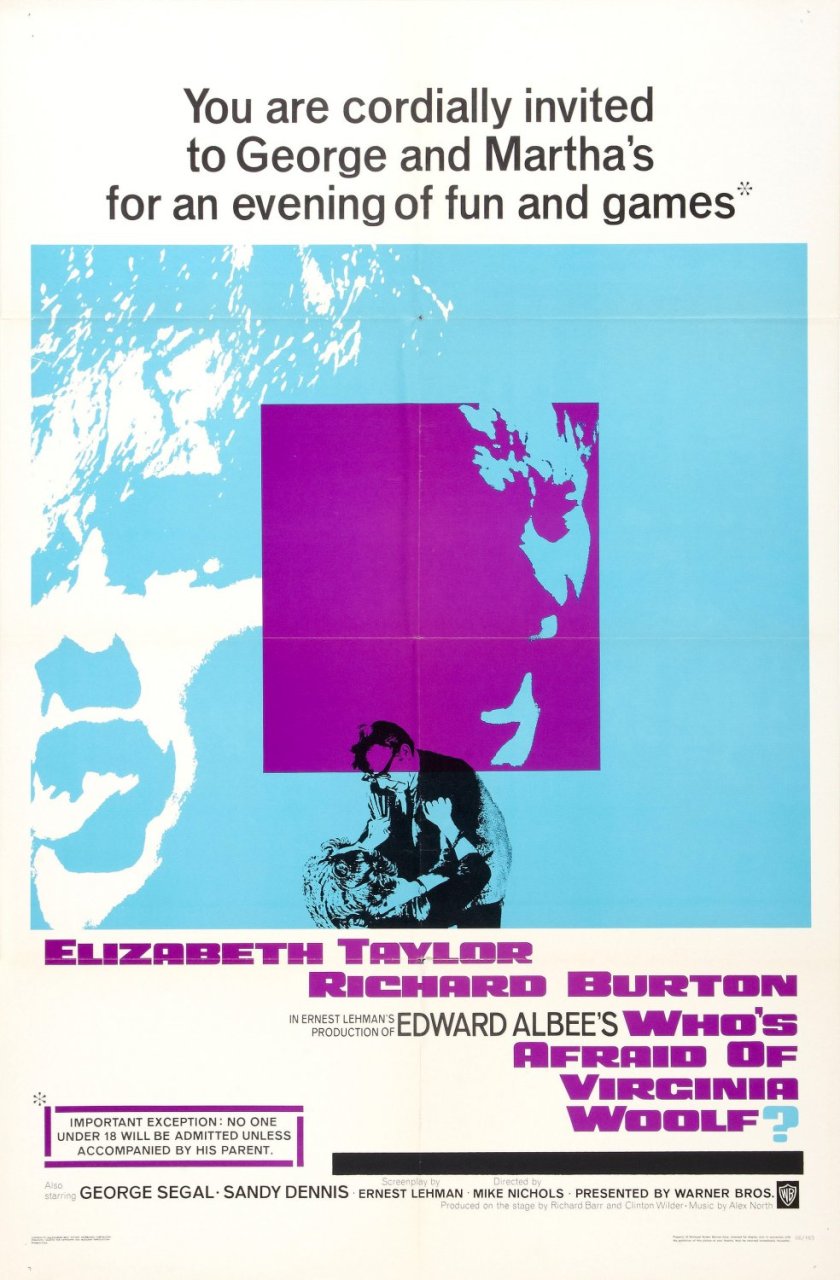
#223) Who’s Afraid of Virginia Woolf? (1966)

whos_afraid_of_virginia_woolf_xlg

#223) Who’s Afraid of Virginia Woolf? (1966)

OR “Some Goddamn Warner Bros. Epic”

Directed by Mike Nichols

Written by Ernest Lehman. Based on the play by Edward Albee.

Class of 2013

The Plot: New England history professor George (Richard Burton) and his wife/boss’ daughter Martha (Elizabeth Taylor) are middle-aged and in a deteriorating marriage. They constantly argue and play mind games that psychologically cut each other down. When returning home from a late night faculty party, Martha informs George she’s invited a couple from the party over for a nightcap. Biology professor Nick (George Segal) and his chirpy wife Honey (Sandy Dennis) are young and happy, and therefore ripe targets for the jaded older couple. There’s fun and games, drinks, plenty of obscenities, and Albee’s trademark stripping down of humanity to its unpleasant, bitter, funny core. Just make sure not to mention George and Martha’s child.

Why It Matters: The NFR salutes the play for making “a successful transfer to the screen”, and mentions the film’s controversial “frank, code-busting language”. The write-up goes on to praise Burton & Taylor, Nichols, and cinematographer Haskell Wexler.

But Does It Really?: What a delightfully dark movie this is. Plays rarely make the transition to film – theater is a verbal medium, film is visual – but “Who’s Afraid of Virginia Woolf?” is the best of both worlds. The story is translated visually thanks to some inventive direction and cinematography, but never loses the dialogue and themes thanks to some powerhouse performances from a pitch-perfect quartet. The psychological warfare between George and Martha is riveting, and casting real-life couple Burton & Taylor is an irresistible ploy, aided by the pair’s talent and charisma. This endless entertainment value, paired with its historical status as the film that helped break the Production Code, makes “Who’s Afraid of Virginia Woolf?” an obvious choice for the Registry.

Shout Outs: George makes quick references to “Bringing Up Baby” and “A Streetcar Named Desire” during the evening. But more importantly, the title is a pun on “Who’s Afraid of the Big Bad Wolf?” from “The Three Little Pigs” (even though, for legal reasons, they don’t sing the Disney melody).

Everybody Gets One: Richard Burton was initially reluctant to play George, but was persuaded by Taylor, already cast as Martha. This was their fourth film together. Also featured here are George Segal and Sandy Dennis in their breakout roles.

Wow, That’s Dated: It’s all fine until they go to the roadhouse, where Taylor and Segal do a very ‘60s dance to some very ‘60s go-go music.

Seriously, Oscars?: A big controversy but an even bigger hit, “Who’s Afraid of Virginia Woolf?” led the Oscars with 13 nominations, one in each category it was eligible for. The big winner of 1966 was another prestigious play-turned-movie, the more-agreeable epic “A Man for All Seasons”. “Virginia” did, however, manage five wins: Actress for Taylor, Supporting Actress for Dennis, and the prizes for Art Direction, Cinematography and Costume Design.

Other notes

  • This is Mike Nichols’ first film as a director! He was an acclaimed stage director, and half of a popular comedy duo with “& May”. Giving him the film version of this highly sought-after property was quite the leap of faith. But between the cast, Ernest Lehman, Jack Warner, and Haskell Wexler, I’m sure Nichols got quite the film education.
  • Even when playing a middle-aged frump, Liz Taylor has her own costumer, make-up and hairstylist.
  • It’s “Beyond the Forest”. Moving on.
  • Like Tracy & Hepburn before them, Taylor & Burton’s real-life relationship helps give you a sense of eavesdropping on Martha & George, rather than watching a performance.
  • Ernest Lehman does a great job of “opening-up” the play. The majority of the film still takes place in George & Martha’s living room, but there are occasional moves to other well-chosen spots in the house.
  • Sandy Dennis is a series of tics disguised as a person. It works, but as her film career proved, a little bit goes a long way.
  • Don’t think I didn’t notice the occasional cuts made mid-shot to speed up pauses. I’m looking at you, Nichols and editor Sam O’Steen.
  • Oh my god: Other People! That’s Frank Flanagan, this film’s gaffer, as the innkeeper and his wife/Liz’s hairdresser Agnes as the waitress.
  • It’s a damn shame Richard Burton didn’t win the Oscar for this performance. Paul Scofield made a splash reprising his stage role in “A Man for All Seasons” and had the benefit of being a first-time nominee, compared to nod #5 for Burton. Burton suffered from what I call the “Too Good Factor”: Sure, he’s always great, so we’ll vote for him next time.
  • Speaking of George, I don’t think I agree with the assumption that he is completely emasculated by Martha. Burton seems to play him as an equal match to Martha who’s just given up on fighting back. And tonight is the night he finally decides to come back swinging.
  • My main question with this viewing: Have George & Martha done this before? Have there been other late nights with faculty members coming over and becoming part of their games? Albee loves creating strong, cryptic characters that keep you guessing.

Legacy

  • After some fights with the newly founded Motion Picture Association of America, “Virginia Woolf” finally got a seal of approval without having to censor too much of its language (albeit with a “Mature Audiences Only” disclaimer). This, along with similarly risqué films of the era, led to the MPAA creating the film rating system that is still in use today.
  • Mike Nichols followed this movie up with a little piece of the ‘60s called “The Graduate”. And then things sort of leveled off for him from there.
  • Everyone’s career got a boost thanks to “Virginia Woolf”. Taylor and Burton continued making movies/publically squabbling together for the next decade, Segal spent most of the ‘70s as a Hollywood leading man, and Dennis made a string of movies before returning to the stage.
  • In the early ‘00s, Yale used the film to study the perception of people with Autism. The film’s small ensemble and intimate setting is ideal to study if the participants looked into the eyes of the performers or not. What they made of the subject matter was not documented.
  • There’s never been an American remake of this film, but the original play is still performed with regularity, including several successful Broadway revivals.
  • Many spoofs of the film over the years, primarily lampooning Burton & Taylor’s on-and-off-screen feuds. And here’s Benny Hill to show you more!

AFI’s 100 Years…100 Movies (1998)

afi---100-years-of-movies-movie-poster-2001-1020209554

AFI’s 100 Years…100 Movies (1998)

OR “Round Up The Usual Suspects”

Directed by Gary Smith and Dann Netter

Written by Smith & Fred A. Rappoport & Marty Farrell

June 16th, 1998: America was watching the world be destroyed by various asteroids in the movies and debating whether “The Boy” was truly Brandy’s or Monica’s. But that night I was watching the first American Film Institute “100 Years” TV special. It was the start of a decade long summer ritual, as well as the start of my film education.

“100 Years…100 Movies” came about to commemorate the 30th anniversary of the American Film Institute, and the 100th anniversary of film (they were off by about a decade on the latter). The AFI nominated 400 American films and asked 1500 filmmakers, historians, experts, and drifters to vote for what they believe were the “greatest”: not necessarily the best, but rather the ones with the largest cultural impact. The top 100 were announced on CBS, and I was…baffled. I had only seen four movies on that list (“Fantasia”, “Snow White”, “Star Wars”, and “The Wizard of Oz”) and hadn’t even heard of most of the others. I started taping these movies when they were on TV and looking through my parents’ VHS collection for help (I saw “Vertigo” when I was way too young). At first these 100 were unquestionably sacrosanct, but thankfully that didn’t last long. I quickly learned that lists like these are about as official as Izzy Mandelbaum’s “World’s Greatest Dad” t-shirt, and are created primarily to start a dialogue (and sell videos). Nevertheless, that three hours of TV started me on a path I’ve been walking for the last 20 years.

Because I am a nerd, I obtained a copy of the original special years back, and re-watched it for the first time since I was a kid. Below are a few of my thoughts on the list, as well as the special.

UPDATE: Hey, someone uploaded the whole special online! Come nerd out with me!

  • By 1997, 66 of the 100 films were already in the National Film Registry. An additional 27 have been added over the last two decades, bringing the total to 93 (41 of which have already been covered for this blog).
  • The missing seven are: “Mutiny on the Bounty”, “The Third Man”, My Fair Lady, “Doctor Zhivago”, “A Clockwork Orange”, “Amadeus“, and “Platoon“. “The Third Man” is the only one that has been deemed ineligible for NFR inclusion (It’s British, but David Selznick co-produced it, which is enough for the AFI, but not enough for the NFR). “Clockwork” is the only one whose absence surprises me.
  • Among those interviewed for the special are such “It’s 1998” figures as David Copperfield and Sarah Ferguson, Duchess of York. Plus a performance by Trisha Yearwood!
  • No one had anything to say about “My Fair Lady”?
  • TV censorship fascinates me. They don’t edit out the nudity in “MASH” or the violence in “The Wild Bunch”, but god forbid anyone hear Joe Pesci say “fuck” a few times. Oh and thanks for including the blackface number from “The Jazz Singer”, CBS.
  • It’s remarkable to see how far film restoration has come in 20 years. Are all these clips from someone’s laserdisc collection?
  • Covering 100 films in 2 1/2 hours means boiling them down to their core essence. And I thought my 1000 word cap was too limiting.
  • There’s a point in watching this where the ranking of these films becomes immaterial. It’s not about “A is better than B”; it’s about the iconic imagery that makes up our film heritage.
  • That being said, my one qualm about the ranking: of the three Chaplin films, “The Gold Rush” is greater than “City Lights” and “Modern Times”? Foul!
  • Why is Susan Lucci being filmed on her bed? Should we come back later?
  • Dustin Hoffman’s “Tootsie” story is forever tainted. Damn.
  • Proving my earlier point, all anyone has to say about “From Here to Eternity” is who’s in it and that the beach scene is great.
  • Watching these AFI specials was always a treat, but I forgot how many classic films were spoiled for me.
  • Ugh, it’s the “Let’s Defend ‘Birth of a Nation’” segment. Samuel L. Jackson gives a very diplomatic answer about art and the conversations they inspire.
  • Oh god, Donald Trump is in this. He makes a brief appearance to talk about “King Kong”, but really it’s to talk about how he owns the Empire State Building (Trump had a 50% share in the landmark from 1994 to 2002). Even back then he was making everything about himself.
  • Speaking of presidents, it’s telling that Bill Clinton’s favorite movie, “High Noon”, is about a middle-aged man who is tempted to shirk all responsibility and run off with a woman half his age.
  • Even out of context, the Star Gate scene in “2001” is a trip.
  • I will listen to Larry King opine about anything. #My2Cents
  • Burt Reynolds states that “Make ‘em Laugh” should be “put in a time capsule”. The NFR is way ahead of you, Burt.
  • “The Wizard of Oz” had just finished its 40-year run on network television (ending at CBS) a few weeks prior to this special. This is a fitting sendoff before being banished to the Turner cable networks.
  • And then we get to #1: “Citizen Kane”. The commentary here tells you it’s the greatest film because it’s…great? Don’t get me wrong, based on the AFI’s criteria it deserves the top spot, but no one had anything specific to say about the movie? “The Godfather” and “Casablanca” get a much more emotional response from this group, making this a bit anticlimactic for me.
  • If you’ve ever studied this list you’ve probably come across critic Jonathan Rosenbaum’s decimation of the AFI’s selection and his list of an alternate 100. It’s a bit extreme, but I see where he’s coming from. The better, more rational article is this Essays on Films piece from 2013, which takes AFI’s criteria into consideration and stresses that these lists are not set in stone, and should be a starting point for your own “greatest films”.
  • The AFI list would be revised in 2007, with “Kane” still on top, and about a quarter of these movies bumped in favor of stronger fare (Goodbye “Wuthering Heights”, hello “Do the Right Thing”).
  • Oh, and all the directors on the 1998 list are white men. Thanks, Hollywood!

Further Viewing: One of my favorite videos: Someone took the interviews from this special and recut them to make it sound like everyone’s talking about “Anchorman”. Genius.

#222) The Times of Harvey Milk (1984)

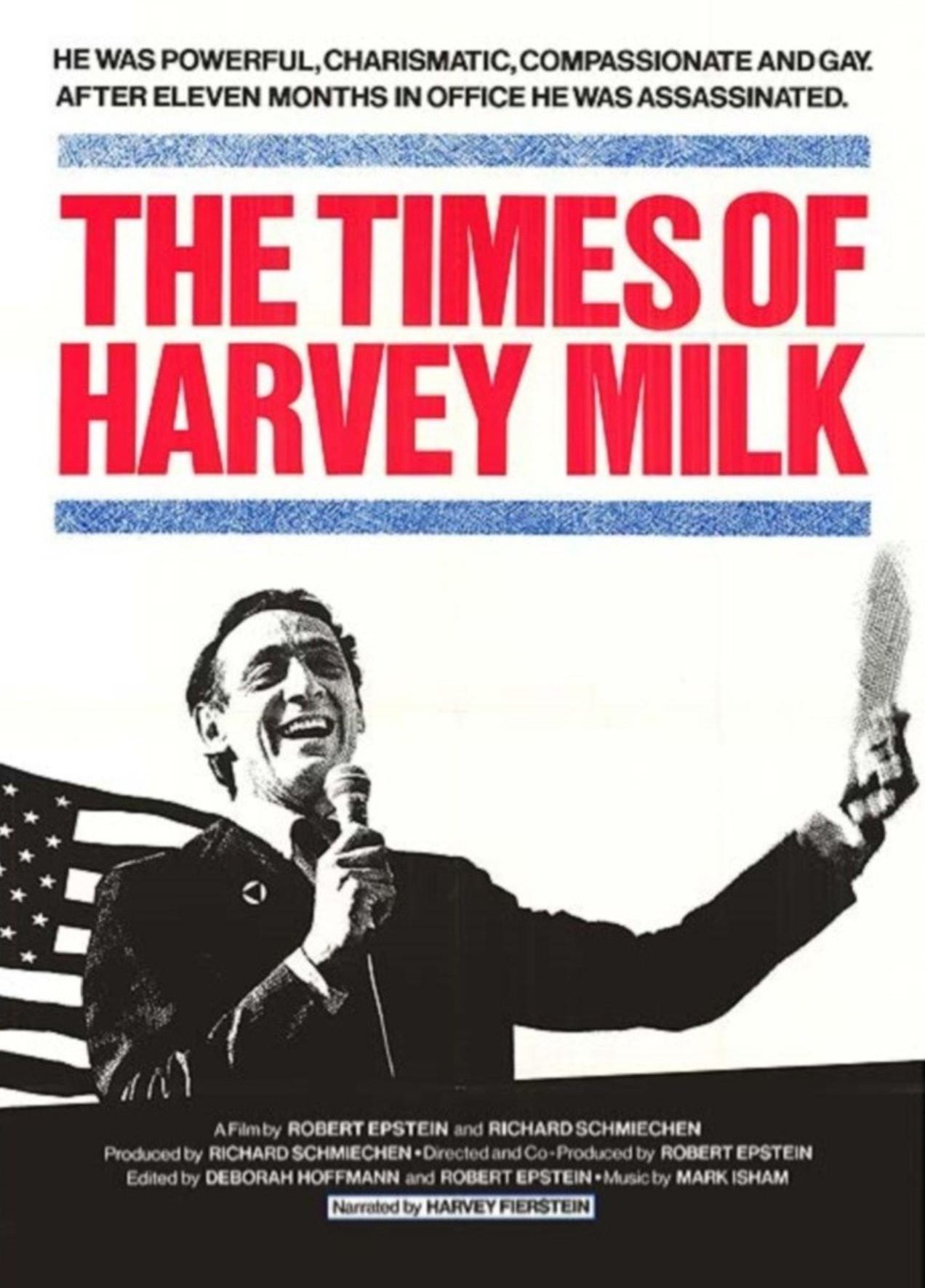
a086b25e71462ec5a938e1ef42d1627f

#222) The Times of Harvey Milk (1984)

Directed by Rob Epstein

Class of 2012

Not so much a trailer as it is a snippet from the film, featuring “You Make Me Feel (Mighty Real)”.**

The Plot: Utilizing archival footage, local news coverage, and present day interviews with those who knew the man, “The Times of Harvey Milk” chronicles San Francisco’s “Mayor of Castro Street” and California’s first openly gay elected official. Among the topics covered are Milk’s landmark 1977 election to San Francisco’s Board of Supervisors, his stance against the 1978 Briggs Initiative (which would have prevented openly gay Californians from teaching), his tragic murder – alongside San Francisco Mayor George Moscone – by co-supervisor Dan White, and the impact his death had on California and the LGBT community. Narrated by Harvey Fierstein in what may be his least vocally intrusive performance.

Why It Matters: The NFR calls the film a “moving and incisive portrait” as well as “a historical document of a grassroots movement gaining political power through democratic means.”

But Does It Really?: “The Times of Harvey Milk” is being preserved for its standing as a compelling, engaging documentary, and as a time capsule of a specific pivotal moment in American history. Rob Epstein has solidified his place as a pioneering documentarian of gay Americans, and one of his films should be on the list. This film’s cultural significance is already very strong, and I suspect will just keep getting stronger.

Everybody Gets One: Everyone involved in this film, primarily director Rob Epstein (more on him in the “Legacy” section), and narrator Harvey Fierstein (though of his other films, I’m gonna guess the next entry will be… “Independence Day”?)

Seriously, Oscars?: At long last, I have covered an Oscar winning documentary. “The Times of Harvey Milk” is one of only five Best Documentary Oscar winners to make the Registry. Finally, Oscars!

Other notes

  • For weeks I’ve been erroneously calling this film “The Life and Times of Harvey Milk”, but I think it’s important to examine the crucial omission of “Life”. This film isn’t a Harvey Milk biography, but rather a focus on the era in which Harvey Milk came to prominence. There’s virtually nothing about Milk’s life before San Francisco, and his longtime partner Scott Smith only gets a passing reference. This film is about the world Milk came into, and how he changed it. This film is about the man, but more importantly it’s about a moment and a movement.
  • As previously stated, I don’t pick these films too far out in advance, but sometimes the timing is an unexpected bonus. Happy Pride Month, everyone!
  • There’s a brief mention in the narration of Harvey Milk’s time “producing on Broadway”. Turns out he was an associate producer on the 1971 musical “Inner City”, and was an assistant to director Tom O’Horgan for a little thing called “Jesus Christ Superstar”.
  • There’s a lot about Harvey Milk that separated him from other politicians. One of the things this film touches upon is his keen sense of what his district needed and how to get it done. You get a sense of someone tirelessly reaching as many people as he could, not only to help his district and its citizens, but also to help break down the stigma of homosexuality. He made sure you thought of Harvey Milk as a person first, with his orientation being secondary to his humanity.
  • It’s great to see the likes of Annie Kronenberg and Tom Ammiano discuss their time with Harvey Milk, but there are a few noticeable absences, primarily Scott Smith and Cleve Jones. And it seems like teamsters union leader Allan Baird gets a lot of screen time. A bit lopsided, don’t ya think?
  • As a resident of San Francisco, it’s great seeing what the city looked like 40 years ago. For starters, that Safeway is still there!
  • “The reason for all this merriment and gaiety – if you’ll pardon the pun…” Fuck you, Channel 5 Reporter John Lester.
  • Of course all-American white boy Dan White was frustrated on the Board of Supervisors. Between Milk, Ella Hill Hutch, Gordon Lau and Carol Ruth Silver, White was the Board’s “and Peggy”.
  • Milk’s sense of humor also differentiates him from other politicians. No one in politics has a sense of humor anymore. It’s why the White House Correspondents Dinner is always such a downer.
  • In another time or universe, Professor Sally Gearhart would be played by Olivia de Havilland. They have similar mannerisms and cadence. Side note: Gearhart taught at my alma mater SFSU. Go WeDon’tHaveASportsTeam!
  • “The Times of Harvey Milk” was released in 1984, in the midst of the AIDS epidemic. This documentary makes sure to point out that 1978 Ronald Reagan was publicly against the Briggs Initiative (and therefore presumably pro-gay rights), while 1984 Ronald Reagan was actively ignoring the thousands of Americans dying of AIDS during his presidency.
  • I know it’s coming (the film begins with Dianne Feinstein’s announcement of the murders) but Milk & Moscone’s deaths and the immediate aftermath are just heartbreaking.
  • Oh my God, Dan White was 32 when he shot Milk and Moscone. A straight, white 32-year-old man shot a gay peer and the mayor who opposed his return. Shit.
  • This film’s credits list hundreds of contributors who helped finance it. Very telling of not only the importance these people knew this film would have, but also how taboo it still was in 1984 to produce any gay-related film.

Legacy

  • Rob Epstein is still going, with career highlights that include “Common Threads: Stories from the Quilt” (which got him another Oscar), and “The Celluloid Closet”.
  • Many of the participants are still with us and still doing what they can for gay rights. Interestingly enough, teacher Tom Ammiano was elected to the San Francisco Board of Supervisors a decade after being interviewed for this film.
  • Dan White’s release from prison is mentioned in the film, and a year after the premiere, White committed suicide in his home in San Francisco. Epstein initially opposed adding this information to the movie’s epilogue, but eventually included it in some prints.

Further Viewing: If you want the Harvey Milk biopic, look no further than “Milk”. I saw it in 2008 at the Castro Theater, which was an experience unto itself.


**2019 Update: Rejoice, for “You Make Me Feel (Mighty Real)” by Sylvester has just been added to the National Recording Registry!

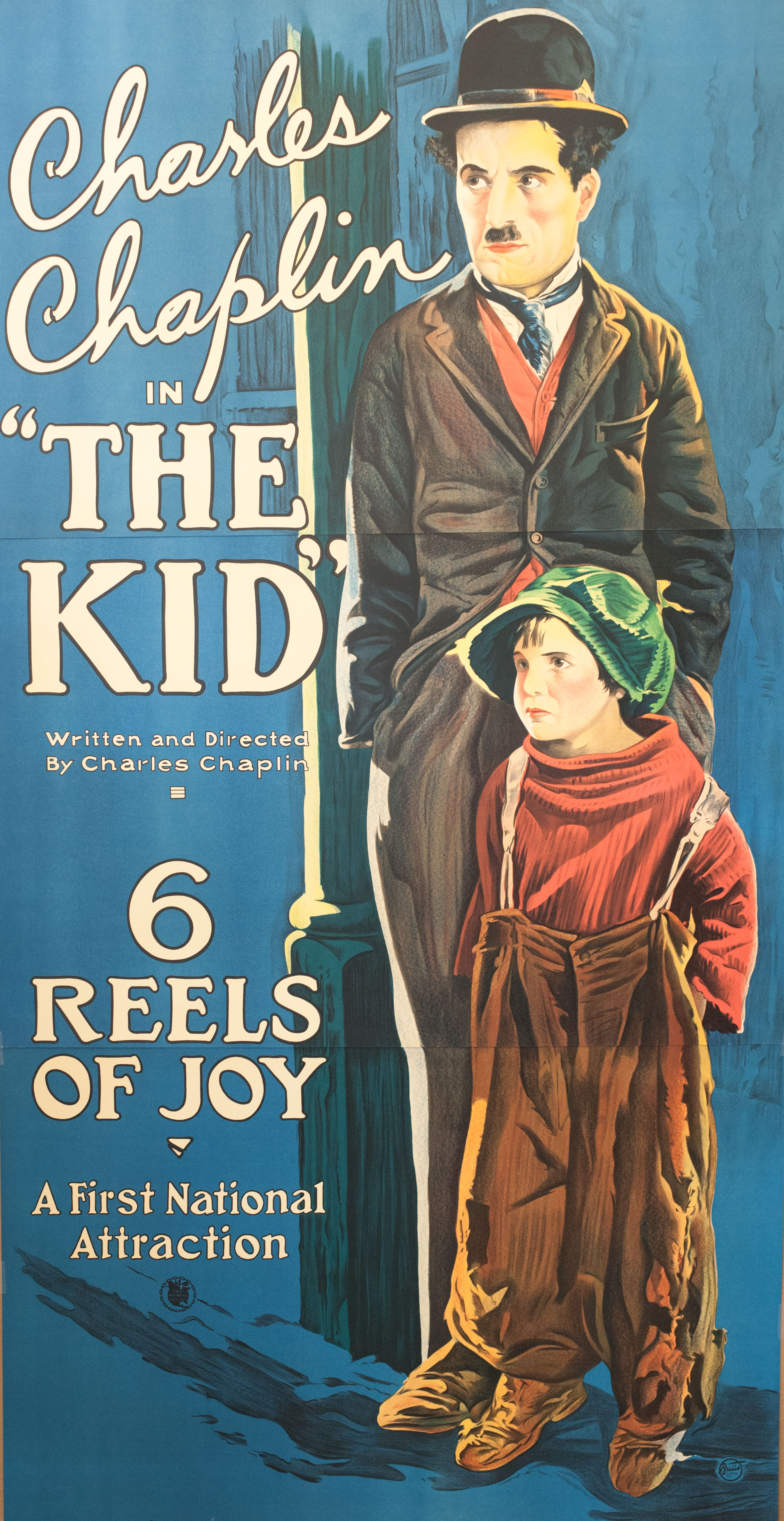
#221) The Kid (1921)

edited-3sheets-6

#221) The Kid (1921)

OR “Waif Waif…Don’t Tell Me!”

Directed & Written by Charlie Chaplin

Class of 2011

NOTE: As is the case with Chaplin’s “The Gold Rush”, there are a few versions of “The Kid” out there. For this post I watched a restored print that has been cut to best match Chaplin’s 1971 reissue of “The Kid”. That seems to be the one Chaplin wants you to see, so that’s what I’m going with.

The Plot: An unwed mother (Edna Purviance) abandons her newborn child with a note asking its finder to take care of the baby. The child is discovered by a tramp (Charlie Chaplin) who, after a few unsuccessful attempts at pawning off the baby, grows to love him, and takes him in, naming him John. Five years later, the mother is now a successful actress whose charity work coincidentally leads to her meeting her son (Jackie Coogan) without knowing who he is. The Tramp’s attempt to raise a child in the slums without the orphanage taking John away is mixed with Chaplin’s trademark blend of slapstick and pathos.

Why It Matters: The NFR praises Chaplin and calls the film “an artful melding of touching drama, social commentary and inventive comedy.” There’s also a very informative essay by Chaplin expert Jeffrey Vance.

But Does It Really?: “The Kid” is Charlie Chaplin’s first full-length film after six years of shorts, and that alone would be enough for film preservation. But it helps that “The Kid” is on its own merit a very funny and warm film. Chaplin, ever the perfectionist, has crafted a simple yet powerful story with expertly precise filmmaking. He also manages to get a performance out of child actor Jackie Coogan that is neither too sugary nor artificial. “The Kid” doesn’t get the attention some of Chaplin’s other titles get, but it deserves a place on the Registry, as well as on the Mt. Rushmore of Chaplin’s greatest accomplishments.

Everybody Gets One: The major player making his sole NFR appearance here is child actor Jackie Coogan. That adorable kid would grow up to play, and I swear this is true, Uncle Fester on “The Addams Family” TV series. Let that sink in the next time you watch this film.

Wow, That’s Dated: Gaslights instead of light bulbs. Light bulbs were around for purchase at the time, but they were still considered a sign of wealth.

Other notes

  • The opening intertitle describes the film as “A picture with a smile – and perhaps, a tear.” You could put that at the beginning of any Chaplin film.
  • As we watch an unwed mother carrying her baby away from a hospital, we fade to an image of Jesus carrying the cross. Real subtle, Charlie.
  • Carl Miller appears as “The Man” (suggested to be the father of “The Kid”) for one scene. His limited screentime wouldn’t bug me if he weren’t one of only four actors to actually get screen credit, over more prominently featured actors like Tom Wilson as the town’s only police officer.
  • Watching this film in HD brings out with great clarity the layers of makeup some actors have caked on.
  • The Tramp’s first line: “Awkward ass.” I’ve been called that before. Hell, I’ve been called that this week.
  • Yes, our lovable hero: a bum contemplating throwing a baby into an open sewer.
  • The Kid is the only major character who has a name (John). And the scene where the Tramp names him was the film’s first big laugh for me.
  • Ah man, now I want pancakes.
  • The Tramp invented the precursor to the Snuggie!
  • Ah, to be alive in the days when tough guys would wear bowler hats.
  • Surprise cameo by William McKinley as the country doctor.
  • I’m glad we as a society have veered away from the phrase “orphan asylum”.
  • Nice pre-“Vertigo” rooftop chase scene.
  • Did Mom bring her own wind machine to the police station?
  • And then we get to the Dreamland sequence. What the hell does that have to do with anything? Perhaps it’s a young filmmaker used to shorts adding another episode to his screenplay.
  • Side note: The “flirtatious angel” in Dreamland is played by Lita Grey. A few years later Ms. Grey would become the second Mrs. Charlie Chaplin. Not surprising considering that Chaplin’s first marriage to Mildred Harris was dissolving during the shoot.
  • Wait that’s it? The film just kind of ends.

Legacy

  • With the universal success of “The Kid”, Chaplin finished his contractually obligated two-reelers for First National and headed off to his own production company: United Artists. His next few features were more or less vehicles for this film’s leading lady, Edna Purviance, but he struck gold again with, appropriately enough, “The Gold Rush”.
  • Jackie Coogan became a successful child star, and then eventually played, because I can’t mention it enough, Uncle Fester on “The Addams Family” TV series.
  • “The Kid” has been remade twice…for some reason: once in 1986 as the Turkish film “Garip”, and again in 2015 by David Scott Heck, and appears to be a scene-for-scene update of the original.
  • Perhaps to avoid confusion with this film, a 2000 Disney film also titled “The Kid” was marketed as “Disney’s The Kid”. And then that movie disappeared so you don’t have to worry about it.
  • But for me, “The Kid” will always be my nickname for Chaplin’s fourth wife, Oona O’Neill. She was 18 when they wed in 1943; he was 54. We may have to rename the Michael Douglas Scale.

#220) The Pink Panther (1963)

pink9

#220) The Pink Panther (1963)

OR “I’m All Right Jacques”

Directed by Blake Edwards

Written by Edwards and Maurice Richlin

Class of 2010

The Plot: The Pink Panther is the world’s largest diamond, now controversially in the hands of Princess Dala of Lugash (Claudia Cardinale). While on holiday at a ski resort in Cortina, Italy, she is wooed by Englishman Sir Charles Lytton (David Niven), who is secretly notorious jewel thief “The Phantom”. Also mixed up in the attempted theft is Sir Charles’ highly Americanized nephew George (Robert Wagner), and the inspector assigned to the case, the very clumsy and very French Jacques Clouseau (Peter Sellers). Clouseau brings along his wife Simone (Capucine) who, unbeknownst to him, is The Phantom’s secret accomplice/lover. Come for the international intrigue, stay for the beginnings of Sellers and Blake Edwards’ beautiful/rocky friendship.

Why It Matters: The NFR calls it a “comic masterpiece” and praises Edwards, Sellers, and composer Henry Mancini.

But Does It Really?: I’ll argue that “A Shot in the Dark” is the funniest of the “Pink Panther” films, but it’s always fun to watch the first film in a franchise before it became formulaic. As a standalone ‘60s caper comedy it’s fun, but the real joy is watching Blake Edwards realize that Sellers is the MVP. Having Clouseau as a supporting character makes for a film that’s not a complete laugh-fest, but the physical comedy more than makes up for that, and at times is still laugh-out-loud funny. “The Pink Panther” led to a ripple effect that influenced film comedy for the next 20 years (to say nothing of what it did for Peter Sellers), and is one of the more fun entries on the NFR.

Everybody Gets One: Lead performers Capucine (who led a sadly tragic life) and Robert Wagner (who will always be Number Two).

Wow, That’s Dated: This film very much has that ‘60s jet-setting vibe to it. Throw in Italian star Claudia Cardinale and you’ve got yourself 1963!

Seriously, Oscars?: “The Pink Panther” snagged one nomination, but if you only get one, it should be for Henry Mancini’s score. Mancini lost to the Sherman Brothers’ song score for “Mary Poppins”. But you don’t need to feel too bad for Mancini; he had already won three of his four Oscars at that point.

Other notes

  • This film’s most famous piece of trivia was its original casting. Ava Gardner was tapped to play Simone, with Peter Ustinov as Clouseau. When Gardner’s demands could not be met, she left the film, and Ustinov soon followed suit. Sellers was an eleventh hour casting choice, and it was his idea to turn Clouseau from the clueless straight-man to the clueless comic relief. Edwards agreed, and revised the film accordingly.
  • No offense to Saul Bass, but this may be the best animated opening credits sequence ever. Great animation under the direction of David H. DePatie and Friz Freleng, and an iconic score by Henry Mancini. This may be the only movie with a credit for “tenor sax solos” (shoutout to Plas Johnson).
  • Claudia Cardinale: Because Sophia Loren costs how much?
  • Speaking of, Claudia Cardinale didn’t speak English, so her entire performance is dubbed by singer Gale Garnett; who was a few months away from her biggest hit: “We’ll Sing in the Sunshine”.
  • As Clouseau, Sellers is doing lowest common denominator physical schtick. But it’s so well choreographed and perfected, it works. It helps that Blake Edwards knows how to film physical comedy: Long uninterrupted takes, with everything you need in the frame (or comically coming into the frame).
  • There is a long stretch of this movie without Peter Sellers in it, and it is, unsurprisingly, not very funny. It doesn’t help that most of this time is Sir Charles trying to get Princess Dala to pass out from drinking while discussing antiquated gender politics. More pratfalls!
  • Shoutout to ‘60s singer Fran Jeffries performing “Meglio stasera (It Had Better Be Tonight)”. It’s essentially a music video wedged into the middle of this film, but it’s impressively shot and a lot of fun. Points deducted, however, for clapping on One and Three.
  • The centerpiece of the movie is the farce happening in the Clouseaus’ hotel room. Niven, Wagner, and Capucine don’t get the funniest lines, but they are very game for the physical comedy.
  • Blake Edwards loves his party scenes.
  • A few logistical questions about the Phantom. He always leaves a glove embroidered with a “P”. Does he have them custom made for each robbery? Or does he have a bunch made in advance? And is it always the same hand? Did his tailor have to sign an NDA?
  • “The Pink Panther” is in the vein of “The Thin Man” where the title of the franchise is a plot-point from the first film only (although the actual Pink Panther does pop up in some, but not all, of the sequels).
  • They are so clearly setting up the ending to be the first in a series of “Charles and George Lytton” films. What an interesting little “Sliding Doors” moment in film history.

Legacy

  • Peter Sellers’ Inspector Clouseau was so well received, Blake Edwards immediately started rewriting his next film, an adaptation of the stage play “A Shot in the Dark”, to incorporate Clouseau. It’s also the film that brought Herbert Lom’s Commissioner Dreyfus and Burt Kwouk’s Cato into the fold.
  • 1964 was the year that Peter Sellers went from British comedian to international superstar. “Dr. Strangelove” was released in January, “The Pink Panther” in March, and “A Shot in the Dark” in June. None of his other ‘60s films packed the same punch as these three, but it was enough to keep his momentum going.
  • Sellers aside, the film’s biggest breakout star was The Pink Panther himself. The title character appeared in a series of animated shorts throughout the ‘60s and ‘70s, which were eventually aired on television (along with new material) as “The Pink Panther Show”.
  • After being left for dead with 1968’s “Inspector Clouseau” (with Alan Arkin filling in for Sellers and with no involvement from Edwards at all), The Pink Panther franchise was resurrected with 1975’s “The Return of the Pink Panther”. Blake Edwards followed up with two more sequels with Sellers, one with outtake footage of Sellers following his death, and a final film that tried to create a new central character with Ted Wass’ Det. Clifton Sleigh. No takers.
  • I’ll clump the 1993 and 2006 reboots together, because who cares?
  • As for the Pink Panther diamond, I think Richard Burton bought it for Liz Taylor at some point.