Listen to This: The Class of 2017

Here is a rundown of this year’s 25 entries into the National Recording Registry. Links provided when available.

“Dream Melody Intermezzo: Naughty Marietta” (single), Victor Herbert and his Orchestra (1911) [aka “That Song from Young Frankenstein“]


Standing Rock Preservation Recordings, George Herzog and Members of the Yanktoni Tribe (1928) [Hmmm…what could have prompted this inclusion?]


“Lamento Borincano” (single), Canario y Su Grupo (1930)


“Sitting on Top of the World” (single), Mississippi Sheiks (1930)


The Complete Beethoven Piano Sonatas (album), Artur Schnabel (1932-1935) [aka “The Complete Schroeder Collection”]


“If I Didn’t Care” (single), The Ink Spots (1939) [aka “The guy they’re spoofing in “Magical Maestro” that is completely lost on a modern audience”.]


Proceedings of the United Nations Conference on International Organization (4/25/45-6/26/45) [No full audio, but please enjoy this newsreel footage!]


“Folk Songs of the Hills” (album), Merle Travis (1946)


“How I Got Over” (single), Clara Ward and the Ward Singers (1950)


“(We’re Gonna) Rock Around the Clock” (single), Bill Haley and His Comets (1954) [How did it take this long to make the list?]


“Calypso” (album), Harry Belafonte (1956) [aka “The one with the Beetlejuice song”]


“I Left My Heart in San Francisco” (single), Tony Bennett (1962) [aka “I can’t listen to this one because it WILL make me cry.”]


“King Biscuit Time” (radio), Sonny Boy Williamson II and others (1965)


“My Girl” (single), The Temptations (1964) [Another one of those “Wait, that wasn’t on the list already?”]


“The Sound of Music” (soundtrack), Various (1965)


“Alice’s Restaurant Massacree” (single), Arlo Guthrie (1967) [aka “Not the Big Yellow Joint song” Happy Thanksgiving!]


“New Sounds in Electronic Music” (album), Steve Reich, Richard Maxfield, Pauline Oliveros (1967)


“An Evening with Groucho” (album), Groucho Marx (1972)


“Rumours,” (album), Fleetwood Mac (1977)


“The Gambler” (single), Kenny Rogers (1978)


“Le Freak” (single), Chic (1978) [aka “Ahhhhh, FREAK OUT”]


“Footloose” (single), Kenny Loggins (1984)


“Raising Hell” (album), Run-DMC (1986)


“Rhythm Is Gonna Get You” (single), Gloria Estefan and the Miami Sound Machine (1987)


“Yo-Yo Ma Premieres:  Concertos for Violoncello and Orchestra” (album), Various (1996)
#186) The Making of an American (1920)

the-making-of-an-american-1920-image-normal

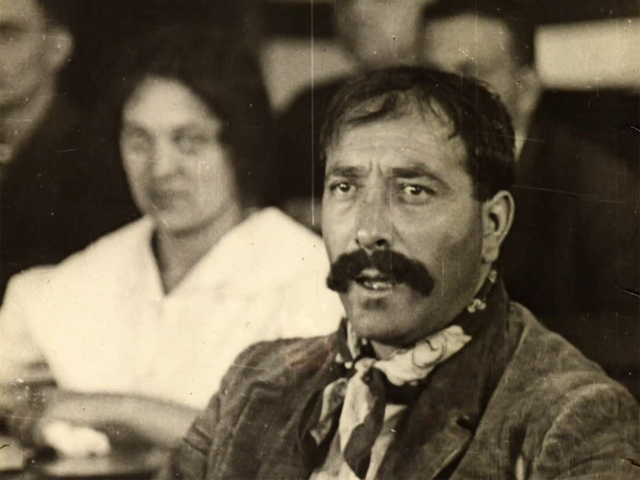
#186) The Making of an American (1920)

OR “English, Mother-Tonguer, Do You Speak It!?”

Directed by Guy Hedlund

Class of 2005

The Plot: Italian immigrant Pete (Emil De Varney) arrives in America with dreams of making a new successful life for himself. Problem is, he can’t speak English, which severely limits his job opportunities. He is encouraged by fellow immigrant Tony (Unknown Actor) to attend night school and learn English. Once Pete masters the language and graduates from his program, everything really starts to go his way. A powerful message from your friends at the State of Connecticut Department of Americanization.

Why It Matters: The NFR calls the short “a sincere, dramatically effective public education film”. And we get another essay from Buckey!

But Does It Really?: I found this one quite interesting because we don’t see a lot of silent educational films. We tend to associate instructional shorts more with the ‘50s: Dominant voiceovers, stilted acting, slight propaganda qualities. The silent era still has its share of trappings, but they help differentiate this film from any similar films in the sound era. “The Making of an American” is a surprisingly well made film that encapsulates the immigrant boom of the early 20th century and an early attempt to use film to mass-distribute a message.

Everybody Gets One: Director Guy Hedlund was primarily an actor in the silent era. “The Making of an American” is one of two directing credits for Hedlund, the second being 1916’s “Hungry Happy’s Dream”. Both Hedlund and actor Emil De Varney have very few credits following this one.

Wow, That’s Dated: The lucrative profession of elevator operator.

Other notes

  • The NFR write-up says that the intertitles were presented in English, Italian, and Polish. The print I watched (courtesy of the Library of Congress YouTube page) only had them in English.
  • Pete is a dead-ringer for Jerry Colonna.
  • “The way to do a thing is to begin.” Who wrote these intertitles? Some of them read like they were translated into a foreign language and then back into English.
  • The school blew their budget on all those phones. Every student has one!
  • “Mastery over all good things begins with mastery of self.” Okay, I like that one. It sounds like a good fortune cookie fortune…in bed.
  • Surprise guest star Mark Twain handing out the diplomas.
  • Man, Pete gets all of this success just by learning English? I should give that a try!

Legacy

  • ESL Adult Education has been encouraged throughout the years, including by this handy guide from 1975.

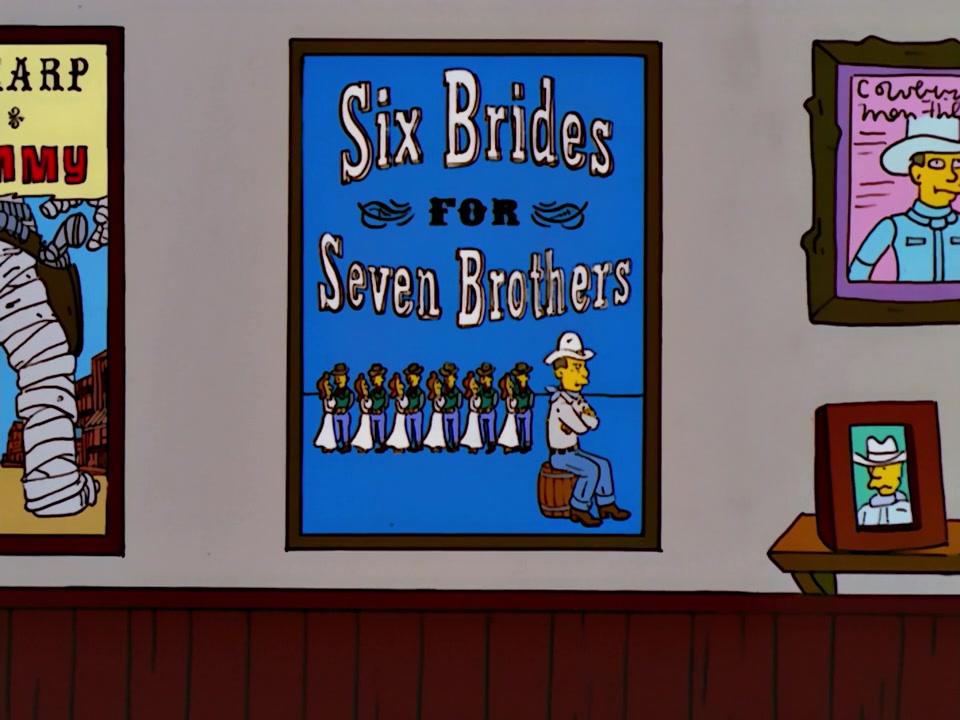
#185) Seven Brides for Seven Brothers (1954)

nxc46j9cnIEcM53aAk3-o

#185) Seven Brides for Seven Brothers (1954)

OR “The Kidd Is All Right”

Directed by Stanley Donen

Written by Albert Hackett & Frances Goodrich and Dorothy Kingsley. Based on the story “The Sobbin’ Women” by Stephen Vincent Benet.

Class of 2004

The Plot: Young waitress Milly (Jane Powell) meets, falls in love with, and marries frontiersman Adam Pontipee (Howard Keel) on the same day. Milly is excited to be a wife and housekeeper, until she learns she is also taking care of Adam’s six younger brothers (Jeff Richards, Matt Mattox, Marc Platt, Jacques d’Amboise, Tommy Rall, Russ Tamblyn). Milly is appalled by their rugged, uncivilized behavior, and teaches them how to be gentlefolk and find a bride. When all that fails, Adam takes a cue from “The Sabine Women” and encourages the brothers to just kidnap their future brides (Julie Newmeyer, Ruta Kilmonis, Nora Doggett, Virginia Gibson, Betty Carr, Nancy Kilgas). It’s a bit problematic, but…hey look at those cool dance numbers!

Why It Matters: The NFR praises the cast and especially the Michael Kidd choreography, but admits that the story seems “trite and sexist by contemporary standards”.

But Does It Really?: This is one of those movies I wish could be partially preserved. Most of the film’s dated sensibilities creak quite a bit, but Michael Kidd’s work on the Barn Raising dance sequence is worthy of recognition. The film clips along at a good pace, and makes excellent use of the widescreen, but it gets increasingly difficult to defend a story about kidnapping women as good clean fun. Can we just preserve the best 6 ½ minutes of this film and pretend it was a short this whole time?

Everybody Gets One: Of the 14 title characters, Russ Tamblyn is the only one who appears elsewhere on the Registry (he gets “West Side Story”). The other 13 only have this film, most surprisingly musical stars Keel and Powell.

Wow, That’s Dated: The widescreen process of CinemaScope gets top billing. After that, everything else about this movie is dated.

Title Track: No one says “seven brides for seven brothers”, but they do reference the film’s source material: “The Sobbin’ Women”. It’s a take on the Roman legend “The Rape of the Sabine Women” (That’s rape in the original “abduction” sense.)

Seriously, Oscars?: “Seven Brides” won in the category you’d expect it to: Best Scoring of a Musical Picture. It received four other nominations including Best Picture, losing to “On the Waterfront”. That’s right, “Rear Window”, “Sabrina”, and “A Star is Born” all missed out on Best Picture to make way for this.

Other notes

  • There’s a second version of “Seven Brides” that was filmed in a flat widescreen process for theaters that didn’t have CinemaScope. I’ll spare you a “Second Screening” post and say that the CinemaScope version is the one to watch. The flat version is nearly identical, but doesn’t have the, well…scope of the widescreen version.
  • Producer Jack Cummings made his career at MGM thanks to some help from his uncle: Louis B. Mayer.
  • Howard Keel has quite a voice. It’s a shame he’s not really given anything to do with it.
  • Jane Powell is 5’1”, Howard Keel 6’ 3”. It makes staging scenes for widescreen quite tricky. Look for how many scenes there are in the film where Milly is elevated to meet Adam eye to eye.
  • Watch closely: A bird hits the backdrop during “Wonderful, Wonderful Day”.
  • Gotta love a movie where a fist fight is happening in the background.
  • Benjamin is played by Jeff Richards, who was a professional minor league baseball player and NOT a dancer. Keep count of how many numbers he doesn’t actually dance in.
  • I did not need to see any of the brothers in long underwear.
  • Say what you will about the boys, they are quick learners. They pick up the “Goin’ Courtin’” dance instantly.
  • One of the brides is Julie Newmeyer, who shortly after this film’s release shortened her last name to Newmar and later became the first Catwoman in the ‘60s version of “Batman”. She’s also the person that thanks Wong Foo for everything.
  • As previously stated, the Barn Raising dance is the highlight of the movie. That being said, that’s not how lumber works.
  • Runner-up for best dance sequence is “Lonesome Polecat”, which is done in one uninterrupted take.
  • If these boys are looking for female companions for the winter, might I recommend McCabe & Mrs. Miller’s place?
  • Jesus, those corsets look really tight on those women. Are they wearing blush or is that just a lack of oxygen in their faces?
  • And then the brides start fighting in their undergarments. Maybe I’ve been too hard on this film…
  • Is that a portrait of Lincoln on the wall? It’s 1851. No one in Oregon would have known who he was!
  • In the end the boys learn the right lesson…kind of.

Legacy

  • The film was a huge success in its day and continued the popular trend of ‘50s MGM musicals. Stanley Donen followed this up with the likes of “It’s Always Fair Weather” and “Funny Face”, while Michael Kidd returned to his native Broadway, with the occasional film choreography.
  • A stage version seemed inevitable, but several attempts over the years, including a brief Broadway run in the early ‘80s, failed to properly adapt the material.
  • This film influenced two TV shows: The 1982 series of the same name, and the 1968 series “Here Come the Brides”.
  • And of course, the unsuccessful remake starring Buck McCoy.
The-Simpsons-Season-13-Episode-12-15-5c1e

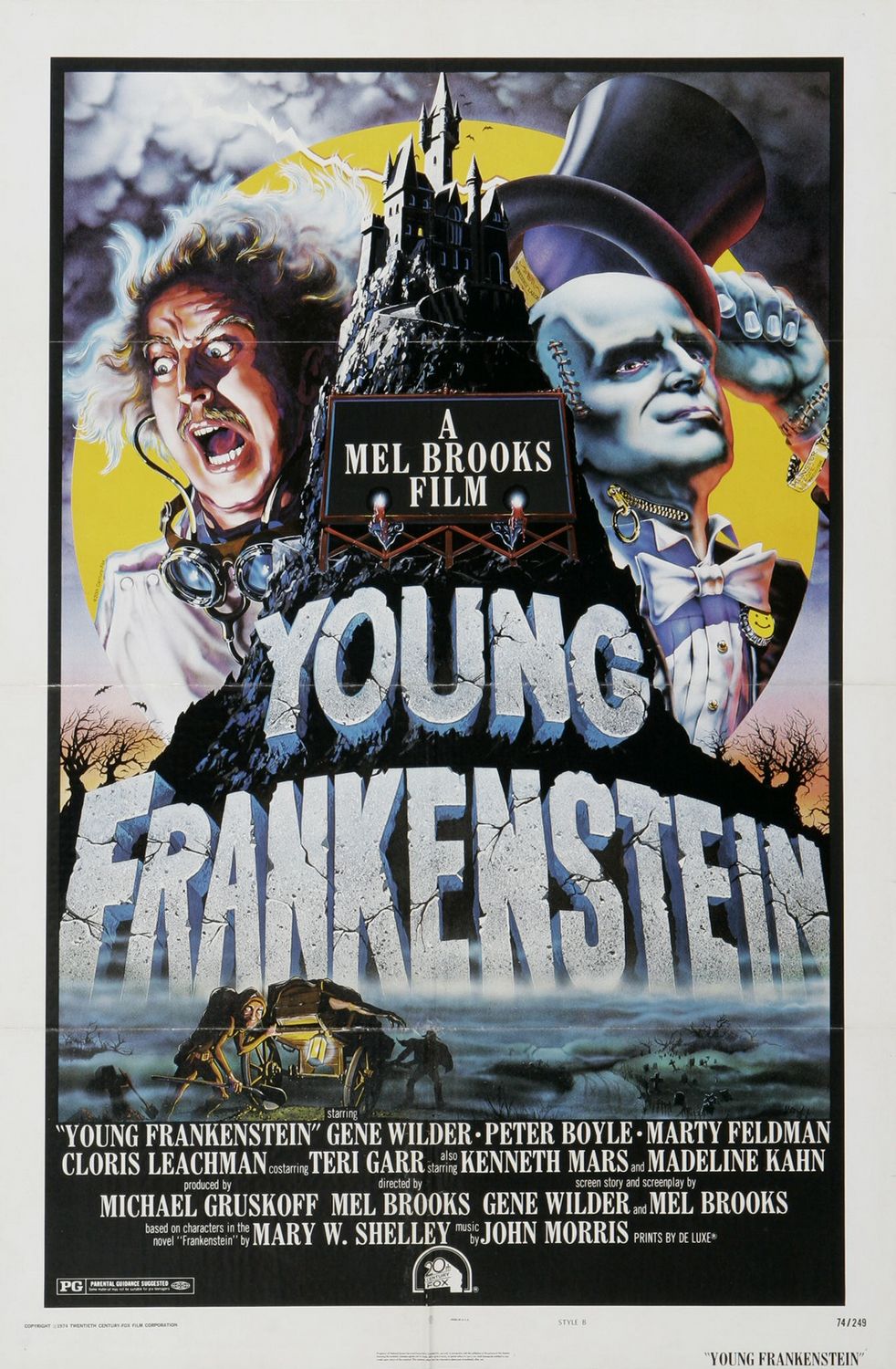
#184) Young Frankenstein (1974)

young_frankenstein_xlg

#184) Young Frankenstein (1974)

OR “Downton Abby Normal”

Directed by Mel Brooks

Written by Brooks & Gene Wilder. Based on characters from the novel “Frankenstein” by Mary Shelley.

Class of 2003

The Plot: Dr. Frederick Fron-ken-steen (Gene Wilder) is a straight-laced physicist who detests being the grandson of the infamous Victor Frankenstein. Upon inheriting the family castle in Transylvania, Frederick travels to the estate, discovers his grandfather’s secret notations on reanimating dead tissue, and becomes increasingly enticed by the idea. Assisted by bug-eyed Igor (Marty Feldman), seductive Inga (Teri Garr), and ominous Frau Blücher (Cloris Leachman), Frederick makes a creature (Peter Boyle) that is part monster and part “man about town”. Only his uptight financier Elizabeth (Madeline Kahn) and an angry mob of townspeople can prevent Frederick from fulfilling his destiny.

Why It Matters: The NFR calls the film a “stylish spoof” with “[c]lever writing” and “a formidable comedic ensemble”. They also praise the crew for its meticulous recreation of the 1930s Frankenstein films. In addition, there’s an essay by Brooks expert and “Tootsie” devotee Brian Scott Mednick.

But Does It Really?: “Young Frankenstein” is not only one of the funniest films ever, but also a frontrunner for best parody ever. While “Airplane!” is the spoof that throws in everything but the kitchen sink, “Young Frankenstein” gets its laughs by faithfully emulating the source material, and tweaking it in just the right places. While not my pick for Mel’s funniest film, it’s definitely his best. Brooks and Wilder make for excellent collaborators: Brooks adheres to Wilder’s more restrained style of parody, and Wilder allows Brooks to occasionally punch up the humor with his sketch-comedy sensibilities. Throw in an ensemble that’s clearly having a blast, and the result is damn near perfect. Mel made a name for himself as the king of parodies after this (I will always have a soft-spot for “Spaceballs”), but “Young Frankenstein” is his last true classic.

Shout Outs: In addition to the main influences from “Frankenstein” and “The Bride of Frankenstein”, the film makes excellent use of “Ah! Sweet Mystery of Life” from “Naughty Marietta”.

Everybody Gets One: Marty Feldman was already a popular comedian in his native England, but it was his performance as “I-gor” that brought him international fame. Feldman would continue to be a staple in subsequent films by Mel Brooks and Gene Wilder.

Seriously, Oscars?: “Young Frankenstein” garnered two Oscar nominations: Adapted Screenplay for Brooks and Wilder (losing to “The Godfather Part II”) and Sound (losing to “Earthquake”). How Gene Wilder didn’t get an acting nomination from ANY voting body that awards season is an everlasting disgrace.

Other notes

  • Just a reminder that this film was released a mere 10 months after “Blazing Saddles”. It may be the finest one-two punch in film history.
  • This film really takes its time setting the mood; it’s a full five minutes before we get the first real joke.
  • It may be “A Mel Brooks Film”, but this is Gene Wilder’s movie. In addition to a screenplay that is noticeably different from Mel’s other movies, this is Gene Wilder’s finest film performance. And that’s saying something.
  • And now, a sensible “Chattanooga Choo Choo” reference for the kids.
  • There’s a lot of artificial zooming going on in this film. Some of it is there to help cover cuts, but it always sticks out to me.
  • Oh Cloris Leachman, when you commit to a part you really commit. Leachman would have filmed this not too long after she departed “The Mary Tyler Moore Show” to star in her own spin-off!
  • No, it doesn’t mean “glue”. Moving on.
  • Did Spielberg lift this film’s “You go first” gag for “Raiders”?
  • Shout-out to cinematographer Gerald Hirschfeld. It’s a perfect copy of the old Universal films. Where’s his Oscar nod?
  • Why does everyone in Transylvania have an English accent?
  • Excellent physical work by Kenneth Mars. And good work from the sound guys too.
  • This is one of filmdom’s most endearing Frankenstein monsters. And to think he would end up making a living by saying “Holy crap.”
  • Helga’s father is played by actor Michael Fox. Because the Screen Actors Guild does not allow more than one actor to be registered under the same name, the other Michael Fox had to add the J middle initial.
  • Gene Hackman is giving one of the best cameo performances in any film. “I was going to make espresso!”
  • One more word on Gene Wilder’s performance: It’s so good even his hair is brilliant.
  • Four words: Puddin on a reeeeeetz.
  • I love that Mel kept in one of the moments where Gene starts corpsing on camera. Wilder barely gets out the line “Stop that!” to Marty Feldman.
  • You’ll never get me to say anything bad about Madeline Kahn. This viewing made me debate whether she should have gotten her Oscar nomination for this instead of “Blazing Saddles”. These are the things that keep me up at night.
  • That being said, the relationship between Elizabeth and the monster has some moral gray area that I feel might be a bit questionable today.
  • Too many great lines to mention, but here are some of my favorites:

“Give him an extra dollar.”

“There wolf. There castle.”

“What the hell are you doing in the bathroom day and night?”

“You just made a yummy sound.”

“Seda-GIVE!?”

“I suggest you put on a tie.”

“Say nothing, act casual.”

“No tongues.”

Legacy

  • Despite the worldwide success of “Young Frankenstein”, Mel Brooks and Gene Wilder never made another film together. Gene tried his hand at directing the similar genre spoof “The Adventure of Sherlock Holmes’ Smarter Brother” and Mel followed up with “Silent Movie” and “High Anxiety”, but neither would make another film as well received as “Young Frankenstein”.
  • Following the success of “The Producers” on Broadway, Brooks turned this film into a stage musical in 2007. It ran for a while, but lightning definitely didn’t strike twice. A streamlined version played the West End recently with better results.
  • The dramatic sting used to establish Castle Frankenstein would gain internet notoriety in the “Dramatic Chipmunk” video.
  • I guess there’s a Turkish version of this called “My Friend Frankenstein”?
  • And of course, the “walk this way” gag is not only endlessly referenced in films (especially by Mel), but is also the inspiration for the Aerosmith song.

#183) Star Theatre (1901)

t1-demolishing-and-building-up-the-star-theatre-1901-image-normal

#183) Star Theatre (1901)

OR “Breaking the Fourth Wall (And the Other Three)”

Directed by F.S. Armitage

Class of 2002

The Plot: Time-lapse photography shows us the demolition of New York City’s Star Theatre. The real event occurred over the course of 30 days from April to May of 1901, but thanks to the geniuses at Biograph, you can see the whole thing in less than two minutes!

Why It Matters: The NFR gives a brief summary, plus some backstory on the project.

But Does It Really?: I’ll say sure, because time-lapse photography is neat, and someone had to introduce it to the American mainstream. Plus this is one of the few films that remotely cares about the death of the American Theater. Where’s this guy’s Isabelle Stevenson Award?

Everybody Gets One: F.S. Armitage did most of his groundbreaking camera work for the American Mutoscope and Biograph Company (later shortened to Biograph Company). Time-lapse photography was his main trick with this short, but he also experimented with film reversal and image superimpositions. Virtually nothing is known about Armitage outside of a six-year period with Biograph, and most of that information is his filmography.

Wow, That’s Dated: Literal horsepower. That’s the main one.

Other notes

  • Despite what the internet claims, this is not the first film to utilize time-lapse photography. French film pioneer George Méliès beat this film to the punch in the late 1890s. This may, however, be the first American film to do so, or at least the earliest surviving one.
  • The film’s timelapse consisted of one frame every four minutes. At approximately two minutes in length, this film covers 192 hours of the theatre’s destruction.
  • This film was a pretty easy set-up for Armitage: the theatre was located across the street from the Biograph studio. They just put a camera by one of their windows and let the thing run.
  • Among the actors that performed on the stage of the Star over the years were the legendary Sarah Bernhardt, and most notably, Edwin Booth, a celebrated Shakespearean actor in his day, but perhaps best known today as being the brother of that other actor named Booth.
  • The final show that performed at the Star Theatre was something called “The Convict’s Daughter” by J.A. Fraser. You now know as much as I do about that play.
  • This film is referred to by the NFR as “Demolishing and Building Up the Star Theatre”. The actual footage is just the demolition, but Biograph sent out prints with the suggestion that when shown in reverse, “the effect is very extraordinary”. (The title on the actual film is simply “Star Theatre”, hence its naming on this post).

Legacy

  • The Biograph Company folded in 1916, but not before launching the careers of Mary Pickford, Lillian Gish, and D.W. Griffith.
  • The former site of the Star Theatre is currently the home of several businesses including, appropriately enough, a movie theater.

Only tangentially related to this film, I’ve always enjoyed this photo of Gloria Swanson posing amongst the rubble of the former Roxy Theater movie palace in 1960. The main lobby area is currently home to a T.G.I. Friday’s. What’s playing at the Roxy? Steak and ribs, mostly.

photoby-Eliot-elisofon_large792x1024