#78) Newark Athlete (1891) [Original 2017 Post]

MV5BZGJiZTkwODEtOTg1MS00OTZkLWI0MGUtMTM3YjZhNzQ5ODg0L2ltYWdlXkEyXkFqcGdeQXVyNTc0NjY1ODk@._V1_

#78) Newark Athlete (1891)

OR “Jersey Boy”

Directed by William Dickson

Class of 2010

This is the original write-up I did for “Newark Athlete”, but please read this revised, expanded version instead. Please, I am begging you.

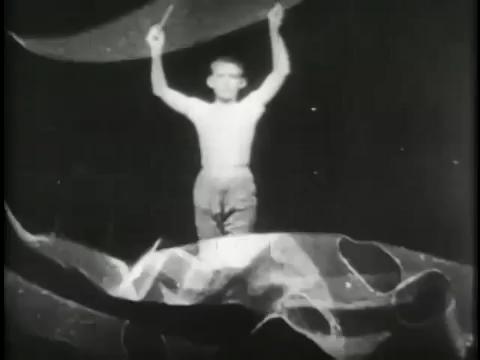
The Plot: A young man swings two Indian clubs in unison. That’s the entire film. In fact, it’ll take you longer to read this description than it will to just watch the film.

Why It Matters: “Newark Athlete” is one of the earliest American films. It is not only the oldest film on the National Film Registry, but also possibly the oldest surviving American film ever.

But Does It Really?: For the above, absolutely. Beyond that, I got nothing.

Everybody Gets One: Whoever that kid is.

Wow, That’s Dated: Indian clubs (which, it turns out, are actually from Persia).

Other notes

  • This was filmed in Edison’s studio in West Orange, New Jersey, which means that somewhere there’s a nearly identical earlier film shot by Tesla.
  • The weirdness of the athletics combined with the bad film print makes the whole thing look like a scene out of a David Lynch film.

Legacy

Further Viewing: Here’s 10 easy exercises that you can do with your own Indian Clubs! (Goofy looking goatee not included)

#77) The Exiles (1961)

39099.large

#77) The Exiles (1961)

OR “A Night in the Bunker”

Directed & Written by Ken Mackenzie

Class of 2009

The Plot: Based on interviews and dramatic recreations, “The Exiles” covers a group of Native Americans who left their respective reservations, making them “exiles” of their community, but forming a new community of their own. Yvonne (Yvonne Williams) wishes for a better life for her children, while her husband Homer (Homer Nish) goes out drinking and playing poker. Meanwhile Tommy (Tommy Reynolds) joins Homer in his drinking and tries to pick up pretty much any woman in sight. All of this occurs over a few hours on a dark, very film-noir night in L.A.’s Bunker Hill district.

Why It Matters: The NFR salutes the film as “one of the few non-stereotypical films that honestly depict Native Americans.” An essay by film professor Catherine Russell offers more insight on the film and its significance.

But Does It Really?: As is often the case with docudramas like this and “Nanook of the North”, I’m always a little concerned about recommending a film that might not be the most accurate depiction of a specific culture. But enough people with far more credibility than I have called this film true to life, and that’s good enough for me. I just wish the film were a little more polished. There are long stretches where nothing happens, and it’s only 72 minutes! Regardless, “The Exiles” takes a unique approach to a largely ignored culture, and that’s what film preservation is all about.

Shout Outs: Among the films playing at the theater Yvonne visits is the 1959 remake of “Imitation of Life”.

Everybody Gets One: Not surprisingly, this is the only NFR film (and in most cases the only film period) for the cast of “The Exiles”, as well as Kent Mackenzie.

Wow, That’s Dated: Gas is only 29 cents a gallon!? Also one of the barbershops they pass by offers a shave and a haircut for 40 cents (approximately 3 and 1/5th bits).

Seriously, Oscars?: Well you can’t blame the Oscars for not nominating a film that had no major theatrical release until 47 years after its completion. Or maybe you can.

Other notes

  • The Native American photos at the beginning are from Edward S. Curtis, who you may recall as the filmmaker who gave us “In the Land of the Head Hunters”.
  • Bunker Hill’s historic “Angels Flight” makes an appearance throughout the film. I guess it’s reopening again in a few months?
  • Oh, these folks are not actors.
  • Other films playing at Yvonne’s theater are “Escape to Burma” and “The Iron Sheriff”.
  • Either everyone in this film is dubbed or they are all excellent ventriloquists.
  • I do find the decision to make “The Exiles” a docudrama an interesting choice. If you’re going to include the subjects in the film, why make them act?
  • Ah yes, a simpler time when it was expected of you to sexually harass your waitress. Truly this is the kind of clean ‘50s American lifestyle we all yearn for again.
  • Homer suggests that white people have more problems than the Indians. Don’t tell white people that, you’ll never hear the end of it.
  • It’s around the point when Tommy and Cliff are talking to their dates and trying to pick a song from the jukebox where I started to wonder why this wasn’t a short.
  • Under no circumstances should you ever rush a woman when she’s in the bathroom.
  • That dancer towards the end is a surprisingly open “confirmed bachelor” given the era. For some reason he’s dubbed by someone who sounds a lot like Jerry Lewis.
  • Okay, one of the guys at the 49 Dance definitely makes the Goofy Holler.
  • It’s not perfect, but “The Exiles” is definitely a warts-and-all look at this lifestyle. Why would you let cameras film some of this unflattering behavior?

Legacy

  • Bunker Hill as seen in the film no longer exists. The district was at the beginning of a major redevelopment during filming and “The Exiles” captured many of these buildings shortly before their demolition. Bunker Hill is now comprised mainly of skyscrapers and office buildings.
  • Kent Mackenzie continued to direct and edit films until his premature death in 1980 at the age of 50. One wonders how his career would have gone had “The Exiles” gotten a proper film distribution in 1961.

Further Listening: Ladies and gentlemen, The Revels!

#76) The Terminator (1984)

terminator_xlg

#76) The Terminator (1984)

OR “Die, Robot”

Directed by James Cameron

Written by Cameron & Gale Anne Hurd. Based on the works of Harlan Ellison?

Class of 2008

The Plot: In the not-too-distant future of 2029, a war between machines and humans comes near an end when the human resistance finally takes control. To prevent this, the machines’ company Skynet sends a Terminator robot (Arnold Schwarzenegger) back in time to 1984 to kill Sarah Connor (Linda Hamilton), whose unborn son will lead the resistance. Also arriving from the 2020s is Reese (Michael Biehn), a human who will protect Sarah at all costs.

Why It Matters: The NFR calls it “among the finest science-fiction films in many decades” and praises Cameron, Schwarzenegger, Stan Winston and even the soundtrack. An essay by John Willis is a pretty thorough overview of the film, its creation, and its legacy.

But Does It Really?: The film’s lasting influence cannot be denied. As science-fiction, it’s inventive but at times illogical. As action, it’s endlessly riveting if excessively violent. Regardless of genre, “The Terminator” clips along at an exciting pace and creates a real and terrifying world for the characters to run around in. This is all grounded by Linda Hamilton’s fine performance (though I don’t believe for a second she’s only 18) and of course, the Schwarzenegger performance to end all Schwarzenegger performances.

Everybody Gets One: Amazingly this is the only film on the NFR for pretty much everyone, from Arnold and Linda Hamilton to Michael Biehn and Paul Winfield. Most surprisingly, despite directing 11 films, including two that were/are the highest grossing films ever, this is James Cameron’s only representation on the Registry…for now**.

Wow, That’s Dated: The usual ‘80s fare, like answering machines and compact laserdiscs – not to mention that score! But perhaps the most dated reference of them all: it’s an Orion picture.

Take a Shot: They actually don’t say the name “Terminator” that often. I say you do you.

Seriously, Oscars?: Perhaps due to its low-budget status and Orion’s overall lack of support for the film, “The Terminator” received zero Oscar nominations. Its sequel would help rectify this oversight with four Oscars in the tech categories.

Other notes

  • I’ll go ahead and predict that 2029 will end up being exactly how the film depicts it.
  • Wow, that’s two different sets of male buttocks in the first 10 minutes of this film. And who says there’s nothing in these kind of films for the ladies?
  • That’s the late great Bill Paxton (in his only NFR appearance as well++) as one of the street thugs at the beginning.
  • This really is the best use of Arnold Schwarzenegger in a film. Don’t give him a lot of lines, just let him stand there and look cool kicking ass. And to think the producers passed on O.J. Simpson.
  • To be fair, the scene of Reese grabbing clothes is an accurate depiction of how most men go shopping. Just grab what you need and run.
  • Technically Reese’s memories of the war are a flash-forward.
  • This film raises a lot of issues involving time-travel. For starters, I feel like killing those other two Sarah Connors would lead to some pretty massive Butterfly Effect shit.
  • So 12 years in the future, graphics devolve back into early ‘80s mode? Or does Skynet have a retro app?
  • Reese’s description of the Terminator (“It can’t be bargained with, it can’t be reasoned with…”, etc.) sounds a lot like our president.
  • Can the police arrest a man who hasn’t been born yet?
  • All I can say about those effect shots with the Terminator is “Stan Winston, you are missed.”
  • Like so many action films, this one falls victim to “You still don’t get it, do you?”
  • Sarah and Reese running for their lives in the police station is not the right time for a keyboard solo, Brad Fiedel!
  • This film has so much wibbly wobbly timey wimey going on with Sarah Connor and her role in the uprising that if I think about it too much I’ll go cross-eyed.
  • I’m glad that when a homicidal robot is hunting you down, there’s still plenty of time for doing it.
  • Surprise guest star Ron Swanson as the truck driver.
  • If my math is correct, Sarah Connor is 42 years older than Reese.
  • Some of these effects really don’t hold up. Next time fellas, use ILM.
  • The final chase sequence may be the first one in all of film that is comprised solely of crawling.

Legacy

  • So many sequels, the first being considered equal to the original. The rest, not so much.
  • A TV series focusing on Sarah Connor and her son, starring a pre-“Game of Thrones” Lena Headey.
  • A Universal Studios attraction that is technically based on the first sequel, but we’ll include it here for the time being.
  • Everyone, EVERYONE, has spoofed this film. Jesus Christ so many people have said, “I’ll be back.”
  • Shortly after the events of the film, Sarah Connor went into hiding in Manhattan and fell in love with a guy who looks like Ron Perlman.
  • This launched both Schwarzenegger and James Cameron into stardom, so go ahead and pick your least favorite Schwarzenegger film while I play Cameron’s self-indulgent Oscar speech.
  • Bonus Clip: It was during the filming of “Terminator: Salvation” that Christian Bale delivered this little gem that took a naïve America by storm in 2009 (though it’s fun to hear him slip into his native English accent).

** 2017 Update: Well that was fast. Five months later and “Titanic” shows up on the Registry. Ask and you shall receive.

++2017 Update: Nope, he’s got “Titanic” too!

#75) The Sex Life of the Polyp (1928)

Screen Shot 2017-06-29 at 9.28.57 PM

#75) The Sex Life of the Polyp (1928)

OR “Benchley Warmer”

Directed by Thomas Chalmers

Written by Robert Benchley

Class of 2007

The Plot: A somewhat inept doctor (Robert Benchley) lectures a women’s club about his studies regarding the polyp’s reproductive practice, hemming and hawing his way through the more delicate details.

Why It Matters: The NFR cites no specific reason, but an essay by silent comedy expert Steve Massa tells us about the brief but memorable film career of Robert Benchley.

But Does It Really?: I give this the slightest of passes only as a representation of Robert Benchley. The film is intentionally droll, but some of the jokes still land. And hey, at least it’s short.

Everybody Gets One: A celebrated essayist and member of the famed Algonquin Round Table, Robert Benchley had been performing his comic lectures on stage for years before Hollywood came a-callin’. He went back and forth between acting in and writing for films before his alcoholism took his life at the age of 56.

Wow, That’s Dated: This film briefly depicts women’s clubs at the height of their movement.

Title Track: Benchley says the title once near the beginning of the film.

Other notes

  • What is the deal with the framing on this short? Am I just watching a bad print?
  • Such frank sex talk for 1928, how scandalous back now.
  • By talking around a polyp’s natural asexuality, Benchley inadvertently promotes transgender rights about 85 years before it was fashionable. Right on!
  • Shout out to Ethel Barrymore.
  • Nice animation. Very “Origins of Love”.
  • How much of this will be on the final?

Legacy

  • The success of “The Sex Life of the Polyp” led to several of Robert Benchley’s other comic lectures being filmed, eventually leading to Benchley getting his own series of humorous shorts with MGM.
  • Such people as humorist Dave Barry, author James Thurber, and fellow NFR filmmaker Sid Laverents have cited Benchley as an influence.
  • Benchley’s years with the Algonquin Round Table were fictionalized in the 1994 film “Mrs. Parker and the Vicious Circle”. Campbell Scott plays Benchley while wooing Jennifer Jason Leigh’s Dorothy Parker and wearing the hell out of a pencil moustache.

Further Viewing: A loving documentary on the Algonquin Round Table, “The Ten-Year Lunch” won the Academy Award for Best Documentary, one of the rare times a film not tackling a contemporary social issue won the prize.

#74) Groundhog Day (1993) [Original 2017 Post]

groundhog_day_xlg

#74) Groundhog Day (1993)

OR “Live. See Shadow. Repeat.”

Directed by Harold Ramis

Written by Ramis and Danny Rubin

Class of 2006

Thanks Heather

This is my original write-up about “Groundhog Day”. You can read my revised and updated post about the movie here. Read them back to back for your own time loop!

The Plot: Arrogant weatherman Phil Connors (Bill Murray) comes to Punxsutawney, Pennsylvania to cover its annual Groundhog Day celebration. After an unexpected blizzard strands him in town for the night, he wakes up to discover that he is reliving Groundhog Day again. Phil continues to experience the same day over and over, with varying results. Throughout his time loop, Phil starts to fall for his segment producer Rita (Andie MacDowell) and begins to grow as a person. Let the theological speculation continue!

Why It Matters: The NFR calls it “a clever comedy with a philosophical edge to boot.” An essay by Steve Ginsberg gets philosophical as well and debates how the film will hold up 100 years from now. I don’t know how a movie about a groundhog will play to those DAMN DIRTY APES!

But Does It Really?: Oh yes. This is a film that just feels right on every level. You immediately buy everything this film has to offer (even its insurance policy!). A lot of that is Murray, giving perhaps his most underrated and surprisingly understated performance, but a lot of that is a simple yet memorable story by Danny Rubin, and Harold Ramis finding the perfect balance between the fantasy elements and a real-world grounding. Like many of the greats, it’s perfectly executed in a way that looks so damn easy.

Shout Outs: Brief references to “Dirty Harry” and “It’s a Wonderful Life”.

Everybody Gets One: Special mention to Bill’s brother Brian Doyle-Murray, Chris “Cabin Boy” Elliott and (by virtue of archival “Jeopardy” footage) Alex Trebek.

Everybody Gets One – Bonus Round!: See that groom at the end that goes to Wrestlemania? That’s future two-time Oscar nominee Michael Shannon. I’m not kidding. Go ahead, look it up. I’ll wait.

Wow, That’s Dated: Blue screens for TV weathermen rather than green screens. A non-digital alarm clock.

Take a Shot: Amazingly, they don’t say the phrase “Groundhog Day” in this film as often as I remember.

Seriously, Oscars?: While completely snubbed by the Academy, “Groundhog Day” did win the BAFTA for Best Original Screenplay. Its only stateside accolade was a Saturn Award for Andie MacDowell’s performance.

Other notes

  • Before we dive into the film itself, can I just say how much I hate the original poster? I know it’s the easiest way to convey the film’s plot, but “Groundhog Day” just isn’t that type of comedy. Also there’s a TV spot for this film that tells you to bring the family. They really didn’t know how to market “Groundhog Day” in 1993.
  • The opening music sounds a little like the theme from “8 ½”.
  • Stephen Tobolowsky, man. Talk about leaving an impression.
  • Ladies and Gentlemen, Gobbler’s Knob!
  • I appreciate that this film takes its time setting everything up. The first 20 minutes or so are pretty much just set-up.
  • The neurologist had other advice for Phil; don’t cross the streams. It would be bad.
  • Of course Nancy Taylor doesn’t remember going to high school with Phil. She’s 12 years younger than him!
  • I always got the sense that Bill Murray wanted this film to be “Scrooged” with the kinks worked out. Both films are contemporary stories of redemption via the supernatural, but “Scrooged” relies too much on the effects and Murray has gone on record saying he wasn’t happy with the results.
  • I love a lot of the lines in this film, but the best is Phil’s “Maybe [God is] not omnipotent. He’s just been around so long he knows everything.”
  • Why does Larry turn into such a creep towards the end of the film? He was just kinda goofy and easy-going for the rest of it.
  • How long do I think Phil spent reliving Groundhog Day? About 100 minutes.
  • I usually don’t mention film reviews on these posts, but Desson Howe wins the “Most Short-Sighted” award for writing in his Washington Post review, “‘Groundhog’ will never be designated a national film treasure by the Library of Congress.” There’s one of these reviews for every classic film, but I have to mention this one specifically.
  • My own theological conclusions on the film? Phil learns to live in the present. He spent so much of his life focused on getting a better job and not being stuck where he is that he never took the time to acknowledge and appreciate whatever is right in front of him. When he learns to accept the now, he becomes a better person.

Legacy

  • A Broadway musical based on the film that, despite a star (and knee) turn by Andy Karl, recently went home empty-handed at the Tony Awards.
  • While definitely not the first film to feature the “reliving the same day” trope, “Groundhog Day” definitely helped its surge in popularity.
  • The phrase “Groundhog Day” as a reference to frequent repetition gets a lot of mileage in our government, specifically the military.
  • The film of course helped popularize Groundhog Day the holiday, as well as the town of Punxsutawney (even though the movie wasn’t actually filmed there).

Listen to This: How has “I Got You Babe” not made it into the National Recording Registry yet? It’s the perfect song choice for this film, as well as Sonny & Cher’s signature tune. Make it happen, people!