#384) Motion Painting No. 1 (1947)

image-w1280

#384) Motion Painting No. 1 (1947)

OR “Paint It Bach”

Directed by Oskar Fischinger

Class of 1997

Here’s an odd one: Finding “Motion Painting No. 1” online is nearly impossible. In fact, I couldn’t find a single clip of this movie that could I embed here. So instead, the video below is “An Optical Poem”, one of Oskar Fischinger’s earlier works. Enjoy?

The Plot: Oskar Fischinger shows off his love of oil painting on acrylic glass and creates a series of abstract compositions, all set to Bach’s “Brandenburg Concerto no. 3, BMW 1048”.

Why It Matters: The NFR gives a brief synopsis, and cites Oskar Fischinger’s influence on later filmmakers.

But Does It Really?: I can give “Motion Painting No. 1” a pass based on my previous criteria of accepting short movies that are the sole representation of an artist. You win this round, German artist I’ve never heard of.

Everybody Gets One: An experimental filmmaker/special effects guru in his native Germany, Oskar Fischinger accepted a job offer from Hollywood as a means to escape the Nazis and their constrictions on “degenerate art”. Fischinger was most interested in combining animation with classical music, and even contributed to the “Toccata and Fuge” section of “Fantasia”. Finding his experiences in Hollywood artistically unfulfilling, Fischinger turned to oil paintings. In the mid ‘40s the Guggenheim Foundation commissioned Fischinger to create an animated short, and Oskar opted to film his oil painting process; shooting a frame of film after each brush stroke, and synching the entire process to a piece of Bach he had long wanted to incorporate into a film.

Seriously, Oscars?: No Oscar nomination for “Motion Painting”. The Animated Short winner for 1947 was “Tweetie Pie”, the first of the Merrie Melodies to pair up Sylvester and Tweety. Clearly, the animation branch at the time was looking for something a little different than what Fischinger had to offer.

As always, it’s pointless for me to try to decipher an experimental film, so we’ll move on to my alternate notes section, “Things I Thought I Saw in ‘Motion Painting No. 1’

  • Confetti and streamers
  • Snake eyes (the physical eyes, not the dice)
  • Spirals, lots of spirals. This movie is 90% spirals.
  • A circle in a spiral
  • A wheel within a wheel
  • The windmills of my mind
  • A Hidden Mickey
  • A T-bone steak
  • A map of all US Highways
  • Bricks
  • James Lipton’s pile of note cards from “Inside the Actors Studio”
  • The blueprints to the Winchester Mystery House
  • A topographical map of the Swiss Alps
  • Morse code that roughly translates to “OOOOOOOOOOOOOO”
  • The 3D Pipes screensaver from the ‘90s
  • A Yield sign
  • The treble clef
  • A Navajo rug
  • Some of Oskar’s leftover designs from “Toccata and Fuge”
  • The Looney Tunes logo. That’s all, folks!

Legacy

  • Although “Motion Painting” was one of Oskar Fischinger’s last competed shorts, he continued to experiment with combining music and imagery, including his invention the Lumigraph, a color organ of sorts.
  • The NFR writeup on “Motion Painting” mentions Fischinger’s influence on such experimental filmmakers as Norman McLaren, Jordan Belson, and Harry Smith. I’m embarrassed to admit I don’t know who any of those three are, but we’ll cover Belson’s film “Allures” a little later on the blog. As for the other two, Harry Smith used to host “Biography”, right?
#383) She Done Him Wrong (1933)

MV5BY2Q3NjEzMTAtMDY3ZS00MDQ5LWI2N2MtZjk4NTE2ZDIwMzU3L2ltYWdlL2ltYWdlXkEyXkFqcGdeQXVyNjc1NTYyMjg@._V1_

#383) She Done Him Wrong (1933)

OR “Come What Mae”

Directed by Lowell Sherman

Written by Harvey F. Thew and John Bright. Based on the play “Diamond Lil” by Mae West.

Class of 1996

No trailer, but here’s THE clip

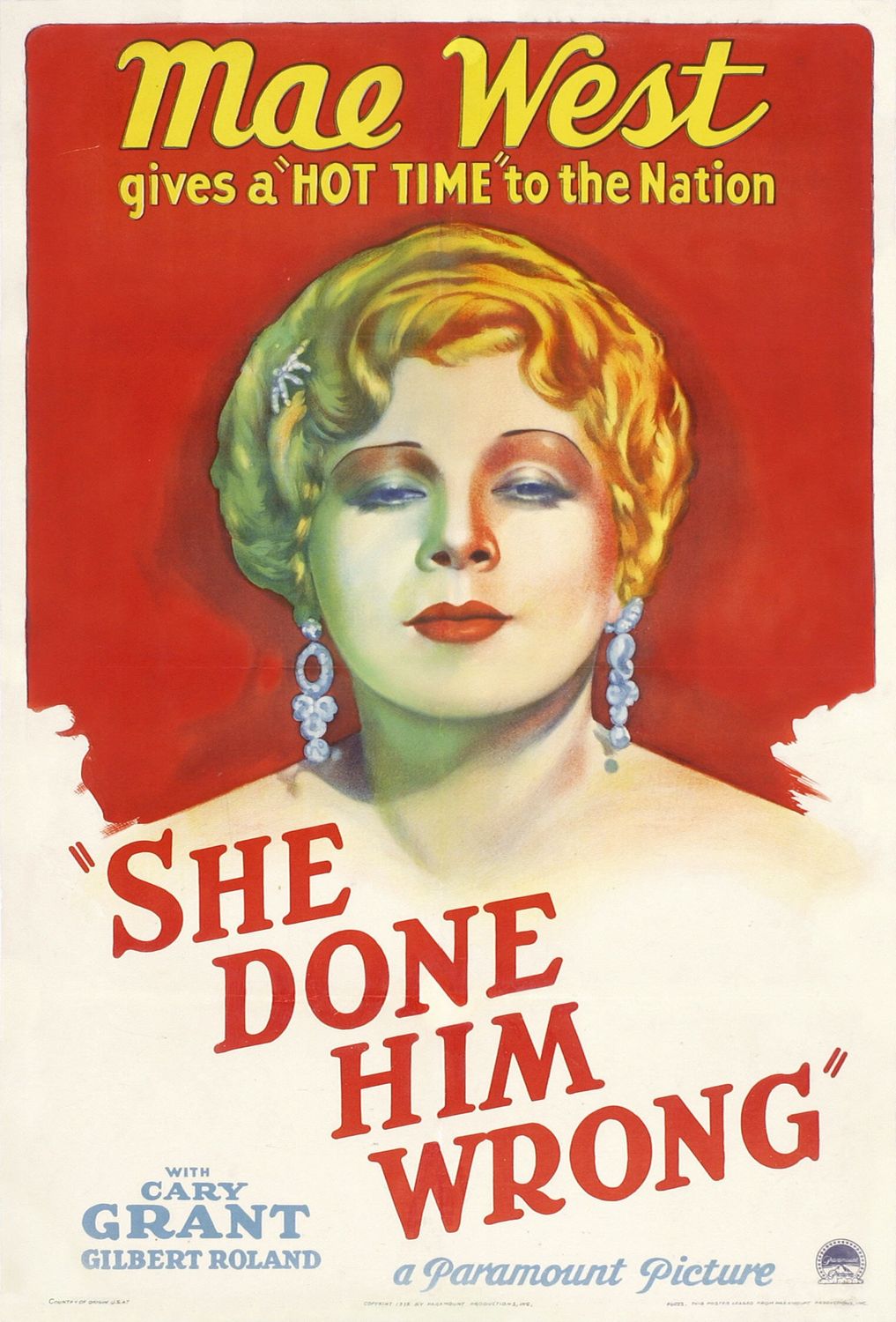
The Plot: There’s about three hours worth of plot crammed into this 65 minute movie, but who cares? This movie is really about Mae West wearing extravagant gay nineties attire, singing songs full of double entendres, and spouting sexual one-liners at every single man in sight, including a young Cary Grant!

Why It Matters: The NFR offers no plot synopsis or superlative, but does cite the film’s role in establishing the Hollywood Production Code. There’s a more detailed essay by author/NFR regular Randy Skretvedt.

But Does It Really?: “She Done Him Wrong” is on here for Mae West, pure and simple. As a film it’s convoluted and a bit of a mess, but at its center is one of Hollywood’s most important stars. I feel like Mae West doesn’t get her due as often as she used to, but Ms. West was a true trailblazer, and the last star to benefit from the pre-Code era. “She Done Him Wrong” showcases West’s confident performance skills, plus racy quips that still pack a punch almost 90 years later. The NFR would not be complete without Mae West, and “She Done Him Wrong” is a natural choice to represent her.

Everybody Gets One: A vaudeville performer since her teenage years, Mae West made headlines when she wrote and starred in the 1926 Broadway play “Sex”. The show was a hit, but West was arrested on obscenity charges (the show tackled prostitution) and served 10 days in a workhouse. The subsequent publicity solidified her star status, and West cranked out hit after hit. 1928’s “Diamond Lil” was her most popular (and controversial) play, finally attracting the attention of Hollywood.

Title Track: After a lot of pushback from the Production Code Association, “Diamond Lil” was allowed to be filmed on the condition that all direct references to the play be removed, including a name change for the title character. Production began under the working title “Ruby Red”, but Paramount eventually settled on the surprisingly more evocative “She Done Him Wrong”.

Seriously, Oscars?: “She Done Him Wrong” was the runaway hit that struggling Paramount Pictures needed to get out of the red, and received an Oscar nomination for Best Picture. Despite being one of four NFR entries in that category, “She Done Him Wrong” lost to the now forgotten “Cavalcade”.

Other notes

  • The Production Code Association finally approved the screenplay for “She Done Him Wrong” three days after shooting began. Among the required alterations was the complete removal of a subplot involving forced prostitution, and toning down the screenplay’s “ribald comedy”. Mae West allegedly liked the new, more suggestive substitutions better than the original, more explicit dialogue.
  • Lowell Sherman was an oddity in the Hollywood Studio System: an actor who got to direct. Sadly, Sherman’s career was cut short when he died at 46 of double pneumonia, but his directing career also included “Morning Glory”, featuring Katharine Hepburn’s first Oscar-winning performance.
  • The 1890s seems far away now, but to a ‘30s moviegoer it was only 35 years prior. “She Done Him Wrong” was the “Stranger Things” of its time!
  • We’re only five minutes in and there’s already way too much plot. Do you expect me to remember all of this? And stop introducing me to characters who aren’t Mae West; you know why I’m here!
  • Now that’s an entrance! Mae’s Lady Lou arrives in a horse-drawn carriage and immediately implies she’s a prostitute. Mae West’s screen persona is lust disguised as a human. She could make a W2 form sound sexy.
  • The good news: Mae West advocated for casting African-Americans in her productions, even when staging a play with an integrated cast would immediately shut down the theater. The bad news: Louise Beavers is the sole African-American in this film, playing Lou’s ignorant maid Pearl. Don’t worry Louise, “Imitation of Life” isn’t too far away.
  • Best exchange in the movie: “Your bath is ready, Miss Lou.” “You take it, I’m indisposed.”
  • This is one of Cary Grant’s first movies! Mae West spotted him on the Paramount lot and reportedly quipped, “If he can talk, I’ll take him.” It’s fun watching Grant be a little stiff, as befitting an inexperienced film actor. Even the most iconic screen personas were honed one movie at a time.
  • “Why don’t you come up sometime and see me?” is one of those quotable lines that benefits from repeated use. Lou says several variations of the line throughout the film, hence the future misquoting (see “Legacy”).
  • Lou’s first number is the very suggestive “I Wonder Where My Easy Rider’s Gone”. Last I checked they were headed to Mardi Gras.
  • The musical numbers are a nice sampling of West’s stage performance, but I can’t understand what she’s actually saying. I think we figured out how this all got past the censors.
  • Mae West may be the only woman in film history to reject an advance from Cary Grant.
  • Raciest line in the movie: Lou, while resisting handcuffs, “Hands ain’t everything.” Did it get warmer in here?
  • And now a sample of the kind of controversial dialogue Mae West was known for:

“When women go wrong, men go right after them.”

“There was a time I didn’t know where my next husband was coming from.”

“I have heard so much about you.” “Yeah, but you can’t prove it.”

and the piece de resistance –

“Haven’t you ever met a man who could make you happy?” “Sure, lots of times.”

Legacy

  • “She Done Him Wrong” was the first in a series of successful pictures for Mae West, but the implementation of the Production Code in 1934 neutered all of West’s subsequent screenplays. West eventually left the movies, spending the next four decades touring, recording albums, and making the occasional TV appearance (including “Mr. Ed”!). Additionally, West revived the original “Diamond Lil” play from time to time.
  • Mae West only made two films after her ‘30s heyday: 1970’s “Myra Breckinridge” and 1978’s “Sextette”. Both are routinely cited among the worst movies ever made.
  • This film’s biggest legacy is one of Hollywood’s great misquotes. “Why don’t you come up sometime and see me?” quickly became “Come up and see me sometime”, and the go-to line for Mae West impressions. Mae does, however, say the oft-quoted version in her next film, 1933’s “I’m No Angel”.

#382) Cabaret (1972)

MV5BNTEyMzc0Mjk5MV5BMl5BanBnXkFtZTgwMjI2NDIwMTE@._V1_

#382) Cabaret (1972)

OR “Manischer Elf Traum Mädchen”

Directed by Bob Fosse

Written by Jay Allen (and “Research Consultant” Hugh Wheeler). Based on the musical by Joe Masteroff, the play “I Am a Camera” by John Van Druten, and the novel “Goodbye to Berlin” by Christopher Isherwood. Songs by John Kander & Fred Ebb.

Class of 1995

Thanks Neil!

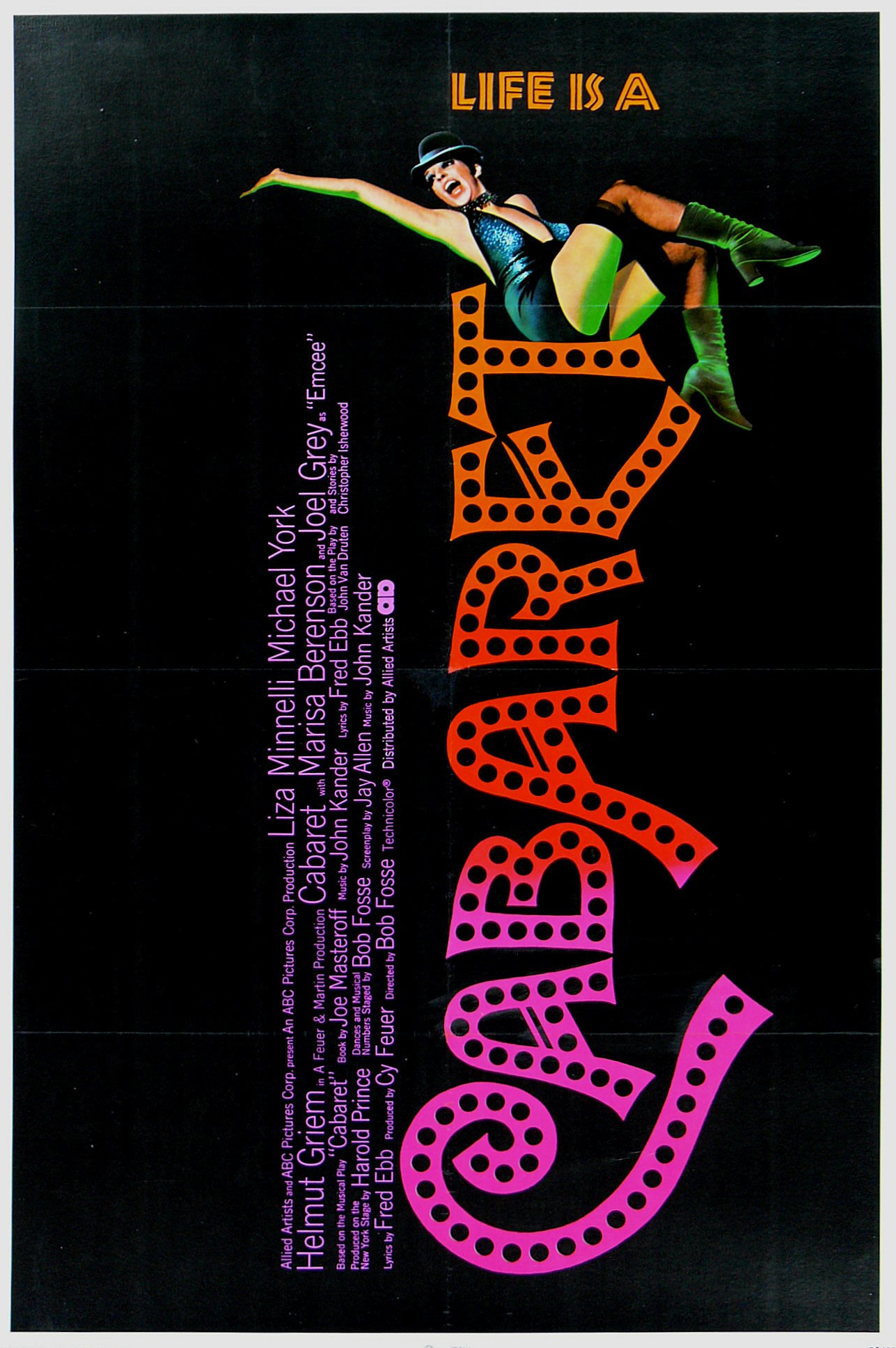
The Plot: British writer Brian Roberts (Michael York) arrives in 1931 Berlin to teach English, and rooms with Sally Bowles (Liza Minnelli), an aspiring singer at the local cabaret. Despite Brian’s repressed homosexuality, the two begin a romantic relationship, which is turned on its head with the arrival of wealthy Baron Max von Heune (Helmut Griem). In the midst of this personal drama is the foreboding rise of the Nazi party, as well as commentary from the cabaret’s androgynous Master of Ceremonies (Joel Grey). Oh, and it’s a musical.

Why It Matters: The NFR praises Fosse et al for a film adaptation that “maintains the vivacity of the stage version”. There’s also an essay by author/“Cabaret” commentary track Stephen Tropiano.

But Does It Really?: “Cabaret” is a notch above your average movie musical, if not one of the untouchables of filmdom. Bob Fosse succeeds in crafting a musical film for the more mature, gritty movie scene of the ‘70s, aided by a screenplay that wisely borrows from its source materials, and a star-making performance by Liza Minnelli. “Cabaret” tends to get lost in the shuffle of great movie musicals, but its unique presentation and dark subject matter makes it stand out among the crowd.

Everybody Gets One: Daughter of Hollywood legends Judy Garland and Vincente Minnelli, Liza Minnelli originally auditioned for Sally in the Broadway production, but was deemed too inexperienced. By the time the film rolled around, Minnelli was a bigger star, as well as an Oscar nominee for “The Sterile Cuckoo”. Joel Grey won the Tony for his work as the Emcee on Broadway, and is the only original company member cast in the film.

Wow, That’s Dated: Aside from some ‘70s cinematography, the only signs of the time come during the credits: “Cabaret” was produced by Allied Artists, and shot on location in West Germany.

Title Track: The title song is the climax of the movie, and Liza knocks it out of the park, aided by some very shrewd lighting and camera moves.

Seriously, Oscars?: A hit with critics and audiences, “Cabaret” entered the Oscar race with 10 nominations, tied for first place with “The Godfather”. The Corleone family took home Best Picture and Adapted Screenplay, but “Cabaret” won all eight remaining categories, including Director, Actress, and Supporting Actor (Grey).“Cabaret” still holds the record for most Oscars without winning Best Picture. Weirdly, neither of Kander & Ebb’s two new songs (“Mein Herr” and “Money”) were nominated that year.

Other notes

  • As far as stage-to-film adaptations, “Cabaret” is quite unique. In a push for realism, all songs not sung in the cabaret were scrapped. As for the “book scenes”, most of the stage material was deleted in favor of restoring plot lines from both the original “Berlin Stories” and its first stage adaptation “I Am a Camera”. Can you imagine the film version of a stage musical taking this many liberties today? Theater geeks everywhere would be furious!
  • “Willkommen” sets up not only the world of the cabaret, but also the creepy vibe of the whole movie. Like so many great performances, you can’t imagine anyone but Joel Grey as the Emcee (apologies to Alan Cumming).
  • The other big change: On stage Sally Bowles was British and untalented, in the film she’s American and…Liza Minnelli.
  • The Golden Rule of musical film adaptations: put your cut songs in the underscore. Listen closely for instrumental versions of “Don’t Tell Mama”, “It Couldn’t Please Me More”, “Married”, “Sitting Pretty” and “So What”.
  • Michael York is one of those actors who I could listen to read the phone book. Or provide exposition in an homage to ‘60s spy movies.
  • “Mein Herr” is the number that really showcases Fosse’s trademark choreography: precise isolated sexuality. Only Fosse can make standing on a chair that erotic.
  • “I’m going to be a great film star. That is, if booze and sex don’t get me first.” Oh Liza…
  • Most of the time I just kept thinking how daring and taboo this subject matter would have been in 1972. Bisexuality, abortions, Nazis: you didn’t see “Man of La Mancha” tackling any of this.
  • I’m not Liza’s biggest fan, but she’s very good in this. It’s a fascinating performance that’s somehow larger than life while simultaneously subtle. And although Liza is a one-of-a-kind performer, there are still welcomed flashes of Judy hiding in the corners of her work.
  • In true Fosse fashion, the doomed romance between the middle-aged Fraulein Schneider and Herr Schultz is replaced with a similar, younger, sexier version with Natalia Landauer and Fritz Wendel. It gets the same point across, but next to Marisa Berenson we all look like Lotte Lenya.
  • Max is so close to being John McMartin.
  • The one non-cabaret song to make the cut is Nazi anthem “Tomorrow Belongs to Me”. Sung by an obviously dubbed Hitler Youth, the song is still a stirring, dangerous moment in the film.
  • Like any good production of “Cabaret”, the rise of the Nazis is subtle yet consistent. It’s never big enough to be concerned about until it’s too late. “If You Could See Her” is the pivotal turning point, in which anti-Semitism is initially mocked but ultimately accepted.
  • What good is sitting alone in your room?” Hey, I got 370 more movies to get through! Leave me alone!
  • Oof that ending still packs a punch. I wonder how much of that is the Nazi reprisal we’re currently going through as a nation?

Legacy

  • “Cabaret” was a hit and made Liza Minnelli a movie star. Bob Fosse would go on to direct such films as “Lenny” and future NFR entry “All That Jazz”.
  • The stage version of “Cabaret” has been revived on Broadway three times, each incorporating songs from the movie. Joel Grey reprised the Emcee for the 20th anniversary revival in 1987.
  • Liza continues to perform songs from “Cabaret”, most famously in her follow-up collaboration with Bob Fosse: “Liza with a Z”. Joel Grey reprised “Willkommen” during his appearance on an early “Muppet Show”.
  • The making of “Cabaret” is prominently featured in “Fosse/Verdon”, with Gwen Verdon finally getting her due as the glue holding Fosse and the movie together.

#381) Hospital (1970)

image-w1280

#381) Hospital (1970)

OR “NET Work”

Directed by Frederick Wiseman

Class of 1994

The Plot: After examining a Massachusetts mental institution, a Philadelphia high school, and the Kansas City Police Department, Fredrick Wiseman turns his direct cinema eye towards New York City’s Metropolitan Hospital. The doctors and nurses of this East Harlem establishment face a never-ending array of alcoholics, heroin addicts, abandoned children, poor families who cannot afford treatment, and everything in between. All this brought to you by the National Educational Television network, the Corporation for Public Broadcasting, and contributions from viewers like you. Thank you.

Why It Matters: While the NFR description only gives a brief rundown, the accompanying essay by film professor Barry Keith Grant explores the film’s examination of the Metropolitan as “a symptom of larger social ills”.

But Does It Really?: Like Wiseman’s other documentaries, “Hospital” is a frank yet neutral observation of an important American institution. Wiseman’s pseudo-blank slate approach to filmmaking allows you to bring your own perspective and bias towards the subject and draw your own conclusions. “Hospital” is still an engrossing view 50 years later, and you’ll get no argument against its NFR inclusion from me.

Every Former Network Gets One: Funded by the Ford Foundation for Adult Education, the National Educational Television network (NET) packaged pre-existing educational films and sent them to affiliates across the country. Its run in the ‘50s was more academic than entertaining (some called it “The University of the Air”), but that changed in 1958 with a move from Ann Arbor to New York, and a goal to become the fourth nationally broadcast television network (suck it, DuMont!). Throughout the ‘60s, NET commissioned several original documentaries that tackled social issues of the day. Among the young filmmakers recruited by the NET: former law instructor and “The Cool World” producer Fredrick Wiseman. Wiseman’s first four documentaries were all commissioned by NET.

Wow, That’s Dated: For starters, we’ll pour one out for NET (see “Legacy”). As for the specifics of the film, there are the now-outmoded medical standards of 1970, and the tail end of the era where nurses wore white dresses and hats. Other than that, the only thing that’s really changed about our hospital system is the amount on the bill.

Seriously, Emmys?: “Hospital” aired on NET in 1970, and took home Emmys for News Documentary Program and an Individual Achievement award for Wiseman’s directing. 24 years later, “Hospital” was the first television program to be inducted into the NFR.

Other notes

  • For those of you wondering why a television documentary is on a list of essential films, this is explained on the NFR submission page:

“Registry criteria does not specifically prohibit television programs, commercials, music videos or foreign productions, however, the original intent of the legislation that established the Registry was to safeguard U.S. films. Consequently the National Film Preservation Board and the Librarian of Congress give first consideration to American motion pictures.”

  • If you think about, a documentary in a hospital is a brilliant idea. Documentaries are about exploring humanity on a deeper level, and you’re already incredibly vulnerable when you’re in a hospital, so a film would amplify the whole experience. Exhibit A: The heartbreaking uncut close-up of the woman describing her mother’s medical history following her stroke. You are right there with her as she experiences the pain and frustration of telling a stranger about a loved one’s condition in an intense situation.
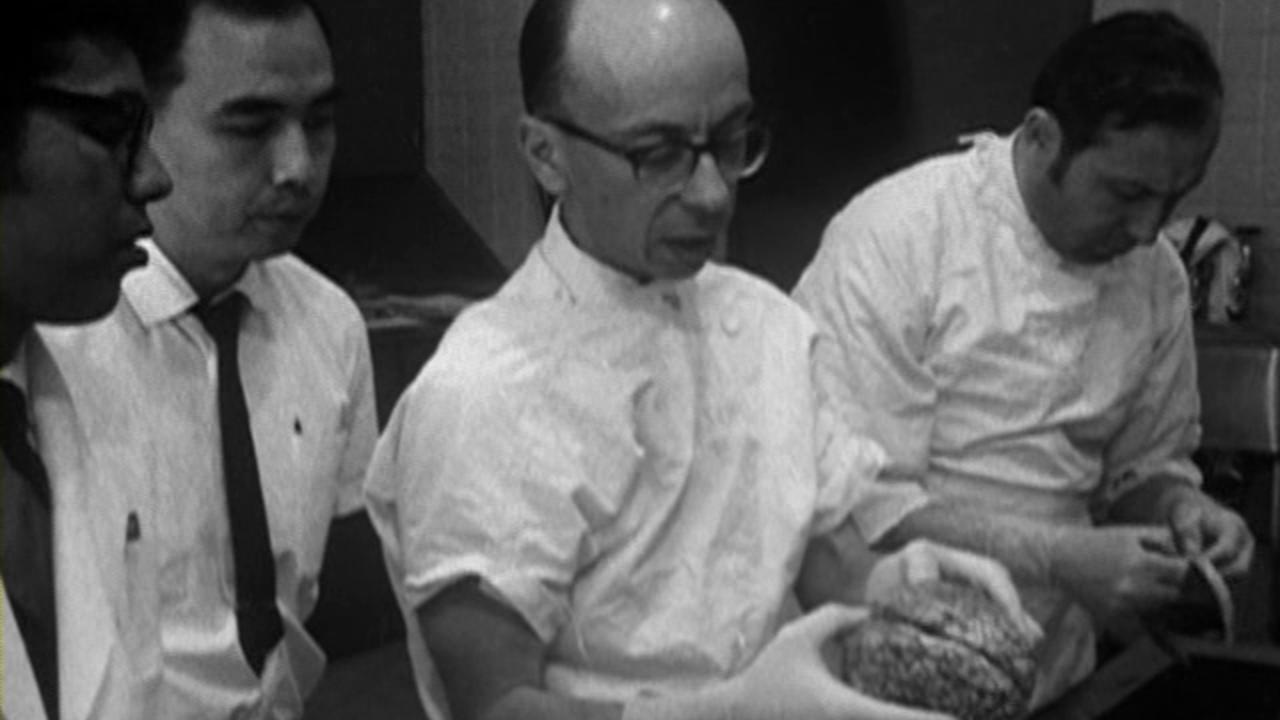
  • And now for your consideration: several human brains. Dr. Don Knotts’ Older Brother shows a group of med students parts of a real brain, no doubt on loan from Abby…someone…
  • I respect the decision to film “Hospital” in black & white: It would have been too gory in color. That being said, eating dinner during this viewing was still a bad call on my part.
  • It’s fun hearing medical jargon spoken with a Brooklyn accent. Added bonus: the police officers that keep popping up sound like they’re straight out of “The Odd Couple”.
  • What I appreciate most about this movie is at no point does Wiseman try to make saints or sinners out of the doctors and nurses: these are regular people trying to do their job and help these patients to the best of their ability.
  • Another sign of the times: the patient who today would be identified as homosexual, but back then is diagnosed as schizophrenic. Not as dated: The phone maze the hospital psychiatrist has to navigate trying to get this man back on welfare.
  • The film spends an extended amount of time with the young Paul Dano lookalike who has ingested mescaline. A majority of that screen time is devoted to an uninterrupted shot of the man freaking out and vomiting everywhere. I never thought I’d say this, but I’d rather watch “Eraserhead” again.
  • Well thank god that scene is ov- oh don’t pan down to the vomit! Why would you do that!?
  • Another extended close-up: the shot of the woman holding her husband’s hand as he’s admitted on a gurney and drifting in and out of consciousness. I’m not crying you’re crying.
  • The Emergency Room: the one place in the 1970s where you can’t smoke!
  • Shoutout to the doctor towards the end whose unkempt hair/chin curtain combo makes him a dead ringer for me circa 2006.
  • The final sequence is a sermon at the hospital chapel attended by patients. This should be uplifting in theory, but something about passing around the collection plate at a hospital doesn’t feel right.

Legacy

  • “Hospital” was the kind of stark, controversial documentary that NET was known for broadcasting. While critics often praised these films, affiliates were less enthused about alienating their viewers. It was films like “Hospital” that led to the Corporation for Public Broadcasting shutting down the network. NET’s New York headquarters merged with WNDT to become WNET, and is still the home of NET’s successor: PBS.
  • At age 89, Fredrick Wiseman is still going! In fact, in the year and a half since my post about “High School”, Wiseman has produced another documentary: 2018’s “Monrovia, Indiana”. Based on the trailer, Wiseman has not lost his touch.

#380) His Girl Friday (1940)

MV5BZDVmZTZkYjMtNmViZC00ODEzLTgwNDAtNmQ3OGQwOWY5YjFmXkEyXkFqcGdeQXVyNDY2MTk1ODk@._V1_

#380) His Girl Friday (1940)                  

OR “Get Me Rewrite!”

Directed by Howard Hawks

Written by Charles Lederer. Based on the play “The Front Page” by Ben Hecht and Charles MacArthur.

Class of 1993

The Plot: Morning Post editor Walter Burns (Cary Grant) is about to lose his star reporter/ex-wife Hildy Johnson (Rosalind Russell) to her new fiancé, bland insurance salesman Bruce Baldwin (Ralph Bellamy). Walter knows that a good story will lure Hildy back, and convinces her to interview Earl Williams (John Qualen), a convicted murderer set to hang in the morning. When Williams escapes, all hell breaks loose in the press room as only a Hawks screwball comedy can. There’s plenty to be said about love, politics, and the newspaper industry, and it’s all being said at the same time.

Why It Matters: The NFR calls the film a “fiery and funny battle of the sexes”, praising Hawks’ use of overlapping dialogue and “vibrant pace”.

But Does It Really?: “His Girl Friday” has a lot going for it: snappy dialogue, wonderful chemistry between Grant and Russell, and a pace so frenetic it can never be duplicated, only appreciated. I will argue that the film doesn’t hold up as well as others of the era, but the whole thing goes by so quickly who can tell? “His Girl Friday” deserves its spot on the NFR, and still has plenty of laugh-out-loud moments, but I’d be curious to see if future generations will revere it as much as we do now.

Shout Outs: Though the 1931 movie of “The Front Page” is not directly referenced here, Howard Hawks’ goal was to craft a remake of the original play that was faster and funnier than its predecessor.

Wow, That’s Dated: Umm…everything? From its printed newspaper setting and binary gender politics to its topical references and racially insensitive terminology, this movie is very much a product of its time. Speaking of…

Title Track: A “girl Friday” is slang for a man’s female assistant or secretary, and is derived from the Friday character in “Robinson Crusoe”. “His Girl Friday” didn’t coin the phrase, but did make it popular.

Seriously, Oscars?: While successful with critics and audiences, “His Girl Friday” was completely shut out at the Oscars. 1940 was a very crowded year at the Oscars (“Grapes of Wrath”, “Philadelphia Story” and “Rebecca”, to name just a few nominees), and Columbia was still finding its footing as a major movie studio. Plus “His Girl Friday” came out in January; even back then early releases didn’t get Oscar nods.

Other notes

  • There are two different stories as to how “The Front Page” became “His Girl Friday”. Hawks’ version involves reading scenes from “The Front Page” at a party, and being impressed by how well the character of Hildy worked when read by a woman. The version from Hawks’ biographer Todd McCarthy says that Hawks initially planned a straightforward remake of “The Front Page”, but liked how Hildy’s lines sounded coming from his secretary at auditions. Either way, inspiration struck.
  • Rosalind Russell was no one’s first choice for Hildy, and she knew it (Jean Arthur, Ginger Rogers and Irene Dunne all passed). Undeterred, Russell hired a comedy writer to punch-up her dialogue, and successfully snuck the lines into Hawks’ encouraged spontaneity. Russell more than holds her own in the final film, and it’s hard to imagine anyone else playing Hildy.
  • Hawks accomplished the film’s trademark overlapping dialogue by rewriting the lines so that the beginnings and endings could be talked over without missing anything important, and having the sound mixer on set adjusting the boom mics live for each take. Somewhere Robert Altman took notes.
  • Poor Ralph Bellamy. He plays the third wheel so beautifully is it any wonder he got pigeonholed? Bellamy would eventually head to the theater for more substantial roles (You never saw FDR lose Eleanor to Cary Grant).
  • Despite the breakneck banter of Grant and Russell, I always find something stagnate about the movie. Having now seen the original “Front Page” I think I’ve figured it out. The first scene of the play is now 25 minutes into the film, meaning that we get TWO first acts; the new one establishing Burns and Johnson as a divorced couple, and the original one setting up the reporters and Earl Williams. The movie doesn’t really get going until more than halfway through. It’s still fun, but there’s a bit of inertia for most of the runtime.
  • If Endicott sounds familiar, that’s Cliff Edwards, aka Jiminy Cricket. “Pinocchio” would be released one month after “His Girl Friday”.
  • Most risqué line by 1940 standards: “Earl shot the Professor right in the classified ads. …No, ads.”
  • In addition to Cliff Edwards, fellow Disney voiceover actor Billy Gilbert (Sneezy) steals the show in his two scenes as Mr. Pettibone trying to deliver the Governor’s pardon.
  • Also very 1940: Americans ignoring the rise of Hitler and the ongoing war in Europe.
  • Cary Grant makes a few inside jokes throughout the movie. First, Walter describes Bruce as looking like “that fellow in the movies. You know, Ralph Bellamy.” Then he calls Williams a “mock turtle”, like the one Grant played in 1933’s “Alice in Wonderland” (though this line also appears in 1931’s “The Front Page”). And towards the end, he mentions the tragic fate of an “Archie Leach”, Cary Grant’s birth name.
  • All of this just makes me wonder how many other male-centric classic movies could be improved upon with a change in gender. “The Godmother”? “Midnight Cowgirl”? “No Country for Your Grandma”?

Legacy

  • “His Girl Friday” is one of those movies whose legacy is its genre shorthand. Anyone who talks quickly in a Trans-Atlantic accent is paying homage to “His Girl Friday” and the screwball comedy genre whether they know it or not.
  • While there have been many remakes of “The Front Page” over the years, only one has included the “His Girl Friday” gender-swap. 1988’s “Switching Channels” updates the story to cable news and features the love triangle of Burt Reynolds, Kathleen Turner, and Christopher Reeve, none of whom spoke fondly of their time making the movie.
  • There have been attempts to recreate the fast-paced world of “His Girl Friday”, most notably the TV show “Moonlighting”. Does anyone remember that show? It was a big deal back in the ‘80s. Anyway, they talked fast and had witty banter. Oh, and one of them was a young Bruce Willis.
  • Some of Rosalind Russell’s dialogue is sampled in the Pomplamoose song “Expiration Date”. That really has nothing to do with anything, I just like Pomplamoose.