#337) The Empire Strikes Back (1980)

842314cb211182f591e3bffc964d280f

#337) The Empire Strikes Back (1980)

OR “The Dark Father Part II”

Directed by Irvin Kershner

Written by Leigh Brackett and Lawrence Kasdan. Story by George Lucas.

Class of 2010

NOTE: As with my “Star Wars” write-up, this post is about the original, unaltered “Empire Strikes Back”.

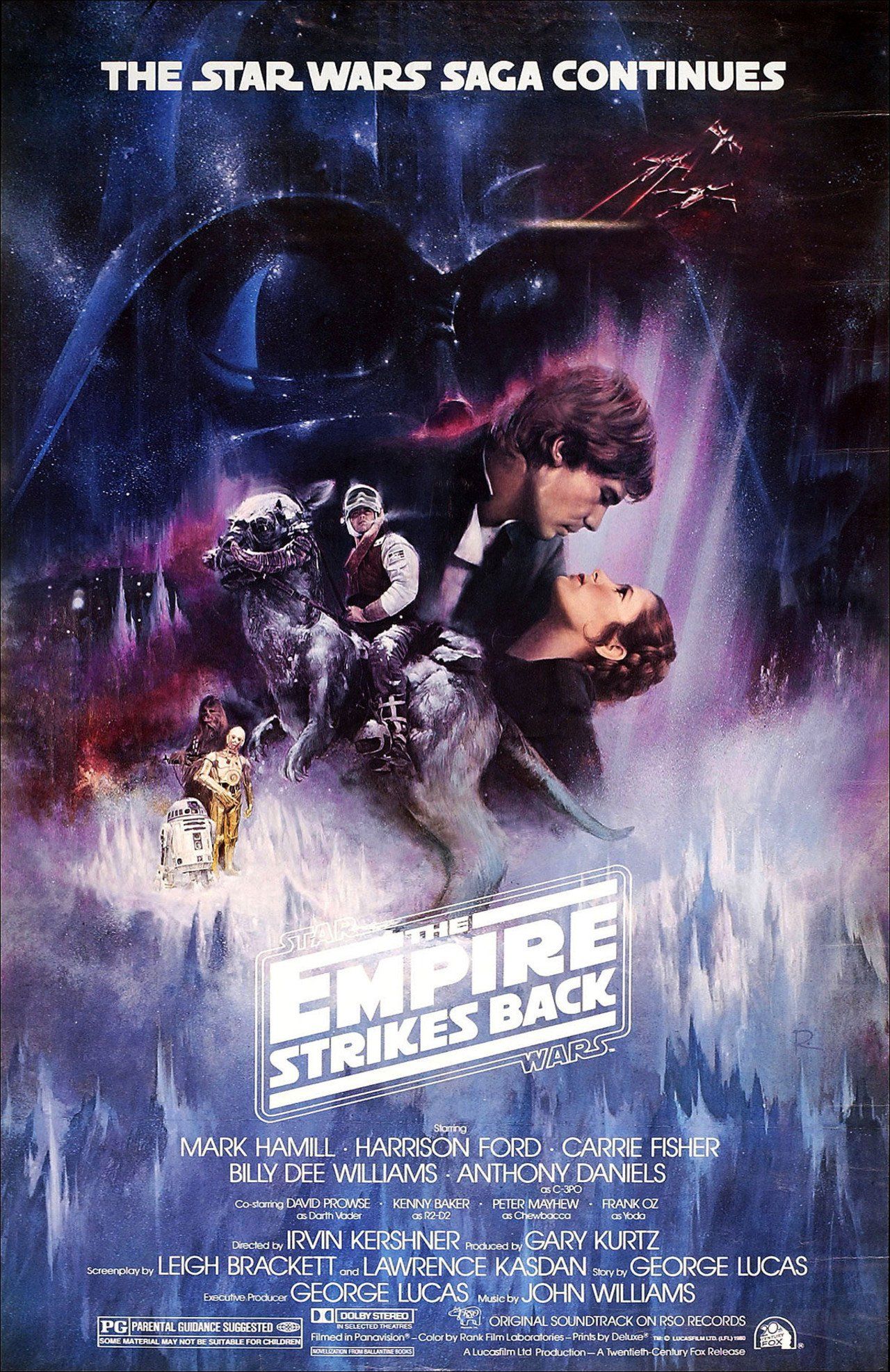
The Plot: A slightly less long time ago in a galaxy far, far away, Darth Vader (David Prowse, voiced by James Earl Jones) is in pursuit of Luke Skywalker (Mark Hamill) and the Rebels, and has tracked their base to the ice planet Hoth. After the Empire’s attack, Luke travels to the swamp planet Dagobah and begins his Jedi training with the wizened yet wise Yoda (Frank Oz). Meanwhile, Han Solo (Harrison Ford) and Princess Leia (Carrie Fisher) escape onboard Han’s ship with the Empire in hot pursuit. They seek shelter on Cloud City, run by Han’s old buddy Lando (Billy Dee Williams). Will our heroes escape the clutches of evil? Will Vader lure Luke to the dark side of the force? And why does everyone have a bad feeling about everything?

Why It Matters: The NFR praises Kershner and states that the film is often cited as the best of the original trilogy.

But Does It Really?: No sequel can top its predecessor, but “Empire Strikes Back” comes pretty damn close. “Empire” manages to avoid all the pitfalls of a sequel and successfully expands the worlds and characters of the original. Many NFR films have sequels, but rare is the one worthy of Registry recognition. “Empire Strikes Back” justifiably ranks on this list not only as a great sequel, but a great movie, period.

Everybody Gets One: Irvin Kershner was baffled when his former USC pupil George Lucas approached him about directing the “Star Wars” sequel, having been primarily known for helming low-budget character studies like “Eyes of Laura Mars”. Kershner finally accepted the job, and started meeting with screenwriter Lawrence Kasdan to find the humanity underneath the hardware.

Seriously, Oscars?: The highest-grossing film of 1980, “Empire” received three Oscar nominations, winning Best Sound (over “Raging Bull”, which I gripe about in that post). In addition, “Empire” received a Special Achievement Oscar for its visual effects.

Other notes

  • With this viewing, I paid close attention to the intentional differences between “Star Wars” and “Empire”. The main characters are all pushed beyond their original archetypes, and all of the first film’s reliable machinery (the Falcon, the droids) malfunctions at some point. Amazingly, the film takes a full 180 from the original’s optimism without betraying the characters or their universe. It speaks volumes of Kasdan’s screenplay, as well as the strong foundation of Lucas’ original character work.
  • Speaking of the screenplay, film noir legend Leigh Brackett wrote the first draft of “Empire”, but died shortly thereafter. Lucas was unsatisfied with Brackett’s work, and “Raiders of the Lost Ark” screenwriter Lawrence Kasdan was brought onboard. Despite still receiving screen credit, Brackett’s contributions to the final film are disputed.
  • The opening Wampa attack was NOT added to explain Mark Hamill’s reconstructed face after a car accident, which occurred a full two years before “Empire” started shooting. Besides, it was only a broken nose.
  • Han and Leia are at each other’s throats the whole film. What happened between the two movies? This is one of filmdom’s more extreme “We’re in love, but we hate each other” tropes, to the point where it actually made me uncomfortable watching it.
  • Despite his dislike of “Star Wars”, Alec Guinness agreed to return as Obi-Wan for “Empire”, on the condition he receive a small percentage of the film’s profits. Guinness completed his scenes in one day.
  • You can never convince me that George Lucas had this whole trilogy mapped out from the beginning. Exhibit A:
  • The battle of Hoth is stop-motion animation’s final hurrah before the movies switched over to computers. I blame the California Raisins.
  • Yes, Yoda has jumped around and had lightsaber battles, but Senile Muppet Yoda will always be my favorite. Kudos to Frank Oz, as well as the entire team of puppeteers.
  • I always found it hilarious that despite an infinite amount of alien species in the Star Wars universe, Dagobah is home to lizards and snakes.
  • With all this interplanetary travel, everyone in this galaxy must be extremely jet-lagged. It’s a wonder Han and Leia didn’t take a nap when they got to Cloud City.
  • Continuing the film’s theme of subverted expectations: Lando Calrissian, the series’ first morally complex character. Billy Dee Williams does a wonderfully subtle job of navigating Lando’s duality. Works every time.
  • Of course Lando is untrustworthy; he keeps mispronouncing Han’s name! Some friend he is.
  • Yoda speaks of another. Is it Rey? Was she a Kenobi this whole time? “Episode IX” hasn’t come out yet, I need to know!
  • “I love you.” “I know.” I don’t care if Harrison Ford ad-libbed it or not, that exchange is perfect.
  • Everyone gives Mark Hamill crap for his dramatic “Noooooo” once Luke learns the truth about his father. To be honest, so did I, until I finally saw this movie on a big screen as intended. The revelation is an operatic crescendo in an unapologetic space opera, and Hamill’s emotional reaction is perfect for the moment.
  • In my head canon, while Han was in carbon freeze he had very vivid hallucinations of being on Earth as both an adventurous archeologist and a jaded cop/not a robot. 

Legacy

  • “Empire” was a smash hit and work began immediately on the saga’s final chapter. “Return of the Jedi” can’t live up to its predecessors, but judged on its own merits provides a satisfying conclusion.
  • The biggest influence “Empire” had was actually behind the scenes. George Lucas left the Writers Guild and Directors Guild over a dispute involving credit placement (A film with no opening credits was a rarity in 1980). This made Lucas’ hiring pool of writers and directors for future projects much more limited.
  • John Williams’ “Imperial March” is second only to the main theme as the most iconic “Star Wars” music. Like the Wicked Witch of the West theme, the march has become shorthand for impending evil.
  • Lawrence Kasdan has continued penning Star Wars scripts, including “Return of the Jedi”, “The Force Awakens” and “Solo: A Star Wars Story”.
  • I’d like to point out that “Empire” has had the least amount of changes made to it for the Special Editions and video releases.
  • Like “Star Wars”, many moments and characters from “Empire” have found their way into pop culture. Mel Brooks as Yogurt in “Spaceballs” immediately comes to mind.
  • Despite his limited screentime, Boba Fett is the film’s breakout star. Seriously, he does nothing in this movie. I haven’t even mentioned him until now.
  • “Ben….Leia….Tom Selleck….”
  • Bad Lip Reading is always enjoyable, but man oh man do I love “Seagulls! (Stop It Now)”.

Further Viewing: Turns out Peter Mayhew would deliver Chewbacca’s dialogue on-set during production. You will never hear Chewbacca without a Surrey accent again.

#337) Good Burger (1997)

good_burger_xlg

#337) Good Burger (1997)

OR “All That and a Side of Fries”

Directed by Brian Robbins

Written by Dan Schneider and Kevin Kopelow & Heath Seifert. Based on the novel by James Joyce.

Class of 2010

The Plot: Ed (Kel Mitchell) is the likeable yet simple-minded cashier at local fast food establishment Good Burger. New hire Dexter Reed (Kenan Thompson) is forced to take a summer job at the restaurant to pay off his debt with his teacher (Sinbad). As the summer starts, Good Burger faces stiff competition from corporate chain Mondo Burger and its intense owner Kurt (Jan Schweiterman). When Dexter samples Ed’s surprisingly delicious homemade sauce, they strike a business deal and start using the sauce on their burgers. Business picks up, but is it enough to save Good Burger?

Why It Matters: The NFR calls the film a “comical character study” that “holds up impeccably today”. Special mention goes to the film’s “deft, innovative” screenplay, as well as Thompson and Mitchell being “[a]s gifted in their repartee as they were in their physical antics”.

But Does It Really?: Oh of course. While not as infallible as the NFR will lead you to believe, “Good Burger” is cinema’s definitive buddy comedy. A strong combination of farce and pathos, the film’s well-founded structure is aided by the undeniable chemistry between Kenan and Kel. A film whose seismic impact has already been felt by every comedy since 1997, “Good Burger” is still an enjoyable romp, and an obvious choice for the NFR.

Shout Outs: Brief allusions to “Shaft” and “One Flew Over the Cuckoo’s Nest”, as well as obvious homages to “Raging Bull” (the mini-golf double date) and “Citizen Kane” (Dexter’s yo-yo as a symbol of his lost childhood).

Everybody Gets One: Kenan Thompson had already made a handful of movies (including fellow NFR entry “Heavy Weights”) when he joined the cast of Nickelodeon’s sketch comedy show “All That”. There, Thompson met fellow actor Kel Mitchell, and the two collaborated on a sketch that would evolve into “Good Burger”, originally performed in the “ten-to-one” slot on an episode hosted by Leslie Nielsen.

Wow, That’s Dated: I will disagree with the NFR’s stance that “Good Burger” is timeless. The main giveaways are the film’s ska soundtrack and quick references to “American Gladiators”, Blockbuster Video and the UPN network.

Take a Shot: “Welcome to Good Burger, home of the Good Burger, can I take your order?”

Seriously, Oscars?: Despite mixed critical and box office reception, “Good Burger” managed an Oscar nomination in its most deserving category: Adapted Screenplay. The writing team lost to odds-on favorite “L.A. Confidential”, though many insiders dismissed that film’s victory as “typical Oscar snobbery”.

Other notes

  • Right from the beginning, the film expands upon the original in the right places. The world of Good Burger is given more texture and dimension, while Ed’s opening dream delves deep into our protagonist’s uncharted psyche.
  • For the record, “Good Burger” is the Sinbad movie that does exist.
  • The other ‘90s giveaway: the use of Kool & The Gang’s “Celebration”, which we would often play to celebrate good times come on.
  • A tip of my hat to the film’s sound department. The strategic use of cartoon sound effects aids the film’s comedy, rather than detracts.
  • I’m still holding out for a “Sweeney Todd” reveal that Ed’s secret sauce is made from murdered customers.
  • Surprise guest star Shaquille O’Neal: newly signed to the Lakers and star of the 1996 genie movie “Kazaam”, not to be confused with “Shazaam”, the non-existent Sinbad genie movie.
  • Ed teases Dexter by “mooing” like a chicken, which begs the question: Has anyone in this movie ever even seen a chicken?
  • Another cameo; this time by “All That” alumni Lori Beth Denberg as the bubbly Connie Muldoon. This has been more Vital Information for your everyday life.
  • Ed and Dexter’s drag scene is a comic highlight, but it turns out Kenan’s cross-dressing days were numbered.
  • That’s Linda Cardellini (eight years away from “Brokeback Mountain”) in her film debut as Heather the mental patient. Side note: Was this her “Girl, Interrupted” audition tape?
  • Just when you think this film could not possibly top itself, along comes George Clinton, “(Not Just) Knee Deep”, and some questionable safety procedures from a mental institution.
  • Don’t worry, Sinbad; I appreciated your “This Old Homie” joke.
  • “I need a hot jacuzzi!” Genius. Pure genius.
  • But seriously, why so much property damage directed at Mr. Wheat? Is this all because he administered a test on the last day of school? Seems a bit extreme, don’t you think?
  • An entire film starring Kel Mitchell, and they don’t once mention his love of orange soda? What a rip-off!

Legacy

  • Talks for a “Good Burger” sequel began soon after the film’s release. “Good Burger 2 Go” would have followed Ed and Dexter in another attempt to save Ed’s secret sauce recipe from landing in the wrong hands. The film never came to pass (for now), but there is a novelization out there.
  • Kenan Thompson joined the cast of “SNL” in 2003, and is currently its longest-serving castmember.
  • While Kel Mitchell hasn’t achieved Kenan’s level of post-“Good Burger” acclaim, he has steadily worked in both TV and film in the past 20 years (including the underrated “X’s and O’s”).
  • Kel reprised his role of Ed (along with Kenan as a different character) for a 2015 sketch on “The Tonight Show Starring Jimmy Fallon”.
  • Kenan & Kel recently announced they will be co-producing a revival of “All That”, set to debut in mid-2019. Mark your calendars!
  • And the greatest news of all: Kel Mitchell is still not dead!

Listen To This: “We’re All Dudes” by Less Than Jake (featuring Kel Mitchell) made the 2016 NRR cut, with the Registry hailing the song as “a work of incredible honesty” that “ultimately dramatizes the value of human life”. The song’s “painstaking recording session” is also highlighted.

In case you haven’t figured it out yet, Happy April Fools Day! Here’s the REAL #337.

Tony

#336) Stark Love (1927)

Stark-Love-images-9c4ed32b-2cb7-4a76-8026-dc4131a2bc4

#336) Stark Love (1927)

OR “Backwoods and Forwards”

Directed by Karl Brown

Written by Brown and Walter Woods

Class of 2009

The Plot: In the Smokey Mountains of North Carolina resides a primitive culture where – and I’m quoting the movie here – “Man is the absolute ruler, woman is the working slave”. Dreaming of going to school in the city, Rob Warwick (Forrest James) has learned to read, and passes on some of his knowledge to his neighbor Barbara Allen (Helen Mundy). Forrest sells his horse in town to pay tuition, but decides to let Barbara go to school in his place. When he returns, however, Forrest learns that his mother has died and that his father (Silas Miracle) has chosen Barbara as his wife to take over the household chores. Strap in for one of filmdom’s weirder love triangles.

Why It Matters: Well someone at the Library of Congress really liked this one. The NFR write-up calls “Stark Love” “[a] maverick production in both design and concept” and “an illuminating portrayal of the Appalachian people.” They can only come up with a plot recap for most of the more popular titles, but this obscure entry gets a heap of praise.

But Does It Really?: Full disclosure: I normally hold off reading the official NFR entry on each of these films until after my viewing, so as not to cloud my own opinion of why this film should be on the list. About halfway through “Stark Love” I found myself so disinterested in the film I looked up the NFR description. “Stark Love” is definitely on the list for what it represents rather than what it is. On top of its status as the directorial debut of cinematographer Karl Brown, as well as a look at Appalachian life, this film was considered lost until a single print was discovered in the late 1960s. Longtime readers know I’m willing to give films a slight pass with a convincing argument, but “Stark Love” is testing those limits.

Everybody Gets One: Karl Brown got his start in the lab at Kinemacolor Film Company, eventually becoming a camera assistant for G.W. Bitzer on such films as D.W. Griffith’s “The Birth of a Nation” and “Intolerance” (he was even allowed to shoot some second unit footage on these films). After Kinemacolor folded, Brown found himself at the Famous Players-Lasky Corporation (later Paramount). It was during filming of the 1923 western epic “The Covered Wagon” that he learned of a primitive Appalachian culture in North Carolina and traveled there after filming. Brown was so impressed that he convinced Paramount to finance his film, even though he didn’t have a script yet.

Other notes

  • In addition to being filmed entirely on location in North Carolina, “Stark Love” features a cast entirely of non-professional locals. I have to say; this group of non-actors is no more stiff and awkward on camera than your average silent film actor.
  • Right off the bat, I can tell what’s wrong with this movie, and it’s the same problem that most silent films have: too many intertitles. It’s somewhat ironic that a cinematographer’s first time directing relies more on words than visuals. With “Stark Love” Brown shows he is good at shooting beautiful settings, but not necessarily shooting visual storytelling.
  • That being said, Brown later said in hindsight that he should have waited a few years to make “Stark Love” in order to take advantage of both sound and color development in films.
  • Her name is Barbara Allen? Like the song?
  • So even back in the ‘20s people knew how stupid the concept of chivalry was?
  • “Stark Love” is another one of the “two steps forward, one step back” films I’ve come to expect from movie feminism. Barbara is learning to become more independent and free from a patriarchal society, but she is still very much in a patriarchal society.
  • Among the Appalachian terminology this film taught me was “wild marriage”; two people living together without being legally married. Who knew that’s what it was called?
  • Brief, uncomfortable almost-nudity? Sorry, movie, you’ll have to do better than that.
  • Ah yes, death by intertitle. Back in the 1920s, expositional intertitles were the third leading cause of death, behind infectious diseases and bathtub gin-related accidents.
  • The river flooding is a major plot point. Quick, someone call the TVA!
  • My note during the finale was “Do something, Barbara!” She does eventually, but not much. I’m not enjoying this pattern of films with female leads that become uncharacteristically passive during the third act.
  • Having now finished this viewing of “Stark Love”, I can think of at least two things wrong with that title.

Legacy

  • Karl Brown spent the next decade writing and directing a series of B-movies for Poverty Row studio Monogram. There were a few more screenplays into the ‘40s, and a few early episodes of “Death Valley Days”, but Brown’s career more or less petered out after the Monogram days.
  • Shortly after production wrapped, Helen Mundy was brought to New York, met with Paramount executives, and signed a one-year acting contract. Nothing seems to have come from it, as “Stark Love” is Mundy’s only film credit.
  • Even the film’s Wikipedia page devotes space to how obscure this movie is. “Stark Love” premiered in 1927 and quickly disappeared. Presumed lost for decades, the Czechoslovakian Film Archive found a print in their vault, which was restored by the Museum of Modern Art and the American Film Institute. After that, and again, this is from the Wikipedia page, the film “went back into obscurity” and “is still widely unknown.”
  • The film’s history and production is documented in the 1995 J.W. Williamson book “Hillbillyland: What the Movies Did to The Mountains and What the Mountains Did To the Movies”. It’s long out of print, but you can track it down wherever obscure books with the word “hillbilly” are sold.

#335) On the Bowery (1956)

OTB 5

#335) On the Bowery (1956)

Directed by Lionel Rogosin

Written by Mark Sufrin

Class of 2008

Here’s a modern trailer

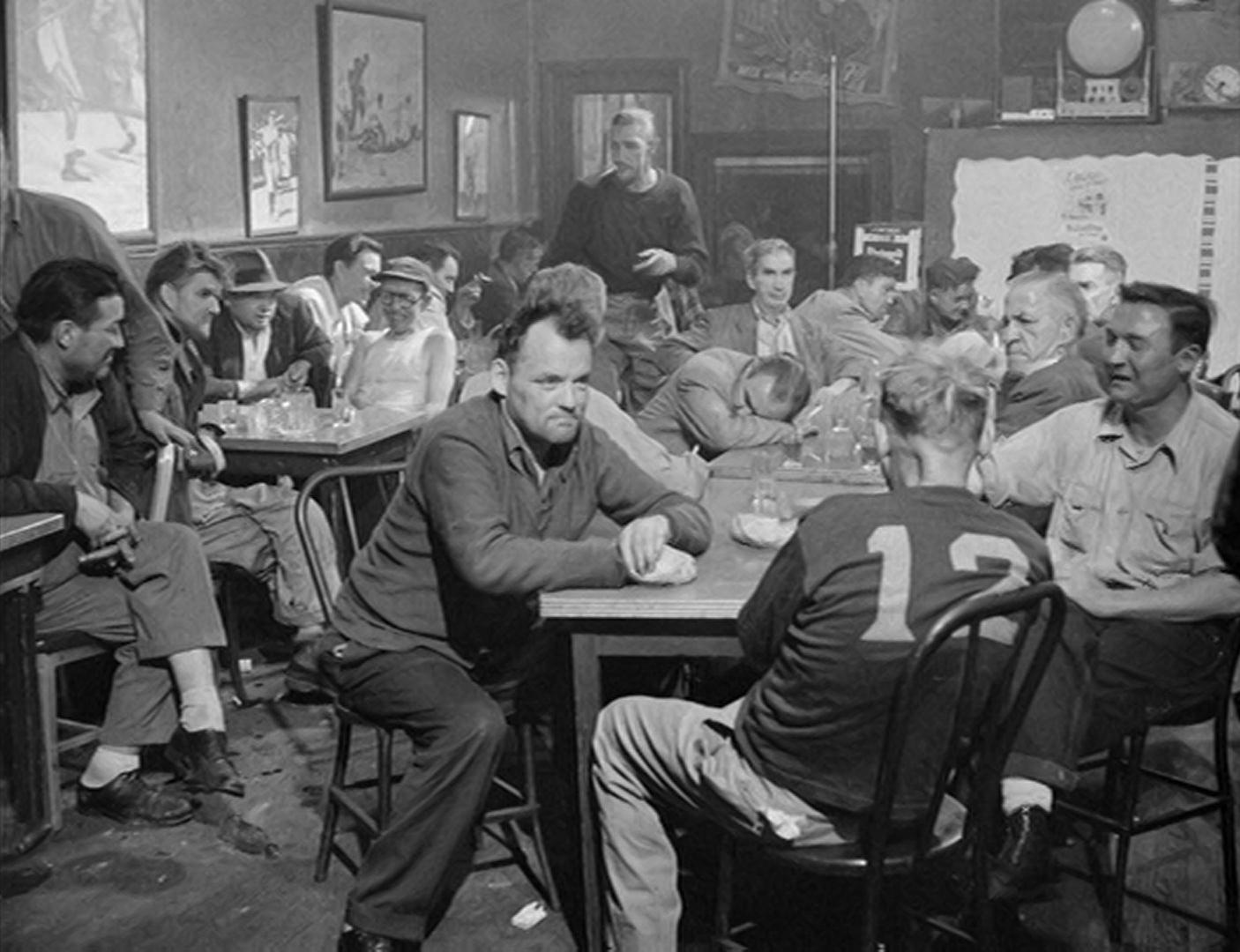
The Plot: Lionel Rogosin blurs the line between reality and fiction in this docudrama about New York’s troubled Bowery, using real residents as his cast of characters. Ray Sayler arrives in the Bowery looking for work, and meets up with longtime resident Gorman Hendricks. Ray becomes even more down on his luck when his suitcase is stolen while he is passed out from drinking, never learning that Gorman sold the suitcase to make extra money. Ray’s time in the Bowery is filled with an endless cycle of drinking, a short supply of employment, and a constant struggle for survival.

Why It Matters: The NFR calls the film an “unrelenting…wrenching portrait”, and quotes Bosley Crowther’s original New York Times review: “a dismal exposition to be charging people money to see.” Is that really the review you want to connect with a film’s entry into a national archive?

But Does It Really?: Once you get used to the “drama” part, “On the Bowery” is an interesting watch. I know very little about the Bowery, and this film was an eye-opener. The “scripted” parts help make the “unscripted” parts palatable, but ultimately knowing that these are real people with real struggles makes it all quite painful to watch. “On the Bowery” is a capsule of a long-forgotten American life, told in a unique, enticing format. A definite yes to the NFR inclusion of “On the Bowery” and filmmaker Lionel Rogosin.

Everybody Gets One: Son of philanthropist Israel Rogosin, Lionel served in the navy during WWII, and afterwards traveled to Eastern Europe, Israel, and Africa. Affected by the plight of the underprivileged, and having no interest in taking over his father’s textile industry, Rogosin taught himself filmmaking, with the goal of creating socially conscious docudramas. Before tackling his dream project about Apartheid in Africa, Rogosin decided to practice by making a film about the nearby Bowery. That story again: a filmmaker’s test movie made it into the NFR.

Wow, That Was Already Dated When the Film Came Out: The el-train tracks that literally overshadowed the Bowery were demolished shortly after filming of “On the Bowery”.

Take a Shot: The Reverend George Bolton actually says “on the Bowery” during his sermon. Did his speech influence the title or vice versa?

Seriously, Oscars?: After struggling to find distribution, “On the Bowery” made its theatrical debut in 1957. Despite its limited release and dour subject matter, the film managed an Oscar nomination for Best Documentary, losing to the more agreeable “Albert Schweitzer” by fellow NFR filmmaker Jerome Hill . “On the Bowery” was, however, the first American film to win the Venice Film Festival Documentary prize.

Other notes

  • Named after the Dutch word for farm (“bouwerij”), Bowery Lane was one of early New York City’s busiest thoroughfares. By the late 1800’s, the neighborhood had become overrun with flophouses, dive bars, and prostitutes. Many a song and short story has been written about the Bowery of the early 20th century, none of them good.
  • Both Ray and Gorman were non-professional actors that Rogosin convinced to star in the film. Surprisingly, both are natural performers. Ray even has your typical leading man look, though maybe that’s just because he’s the only person in this movie that doesn’t look like a catcher’s mitt come to life.
  • I will admit that this movie’s staged aspects are not as jarring as I thought. Clearly these men were given a lot of leeway in terms of their dialogue. Heck, it’s better than most improv performances I’ve been to (low bar, I know).
  • Ray does not want his watch to be sold. Do you have any idea what Christopher Walken went through to get that watch to him?
  • The famous Bowery Mission is featured in one scene, and it sounds like something straight out of “Guys and Dolls”. Where’s Stubby Kaye?
  • Not a lot of women in the Bowery. Is that a fair representation, or did no women feel like participating in the movie?
  • Drinks are only 15 cents, roughly $1.40 today. WHY ARE WE SO BAD AT INFLATION!?
  • I assume once the drinking really gets going the subtitles just say, “[????]”.
  • It was worth reminding myself during this viewing that mental institutions were still commonplace in the ‘50s. When we think of the homeless today, we automatically think of the mentally unstable, but everyone in this film more or less has their wits about them. Of course if I think too long about our abolition of mental institutions and the long-term effects it has had on mental health in the country…oh no I’m getting lightheaded. Where’s the paper bag?
  • Tangentially related to this movie: a “Bowery Boys” movie has yet to make the NFR.

Legacy

  • After completion of “On the Bowery”, Lionel Rogosin felt confident enough to make his dream project: 1960’s anti-apartheid “Come Back, Africa”.
  • Following “Africa”, Rogosin spent most of the ‘60s making socially relevant films and operating the Bleecker Street Cinema, which he transformed into a home for independent filmmakers. By the ‘70s, Rogosin faced increased difficulty finding financial backing for his movies, and sold the Bleecker. He spent the last two decades of his life as a writer in England (Europe appreciated his work far more than America ever did).
  • Tragically, many associated with “Bowery” – including cinematographer Dick Bagley and actors Ray Salyer and Gorman Hendricks – succumbed to alcoholism and passed away within a few years of the film’s completion. Hendricks actually passed a few weeks before the film’s premiere.
  • Many filmmakers have cited “On the Bowery” as an influence, including John Cassavetes and Martin Scorsese. Watching this film, you can definitely see the influence Rogosin had on these two.
  • The Bowery started to clean up in the 1970s as New York City made a concentrated effort to improve its image. As with most other major U.S. cities throughout the ensuing decades, the Bowery has been a victim of gentrification. Lousy hipsters.

#334) Back to the Future (1985)

MV5BZmU0M2Y1OGUtZjIxNi00ZjBkLTg1MjgtOWIyNThiZWIwYjRiXkEyXkFqcGdeQXVyMTQxNzMzNDI@._V1_

#334) Back to the Future (1985)

OR “H.G. Wells’ Oedipus Rex”

Directed by Robert Zemeckis

Written by Zemeckis & Bob Gale

Class of 2007

The Plot: Teenager Marty McFly (Michael J. Fox) is trapped in his hometown of Hill Valley with seemingly no real future. One night in 1985, Marty’s friend – eccentric scientist “Doc” Emmett Brown (Christopher Lloyd) – reveals his latest experiment: a time machine built into a DeLorean. When a terrorist group attacks Doc, Marty escapes in the car and accidentally travels back to 1955. While there, Marty prevents his father George (Crispin Glover) from meeting his mother Lorraine (Lea Thompson), therefore creating a paradox and threatening his own existence. Can he save his parents and himself? And can he and 1955 Doc find a way to send him back to…the time he came from?

Why It Matters: The NFR gives a plot synopsis, praises the “masterfully over-the-top” Christopher Lloyd, and states that the film spawned “a popular soundtrack and two enjoyable sequels”.

But Does It Really?: I watched “Back to the Future” a lot as a kid, and I’m happy to say that despite a few dated aspects here and there, it holds up remarkably well. An airtight script is aided by great performances from Fox and Lloyd, with every department of the production giving A+ work. On top of all this, “Back to the Future” is just pure fun from beginning to end, and manages to be a logical but never overcomplicated sci-fi story. “Back to the Future” is an iconic classic and another no-brainer for the NFR.

Shout Outs: Quick references to “Dr. Strangelove”, “Star Wars” and most notably, “Safety Last!

Everybody Gets One: Robert Zemeckis’ writing partner Bob Gale was inspired to write “Back to the Future” when he found his father’s high school yearbook and wondered if they would have been friends if they were classmates. Michael J. Fox was originally unable to commit to “Future” due to his commitment to the TV series “Family Ties”. After Eric Stoltz was cast as Marty and subsequently let go, Fox was allowed to be in the film, on the condition that his “Family Ties” schedule came first. Fox spent weeks juggling the two projects, averaging about five hours of sleep every night.

Wow, That’s Dated: The film firmly establishes its 1985 setting with video-recorders, a Huey Lewis soundtrack, and oh yes, the DeLorean.

Seriously, Oscars?: The highest-grossing film of 1985, “Back to the Future” received four Oscar nominations, and won for its Sound Editing. Zemeckis & Gale’s screenplay lost to “Witness”, while Huey Lewis’ “The Power of Love” lost to Lionel Ritchie’s “Say You, Say Me” from “White Nights”. “Back to the Future” did not receive a Best Picture nod, no doubt because Universal already had a contender in that category: “Out of Africa”.

Other notes

  • No offense to Eric Stoltz, but only Michael J. Fox could have played Marty McFly. Fox has a fun combination of boy-next-door charm and offbeat acting that helps Marty from being a passive cipher. It’s a perfect match of character and actor.
  • The entire screenplay is a master class of set-up and payoff. Every line and shot is essential to the story and/or the characters. This is aided by the film’s excellent editing. No scene overstays its welcome: just the essential information and onto the next one.
  • Oof, the old age makeup on George, Biff and Lorraine has not held up. These are clearly people in their ‘20s playing middle-aged.
  • This time travel experiment brought to you by JCPenney: You’re looking smarter than ever!
  • Doc and the DeLorean get one of filmdom’s best intros. Christopher Lloyd manages to make Doc eccentric without seeming crazy. In addition, Lloyd and Fox have an easy chemistry together. There’s no logical reason these two should be friends, but they sell it.
  • I wish to take this time to apologize to all Libyans everywhere for how they’re portrayed in this film. Hell, I might as well apologize to the entire Middle East.
  • Wow, there’s so much more cursing is in this movie than I remember. I guess I watched the TV edit more often.
  • And then Lorraine falls for “Calvin Klein” and this movie takes a turn. Lea Thompson’s convincing naiveté as Lorraine smooth over some very rough patches.
  • Not to get all “wibbly wobbly timey wimey” on everyone, but I feel like Doc learning about his time machine 30 years before it happens would have a larger ripple effect on history.
  • The scene I wish existed: the montage of Doc taking Marty ‘50s clothes shopping.
  • Thomas F. Wilson is just perfect as Biff. Like many an ‘80s antagonist before and after, this casting was a blessing and a curse for Wilson.
  • You know it’s coming, but the first kiss between George and Lorraine is very sweet. Bonus points to Alan Silvestri for composing a sweeping underscore for “Earth Angel”.
  • The finale at the clock tower is always an exciting watch. I’ve seen this movie hundreds of times, and I still get anxious at the end.
  • I am willing to forgive the movie’s altered history stuff, but you cannot convince me the McFlys would still be living in the same neighborhood, let alone the same house in the new timeline.
  • Sure Biff is emasculated in the new 1985, but he still runs his own business, so lay off, butthead.
  • “No no no, Marty, you and Jennifer turn out fine. Well, Jennifer looks more like Elisabeth Shue, but still…”

Legacy

  • “Back to the Future” was a runaway hit, and Zemeckis & Gale started on a sequel. Production was delayed so Zemeckis could direct “Who Framed Roger Rabbit”, but “Back to the Future Part II” and “Part III” are both worth the wait, and the trilogy makes for satisfactory binge watching.
  • Several movies on the Registry have inspired a theme park ride, a few have even become video games, but how many films on this list have their own pinball machine? Just this and “Magnificent Ambersons”.
  • The 2015 documentary “Back in Time” is a loving glimpse at the film’s devoted (albeit a bit intense) fanbase.
  • To be honest, I could never get into “Rick and Morty”. You’d think its sense of humor would mesh with mine, yet here we are.
  • The film’s more problematic aspects are wonderfully articulated in this hilarious John Mulaney bit.
  • This is the only chance I’ll get to mention Crispin Glover’s weird Letterman interview.
  • And of course, “Back to the Future Part IV”…is a thing that should never happen. There, I said what we were all thinking.

Further Viewing: Wanna ask Thomas F. Wilson about “Back to the Future”? Chances are he’s already covered it in “The Question Song”!

Listen to This: The Penguins’ original version of “Earth Angel (Will You Be Mine)” was added to the National Recording Registry in 2004. The song’s “Back to the Future” connection gets a mention in this essay by Library of Congress staple Cary O’Dell.