#333) Daughter of Shanghai (1937)

038126133732f512ac6320d1a6c48a7c

#333) Daughter of Shanghai (1937)

OR “Slaying the Dragon Lady”

Directed by Robert Florey

Written by Gladys Unger and Garnett Weston. Based on a story by Weston.

Class of 2006

A rare case of a movie with no clips on YouTube, but here’s a tribute to Anna May Wong.

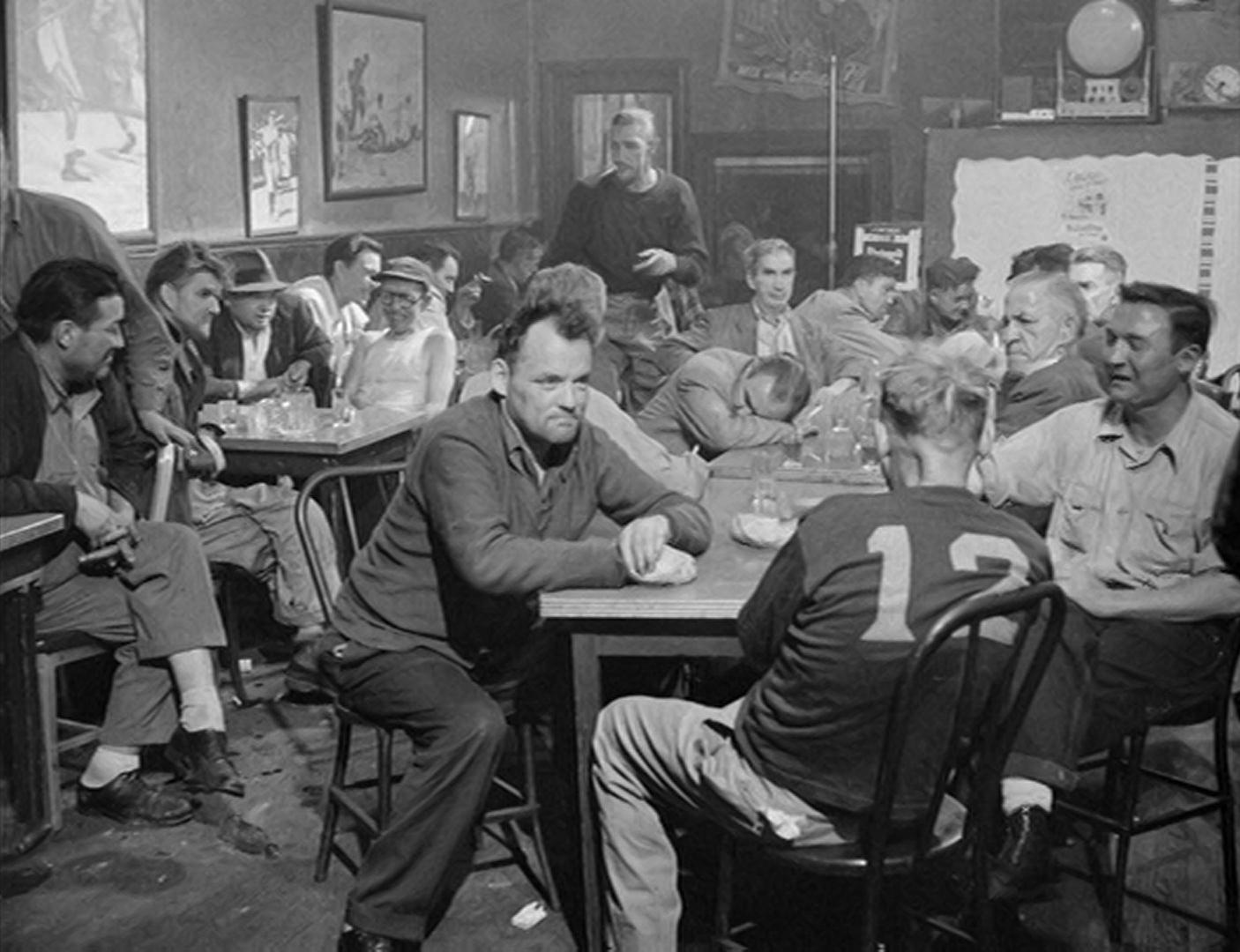
The Plot: Lan Ying Lin (Anna May Wong) is determined to find the men who murdered her father (Ching Whah Lee), a successful San Francisco businessman who refused to aid an illegal immigrant smuggling racket. One of her father’s clients, Mrs. Hunt (Cecil Cunningham), introduces Lan Ying to Kim Lee (Philip Ahn), the government agent assigned to crack down on the smuggling. Lan Ying travels to Port O’Juan and poses as a dancer to infiltrate the dive bar run by Otto Hartman (Charles Bickford), the man she believes is running the racket. But there are more surprises along the way in this remarkably stereotype-free mystery.

Why It Matters: The NFR calls the film “an intriguing, taut thriller” and “more truly [Anna May] Wong’s personal vehicle than any of her other films.” There’s also an essay by Library of Congress archivist Brian Taves.

But Does It Really?: I went into “Daughter of Shanghai” fearing 62 minutes of cringe-worthy stereotypes, and was pleasantly surprised when it wasn’t. Sure, it’s a run-of-the-mill B picture with its share of clichés and budget limitations, but the film stars two Asian Americans that are treated as, ya know, people. Thanks to Anna May Wong’s concentrated effort on expanding the roles Asian Americans can play in film, I can judge “Daughter of Shanghai” on its content rather than its antiquated racial issues. “Daughter of Shanghai” is the kind of film I’m looking for on this list: an underrated, largely forgotten film that was vastly ahead of its time. Yes, it’s on the list for what it represents more than for what it is, but its characterizations are refreshingly progressive, so no argument here for NFR inclusion.

Wow, That’s Dated: Mainly just ‘30s things like candlestick phones, taxi cabs, and printed newspapers. I am delighted I didn’t have to bring up coolies or the “Oriental riff” in relation to this film.

Take a Shot: Lan Ying Lin is introduced as “Daughter of Shanghai” before she performs at Hartman’s club. It makes no sense for the film or the character, but it does make a great title.

Seriously, Oscars?: “Daughter of Shanghai” received mixed critical response and tepid audience reactions, and quickly disappeared. Seeing as how the Oscars were still two years away from giving Hattie McDaniel an award in a prestigious studio picture, they were not going to nominate an Asian American for a B-Picture. Heck, “Daughter of Shanghai” didn’t even make the late show TV circuit.

Other notes

  • Anna May Wong was already an established Hollywood star by 1937, though she was still reduced to playing supporting roles and “Dragon Lady” stereotypes. After not being offered the lead role of O-Lan in “The Good Earth” (a role that went to white actor Luise Rainer), Wong traveled to China to visit family, and ended up staying for a year, absorbing the culture. Still under contract with Paramount, she returned to Hollywood, on the condition that her remaining films feature positive portrayals of Chinese-Americans.
  • Anthony Quinn and Buster Crabbe play the two thugs at the beginning. Quinn was just starting out in the movies, and Crabbe was fresh off his success as Flash Gordon.
  • Once I realized the film was going to treat Lan Ying and Kim Lee respectfully, I started to relax and enjoy myself. Wong is giving a nicely restrained performance, especially compared to some of the overacting happening around her. Side note: Wong was born and raised in Los Angeles, but got vocal coaching at Cambridge while in Europe during the early ‘30s, hence her slightly-British, more enunciated cadence.
  • Lan Ying’s dad isn’t a stereotype either! This is amazing! Though I’m pretty sure all of Ching Whah Lee’s dialogue is dubbed.
  • I get the feeling Cecil Cunningham would have been a great foil for the Marx Brothers or the Three Stooges.
  • For the record, Philip Ahn is Korean, not Chinese. But hey, he’s the co-lead in a 1937 B-picture; baby steps everyone.
  • There are a handful of scenes in which Lan Ying, Kim Lee and others briefly speak Chinese. There are no subtitles, so that’s a bonus element for anyone who speaks Chinese, though I’m pretty sure the dialogue translates to “White people don’t know that I’m lying.
  • The film’s B-picture budget is on full display with the model work. The sequence of the helicopter landing in the water was obviously filmed in a tank at the Paramount backlot.
  • It’s not that the film gets worse during the third act; it’s just that Lan Ying becomes a very passive character all of a sudden. Hell, one shot is literally just Lan Ying standing there watching the male characters fight it out. I did not come this far in this movie for Kelly the chauffeur/Irish stereotype to end up being the hero.
  • Ugh, I was willing to forgive this movie’s third act, but it tripped at the finish line. The movie clips along with no romantic subplot between Lan Ying and Kim Lee, and then they discuss getting married right at the end. So close. But then again, not too many “how we met” stories involve dangling from a helicopter. Take that, Bob Saget voiceover!

Legacy

  • Anna May Wong continued to make films that put Chinese-Americans in a positive light, though she spent most of World War II aiding the Chinese war effort, and her screen appearances diminished. After the war Wong never regained her status as film star, but did find success on radio and television, including the first series to star an Asian-American: “The Gallery of Madame Liu-Tsong”. Unfortunately no prints of the 10 produced episodes survive.
  • Wong was set to appear in the film version of “Flower Drum Song” but had to withdraw due to health issues. She died of a heart attack in 1961 at the age of 56.
  • Anna May Wong’s work started being reappraised in 2005 (what would have been her 100th birthday). She has been celebrated in retrospectives, film festivals, at least three biographies, and the documentary “Anna May Wong, Frosted Yellow Willows: Her Life, Times and Legend”.

Listen to This: The Class of 2018

15edba674c

The Vernal Equinox: Spring has sprung, allergy season has officially started, and the National Recording Registry has picked its 2018 inductees. Links for each entry are embedded in the text when available. Don’t have time to listen to all of these recordings? The NRR has provided this handy video as well!

And just for the hell of it, here’s “I’m Just a Bill”, now considered by the National Recording Registry just as significant as Orson Welles’ “War of the Worlds” broadcast or Booker T. Washington’s Atlanta compromise speech.

#332) San Francisco Earthquake & Fire, April 18th 1906 (1906)

1906-earthquake

#332) San Francisco Earthquake & Fire, April 18th 1906 (1906)

Class of 2005

Today’s Oversimplified History Lesson: the 1906 San Francisco Earthquake. There’s a lot of information out there about the earthquake, so please educate yourself beyond this post. Easily the most fun way to research this: the earthquake simulation room at a San Francisco science museum whose name escapes me.

At 5:12 am on April 18th, 1906, a 7.9 magnitude earthquake hit just offshore of San Francisco. The initial destruction to most of the city’s buildings was exacerbated by the ensuing fires, which lasted the next four days. When everything finally settled, over $400 million dollars of damages had accumulated, and 80% of San Francisco’s buildings were completely destroyed. While accounts vary, the death toll is in the wide estimated range of between 700 and 3000 people, making it one of the most fatal earthquakes in world history.

While no footage exists of the actual event, this film depicts its aftermath. In 14 minutes, silent footage captures the ruins of downtown San Francisco, the immediate motions to feed and house the survivors, and the transportation of thousands of citizens by ferry to Oakland. The actual scenes might be played up a bit for the cameras, but the footage is nevertheless welcome in the National Film Registry for its historical significance.

Why It Matters: The NFR gives an overview, theorizes that some shots were “almost certainly staged”, and states that the intertitles “overdramatized and sentimentalized” the events.

Somebody Gets One: This is one of the rare NFR entries with no surviving record of who actually made it. And that’s why you always put your name on your things!

Wow, That’s Dated: Intertitles refer to “Man’s faithful friend the horse” and “odd looking automobiles”, plus…oh God, they actually say “Chinamen”.

Other notes

  • As a longtime resident of San Francisco, I realized that I’ve never really looked into this earthquake (I had just moved here during the centennial in 2006). It is a sobering experience watching streets I have travelled down many times completely covered in rubble and debris.
  • The more research I do about the 1906 earthquake, the more I have to confront this town’s longtime prejudice towards Chinatown and its inhabitants. The reason no one knows the earthquake’s actual death toll is because no one bothered to document Chinatown’s damage. Even worse, several city officials tried to use the earthquake as an excuse to get rid of Chinatown entirely.
  • Exhibit A that some of these shots were staged: several of the evacuees wave to the camera as they pass by.
  • What a dark companion piece this film must make with the other early 1900s San Francisco NFR entry: “A Trip Down Market Street”, filmed just four days before the earthquake.

Legacy

  • Many accounts of the day categorize San Francisco’s mood post-earthquake not as “devastated”, but rather “determined to rebuild” (though part of this was a business strategy to prevent companies from leaving). The cityscape of San Francisco as we know it today was created in the immediate aftermath of the earthquake. Reconstruction was more-or-less completed in time for the 1915 Panama-Pacific International Exposition, which celebrated the city’s literal rise from the ashes.
  • Perhaps the largest influence the earthquake had on San Francisco: many of the city’s major trade businesses moved to Los Angeles, causing L.A. to usurp San Francisco’s title as the largest city in California. L.A. holds that distinction to this day.
  • It should go without saying that San Francisco got really into earthquake awareness after 1906. When the Loma Prieta earthquake hit in 1989, while the structural damage was still massive, the death toll went down significantly (63, compared to 1906’s 700+). Part of that was the earthquake proofing that happened in the previous 80 years, and part of that was everyone staying home to watch the World Series (played by two Bay Area teams: the San Francisco Giants and the Oakland A’s).
  • Thousands attended the earthquake’s centennial commemoration in 2006, including 11 of the original survivors. The footage below was captured by the only friend of mine crazy enough to be in downtown San Francisco at 5am on a Tuesday.

Video courtesy of Heather Orth. Thanks, Heather!

Further Viewing: I can’t remember the name of it, but there’s a movie set in San Francisco that recreates the San Francisco earthquake. And it has a song called “San Francisco”, which later became the official song of San Francisco. What was it called? Oh man, this is gonna drive me nuts.

Listen to This: The City by the Bay’s other official song: “I Left My Heart in San Francisco”, as immortalized by Tony Bennett, and inducted into the National Recording Registry in 2018. I’m not crying, you’re crying.

#331) Eraserhead (1977)

Eraserhead

#331) Eraserhead (1977)

OR “David Lynch’s Adventures in Babysitting”

Directed & Written by David Lynch

Class of 2004

The Plot: Henry Spencer (Jack Nance) learns that his girlfriend Mary (Charlotte Stewart) has given birth to their child. At the insistence of Mary’s mother (Jeanne Bates), Henry and Mary wed, and raise the child together. Mary, however, cannot take the stress of motherhood, and abandons Henry and the baby. Sure, this all sounds like a straightforward, “Kramer vs. Kramer”-esque family drama, but it’s David Lynch, so it contains visual storytelling and imagery both offbeat and creepy as hell.

Why It Matters: The NFR calls the film “visually stunning” and praises Lynch’s “unique, surrealistic style” as well as his cult status for those “craving unorthodox filmmaking.” There’s also an essay by film critic/cult movie enthusiast David Sterritt.

But Does It Really?: Well that was the most disturbing 90 minutes of my life. Even writing about “Eraserhead” after the fact makes me a bit squeamish. Despite its occasional repellence, Lynch achieves what all the great filmmakers should; he tells a story visually and leaves a majority of it up to your interpretation. “Eraserhead” is a movie whose visuals linger in your brain long after it’s over. I’m in no rush to see this movie again, but David Lynch should definitely be on the NFR, and “Eraserhead” is a natural choice.

Everybody Gets One: David Lynch originally planned on being a painter, but his time at Boston’s School of the Museum of Fine Arts left him uninspired. At the Pennsylvania Academy of Fine Arts, a plan to turn one of his paintings into an animated short fell through, but that was enough to convince Lynch to become a filmmaker. He successfully got funding for “Eraserhead” through a grant from the American Film Institute, who thought that his 20 page script would result in a 20 minute movie. This lapse in communication led to the film’s extensive production troubles.

Seriously, Oscars?: What I would not give for “Eraserhead” to have been nominated alongside the likes of “Annie Hall” and “The Turning Point”. Mainstream America still isn’t ready for that. Although some of Lynch’s later films became Oscar nominees, none of his movies have ever won, nor has the man himself**.

Other notes

  • Lynch was inspired to write “Eraserhead” following the birth of his daughter Jennifer, who needed corrective surgery for her clubfoot. “Eraserhead” is, among other things, an expression of David Lynch’s parenting fears. Nothing strengthens the bond between father and daughter like a movie that says, “Your birth terrified me!”
  • Production was delayed several times due to lack of funds, with everyone taking on side-jobs and other projects to help pay for “Eraserhead”. Filming continued on and off from 1971 to 1976. Jack Nance stayed with the film for its entire shoot, and even maintained Henry’s iconic hairstyle the entire time.
  • Oh boy, hunker down: this opening is already quite unsettling. And what the hell is that thing? Sea monkey? Uncooked sausage? Oh…never mind, I figured it out.
  • The Man in the Planet seen throughout the film is played by Lynch’s longtime friend Jack Fisk. Fisk helped with funding when he could, as did his wife, Sissy Spacek. This movie was possibly financed by “Carrie” money.
  • Did David Lynch base Henry’s hair off of his own? And is it weird that it’s giving me “Beakman’s World” flashbacks?
  • I just want to know how David Lynch pitched any movie before anyone knew what a “David Lynch movie” was.
  • I’m not a vegetarian, but this man-made chicken scene is definitely making me reconsider.
  • Shoutout to sound designer Alan Splet. Part of this film’s consistently off-putting mood is its consistently off-putting white noise soundtrack.
  • Not only does David Lynch refuse to discuss his interpretation of “Eraserhead”, he won’t even acknowledge how the baby was created, cryptically saying it was either “born nearby” or “found”. Regardless, I am equal parts fascinated and disgusted by “Spike”, as it was named by the crew.
  • And then we get to the Lady in the Radiator. Given the bizarreness of everything we’ve already seen in this film, Lynch steps it up for the dream sequences. Side note: Is she storing nuts for the winter?
  • What do you suppose David Lynch’s dreams are like? I hope he dreams about really mundane things like yard work or data entry.
  • “Eraserhead” has broken the record for most times I’ve uttered my “weirded-out noises” during a movie. I believe “It” was the previous record-holder.
  • And now a little bit of stop-motion! Very Tim Burton-esque. Though I guess Tim Burton is actually very David Lynch-esque.
  • If you want to know where the title comes from, have I got a scene for you. The Eraserhead dream sequence raises a question I often pose: when someone’s decapitated in a movie, is that actor allowed to keep their own severed head?
  • Despite how weird and unsettling viewing this movie is today, it can only pale in comparison to watching this film in 1977, without the foreknowledge of Lynch’s filmography and aesthetics.
  • I’m no parent, but I think there’s more to parenting than just ignoring your child and hoping they’ll stop crying. I think physical contact/affection is involved at some point.
  • The less said about that ending, the better. I was disturbed throughout the entire film, but that’s not necessarily a bad thing. Dare I say it was what Lynch was going for?

Legacy

  • “Eraserhead” premiered at the L.A. Filmex festival to low attendance, but the film’s distribution company successfully lobbied to get the film a midnight screening at L.A.’s Cinema Village. Gradually, “Eraserhead” became a cult midnight movie, leading to similar screenings in New York, San Francisco, and eventually Europe.
  • “Eraserhead” developed a cult following not only among filmgoers, but filmmakers as well. Among its early devotees was Stanley Kubrick, who used the film as inspiration for the mood and tone of  “The Shining”.
  • After watching this film, I completely understand how David Lynch’s next project ended up being “The Elephant Man”. It’s “Eraserhead” with a budget.
  • Lynch has been steadily working for the last 40 years, either in film or whatever other media he chooses to creep me out in. Highlights include “Dune”, “Blue Velvet”, “Twin Peaks”, and “Mulholland Drive”.
  • Jack Nance would continue to be a staple of David Lynch’s work up until his death in 1996.
  • It is okay to mention Lynch’s guest appearance on “Louie”? He’s really good in it.

** 2019 Update: FINALLY!

#330) The Chechahcos (1923)

MV5BNDhhNGNkNDAtYTBiMy00ZmU5LTgyYjgtMWZlOTM1YzRmYTdjXkEyXkFqcGdeQXVyNTEyODQ1NjM@._V1_SY1000_CR0,0,1200,1000_AL_

#330) The Chechahcos (1923)

OR “Fear and Loathing in Los Anchorage”

Directed & Written by Lewis H. Moomaw

Class of 2003

The Plot: A ship headed towards the Klondike Gold Rush of the late 1890s catches on fire and all onboard must abandon ship. Passenger Margaret Stanlaw (Eva Gordon) loses her young daughter Ruth (Baby Margie) in the ensuing panic, and is informed by shady gambler Richard Steele (Alexis B. Luce) that she did not survive. In actuality, Ruth is saved by prospective prospectors “Horseshoe” Riley and Bob Dexter (William Dills and Albert Van Altwerp). This new makeshift family arrives in Anchorage and almost immediately strikes gold. 15 years later Ruth is now a young adult (Gladys Johnson), who is having an inexplicable attraction to Dexter, the man who helped raise her and is essentially her father. When Margaret and Richard come into town to run the local saloon, secrets will be revealed, pasts will be confronted, and the Alaskan terrain will be filmed for the first time.

Why It Matters: The NFR references the film’s main bullet point as “[t]he first feature film produced in Alaska” and highlights the “spectacular location footage of the lonely and unfathomable Alaskan wilderness”. There’s also an essay by Anchorage film historian Chris Beheim.

But Does It Really?: Its Alaskan production claim might be this film’s sole reason for making the NFR (that, and it’s a silent movie that was presumed lost). “The Chechahcos” is certainly a step above a lot of the other silent films I’ve endured on this list, but it just didn’t grab me the way I wanted it to. I will admit, however, that the version of “The Chechahcos” I watched was without a score, and while I tried to listen to appropriate music during my screening, I definitely didn’t watch this film as completely intended. The film includes a few genuinely exciting moments and, as the NFR points out, beautiful shots of the tundra, but overall it’s the film’s novelty rather than its artistic merits that has given “The Chechahcos” noteworthy value. I can give this a very slight pass for NFR induction, but perhaps a second screening with an accompanying score would change my mind.

Everybody Gets One: Portland-based film producer George Edward Lewis joined forces with prominent Alaska entrepreneur Austin Lathrop in 1922 to found the Alaska Moving Pictures Corporation and produce the first film shot entirely in Alaska (Hollywood usually travelled only as far as Northern California to film sequences set in Alaska). Director/writer Lewis H. Moomaw was George Edward Lewis’ business partner at American Lifeograph. With the exception of Eva Gordon, the principle cast members were all stage actors with little or no film experience.

Wow, That’s Dated: There’s only one Inuit in the entire film and she’s played by a white woman. Oy.

Take a Shot: As mentioned at the beginning of the film, “cheechakos” (pronounced “chee-chaw-kos”) is a Chinook word that literally translates to “tenderfoot”, and is used to describe a newcomer to the territory.

Other notes

  • Full disclosure: there is not a lot of information out there about “The Chechahcos” or its creators. My knowledge of the film’s production comes primarily from the aforementioned Beheim essay. Thanks to some extensive research, Beheim knows more about “The Chechahcos” than the people who actually made it.
  • Among the essay’s highlights: the citizens of Anchorage eagerly anticipated production of “The Chechahcos”, even greeting the cast and crew upon their arrival. Filming in Alaska took place over the course of three months and hundreds of miles of locations. The bulk of it was filmed in the summer of 1923, and fake snow was used for a few sequences.
  • …And that’s pretty much all I have to say about this movie. Again, there are some beautiful visuals of Alaska throughout, but as a whole the film just sat there for me. Perhaps those of you with more knowledge and appreciation for Alaska (and/or not-incestuous-but-morally-unethical relationships) will get more out of “The Chechahcos” than I did.

Legacy

  • Associated Exhibitors purchased “The Chechahcos”, changed the title’s spelling from its original “The Cheechakos” for unknown reasons, and launched one of their largest advertising campaigns in anticipation of the surefire hit they had on their hands. After a successful premiere in Anchorage in December 1923, “The Chechahcos” played New York, where it was met with favorable reviews, but the audience never showed up. The film lost money and was the only production from the Alaska Moving Pictures Corporation.
  • After its premiere engagement, “The Chechahcos” more or less disappeared until being rediscovered by the University of Alaska in 2000. The film was restored with support from the National Film Preservation Foundation, and wouldn’t you know it, they added the film to their National Film Registry three years later. What are the odds?
  • While the actual film of “The Chechahcos” was found and restored, the original score remains lost. A new score was composed by Eric Beheim to commemorate Anchorage’s centennial in 2015. And Eric’s brother Chris Beheim just happened to mention this new score in his essay. Again, what a small world it is.
  • I can’t prove that this film inspired Charlie Chaplin’s “The Gold Rush” (which started production a year after the premiere of “The Chechachcos”), but I can’t not prove it either.
  • I will also label this film the forefather to the “tough guys with cute kids” sub-genre of movies, which would eventually be perfected with “Kindergarten Cop”.