#145) Nothing But a Man (1964)

Nothing_But_a_Man_theatrical_release_poster

#145) Nothing But a Man (1964)

OR “Can’t Get Enough of That Wonderful Duff”

Directed by Michael Roemer

Written by Roemer and Robert M. Young

Class of 1993

No original theatrical trailer, but here’s a modern one by the British Film Institute.

The Plot: Set in and around Birmingham, Alabama during the Civil Rights movement, “Nothing But a Man” is the story of two African-Americans who fall in love. Railroad section hand Duff (Ivan Dixon) is uncompromising in his dislike for the racist treatment he and his race have received, while schoolteacher Josie (Abbey Lincoln) wishes to coexist with the town’s white population as is, following the example of her preacher father (Stanley Green). Both Duff and Josie’s morals are challenged by the ongoing racial tension, Duff’s inability to find steady work, and his strained relationship with his alcoholic father Will (Julius Harris).

Why It Matters: The NFR praises the film’s soundtrack and “naturalistic almost documentary visual style”.

But Does It Really?: “Nothing But a Man” is the kind of film the National Film Registry is all about. Sure, it’s for the classics, but it’s also for films that captured their time perfectly and need to be remembered. “Nothing But a Man” shows the complexity of the African-American life of the early ‘60s without making it preachy or sentimental. This film is grounded by its neorealism, as well as some excellent chemistry between Ivan Dixon and Abbey Lincoln. Celebrated by critics and scholars in more recent years, “Nothing But a Man” has never gotten its fair share of praise, and its inclusion on the NFR is a chance for future generations to discover this wonderful film.

Everybody Gets One: Director Michael Roemer based this film partly on his experience as a child surviving the rise of Nazis in his native Berlin. He felt the persecution towards him and his Jewish family paralleled the persecution of African-Americans in the south. Abbey Lincoln was a jazz singer with several hit albums under her belt by the time she made “Nothing But a Man”. Her brief appearance in the 1956 film “The Girl Can’t Help It” inspired her to launch an acting career.

Wow, That’s Dated: Gas is 27 cents a gallon! And keep an ear out for a song by “Little” Stevie Wonder.

Take a Shot: No one says the title, but the real drinking game is every time a white character calls Duff “boy” and/or every time Duff calls Josie “baby”.

Seriously, Oscars?: Due to its very limited release (I don’t think it ever played Los Angeles), “Nothing But a Man” received zero Oscar nominations. It didn’t start getting acclaim until it was rereleased with a restored print in 1993 (the same year it made the NFR list).

Other notes

  • The DVD of this film comes with a reprint of an all-encompassing essay by Jim Davidson from a 1998 issue of Common Quest. If you want to know anything about the making of this film, track this article down. I also recommend this essay by Judith E. Smith. You’ll learn more here than on the IMDb trivia page, that’s for sure.
  • Yes, this movie was directed by a white man, but Michael Roemer has stated that he only did it because he felt no one else was telling this story. In the years since, he has said that enough films by/about African-Americans have been made that white people should no longer direct them.
  • If nothing else, this film has a great soundtrack
  • Duff, never call a woman “ma’am”. Especially if you’re trying to get with her.
  • A morally complex man trying to date a repressed relative of the town preacher…oh my god, it’s a remake of “Hell’s Hinges”!
  • When a group of clean-cut white men show up, it can only be trouble. And I’m not talking about the movies, I mean in real life.
  • I understand this was made on a shoe-string budget, but there are several out-of-focus shots throughout the film. Cinematographer (and co-writer) Robert Young should have stuck to his old job of family physician.
  • I’m glad that “Nothing But a Man” is pro-vaccination.
  • That’s Gloria Foster as Will’s wife Lee. If you know her only as the Oracle from “The Matrix”, you owe it to yourself to look up her other work.
  • (Love Is Like A) Heat Wave” doesn’t strike me as a slow-dance kinda song.
  • Blink and you’ll miss Esther Rolle (aka Florida from “Good Times”) as one of the churchgoers in the wedding scene.
  • Be on the lookout for not one, but two driving shots in the movie where someone on the street waves at the camera.
  • “Stop being so damned understanding!” Now that’s a line you don’t hear in most movies.
  • Along those lines, I appreciate that this film never pits Duff and Josie against each other. They fight and argue sometimes, but through it all you can see that they love each other.
  • The guy with the broken car was the winner of the 1964 Truman Capote lookalike contest.
  • We learn towards the end that Will is 48, and that is a rough 48. To add to the confusion, Julius Harris was 40 during filming, while his on-screen son Ivan Dixon was 32.

Legacy

  • Ivan Dixon continued acting, most famously on “Hogan’s Heroes” for five seasons. Dixon would go on to direct films and episodic television, including fellow NFR entry “The Spook Who Sat by the Door”.
  • Abbey Lincoln would continue her singing career well into the early 2000s. Her acting career never took off, but she did manage to snag a Golden Globe nomination for playing the titular maid in “For Love of Ivy”.
  • When Michael Roemer’s follow-up film “The Plot Against Harry” couldn’t find distribution, his directing career all but ended. It was only after he converted his film to video for his children that they started getting recognition.

#144) Big Business (1929)

e924c3a18fe1903be036fd0ae614e2f0

#144) Big Business (1929)

OR “Holly Jolly Stan & Ollie”

Directed by James W. Horne

Written by Leo McCarey. Titles by H.M. Walker.

Class of 1992

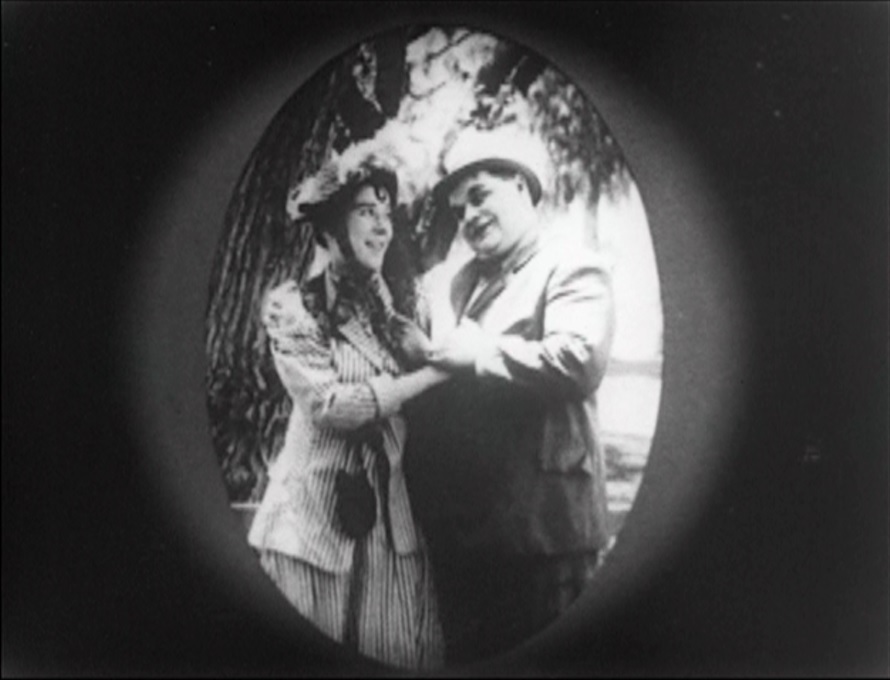
The Plot: Stan Laurel & Oliver Hardy are two door-to-door Christmas tree salesmen (like you do), trying and failing to peddle their wares in Southern California. A heated exchange with one particularly unenthusiastic homeowner (James Finlayson) leads to an all-out war on the man’s front yard.

Why It Matters: The NFR calls Laurel & Hardy “the perfect team for the transition from silent film comedy to sound.” An essay by Laurel & Hardy expert Randy Skretvedt calls “Big Business” the team’s best silent film.

But Does It Really?: I laughed a lot, but I feel the same way about this as I did about W.C. Fields’ silent NFR entry “So’s Your Old Man”: Laurel & Hardy without sound is only half a film. It’s all very entertaining, but I don’t know if it absolutely needs to be preserved. And how this made the NFR list before their more iconic films “The Music Box” and “Sons of the Desert” is quite puzzling.

Everybody Gets One: James Finlayson appeared in 33 films with Laurel & Hardy, always as their adversary. He gets an extended biography in the aforementioned Skretvedt essay. Like so many before and after him, Jim was a Scottish tinsmith who caught the acting bug. P.S.: The moustache was fake.

Take a Shot: Stan says “big business” once (via title card) about six minutes in.

Seriously, Oscars?: The only reason “Big Business” didn’t win Best Live Action Short was because the category didn’t exist yet. It would first appear in 1932, the winner being L&H’s “The Music Box”.

Other notes

  • The supervising director (and uncredited screenwriter) for “Big Business” is Leo McCarey, while the cinematographer is George Stevens. Both men would go on to become acclaimed directors in their own right, both winning the Best Director Oscar twice. Between the two of them, McCarey and Stevens directed 15 films that have appeared on the National Film Registry. Hal Roach knew how to pick ‘em.
  • Note to self: Start answering door with hammer.
  • Watch closely: Stan calls Ollie “Babe” in one take. Babe was Oliver Hardy’s real-life nickname.
  • Does anyone in this crowd want to do literally anything to help?
  • The inside of the man’s house seems to consist solely of vases.
  • The boys are hilarious throughout this short, but I miss hearing them speak.

Legacy

  • It doesn’t happen in this film, but Laurel & Hardy foil James Finlayson would go on to exclaim “d’oh” in their sound films, inspiring Dan Castellaneta to make that annoyed grunt Homer Simpson’s trademark.

The Horse’s Head: Class of 2017

national-film-registry

And my personal Mt. Everest just got a bit taller.

Here are (in chronological order) the 25 films selected for the National Film Registry in 2017. Films noted with an asterisk are films that I submitted on my nomination ballot.

  • Interior New York Subway, 14th Street to 42nd Street (1905)
  • The Sinking of the Lusitania (1918)
  • Fuentes Family Home Movies Collection (1920s-1930s)
  • He Who Gets Slapped (1924)
  • With the Abraham Lincoln Brigade in Spain (1937-1938)
  • Only Angels Have Wings (1939)
  • Dumbo (1941)
  • Gentleman’s Agreement (1947)
  • Ace in the Hole (1951)
  • Spartacus (1960)*
  • Guess Who’s Coming to Dinner (1967)*
  • Wanda (1971)
  • Lives of Performers (1972)
  • Time and Dreams (1976)
  • Superman (1978)
  • Boulevard Nights (1979)
  • The Goonies (1985)
  • La Bamba (1987)
  • Die Hard (1988)*
  • Thelonious Monk: Straight, No Chaser (1988)
  • Field of Dreams (1989)
  • To Sleep with Anger (1990)
  • 4 Little Girls (1997)
  • Titanic (1997)*
  • Memento (2000)

These 25 films have been added to my official rotation, the first write-up will appear on this blog in February 2018.

In addition, the Library of Congress’ YouTube channel has added a selection of films from the Registry. Check it out, I know I will.

#143) David Holzman’s Diary (1967)

david

#143) David Holzman’s Diary (1967)

OR “Confessions of a Film Junkie”

Directed & Written by Jim McBride

Class of 1991

The Plot: David Holzman (L.M. Kit Carson) is a young filmmaker who decides to record his daily life in order to better observe/learn about himself. This leads to some pretty awkward interactions with friends and strangers alike, most disastrously with his model girlfriend Penny (Eileen Dietz). The result is a docudrama that blurs the line between fiction and reality.

Why It Matters: The NFR says the film “captures the essence of the filmmaker as artist while skewering it with its own devices”. They also say that “David Holzman’s Diary” led the way for “This is Spinal Tap”, “Waiting for Guffman”, and other mockumentaries. I…don’t think so.

But Does It Really?: It’s not the forefather to modern mockumentary, but “David Holzman’s Diary” definitely pushes the limits of docufiction. Carson gives such a natural performance I started to wonder if this was an actual documentary. The film definitely has its uncomfortably voyeuristic moments, but that may be the filmmakers making a statement about these kind of films (at least I’m hoping that’s what they were aiming for). I give “David Holzman’s Diary” a pass for its inventiveness, its introduction to Jim McBride, and its unique view of late ‘60s Upper West Side living.

Shout Outs: David mentions “The Life of Emile Zola” and “Singin’ in the Rain” during his narration. There’s also a “Touch of Evil” poster in his apartment.

Everybody Gets One: Pretty much everyone. There isn’t a lot of information about Jim McBride or L.M. Kit Carson prior to 1967, other than they were classmates at New York University together.

Wow, That’s Dated: Obviously the entire filming process. Today this would be filmed on a phone and uploaded to YouTube where it belongs!

Seriously, Oscars?: No Oscars, but it did win Grand Prize at the 1967 Mannheim-Heidelberg International Festival. So that’s cool.

Other notes

  • The song playing during the opening montage of David filming along the street is “Green Onions” by Booker T. and the M.G.s. Not super important, I’ve just never known what that song was called.
  • That camera weighs 18 pounds!? Someone please invent the camcorder.
  • Is it healthy for a man to have that many photos of his girlfriend on the wall?
  • Penny is uncomfortable being on camera because she’s “not dressed”. No one tell her that we’ve already seen her full-frontal photo shoot.
  • Pepe’s run about how fake this film is goes on for a while. At one point he asks where he should put his hands. Common concern.
  • David’s monologue while he’s filming a sleeping Penny makes him sound like that creepy guy from “American Beauty”. No, not that one.
  • I’m pretty sure David’s phone calls to Penny are the reason we have Caller ID now.
  • Ugh, Truffaut name-dropping. Like I already don’t hate you enough, David.
  • Sandra, where have you been all my life?
  • Very disappointed the internet doesn’t know which episode of the original “Star Trek” series David watches on TV. Come on, Trekkies!
  • And now a seemingly never-ending parade of old people on park benches! I kept expecting David to do a Tom Servo run.
  • Holzman’s filming strategy: Film until someone says to stop.
  • Answering services. What a horribly awkward job.
  • Any debates I had about the authenticity of this film were laid to rest when Max showed up. Bob Lesser is not much of an actor.
  • Shout-out to Margaret Rutherford.
  • David thinks about trains going into tunnels while he’s masturbating? He watches too many movies.
  • When will couples learn not to start making out in front of an open window?
  • But how did he get the film back?

Legacy

  • Vlogs. I’m blaming this film for vlogs.
  • Jim McBride would continue making docudramas for the next decade before shifting to more conventional fare. His most notable films were his two with Dennis Quaid: “The Big Easy” and “Great Balls of Fire!”
  • A reminder that Jim McBride also directed the made-for-TV movie “Meat Loaf: To Hell and Back”.
  • M. Kit Carson would continue to act and produce, but his most successful film venture was as screenwriter for indie darling “Paris, Texas”.
  • Eileen Dietz is still going strong, though her main claim to film immortality is her brief performance as the demon Pazuzu in “The Exorcist”.