#730) Annabelle Serpentine Dance (1895)

#730) Annabelle Serpentine Dance (1895)

OR “Skirty Dancing”

Directed by William K. L. Dickson and William Heise

Class of 2024

The Plot: It’s 1895, movies don’t have plots yet. What we do have is Broadway dancer Annabelle Moore demonstrating the Serpentine dance while wearing a flowing dress, as captured by Edison’s camera. And that’s it; the film is less than a minute long, what else do you want from me?

Why It Matters: The NFR provides plenty of historical context for the film and calls it “an excellent example of what the [film] industry created to entice and enchant audiences” in the early days.

But Does It Really?: Eh, I guess. We’ve already got plenty of early Edison films on the list, but I’ll give this one a pass because I recognized it from a Chuck Workman montage, so that’s something. I could frame this in some flowery prose about the dawn of cinema, but at the end of the day, it’s just a dancing woman with a fancy dress. I’ll give “Annabelle Serpentine Dance” its due, but I’m ready to move on.

Everybody Gets One: Annabelle Whitford Moore made her professional dancing debut at age 15 at the 1893 Chicago World’s Fair. The Serpentine dance was one of many Moore filmed for Edison, all of which were quite popular with audiences. Moore would go on to join the Ziegfeld Follies as one of their original Gibson Girls and seems to have retired from performing around 1912.

Wow, That’s Dated: The Serpentine Dance was a specialty dance in the 1890s in which women wearing multilayered dresses would move them about to create a flowing pattern, often accompanied by multi-color lighting. Simple stuff, but this apparently killed in vaudeville and burlesque houses of the time. The dance was created by Loïe Fuller, a stage actor who noticed the interesting effects that occur when a stage light is shone on gauze fabric. The name “Serpentine” came from theater impresario Rudolph Aronson, allegedly coined during Fuller’s audition for him in 1891, no doubt referring to her snakelike movements during the dance. The Serpentine dance was quickly imitated by others, and Fuller’s subsequent lawsuits ruled in favor of the imitators (dance that wasn’t part of any narrative wouldn’t be protected under copyright law until 1976). By the time “Annabelle Serpentine Dance” was made, Fuller had already emigrated to Europe, settling in Paris for the rest of her life.

Other notes

  • Why this movie took two people to direct it I have no idea, but Dickson and Heise were both longtime Edison employees whose name pop up in many of these early “actualities”.
  • With Annabelle’s very flowing dress, I suspect Martha Graham would have loved this movie.
  • Despite my initial guess, the Serpentine dance does not involve running across an airport tarmac with Peter Falk and Alan Arkin yelling, “Serpentine! Serpentine!” It’s mostly an elaborate dress being moved around, but the patterns are surprisingly hypnotic.
  • This film would have been viewed in its day on Edison’s Kinetoscope, an early viewing device for movies where you would watch the film through a peephole, using a hand crank to control the speed of the film strip inside. To better replicate a real Serpentine performance, some versions of this film were color-tinted by hand. I can see how watching a woman dancing provocatively would be more popular with early moviegoers than a man sneezing.

Legacy

  • Although the NFR lists “Annabelle Serpentine Dance” as being released in 1895, some sources say it could have been released as early as August 1894. Regardless, the film was one of the first to be publicly exhibited, costing a nickel to watch (about $1.88 today). The film (as well as films in general) was a success, and helped launch moviegoing as we know it.
  • Some historians have suggested that “Annabelle Serpentine Dance” helped introduce the idea of erotica in film. Some historians have a little too much free time.
  • This may be the earliest NFR movie with a sequel. In addition to the other types of dances Annabelle Moore was filmed doing (Butterfly dance, Sun dance, etc.), she appeared in 1895’s “Annabelle Serpentine Dance, no. 2” for Edison. Moore also performed the Serpentine dance in a few films released by Edison’s rivals at the American Mutoscope Company (later known as Biograph).
  • “Annabelle Serpentine Dance” shows up every once in a while in movie history clip packages, most notably in Chuck Workman’s “100 Years at the Movies” and the 2003 documentary “Sex at 24 Frames Per Second”.
  • To the best of my knowledge, Annabelle Moore is in no way connected to that creepy doll movie “Annabelle” from a few years back. [Shudders]

The Horse’s Head 8th Anniversary: A Moment of Silents

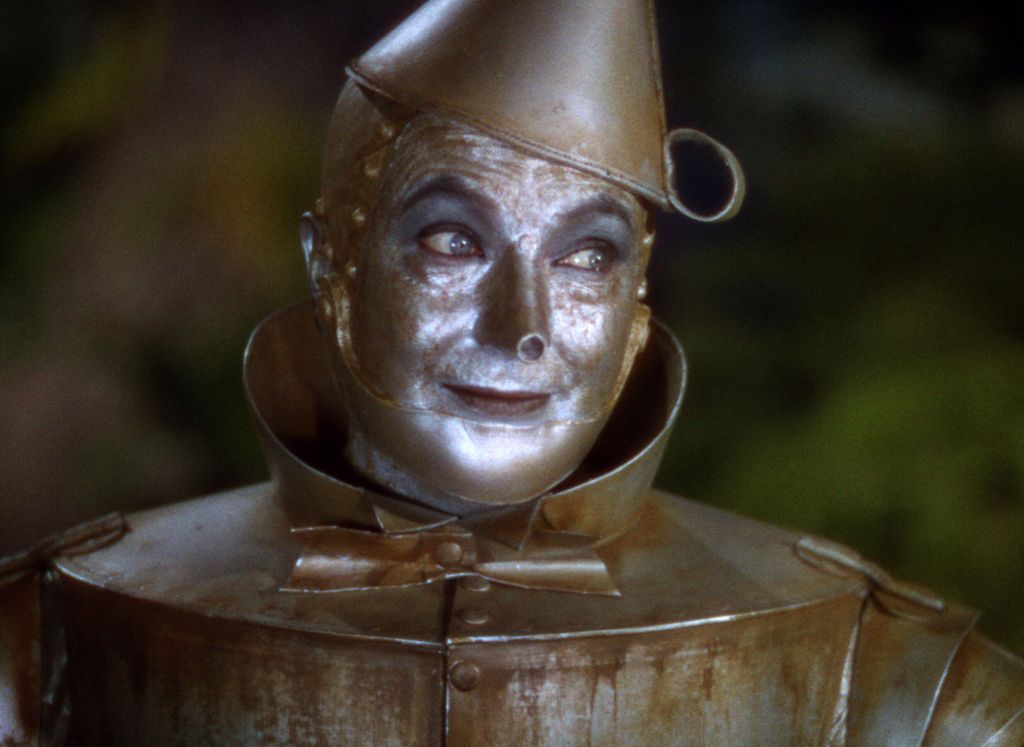
The 8th anniversary gift is tin. Get it? ’cause it’s the Tin Man. From that movie.

Today the Horse’s Head celebrates 8 years, aka 2 terms! We’ve hit a lot of milestones along the way (and we should clear 750 movies this summer), but there’s one I wanted to acknowledge today.

It recently came to my attention that, with a few hard-to-find exceptions, I have seen every silent film on the National Film Registry. This got me thinking about conversations I’ve noticed out there in Film Discourse Land regarding where silent films stand with the movie lovers of today. While there are those who enjoy and champion this early form of film, most people steer clear of them, preferring “talkies” (these people also tend to avoid black and white movies in general, but that’s a discussion for another day). While admittedly most silent films lose their entertainment value well before they hit the century milestone, I think it’s important to keep these movies in the conversation. With this, I have challenged myself to compile a list of silent films that I could recommend to people interested in giving these flickers a shot. To help streamline things, I am focusing only on silent films on the National Film Registry, specifically narrative features and shorts (no documentaries or “actualities”, though those are great too). Most of these movies come from the late 1920s, when silent films were at their artistic peak, and most of them are comedies because physical humor tends to hold up better than two people talking via intertitles. So, without further ado:

The Horse’s Head 8th Anniversary List of Recommended NFR Silent Movies (arbitrarily categorized)

Starring Charlie Chaplin: The Kid (1921), The Gold Rush (1925), City Lights (1931)

Starring Buster Keaton: The Navigator (1924), Sherlock Jr. (1924), The Cameraman (1928)

Starring Harold Lloyd: Safety Last! (1923), The Freshman (1925), The General (1926)

Familiar IP: Twenty Thousand Leagues Under the Sea (1916), The Mark of Zorro (1920), Peter Pan (1924), The Phantom of the Opera (1925)

Epics (three of which feature Jesus!): From the Manger to the Cross (1912), Intolerance (1916), Greed (1924), Ben-Hur: A Tale of the Christ (1925), The Big Parade (1925), Wings (1927)

Strong Female Leads: A Fool There Was (1915), The Poor Little Rich Girl (1917), Ella Cinders (1926), 7th Heaven (1927), It (1927), Sunrise (1927), Show People (1928), The Wind (1928)

Westerns: The Bargain (1914), Hell’s Hinges (1916), Wild and Woolly (1917)

Kinda Sorta Westerns: Jubilo (1919), Sky High (1922), Clash of the Wolves (1925), Hands Up! (1926)

Silent Movies with Dinosaurs!: Gertie the Dinosaur (1914), The Lost World (1925)

Comedy shorts: Mabel’s Blunder (1914), Fatty’s Tintype Tangle (1915), One Week (1920), Cops (1922), KoKo’s Earth Control (1928)

Grab Bag: Suspense (1913), The Cheat (1915), The Dragon Painter (1919), Within Our Gates (1920), The Crowd (1928)

And finally: WTF (Silent films that defy categorization): Dream of a Rarebit Fiend (1906), Princess Nicotine (1909), HE Who Gets Slapped (1924), The Fall of the House of Usher (1928), There It Is (1928)

Honorable Mention: Modern Times (1936). Not a silent movie, but filmed as such with a synchronized soundtrack of music, sound effects, and the occasional dialogue.

While we’re on the subject, I highly recommend “Hollywood” the 1980 miniseries devoted to silent filmmaking. Featuring interviews with many of the people who were there, plus narration by the comforting voice of James Mason and a wonderful score by Carl Davis. Leave it to the Brits to make the definitive documentary on American film.

Thanks as always to everyone who has stuck around these last eight years. Year Nine looks to be a good one!

Happy Viewing,

Tony

#729) The Social Network (2010)

#729) The Social Network (2010)

OR “Facebook/Off”

Directed by David Fincher

Written by Aaron Sorkin. Based on the book “The Accidental Billionaires” by Ben Mezrich.

Class of 2024

The Plot: Harvard student Mark Zuckerberg (Jesse Eisenberg), drunk and bitter after being dumped by his girlfriend Erica (Rooney Mara), creates a website that ranks the attractiveness of Harvard’s female students. The website is the talk of campus, and Zuckerberg is recruited by students Cameron & Tyler Winklevoss and Divya Narenda (Armie Hammer, Armie Hammer, and Max Minghella) to work on their idea for a Harvard website akin to the face book directories on college campuses. At the same time, Zuckerberg proposes a similar website across multiple college campuses to his friend Eduardo Saverin (Andrew Garfield), who puts down the initial seed money for “The Facebook”. Zuckerberg’s website is very popular from the start, which leads to an intellectual property theft lawsuit from the Winklevosses. As The Facebook continues to grow, Napster co-founder Sean Parker (Justin Timberlake) takes Zuckerberg under his wing, which frustrates Saverin and leads to his falling out (and subsequent lawsuit) with Zuckerberg. There’s plenty more drama and backstabbing in this very modern biopic from the dynamic duo of David Fincher and Aaron Sorkin.

Why It Matters: The NFR calls the film “a riveting examination of modern-day American business and capitalism”, praising Fincher, Sorkin, and the cast. The write-up also goes on a short tirade about society becoming isolated and a “slave to technology and the wonders it offers.” Good to know the Library of Congress has their own Ron Swanson.

But Does It Really?: “The Social Network” has been routinely hailed as a classic since its release 15 years ago, and I will not disagree with that assessment. Fincher, Sorkin, and all the film’s creatives go beyond the convoluted tech and legal aspects of this story and find the human element underneath. What could have been a very dry movie about White men sitting around and arguing is instead a visually vibrant, richly verbose movie…about White men sitting around and arguing. On top of all its creative achievements, “Social Network” has maintained its relevancy thanks to everything that has happened to Facebook since 2010, making the film seem more like “Frankenstein”, the creation of a monster that no one can control. “The Social Network” is an NFR no-brainer and a film I give my highest honor: a Damn Good Movie.

Everybody Gets One: David Fincher had been fascinated by filmmaking since watching a TV special about the making of “Butch Cassidy and the Sundance Kid” as a child. Fincher’s first showbiz job was working as an assistant cameraman for Industrial Light and Magic (his only other NFR credit is in this capacity for “Return of the Jedi”). After making a name for himself throughout the 80’s as a TV commercial and music video director (most notably for Madonna’s “Vogue”), Fincher was selected by Fox to direct 1992’s “Alien3” which was besieged with studio tampering and met with mixed reception. Fincher’s run of highly acclaimed (and currently NFR-less) films throughout the ‘90s and ‘00s include “Seven”, “Fight Club”, and “Zodiac”. “Social Network” marks the NFR debut for screenwriter Aaron Sorkin, already famous at that point in time for penning, among other things, the play and film “A Few Good Men”, the films “Malice” and “The American President”, and the TV show “The West Wing”.

Seriously, Oscars?: A critical and commercial darling out the gate, “The Social Network” was the perceived frontrunner for the Oscars and started racking up precursor awards. By the time the Oscar nominations rolled around, “Social Network” received eight nods, trailing behind the 12 for eventual Best Picture winner “The King’s Speech”. “Social Network” did, however, score three big wins: Best Original Score (for Trent Reznor and Atticus Ross of Nine Inch Nails), Best Editing, and Best Adapted Screenplay.

Other notes

  • Ben Mezrich’s publisher started shopping around the film rights to Mezrich’s book “The Accidental Billionaires” before it was even finished. Aaron Sorkin read an incomplete draft and was attracted to the conflicting testimonies given by Zuckerberg, Saverin, and the Winklevosses. Both the book and the screenplay take their historical details from the court transcripts of the various depositions, and no one directly involved with the creation of Facebook had any input on the final film (while Eduardo Savarin did serve as a consultant on “The Accidental Billionaires”, he withdrew once his lawsuit with Zuckerberg was settled).
  • I don’t have the time to get into all the historical inaccuracies depicted in this film, suffice it to say that while all the major events are true to life, several details were changed, fabricated, or omitted for dramatic license. The biggest creative change was the “Rosebud” of Zuckerberg creating Facebook because his girlfriend dumped him. Also, it’s safe to assume that not everyone involved with Facebook’s creation tossed off rapid-fire witticisms 24/7. Sorkin has repeatedly stated that he was going for compelling storytelling over accuracy, but there’s always people who accept these kinds of films as gospel.
  • Speaking of Sorkin, man alive does this movie pack in the dialogue. The first line is spoken before the opening Columbia logo has completely faded from the screen! I know this level of speed and density of dialogue is a Sorkin trademark, but I didn’t realize how quickly you need to hop onto that moving train. I now understand why my dad had a no-talking policy when “The West Wing” was on. With its creative structuring and seemingly endless supply of clever exchanges, Sorkin’s screenplay earns its reputation as the second best screenplay with the word “Network” in the title. Shoutout to Fincher and the cast for finding the right balance that prevents the dialogue from becoming overwhelming or impenetrable, and double shout-out to the editing team of Angus Wall & Kirk Baxter for maintaining that rhythm in the final cut.
  • Everyone in this ensemble does such good work it’s hard to single anyone out. Jesse Eisenberg is great at tempering Zuckerberg’s aloofness and perceived assholic behavior; he may not be likable, but Eisenberg keeps him watchable. Andrew Garfield probably wouldn’t get cast as Eduardo Saverin today (same goes for Max Minghella as Divya Narendra), but he comes the closest to being this movie’s beating heart. And while I really don’t want to delve into anything related to Armie Hammer, I will give him kudos for playing both Winklevoss twins with zero distinction between the two. Bonus shoutout to Josh Pence, the body double for whichever Winklevoss Hammer wasn’t playing at the time.
  • The rest of this cast is a smorgasbord of character actors. I even shouted “Hey, it’s that guy!” when both Wallace Langham and Brian Palermo appeared on screen. And thanks to Rooney Mara’s brief but pivotal appearance here we now have both Mara sisters in the NFR (Kate’s in “Brokeback Mountain”). Rooney Mara has stated that the opening breakup scene took 99 takes before Fincher was satisfied, confirming Fincher’s Kubrick-like reputation for a copious number of takes.
  • Sorkin has a pretty ingenious way of unloading all the important details throughout the film: Exposition via deposition. We intercut with Zuckerberg’s various depositions with Saverin or the Winklevosses every time we need clarification of new information or story beats. These scenes also give us some of the best lines in the movie, including Zuckerberg’s claim to the Winklevosses: “If you guys were the inventors of Facebook, you’d have invented Facebook.” Also showing up in these scenes, Rashida Jones as one of Zuckerberg’s attorneys. How can you hate a movie with Ann Perkins in it? Hey, that’s two “Parks & Rec” references in one post!
  • I watched this movie with my wife, a former Facebook employee (although she was there long after the events of this movie). I’m not sure what I should and shouldn’t disclose about her thoughts on Facebook, but watching “The Social Network” with her made me understand some of the stories she has told me of her time there. Also, my wife informs me that hackathons were still a thing when she was there, though not nearly as fraternal as the one in the film.
  • Justin Timberlake isn’t the greatest actor in the world, but he does well with his part, aided by the excellent casting choice: Sean Parker is portrayed here as a mega-celebrity within the booming tech world. And if the young woman he sleeps with in his first scene looks familiar, it’s Dakota Johnson; the future “Fifty Shades” star joining her grandmother on the NFR.
  • Even though I was alive during the film’s 2003-2004 timeline, I had to be reminded of all the technology that has come about since the events of the film. Any time during my viewing I started to ask, “Why didn’t they just do x or y?” I would stop and remember that there were no smartphones or ride shares or social media to the extent we know it today (sorry, LiveJournal). As I was reminded recently, there is a short window of time between when something is new and when something has always been.
  • Apologies to every actress in this movie playing a severely underwritten female character. Take the misogynistic boys club of the tech world, add Sorkin’s history of underdeveloped roles for women, and you’ve got a movie that hasn’t even heard of the Bechdel test. I thought Eduardo’s girlfriend Christy would make it out of the movie unscathed, but she just had to turn psychotic at the end, didn’t she? Oh, and Christy’s actor is Brenda Song, who I’m told was a big Disney Channel star in the 2000s. I’ll take your word for it; I stopped watching after they phased out Vault Disney.
  • Easily this movie’s biggest flex is playing The Beatles’ “Baby You’re a Rich Man” over the end credits. That must have been half the budget right there. Also is it me or does “The Social Network” have more legal disclaimers than a typical film? I guess they took their own advice and lawyered up.

Legacy

  • “The Social Network” was released in October 2010, and while it was well-received by critics and film geeks alike, it was unsurprisingly blasted by its real-life counterparts (although Mark Zuckerberg conceded that they got his wardrobe right). In fact, the only people who seem to have enjoyed the film are Cameron & Tyler Winklevoss and then-Harvard president Larry Summers (portrayed with delicious exasperation by producer Douglas Urbanski). “Social Network” continues to rank among the best movies of the 2010s and of the 21st century (so far).
  • The inevitable “Social Network” parodies are still going strong 15 years later, with the film’s more quotable lines and overall concept getting ribbed from time to time. My favorite is still the “How It Should Have Ended” video. “It’s our time, down here!” “Did…did you just quote ‘Goonies’?”
  • “Social Network” has also spawned this weird subgenre of movies that focus on world-famous brands and their creators. Since 2010 we’ve had “The Founder” (McDonald’s), “Air” (Air Jordan), and two movies about Steve Jobs and Apple, one of which was written by Aaron Sorkin (the good one).
  • David Fincher’s immediate follow-up to “The Social Network” was an American remake of “The Girl with the Dragon Tattoo”, which helped propel Rooney Mara’s career and got Angus Wall & Kirk Baxter their second consecutive Best Editing Oscar . Fincher has also directed “Gone Girl”, “Mank”, two episodes of “House of Cards”, and Justin Timberlake’s “Suit & Tie” music video.
  • Aware of Aaron Sorkin’s directorial aspirations, David Fincher allowed Sorkin to direct one shot in “The Social Network” (he won’t disclose which one), which has led Sorkin on the path of writer/director. And if you think Sorkin took historical liberties with Facebook, wait until you see what he did to “I Love Lucy”.
  • Aaron Sorkin has expressed interest in a “Social Network” sequel focusing on the role Facebook played regarding the January 6th Capital attacks, on the proviso that David Fincher returns to direct. Maybe it’s because I lived through it, but I’m waving my “Too Soon” flag on this potential movie.
  • Oh, and Facebook now has three billion users and has gone from the hip elitist forefront of social media to the #1 website for weird uncles everywhere. It happened so gradually I didn’t even notice.

NFR 2024: The Class of Khan


‘Twas the week before Christmas, when all through the blog

Not a crea—

            Ah, screw it I’m not doing this whole thing in rhyme. Hey, we got more NFR films!

Here is your National Film Registry class of 2024, bringing the total number of NFR films to a nice and even 900. As always, movies with * are ones I submitted this year, movies with + are ones I have submitted in previous years. In chronological order, they are:

  • Annabelle Serpentine Dance (1895)
  • KoKo’s Earth Control (1928)
  • Angels with Dirty Faces (1938)
  • The Pride of the Yankees (1942)*
  • Invaders from Mars (1953)
  • The Miracle Worker (1962)*
  • Chelsea Girls (1966)
  • Ganja and Hess (1973)
  • The Texas Chain Saw Massacre (1974)
  • Uptown Saturday Night (1974)
  • Zora Lathan Student Films (1975-1976)
  • Up in Smoke (1978)+
  • Will (1981)
  • Star Trek II: The Wrath of Khan (1982)+
  • Beverly Hills Cop (1984)+
  • Dirty Dancing (1987)+
  • Common Threads: Stories from the Quilt (1989)
  • Powwow Highway (1989)
  • My Own Private Idaho (1991)
  • American Me (1992)
  • Mi Familia (1995)
  • Compensation (1999)
  • Spy Kids (2001)
  • No Country for Old Men (2007)+
  • The Social Network (2010)+

Other notes

  • Two of my submissions made the cut this year: “The Pride of the Yankees” and “The Miracle Worker”. The latter is particularly satisfying because I have been submitting it for years, and it’s one of my mom’s favorite movies. I believe this qualifies as being a good son.
  • Even by NFR standards the 2024 class is a very broad spectrum of movies. These 25 films span 115 years (across three centuries!) and cover practically every genre or type of film possible, created by filmmakers from all walks of life. In addition to celebrating this diversity of films and creatives, the NFR write-ups also go out of their way to highlight the lasting impact of these movies, citing recent film and TV inspired by these inductees.
  • While I try not to focus on the other 48 movies on my ballot that didn’t make the cut, I take comfort in the fact that this year there were 6,744 movies publicly nominated for NFR consideration. Put another way, it would take 270 years for the NFR to induct every movie nominated in 2024, so the fact that two of my picks made it is pretty good.
  • The NFR erroneously states that “Beverly Hills Cop” and “Up in Smoke” are the first NFR titles for, respectively, Eddie Murphy and Cheech Marin. While this is technically the first on-screen appearance for both, they have lent their voices to previous NFR entries; Murphy can be heard as Donkey in “Shrek”, Marin as one of the hyenas in “The Lion King”.
  • Speaking of Cheech Marin, thanks to “Up in Smoke” and “Spy Kids”, Marin is one of this year’s NFR double-dippers. Also double-dipping this year are producer Lou Adler and actor/director Edward James Olmos, who now has eight movies on the NFR! Watch your back, Ward Bond.
  • Alright, another Warhol movie! I feel like it will be harder to accidentally watch a fan-made recreation of “Chelsea Girls”. Although given my brief internet search this morning it might be hard to watch the real “Chelsea Girls”.
  • This roster also includes a few “What I really want to do is direct” movies with films helmed by art director William Cameron Menzies, the aforementioned Edward James Olmos, and the legendary Sidney Poitier. I have heard of but never seen “Uptown Saturday Night”, so let me refresh my memory and look up who else is in the cast – Oh my god!
  • It is increasingly bizarre to see more and more movies from my lifetime making it onto the NFR. On one hand there’s “No Country for Old Men”, one of my favorite theater-going experiences back in 2007, and on the other hand: “Spy Kids”. No knock against the movie or Robert Rodriguez, but I have lived long enough that “Spy Kids” has been deemed a historically significant American film. I’m gonna go lie down for a bit.

Those are my thoughts for now, I will begin tackling the class of 2024 in January (Up first: “The Social Network”). My thanks to everyone who has stopped by and visited “The Horse’s Head” this year. 2024 was the year with the highest view count for this blog, and it was the year we hit the important milestones of 700 movies and 100,000 all-time views! And special thanks to the small NFR community I have been adopted into this year; you know who you are. As we gear up for whatever the hell 2025 is going to be, I leave you with the most iconic moment from this year’s NFR entries:

Happy Viewing,

Tony

#728) Love & Basketball (2000)

#728) Love & Basketball (2000)

OR “She Got Game”

Directed & Written by Gina Prince-Bythewood

Class of 2023

The Plot: “Love & Basketball” follows two childhood friends and aspiring basketball players as they grow up and fall in love through the 1980s. Monica Wright (Sanaa Lathan) keeps playing despite the insistence of her mother (Alfre Woodard) that “girls shouldn’t play basketball”. Quincy “Q” McCall (Omar Epps) is following in the footsteps of his NBA star dad (Dennis Haysbert) but uncovers some tough truths along the way. During their senior year of high school in 1988, Monica and Q both get accepted to play basketball at USC, and sleep together for the first time. While their romantic relationship blossoms in college, their separate career paths threaten to tear them apart, proving that all’s fair in love and basketball.

Why It Matters: The NFR calls the film “[u]nforgettable and inspiring”, highlighting its “ongoing resonance with women athletes and young people”.

But Does It Really?: I had never seen “Love & Basketball” before this viewing, and I was quite charmed by it. “Love & Basketball” is another prime example of why we need more women and people of color directing movies. This film could have been riddled with sports and rom-com cliches had it been directed by a White person, but by telling her own story, Gina Prince-Bythewood guarantees a fresh dynamic to the proceedings: What could be contrived and obvious plays here as authentic and realistic. Prince-Bythewood’s commitment is matched by a very strong cast, led by the charismatic Lathan and Epps. “Love & Basketball” continues to not only entertain, but also inspire a generation of female athletes finally seeing themselves represented on the big screen. “Love & Basketball” is a modern classic, and I’m glad it has taken its rightful spot on the Registry.

Everybody Gets One: Raised in Pacific Grove, California, Gina Prince played high school basketball, and later ran track at UCLA, where she received her film degree. One of her first professional jobs was as a writer for “A Different World”, where she met her future husband, fellow writer Reggie Rock Bythewood. Although several other TV jobs followed, Gina Prince-Bythewood walked away from TV to focus on writing a semi-autobiographical screenplay she declared would be “a Black ‘When Harry Met Sally’.” After being turned down by multiple studios, “Love & Basketball” received a reading at the Sundance Institute, which caught the attention of Spike Lee, who would produce the film under his company 40 Acres and a Mule Filmworks. Thanks to Spike Lee’s clout, Prince-Bythewood was able to direct the film herself, marking her feature film debut.

Title Track: The title is a riff on the idiom “All’s fair in love and war”, which I always assumed was a Shakespeare quote; turns out it’s John Lyly from his novel “Euphues”. In the category of “Lines that sound weird but inexplicably work in this movie”, the line “All’s fair in love and basketball” is spoken twice in the film.

Wow, That’s Dated: Monica’s dream of being the first female NBA player stems from the fact that there was no WNBA in the 1980s. The league would not be founded until 1996, while Gina Prince-Bythewood was writing the screenplay.

Seriously, Oscars?: No Oscar nods for “Love & Basketball”, though Gina Prince-Bythewood did win the Independent Spirit Award for Best First Screenplay. The film also cleaned up at that year’s Black Reel Awards.

Other notes

  • We open with Al Green’s “Love and Happiness” over the opening credits, which automatically places this film as a contender for Greatest Movie Ever Made.
  • Casting the role of Monica came down to two actors: Sanaa Lathan – a professional actor with no basketball experience – and Niesha Butler – a professional basketball player with no acting experience. Both trained for months to prepare for the role, and Gina Prince-Bythewood went back and forth on who to cast. Prince-Bythewood ultimately realized that she was making a love story first and foremost (adding “You could fake a jump shot, but you can’t fake a close-up.”) and cast Lathan in the role. To her credit, Niesha Butler bares no ill will towards Prince-Bythewood or the final film, stating she’s just glad the movie was made. 
  • Both leads are incredible in this, but you all lucked out with Sanaa Lathan. Thanks to Lathan’s performance (with support from a charming Kyla Pratt as young Monica), we immediately empathize with Monica and root for her every step of the way. While this film is primarily Monica’s story, Q gets his share of the spotlight, and Epps gives a wonderfully nuanced performance, sharing plenty of chemistry with Lathan. It helps that Lathan and Epps were dating during production, a fact they attempted and failed to keep a secret from their director.
  • Shoutout to the actors playing the parents; all of whom do not age at any point in this movie’s 12-year timeline. Oscar nominee/perennial Emmy winner Alfre Woodard is the standout to me, popping up sporadically in the film, but delivering a powerful monologue near the end. For those of us who know Dennis Haysbert as the President on “24”, it’s great seeing him play a much more despicable, yet still likeable, character; though admittedly every time Haysbert spoke all I could hear was “That’s Allstate’s stand. Are you in good hands?” Also appearing in smaller but no less important roles are “Eve’s Bayou” standout Debbi Morgan as Q’s mother, and Spike Lee staple Harry J. Lennix as Monica’s supportive dad.
  • The scene where young Monica fights with young Q on his front lawn was re-written to incorporate the real-life scar on Sanaa Lathan’s cheek, which begs the question: Just how sharp is that grass?
  • Two of this film’s supporting actors were on the cusp of their own stardom. Both Regina Hall (as Monica’s sister Lena) and Gabrielle Union (Q’s high-school date Shawnee) were a few months away from their breakout performances in, respectively, “Scary Movie” and “Bring It On”. Side note: Gabrielle Union originally auditioned for Monica, and despite playing Varsity basketball in high school was told by Gina Prince-Bythewood that she didn’t look like a basketball player.
  • I especially loved how bad Monica is at being flirty or sexy. Watching Monica not know how to sit down while wearing a dress is her most endearing moment. 
  • Once again, the MPA’s double-standard with Black sex scenes rears its ugly head. “Love & Basketball” originally received an R rating, but Gina Prince-Bythewood was adamant the film be PG-13 so that young girls could see it. Several trims were made to the sex scene, even though there is no nudity and very little movement depicted. I get the feeling that this was somehow Jack Valenti’s fault; I have no evidence to support this claim, it just seems right.
  • After such a tender love scene, what could be a better mood killer than an overenthusiastic cameo by longtime college basketball announcer Dick Vitale? Vitale is one of several real-life sportscasters and athletes who appear as themselves in the film, including Robin Roberts, Stu Lantz, and Chick Hearn. Conspicuously absent is “Magic” Johnson, whose career highlights are weaved throughout the film (Johnson does appear via archival footage).
  • For those of us ignorant to the rules and positions of basketball, I can vouch that this is a love story first and a sports movie second, so you can still follow along with relative ease (although my wife did have to explain to me what a point guard is). Also, I believe this, “Hoosiers”, and “Hoop Dreams” are the only basketball movies on the NFR. I can’t think of any more that should be on the list, other than joke answers like “Air Bud” or “Space Jam”.
  • Yes, that is Tyra Banks near the end of the film as Kyra. Truly, everybody gets one.
  • “Love & Basketball” gives me one of my favorite movie tropes of all time: the “Everyone is sad” montage that happens in a film’s third act (or in this movie’s case its fourth quarter). The montage song of choice is Angie Stone’s cover of Simply Red’s “Holding Back the Years”.
  • It was during Alfre Woodard’s monologue that I realized I have unintentionally bookended this year’s blog posts with Alfre Woodard movies (She also makes an appearance in “12 Years a Slave”).
  • The final one-on-one match between Monica and Q is great. Yes, the “For your heart” line is cheesy, but after everything you’ve gone through with these characters you really don’t mind. And I love how many of these shots are clearly the actors themselves making the basket in one uninterrupted take.
  • Stick around after the credits for one final shot. Also, this film’s copyright reminded me that 2000 is the easiest Roman numeral year to remember (MM; I recall a certain candy brand using this to their marketing advantage at the time).

Legacy

  • “Love & Basketball” was a critical hit and did good if not amazing box office. The film found a second life on home video and cable, boosted by the success of its soundtrack album. By the mid-2000s “Love & Basketball” was being re-evaluated as a great under-appreciated movie and continues to be a cult classic.
  • Practically every major player in the WNBA has cited “Love & Basketball” as an influence and inspiration. One oral history alone features quotes from Sheryl Swoopes, Diamond DeShields, Nneka Ogwumike, Cheyenne Parker, and Napheesa Collier, as well as writer/director Lena Waithe, who worked as Gina Prince-Bythewood’s assistant early in her career.
  • Gina Prince-Bythewood’s next film was 2008’s “The Secret Life of Bees”. Her subsequent filmography includes “Beyond the Lights”, “The Old Guard”, and “The Woman King”, with a healthy dose of writing and producing credits in both film and TV. And despite several pleas over the years, she refuses to make a sequel to “Love & Basketball”, declaring “I told the story I wanted to tell.”

And with that defiant stance against sequels, we conclude Year Eight of The Horse’s Head. My thanks to each and every one of you for making 2024 the blog’s most successful year ever! I’ll be back later this month to cover the Class of 2024, and after that taking some time off for the holidays. Until then, Happy Viewing, and may your nominations finally make the cut this year.

Tony