#633) Stop Making Sense (1984)

#633) Stop Making Sense (1984)

OR “And You May Tell Yourself, ‘This Is Not My Beautiful Blog!’”

Directed by Jonathan Demme

Written by Demme and Talking Heads

Class of 2021

The Plot: By 1984, Talking Heads had already made a name for themselves in the rock scene. With their effective blend of new wave, punk, art rock and world music, Talking Heads gave us such hits as “Psycho Killer”, “Burning Down the House” and “Once in a Lifetime”. To promote their 1983 album “Speaking in Tongues”, Talking Heads went on a U.S. tour, with their stop at Hollywood’s Pantages Theater being filmed by Jonathan Demme. The resulting film features all of their hits, as well as some impressively energetic performances from the band, plus an extra-large business suit that continues to linger in pop-culture.

Why It Matters: The NFR calls the film “as inventive visually as it is sonically” and “the quintessential get-up-and-dance experience.” The “charismatic” David Byrne is highlighted, as is Demme’s direction.

But Does It Really?: If any movie can claim the title of best concert feature ever, it’s “Stop Making Sense”. In a sleek 88 minutes, Jonathan Demme captures Talking Heads at the height of their fame with top-notch renditions of all their best songs (of course it helps if you’re a fan of their music, which I am). “Stop Making Sense” might not be an essential American movie in the vein of your heavy hitters, but it continues to rock four decades later, and is iconic enough to deserve its spot on the NFR.

Shout Outs: Among the random words projected on the background slides is the phrase “Star Wars“. Also noteworthy are the film’s credits, designed by Pablo Ferro in the style of his “Dr. Strangelove” opening.

Everybody Influential New Wave/Rock Band Gets One: After an early stint as The Artistics, Rhode Island School of Design students David Byrne, Chris Frantz and Tina Weymouth moved to New York, naming their new band Talking Heads after the TV term for a head and shoulder interview shot. From 1977 to 1980, Talking Heads had a meteoric rise with three popular albums and such hit singles as “Psycho Killer” and “Life During Wartime”. After a three year hiatus, Talking Heads returned in 1983 with the album “Speaking in Tongues”, and went on a promotional tour. While performing at L.A.’s Greek Theatre in August 1983, the group met filmmaker Jonathan Demme. Fresh off the disastrous production of “Swing Shift” and looking for a change of pace, Demme proposed filming the performance. Talking Heads raised the entire $1.2 million budget themselves, dipping into their respective life savings, which they would eventually get back in profits.

Title Track: The film’s original working title was “Electric Guitar”, but was eventually changed to “Stop Making Sense”; derived from the lyrics of “Girlfriend Is Better”, which is performed in the film. When asked by L.A. Weekly why he had picked that title, Jonathan Demme responded “That’s a good question.”

Seriously, Oscars?: Although “Stop Making Sense” missed out on an Oscar nomination for Best Documentary, the National Society of Film Critics gave the film its documentary prize, as well as third place for its Best Film of the year. For the record: the Oscars gave Best Documentary to fellow NFR entry “The Times of Harvey Milk“.

Other notes 

  • Talking Heads performed at the Pantages Theater from December 13th-16th, 1983 specifically for this film. To be as unobtrusive as possible, Demme placed his cameras in different spots in the the theater every night; stage left one night, back of the house the next, etc. The bulk of the final film comes from the performance on the 15th.
  • The beginning of the concert has a bit of a narrative thread, with the first few songs on the setlist mirroring the band’s evolution. We start with David Byrne alone on stage performing “Psycho Killer” (the band’s first hit) on guitar accompanied by a boombox. This is a bit of historical revision on Byrne’s part, as Byrne was not the band’s sole founding member, nor did he write “Psycho Killer” by himself.
  • I was struck by how young David Byrne is in this. Byrne was 31 when they filmed “Stop Making Sense” and looks like a cross between Cillian Murphy and Daniel Day-Lewis.
  • Following “Psycho Killer”, Byrne is joined for each number by more band members: Tina Weymouth joins for “Heaven”, while “Thank You for Sending Me an Angel” adds drummer Chris Frantz, who apparently didn’t get the “all grey clothing” memo with his bright teal polo. Subsequent numbers bring in guitarist/keyboardist Jerry Harrison, percussionist Steve Scales, and backup singers Lynn Mabry & Ednah Holt. I was really hoping this pattern would continue throughout the whole movie, and by the end the stage would be filled with performers. But alas, the culmination comes with the night’s sixth number – “Burning Down the House” – in which we get the rest of the band (Guitarist Alex Weir and keyboardist Bernie Worrell) and a shit ton of percussion.
  • As often noted, part of what helps distinguish “Stop Making Sense” from other concert features is the focus on the actual performance. No behind the scenes interviews, no cutaways to the audience, just the performers on stage doing their show. It effectively captures the energy of a live performance, and subsequently helps the film age better than most other concert films. The other thing this movie has going for it is that everyone seems to be having a good time. The whole movie has a relentless energy about it (at one point Byrne runs laps around the stage), and you get caught up in the sheer joy of performing everyone has in this. Like all good movies, “Stop Making Sense” is as fun to watch the 100th time as it is the first.
  • I guess all that energy is really paying off because my god everyone is sweating buckets in this. Were the first few rows warned they were in the splash zone?
  • Around the halfway point you really start to see the art school influence on these guys. The backdrop becomes a series of slides with random words and phrases like “Dollface”, “Onions”, “Under the Bed”, “Pig” etc. I don’t know what it all means, but I’m sure someone does. On a related note, I’d like to claim the name “Digital Babies Dustballs” for my alt rock band.
  • “This Must Be the Place (Naive Melody)” is one of my favorites, with this live performance highlighted by David dancing with a standing lamp. Eat your heart out, Fred Astaire. I was hoping the lamp would get some sort of shoutout in the credits. “Lamp courtesy of Al’s Lamp Emporium of Pasadena. Mention ‘Stop Making Sense’ and get 10% off your first purchase.”
  • Another favorite of mine (and everyone’s), “Once in a Lifetime” is captured here in almost entirely one take. This is the song where you really appreciate David Byrne’s incredible physicality as a performer. With his lanky figure and seemingly impossible dexterity, he’s like an over-caffeinated Ray Bolger.
  • Just want to point out that a good chunk of this movie’s playlist comes from “Speaking in Tongues”, making this one of the rare times in history that a band retained an audience while playing stuff from their new album.
  • “Genius of Love” is a bit of a detour courtesy of Tom Tom Club; a side band Tina Weymouth and Chris Frantz created during their Talking Heads hiatus. I didn’t realize “Genius of Love” is that “I’m in Heaven” song that everyone samples. Tom Tom Club’s performance serves the double purpose of giving Tina and Chris a moment in the spotlight, while simultaneously giving David a chance to go backstage and change into his big suit. Fun Fact: Tina Weymouth and Chris Frantz have been married for 45 years!
  • We have arrived at “Girlfriend Is Better”, the song that gives us the lyric “stop making sense” AND David Byrne in his big gray suit. Shoutout to costume designer Gail Blacker, who designed the suit, calling it “more of an architectural project than a clothing project”.
  • I love the moment during “Girlfriend Is Better” where David holds his mic in front of a crew member operating a hand-held stage light, and the crew member sings along without missing a beat! This is immediately followed by Byrne jokingly pointing the mic at the camera. Can he see me?
  • “Take Me to the River” is one of my favorite songs of all time, and includes the greatest bridge in music history (“Hug me/SQUEEZE me/Love me/TEASE me”). That being said, call me a godless heathen, but I prefer the album version over this live rendition. Also, I didn’t realize this was a cover of an Al Green song. I’m glad that the good Reverend is getting royalties from all this.
  • The show’s curtain call goes across both final songs. David uses a break in “Take Me to the River” to introduce the band by name, while “Crosseyed and Painless” gives the crew a much deserved moment of recognition. “Crosseyed” is also the song where they bump up the houselights and show us there was an audience the whole time!

Legacy 

  • “Stop Making Sense” premiered at San Francisco’s Castro Theater in April 1984, going into wide release that October. Critics loved it, with Leonard Maltin declaring it “one of the greatest rock movies ever made”, and the usually dismissive Pauline Kael calling the film “close to perfection”. The live album of the tour (also called “Stop Making Sense”) routinely ranks on lists of the best albums of all time.
  • Jonathan Demme spent the rest of his film career alternating between narrative and documentary films. Among Demme’s post-“Stop Making Sense” highlights are “Married to the Mob”, “The Silence of the Lambs” and “Philadelphia”. The subjects of his subsequent concert films ranged from Neil Young to Robyn Hitchcock to Neil Young again to Justin Timberlake to Neil Young yet again.
  • Unbeknownst to anyone at the time, the “Speaking in Tongues” tour would be the last tour Talking Heads ever embarked on. Talking Heads spent the rest of the ’80s making new albums, but disbanded in 1991 when David Byrne left the group. The original members did reunite briefly in 1999 to promote the 15th anniversary re-release of “Stop Making Sense”, and the group performed together one final time in 2002 as part of their induction into the Rock and Roll Hall of Fame. Although Tom Tom Club still performs occasionally to this day, members have stated several times over the years that a full Talking Heads reunion is unlikely.
  • [UPDATE: When the rights to “Stop Making Sense” reverted back to Talking Heads, the film was re-released by A24 in 2023 in the lead-up to its 40th anniversary. To promote the film, Talking Heads reunited for the first time in 20 years to hit the talk show circuit. Although there is seemingly no possibility of Talking Heads making any more music, it was lovely seeing these four together again.]
  • The closest this film has ever gotten to a sequel is “American Utopia”, the stage tour of David Byrne’s 2018 album of the same name, with a 2020 filmed version directed by Spike Lee.
  • “Stop Making Sense” is one of those movies that gets referenced more than parodied. One of the few full-on parodies comes from “Documentary Now!” and the episode “Final Transmission”. While I do love me some “Documentary Now!”, man is that episode a letdown. Maybe it’s just my overall dislike of Fred Armisen’s brand of humor. Ah well, they can’t all be gems.
  • When “Stop Making Sense” gets referenced in pop culture it’s almost always about the big suit. My first introduction to the big suit came from – of all things – an episode of “Doug”. Think Big.

Listen to This: Talking Heads made the National Recording Registry in 2016 with their 1980 album “Remain in Light”. The NRR calls the album “Talking Heads at their most essential – contradictory.” The official NRR write-up includes not one but two essays, as well as an interview with David Byrne and a Studio 360 piece about “Once in a Lifetime”.

And with that, we finish up the last Horse’s Head post of 2022 and Year Six! Thanks for reading along with me as I hit the 75% threshold of the National Film Registry! We’ll be back in January with a few selections from the NFR Class of 2022.

Happy Holidays and Happy Viewing,

Tony

The Horse’s Head: Class of 2022

Merry NFR Day to those who celebrate!

The National Film Registry has unveiled the latest 25 films to make the list, bringing the total to 850 movies! Here they are in chronological order. Those with a * symbol are movies I submitted for consideration this year, while movies with a + symbol are ones I have submitted in previous years.

  • Mardi Gras Carnival (1898)
  • Cab Calloway Home Movies (1948-1951)
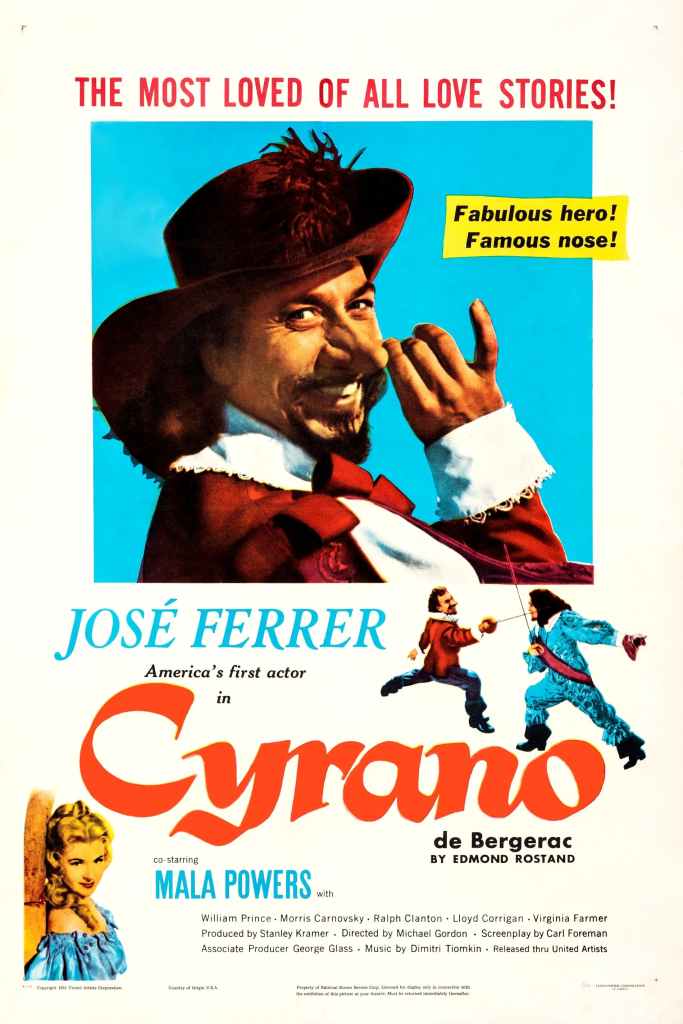
  • Cyrano de Bergerac (1950)
  • Charade (1963)       
  • Scorpio Rising (1963)
  • Behind Every Good Man (1967)
  • Titicut Follies (1967)
  • Mingus (1968) 
  • Manzanar (1971)
  • Betty Tells Her Story (1972)
  • Super Fly (1972)
  • Attica (1974)
  • Carrie (1976)*
  • Union Maids (1976)
  • Word is Out: Stories of Some of Our Lives (1977)
  • Bush Mama (1979)
  • The Ballad of Gregorio Cortez (1982)
  • Itam Hakim, Hopiit (1984)
  • Hairspray (1988)
  • The Little Mermaid (1989)+
  • Tongues Untied (1989)
  • When Harry Met Sally (1989)*
  • House Party (1990)
  • Iron Man (2008)+
  • Pariah (2011)  

This year two of my 50 nominated films made the cut. Not my best year, but not my worst either. According to the NFR press release, my submissions were 50 of the 6,865 titles suggested for consideration this year, so with those odds two is an impressive number. And once again I sadly have to announce the current score: Movies on the NFR with Jane Fonda: 0, Movies on the NFR with Buddy Hackett: 2.

This year the NFR really outdid themselves in terms of the diversity of its selections. 15 of the 25 films were directed by women, people of color, and/or LGBTQ+ filmmakers (shoutout to Dee Rees, the center of this Venn Diagram!). While the Class of 2022 leans more towards obscure titles, I believe this says more about us as a moviegoing public not giving these movies the attention they deserve. As always, I look forward to these films broadening my horizons a bit. We’ll be covering a sampling of this year’s roster in January.

As always, you can nominate up to 50 movies for NFR consideration every year. You can fill out a nomination form here, and check out the NFR’s handy guide to movies not yet on the list. And may I humbly suggest checking out my FYC page, which includes some of the films and stars I have tried to get on this list over the years.

Happy Viewing and Stay Safe,

Tony

#632) Buena Vista Social Club (1999)

#632) Buena Vista Social Club (1999)

OR “Havana Good Time”

Directed by Wim Wenders

Class of 2020

The Plot: In 1996, a group of musicians from Cuba’s “musical golden age” of the 1940s and 1950s were recruited by composer and producer Ry Cooder to record “Buena Vista Social Club”, an album of classic Cuban music (cha-cha, mambo, rhumba, etc.) from this long-forgotten era. The album was a worldwide success, and their subsequent performances were captured by filmmaker Wim Wenders. In addition to filming their Amsterdam performances in 1998, Wenders highlights each member of the band, most of them in their 70s and 80s, telling their stories and recapturing the glory of their Cuban youth. The tour culminates in a one night concert at New York’s Carnegie Hall, which was ultimately the final performance with the original Buena Vista Social Club.

Why It Matters: The entire NFR write-up is cribbed from critic Jonathan Rosenbaum, who calls the film “the best Win Wenders documentary to date”, and his filmmaking “uncommonly sensitive and alert”.

But Does It Really?: Both Buena Vista Social Club the act and the movie were names I knew of but couldn’t tell you anything about. Like many a concert doc on this list, I enjoyed listening to the music and watching these performers clearly having a blast, but overall I appreciated that this movie was focused on the people rather than the music. You are watching a group who thought their lives were over being given an extraordinary second life with newfound attention and acclaim. These aren’t the likes of Bob Dylan or The Band letting their youthful arrogance get in the way, but rather some long-lost talent letting their age and experience help them savor every moment, and it’s hard not to be moved by their stories. A yes for “Buena Vista Social Club” making the NFR, not only for its outstanding story telling, but also its representation of this Cuban music revival, as well as the work of Wim Wenders.

Shout Outs: A Buzz Lightyear action figure can been seen in Compay’s house when he and Cooder rehearse “Black Bottom”. Movie memorabilia from “The Wizard of Oz“, “Rebel Without a Cause” and “The Sound of Music” is on display when the band is window shopping in Manhattan.

Everybody Gets One: Wim Wenders was one of many filmmakers to come out of the New German Cinema movement of the 1970s. His breakthrough films in America chronicled his fascination with Americana, best exemplified with 1984’s “Paris, Texas” (which has surprisingly not yet made the NFR). “Paris” was Wenders’ first collaboration with muscian Ry Cooder as his composer. While working on the 1997 film “The End of Violence”, Cooder told Wenders about his experience working with Cuban musicians (See “Other notes”), which inspired Wenders to make “Buena Vista Social Club”.

Wow, That’s Dated: The movie doesn’t show its age until the band arrives in New York, in which among the ’90s sights they see are a billboard promoting the 1998 remake of “Godzilla”, and the marquee for “Cats”, which was in year 16 of its 18 year run at the Winter Garden Theatre.

Title Track: Rubén Gonzalez’s piano skills are on display when he performs the movie’s title track, with Ry Cooder on slide guitar.

Seriously, Oscars?: “Buena Vista Social Club” earned Wim Wenders his first Oscar nomination, though the film lost its Best Documentary Feature nod to “One Day in September”, Kevin Macdonald’s film about the tragedy at the 1972 Olympics. (For those of you keeping score, that’s two movies in a row on this blog that lost major awards to a movie about the ’72 Olympics. What are the odds?) Though Wenders has received two additional nominations in this category – for “Pina” and “The Salt of the Earth” – he has yet to win an Oscar outright.

Other notes 

  • BVSC came to be thanks to Ry Cooder and his lifelong work as a “musical archaeologist”, exploring the music of different cultures and finding their common roots. In the early 1990s, Cooder was commissioned by record producer Nick Gold to explore the connection between Cuban music and West African music (the percentage of Cubans with African heritage is anywhere from 30 to 60%). When the African musicians couldn’t travel to Cuba, Cooder gathered 20 musicians within Cuba – many long retired from the music scene – and helped them find their commonalities to record an album together. The resulting album “Buena Vista Social Club” (named after a famous club in Havana) was a worldwide phenomenom, winning a Grammy and launching the tour profiled in this film.
  • This is arguably the most international production on the NFR, with the film being funded by five production companies in five different countries: the United States, Germany, Cuba, France, and the United Kingdom. Thanks to the contributions of L.A. based Kintop Pictures, “Buena Vista Social Club” qualifies as an American film, and therefore eligible for this list.
  • The film begins with BVSC singer Compay Segundo and the crew driving around Havana trying to find the original Buenavista Social Club, which had been closed shortly after the Cuban Revolution of 1959. I appreciate any movie that bothers to stop and asks for directions.
  • I don’t know what kind of camera Wenders and his cinematographer Jörg Widmer are using, but some of these scenes have that ’90s camcorder feel to them. I was not expecting this movie to look like “The Blair Witch Project”.
  • The Amsterdam concert opens with “Chan Chan”, BVSC’s breakthrough hit. Surprisingly, despite the band’s nostalgic appeal, this song was written in the early 1980s.
  • One of my favorite moments is early on when singers Ibrahim Ferrer and Omara Portuondo perform the song “Silencio” in the recording studio, filmed with the cameras moving 360 degrees around the two, highlighting the intimacy of the recording. Side note: These recording sessions were for the BVSC follow-up album “Buena Vista Social Club Presents: Ibrahim Ferrer”.
  • I will admit, if you’re going into this movie cold, some research on the history of BVSC and Cuban music would help. I ended up watching this movie twice for this write-up, and I got a lot more out of it the second time after doing some homework.
  • Man, the Amsterdam crowd is lovin’ this. Every song gets recognition applause. It must be the hash.
  • I think the reason there are so many concert docs on this list is because music is universal, and therefore translates better for a wider audience. I also suspect that due to the age of its subject matters, “Buena Vista Social Club” is easily the most mellow concert doc in the NFR.
  • Compay Segundo was 90 years old when they filmed this! I would kill to be that cognitive (and talented) at 90.
  • I’m gonna go ahead and say this is the most cigars in a single NFR film. There’s even a shot of factory workers making cigars, a shot which allegedly was filmed without permission.
  • Whoa, Cuba’s got some king tides going on! Imagine what they’re like now.
  • There’s a lovely scene of Rubén González playing “Begin the Beguine” on piano in a large auditorium, while kids practice gymnastics. Both the artist and the athletes stick the landing.
  • Oh man, Ibrahim just mentioned he was shining shoes – “zapatos” – and now I’m hungry.
  • “El Cuarto de Tula” is fun, until you realize it’s a song about someone’s house being on fire. Singer Pío Leyva is literally shouting “Fire!” in a crowded theater! During the song break, Barbarito Torres plays the laúd behind his back! I didn’t know Cuba had a Jimi Hendrix.
  • It’s satisfying to watch Pío win a game of dominoes. Also, is it just me, or does Pío Leyva kinda look like Richard Pryor towards the end of his life?
  • The film ends with Buena Vista Social Club performing at Carnegie Hall. For many of the group, it was their first trip to America. After learning about everyone for the last hour and a half, it’s wonderful seeing their wide eyed wonder at New York (I love the moment where Rubén comments on how small the Statue of Liberty is). There’s something lovely about Ibrahim Ferrer walking Manhattan’s street and declaring what he sees “beautiful”. Turns out these Cubans share Wenders love of Americana. Side note: The first song from their Carnegie set is “Quizás, Quizás, Quizás”, which is covered in English as one of my favorite songs, “Perhaps, Perhaps, Perhaps”.
  • Do you think the Buena Vista Social Club ever got into rumbles with “The Joy Luck Club”? Or would they join forces to fight “The First Wives Club”?

Legacy 

  • The success of “Buena Vista Social Club” (both the album and movie) led to a revival of Cuban and Latin American music, and gave these musicians an unexpected career boost. Sadly, most of the band members featured in this documentary would pass within the decade, with Compay Segundo, Rubén González and Ibrahim Ferrer all passing away in the early 2000s.
  • The original Buena Vista Social Club folded in 2015, with their final tour being filmed by Lucy Walker for the 2017 documentary/sequel “Buena Vista Social Club: Adios”. Surviving members continue to tour under the name Orquesta Buena Vista Social Club.
  • Wim Wenders continues to make films, though his focus seems to be shifting away from narrative features and more towards documentaries. His most recent offering is a tribute to his Catholic upbringing: 2018’s “Pope Francis: A Man of His Word”.

Further Viewing: Wim Wenders best film that’s not eligible for this list: 1988’s “Wings of Desire”, a romantic fantasy filmed in his native Germany, considered one of the greatest films of the decade. You gotta love a movie where Peter Falk plays himself!

Listen to This: Buena Vista Social Club’s self-titled 1997 album was added to the National Recording Registry this year! The band’s historical context is given, as well as an interview with Ry Cooder, and an essay by Ry Cooder expert Fred Metting.

#631) Wattstax (1973)

#631) Wattstax (1973)

OR “A Beautiful Day in the Neighborhood”

Directed by Mel Stuart

Class of 2020

The Plot: On August 20th, 1972, almost exactly seven years after the riots in the Black neighborhood of Watts, the largest civil unrest in Los Angeles up to that time, the Los Angeles Memorial Coliseum hosted a one-time concert to celebrate the community’s regrowth. Presented by Stax Records, Wattstax featured over 30 Black artists from the record’s label, including the Staple Singers, Kim Weston, Jimmy Jones, Rance Allen, The Bar-Kays, Albert King, Rufus Thomas, Luther Ingram, and Isaac Hayes. The concert was filmed for this documentary, as were candid conversations with Watts residents, additional performances by such Stax artists as The Emotions and Little Milton, and running commentary from comedian Richard Pryor.

Why It Matters: The NFR calls it “more than simply a great concert film”, praising the “dazzling music highlights”, the “incisive comments from people on the Watts streets”, and the “Shakespearean musing” of Richard Pryor. There’s also an essay by Al Bell, former Stax Records Chairman and executive producer on “Wattstax”.

But Does It Really?: I’m always pleasantly surprised when a concert movie on this list goes beyond the performances and tells me about the community and the culture, and “Wattstax” succeeds on this front. While the ratio of concert performances to “the other stuff” is more evenly split than most concert docs, I finished “Wattstax” with a better understanding of a specific time and place in American history. Most documentaries about historical events spend little time on how those events permanently changed a community, but “Wattstax” focuses solely on that aftermath, showing a neighborhood that is not only surviving, but thriving. Plus, you can never go wrong with a soundtrack that good. A pass for NFR inclusion for “Wattstax”.

Shout Outs: One of the best shout-outs to another NFR film this blog has ever encountered: Isaac Hayes opens his set with “Theme from ‘Shaft’“. Damn right.

Every Record Company Gets One: Founded in 1957 by siblings Jim Steward and Estelle Axton, Stax Records differentiated itself in the recording industry by not only including an ethnically diverse roster of artists, but also an equally diverse production team. Based in Memphis, Stax was picked up by Atlantic Records for national distribution, helping them become a serious competitor with Motown. By the early 1970s, Stax found itself on shaky financial ground after being dropped by Atlantic. The Wattstax concert was conceived by Stax’s West coast director Forrest Hamilton, who had been in Watts during the riots and thought an all-star benefit concert could help support a good cause while simultaneously giving the label a much needed boost.

Wow, That’s Dated: Obvious racial issues aside, we have another installment of “We Suck at Inflation” and its spin-off “We Suck at Not Price Gouging”. To ensure a large attendance, tickets for Wattstax were sold for $1 apiece, which is about $7 in today’s money. If that concert was today, $7 would be the smallest of Ticketmaster’s multiple surcharges and the whole thing would be sold out online within seconds, leading to scalping and the sort of classism this kind of event was designed to avoid. Whoo, got a little lightheaded there. Where were we?

Seriously, Oscars?: No Oscar nod for “Wattstax”, though the film was nominated in the Golden Globes’ short-lived Documentary category, losing to “Visions of Eight“, an anthology film chronicling the ’72 Olympics (Coincidentally, “Visions” and “Wattstax” were both produced by David Wolper). For the record: the Oscars gave their Best Documentary award to “The Great American Cowboy”, a film about rodeos.

Other notes 

  • Like Stax, “Wattstax” was notable for its behind-the-scenes integration. Of its four producers, two were White (David Wolper and Mel Stuart) and two were Black (Al Bell and Larry Shaw). Although Mel Stuart is the sole credited director, Stax’s VP of Publicity Larry Shaw helped co-direct and guide the final film. At the insistence of Stax, 90% of the film crew (as well as a majority of the security team at the Los Angels Memorial Coliseum) were Black. This experience allowed several of the Black crew-members to join Hollywood’s traditionally closed-off unions.
  • Fun Fact: “Wattstax” director Mel Stuart helmed “Willy Wonka and the Chocolate Factory” two years earlier. While it may seem that “Wattstax” is the outlier in Stuart’s filmography, it’s actually “Wonka”. Stuart’s film career was primarily in documentaries.
  • Among the people interviewed throughout the film is Ted Lange, five years away from his breakthrough role as Isaac your bartender on “The Love Boat”. Lange was primarily a stage actor whose film career was just getting started when he appeared in “Wattstax”.
  • For the curious, I counted four White people in attendance at Wattstax (not counting staff or people in scenes outside of the concert).
  • “Wattstax” obviously pairs well with fellow NFR film “Felicia“, the documentary that was filmed in Watts shortly before the 1965 riots. Together, these two films paint a refreshingly optimistic portrait of the neighborhood.
  • The concert gets going with the “National Anthem” (in which the audience remains seated, at least according to this edit). The mood quickly livens up when Reverend Jesse Jackson takes the stage to perform his poem “I am Somebody”, followed by Kim Weston’s rendition of “Lift Every Voice and Sing” (aka the “Black National Anthem”). I actually started tearing up at this. It was thrilling to watch a community so fully embrace a performance.
  • One of the first performances outside of the concert comes from singing group The Emotions. Before their larger success in the disco era, The Emotions were on Stax’s label, and are seen here performing “Peace Be Still” in a local church. Man, if more R&B groups performed at my church I would have paid a lot more attention.
  • Shoutout to The Staple Singers, who now make two appearances on the NFR (they also perform in “The Last Waltz“). They’re tied with Jean Harlow!
  • My sympathy to the Bar-Kays, who perform their entire set with the setting sun directly in their eyes. They must have picked the short straw.
  • Little Milton performs his song “Walking the Back Streets and Crying” at a train station near Watts Towers in front of a literal garbage fire. Who did he piss off?
  • As a White male I am, of course, grossly unqualified to discuss any of the complex issues presented in this film regarding Black life in America. As someone who has previously dated a few Black women, however, I can confirm that the quote “A Black woman is always two steps ahead of her man” is 100% accurate.
  • Rufus Thomas has one of the film’s most memorable sets, in which he encourages the crowd to come out onto the football field and “Do The Funky Chicken”, only to learn that the audience is not allowed on the field and quickly encourages the crowd to go back into the stands. Also, with his matching pink suit, shorts, and cape – as well as his white mid-calf boots – Thomas gets my vote for Best Dressed.
  • Also notable during Thomas’ set: two men in the crowd doing what I’m pretty sure is the Rerun dance from “What’s Happening!!” Fred Berry is listed as an uncredited dancing man in the “Wattstax” IMDb page, but I couldn’t find any other source that could confirm this.
  • Richard Pryor’s commentary throughout is essentially his various stand-up routines on race relations in America presented as if he’s speaking off-the-cuff at a bar. True to Pryor’s comedy stylings, there’s a lot of really funny material, none of which I feel comfortable quoting here.
  • As the sun sets on the Los Angeles Memorial Coliseum, things start getting sexy with Luther Ingram’s “(If Loving You Is Wrong) I Don’t Want to Be Right”. It’s a soulful, tantalizing live performance, even if I will forever associate that song with “A Very Brady Sequel“.
  • And then we get to the man himself, Isaac Hayes. 1972 was a great year for Hayes’ career, having won two Grammys and an Oscar for his work on “Shaft” a few months before headlining Wattstax. You are watching a man at the peak of his career. And on top of everything, the Wattstax concert was on Hayes’ 30th birthday!
  • Side note about Isaac Hayes’ performance: Prior to the film’s release, Stax was sued by MGM for Hayes’ performances of “Theme from ‘Shaft'” and “Soulsville”, which both appeared in “Shaft” and therefore exclusively owned by MGM for the next five years. While both songs were allowed to be seen in the film’s premiere, the general release version features Hayes singing “Rolling Down a Mountainside“, which he shot after the concert for the film.

Legacy 

  • Over 112,000 people attended the Wattstax concert, making it one of the largest gatherings of African-Americans in history (second only to the 1963 March on Washington).
  • While Wattstax the concert was a success, “Wattstax” the film didn’t fare as well. Despite its Golden Globe nomination and screening at Cannes, “Wattstax” didn’t receive a wide theatrical release, only gaining a small cult following from subsequent TV and home video releases. The film’s initial disappointment, mixed with several mismanagement issues, led to Stax declaring bankruptcy in 1975. Currently, the Stax records catalog is owned by Concord Relations, who have revived the brand for reissues as well as new releases by their R&B artists.
  • “Wattstax” starting getting rediscovered and reappraised following the film’s 30th anniversary restoration in 2003, with Isaac Hayes’ original performances intact. This restored version played the Sundance Film Festival, and a companion documentary about the concert aired on PBS, helping revive interest in both concert and movie.
  • According to Al Bell, it was co-producer David Wolper’s experience with the predominantly Black creatives of “Wattstax” that inspired him to produce “Roots”, the 1977 TV miniseries that is still a benchmark in Black representation in pop culture.

Listen to This: The only “Wattstax” artists featured on the National Recording Registry are The Staple Singers, Albert King, and Isaac Hayes. Bonus shoutout: The Bar-Kays are sampled on De La Soul’s album “3 Feet High and Rising“. The NRR also includes recordings of “Lift Every Voice and Sing” via two recordings by, respectively, Manhattan Harmony Four and Melba Moore and Friends.

#630) Grease (1978)

#630) Grease (1978)

OR “Fast Times at Rydell High”

Directed by Randal Kleiser

Written by Bronte Woodard. Adaptation by Allan Carr. Based on the stage musical by Jim Jacobs and Warren Casey. Original songs by Jacobs and Casey. Additional songs by Barry Gibb, John Farrar, Louis St. Louis and Scott Simon.

Class of 2020 

The Plot: As the school-year commences at Rydell High in fall 1958, senior Danny Zuko (John Travolta) regales his greaser gang the T-Birds about an Australian girl named Sandy (Olivia Newton-John) that he had a summer fling with. Shortly thereafter Danny learns that Sandy has enrolled at Rydell and has been taken under the wing of the Pink Ladies, an all-female greaser gang led by Rizzo (Stockard Channing). What follows throughout the year is the hormone-fueled Will They/Won’t They world of teenagers, mixed with a nostalgic caricature of the 1950s and a whole lotta songs.

Why It Matters: The NFR calls the film a “tuneful, loving tribute to 1950s America – perhaps more romanticized than accurate”. Ah, there’s that backhanded praise I’ve missed from these write-ups. The “energetically directed” work of Randal Kleiser is highlighted, as is the film’s ongoing influence in pop culture.

But Does It Really?: Since this blog’s inception, “Grease” has been my Evelyn Beatrice Hall movie: I disapprove of what it says, but I will defend to the death its right to be in the National Film Registry. Admittedly the musical numbers are a lot of fun, and the movie does a good job of opening up the play, but this film’s pros are easily bogged down by its lethargic pacing and off-putting characterizations. Still, you can get away with a lot as long as the songs are catchy, and “Grease” can still smooth over the rough patches when it needs to. While I don’t have the nostalgic love for this movie most people have, I understand I am in the minority, and “Grease” continues to be a popular and iconic film over 40 years later. With its rightful (and long overdue) NFR induction, “Grease” is still the word – or at least a word.

Shout Outs: Among the plethora of ’50s pop culture referenced throughout are NFR films “From Here to Eternity“, “Rebel Without a Cause“, “The Ten Commandments“, and “Ben-Hur“.

Everybody Gets One: Born in England and raised in Australia, Olivia Newton-John found success as a singer in her teen years. By the early ’70s Olivia had found worldwide acclaim with her singles “I Honestly Love You” and “Have You Never Been Mellow”. Newton-John was cast as Sandy in “Grease” thanks to her manager Alan Carr, who happened to be co-producing the film. Uncertain of her acting talents, Olivia signed on after a successful screen test with John Travolta, and the Chicagoan Sandy Dumbrowski became the Australian Sandy Olsson. After a lifetime of music and humanitarian efforts, Olivia Newton-John died earlier this year at the age of 73.

Title Track: Director Randal Kleiser commissioned a title song that fit the ’50s pastiche, but it was vetoed by Allan Carr, who opted for Barry Gibb’s disco-infused composition with Frankie Valli on lead vocals. Kleiser hated this version, though it did become a chart-topper in its own right.

Seriously, Oscars?: The biggest hit of 1978, “Grease” only received one Oscar nomination: Best Original Song for “Hopelessly Devoted to You”, which lost to “Last Dance” from “Thank God It’s Friday”.

Other notes 

  • Based on co-author Jim Jacobs’ teen years, the original “Grease” stage show premiered in Chicago in 1971. This version had a completely different score, and was far cruder and more vulgar. A revised version premiered off-Broadway in 1972 before quickly transferring to Broadway and playing over 3300 performances by decade’s end. The film rights were originally acquired by animator Ralph Bakshi (of “Fritz the Cat” fame) with the plan of making “Grease” an animated film. After Bakshi’s option lapsed in 1976, Robert Stigwood and Allan Carr snatched up the rights. To create a broader appeal, they moved the show’s setting from urban Chicago to a suburban anytown, toned down the overall raunchiness, and reshuffled the song list. They also hired John Travolta – star of TV’s “Welcome Back Kotter” and a replacement Doody on stage – to play Danny, who in turn recommended his “Boy in the Plastic Bubble” director Randal Kleiser to helm. (Side note: Kleiser had previously directed the wonderful NFR short “Peege“)
  • Shame on Fine Arts Films, which did the animated opening credits, not only for an unnecessarily salacious shot of Sandy in her nightgown, but also for the grotesquely inaccurate Stockard Channing caricature. This is not what I expect from the team that brought us the animated opening for “The Carol Burnett Show”.
Gah! Why would you do this to her? Did she lose a bet?
  • Much has been made about how no one playing a high-schooler in this movie is age-appropriate (the main cast ranged in age from 21 to 33!). Most of the female cast adhere to what I call the “Ponytail Stratagem”: Adult actors automatically look like teenagers if they put their hair up in a ponytail or pigtails. If it worked for Laurie’s friends in “Halloween” it can work here too.
  • “Summer Nights” is one of those songs that is lovely and infectious as long as you don’t pay attention to the lyrics or think about them too hard. “Did she put up a fight?” Do you hear what you’re saying?
  • Practically every adult actor in this movie has some sort of ’50s nostalgia attached to them. Eve Arden previously played a high school teacher on “Our Miss Brooks”, Dody Goodman was a regular on Jack Paar’s “Tonight Show”, and Sid Caesar pioneered the sketch show format with “Your Show of Shows”.
  • Despite being a theater kid, I missed out on “Grease” (my drama teacher hated musicals), and never saw the film until I reached adulthood. I imagine “Grease” goes over best with younger kids who can imagine that this is what high school will be like. Although given some of the racier lyrics and subject matter, I don’t know why anyone would let their kids watch this.
  • There’s a surprising amount of shoutouts to Annette Funicello throughout this movie. I didn’t realize she went over so well with high-schoolers. This is especially weird considering that in 1958 she was still a Mouseketeer and her “Beach Party” teen movie era was still about five years away.
  • Shoutout to the Pink Ladies: Stockard Channing (future Oscar nominee and First Lady), Didi Conn (who I remember best from “Shining Time Station”), Dinah Manoff (future Tony winner and daughter of Lee Grant), and Jamie Donnelly (the only cast member from Broadway to reprise their role). They really hold this movie together, and offer a lot more than their hammy T-Bird counterparts.
  • “Hopelessly Devoted to You” was written specifically for Olivia Newton-John, who had it in her contract that she receive a solo number. The song was filmed at the end of production, which explains why Olivia is the only actor in the scene.
  • During my viewing, I noted myself having a similar experience to the one I had while watching “Saturday Night Fever” for this blog. Obvious Travolta connection aside, both movies are well shot, directed, choreographed, etc., but have a veneer of toxic masculinity that ultimately dampens my enjoyment. But of course, “Grease” is not a museum artifact to be dissected; it’s a piece of entertainment to be enjoyed. So I guess I’ll put the over-analysis on hold and just enjoy the singin’ and dancin’.
  • Speaking of enjoyable musical numbers, “Greased Lightnin'” is a lot of fun. The dancing is some of the best in the movie; I got exhausted just watching it. As for the rundown Ford Deluxe being worked on during the number: I’m convinced that Kenickie got it cheap because Phil Silvers almost drowned in it.
  • If something looks off at the Frosty Palace diner, you’re not seeing things. The set featured large advertisements for Coca-Cola, but the producers made an endorsement deal with Pepsi during post-production. Rather than reshoot the diner scenes, Randal Kleiser opted to blur out the Coke ads, which is pretty jarring to say the least. This blurriness was digitally replaced with a Pepsi ad for the film’s 2018 Blu-Ray.
  • I’m surprised Danny didn’t think to take Sandy to that other ’50s diner he likes going to. They have a twist contest every night and one of the waiters looks like Steve Buscemi!
  • The dance in the gym is the film’s highlight for me, maybe because everyone stops being horny jerks to each other and just starts dancing. Side note: No offense to Edd Byrnes, seen here as “National Bandstand” host Vince Fontaine, but he’s the only one of the film’s “Special Guest Stars” I didn’t recognize on sight. “77 Sunset Strip” never made the rerun rounds when I was growing up.
  • “Sandy” – Danny’s number at the drive-in – has the best ending, in which Danny sulks in front of a movie screen showcasing the “Variety Show” snipe with a hot dog jumping into a bun. I just love that a group of professionals had to time out the exact rhythm of the number to climax with a wiener joke. This almost makes the movie for me. Almost.
  • For some reason I thought Stockard Channing didn’t like being associated with “Grease”, but there are plenty of interviews where she speaks highly of the experience, and continues to be amazed by the film’s ongoing legacy. Side note: Channing successfully lobbied to keep Rizzo’s solo number, “There Are Worse Things I Could Do”, in the film, and it’s a nice quiet moment in the midst of all this nonsense.
  • The original version of “Grease” was a parody of popular teen movie tropes. Case in point: Having the strait-laced good girl conform to her greaser boyfriend instead of the other way around, as seen in “You’re the One That I Want”. You can’t blame a modern audience for not getting the joke. But that’s what me and my chronic contextualizing are here for!
  • Despite only being 110 minutes, this movie seems to go on forever. At one point I thought I was experiencing this school year in real time! The last day of school carnival finale has two musical numbers, resolutions to every plot thread, and then the inexplicable final shot of the car flying off into the sky? I’m know I’m taking this all way too seriously, but what is happening?

Legacy 

  • Paramount originally planned to release “Grease” in a handful of theaters in Chicago before a gradual roll-out, but the success of “Saturday Night Fever” and Travolta’s subsequent rising star gave the studio more faith in the film. “Grease” would go on to become the highest-grossing film of 1978, and was the highest-grossing movie musical ever until being surpassed by “Beauty and the Beast” 13 years later.
  • Everyone’s career got a boost from “Grease”. Although John Travolta has continued his movie stardom for the last four decades, Olivia Newton-John’s film career more or less petered out with “Xanadu” (although she and Travolta did reunite for 1983’s “Two of a Kind”).
  • Plans for a sequel (at one point titled “Greasier”) began shortly after the first film’s release, and after a few false starts “Grease 2” hit theaters in 1982. Set four years after the first movie, “Grease 2” starred a young Michelle Pfeiffer and was a critical and financial failure.
  • The original stage version has had multiple revivals since 1978, including two on Broadway that have attempted to interlope songs written for the film into the show proper. In addition, “Grease” is a staple of regional and high school theaters (except mine). Somewhat ironically for a show about teenagers, the school version tones down the lewdness even further than the film did!
  • After a string of live musicals on NBC in the mid-2010s, Fox beat the Peacock network at its own game with 2016’s “Grease Live!” With an all-star roster of talent and a live studio audience to play off of, “Grease Live!” exceeded all expectations. Even I admit to enjoying it!
  • It’s hard to parody something that’s already a parody, but “Grease” has gotten its share of skewering over the years. I’m partial to this musical number from an early “Family Guy”.
  • And finally, we are apparently getting not one, but TWO prequel series to “Grease”. One focusing on Danny and Sandy’s summer together – “Summer Lovin'”- was announced in 2019 but seems to have stalled. The other – “Grease: Rise of the Pink Ladies” – has been filmed and will premiere some time next year. WHO IS ASKING FOR THESE!? [2023 Update: “Pink Ladies” premiered and not only has Paramount+ already cancelled it, they’re scrubbing it from their service! At long last Paramount+ have you no sense of decency?]