#489) Little Nemo (1911)

#489) Little Nemo (1911)

OR “The Stuff That Dreams Are Made Of”

Directed & Written by Winsor McCay. Based on his comic strip.

Class of 2011 

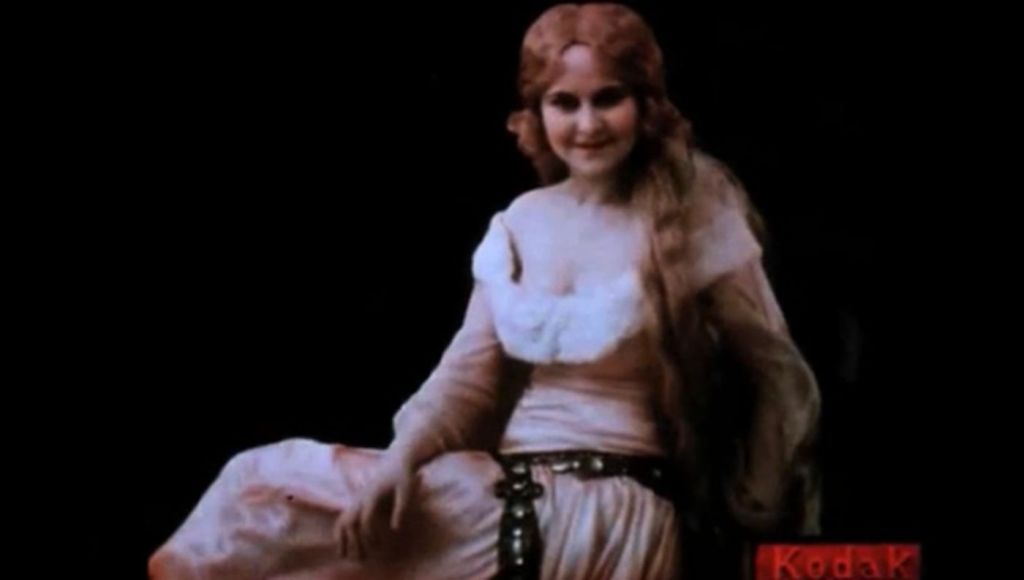
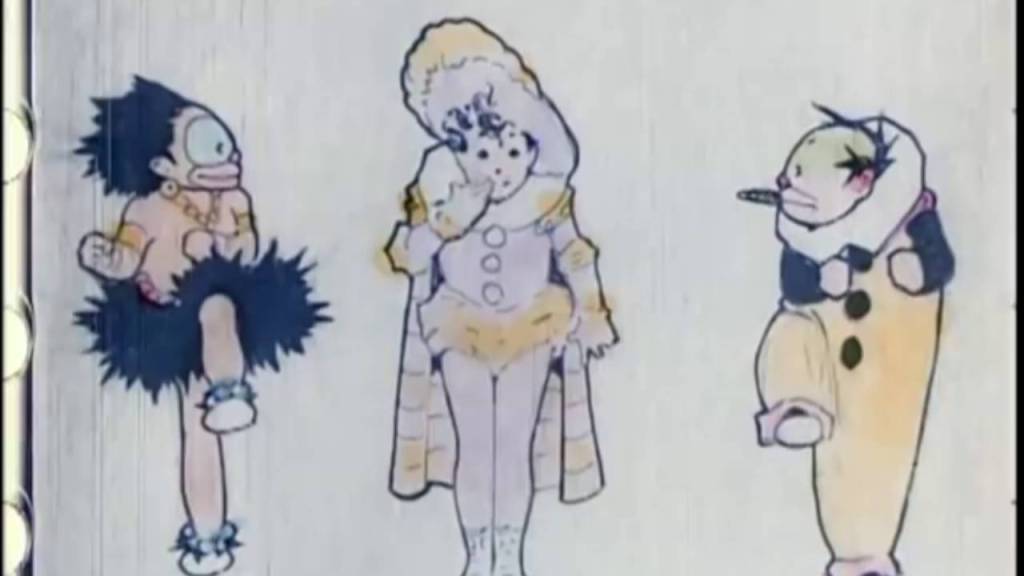
The Plot: “The Famous Cartoonist” Winsor McCay makes a bet with his colleagues (George McManus, John Bunny, and Eugene V. Brewster) that he can make his comic strip “Little Nemo” come to life. One month and 4000 drawings later, McCay wins the bet with some very impressive early animation. All your favorites are here: Nemo….um….the Mickey Rooney one…and…a native? That can’t be right.

Why It Matters: The NFR praises the film’s “fluidity, graphics, and story-telling” and cites McCay as an influence on “many generations of future animators”. There’s also an informative essay by film historian/NFR author Daniel Eagan.

But Does It Really?: This is definitely a “stepping stone” movie for the NFR. “Little Nemo” is the evolutionary step needed to get Winsor McCay to “Gertie the Dinosaur“, but is also an impressive undertaking in its own right. The live-action segment goes on for too long, but the revolutionary animation is worth the wait. It took 19 rounds for “Nemo” to make the NFR list, and that feels right: Justified, but hardly a film essential.

Wow, That’s Dated: McCay was no stranger to the ethnic stereotypes of the day, and “Little Nemo” features Impie, a generic African native, complete with some variation on blackface.

Other notes 

  • I will admit I’m not too familiar with the original “Little Nemo in Slumberland” comics. In each strip, Nemo would venture into Slumberland in his sleep, having adventures with clown-like trickster Flip and the aforementioned Impie. Real-life rules did not apply in Slumberland, as characters would squash and stretch, change sizes, and even acknowledge that they were in a comic strip! The whole thing looks really trippy; I see why it’s still revered by animators and graphic artists over 100 years later.
  • The “Little Nemo” comic strip premiered in the “New York Herald” in 1905, and was an immediate hit. In the six years before this film, “Nemo” had been adapted for the stage a few times (including a Broadway musical), and Winsor McCay had found success doing live drawings of the characters on the vaudeville circuit. Inspired by his son’s flipbooks, McCay made an animated short featuring his “Nemo” characters to spice up his vaudeville act. While not the first animation in American film (hello James Stuart Blackton), “Nemo” was the first to advance the medium with fluid character movement.
  • The “Little Nemo” film has a nearly identical live-action opening to “Gertie”. In both films McCay bets fellow cartoonist George McManus that he can make his cartoon come to life via animation. This means that McManus takes McCay up on the exact same bet twice. Either McManus is incredibly stupid or he has a serious gambling addiction.
  • If the larger man in the live-action wraparound looks familiar, you are as obsessed with early silent films as I am. He’s John Bunny, Vitagraph’s biggest star at the time, represented elsewhere on the list with “A Cure for Pokeritis“.
  • Also dated: several instances of McCay going back to his inkwell to replenish his pen while drawing.
  • Oh my god, the live-action prelude goes on forever. I know McCay is animating this whole thing by himself, but get on with it!
  • Once we get to the animation, the film’s NFR designation makes itself known. First of all, it’s in color; definitely wasn’t expecting that. The animation has a lovely, dreamlike quality (befitting the dreamlike style of the original comic). There are a few rough spots, but overall the animation is quite the marvel by 1911 standards.
  • The strip’s unnamed Princess arrives at the end, and she and Nemo ride off on a…dragon whose mouth doubles as a carriage? Apparently that was in the comics too?

Legacy 

  • McCay would spend the next decade creating other trailblazing pieces of animation, including future NFR entires “Gertie the Dinosaur” and “The Sinking of the Lusitania“.
  • “Little Nemo in Slumberland” survived a move from the “New York Herald” to the “New York American” (owned by William Randolph Hearst), and eventually a later move back to the “Herald”, where it stayed until the strip’s end in 1927. Unfortunately most of the original McCay artwork was destroyed in a fire, and a large portion of the surviving art has been poorly preserved.
  • “Nemo” has never truly gone away, with a century’s worth of influence on countless illustrators and animators (Walt Disney, Maurice Sendak, and Alan Moore to name just a few).
  • There have also been several adaptations of “Little Nemo” through the years, including an animated feature film in 1992 that definitely scared the crap out of me. And it looks like Netflix has announced a gender-swapped version centered around “Little Nema”. Whatever, Netflix; you just keep throwing money at IP and see what sticks.

Further Viewing: When is James Stuart Blackton making this list? If we’re going to have early animation on the NFR, why not start at the beginning?

#488) The Killers (1946)

#488) The Killers (1946)

OR “Swede and Lowdown”

Directed by Robert Siodmak

Written by Anthony Veiller. Based on the short story by Ernest Hemingway.

Class of 2008

The Plot: In the small town of Brentwood, New Jersey, local gas station attendant Pete Lund (Burt Lancaster) is gunned down by two mysterious hitmen (Charles McGraw & William Conrad). When insurance investigator Jim Reardon (Edmond O’Brien) attempts to pay out Lund’s $2500 life insurance policy, he pieces together the events that led to Lund’s murder, one flashback at a time. Real name Ole Anderson (aka “The Swede”), Lund was a boxer forced into early retirement who turned to a life of crime. After falling for the boss’ girlfriend Kitty Collins (Ava Gardner), Lund double-crosses his accomplices and runs off with $250,000 from a payroll robbery. And out of this movie’s noir aesthetic comes two of Hollywood’s brightest stars.

Why It Matters: The NFR calls the film “a classic example of film noir”, praising the work of composer Miklós Rózsa, editor Arthur Hilton, and Lancaster’s “electrifying film debut”.

But Does It Really?: “The Killers” is just shy of a minor classic. It’s a great noir film with a well-crafted mystery and star-making turns from Lancaster and Gardner, but you don’t hear too much about this movie nowadays. That being said, “The Killers” has enough of a pedigree to earn eventual NFR recognition, and is definitely worth a viewing or two.

Everybody Gets One: A filmmaker in his native Germany, Robert Siodmak left for Paris following the rise of the Nazis, and eventually came to California in 1939. A series of B-pictures got him a seven-year contract with Universal, where he helmed a series of notable film noir entries, with “The Killers” largely considered his greatest movie. After the troublesome production of “The Crimson Pirate” (again with Burt Lancaster), Siodmak returned to Europe, where he continued to make movies while collecting his share of European film festival awards.

Wow, That’s Dated: The usual ’40s stuff, like the phrase “take a powder”, and the statement that our solar system has nine planets. And adjusted for inflation, the heist money would be about $3.3 million.

Title Track: Shoutout to the killers of the title: Charles McGraw in an early film performance, and William Conrad, future star of “Cannon” and “Jake and the Fatman“.

Seriously, Oscars?: A surprise hit in theaters, “The Killers” received four Oscar nominations (Best Director, Screenplay, Scoring, and Editing), but lost all of them to unstoppable juggernaut “The Best Years of Our Lives“.

Other notes 

  • Longtime readers know my skepticism regarding short stories being padded out to a full-length film, but “The Killers” takes a unique approach. The first 20 minutes of the movie are a faithful adaptation of the original short story, and the rest of the running time is an original script fleshing out Lund’s backstory. Amazingly, it works. Hats off to screenwriter Anthony Veiller, with potential uncredited assistance from John Huston and Richard Brooks.
  • The entire opening sequence has a wonderful tension to it, which is amazing considering they really don’t reveal anything during that scene. All you know is that these two are looking for “The Swede” and that there are guns involved.
  • The supporting character of Nick Adams appears in 25 Hemingway short stories, typically as a stand-in for Hemingway’s own adolescence and coming-of-age. Nick is played in this film by Phil Brown, who would go on to play – and this is absolutely true – Uncle Owen in “Star Wars“. Look it up, I’m still in shock.
  • Although “Desert Fury” was filmed first, “The Killers” was Burt Lancaster’s first released movie. A former acrobat, Lancaster was spotted in a Broadway play by producer (and future business partner) Harold Hecht, and the actor headed to Hollywood. Lancaster was the third choice for Lund, and after seeing the rushes, producer Mark Hellinger allegedly declared “may all my actors be acrobats!”
  • Edmond O’Brien looks like if someone ironed out the lines of Bogart’s face. Also, thanks to Jim Reardon, we get another movie that depicts an insurance investigator’s life as one of non-stop mystery and danger!
  • Lancaster’s character spent time in an Atlantic City hotel after committing a crime? Why does this sound so familiar…?
  • Does every character in this movie get to tell a flashback? And are all these witnesses describing these scenes to Reardon in detail? “I remember when I met Lund. We fade in on Interior: Hotel Lobby, Day. A slow pan through the crowd…”
  • I didn’t realize “The Killers” was a boxing movie. It’s interesting watching young Burt Lancaster play a somewhat out-of-it naïve boxer, in contrast to the more intellectual characters of his later filmography.
  • Despite her prominent billing, Ava Gardner doesn’t show up until 38 minutes in. At this point in her career, Gardner was a contract player at MGM with only a few years of bit parts to her credit, and was loaned out to Universal to play Kitty Collins.
  • Until this viewing, the only other Ava Gardner performances I’d seen were her cameo in “The Band Wagon” and her work in “Earthquake”. Thank god “The Killers” is on this list.
  • My favorite unintentionally funny moment is when Lund’s former cellmate Charleston (as played by Vince Barnett) says he won’t tell Reardon anything about “The Swede”, and then segues into a flashback.
  • Shoutout to cinematographer Elwood Bredell. There are some lovely noir compositions throughout the film, culminating in an uninterrupted two-minute take of the robbery and getaway. Where’s his Oscar?
  • Revolutionary by 1946 standards: the flashbacks aren’t in chronological order, adding an extra layer to solving this mystery.
  • My main takeaway from this movie is that everyone in the ’40s had a pack of cigarettes and a gun on their person at all times.
  • What a weird ending. All the plot points gets wrapped up, but it all happens so quickly, followed by a comic relief epilogue between Reardon and his boss that doesn’t mesh with the rest of the movie.

Legacy 

  • “The Killers” was a hit and propelled both Burt Lancaster and Ava Gardner to stardom. Among the film’s fans was Ernest Hemingway, who called it “the only good picture ever made of a story of mine.”
  • According to the NFR’s write-up: [Arthur] Hilton’s work on the fight scenes would stand as the vanguard of such fare until “Raging Bull” some 34 years later. …Sure.
  • There have been two other major film adaptations of the original Hemingway story. A 1956 short by Andre Tarkovsky sticks to the original story, while a 1964 update from Don Siegel was the final acting role for Ronald Reagan.
  • Perhaps the film’s most interesting legacy: In 1949, Walter Schumann composed the iconic instrumental “Danger Ahead” for the “Dragnet” radio series. “Killers” composer Miklós Rózsa felt the opening riff (“Dun-da-dun-dun”) sounded a lot like a selection from his “Killers” score, and made a copyright claim. A settlement was reached, and Rózsa received joint credit for the “Dragnet” theme.

Further Listening: As a college student in the mid-to-late-2000s I was legally required to enjoy rock band The Killers. They’re not named after the movie, but I’m still using it as an excuse to listen to “Hot Fuss”.

#487) Bullitt (1968)

#487) Bullitt (1968)

OR “Mustang Stevie”

Directed by Peter Yates

Written by Alan Trustman and Harry Kleiner. Based on the novel “Mute Witness” by Robert L. Pike (aka Robert L. Fish).

Class of 2007

The Plot: San Francisco Police Detective Frank Bullitt (Steve McQueen) is assigned by Senator Walter Chalmers (Robert Vaughn) to protect Johnny Ross (Felice Orlandi), a mob informant scheduled to testify against “The Organization” at a senate subcommittee. When two professional hitmen shoot Ross in his hotel room, Bullitt is determined to find out who’s responsible before Chalmers finds out and the case is taken away from him. But this mystery has a few twists to it, mainly the twists and turns of the city streets as Bullitt chases a lead into film immortality.

Why It Matters: The NFR gives superlatives to McQueen, Yates, Lalo Schifrin’s “superb” score, and of course, the chase scene, which is hailed as both “exhilarating” and “arguably the finest in cinema history.”

But Does It Really?: We all know why we’re here: “Bullitt” makes the list for its iconic chase scene through San Francisco (more on that later). Thankfully, the rest of the movie is exciting and entertaining enough not to be overshadowed by 10 minutes in the middle. “Bullitt” arrived at the dawn of the New Hollywood era, and Yates’ energetic direction presaged the sleek, gritty aesthetic of 1970s studio films. “Bullitt” is by no means an untouchable classic, but does feature an untouchable movie moment, and has endured as a shining example for all action movies to follow.

Everybody Gets One: British director Peter Yates got his start directing in the theater and serving as assistant director on such films as “The Guns of Navarone” and “A Taste of Honey”. His 1967 film “Robbery” (which also includes an extended chase sequence) caught the eye of “Bullitt” screenwriter Alan Trustman, who brought him to the attention of Steve McQueen and the film’s producers. “Bullitt” was Yates’ first American directing gig. And shoutout to Felice Orlandi as Ross, aka “the vic”…or is he?

Wow, That’s Dated: Much of the film’s story points hinder on such outdated things as cabs, phone booths, and a brand new Xerox Magnafax Telecopier, one of the first facsimile (or “fax”) machines. Also dated: “Thank you for choosing Pan American. Please, for the love of God, keep choosing us.”

Seriously, Oscars?: “Bullitt” was one of the most successful movies of 1968, and in a very crowded Oscar field, still managed to take home the prize for Frank P. Keller’s editing (presumably for the chase). Warner Bros.’ sound department was also nominated, losing Best Sound to the Columbia team for “Oliver!”.

Other notes 

  • The novel “Mute Witness” was set in New York, and although the city was considered (along with Boston), “Bullitt” was ultimately filmed in San Francisco, thanks to some lobbying from then-Mayor Joseph Alioto. “Bullitt” was one of the first studio films to shoot entirely on location, which ultimately cost the film an additional half million dollars.
  • Even the opening credits are sneaky. Shoutout to Pablo Ferro and his team.
  • Did Bullitt ever work with Dirty Harry? Speaking of, “Bullitt” came out just after the Miranda Rights were implemented, and while the film never goes to the “Dirty Harry” extremes, Bullitt is definitely a cop who doesn’t play by the rules. I kept waiting for the film to play into those “hand in your badge” clichés, but thankfully it never did.
  • Just a few years away from “The Godfather“, Robert Duvall shows up here as cab driver/witness Weissberg. Duvall’s later fame makes his appearance here a little distracting, and tips off too early that his character will be important later.
  • I assume Senator Chalmers hired Bullitt and his team because Skinner was too busy making Steamed Hams.
  • Steve McQueen is so close to being Paul Newman. I see why they were always up for the same parts. McQueen’s acting is sometimes dismissed as too stiff, but it works well for this character; a man desensitized by the violence that surrounds him.
  • As Bullitt’s live-in girlfriend Cathy, Jacqueline Bisset gets virtually nothing to do (other than look sexy), but it’s good to know that this movie was a launching pad for more substantial work (I enjoy her in “Murder on the Orient Express”). And while we’re here: it’s pronounced BISS-et, not Bis-SET.
  • Among the countless character actors in “Bullitt” are future sitcom stars Vic Tayback and Norman Fell, “Psycho” outlier Simon Oakland, and actor/director Georg Stanford Brown, progressively cast here as an African-American surgeon. Who isn’t in this movie?
  • And now the moment you’ve been waiting for: the chase between Bullitt’s first-generation Ford Mustang and the bad guy’s Dodge Charger through the hilly streets of San Francisco. The bumpy landscape and driver POV shots give the whole scene the sensation of a roller coaster (the film’s “Variety” review compared it to the opening of “This Is Cinerama“). Also aiding the excitement is the natural claustrophobia of San Francisco’s streets: already intimidating while going the speed limit, but especially terrifying at 100 mph. The sequence is a classic for a reason, and still a fun watch over 50 years later. My one gripe: the chase is geographically impossible. How the hell did they end up in Brisbane from the Marina District?
  • While we’re talking about the chase, shoutout to the stunt drivers. An accomplished race car driver, Steve McQueen did his own driving for the closeups (at his own insistence). The long shots of the Mustang were done by McQueen’s regular stuntman Loren James, legendary stunt coordinator Carey Loftin, and McQueen’s “Great Escape” motorcycle double Bud Ekins. The Charger was driven by stuntman Bill Hickman, who was driving right behind James Dean at the moment of his fatal car crash.
  • Nothing ever tops the chase scene, but the mystery is well-crafted enough to hold your interest. The film’s finale at SFO is an interesting mix of “Airport ’68” and “Where’s Waldo?”. Though perhaps the most exciting element is all the pre-9/11 airport procedures, which seem quite casual to a modern viewer. Hell, back then if you asked nice enough they’d let you fly the plane.
  • Oooh, Bullitt said “bullshit”. You earn that M rating, movie.
  • Also incredibly dated in 2020: the lingering shot of a “Support Your Local Police” bumper sticker. About that…

Legacy 

  • Everyone benefited from the success of “Bullitt”. Director Peter Yates would go on to direct such films as “The Deep” (also with Jacqueline Bisset) and “Breaking Away”. Producer Philip D’Antoni would later win an Oscar for producing “The French Connection“. Hey, there’s an iconic chase scene in that movie, too! What are the odds?
  • “Bullitt” still gets referenced from time to time, almost always for the chase scene. Runner-up: the title is occasionally a cultural short-hand for erratic driving (“Okay Bullitt…”).

#486) Reminiscences of a Journey to Lithuania (1972)

#486) Reminiscences of a Journey to Lithuania (1972)

Directed by Jonas Mekas

Class of 2006

The Plot: Lithuanian filmmaker Jonas Mekas chronicles his return to his home country over 25 years after emigrating to America. Mekas and his brother return to the village of Semeniškiai and reunite with their mother and extended family, which Mekas turns into a sort of film collage of 100 images. As Mekas continues to rediscover his homeland, he starts to open up about what WWII did to him and his family, and why he left Lithuania.

Why It Matters: The NFR calls the movie “an elegiac diary film” and praises Mekas and his “exceptional body of avant-garde films”.

But Does It Really?: If this blog has taught me anything, it’s to appreciate not only the undervalued work of underground filmmakers, but also their stories that have an overarching influence on their work. Jonas Mekas is one such filmmaker, and his childhood in Lithuania is one such story. Jonas Mekas is deserving of film preservation not only for such work as “Lithuania”, but also for his lifelong devotion to promoting avant-garde filmmaking. No argument here for the NFR preservation of Jonas Mekas.

Everybody Gets One: As mentioned in the film, Jonas Mekas and his brother Adolfas were escaping their home country of Lithuania during WWII when their train was stopped in Germany, and the two were sent to a labor camp in Elmshorn. After they escaped, the two hid in Denmark before emigrating to America in 1949. While living in Williamsburg, Brooklyn, Jonas bought his first camera. In addition to making his own films, Jonas Mekas was known for curating avant-garde films, as well as advocating them in his columns for “Film Culture” and “The Village Voice”. All of these efforts earned Mekas the nickname “The Godfather of American experimental cinema”.

Wow, That’s Dated: Mainly the idea of anyone taking extensive footage at a family gathering and turning it into a documentary. At best, a modern remake would be a story on Instagram. Maybe a YouTube montage set to royalty-free music.

Seriously, Oscars?: Like many a renowned avant-garde filmmaker, Jonas Mekas received zero Oscar attention for his films. For the record: 1972’s Best Documentary winner was a movie about ’70s evangelical preacher Marjoe Gortner. Wow, that’s dated.

Other notes 

  • The film is divided into three parts, though Parts One and Three serve more as prologue and epilogue respectively. Part One is comprised mainly of footage from Mekas’ previous films, and his life in Williamsburg after the war.
  • I’m sure this was intentional, but all of the footage in part one is in black and white. When we move on to Part Two, all of the footage in Lithuania is in color, making for a nice “Wizard of Oz“-esque reveal. The shift also highlights the natural beauty of Lithuania and its expansive fields.
  • Although the footage is silent, there was obviously some audio recordings done at the same time, with various family members providing commentary as well. Most notable of these audio recordings is all the singing that Jonas and his family do together. As Jonas says later in the film “When more than one Lithuanian get together, they sing.”
  • Jonas chooses not to make mention of his time imprisoned in a Nazi labor camp until about halfway through the film. It completely changed my entire viewing perspective. What started as a family reunion became a movie about a man finally able to revisit his formative years without the painful trauma of the war. It’s a credit to Mekas’ talent with structure. This isn’t just a series of vignettes strung together, there’s an emotional story at this film’s core.
  • This movie has something you don’t see all the time: a scythe being used as an actual agricultural tool rather than just something being held by the Grim Reaper.
  • Jonas’ cousin is a computer engineer. This is 1971, that’s super fancy!
  • As previously mentioned, Part Three is an epilogue of sorts in which Jonas and his family visit extended family in Vienna. The final shot is Jonas departing Vienna as a large fire ravishes part of the city. It is theorized that the government has intentionally burned the building in an effort to modernize. Yeah, we had something like that happen in the Mission District a few years back.

Legacy 

  • Jonas Mekas continued making films well into the early 2010s, in addition to teaching film for NYU and other schools. Highlights of his later film career include 2000’s “As I Was Moving Ahead Occasionally I Saw Brief Glimpses of Beauty”. Jonas Mekas died in 2019 at age 96.

#485) Cool Hand Luke (1967)

#485) Cool Hand Luke (1967)

OR “I Am a Christ Allegory from a Chain Gang”

Directed by Stuart Rosenberg

Written by Donn Pearce and Frank Pierson. Based on the novel by Pearce.

Class of 2005

Spoilers Ahead!

The Plot: A 1950s prison camp gets some “new meat” for their chain gang, including Luke Jackson (Paul Newman), a veteran doing time for cutting off parking meter heads. Luke immediately establishes his nonconformity by mouthing off to both his warden The Captain (Strother Martin) and lead prisoner Dragline (George Kennedy). Despite this initial “failure to communicate”, Luke’s perseverance and refusal to let the camp get him down prove an inspiration to his fellow prisoners. Let’s see, a young radical who doesn’t know his real father, always sticks to his morals in the face of hardship, and has a following of about 12 guys. Something very familiar about all this…

Why It Matters: The NFR praises Newman’s performance as a “classic antihero”, mentions the film’s Oscar nods, and quotes Strother Martin’s famous line.

But Does It Really?: In a film year that gave us “In the Heat of the Night“, “The Graduate” and “Bonnie and Clyde“, “Cool Hand Luke” can easily get lost in the shuffle of 1967’s movie lineup. But the film endures thanks to its bountiful iconic moments, a never-better Paul Newman, and some stunning imagery from cinematographer Conrad L. Hall. The film’s inspirational take on the anti-establishment stance of the ’60s gives the film a timeless quality, which has helped “Cool Hand Luke” remain a classic over 50 years later.

Everybody Gets One: “Cool Hand Luke” was the first major studio film for director Stuart Rosenberg, who spent most of the ’60s directing episodic television, as well as the independent film “Question 7”. Also making their sole NFR appearance is most of the supporting cast, including George Kennedy, Wayne Rogers, Joe Don Baker, and Morgan Woodward as “the man with no eyes”.

Wow, That’s Dated: As I mentioned in my “I Am a Fugitive…” post, chain gangs were more or less phased out of the American criminal reform system by the mid-‘50s, though some states continued the practice well into the ’70s, and Arizona briefly revived it in the mid ’90s.

Seriously, Oscars?: A critical and commercial success, “Cool Hand Luke” received four Oscar nominations, and George Kennedy took home the prize for Supporting Actor (Kennedy invested $5000 of his own money into his campaign). Newman’s Best Actor nod was his 4th failed bid in nine years. Perhaps most embarrassing, “Luke” missed out on a Best Picture nomination, because “Doctor Dolittle” you guys!

Other notes 

  • I have a few personal connections with “Cool Hand Luke”. For starters, it was one of my Dad’s favorite movies, and subsequently I saw this film when I was a tad too young for it. “Cool Hand Luke” was also primarily filmed in my hometown of Stockton, California. Much of the seemingly endless stretches of road in the film are from Stockton’s outskirts, and look remarkably similar today. And yes, it’s always that hot.
  • Donn Pearce based his novel “Cool Hand Luke” on his own experience in a Florida chain gang. Warner Bros. bought the film rights and commissioned Pearce to adapt the screenplay. Pearce’s screenwriting inexperience led to Frank Pierson being brought in. Depending on which story you read, it was either Pierson or director Rosenberg who layered on the Christ metaphors.
  • Shoutout to Lalo Schifrin’s superb score. I could listen to that main theme all day.
  • Dragline goes through a lot of trouble trying to give Luke a good nickname. Why not stick with “Fast Eddie“?
  • Some of the most iconic lines from this movie are the ones that get repeated a lot. Keep an ear out for the frequent instances of lines like “Takin’ it off here, boss” and “Shakin’ the bushes, boss”. Anyone not noticing these moments spends a night in the box.
  • Goddamit, there’s that “Enter the Dragoncollapse/oof sound again! Damn you to hell, Warners Sound Department!
  • Oh god, it’s the “Lucille” scene. Everyone stop ogling that woman. That means you too, Conrad L. Hall!
  • “Sometimes, nothing can be a real cool hand [to play].” Can it? This movie has the same questionable moral as “Parasite“.
  • Jo Van Fleet IS Geraldine Page. Like her Oscar-winning turn in “East of Eden“, Van Fleet nails her cameo here as Luke’s mother.
  • Shoutout to Harry Dean Stanton. This is one of four NFR entries with Stanton, and while his characters never get much to do, he spent a 60+ year career being reliably perfect in whatever role he was given. And at least in “Luke” he gets to sing!
  • This is yet another classic movie that I always forget Dennis Hopper is in. Speaking of, how did his character get the nickname “Babalugats”? And what does that even mean?
  • The 50 egg challenge is still nauseating to watch. Between this and “Rocky“, eggs don’t come across as too appetizing in classic films. Oh, and afterwards, Luke is lying on the table in his underwear with his arms stretched out. Real subtle, everyone.
  • Paul Newman sings too! And plays the banjo! What can’t he do?
  • “What we’ve got here is failure to communicate.” Strother Martin spent most of his career in westerns (playing characters he referred to as “prairie scum”), and “Luke” was a chance to play a more sophisticated, yet more sadistic variation. Fun Fact: Due to their physical and vocal similarities, Martin was occasionally cast as Tennessee Williams-esque characters.
  • Luke’s tactics for escaping and evading the police are quite ingenious. Did Christ use chili powder when he was a fugitive?
  • We’re at the tail end of the Hays era, so the movie gently pushes a few boundaries. Profanity is sprinkled in for effect (“son-of-a-bitch” is the favorite), and there’s even some rear nudity! And Luke’s butt is not a double: that is Newman’s Own!
  • I can see how George Kennedy got the Oscar. Dragline gets a nice character arc, going from the intimidating heavy to a helpless follower, and Kennedy makes that change subtly and effectively. Plus he gets to be the Judas!
  • The film ends with a supercut of every time Luke/Paul Newman smiles in the movie (a late addition to the film), and a wide pan out to a crossroad. A crossroad. Get it? GET IT?

Legacy 

  • “Luke” was an instant hit, and was just as instantly inundated with parodies. Everyone at some point in pop culture has commented on “a failure to communicate”. It helps that this line is repeated multiple times in the original trailer.
  • The name “Cool Hand Luke” served as the inspiration for both the Christian band and the steakhouse.
  • Lalo Schifrin’s composition for the “Tar Sequence” was used by ABC for their Eyewitness News programs throughout the ’70s (it has that rapid staccato associated with typewriters). The music is so ubiquitous with Eyewitness News, people thought Schifrin lifted the music from the show for “Cool Hand Luke”! That being said, Schifrin is on the record saying that he “laughed all the way to the bank”.
  • The MTV show “Jackass” actually recreated the 50 egg challenge. Mercifully, I could not find a clip. Or maybe I just didn’t want to.
  • Luke Jackson paved the way for such future Christ metaphors in film as E.T. and Neo. And just when you think Hollywood has killed this trope, it just keeps getting…revived? Is that the word I’m thinking of?