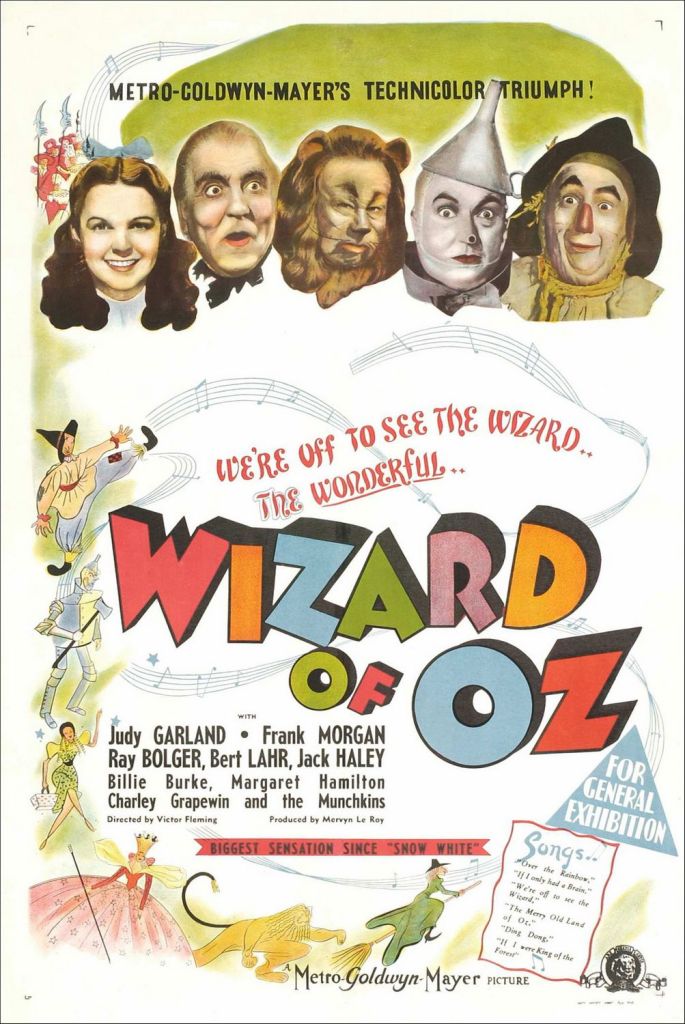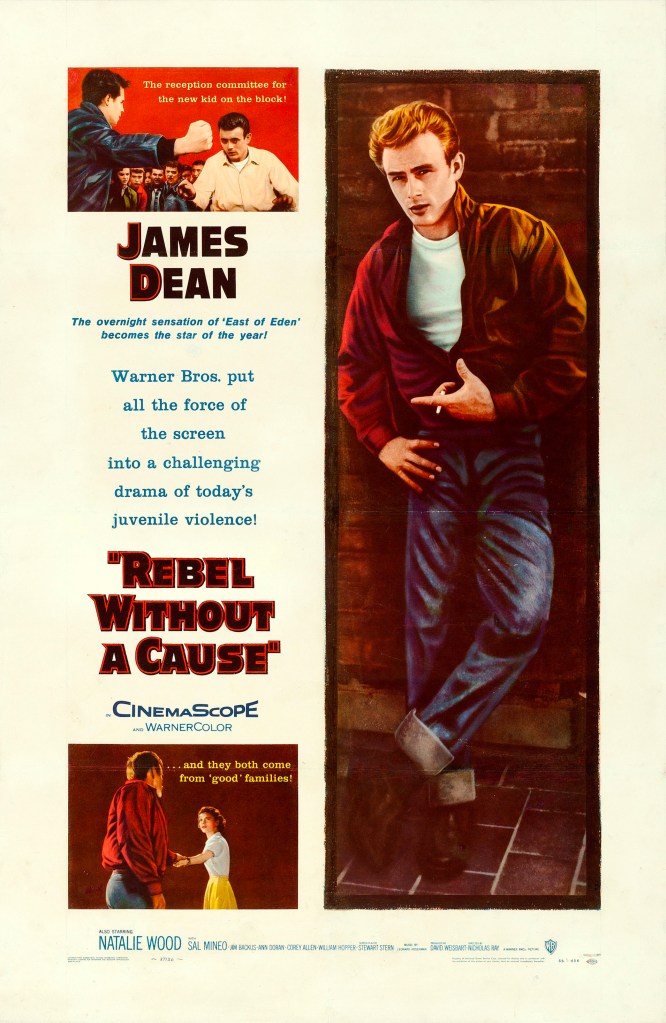
#470) Rebel Without a Cause (1955)

#470) Rebel Without a Cause (1955)

OR “Angst for Nothing”

Directed by Nicholas Ray

Written by Stewart Stern. Story by Nicholas Ray. Adaptation by Irving Shulman.

Class of 1990

The Plot: Jim Stark (James Dean) is a mixed-up teenager, constantly rebelling against his misunderstanding parents (Jim Backus & Ann Doran). In 24 hours, Jim gets arrested for public drunkenness, runs afoul of teen gang leader Buzz Gunderson (Corey Allen) on a field trip at the Griffith Observatory, partakes in a knife fight and a deadly game of chicken, and closely bonds with Buzz’s girlfriend Judy (Natalie Wood) and social misfit Plato (Sal Mineo). “Rebel Without a Cause” flouts convention to suggest that teenage delinquency can happen in any neighborhood to any family.

Why It Matters: The NFR calls it “wretchingly powerful, despite some dated elements” and goes on to praise director Ray, screenwriter Stern, and the cast. An essay by the late film critic Jay Carr analyzes the film’s themes.

But Does It Really?: The legacy of “Rebel” is two-fold: the definitive entry in the ’50s teen drama subgenre, and James Dean’s commanding central performance. The key to the film’s success is Nicholas Ray et al focusing on the teen characters, making them the dimensional, complex protagonists over their authoritative parents. “Rebel” may not be an untouchable essential, but, aided by a strong cast of rising talent and several iconic moments, continues to be a memorable classic.

Title Track: In 1946, Warner Bros. bought the screen rights to the 1944 book “Rebel Without a Cause: The Hypnoanalysis of a Criminal Psychopath” by Dr. Robert M. Lindner. Various adaptations were written, but all were abandonded, and the project was dropped. In 1954, Warner Bros. purchased Nicholas Ray’s treatment about teenage rebellion called “The Blind Run”. Irving Shulman’s script adaptation bared the title “Juvenile Story”, and Stewart Stern’s re-writes lifted “Rebel Without a Cause” from the unrelated Lindner book.

Seriously, Oscars?: Despite mixed reviews, “Rebel Without a Cause” was one of Warner Bros.’ biggest hits of the year. The film, however, failed to win any of its three Oscar nominations: Supporting nods for Wood and Mineo, and Best Story for Nicholas Ray (Side Note: “Best Story” is a now retired category specifically for a movie’s treatment, not its screenplay, hence Ray’s nomination as opposed to Stern). The only reason James Dean wasn’t nominated was because he was already up for Best Actor for “East of Eden” (sadly, Dean is the category’s first posthumous nominee).

Other notes

  • “Rebel Without a Cause” was originally slated to be a black and white B-movie with a small budget. Production began in March 1955, the same month “East of Eden” was released. Recognizing Dean’s rising star (and the popularity of teen movies), Jack Warner bumped up “Rebel” to an A-movie in Technicolor and CinemaScope.
  • This classic opens with a screen legend in the making…playing with a cymbal monkey? Have I never seen this movie from the beginning?
  • Natalie Wood had been a child actor for 12 years before successfully making the transition to young ingenue thanks to this movie. Judy’s promiscuity was all but eliminated from the script, but Wood still gets in some emotional shading when she can.
  • “You’re tearing me apart!” A moment that big so early in a movie could come across as over the top, but Dean pulls it off.
  • Shoutout to classic Hollywood cinematographer Ernest Haller. An Oscar winner for “Gone with the Wind“, Haller makes excellent use of the CinemaScope widescreen camera. Multiple characters comfortably fill the screen, and there’s plenty of storytelling packed into each shot.
  • Primarily known then as the voice of Mr. Magoo, Jim Backus shines in easily his best live-action performance. Equally impressive is Ann Doran as Jim’s mom, domineering but never cartoonish.
  • Although the Production Code made the filmmakers tone down Plato’s obvious homosexuality, there are still a few references hidden in the film. Exhibit A: the photo of Alan Ladd in Plato’s locker.
  • Wow, what a nihilistic planetarium show. Life goes on, man’s problems don’t matter, go forth young graduates!
  • Buzz’s friend Goon is played by a young Dennis Hopper! Unfortunately Hopper is given nothing to do: Goon and the other teen characters were de-emphasized in favor of James Dean.
  • The knife fight at the Observatory confirms my theory that field trip chaperones are useless.
  • To fully understand his leading man, Nicholas Ray allowed Dean free-reign to improvise his dialogue. This is most evident in Jim’s conversation with Dad before the chicken run. Dean does a great job of conveying the inarticulate confusion of a teenager, and Backus follows wherever Dean is going.
  • If the abandoned mansion Jim, Judy and Plato hang out in looks familiar, it’s J. Paul Getty’s “Phantom House”, a.k.a. Norma Desmond’s mansion from “Sunset Boulevard“. Sadly, the house was completely demolished just two years later.
  • While impersonating Jim’s dad, James Dean sneaks in a surprisingly spot-on Mr. Magoo voice. I learned it from you, dad!
  • Shoutout to Sal Mineo, who is just perfect as a lost soul yearning to connect. Bonus shoutout to the film for not using Mineo’s Italian ethnicity to define the character.
  • Despite some truly exciting action scenes, the film’s finale loses momentum. This is not helped by the film’s unsympathetic portrayal of the police. It’s true to the rest of the film’s view of adults, but nowadays we really don’t need the reminder.

Legacy 

  • After production wrapped on “Rebel Without a Cause”, James Dean headed off to Texas to film “Giant“. Upon his return to California, Dean resumed his fascination with auto racing, and was en route to a race in Salinas when he was killed in a car accident on September 30th 1955. He was 24. “Rebel” was released in theaters less than a month later on October 26th.
  • “Rebel” was a hit, and continued the ’50s trend of movies targeted towards/dealing with the teen market. Some, like “Blackboard Jungle“, tackled real life issues, but as the decade went on, the genre started getting more fanciful (see “Gidget” and “I Was a Teenage Werewolf”).
  • Griffith Observatory got a major tourism boost thanks to “Rebel”, becoming a historical landmark in 1976. A bust of James Dean can be viewed on the Observatory’s lawn.
  • “Rebel Without a Cause” is definitely one of those movies where people know the title more than the actual movie. A typical allusion to the movie focuses on the title and Dean’s iconic wardrobe rather than any specific scene.
  • One “Rebel” moment that does get referenced: Jim’s line “You’re tearing me apart!” is uttered by James Dean uber-fan Tommy Wiseau in “The Room”, quite possibly the worst movie ever made.

Bonus Clip: In 1947, Warner Bros. used a draft from one of the unproduced versions of “Rebel” in a screen test for 23-year-old stage actor Marlon Brando. Warner Bros. passed on Brando, who went back to New York to do some new Tennessee Williams play…

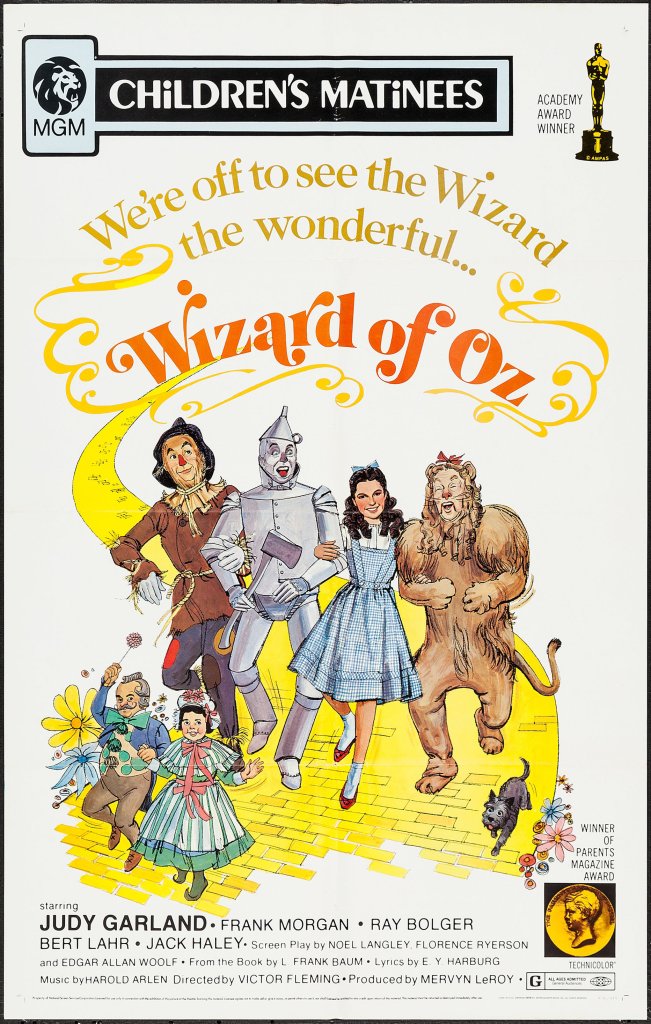
#469) The Wizard of Oz (1939) – Part 3 (Legacy)

Here’s Part 1 of my lengthy “Wizard of Oz” post, and Part 2 too!

The Legacy of “The Wizard of Oz”

  • Reports of “The Wizard of Oz” being a financial flop are inaccurate. “Oz” was one of the highest grossing films of the year, but its massive budget guaranteed the film would not make a profit. The movie finally landed in the black after a 1949 re-release to capitalize on Judy Garland’s continued popularity.
  • In an effort to compete with the live family-friendly musicals that aired on TV throughout the late ’50s, CBS bought the TV rights to “The Wizard of Oz”. The film’s first broadcast was on November 3rd, 1956, and became an annual TV tradition for the next 40 years. The airing on February 24th, 1988 was taped by my parents, and may in fact be the first National Film Registry entry I ever watched.
  • Everybody has attempted to make this movie’s unofficial sequel. Disney owned the film rights to the original Baum Oz sequel books, and in 1985 (faced with the prospect of losing those rights) brought us cult classic “Return to Oz”. Combining “The Marvelous Land of Oz” and “Ozma of Oz”, “Return” is closer in tone to the original books, and therefore darker than the colorful musical it is ostensibly a sequel to.
  • Other noteworthy follow-ups are “Journey Back to Oz”, a 1974 animated sequel with Liza Minnelli filling in for her late mother, and 2013’s “Oz the Great and Powerful”, Disney’s stab at a prequel with a totally disinterested James Franco as the Wizard.
  • There is no more iconic costume piece in filmdom than Dorothy’s ruby slippers. Over the last 80 years, four of the alleged six pairs created for the film have been sold, auctioned, lost and found. There’s a pair in the Smithsonian Institution, and another will appear at the Academy Museum of Motion Pictures in Hollywood, should that ever actually open.
  • I’m always a fan of when a movie on this list has a video game adaptation, and “Wizard of Oz” joined this elite group with a Super NES game in 1993!
  • There have been countless stage adaptations of “Oz” dating back to the 1900s, but the movie didn’t get its official stage production until 1987 courtesy of the Royal Shakespeare Company. A 1995 concert staging in New York was televised on TNT, and showed Nathan Lane assuming his place as Bert Lahr’s heir apparent.
  • To add some confusion, there’s another stage version of the movie that premiered on the West End with new songs by Andrew Lloyd Webber and Tim Rice. What is happening?
  • Even more successful are two completely unrelated “Oz” stage musicals. 1974’s “The Wiz” modernizes the story with an all-Black cast, and spawned a wonderfully awful movie. 2003’s “Wicked” is an adaptation of the 1995 novel telling the story from the witches’ perspective. “Wicked” is still playing on Broadway (COVID pending), and I will admit is a well-crafted (if overly praised) piece of theater.
  • Every fantasy movie owes a debt of gratitude to “Oz”; without it, would there even be a “Star Wars“?
  • There are thousands of references, allusions, and parodies of “The Wizard of Oz” out there. Various costumes and set pieces found their way into other MGM movies of the era, but the homages really pick up once the film became a television staple.
  • While we’re on the subject: can we put the kibosh on sketch comedy shows doing a “long lost deleted scene” Oz sketch? We get it: it’s funny watching these characters say and do dirty things. Move on.
  • I’ve also noticed that “Oz” tends to get mentioned either in period pieces as a reference modern audiences would get (see “A League of Their Own“), or in futuristic dystopias as the only piece of pop culture that has survived (see “Avatar” and “The Matrix“). For a reversal of the former, see this exchange from “The Avengers”.
  • “Mystery Science Theater 3000” riffed on “Oz” in almost every episode, but for whatever reason their go-to was the Wizard’s line “I can’t come back, I don’t know how it works! Goodbye folks!”
  • “There’s no place like…I wanna be a witch!”
  • The film’s behind-the scenes production was covered in part by the TV miniseries “Life with Judy Garland: Me and My Shadows”, with Tammy Blanchard as young Judy.
  • 1981’s “Under the Rainbow” is a fictional account of how 124 little people arrived in Hollywood to play the Munchkins, and is considered one of the worst movies ever made.
  • Every song from “Oz” has been covered throughout the years, and Judy could never get through a concert without belting “Over the Rainbow”. Speaking of, people seem to love the Israel Kamakawiwoʻole mashup of that song with “What a Wonderful World”.
  • Most of the cast lived long enough to see the film become a classic, and many of them would appear in conjunction with the annual television airings. Ray Bolger reprised the Scarecrow on an episode of “Donny & Marie”, and Margaret Hamilton turned up as the Wicked Witch in “The Paul Lynde Halloween Special”!
  • “Oz” was the grand finale to the dearly departed “Great Movie Ride” at Disney MGM Studios, with the Wicked Witch animatronic being the most technologically advanced of its time.
  • But the greatest “Oz” reference in history, possibly better than the original film itself: 1974’s “Zardoz”.

And now the Odds & Ends of “Oz” references I haven’t mentioned yet in these three posts:

  • The three vaudevillians Aunt Em hired as farmhands.
  • The Wicked Witch theme music
  • Professor Marvel
  • “Toto, I’ve a feeling we’re not in Kansas anymore”
  • Adriana Caselotti’s weird cameo
  • Everyone’s insufferably extensive costume/makeup ordeal.
  • “Surrender Dorothy”
  • Pat Walshe as Nikko, the head winged monkey.
  • For that matter, Nikkō Tōshō-gū.
  • The Scarecrow carrying a gun through the haunted forest
  • The Winkie guard’s Rorschach test chant
  • “Oh what a world, what a world.”
  • “Pay no attention to that man behind the curtain.”
  • The inaccurate definition of an isosceles triangle
  • “And you and you and you…and you were there!”
  • Russell Maloney’s New Yorker revue of the movie calling it a “stinkeroo”.
  • And of course, the copious amount of gay coding throughout the whole film.

Bonus Clip: Margaret Hamilton appeared on a 1975 episode of “Mister Rogers Neighborhood” as herself, talking about how she was only pretending to be a Wicked Witch and that no one needed to be afraid of her. Thanks Maggie.

Listen to This: Judy Garland’s rendition of “Over the Rainbow” is a classic, though weirdly it’s a Decca recording she sang as a single that has made the National Recording Registry.

Listen to This Too: For those who don’t understand why I’m mentioning Pink Floyd’s 1973 album “The Dark Side of the Moon” in this post, drop the needle after Leo the Lion’s third roar and you’ll thank me later for the most amazing coincidence in the history of art.

Further Reading: There is so much more fascinating history to uncover about the production and legacy of “Oz”, and countless books on the subject. I’ll recommend the “50th Anniversary Pictorial History” by Oz/Judy Garland expert John Fricke, and Aljean Harmetz’s aptly named “The Making of the Wizard of Oz“.

#469) The Wizard of Oz (1939) – Part 2 (Other Notes)

Previously on #469) The Wizard of Oz (1939)…

Other notes

  • The main difference between “Oz” and other movies of the era is money. The film’s budget was a then-record $2.8 million, and it’s clear that no expense was spared. Even the early Kansas scenes have a quiet scope about them; the landscape seemingly goes on forever, and the Gale farm looks and feels like a real place rather than a set on a soundstage.
  • “Over the Rainbow”, what can I say? It’s the ultimate “I Want” song, sung with perfect earnestness by Judy. And to think they were going to cut this song from the film.
  • I’ll take this moment to single out Judy Garland’s genuine, sincere performance. This performance is the reason the film still resonates emotionally with audiences 80 years later, and because her Dorothy believes in the fantasy elements, so do we. Now if only Garland was treated better on and off the set.
  • Miss Gulch is what we would today call a “Karen”. Too bad Aunt Em and Uncle Henry don’t have a manager she could talk to.
  • The twister is the pinnacle of practical special effects. Shoutout to A. Arnold Gillespie and Douglas Shearer for this and all the other effects in this movie that hold up better than most CG effects today.
  • That transition from sepia tone to Technicolor? [Chef’s kiss] Best shot in the movie.
  • I appreciate that Billie Burke, who was 54 at the time she played Glinda, is repeatedly referred to as beautiful.
  • “Ding Dong, The Witch is Dead” is catchy (even I sang along this time), but wow is it morbid. Most of the song consists of Munchkins discussing just how dead the Wicked Witch of the East is (“She’s really most sincerely dead.”). And listen to that chorus: “She’s gone where the goblins go/below, below, below”. They are celebrating that she is in Hell.
  • Fun Fact: Among the 124 Munchkin performers are Harry and Daisy Earles, aka Hans and Frieda from “Freaks“. Harry is the Lollipop Guild member in the blue shirt. As for the other 122, rumors of their debauchery on-set are greatly exaggerated.
  • Everyone’s great, but Margaret Hamilton is this movie’s MVP. She does not hold back, giving you the quintessential classic fairy tale villain. Shoutout to Jack Young not only for his work on Hamilton’s makeup, but also for saving her life when an on-set malfunction gave her second and third degree burns.
  • Toto is the movie’s secret weapon. Sure, it’d still be scary if the Witch just threatened Dorothy, but “and your little dog too”? That’s evil.
  • Everyone loves the yellow brick road, but my brother and I always wondered where the red brick road led to. My guess: the crafts services table?
  • “Some people without brains do an awful lot of talking, don’t they?” [Insert Your Own Political Joke Here]
  • Ray Bolger’s theatricality and “eccentric dancing” lend themselves quite well to the Scarecrow. It helps that playing the Scarecrow was a childhood dream of Bolger’s (his idol, actor Fred Stone, had played the Scarecrow on stage in the 1900s). Bolger was initially cast as the Tin Man, but successfully lobbied to switch roles with Buddy Ebsen.
  • As mentioned in my “Breakfast at Tiffany’s” post, Buddy Ebsen was the original Tin Man, but was hospitalized following his reaction to the aluminum powder makeup. Jack Haley was quickly called in to replace Ebsen, and the makeup was changed to an aluminum paste. While Ebsen doesn’t appear in the final film, his voice can still be heard during group numbers on the soundtrack.
  • It’s a crane. Moving on.
  • Arlen & Harburg wrote a song about the dangerous woods of Oz called “Lions and Tigers and Bears”, but the song was eliminated, save for the famous, seemingly out-of-nowhere repetition of the title. Oh my.
  • Like Bolger, Bert Lahr’s larger-than-life theatricality makes him an ideal Cowardly Lion. Watch closely during his first scene and you can see Judy Garland starting to break character. I will also take this time to recommend “Notes on a Cowardly Lion“, John Lahr’s touching tribute to his father.
  • As great as Bolger, Haley, and Lahr are as their characters, Dorothy does tend to take a backseat to their antics. Garland’s sheer star power prevents Dorothy from being totally overshadowed.
  • “Oz” is one of the first truly integrated movie musicals (preceded only by “Snow White“) . Songs in movies of the time were typically “performed” by the characters, and had little bearing on the story, but the “Oz” songs are all about character.
  • My dream has always been to have the “Merry Old Land of Oz” work schedule: Get up at 12, start to work at 1, an hour for lunch…
  • “If I Were King of the Forest” is another highlight, though it does weirdly reference hottentots, a derogatory term for the Khoikhoi people of South Africa. We’ll see how long before the internet latches onto that one.
  • In the book, the Wizard’s request to Dorothy is to kill the Wicked Witch of the West. This was toned down for the movie: now all he wants is the Witch’s broomstick (although the Tin Man points out they’d “have to kill her to get it”). What a giant disembodied head wants with a broomstick I have no idea.
  • Why does the Wicked Witch send a neverending army of flying monkeys to get Dorothy et al? There’s only four of them, just send in the A team.
  • They really do ramp up the scary in the third act; flying monkeys, menacing guards, the Witch’s truly terrifying appearance in the crystal ball. This is all offset by the Scarecrow, Tin Man, and Lion suddenly turning into the Three Stooges as they raid the castle.
  • Night on Bald Mountain” is just one of many pieces of classical music sampled in the “Oz” soundtrack. Other featured compositions include “The Happy Farmer“, “Gaudeamus Igitur“, and of course, “Home! Sweet Home!“.
  • One detail I never noticed until this viewing is the massive bags under the Wicked Witch’s eyes. Maybe she’d be less evil if she got more sleep?
  • The Witch’s downfall is her arbitrary “let’s not kill the good guys immediately” stance. Also: keeping a random bucket of water in her castle. It’s like Superman keeping a box of kryptonite in the Fortress of Solitude.
  • Another thing I noticed this time: There are some major continuity errors throughout the film; characters switching positions, props coming and going. Turns out most of them were created by cuts made during previews (the original cut was 2 hours long).
  • Many big names were considered to play the Wizard of Oz. Ed Wynn deemed the part too small (hence the addition of the Wizard also playing other characters), and W.C. Fields was bypassed when he kept haggling for more money. MGM contract player Frank Morgan landed the part, and his trademark befuddlement endears him to the role, whereas a bigger name would distract from the fantasy.
  • As any fan of the Oz books will tell you, the “it was all a dream” ending is specifically for the movie. It was believed audiences were too sophisticated to accept the book’s canon of Oz as a real place. Could have been worse; could have all been in a giant snowglobe.
  • In the end, Dorothy learns that “there’s no place like home”. I’m still in quarantine: there’s no place but home.

And now for Part Three and the Legacy of “The Wizard of Oz”.

#469) The Wizard of Oz (1939) – Part 1

#469) The Wizard of Oz (1939)

OR “Friends of Dorothy”

Directed by Victor Fleming

Written by Noel Langley & Florence Ryerson and Edgar Allan Woolf. Based on the book by L. Frank Baum. Songs by Harold Arlen & E.Y. Harburg.

Class of 1989

There’s no way I can cover every aspect of “The Wizard of Oz” in one post, so we have another Horse’s Head three-parter!

The Plot: Kansas farmgirl Dorothy Gale (Judy Garland) and her dog Toto (Terry) are swept up in a tornado that drops their house in the Technicolor fantasy world of Oz. Dorothy learns that her house has crushed the Wicked Witch of the East, and East’s sister the Wicked Witch of the West (Margaret Hamilton) vows revenge. Glinda the Good Witch (Billie Burke) aids Dorothy and recommends that she follow the yellow brick road and seek help from The Wizard of Oz (Frank Morgan) to return to Kansas. Dorothy is befriended along the way by a Scarecrow who wants a brain (Ray Bolger), a Tin Man who wants a heart (Jack Haley), and a Cowardly Lion who wants courage (Bert Lahr). And if I have to explain any more of this plot, I welcome you to our planet.

Why It Matters: The NFR calls the film “[a] genuine American classic”, citing the film’s “[o]utstanding performances – particularly by Judy Garland – fanciful sets and an unforgettable score”. An essay by film critic Peter Keough crams as much dissection of the film’s possible symbolism into two pages, and reveals the author’s surprising attraction to Margaret Hamilton.

But Does It Really?: There are untouchable classic movies, and then there’s “The Wizard of Oz”. The film stands out thanks to its memorable characters, emotional songs, stunning production design, and an attention to detail that bypasses most routine studio fare of the time, with the result being a classic that continues to hold up. “Oz” has gone beyond its status as a classic Hollywood movie to become a cultural touchstone (practically every element within the film’s brisk 100 minute runtime has become a perennial icon), and possesses a magical quality beyond the wizardry on the screen. No movie is guaranteed to live forever, but “The Wizard of Oz” may be the one American film that becomes the exception.

Everybody Gets One: All three of Dorothy’s on-screen companions started out as vaudeville performers, then moved to Broadway, and were just getting started in the movies when “The Wizard of Oz” came into their lives. Of the trio, Ray Bolger was the only MGM contract player; Bert Lahr signed a specific contract for this movie, and Jack Haley was on loan from Fox, famously replacing Buddy Ebsen two weeks into filming (more on that in Part 2). The three of them never had another movie that matched the impact of “Oz”, but as Bolger once said about their takeaway from the movie: “No residuals, just immortality”.

Wow, That’s Dated: The only aspect of “The Wizard of Oz” that dates it is the Emerald City’s art deco aesthetic. The film originally attempted to court the teen demographics with a “Jitterbug” number, but the song was cut after previews, never to be seen again.

Seriously, Oscars?: One of the biggest hits of 1939, “The Wizard of Oz” entered the 1940 Oscars with six nominations, including Best Picture. The film lost in most of its categories to “Gone with the Wind” (and egregiously lost Visual Effects to forgotten disaster film “The Rains Came”), but ultimately took home two well-deserved statuettes: Original Score and Original Song for “Over the Rainbow”. In lieu of a Best Actress nomination, the Academy gave Judy Garland a special Juvenile Oscar for her performance.

Production Notes

  • Film adaptations of the Oz books were nothing new: there had been at least six silent versions predating the 1939 film, many of them produced by L. Frank Baum himself. By the 1930s, Samuel Goldwyn held the film rights to “Oz”, with the hope of making a vehicle for Eddie Cantor (the singer ultimately passed). Meanwhile, MGM was eager to make a big-budget fantasy musical in an effort to cash in on the mega-success of Disney’s “Snow White“. MGM purchased the “Oz” rights from Goldwyn in January 1938, just one month after the release of “Snow White”.
  • “The Wizard of Oz” is notorious for having five directors and 14 writers, but these numbers weren’t too incredible for a film from the studio era. All of these people were under contract with MGM, and could be assigned and re-assigned on a whim. Of the screenwriters, Noel Langley gets most of the credit for the final film, deleting the extraneous comic subplots of earlier drafts, always steering the story back to Baum’s original. But Langley’s most important change: converting the silver slippers of the book to ruby slippers, capitalizing on the film’s Technicolor cinematography.
  • As for those five directors: Norman Tauroug was reassigned after only filming a few color tests. Richard Thorpe filmed for two weeks before the producers became dissatisfied with his footage. George Cukor was a “creative advisor” with a few days off from the pre-production of “Gone with the Wind”, and although he didn’t shoot a frame of “Oz”, he is responsible for much of the film’s final look, particularly Dorothy’s hair and makeup. Victor Fleming helmed the bulk of the movie, filming for three months before somewhat ironically being called in to replace Cukor as director of “Gone with the Wind”. Fifth and final director King Vidor took over for the final month of shooting (mostly the Kansas sequences), and out of respect for his predecessor requested that Victor Fleming receive the final credit. The film’s bonus sixth director was producer Mervyn LeRoy, who oversaw the film’s reshoots.
  • Let’s get this whole Shirley Temple thing out of the way. Yes, Shirley Temple was considered to play Dorothy in “The Wizard of Oz”, BUT Judy Garland was always the first choice. Producers Mervyn LeRoy and Arthur Freed lobbied for Garland, but Loew’s Inc. (which owned MGM at the time) felt that a bigger box office draw was needed and suggested Temple. There was an informal audition at Fox (Temple’s home studio), and it was quickly determined that Temple was not up to the vocal demands of the songs. This story tends to get conflated with an unrelated “Oz” project in 1937 that Temple was also considered for. Shirley Temple would go on to appear in an “Oz” adaptation as Princess Ozma in a 1960 episode of “Shirley Temple’s Storybook”.
  • Not really a production note, but still worth thinking about: Can you imagine if a movie came out today based on a beloved children’s book from 40 years ago that took as many liberties with its source material as this movie does? Message boards everywhere would be furious! All Caps for days!

On to Part Two and the movie itself!