

#374) Lives of Performers (1972)

article00_1064x

#374) Lives of Performers (1972)

OR “I Won’t Dance”

Directed & Written by Yvonne Rainer

Class of 2017

No trailer, but here’s a clip. Please note the music is not part of the original film.

The Plot: “Lives of Performers” blurs the line between fiction and reality in a deconstruction of Yvonne Rainer’s dance routine “Walk, She Said”. Rehearsals are presented through footage out of sync with its audio, still photos, and candid conversations between Rainer and her performers. The final result is experimental dance conveying a love triangle from multiple viewpoints, simultaneously engaging and disengaging the viewer.

Why It Matters: The NFR gives a rundown of Yvonne Rainer’s place in the world of dance and calls the film “a stark and revealing examination of romantic alliances”…which is the same description used by the film’s distributor Zeitgeist Films.

But Does It Really?: I confess that I went into “Lives of Performers” with zero knowledge of the film or Yvonne Rainer, and was quite perplexed by the whole experience. Having now done my homework, the film makes a lot more sense. “Lives of Performers” isn’t my cup of tea, but I can appreciate what Yvonne Rainer is trying to do in her feminist dissection of the melodrama (at least I think that’s what she’s doing here). A pass for “Lives of Performers” and its NFR induction, though I highly recommend doing your research before viewing.

Everybody Gets One: Born in San Francisco, Yvonne Rainer was introduced to a variety of arts at a young age, including ballet, opera, foreign cinema, poetry, and jazz. After moving to New York, Rainer studied modern dance with such well-known instructors as Martha Graham, though most of them doubted her future as a dancer. Undeterred, Rainer pivoted to choreography, founding the Judson Dance Company and choreographing many experimental, political pieces. By the late ‘60s she had been dabbling in short films, and “Lives of Performers” was Yvonne’s first full-length movie.

Wow, That’s Dated: Besides the ‘70s hairstyles, your only giveaway is the use of the Rolling Stones B-side “No Expectations” during the film’s final moments.

Seriously, Oscars?: Unsurprisingly for an experimental film with almost zero information available on the internet, “Lives of Performers” was not nominated for an Oscar in any category. Also unsurprisingly, outside a few critics awards and film festivals, Yvonne Rainer has received little hardware for her movies.

Other notes

  • In order to better understand Yvonne Rainer, I recommend taking a look at her 1965 “No Manifesto”. This essay includes many of her dance guidelines including: No to spectacle, No to style, No to involvement of performer or spectator, and No to moving or being moved. Rainer’s style of dance doesn’t necessarily want to engage the audience, which I feel is key to comprehending “Lives of Performers”.
  • Also important: Rainer enjoyed collaborating with both dancers and non-dancers in her piece. A majority of the performers in this film were not trained dancers.
  • One of the sound consultants is named Gene de Fever. You probably know his brother: Starve de Fever. Thank you!
  • From the get-go this movie is confusing. First off, this print is uncut, meaning the screen goes to black in-between reel changes, complete with film leader. Then we open with a large amount of silence, followed by out-of-synch audio. The barrier between movie and audience is clearly established and consistently enforced.
  • One section of the movie is told with still photos, and thanks to Hollis Frampton, I’m now concerned those photos will be burned during their discussion.
  • I did enjoy one of the performers’ comments on standing ovations during curtain calls: “Oh Christ, do we have to do this too?” The thought crosses my mind every time.
  • Rainer’s love of minimalism is on full display here. Her work makes Jim Jarmusch’s films look like David Lean’s epics.
  • “He wants a homosexual relationship, only with a woman instead of a man.” …wait, what?
  • My favorite part of the film was watching the actors experiment with how a character enters a room. A montage shows Valda entering a scene with several different subtexts and emotions. The film successfully conveys the various colors an actor can bring to a performance.
  • Fernando looks a lot like Adam Driver.
  • Whose cat is that? Yvonne’s? And how come they don’t provide commentary on their performance?
  • Anyone not actively participating in this movie spends a night in the box.
  • The final performance – “Lulu” – is a series of tableaus based on the 1929 silent film “Pandora’s Box”. The “Pandora” influence is not mentioned in the movie; yet another piece of information you need to know going into “Lives of Performers”.
  • Interestingly, the finale is when the performer’s lack of experience comes through. Most of them have visible difficulty holding perfectly still for the tableaus. It looks like the end credits to a “Police Squad!” episode.
  • What I wouldn’t give to watch Yvonne Rainer and her non-professionals tackle a more conventional play like “The Odd Couple”.

Legacy

  • Yvonne Rainer hasn’t made a film since 1996, but is still going strong in the dance community. Her most recent piece, 2015’s “The Concept of Dust, or How do you look when there’s nothing left to move?”, has performed around the world in the ensuing years. Rainer is the recipient of a MacArthur Genius Grant and two Guggenheim Fellowships.
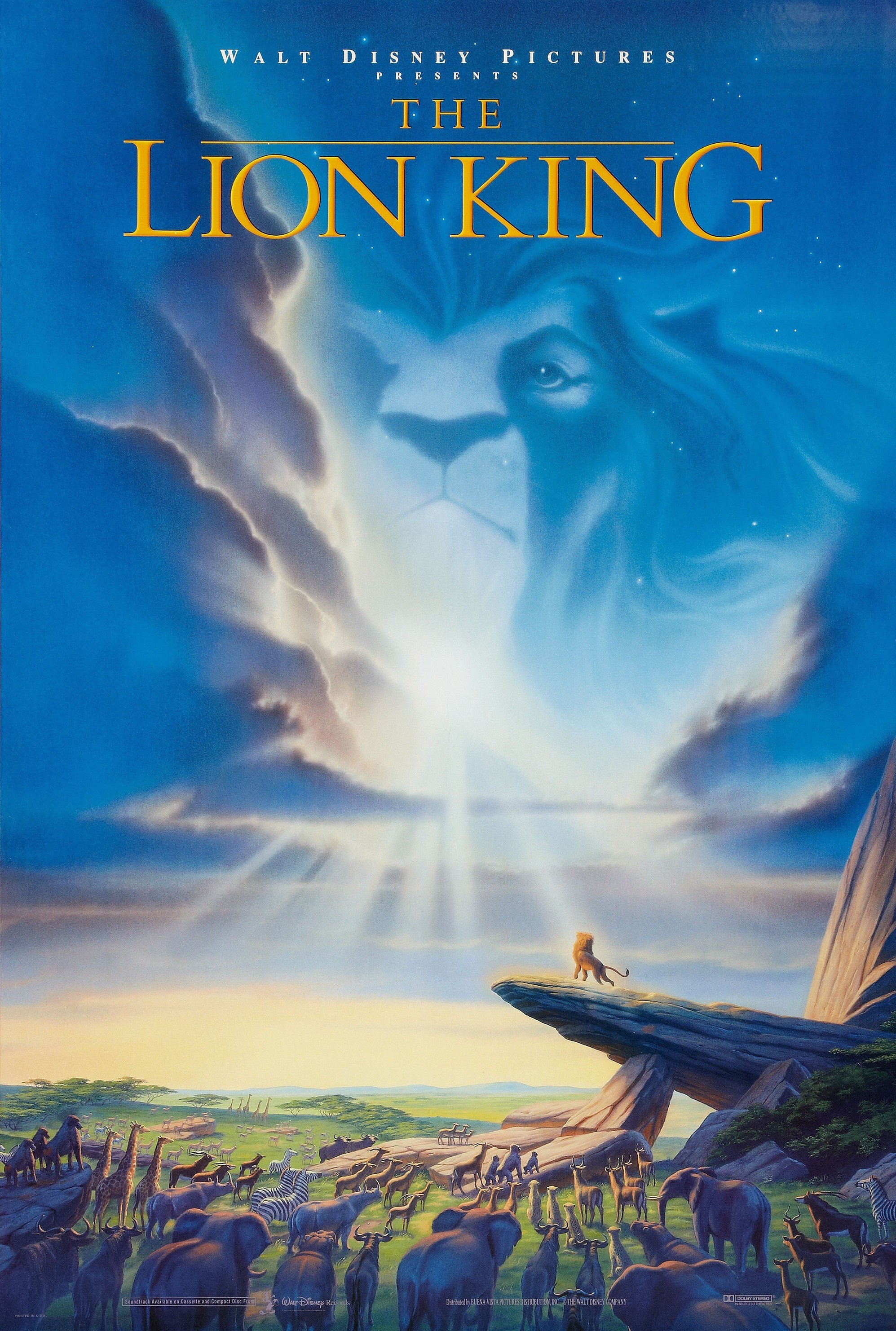
#373) The Lion King (1994)

MV5BYTYxNGMyZTYtMjE3MS00MzNjLWFjNmYtMDk3N2FmM2JiM2M1XkEyXkFqcGdeQXVyNjY5NDU4NzI@._V1_

#373) The Lion King (1994)

OR “ジャングル大帝”

Directed by Roger Allers and Rob Minkoff

Written by Irene Mecchi and Jonathan Roberts and Linda Woolverton. Music by Elton John, Lyrics by Tim Rice.

Class of 2016

The Plot: Lion cub Simba (Jonathan Taylor Thomas) is born to Mufasa (James Earl Jones), the king of Pride Rock in the African savannah. Mufasa’s brother Scar (Jeremy Irons) is jealous of losing his place in the succession, and plots to kill Simba and Mufasa. When Mufasa dies in a wildebeest stampede, Simba runs away and is taken in by meerkat Timon and warthog Pumbaa (Nathan Lane & Ernie Sabella). Simba grows up (now Matthew Broderick), and encounters childhood friend Nala (Moira Kelly), who presumes he was dead. Learning that Scar has taken over Pride Rock, Simba must take responsibility and reclaim his place in the ciiiiiiiircle of liiiiiiiiife! And it mooooooves us aaaaaaallllllll!

Why It Matters: Man, someone really likes “The Lion King” over at the Library of Congress. According to their write-up, “The Lion King” is nothing less than “a triumph” with “innovative animation”, “excellent voice-actors”, “catchy, now classic songs”, and “funny, innovative, suspenseful” storytelling.

But Does It Really?: While I’m not as superlative-happy as the NFR, I can whole-heartedly endorse “The Lion King” as a classic. In a quarter of a century “The Lion King” has became more than just another movie; it is a cultural phenomenon. Part of that is Disney’s perpetual synergy machine, but a lot of it is a touching, entertaining, timeless coming-of-age story aided by top-notch animation and catchy songs. Before I hypocritically throw out any more superlatives, I’ll give “The Lion King” my “untouchable” designation for NFR inclusion.

Shout Outs: Among the film’s surprisingly extensive cultural references are NFR entries/family favorites “In the Heat of the Night” and “Taxi Driver”.

Everybody Gets One: Cast members Whoopi Goldberg, Jeremy Irons, Nathan Lane, Ernie Sabella, Cheech Marin, Rowan Atkinson, Robert Guillaume, and songwriters Tim Rice and Elton John.

Wow, That’s Dated: The only giveaway is Elton John’s very ‘90s rendition of “Can You Feel the Love Tonight” during the end credits.

Seriously, Oscars?: The biggest hit of 1994, “The Lion King” received four Oscar nominations in two categories. Hans Zimmer won for the film’s score, and “Can You Feel the Love Tonight” took home Best Song over “Circle of Life” and “Hakuna Matata”. Despite a win at the Golden Globes, “The Lion King” wasn’t able to break into the Oscar’s Best Picture category.

Other notes

  • “Nants ingonyama bagithi Baba/Sithi uhm ingonyama” “Ingonyama nengw enamabala” There, that’s the Zulu lyrics at the start of “Circle of Life”. Now you know what you’ve been singing your whole life.
  • “Circle of Life” got me crying almost instantly. I found myself moved by the grandeur and scope of the sequence. I’m gonna be a wreck in about a half hour.
  • So let me get this straight: Jonathan Taylor Thomas – who will grow up to be Matthew Broderick – is the son of James Earl Jones and Madge Sinclair, and the nephew of Jeremy Irons. And Jones and Irons are brothers? Only in animation!
  • This is the rare film with an all-animal cast that is fully aware of its food chain. But not even the rich tone of James Earl Jones can justify that our protagonists hunt and eat every other species in this movie.
  • You know what kids love? A “Reversal of Fortune” reference.
  • Great, now I have “I Just Can’t Wait to Be King” stuck in my head. Great, now I have “River of Dreams” stuck in my head.
  • I’m amazed that this is the only NFR entry for Oscar winners Jeremy Irons and Whoopi Goldberg. And Cheech Marin too! Where’s “Up in Smoke”?
  • Jeremy Irons sings! Well, until he blows out his vocal chords and is replaced by Jim Cummings. Speaking of “Be Prepared”, you know what else kids love? “Triumph of the Will” allusions.
  • Aaaaaand I’m crying again. Welcome to my generation’s “Bambi”.
  • “Hakuna Matata” gets my vote for best song in the movie. It brightens up a movie that was getting dangerously dark. How do they do it? Fart jokes a-plenty!
  • Fun Fact: Nathan Lane and Ernie Sabella were both appearing on Broadway in “Guys & Dolls” while recording “The Lion King”.
  • When Simba lies down on the cliff, the dust floating in the wind spells “SFX”, a shoutout to the film’s special effects team. Nothing else.
  • I suspect most of Robert Guillaume’s recording sessions were simply grunts and shouting. But at least this movie gave him something other than “Benson” for his obituary.
  • “Can You Feel the Love Tonight” is another inner monologue song! Speaking of, if someone tells you they are attracted to Nala in this scene, don’t invite them into your home.
  • So Rafiki is Yoda without his meds? Makes sense: both characters mentored Darth Vader.
  • I know most lion roars sound the same, but I’m convinced I heard the MGM Leo roar a few times during the climactic fight between Simba and Scar.
  • “The Lion King” is dedicated to Frank Wells, the president of the Walt Disney Company who, along with Michael Eisner and Jeffrey Katzenberg, was responsible for the Disney renaissance of the late ‘80s/early ‘90s.

Legacy

  • While “The Lion King” was the most successful animated film at the time, it was also the apex of the Disney Renaissance. The aforementioned passing of Frank Wells, as well as Jeffrey Katzenberg’s subsequent departure to form DreamWorks, led to Michael Eisner taking more control over Disney’s animation. While such later Disney fare as “Hunchback of Notre Dame” and “Mulan” have their fans, “The Lion King” was their last true classic of the era.
  • This is one of those movies that’s iconic from beginning to end. Everyone quotes “The Lion King”, everyone knows the songs by heart, and every parent has haphazardly hoisted their newborn child above their heads with “Circle of Life” playing in the background.
  • Disney knows a cash cow when they see one, and “The Lion King” has flourished in every possible media outlet. Immediate follow-ups included a direct-to-video sequel, a direct-to-video prequel, and a Saturday morning cartoon series with Timon & Pumbaa.
  • The only offshoot to rival the success of the film, Disney Theatricals and Julie Taymor successfully translated “The Lion King” into a Broadway musical. Premiering in late 1997, the stage version is still going strong after 9000 performances! That’s not an exaggeration, they’ve literally done 9000 shows on Broadway!
  • I’ll be honest: I’m not excited about this “live-action” remake. I think I’ll sit out the theatrical run and wait for it to end up on Disney+.

#372) Imitation of Life (1959)

Imitation_of_Life_1959_poster

#372) Imitation of Life (1959)

OR “What Ever Happened to Sarah Jane?”

Directed by Douglas Sirk

Written by Eleanore Griffin and Allan Scott. Based on the novel by Fannie Hurst.

Class of 2015

The Plot: Universal takes another stab at Hurst’s story of family and racial identity in this updated “Imitation of Life”. Lora Meredith (Lana Turner) struggles to become a New York theater star while raising her daughter Susie (Terry Burnham). A chance meeting leads to Lora hiring Annie Johnson (Juanita Moore) as her housekeeper, taking in Annie and her light-skinned daughter Sarah Jane (Karin Dicker). Lora finally lands a play, and her star (and finance) rises over the next decade. A now grown up Susie (Sandra Dee) becomes infatuated with Lora’s old flame Steve Archer (John Gavin), while Sarah Jane (Susan Kohner) continues to pass for white, distressing Annie. The original film had its problems, but surely the kinks will be worked out 25 years later, right? …right?

Why It Matters: The NFR’s write-up is primarily a description of Douglas Sirk’s “glossy, often deliriously flamboyant” melodramas and a comparison between both of the novel’s film adaptations. And then they spoil the ending for no good reason! There’s also an essay by film historian/author Matthew Kennedy.

But Does It Really?: Well, this version is…better? This “Imitation of Life” is allowed to explore some of the more complex issues involving race and privilege in America that its predecessor couldn’t, but is ultimately bogged down by the decision to go full melodrama, particularly Lana Turner’s theatrical performance. The 1934 version broke down a major racial barrier in film, and while this version continues down that path, it still keeps Annie and Sarah Jane as the B-plot to an uninteresting A-plot. On a film list that already includes a version of “Imitation of Life” as well as a Douglas Sirk tearjerker, do we really need another of either?

Shout Outs: Lora says her latest stage role is “the best part since Scarlett O’Hara”.

Everybody Gets One: Many a recognizable character actor is making their only NFR appearance here. Among them: Robert (Sky Masterson, father of Alan) Alda, Oscar nominee Dan O’Herlihy, Gladys Kravitz #2 Sandra Gould, and look at her, she’s Sandra Dee.

Wow, That’s Dated: “Imitation of Life” makes an effort to upgrade the original story’s racial elements for the Civil Rights era (Brown vs. Board of Education and the Montgomery bus boycott were recent events in 1959). The film’s crucial mistake is swapping the original’s pancake storyline with Lora’s theater stardom, therefore eliminating Annie having any chance of succeeding beyond her life as “the help”. Like its predecessor, the film is progressive by 1959 standards, yet problematic by today’s.

Title Track: We have a title song! Sung by vocalist Earl Grant, the song makes a better case for the title than the ’34 version: A life without love is just an imitation.

Seriously, Oscars?: “Imitation of Life” managed two Oscar nominations, both in the Best Supporting Actress category. Susan Kohner and Juanita Moore no doubt split the vote with each other, paving the way for Hollywood veteran Shelley Winters in Best Picture nominee “The Diary of Anne Frank”.

Other notes

  • The casting of Lana Turner was a bit controversial: it was her first film following the scandal in which her daughter Cheryl Crane fatally stabbed Lana’s boyfriend Johnny Stompanato in self-defense. Universal gave Turner the royal treatment (including the largest trailer on the lot), but the shoot was still a difficult one for Lana, as a film about a strained mother-daughter relationship surely struck a few nerves.
  • Also incredibly dated: Allen Loomis, the sleazy, sexually abusive movie producer. His character is more or less dismissed (“happens all the time” says Archer), and he is a consistent presence throughout the movie. And while we’re on the subject; a womanizing playwright? Please.
  • As Lora’s plotline about becoming an actress progresses, I’m beginning to think there aren’t going to be pancakes in this one. Then again, if I judged every movie on this list on a pancakes/no pancakes metric, they would all be found wanting.
  • Alright, another movie for the “Die Hard” Not-Christmas list!
  • Even by Sirk standards, this thing is me-lo-dra-ma-tic. There are many ways this subject matter could have been covered; why a soap opera?
  • Taking a step back from the 1934 version, Sarah Jane is played by Susan Kohner, a woman of Mexican and Austrian descent, rather than a light skinned African American. Apparently Natalie Wood was also considered for the part, but don’t worry: her day of whitewashing will come.
  • Coincidentally, Susan Kohner’s mother, Mexican film star Lupita Tovar, was inducted into the National Film Registry the same year as her daughter, thanks to “Drácula”.
  • One of the film’s nicer touches; Lora is so devoted to her career, she never once bothers to learn more about Annie or her life outside of the house.
  • I shouldn’t be laughing at Lana Turner’s performance, should I? She’s just so over-the-top, especially in her more dramatic scenes, which require, ironically, less dramatics.
  • Wow, I’ve already forgotten John Gavin was in this. At least he’s better here than he was in “Psycho”.
  • I will say Juanita Moore is very good in this. She starts off as a somewhat stereotypical “magic Negro”, but as the film continues her sunny exterior fades away and we see the suffering her Annie has endured over the years. Her final meeting with Sarah Jane is heartbreaking.
  • That’s Mahalia Jackson, fresh from her stint at the Newport Jazz Festival, as the choir soloist in the final scene. The finale doesn’t pack the same punch it did for me in the ’34 version, which is a shame.

Legacy

  • “Imitation of Life” was met with critical indifference, but managed to become Universal’s most successful film to date. Universal wanted more from Douglas Sirk, but Sirk instead retired to his native Germany.
  • Lana Turner forewent her usual star salary for “Imitation of Life”, opting for a cut of the box office. The gamble paid off, and while Turner never had another film as successful as “Imitation”, she maintained financial security for the rest of her life.
  • Susan Kohner retired from film shortly after “Imitation” to get married and raise a family. You know her sons Chris and Paul Wietz best as the co-directors and co-writers of “About a Boy”.
  • “Imitation of Life” is largely forgotten today, but still gets referenced more than the 1934 version. Often mentioned in connection Douglas Sirk’s other melodramas, “Imitation” was one of the major influences behind Todd Haynes’ “Far from Heaven”.

#371) State Fair (1933)

state_fair_xlg

#371) State Fair (1933)

OR “How Ya Gonna Keep ‘em Down on the Farm?”

Directed by Henry King

Written by Sonya Levien and Paul Green. Based on the novel by Philip Stong.

Class of 2014

No trailer, but here’s a clip

The Plot: The Frake family travel to the Iowa State Fair for a few days of fun. Father Abel (Will Rogers) believes his hog Blue Boy can take home the blue ribbon, while mother Melissa (Louise Dresser) feels the same about her pickles and mincemeat. Daughter Margy (Janet Gaynor) has a whirlwind romance with reporter Pat Gilbert (Lew Ayres), while son Wayne (Norman Foster) has an affair with experienced acrobat Emily Joyce (Sally Eilers). Will these blossoming young adults heed the siren call of a more exciting life? Or return to the security of the country?

Why It Matters: The NFR’s write-up focuses primarily on Will Rogers, and gives shout-outs to Henry King’s direction and the film’s “diverse storylines rich with Americana and romance”. There’s also an essay by Fox expert Aubrey Solomon.

But Does It Really?: I…don’t know. The NFR definitely makes a case for “State Fair” on the basis of Will Rogers, but I’ll argue there are better Rogers vehicles that could have been chosen (“Laughing Bill Hyde” and “A Connecticut Yankee”, just to name two). “State Fair” is by no means a bad movie, but it lacks the overall emotional and/or cultural impact I’m looking for in an NFR entry. I can give “State Fair” a pass for Will Rogers, but the second another one of his movies makes the list this one’s getting a reevaluation. [UPDATE: We have a second Will Rogers movie on the list, this is not a drill!]

Everybody Gets One: Will Rogers’ performance career started in the early 1900s as a rope twirler on the Vaudeville circuit, and over the next 30 years he became a celebrated humorist, radio personality, newspaper columnist, and movie star. Rogers’ homespun demeanor and witty topicality made him popular with both urban and rural America. Like many of his films, “State Fair” was tailored to fit Rogers’ established persona, with some of his own one-liners sneaking into the final cut.

Wow, That’s Dated: Mainly the concept of state fairs as an event that brought rural America together. Now it’s a showcase for shoddy carnival rides and concerts by one-hit wonders.

Seriously, Oscars?: “State Fair” was the hit Fox Studios needed to get out of their financial slump, and received two nominations at the 6th Academy Awards. The film lost Adapted Screenplay to the umpteenth remake of “Little Women”, and Best Picture to the long-forgotten “Cavalcade”.

Other notes

  • Reminder: “State Fair” is now legally a Disney movie. Will the Janet Gaynor filmography be a sub-category on Disney+?
  • Will Rogers is either the most professional amateur actor I’ve ever seen, or the most amateur professional actor. He’s so natural I can’t tell.
  • The opening scenes on the farm play out like if “The Wizard of Oz” didn’t have a twister. Enough set-up; let’s go to the fair, Frakes!
  • Director Henry King traveled to the 1932 Iowa State Fair with author Philip Stong to observe the action, as well as to film various events and locations for background plates. In addition, the fair’s blue ribbon hog, Dike of Roseland, was cast as Blue Boy.
  • Today’s Inflation Adjustment: the three dollars Wayne wins at ring toss would be about $60 today.
  • Not a lot of meet-cutes happen on a roller coaster. Gaynor and Ayres are charming in their scenes together, proving that love is, in fact, like a roller coaster baby baby.
  • “State Fair” is seemingly on this list to represent Will Rogers, yet Abel is a supporting character. On top of that, most of his scenes are with the hog! Rogers did, however, manage a good one-liner out of the situation during an interview: “A hog’s at his best when he’s on a plate between a couple of eggs.”
  • Hearing this film’s underscore, I completely understand why you would want to musicalize this material.
  • I’m glad I picked a summer evening to watch “State Fair”; it helps set the mood. Weirdly enough, the film was shot at Fox in the winter of 1932.
  • The affair between Wayne and Emily was originally much more implicit. One scene in particular featuring a shot of Emily’s negligee on the floor caused uproar among moviegoers expecting something more family-friendly. When “State Fair” was re-released in 1936, the Hays Code was in full swing, and the aforementioned scene was deleted, never to be seen again.
  • Abel tells Margy that she’s “a lot prettier than them movin’ picture actresses that just get paid for being pretty.” Should Janet Gaynor be insulted?
  • “And if you think next year don’t roll around quick, you just wait ‘til you’re old enough to pay taxes.” There’s your Will Rogers wit in action!
  • The only major difference between the novel and the film is the happy ending tacked onto the movie. That being said, that’s a beautiful closing shot.

Legacy

  • “State Fair” was a critical and commercial hit, and was re-released in 1936 to commemorate the sudden passing of Will Rogers.
  • Phillip Stong was always bugged by the altered “Hollywood ending” his story received, and eventually wrote a sequel, 1953’s “Return in August”, in which Margy and Pat reunite at the fair 20 years later.
  • “State Fair” has been remade for film twice, both times as musicals. The 1945 version features second-tier Rodgers and Hammerstein, while the 1962 update stars Ann-Margret! The remakes inspired a stage production that came and went on Broadway in 1996.
  • “State Fair” was also loosely adapted as a TV pilot in 1976, with Vera Miles as the family matriarch. The pilot aired once on CBS, and never went to series.
  • As for the original film, “State Fair” disappeared after the 1930s, partially to avoid confusion with its remakes, and partially due to quality prints being destroyed in the 1937 Fox fire. A useable print was finally discovered in the 1960s, and the original “State Fair” started making the classic movie cable rounds in the 1990s.

Listen to This: During the Great Depression, President Herbert Hoover asked Will Rogers to join him on a radio program to promote his unemployment relief campaign. Rogers’ speech, later dubbed “Bacon, Beans and Limousines”, was simultaneously a pep talk to downtrodden Americans and a mild condemnation of Hoover’s presidential missteps. The speech solidified Rogers’ standing as the voice of the everyman, and the broadcast made the National Recording Registry in 2012. An essay by Will Rogers expert Ben Yagoda and an NPR piece by Kurt Andersen provide more historical context.

#370) Roger & Me (1989)

roger_and_me_1989_rolled_original_film_art_spo_2000x

#370) Roger & Me (1989)

OR “Flint Condition”

Directed & Written by Michael Moore

Class of 2013

The Plot: Journalist Michael Moore returns to his hometown of Flint, Michigan in 1986, just as the town’s General Motors plant announces a seismic number of layoffs. 30,000 employees find themselves out of work, despite General Motors continuing to turn a profit. Moore chronicles Flint’s citizens as they grapple with a downward-spiraling economy. Simultaneously, Moore attempts to contact GM Chairman/CEO Roger B. Smith and hold him accountable for the devastation his “business solutions” have caused.

Why It Matters: The NFR praises Moore’s “brazen, in-your-face style” of “take-no-prisoners, advocacy documentary filmmaking”, and mentions the film’s continued relevancy.

But Does It Really?: Like many of Moore’s documentaries, “Roger & Me” is flashy and biased, but packs more punches in 95 minutes than most quote-unquote serious films.  “Roger & Me” starts as an investigation and ends with Moore exposing the toll capitalism takes on the working class, as well as the hypocrisy of the American dream. It is downright infuriating how relevant “Roger & Me” and its reportage of class warfare has remained 30 years later. Like him or hate him, Michael Moore and his effective documentaries have earned their place in the National Film Registry.

Everybody Gets One: Michael Moore sums up his youth pretty succinctly in the film’s opening minutes. The unnamed San Francisco magazine Moore worked for was “Mother Jones”, which he successfully sued for wrongful termination. Moore used the money from the settlement to partially fund “Roger & Me”. A first time filmmaker, Moore learned the technical aspects of the movies from “Atomic Café” director (and one of this film’s cinematographers) Kevin Rafferty.

Seriously, Oscars?: “Roger & Me” won a bevy of critics awards, but was famously snubbed for the Best Documentary Oscar. This movie was the first of many acclaimed documentaries to be shutout of the Oscars, culminating with “Hoop Dreams” and an investigation into how the Documentary branch selects the nominees. While some filmmakers were outraged by the exclusion of “Roger & Me”, an anonymous Academy member informed the L.A. Times that voters perceived the film as “dishonest and unfair to its subjects.”

Other notes

  • Moore does an excellent job of utilizing archival footage to create his desired viewpoint. MSTies will be quick to recognize the 1956 GM short “Design for Dreaming” during the film’s opening.
  • The “Tart to Tart” cafe highlighted in the San Francisco montage is right by my apartment. It looks exactly the same!
  • I love me some ironic Beach Boys music. “Wouldn’t It Be Nice” is featured over footage of Flint’s poverty-stricken communities.
  • Despite Michael Moore’s claim, the film is not presented in complete chronological order. Filming occurred from 1987 to 1989, while many of Flint’s attempts to boost tourism had started as early as 1984, before the GM layoffs. But as Roger Ebert correctly points out, an accurate timeline is not this film’s priority.
  • As depicted in the film, President Ronald Reagan visited Flint after the layoffs to address a group of former GM employees. His advice: seek job opportunities in other states. So much for making America great again. (Look it up; it was his campaign slogan first).
  • The Gatsby party (complete with living statues) is your first peek at the class struggle in Flint. That being said, one of the partygoers – Flint lawyer Larry Stecco – successfully sued Michael Moore for “false light invasion of privacy”.
  • Flint native/“Newlywed Game” host Bob Eubanks does not come off looking great in this. Adding insult to injury, Moore includes an outtake of Eubanks telling an off-color joke. Eubanks thought the camera was off when he told that joke, and later apologized for his comments.
  • One of Moore’s strengths as a filmmaker is finding situations with the most dramatic impact. Of course a Miss America contestant isn’t going to have a strong opinion on a car manufacturer’s layoffs, but Moore knows he can get a revealing answer if he presses the issue.
  • Between this and “Harvey Milk”, Anita Bryant is documentary films’ go-to antagonist. She and GM celebrity spokesperson Pat Boone give the same tired spiel about Flint pulling itself up by its bootstraps. Like Miss America, these two are out of their element, but it does highlight the shallowness of celebrity.
  • The tourism section of this film is excruciating. Everyone’s heart is in the right place, but making Flint a tourist destination was never going to work. On the plus side, the AutoWorld theme park is a “Defunctland” episode waiting to happen.
  • Unsurprisingly, the film gets darker as it progresses. In quick succession we get a scene where a rabbit is murdered and skinned on-camera, followed by footage of the Flint police shooting a mentally ill African-American man. Both are unsettling, haunting images.
  • This film kept reminding me of the “This is Fine” meme, as well as the line from “1776” about how Americans “would rather protect the possibility of being rich than face the reality of being poor.” I feel these sum up everything this movie is trying to convey in a nutshell.
  • This is the saddest movie on my “Die Hard” Not-Christmas list. The Singing Dogs’ cover of “Jingle Bells” does not help.
  • Some critics complained about the film’s manipulative editing, particularly in the final scene where a woman and her family are evicted while Roger Smith is giving his annual Christmas address. But listen closely: Moore says he filmed them on separate days during his confrontation with Smith.
  • Shoutout to the movie’s legal team. Where’s their Oscar?

Legacy

  • Upon its release, “Roger & Me” was the highest-grossing documentary ever. As per Moore’s contract with distributor Warner Bros., portions of the film’s profits went to Flint homeless shelters, the families whose evictions are in the movie, and various charities and organizations. Despite all this, Moore later called the film a failure because it didn’t inspire major improvements to Flint.
  • While General Motors publically decried “Roger & Me”, the film was allegedly quite popular with GM employees who became increasingly disillusioned with Roger Smith’s leadership. Smith voluntarily resigned from GM in 1990, less than a year after the film’s release.
  • Modern sources list the number of General Motors employees in Flint between 5000 and 7000, less than 1 percent of its early 1980s figures.
  • Michael Moore initially vetoed any TV airings of “Roger & Me”, but relented in 1992 when it was aired on PBS. The broadcast included Moore’s follow-up/epilogue, “Pets or Meat: The Return to Flint”.
  • You would have to be living under a very conservative rock to be unaware of Michael Moore’s oeuvre of uber-liberal documentaries. Highlights include the Oscar-winning “Bowling for Columbine” and the controversial-even-by-Moore’s-standards “Fahrenheit 9/11”. Flint and its ongoing set of problems are a recurring theme throughout Moore’s films.
  • And finally, a reminder that as of this writing, Flint, Michigan is still without reliably clean drinking water. It’s getting better, but there’s still a long way to go.