The Plot: A blacksmith (Charles Kayser) and his two assistants (John Ott & Unknown Actor) strike a metal rod on an anvil with their hammers. The three pause for a sip of beer, and then resume their work. The film is brief and uneventful, but don’t stop reading; it’s on this list for a good reason.
Why It Matters: The NFR gives a rundown of the film’s historical significance: as far as we know, “Blacksmith Scene” was the first film to be shown publically, and was the first film in which the action was staged for the camera, rather than simply occurring in front of it. The write-up also quotes a Brooklyn newspaper that reported the film would “excite wonderment”.
But Does It Really?: Edison’s early experiment films always seem inconsequential on their own, but the aforementioned historical significance of “Blacksmith Scene” is enough to secure its place in the Registry. Dickson was one of the first to recognize that film could be used to record planned action, rather than sheer reportage. Without this seemingly simple idea, the movies wouldn’t exist. Not a bad legacy for a 30 second film.
Everybody Gets One: All three of the actors in this film were employees of Thomas Edison’s at the time, and this is the only surviving film appearance for any of them. Fun Fact: John Ott’s younger brother Fred also worked for Edison, and is immortalized in “Edison Kinetoscopic Record of a Sneeze”.
Wow, That’s Dated: Blacksmiths mainly. Sure they’re still around, but blacksmithing as a profession is not as prominent as it was during the Industrial Age.
Other notes
At the time of its induction, “Blacksmith Scene” was the oldest film on the National Film Registry. Today it is second only to 1891’s “Newark Athlete”.
Well, it’s been 10 seconds; time for a break. I’m glad Edison et al felt the need to document these guys loafing around. And for crying out loud, don’t all drink from the same beer bottle! That’s how germs spread!
If these guys are actors, then who supplied the blacksmith supplies? What, no “Special Thanks” section in the end credits? Or end credits at all?
“Blacksmith Scene” premiered at the Brooklyn Institute of Arts and Sciences (now the Brooklyn Museum) on May 9th, 1893; mere weeks after it was filmed. Attendees lined up to view the film on Edison’s Kinetoscope one at a time. “Blacksmith” was the first half of history’s first double feature, with a second short film about horseshoeing now lost to the ages.
Legacy
We can go ahead and give “Blacksmith Scene” credit for motion pictures as we know them today, because why the hell not?
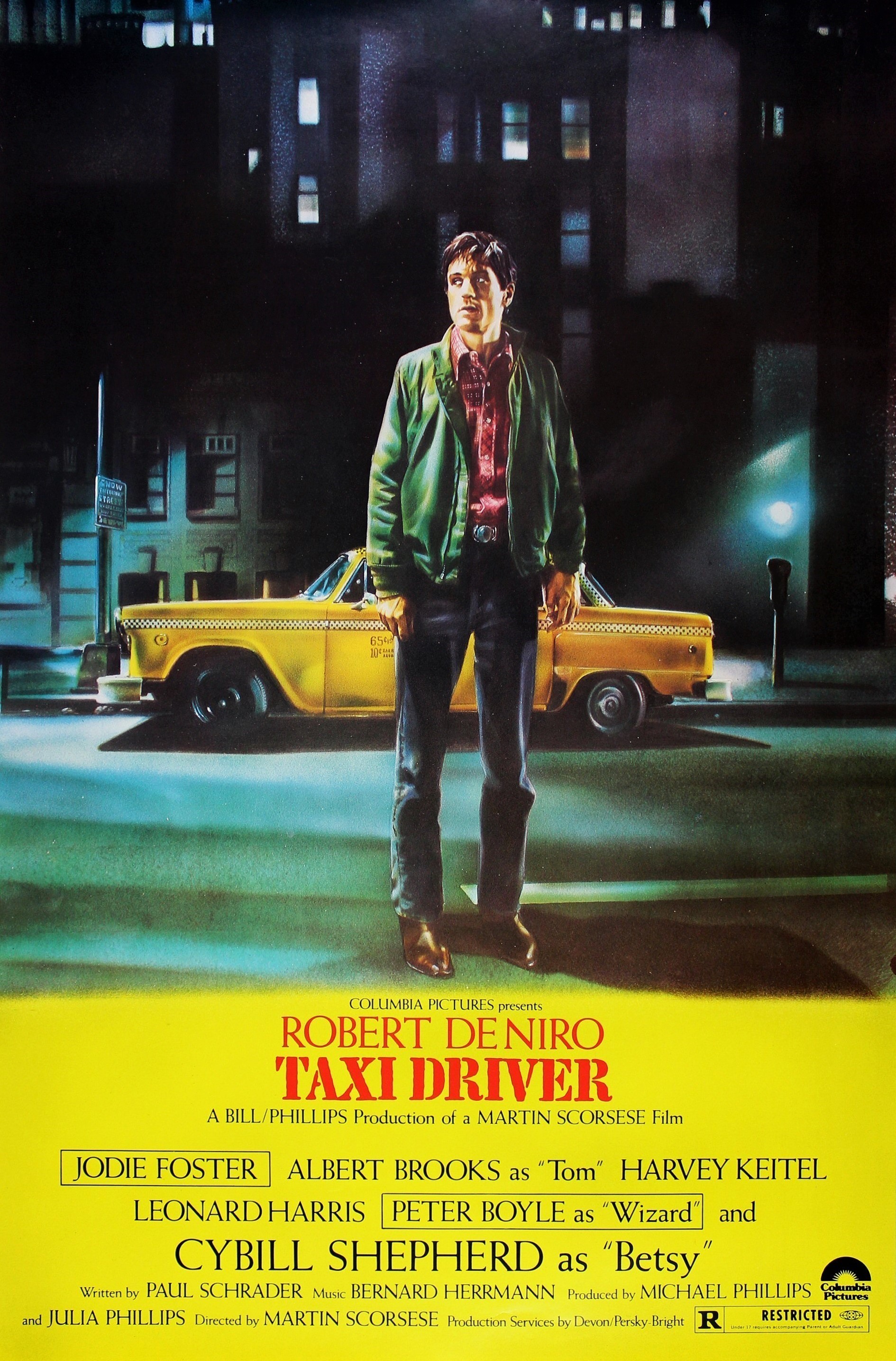
The Plot: Travis Bickle (Robert De Niro) takes a job as a New York City taxi driver to combat his chronic insomnia. His increasing isolation causes him to become unhinged, leading to violent thoughts and stalking political campaign organizer Betsy (Cybill Shepherd). After an encounter with child prostitute Iris (Jodie Foster) and her pimp Sport (Harvey Keitel), Bickle starts purchasing firearms, planning to become the metaphorical rain that will “wash all this scum off the streets”. If you dare to follow Bickle as his mental health deteriorates, be sure to make clear that you are, in fact, talking to him.
Why It Matters: The NFR write-up mostly assumes you know why the film is a classic, giving a brief synopsis and a rundown of the major creatives. They do, however, state that Schrader’s screenplay creates “one of American cinema’s most European in artistic style.”
But Does It Really?: My name is Tony and I’ve never seen “Taxi Driver”. With that out of the way, man alive does this movie live up to the hype. The subject matter is dark and unsettling (and unfortunately still relevant), but Scorsese masterfully draws you into this underworld, to the point that you feel unsafe just by watching this movie. The entire cast is great, with De Niro giving a performance worthy of its continued praise and parodies. Scorsese et al elevate “Taxi Driver” to an unforgettable film experience, but we’ll see if a movie about a white gunman continues to be one of filmdom’s untouchables.
Shout Outs: Paul Schrader has cited “The Searchers” as a major influence on his screenplay. As for references within in the film, Travis wears a King Kong patch on his jacket, and a “Nashville” poster briefly appears in the background.
Wow, That’s Dated: First off, taxi drivers (“Uber Driver” doesn’t pack the same punch). Secondly, this film is a thorough encapsulation of the hellhole that was 1970s New York, aided by the real-life garbage strike during production. Also of note: porno houses, a nod to Kris Kristofferson, and un-inflated cab fares ($1.35!? That’s highway robbery!)
Seriously, Oscars?: A critical and commercial hit, “Taxi Driver” received four Oscar nominations, but was the only Best Picture nominee that year to go home empty-handed. Bernard Herrmann’s posthumous score lost to “The Omen”, De Niro and Foster lost their acting bids to the cast of “Network”, and the film lost Best Picture to “Rocky”. Neither Scorsese nor Schrader were nominated, a trend of Oscar abuse that would continue for both men for decades to come.
Other notes
It’s a bit concerning, but Paul Schrader has called “Taxi Driver” autobiographical. In the early ‘70s, Schrader was unemployed, divorced, and depressed. Like Travis Bickle, he developed insomnia, visited porno theaters, and started researching guns. In the midst of all this, Schrader theorized that he could be a taxi driver, and inspiration struck. To better understand his protagonist, Schrader studied the diaries of Arthur Bremer, the man who attempted to assassinate Governor George Wallace.
Robert De Niro man. Robert Fucking De Niro. This is the performance that solidified De Niro as his generation’s best actor. He so fully inhabits Travis Bickle, forcing you not only to witness his deep disturbing attributes, but also to recognize how similar you may be to this guy. If forced to choose, this is the single best De Niro performance.
One of my notes simply reads “Could Not Be Made Today”. The film is brilliant, but the days of sympathizing with a white male loner are over.
Cybill Shepherd is quite good as one of Scorsese’s first angelic blondes. I’m more familiar with Shepherd’s later work (like her sitcom), but she is equally good joking around with Albert Brooks as she is reluctantly engaging with Travis Bickle.
The camera is constantly moving in this film; gliding over scenes that would normally be covered in static close-ups. I think it’s to symbolize Travis as a modern-day angel, but mostly it’s distracting. Other than that, great movie.
The brilliance of the movie’s structure is that the danger element creeps in incrementally. By the time you figure out just how dangerous Travis is, you’re already past the point of no return.
After actor George Memmoli was injured during another film shoot, Martin Scorsese cast himself as “Passenger Watching Silhouette” in one of filmdom’s creepiest director cameos. Even when acting, Scorsese keeps directing De Niro (“You see that light up there? The window?…Are you blind? Do you see the light? Yeah, yeah you see it. Good.”)
Peter Boyle is so underrated as an actor. He’s best remembered for his comedies (“Young Frankenstein” and “Everybody Loves Raymond”), but the man was also capable of impressive, naturalistic performances, such as his work here as fellow cabbie The Wizard.
Respect must be paid to legendary composer Bernard Herrmann, who died the day after the final recording session for “Taxi Driver”. Side note: Shoutout to Ronnie Lang for the film’s saxophone solos.
All accounts agree that De Niro improvised “you talkin’ to me?” on the day. It’s another iconic movie quote that still works in its original context, despite the repeated homages.
Travis’ showdown at the liquor store is our first glimpse at the film’s unrestrained violence. It’s a disturbing moment, which makes me wonder just how intense this all was for an audience in 1976.
Even at 12 years old, Jodie Foster was the most intelligent adult in the room. Any actor who can pull off this movie and “Freaky Friday” in the same year has my lifelong respect. To ensure that she would not be traumatized from playing a child prostitute, Foster underwent psychological counseling, and had all of the violent effects explained to her in detail so nothing surprised her. Foster’s older sister Connie also served as a body double for her more evocative scenes.
Like a car accident on the side of the road, the film’s violent finale is gruesome, yet simultaneously compelling. And if the color seems a little off, you’re not imaging things: Scorsese brightened the film’s last reel to make the blood look less realistic and avoid receiving an X rating.
Everyone has their own take on the last scene. Mine? Real life doesn’t always reward the good and punish the bad, or even successfully differentiate the two. Travis’ “heroics” will be forgotten, and I suspect his life will continue unchanged by the events of the film.
Legacy
“Taxi Driver” has one of the most unfortunate cultural impacts of any film. In the early ‘80s, 26-year-old John Hinckley Jr. became obsessed with the movie and formed an unhealthy fixation on Jodie Foster, to the point of stalking her while she attended Yale. To prove his love for her, Hinckley shot President Ronald Reagan, mimicking Bickle’s assassination attempt in the movie. Reagan survived, and although Hinckley was declared not guilty by reason of insanity, he ended up serving 35 years in a psychiatric hospital. The team behind “Taxi Driver” rarely, if ever, comments on this situation.
On a lighter note, “Taxi Driver” was the film that launched Scorsese into the roster of A-list directors. His follow-up film, 1977’s “New York, New York”, was less successful, but he bounced back with “Raging Bull”.
Paul Schrader continues writing and directing films, and received his first Oscar nomination for 2017’s “First Reformed”. Other career highlights include the screenplay for “Raging Bull”, and this iconic George C. Scott turn in “Hardcore”.
De Niro and Scorsese planned on making a sequel to “Taxi Driver” in the mid-2000s. The film was scrapped, as was an experimental remake in the 2010s, which Paul Schrader publicly called “a terrible idea”.
But of course, this film’s main takeaway is “You talkin’ to me?” Everyone, EVERYONE, has spoofed this to death. But its official demise came in 2000, when De Niro himself repeated the phrase while playing Fearless Leader in “The Adventures of Rocky and Bullwinkle”.
Listen to This: Only tangentially related to the film, sound designer Tony Schwartz made the National Recording Registry in 2003 with his 1959 album “The New York Taxi Driver”, comprised of actual recordings with real drivers. Thankfully, none of them possess any parallels to Travis Bickle.
Written by Hugo Butler. Based on the novel by Eric Knight.
Class of 1993
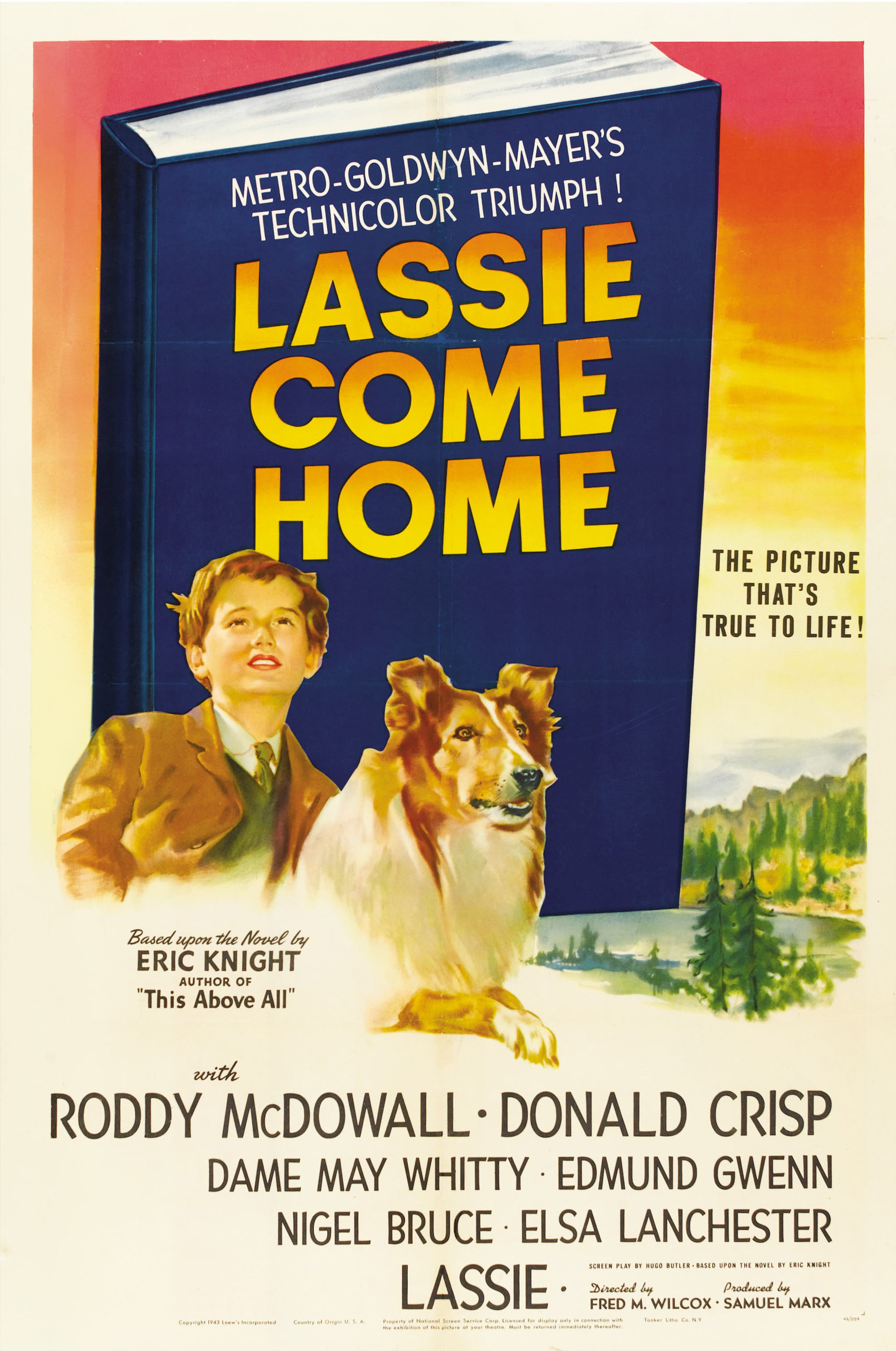
The Plot: Lassie (Pal) is the well-behaved, unbelievably camera-friendly collie of Joe Carraclough (Roddy McDowall). Facing economic hardship, Joe’s parents (Donald Crisp & Elsa Lanchester) sell Lassie to the wealthy Duke of Rudling (Nigel Bruce). Lassie attempts several escapes, but is always returned to the Duke, eventually to his home in Scotland. The Duke’s granddaughter (Elizabeth Taylor) senses Lassie’s sadness, and helps her escape. The rest of the movie is Lassie’s incredible journey back to England, facing nature’s pitfalls and MGM’s roster of contract players.
Why It Matters: The NFR cribs from Bosley Crowther’s New York Times review, which praised the film’s “poignance and simple beauty”. The movie’s “rich color cinematography” is also highlighted.
But Does It Really?: How can I say no to a Lassie movie? “Lassie Come Home” is still a sweet, enjoyable film almost 80 years later, and Lassie has maintained an iconic status to this day (though that’s mostly thanks to the TV show). No film history would be complete without Lassie, and “Lassie Come Home” is the one that started it all.
Everybody Gets One: Rough Collie Pal was originally rejected for the role of Lassie (the character is female, Pal is male), but was hired as the original Lassie’s stunt double. Director Fred Wilcox was so impressed with Pal (and his trainer Rudd Weatherwax) that the original female Lassie was replaced shortly after filming began. Ever the professional, Pal successfully performed his stunts and tricks with few or no retakes. Good boy.
Wow, That’s Dated: The only obvious giveaway is the film’s prologue: a tribute to original “Lassie” author Eric Knight, who was killed in a plane crash nine months before the film’s release. The opening text hails the England-born writer as “a man of two countries”, but makes sure to emphasize that he died while serving for America in WWII.
Title Track: The title is a reference to the then common phrase “a come-home dog”; a dog that is trained to come home after it is sold so that the owners can collect more money. That’s why the film is “Lassie Come Home” and not “Lassie, Come Home!”
Seriously, Oscars?: “Lassie” received one Oscar nomination for Leonard Smith’s cinematography, losing to Universal’s remake of “Phantom of the Opera”. Smith would eventually win for another MGM movie about a boy and the animal he bonds with: 1946’s “The Yearling”.
Other notes
Although the film is set in England and Scotland, the beautiful on-location footage is from California, with a little bit of Washington State. The rapids scene was filmed on the San Joaquin River, allegedly near my hometown of Stockton.
I’m not familiar with Roddy McDowall’s early work as a child actor. In addition to being an endearing lead in a thankless role, he can really turn on the waterworks. It’s like a faucet was turned on behind his eyes.
That’s 10-year-old Elizabeth Taylor – in only her second movie – as Priscilla. Through no fault of her own, all I can think of when Liz is on the screen is the tabloid figure she would become in her adult years. Also, this clip, which is kind of appropriate for this movie.
Other casting notes: Priscilla’s grandfather the Duke is played by Nigel Bruce, best known as Dr. Watson to Basil Rathbone’s Sherlock. Veteran Disney voice actor J. Pat O’Malley plays the Duke’s antagonistic dogkeeper Hynes. Fun Absolutely True Fact: O’Malley was Dick Van Dyke’s dialect coach in “Mary Poppins”. Think about that as you listen to O’Malley’s accent in this movie.
Wow, Lassie does not want to be in that kennel. She is the Paul Muni of dogs.
Shoutout to Leonard Smith; that cinematography is beautiful. Even the drabbest of scenes pops out in Technicolor.
Everyone’s good in this, but Dame May Whitty is the MVP. Even when her scene partner is a dog, she is not phoning this in. Side Note: Whitty’s on-screen husband is played by her real life spouse Ben Webster.
Edmund Gwenn is best remembered for playing Kris Kringle in “Miracle on 34th Street”, and his work in “Lassie” is another charming performance. Gwenn is the anti-W.C. Fields: he’s great with animals and kids.
This movie made me wonder if dogcatchers still exist. They do, they’re just called “animal control officers” now. Also, it’s not an elected position, so the phrase “You couldn’t be elected dogcatcher” makes no sense.
As with “Clash of the Wolves”, this movie knows to end with a shot of puppies. It makes a bad movie tolerable and a great movie even greater!
Legacy
“Lassie Come Home” was a hit, and MGM made six more Lassie movies over the next eight years. Only the second film – 1945’s “Son of Lassie” – was a direct follow-up to “Come Home”. Heck, in some of the later ones her character wasn’t even named Lassie!
In lieu of back payments owed to Rudd Weatherwax for the films, MGM gave the trainer ownership to the trademark and name of Lassie. Although Weatherwax initially used this trademark to tour Pal/Lassie throughout the country, he eventually agreed to a television series about the dog. “Lassie” ran on CBS for 19 seasons and is still one of the longest-running TV shows in primetime history. Side Note: Although several seasons centered around a boy named Timmy, he never once fell down a well.
Pal starred in all of the original Lassie movies, the TV series’ two pilot episodes, and even a radio series in the late ‘40s! After his retirement, Pal’s son and grandsons assumed the role of Lassie. Modern remakes and revivals meet with fan protests whenever a direct descendent of Pal does not play Lassie.
There have been several follow-up Lassie movies over the years, but the only true remake of “Lassie Come Home” came in 2005. The British made “Lassie” features (among others), Peter O’Toole and Peter Dinklage!
MGM kinda-sorta remade “Lassie” in 1954 with “Gypsy Colt”. Aside from this new movie being about a young girl and her horse, the two are remarkably similar.
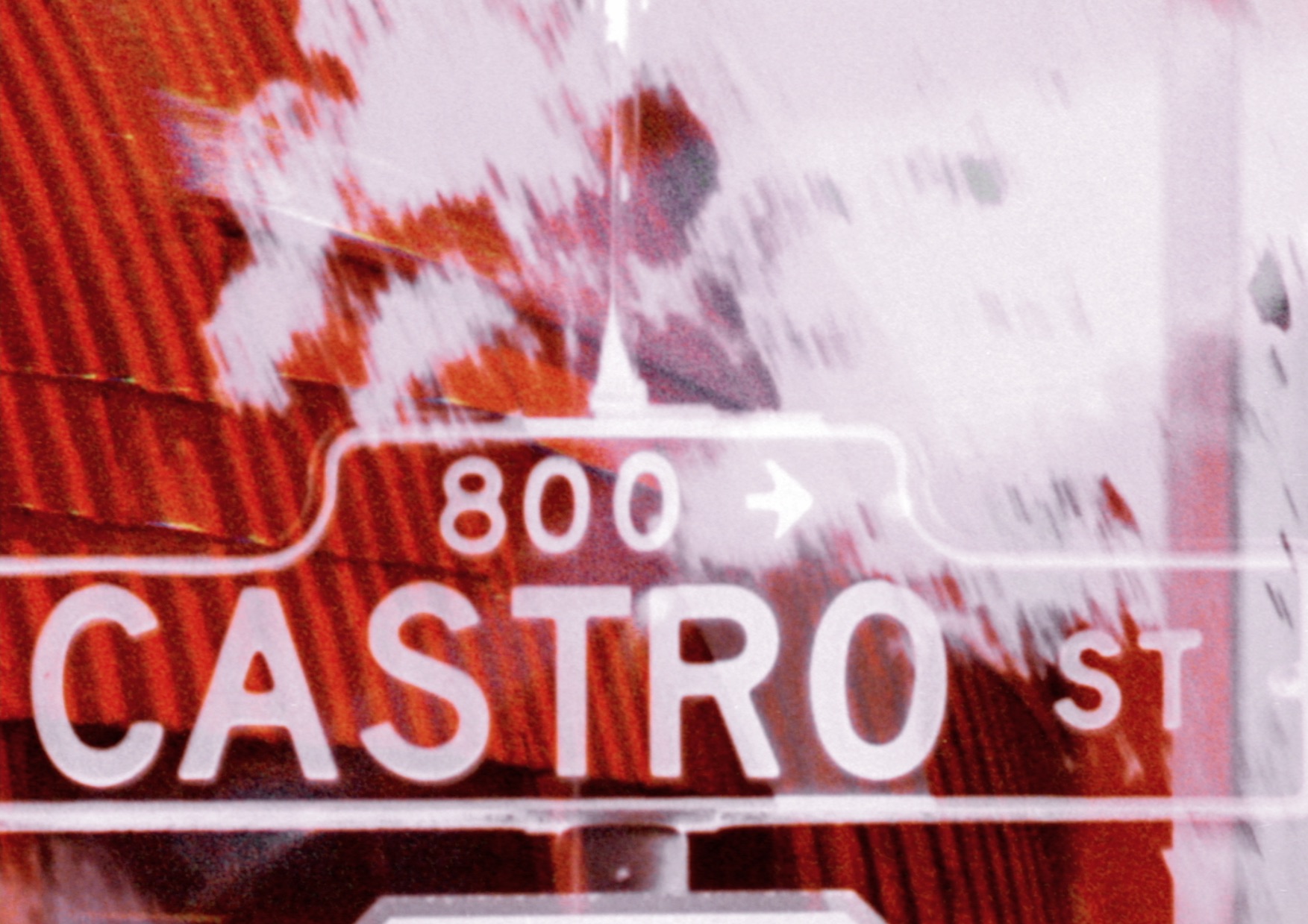
The Plot: By the early ‘60s, San Francisco’s Castro Street was becoming a safe haven for hundreds of closeted homosexuals trying to live a life free of persecution. In Bruce Baillie’s film “Castro Street”, the Castro district…hold on I’m being handed something. Let me just read this…what? This movie is about the Castro Street in Richmond? Isn’t that where the oil refineries are? So, it’s not 10 minutes of cable cars and the Missouri Mule? It’s 10 minutes of oil pipes and the Southern Pacific being shot at abstract angles with a lot of visual experimentation? I see…
Why It Matters: The NFR singles out filmmaker Bruce Baillie with a New York Times blurb stating that Baillie “makes avant-garde films with the gifts of a painter”. There’s also an in-depth essay by independent film expert Scott MacDonald.
But Does It Really?: I do very little research before watching these movies, and I picked “Castro Street” assuming I would see some rare footage of the San Francisco street in the days just before the gay rights movement. It took me longer than I care to admit to figure out that this film took place somewhere else. As a result, it was hard for me to get into this movie. That being said, Bruce Baillie is a legend among the avant-garde filmmakers, and his inclusion here is warranted. Am I giving this movie a hard time because of my own false expectations? Yes. Am I still giving it a pass for the NFR? Of course.
Everybody Gets One: Bruce Baillie is the founder of Canyon Cinema, one of the first theater outlets specifically for independent films. Baillie, along with fellow NFR filmmaker Chick Strand, is also a co-founder of film society San Francisco Cinematheque (his short answer for founding these: “Somebody had to do it”). Inspiration for “Castro Street” came when Baillie was working in the oil fields of PG&E in Richmond. One day the light from the rain made the pipes “stand out with a certain magnificence.” Baillie grabbed glasses and other image distorting objects from his mother’s kitchen, and utilized them for the film’s in-camera effects.
Seriously, Oscars?: Like many an avant-garde legend, there’s no Oscar love for Bruce Baillie or any of his films. For the record, 1966’s Live-Action Short winner was the British conservationist film “Wild Wings”.
Other notes
In an interview, Baillie mentioned he would like to add the following disclaimer to the film: “The filmmaker states that this is all made by hand, no computers, with a few dollars.” It’s always nice to be reminded that some of the most influential movies ever made didn’t have a budget.
Once again, I could not get into “Castro Street”, but it’s my own fault for not doing my homework. There’s a lot of wonderful imagery in the film, and the aforementioned MacDonald essay does a great job of dissecting all of it. As for my desire to see old footage of SF’s Castro Street, I guess I can watch “The Times of Harvey Milk” again.
And now for some reason, “Good Lovin’” by the Rascals!
Legacy
Of course, Bruce Baillie’s main legacy is influential independent film theater Canyon Cinema. Every avant-garde filmmaker on this list owes a debt of gratitude to Baillie and Canyon Cinema.
In response to his legacy and NFR inclusion, Baillie stated, “It is not really about any rewards. It’s about the doing, the done, itself.”
Castro Street still exists in Richmond, and is still an oil refinery, only now under the name of one of Standard Oil’s successors: Chevron. Castro Street is located just west of Richmond’s Iron Triangle. In other words…NEVER GO TO CASTRO STREET.
UPDATE: Bruce Baillie passed away the day this write-up was posted. He was 88. Thanks again, Mr. Baillie, and safe travels.
Written by Frances Marion. Based on the play by Eleanor Gates.
Class of 1991
The Plot: Gwendolyn (Mary Pickford) is the titular poor little rich girl; she has servants waiting on her day and night, yet is denied affection from her parents (Madlaine Traverse & Charles Wellesly) and rarely socializes with other children. On her 11th birthday, Gwen becomes sick, and an overdose of sleeping medicine sends her to the fantasy world of the Tell-Tale forest and the Garden of Lonely Children. Aided by fantastical characters who look a lot like people from her real life, Gwen travels this magical land to find a way to connect with her distant family. Hmmm…this sound so familiar…
Why It Matters: The NFR’s write-up is ONE SENTENCE, and not a very detailed one at that. The accompanying essay by Mary Pickford expert Eileen Whitfield gives a little more insight into the film’s production.
But Does It Really?: I went into “Poor Little Rich Girl” with somewhat high expectations after being bored to tears with Pickford’s other NFR offering: “Tess of the Storm Country”. I agree that Mary Pickford should be on this list, and overall this film is enjoyable, if a bit plodding, but I have yet to hear a compelling argument as to why this specific Mary Pickford film made the cut. She was already a star at this point in her career, and the film does not have any historical significance other than it was also successful. Perhaps it’s the name recognition that puts “Poor Little Rich Girl” at the head of the class. It’ll do for now, but surely there’s a more superior Pickford offering out there.
Everybody Gets One: Stage actor Madlaine Traverse reprises her role as Gwen’s mother from the original stage play.
Wow, That’s Dated: Organ grinders, plus punishing your child by making them cross-dress. Break those gender constructs!
Other notes
By 1917, Mary Pickford was Hollywood’s biggest star, and had a contract with Famous Players (now Paramount) that granted her full control over her films, as well as half the profits. “Poor Little Rich Girl” was produced by Pickford’s own production company, another perk from the new contract.
The stage version of “Poor Little Rich Girl” originally played Broadway in 1913 and starred Viola Dana. Ms. Dana eventually became a film star herself, and her 1917 offering “The Girl Without a Soul” is also in the NFR.
This was the first movie where Mary Pickford played a child, as opposed to a childish ingénue (ick). Pickford was 25 years old when she played 11-year-old Gwen, her short stature (around 5’1”) aiding in the illusion. In addition, certain set pieces were built at a slightly larger scale.
Director Maurice Tourneur did not get along with Mary Pickford, who (along with screenwriter Frances Marion) insisted on adding a few gags into the film. Tourneur did not appreciate the additions, stating his films were dignified, but Pickford was “the muscle” on her films, and got her way. Pickford and Tourneur did not work together after “Poor Little Rich Girl”.
Gwen’s banker father and socialite mother are too preoccupied to care for her? Maybe this family just needs Mary Poppins.
Am I missing something with Mary Pickford? She’s clearly having fun in the role, and she’s as cute as I am allowed to find a woman playing a child, but I’m missing her overall appeal. This is the biggest star of her time?
These domestics are really pushing a fear of bears onto Gwen. She has a bigger case of arkoudaphobia than Stephen Colbert.
I am enjoying Gwen’s occasional daydreams in which she literalizes everyone’s figures of speech. Very “Bobby’s World”.
Cinematographers Lucien Andriot and John van den Broek are having fun with the camera once Gwen starts getting drowsy.
I know Gwen’s just trying to be polite to the Organ Grinder, but “Mr. Grinder” takes on a whole new meaning these days.
The fantasy scenes are definitely the movie’s highlight, but we don’t get to them until more than two thirds of the way through. They should have been the bulk of the movie, a la “Wizard of Oz”! But hey, that’s my critique of 103-year-old movie that has endured just fine without me.
Legacy
“The Poor Little Rich Girl” was another hit for Mary Pickford, and kicked off a string of movies in which Pickford played a child, including “Pollyanna”, “Rebecca of Sunnybrook Farm”, and “Little Annie Rooney”. Pickford’s career faltered after the transition to talkies, but she survived as a producer and co-founder of United Artists.
Director Maurice Tourneur would go on to direct another NFR entry/children’s fantasy: 1918’s “The Blue Bird”.
“The Poor Little Rich Girl” is one of several Mary Pickford films that were remade in the ‘30s as a Shirley Temple vehicle. The Temple version drops the “The” from the title, as well as pretty much everything else from the original plot.
Poor Little Rich Girl was also the nickname linked to Barbara Hutton, a wealthy socialite whose tragic personal life earned her the moniker. The title was also used for her inevitable TV movie starring Farrah Fawcett.