#370) Roger & Me (1989)

roger_and_me_1989_rolled_original_film_art_spo_2000x

#370) Roger & Me (1989)

OR “Flint Condition”

Directed & Written by Michael Moore

Class of 2013

The Plot: Journalist Michael Moore returns to his hometown of Flint, Michigan in 1986, just as the town’s General Motors plant announces a seismic number of layoffs. 30,000 employees find themselves out of work, despite General Motors continuing to turn a profit. Moore chronicles Flint’s citizens as they grapple with a downward-spiraling economy. Simultaneously, Moore attempts to contact GM Chairman/CEO Roger B. Smith and hold him accountable for the devastation his “business solutions” have caused.

Why It Matters: The NFR praises Moore’s “brazen, in-your-face style” of “take-no-prisoners, advocacy documentary filmmaking”, and mentions the film’s continued relevancy.

But Does It Really?: Like many of Moore’s documentaries, “Roger & Me” is flashy and biased, but packs more punches in 95 minutes than most quote-unquote serious films.  “Roger & Me” starts as an investigation and ends with Moore exposing the toll capitalism takes on the working class, as well as the hypocrisy of the American dream. It is downright infuriating how relevant “Roger & Me” and its reportage of class warfare has remained 30 years later. Like him or hate him, Michael Moore and his effective documentaries have earned their place in the National Film Registry.

Everybody Gets One: Michael Moore sums up his youth pretty succinctly in the film’s opening minutes. The unnamed San Francisco magazine Moore worked for was “Mother Jones”, which he successfully sued for wrongful termination. Moore used the money from the settlement to partially fund “Roger & Me”. A first time filmmaker, Moore learned the technical aspects of the movies from “Atomic Café” director (and one of this film’s cinematographers) Kevin Rafferty.

Seriously, Oscars?: “Roger & Me” won a bevy of critics awards, but was famously snubbed for the Best Documentary Oscar. This movie was the first of many acclaimed documentaries to be shutout of the Oscars, culminating with “Hoop Dreams” and an investigation into how the Documentary branch selects the nominees. While some filmmakers were outraged by the exclusion of “Roger & Me”, an anonymous Academy member informed the L.A. Times that voters perceived the film as “dishonest and unfair to its subjects.”

Other notes

  • Moore does an excellent job of utilizing archival footage to create his desired viewpoint. MSTies will be quick to recognize the 1956 GM short “Design for Dreaming” during the film’s opening.
  • The “Tart to Tart” cafe highlighted in the San Francisco montage is right by my apartment. It looks exactly the same!
  • I love me some ironic Beach Boys music. “Wouldn’t It Be Nice” is featured over footage of Flint’s poverty-stricken communities.
  • Despite Michael Moore’s claim, the film is not presented in complete chronological order. Filming occurred from 1987 to 1989, while many of Flint’s attempts to boost tourism had started as early as 1984, before the GM layoffs. But as Roger Ebert correctly points out, an accurate timeline is not this film’s priority.
  • As depicted in the film, President Ronald Reagan visited Flint after the layoffs to address a group of former GM employees. His advice: seek job opportunities in other states. So much for making America great again. (Look it up; it was his campaign slogan first).
  • The Gatsby party (complete with living statues) is your first peek at the class struggle in Flint. That being said, one of the partygoers – Flint lawyer Larry Stecco – successfully sued Michael Moore for “false light invasion of privacy”.
  • Flint native/“Newlywed Game” host Bob Eubanks does not come off looking great in this. Adding insult to injury, Moore includes an outtake of Eubanks telling an off-color joke. Eubanks thought the camera was off when he told that joke, and later apologized for his comments.
  • One of Moore’s strengths as a filmmaker is finding situations with the most dramatic impact. Of course a Miss America contestant isn’t going to have a strong opinion on a car manufacturer’s layoffs, but Moore knows he can get a revealing answer if he presses the issue.
  • Between this and “Harvey Milk”, Anita Bryant is documentary films’ go-to antagonist. She and GM celebrity spokesperson Pat Boone give the same tired spiel about Flint pulling itself up by its bootstraps. Like Miss America, these two are out of their element, but it does highlight the shallowness of celebrity.
  • The tourism section of this film is excruciating. Everyone’s heart is in the right place, but making Flint a tourist destination was never going to work. On the plus side, the AutoWorld theme park is a “Defunctland” episode waiting to happen.
  • Unsurprisingly, the film gets darker as it progresses. In quick succession we get a scene where a rabbit is murdered and skinned on-camera, followed by footage of the Flint police shooting a mentally ill African-American man. Both are unsettling, haunting images.
  • This film kept reminding me of the “This is Fine” meme, as well as the line from “1776” about how Americans “would rather protect the possibility of being rich than face the reality of being poor.” I feel these sum up everything this movie is trying to convey in a nutshell.
  • This is the saddest movie on my “Die Hard” Not-Christmas list. The Singing Dogs’ cover of “Jingle Bells” does not help.
  • Some critics complained about the film’s manipulative editing, particularly in the final scene where a woman and her family are evicted while Roger Smith is giving his annual Christmas address. But listen closely: Moore says he filmed them on separate days during his confrontation with Smith.
  • Shoutout to the movie’s legal team. Where’s their Oscar?

Legacy

  • Upon its release, “Roger & Me” was the highest-grossing documentary ever. As per Moore’s contract with distributor Warner Bros., portions of the film’s profits went to Flint homeless shelters, the families whose evictions are in the movie, and various charities and organizations. Despite all this, Moore later called the film a failure because it didn’t inspire major improvements to Flint.
  • While General Motors publically decried “Roger & Me”, the film was allegedly quite popular with GM employees who became increasingly disillusioned with Roger Smith’s leadership. Smith voluntarily resigned from GM in 1990, less than a year after the film’s release.
  • Modern sources list the number of General Motors employees in Flint between 5000 and 7000, less than 1 percent of its early 1980s figures.
  • Michael Moore initially vetoed any TV airings of “Roger & Me”, but relented in 1992 when it was aired on PBS. The broadcast included Moore’s follow-up/epilogue, “Pets or Meat: The Return to Flint”.
  • You would have to be living under a very conservative rock to be unaware of Michael Moore’s oeuvre of uber-liberal documentaries. Highlights include the Oscar-winning “Bowling for Columbine” and the controversial-even-by-Moore’s-standards “Fahrenheit 9/11”. Flint and its ongoing set of problems are a recurring theme throughout Moore’s films.
  • And finally, a reminder that as of this writing, Flint, Michigan is still without reliably clean drinking water. It’s getting better, but there’s still a long way to go.

#369) The Matrix (1999)

MV5BNzQzOTk3OTAtNDQ0Zi00ZTVkLWI0MTEtMDllZjNkYzNjNTc4L2ltYWdlXkEyXkFqcGdeQXVyNjU0OTQ0OTY@._V1_

#369) The Matrix (1999)

OR “Neo Doesn’t Live Here Anymore”

Directed & Written by Lana & Lilly Wachowski

Class of 2012

The Plot: Thomas Anderson (Keanu Reeves) has a double life on the internet as the hacker “Neo”. The mysterious Morpheus (Laurence Fishburne) recruits Neo and reveals the truth: the world Neo lives in is a computer simulation (the Matrix), and the real world is a 22nd century dystopian nightmare ruled by machines. Prophesized to be “the one”, Neo is unplugged into the real world, and joins Morpheus’ team of fellow escapees determined to free the human race from the Matrix. It sounds convoluted, but boy howdy look at all them flyin’ people!

Why It Matters: The NFR calls the film “visionary and complex”, praising the special effects and their lasting impact on film.

But Does It Really?: It’s only been 20 years since “The Matrix” hit theaters, but its impact on visual effects and pop culture is still quite extensive. As a film, “The Matrix” is flawed, but entertaining. Any of the film’s eye-rolling plot points are immediately forgiven once the next action sequence starts up. “The Matrix” has never been my cup of tea, but no one can deny the film’s well-deserved spot among iconic American films.

Everybody Gets One: The Wachowskis got their start in Hollywood as screenwriters with a three-picture deal at Warner Bros. When their script for 1995’s “Assassins” was completely rewritten, the Wachowskis convinced the studio to let them direct their own screenplays. Their next film, 1996’s “Bound”, was a success, giving Warner Bros. more confidence to finance the Wachowski’s most ambitious screenplay: “The Matrix”. Former teen star turned action movie hero Keanu Reeves won the role of Neo after such names as Will Smith and Brad Pitt turned the part down.

Wow, That’s Dated: Ah, the early internet of the ‘90s. How I’ve missed seeing those eternally loading low-res graphics. Also dated, this film’s reliance on phone booths, floppy disks, and cellular phones the size of a hoagie.

Seriously, Oscars?: “The Matrix” was one of the biggest hits of 1999, and one of the few films to bat 1000 at the Oscars, winning all four of its nominations (Film Editing, Sound, Sound Editing, and Visual Effects). 1999 was one of many years the Academy considered, but ultimately rejected, a proposed “Best Stunt Coordination” category.

Other notes

  • The Wachowskis have cited countless influences on “The Matrix”: from the film version of “Ghost in the Shell”, to Jean Baudrillard’s “Simulacra and Simulation” and “Alice’s Adventures in Wonderland”. Practically every shot of this movie has allusions and references hidden throughout. It’s like the Wachowskis designed the film to be viewed frame-by-frame on the DVD.
  • Speaking of allusions: “Hallelujah. You’re my savior, man. My own personal Jesus Christ.” Alright already, we get it; Neo’s a metaphor for Christ! It makes one pine for the subtleties of “E.T.”.
  • I spent most of the movie assuming the generic downtown American city featured throughout was Toronto. Turns out the bulk of this movie was shot in Sydney, Australia, with the more recognizable buildings digitally removed.
  • Hugo Weaving’s accent is… a choice. If you don’t know going in that it’s deliberately flat and machine-like, it can be quite confusing.
  • Someone using an alias on the internet? Heresy!
  • I don’t care how many acclaimed movies or August Wilson plays he’s in, Laurence Fishburne will always be Cowboy Curtis to me.
  • I am always wary of films that preach against consumerism/complacency, especially when said film is a product from a conglomerate movie studio.
  • The Construct looks a lot like a car commercial. Either that or Morpheus is about to read a letter from a DirectTV customer.
  • I wouldn’t trust Trinity or Cypher if I were Neo; they might have killed Guy Pearce’s wife.
  • So the only pop culture references to survive in 2199 are “The Wizard of Oz” and the Life Cereal “Mikey” commercial? Where were you when we needed you, Library of Congress?
  • The beauty of this film is the blending of digital effects with practical. It’s a marriage that quickly became lopsided towards the digital and has never fully recovered.
  • We have a “whoa”! Keanu knows what audiences expect from his movies.
  • There seems to be a lot of things you can’t do in the Matrix because of “Arbitrary Matrix Rules”. It helps that a lot of the film’s techno babble is explained with a dismissive, “You wouldn’t understand.”
  • Pretty sure the “there is no spoon” kids were the ones Matthew Modine experimented on before Eleven showed up.
  • Off-Broadway legend Gloria Foster is a refreshing change of pace in her one scene as the all-important Oracle. It’s a shame she didn’t finish filming her scenes for the sequels.
  • Uh-oh, Agent Smith is monologuing. This is followed by extended monologues from both Neo and Trinity. More butt-kicking, please!
  • 180 years in the future and there are still no gun control laws? Just because your movie can be prescient…
  • It took us almost the entire movie, but at long last, the “Bullet Time” scene. It is still a sight to behold 20 years later, and the “making of” footage enhances my appreciation of the scene, rather than detracts.
  • I’m willing to accept a lot of this film’s forced plot points, but the romantic angle is where I draw the line. I love you because the Oracle told me I would? Cue “Power of Love”.
  • If it’s a ‘90s movie about the fight against technology, you have no choice but to start your credits with Rage Against the Machine.
  • Sorry folks, but whatisthematrix.com is now just a link to buy the film on Ultra HD Blu-Ray. The password is useless. Useless!

Legacy

  • The Matrix” was a huge success, and paved the way for countless imitators. You couldn’t throw a rock without hitting a “Bullet Time” parody in the early 2000s.
  • Like many an NFR entry, “The Matrix” has had its share of follow-ups. The film’s two sequels – 2003’s “Matrix Reloaded” and “Matrix Revolutions” – are more or less ignored, while “The Animatrix” shorts fare better.
  • And like a surprisingly large amount of NFR entries, “The Matrix” has spawned several video games. The Wachowskis even directed some live-action scenes for them with the original cast!
  • The Wachowskis are still bringing their unique aesthetic to movies, with such highlights as “V for Vendetta” and…“Speed Racer”?
  • Unsurprisingly, “The Matrix” is still referenced throughout the internet. Here are just a few of the memes this film has inspired:
3c77828675f75e52246c980a98447b4e7d074e21d646c7ce830873453726a524
there-is-no-spoon_o_253523
413
  • And of course:
33fl49

#368) The Big Heat (1953)

MV5BMmY1YzRmZDgtMTU4NS00NTcwLWE3N2EtNDc0MTk1ODg2YTA2XkEyXkFqcGdeQXVyMTYzMTY1MjQ@._V1_

#368) The Big Heat (1953)

OR “Good to the Last Drop”

Directed by Fritz Lang

Written by Sydney Boehm. Based on the serial and novel by William P. McGivern.

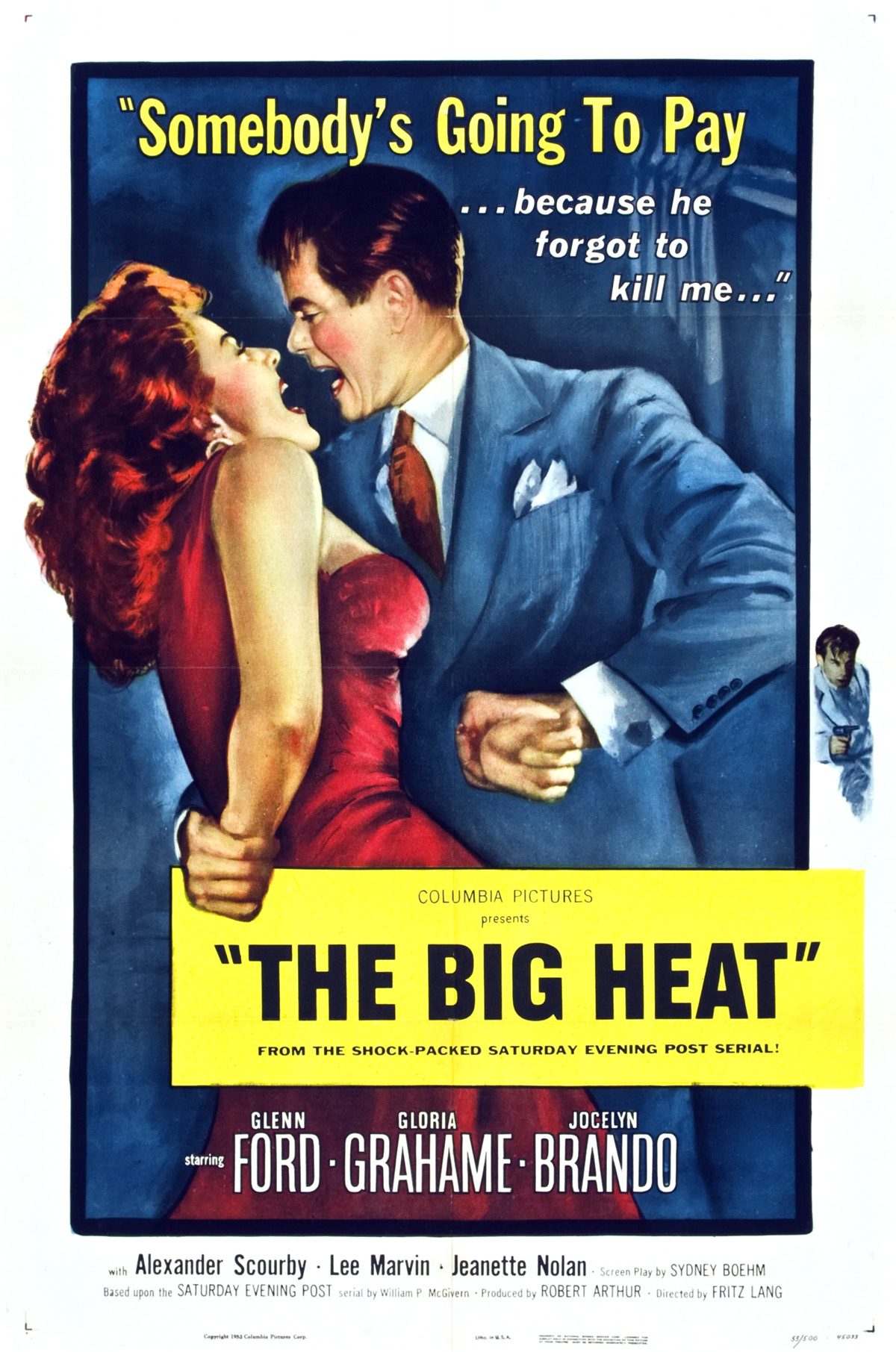
The Plot: Officer Tom Duncan has taken his own life, and Detective Dave Bannion (Glenn Ford) investigates. Duncan’s widow (Jeanette Nolan) says Tom was in poor health, but a woman claiming to be Duncan’s mistress (Dorothy Green) refutes this, and winds up murdered the next day. Bannion continues to inquire, despite objections from his superiors and death threats directed at his wife Katie (Jocelyn Brando). With assistance from Debby Marsh (Gloria Grahame), the girlfriend of gangster Vince Stone (Lee Marvin), Bannion uncovers a crime syndicate whose influence reaches far beyond the town’s underworld.

Why It Matters: The NFR calls it “[o]ne of the great post-war noir films” and “both stylized and brutally realistic”.

But Does It Really?: Sometimes I designate films on this list as “minor classics”, but “The Big Heat” made me question if there was a label below that. There’s nothing wrong with “The Big Heat”; it has all the hallmarks of film noir without resorting to cliché, and its female characters are allowed to be far more dimensional than others of the era, but overall the film was just “meh” for me. “Big Heat” is a well-made pulp drama that has aged quite well, but its standing as a classic has definitely diminished over time. “The Big Heat” is great noir viewing, but I question its standing as a significant American film.

Shout Outs: When Bannion encounters Stone at The Retreat, the background music is “Put the Blame on Mame” from “Gilda”, also starring Glenn Ford.

Everybody Gets One: While not as successful as younger brother Marlon, Jocelyn Brando had a stage and screen career that spanned over 35 years. “The Big Heat” was one of Jocelyn’s first films. Other highlights include the original stage production of “Mister Roberts” with Henry Fonda, and the 1981 cult classic “Mommie Dearest”. Ever the older sibling, Jocelyn was incredibly supportive of Marlon and always quick to publicly defend his behavior.

Wow, That’s Dated: Your standard ‘50s crime elements, like police blotter on an automatic typewriter, and pre-Miranda suspect beatings. And today on “We Are the Worst at Inflation”: a 35-cent drink in 1953 would be $3.35 today, and that’s only at the happiest of happy hours, let me tell you.

Seriously, Oscars?: No nominations for “The Big Heat”, but it did win the Edgar Allan Poe Award for its screenplay. At least someone was paying attention.

Other notes

  • Before becoming a novel (and a major motion picture), “The Big Heat” was a serial from Philadelphia Bulletin reporter William P. McGivern. The story was serialized in the Saturday Evening Post from December 1952 to February 1953. The novel was published shortly thereafter, with the film version hitting theaters that October.
  • Like many novels turned movies, certain liberties were taken with “The Big Heat”. Bannion and Debby’s implied relationship was toned down, as was, believe it or not, most of the violence. The film’s locale was also changed from Philadelphia to the fictitious Kenport, because God forbid a real city is implied to have crime of any kind.
  • I’ve never seen Lee Marvin looking so young. Lee was 29 when he filmed “Big Heat”, and this was one of seven films he made in 1953 alone!
  • The Widow Duncan is played by veteran film actor Jeanette Nolan. Any woman who can play a corrupt widow and everyone’s ailing sweet-natured grandmother has automatically earned my respect.
  • One major element separates “Big Heat” from other film noir: because it’s a later entry in the genre, “Big Heat” can reflect on the suburban boom of the early ’50s. Bannion still treks the darkly lit alleys of a criminal underworld, but this is in counterpoint to his picket-fence homelife.
  • Like “Fury”, Fritz Lang is really struggling to bring his German expressionism sensibilities to an American studio film. He and Old Hollywood cinematographer Charles Lang (no relation) get no opportunities to do any inventive camerawork, other than the occasional 90-degree dolly tracks.
  • Today on Code-Era Profanity: “In a pig’s eye”, and the uninspired “You can fill in the four-letter words better than I can.”
  • [Spoiler] A quick film lesson I call the Gwyneth Paltrow Rule: the more harmonious a movie cop’s home life is, the more gruesome the murder of his wife will be. “The Big Heat” features an extreme example. It’s tame by today’s standards, but still unsettling.
  • Maybe it’s the inherent tropes associated with a gangster’s moll, but a lot of Gloria Grahame’s scenes with Lee Marvin play out like “Born Yesterday: The Drama”.
  • What am I missing about Glenn Ford? I’ve seen three of his movies and I’m just not getting the appeal. He’s giving me the same restrained anger in every performance. I don’t recall Pa Kent being this pissed all the time.
  • This is one of several movies on the list that features Carolyn Jones (aka Morticia Addams) with her natural blonde hair, therefore making her unrecognizable to a modern audience.
  • Why does Gloria Grahame keep getting herself mixed up with tough guys haunted by their dark past? Glenn Ford, Humphrey Bogart, Will Parker…
  • “The Big Heat” will see the grapefruit-smashing scene of “The Public Enemy”, and raise it one coffee-throwing scene. I hesitate to call the moment iconic, but Gloria Grahame getting a face of Folgers is the scene that gets the most mentions when “The Big Heat” is referenced.
  • Speaking of, shoutout to makeup artist Clay Campbell and his uncredited team. Debby’s burn marks look amazing.
  • Wow, the bodies really start piling up in the last 10 minutes. Did this movie need to fill a quota?
  • In a sweet bit of cinematic payoff, Bannion finally monologues about his dead wife at the end. It’s the ‘50s equivalent to the “She Used to Fart in Her Sleep” monologue from “Good Will Hunting”.

Legacy

  • Fritz Lang made a handful of noir movies in the ‘50s with such titles as “While the City Sleeps” and “Beyond a Reasonable Doubt”, before returning to his native Germany. Maybe some day when I’ve finally completed this list we can look at some of Fritz Lang’s more iconic, NFR-ineligible work.

#367) Preservation of the Sign Language (1913)

maxresdefault

#367) Preservation of the Sign Language (1913)

OR “Grandparents of a Lesser God”

Written by George Veditz

Class of 2010

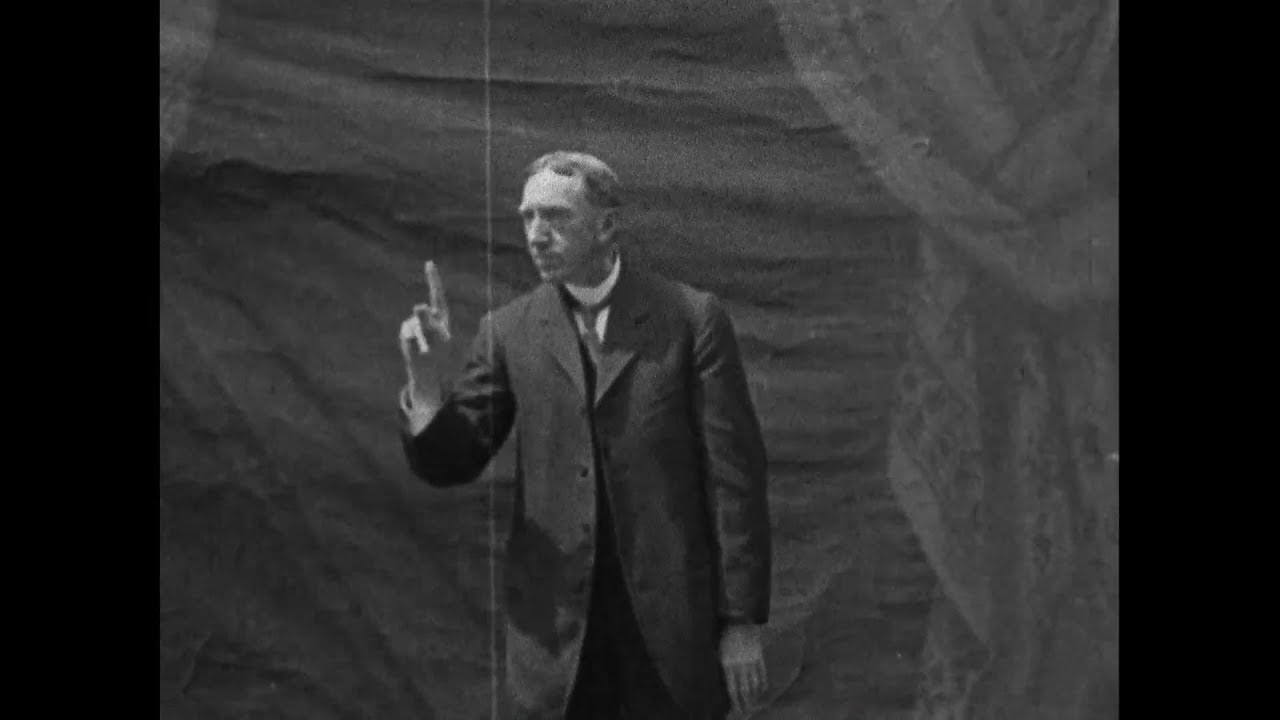
The Plot: National Association of the Deaf’s president George Veditz signs an impassioned speech about preserving sign language at a time when such countries as France and Germany were eradicating the practice. Veditz promotes signing’s superiority to lip-reading, as well as his mission to preserve sign language through a series of films.

Why It Matters: The NFR gives no superlatives, but their write-up includes a healthy dosage of historical context. There’s also a detailed essay by Christopher Shea, archivist at Gallaudet University (whose namesake gets a shout-out in the film).

But Does It Really?: Many films on this list document a culture or a specific time period, but “Preservation of the Sign Language” may be the only one to preserve a language. I’m always looking for NFR entries that stand on their own unique piece of land, and “Preservation” achieves that from its first moments. An important inclusion to the NFR, and yet another reminder for me to brush up on my ASL.

Everybody Gets One: George Veditz was fluent in both English and German (both his parents were immigrants) before losing his hearing at age eight to scarlet fever. He studied at the aforementioned Gallaudet University (then known as the Columbia Institute for the Instruction of the Deaf). After being elected president of the National Association of the Deaf, Veditz was the first to recognize film as a medium to preserve ASL, raising the necessary funds for a proposed film series. “Preservation of the Sign Language” is the first of the NAD’s films.

Wow, That’s Dated: Though ASL is common practice now, it was not widely accepted 100 years ago. The Milan Conference of 1880 put an official emphasis on the oralist method of deaf communication, focusing on speech and lip reading. Sign language was on the brink of being totally eliminated throughout Europe. The National Association of the Deaf was founded in America to combat the oralist method and promote sign as the more effective practice.

Other notes

  • “Preservation of the Sign Language” is presented without subtitles, but I was able to track down a transcript done a few years back by UC San Diego Professor Carol Padden. It differs in some areas from George Veditz’s handwritten translation, proving that, like any other language, ASL has a complexity of vocabulary that greatly depends on interpretation.
  • Knowing his audience, Veditz begins with a respectful reference to Charles-Michel de l’Épée. While he didn’t invent sign language, l’Épée was responsible for sharing it with the world, earning him the moniker “Father of the Deaf”.
  • It should be noted that of the 164 delegates of the Milan Conference of 1880, only two of them were deaf.
  • Among the many prominent deaf figures that get a mention in this film are the aforementioned Thomas Hopkins Gallaudet, Gallaudet University football coach John B. Hotchkiss, Professor Edward Allen Fay, and first NAD president Robert P. McGregor (nicknamed “Rob Roy” by George Veditz).
  • The $5,000 raised by George Veditz is the equivalent of about $129,000 today.
  • ASL may have been the first language that used film as a form of preservation. Think about it: any other language would have had to wait for sound to properly document their cadence and pronunciation. Veditz makes a point to sign slowly, spelling out several words; ensuring that both the language and the alphabet would be preserved.
  • “Fifty years from now, these moving picture films will be priceless.” You gotta respect someone with that kind of foresight.

Legacy

  • George Veditz helped make several films preserving sign language, with topics ranging from poems, songs, jokes, and the Gettysburg Address. Many of these films no longer survive, but the remaining few have been preserved by Gallaudet University and, you guessed it, the Library of Congress.
  • The National Association of the Deaf is still going strong 140 years after its founding. You can find more information about the NAD here.

#366) Pillow Talk (1959)

MV5BMTQ5NDg1NzU1OV5BMl5BanBnXkFtZTgwMDQyODgxMTE@._V1_

#366) Pillow Talk (1959)

OR “Bad Day with Tack Rock”

Directed by Michael Gordon

Written by Stanley Shapiro and Maurice Richlin. Story by Russell Rouse and Clarence Greene.

Class of 2009

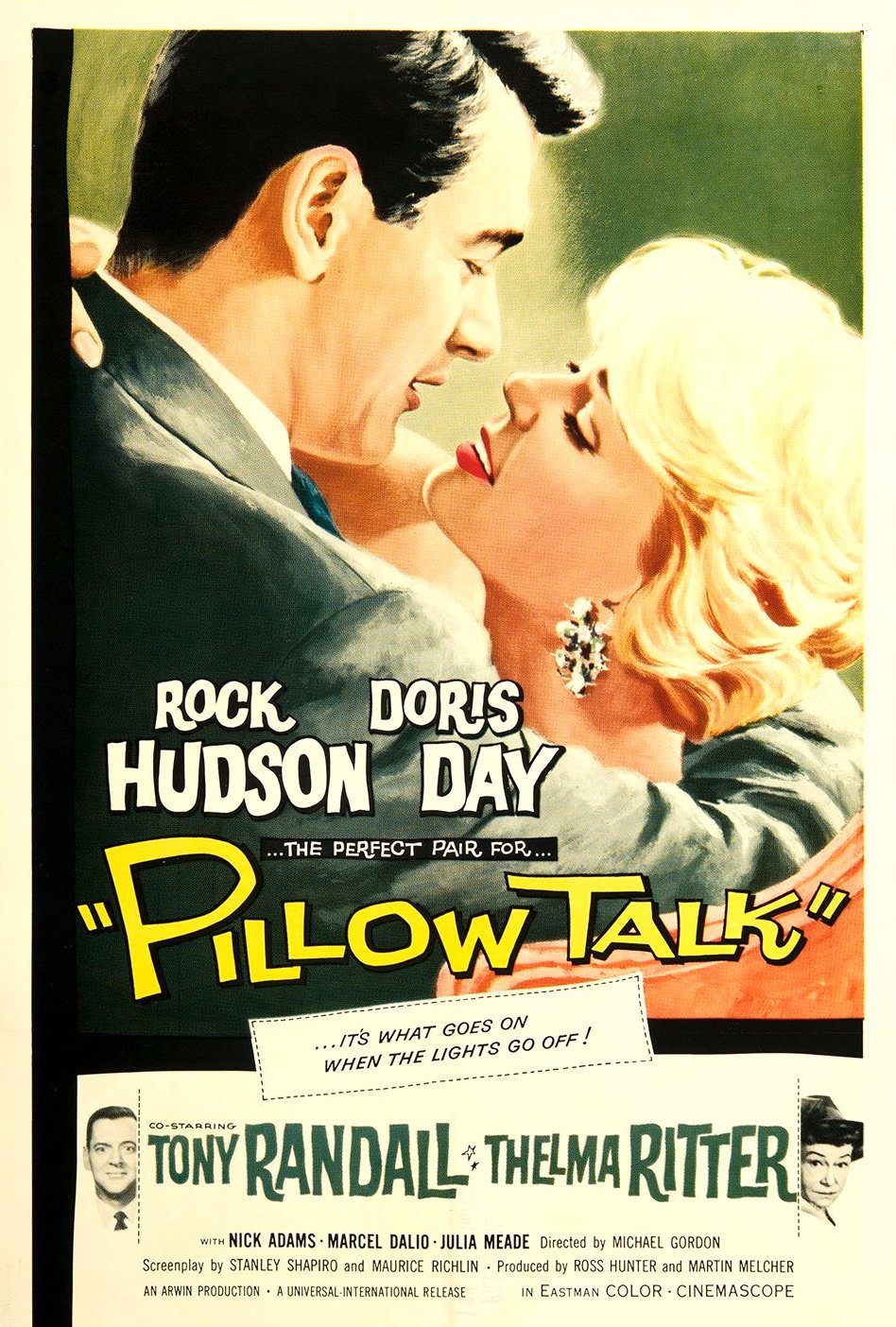
The Plot: Manhattan interior decorator Jan Morrow (Doris Day) is unlucky in love, a point emphasized by sharing a telephone party line with bachelor composer Brad Allen (Rock Hudson), who seems to have a new woman every time Jan picks up the receiver. Through their mutual friend – stuffy millionaire Jonathan Forbes (Tony Randall) – Brad finally meets Jan in person, posing as Texan rancher “Rex Stetson”. Jan immediately falls for “Rex”, while simultaneously continuing her phone squabbles with Brad. Complications arise, hilarity ensues, and Thelma Ritter cracks wise as Jan’s maid, as God intended.

Why It Matters: Someone at the NFR really likes this movie, calling it, “one of the screen’s most definitive, influential and timeless romantic comedies” and praising its “two charismatic stars, especially the effervescent Day”. An essay by film historian/NFR speed-dial Matthew Kennedy gives the movie plenty of historical context.

But Does It Really?: It’s definitely a movie of its time, but “Pillow Talk” is still one of filmdom’s top-notch romantic comedies. Like many a rom-com on this list, the film’s more dated aspects are balanced out by the illuminating charm of its two stars. Whether or not we’ll be talking about “Pillow Talk” in another 60 years is up for debate, but the film’s well-structured screenplay and pitch perfect cast will make a compelling argument.

Everybody Gets One: Singer Doris Kappelhoff got her stage name from bandleader Barney Rapp, who admired her cover of the song “Day After Day”. Doris had a string of post-war hits (most notably “Sentimental Journey”) and quickly transitioned to movie musicals. She showed her range in the Hitchcock thriller “The Man Who Knew Too Much” (still not on the list, FYI), but it was “Pillow Talk” in which Day finally got to play a truly comic lead.

Wow, That’s Dated: Umm…everything? Knowing the concept of a party line is a pre-req (see “Other Notes”), and despite all of this movie’s pros, there’s still a lot of sexism that definitely wouldn’t fly today.

Title Track: “Pillow Talk” was originally deemed too risqué a title, with “Any Way the Wind Blows” being a proposed alternate. Producer Ross Hunter stood his ground, and “Pillow Talk” (the title as well as the song) remained.

Seriously, Oscars?: A big hit for Universal, “Pillow Talk” received five Oscar nominations. Its one win for Original Screenplay was deserving, but is it really better than fellow nominees “The 400 Blows”, “Wild Strawberries”, and “North by Northwest”? Doris Day received her only Best Actress nomination, and Thelma Ritter lost her 5th Best Supporting Actress nod. Allegedly, Ms. Ritter stayed home that night and threw a “Come and Watch Me Lose Again” viewing party.

Other notes

  • What is a party line? For most of the 20th century, multiple households would share the same phone line to save money. The tradeoff was the lack of privacy, and the compromises of sharing a line with strangers. You can see how hilarity would ensue from this situation.
  • Turns out this screenplay had been kicking around Hollywood since 1942! It was originally to be produced at RKO, and after several revisions landed at Universal in 1958.
  • Director Michael Gordon was a controversial choice; it was his first gig after being blacklisted in 1951.
  • For its multiple phone calls, “Pillow Talk” makes excellent use of the widescreen camera, as well as impressive split-screen photography. Shout out to the boys in the lab!
  • Are Doris Day and Rock Hudson great in this or what? Day has her comic delivery down to a science, and Hudson lets you see the wheels turning as Brad gets in over his head. Everything clicks when these two share the screen.
  • Once Tony Randall shows up we really get into the Madison Avenue, psychoanalyzing aspects of ‘50s urban living. Between this and “Rock Hunter”, Tony Randall was the poster boy for the ‘50s businessman.
  • Oh right, the sexism. In quick succession, we get Jonathan kissing Jan without permission, Brad demonstrating the “Matt Lauer button” in his apartment, and Nick Adams telling Jan after she rejects his advances, “It’s your word against mine.” The #MeToo movement may have sealed this movie’s fate.
  • Good to see Rock Hudson making use of the Texan accent he picked up from “Giant”.
  • Half the fun is watching everyone talk around such taboo subjects as intercourse, pregnancy, and homosexuality. A sign of the Hays Code’s long-lasting effect on film, as well as the starts of the liberation movies would get once the Code dissolved in the ‘60s.
  • “There are some men who don’t end every sentence with a proposition.” Screw Truffaut, I’ll give these writers the Oscar right now!
  • Perry Blackwell sings three songs, and gets several prominent close-ups throughout her one scene, but I cannot find any information on her. Friend of the producer? Up and comer on the Decca label?
  • “Roly Poly” may be the first song in history to be appropriated by white people mid-song. Any excuse to get Doris to sing, I guess.
  • Speaking of, Jan’s inner monologue gets a song! At least that was an easy shoot day; no lip-synching required.
  • At first I was skeptical about the idea of a playboy composer, but now I’m convinced the writers did that just to do the “scoring” joke.
  • Thelma Ritter is severely underutilized in this movie. Alma is the kind of role she could do in her sleep.
  • If “Pillow Talk” reminds me of one thing, it’s that men are the worst. This movie compels me to apologize to everyone my gender has wronged.

Legacy

  • Neither Rock Hudson nor Doris Day were known for their comedy skills prior to “Pillow Talk”, but the film’s success solidified their standing in the genre. Day and Hudson (and Tony Randall) reunited for two more comedies: 1961’s “Lover, Come Back”, and 1964’s “Send Me No Flowers”. In addition, Day and Hudson bonded closely during production, and their friendship lasted until Hudson’s death in 1985.
  • A “Pillow Talk” sequel was in the works around 1980, with Day, Hudson, and Randall all willing to return, with Kristy McNichol playing Jan and Brad’s grownup daughter. Day, however, decided she preferred retirement, and the film never materialized.
  • “Pillow Talk” spawned its share of imitators, and is still the template for sophisticated romantic comedies. The genre received a tribute with 2003’s “Down with Love”, featuring a cameo by Tony Randall!