#365) Foolish Wives (1922)

Foolish_Wives_ad

#365) Foolish Wives (1922)

OR “You Can Count on Me”

Directed & Written by Erich von Stroheim

Class of 2008

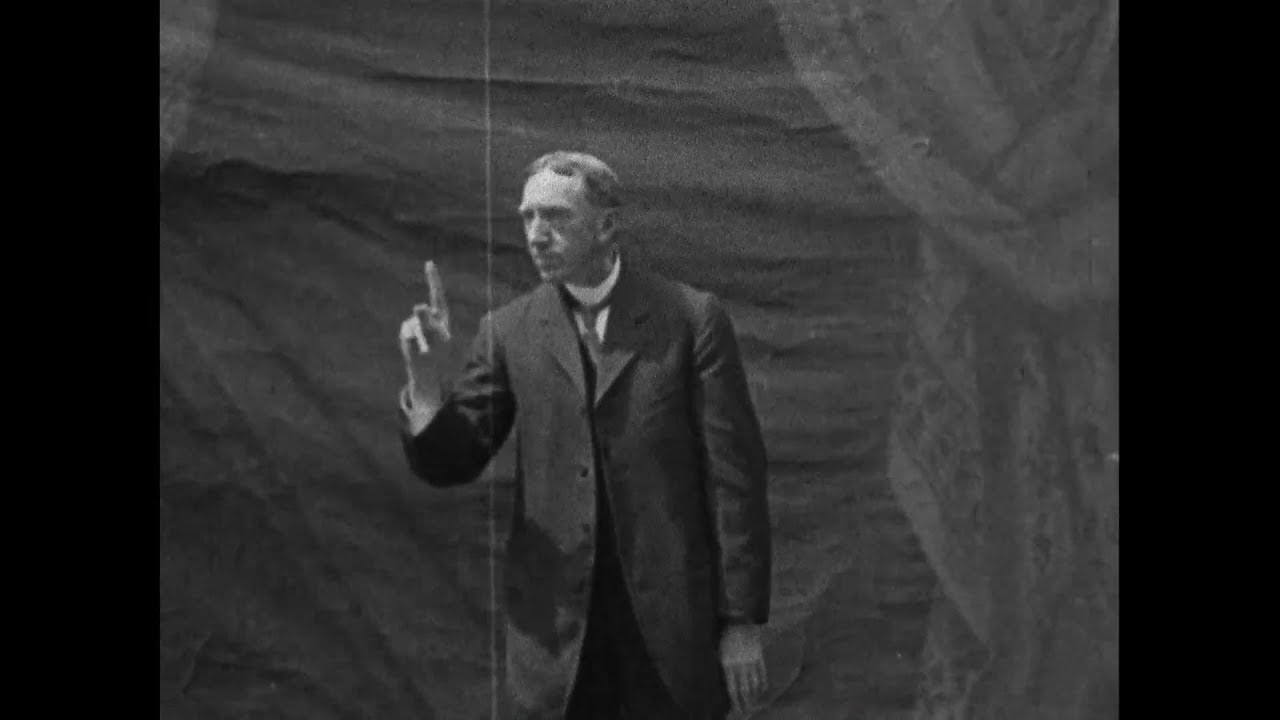
The Plot: A trio of con artists (Erich von Stroheim, Maude George, Mae Busch) arrive in Monte Carlo posing as aristocracy. “Count Sergius Karamzin” is tasked with their next target: Helen Hughes (Miss DuPont), the young, gullible wife of American Monaco Envoy Andrew Hughes (Rudolph Christians). The Count seduces Helen, as well as the hotel’s maid Maruschka (Dale Fuller) and Marietta (Malvina Polo), the handicapped daughter of one his associates (Caesare Gravina). If nothing about this plot sounds redeeming, don’t worry, it gets worse.

Why It Matters: The NFR calls the film “brilliant and, at the time, controversial”, plus gives a quick mention to von Stroheim’s “challenging” reputation. There’s also an essay by silent film expert Daniel Eagan, who wrote the book on the National Film Registry (literally).

But Does It Really?: When I started this blog, a friend asked if I was going to watch these films in chronological order. When I said no, he replied, “Good call. You’d never make it past von Stroheim.” And now I know what he meant. “Foolish Wives” is a cut above the average silent film, but man what a slog it is. While I admire the film’s scope, as well as von Stroheim’s justified place in film history, nothing about “Foolish Wives” needs to be 2 ½ hours, or longer (more on that later). “Foolish Wives” is excess for the sake of excess, and while deserving of NFR recognition, this one may just be for the film buffs.

Everybody Gets One: Many of the creatives behind “Foolish Wives” would be back for von Stroheim’s other NFR titles: “Greed” and “The Wedding March”. Special mention to model Miss DuPont (who summed up her time with von Stroheim by stating, “Put not your trust in directors.”) and actor Rudolph Christians, who died seven months into the film’s extensive production and was replaced with a double.

Wow, That’s Dated: The unfortunate standard gender politics I’ve come to expect from this era. Sergius has to borrow money from a woman? Scandalous!

Title Track: Well here’s an odd one for you: a book called “Foolish Wives” pops up throughout the movie. Its author: Erich von Stroheim. And the weirdest part? This is an original screenplay; there is no novel of “Foolish Wives”!

Other notes

  • A quick word on the film’s length. Erich von Stroheim’s original cut was allegedly anywhere from 6 to 10 hours long! Universal cut the film down to a more manageable 3 ½ hours for its premiere, but various state censor boards objected to the subject matter, and by the time “Foolish Wives” had its general release, the film was running 2 hours (in some states, 75 minutes). Needless to say, von Stroheim hated these shorter prints. Currently, the most readily available version is a 2003 restoration that reinstates as much footage as possible, with a runtime of 140 minutes. Cuts and re-cuts will become a recurring theme with von Stroheim’s other NFR entries.
  • After seeing the establishing shots of Monte Carlo, I presumed they were filmed on location. It turns out, however, that Monte Carlo was a set recreation on the Universal lot. It was the most expensive and detailed set at the time, costing over $420,000 (roughly $6.4 million today). It’s an impressive undertaking, and the most obvious influence from von Stroheim’s mentor: D.W. Griffith.
  • While we’re on the subject, part of von Stroheim’s temperamental attitude came from his insistence on accuracy. His actors wore real clothes (not costumes), drank real champagne and ate real caviar. He even had real French money printed, to the point where he was briefly arrested for counterfeit! Von Stroheim justified his obsessive attention to detail by saying “the camera will know the difference”. Is it any wonder the film went over budget?
  • The sense I’m getting here is that “Foolish Wives” is the ‘20s version of “Dirty Rotten Scoundrels”, only not as funny and much, much longer.
  • This is one of the few movies on this list that openly acknowledges its Michael Douglas Scale readout. Hughes and Helen reveal they are 20 years apart. In real life, these two actors were 25 years apart. Yeesh.
  • Ooh, cool lightning effect during the storm. I’m always surprised when silent movies have special effects.
  • I can see why the censors had issues with “Foolish Wives”: the Count is not only unlikable, but quite salacious with the women in his life. That story again: this movie’s writer, director, and star spends most of his screentime staring at and groping women. You need help, Erich.
  • There’s an extended sequence where Helen, on her way out of the hotel, sees a WWI veteran with no arms (presumably lost in the war). She has an empathetic moment with him while “Over There” and “My Country Tis of Thee” play in the background. Pretty heavy-handed stuff, but the Great War had only been over for less than four years. The scene is a thoughtful inclusion, but it has nothing to do with anything.
  • There’s a poignant moment where the camera moves in on Maruschka from a medium shot to a close-up. Did von Stroheim just invent the zoom? Or at least the idea that you can move the camera in a shot?
  • Sergius tells someone to “Go to hell”. Pretty strong language by 1922 standards. I presume many a pearl necklace was clutched during screenings.
  • [Spoilers] And then our auteur is murdered and his body dumped into a sewer; which is kind of what happened to von Stroheim in Hollywood if you think about it.

Legacy

  • “Foolish Wives” was the first film to be made for over $1,000,000, and was advertised as such. While the film was a hit, its price tag guaranteed it wouldn’t make a profit. At the same time, word had gotten out about von Stroheim’s reputation of being tyrannical and going over-budget, and his directing opportunities dwindled. Von Stroheim eventually transitioned into acting, and is best remembered for his performance in “Sunset Boulevard” as – what else – a former silent film director.
  • Erich von Stroheim and Carl Laemmle appear as characters in an episode of “The Young Indiana Jones Chronicles”. Turns out Indy was an uncredited PA on “Foolish Wives”.

#364) Peege (1972)

MV5BODAxYTEzMmQtOWZlOC00YmY2LWJmNzUtYzEzMTJjOTJiZjI2XkEyXkFqcGdeQXVyNjk1NjkxMzM@._V1_UY1200_CR99,0,630,1200_AL_

#364) Peege (1972)

OR “Last Christmas”

Directed & Written by Randal Kleiser

Class of 2007

The Plot: Christmastime means one family’s annual visit to their grandmother Ethel, nickname “Peege” (Jeanette Nolan), in her nursing home. The entire family dreads this trip, unable to accept Peege’s deteriorating health. Mom’s (Barbara Rush) discomfort manifests itself as condescending remarks, Dad (William Schallert) fills the awkward silences with meaningless small talk, and grandsons Jerry and Damion (David Alan Bailey and Barry Livingston) seem disinterested and joke around. Only eldest grandson Greg (Bruce Davison) connects with Peege, reminding her of the happy times he spent with her growing up. I’m not crying you’re crying.

Why It Matters: The NFR calls the film “extremely moving” and gives a brief synopsis.

But Does It Really?: While not the most recognizable of the NFR entries, “Peege” is certainly one of the most effective. As my friend Ryan put it, “[“Peege”] must be the movie they screen at Pixar when they teach how to make people cry.” The film hits its emotional core so honestly and directly you can’t help but be moved by it. I discovered “Peege” a few years before starting this blog (more on that later), and was happy to learn that another screening would be in my future. A yes for NFR inclusion from me, and definitely worth a viewing. Just keep the tissue handy.

Everybody Gets One: Randal Kleiser knew he wanted to be a film director after seeing “The Ten Commandments” as a child. As a grad student at USC, his original idea for his thesis film was about a theater troupe and time travel (don’t ask). Wanting to retain the film’s copyright (which would have gone to USC had he used their equipment), Kleiser opted for a less expensive, more personal film based on his annual visits to his grandmother (also nicknamed “Peege”) at her nursing home in Pennsylvania.

Wow, That’s Dated: The only majorly dated aspect of the film is Charles Albertine’s score, which has a real “Hallmark Hall of Fame” vibe to it. I imagine it’s the use of the flute for the film’s melancholy main theme that makes me feel this way.

Seriously, Oscars?: Completed in 1972, “Peege” played the festival circuit in search of a distributor, and found one in the recently created Phoenix Films (now Phoenix Learning Group). “Peege” started making the university and library rounds in late 1973, but whether or not it made an Oscar qualifying run in LA is unknown. That year’s winner for Live Action Short was something called “The Bolero”. Great, now I have that stuck in my head.

Other notes

  • Bruce Davison was already well known by 1972 for the film “Willard”. He loved the script for “Peege” so much he did the film for scale (plus a percentage of any profits). Jeanette Nolan was cast by chance: she was filming an episode of “Gunsmoke” at CBS Studios on the soundstage next door to the “Peege” production office (on loan from a TV movie that wrapped early). Ms. Nolan was 60 during production.
  • The rest of the “Peege” family is populated with recognizable TV actors. Barbara Rush was Marsha Russell on “Peyton Place”, William Schallert was Poppo on “The Patty Duke Show”, and Barry Livingston was Ernie on “My Three Sons”. All three excel at getting to play more range here than on their respective TV shows.
  • I’m a little confused as to which of the two parents is Peege’s child. I’m pretty sure it’s the dad, but they both call her Peege. Am I missing something?
  • This family has the awkward part down pat. I have visited my share of dying relatives and it is always this uncomfortable. Not all of us have the luxury of escaping into sepia-tone flashbacks.
  • Speaking of, did Greg grow up in the ‘30s? Every flashback looks like it comes from a “Waltons” episode.
  • After years of character work on film and radio (most notably as Mrs. Bates), Jeanette Nolan finally shines as Peege. Rarely does an actress “of a certain age” get to play the main character, let alone at different stages of her life. Quite simply, Nolan is perfect as everyone’s grandmother (it helps that she looks remarkably like my maternal grandmother).
  • My introduction to “Peege” was a 2015 screening of an original 16mm print at the Exploratorium (“Peege” shared the bill with “Cipher in the Snow” and “Stoned”). Curator Jesse Hawthorne introduced the film by stating: “You are not ready for ‘Peege’”. And boy was he right. Like my viewing for this post, I was a mess of tears by the end. My crying got its second wind when I went home and reflected on those I have lost in my life and how I did or didn’t connect with them at the end. It’s a cathartic experience, and I hope that “Peege” and I cross paths again further down the line.

Legacy

  • Randal Kleiser’s directing career took off after “Peege”; culminating in him landing the plum job of directing the film adaptation of “Grease”. His subsequent filmography includes such oddities as “The Blue Lagoon”, “Big Top Pee-Wee” and “Honey, I Blew Up the Kid”. With this many commercial films on his resume, it would be easy to write off Kleiser as a Hollywood day laborer, but then you see a film like “Peege” and recognize that he, like so many others on this list, is an artist. The next time you watch a big Hollywood “product”, check the director’s resume and find those smaller films that ignited their passion to tell stories.

#363) Traffic in Souls (1913)

traffic-in-souls_movie-poster

#363) Traffic in Souls (1913)

OR “Ms. Barton’s Profession”

Directed by George Loane Tucker

Written by Tucker and Walter MacNamara

Class of 2006

The Plot: “Traffic in Souls” is a melodramatic account of the modern crime of forced prostitution (aka “white slavery”). Young Lorna Barton (Ethel Grandin) is abducted by a New York prostitution ring run by well-known reformist William Trubus (William Welsh). Lorna’s sister Mary (Jane Gail) and Mary’s fiancé Officer Burke (Matt Moore) investigate Lorna’s disappearance, leading to their discovery of the prostitution ring, which also recruits naïve immigrants fresh off the boat from Ellis Island. The plot gets increasingly convoluted from here, suffice it to say that this film is staunchly anti-white slavery, and that we’re all going to Hell.

Why It Matters: The NFR praises the film’s “verve” and “riveting sociology”, while also claiming that it “presaged the Hollywood narrative film”. There’s also an essay by film critic Marilyn Ferdinand.

But Does It Really?: Sure, I’m feeling generous. “Traffic in Souls” can be a heavy-handed, oft-confusing film, but it encapsulates (and sensationalizes) America’s fear of a social issue of the day, and helped establish then unknown film company Universal Studios. I’ll give “Traffic in Souls” a pass, but this movie may just be for the nuts like me determined to watch every movie on an arbitrary list of quote-unquote significant films.

Everybody Gets One: Information is scarce for pretty much everyone involved in this film. Like many silent film cast and crews I’ve researched, the creatives of “Traffic in Souls” did 1,000 movies every year in the 1910s and 1920s, and then disappeared after sound. Many cast members, including leading lady Jane Gail, would appear in another Universal picture/NFR entry: 1916’s “Twenty Thousand Leagues Under the Sea”.

Wow, That’s Dated: This film was a response to the widespread scare in America about “white slavery”, particularly a 1910 story about Chicago brothels with abducted immigrants. This movie also features the silent movie trope of the social worker as hypocritical villain.

Title Track: It wasn’t until I actually watched the film that I realized that in this context, traffic is a verb, not a noun. As in “those who traffic in souls”. That makes a lot more sense.

Other notes

  • First off, a confession: I didn’t do a lot of research for this post, and there are two primary reasons for this. 1) As previously mentioned, there’s very little out there about the film itself and 2) I don’t feel like investigating the history of forced prostitution in America. That being said, it’s still very much happening in the world today, and is a complex, disturbing subject, but you didn’t come here to read about sexual slavery from the guy who over-simplified the Vietnam War.
  • Universal Studios began the way so many other major studios began: with producers tired of the monopoly Thomas Edison had on filmmaking in the early 1900s. Turns out he was from the David Merrick school of thought: It wasn’t enough for him to be successful, others had to fail.
  • I love the film’s subtitle: “A Photodrama of Today”. Seems like 1913 speak for “Ripped from today’s headlines!”
  • This movie is already irritating me because each intertitle is numbered at the bottom left-hand corner. At least if I’m bored I can count the intertitles.
  • There was no censor board in 1913, but the film opts to skirt around the word “prostitution”, going with euphemisms instead. My favorite is referring to the whorehouse as a “den of iniquity”. Also, and this should go without saying, you don’t see anything. Showing an ankle back then would have had the Catholic Church on your butt so fast.
  • There are too many damn characters in this movie. Is the whole film just introductions?
  • Side note: Edison refused to credit his actors, so having the cast listed throughout the film was revolutionary, and helped propel what became the studio star system. Man, fuck you, Edison.
  • The 1910s were into unnecessary abbreviations for names, like Wm. or Robt., which I presume are short for William and Robot.
  • I’m gonna assume the two actresses playing the Swedish immigrants don’t know a word of Swedish. Probably never been to Sweden. Probably never even had Swedish Fish.
  • Also dated: the pre-Miranda Rights days when a cop could beat up their suspect.
  • There’s a lot of intercutting in this movie, to the point of distraction. I think the editor was ADD.W. Griffith. Thank you and good night!
  • One of the prostitutes goes for $500 in 1913 money. That’s almost $13,000 today! That’s “disgraced Senator” money!
  • I know this is a serious drama, but you can’t show a bunch of police officers cramming into one car and not make me laugh.
  • The ending lays it all on pretty thick, with one character literally dying of shame from this experience.
  • 92! 92 intertitles! Ah ah ah!

Legacy

  • The success of “Traffic in Souls” put Universal on the map as a major film studio, and they’re still going strong 100 years later. It’s amazing to think that the likes of “E.T.”, “Jurassic Park”, “Frankenstein”, and the “Fast and the Furious” franchise all owe their existence in part to a film about forced prostitution.

#362) Imitation of Life (1934)

MV5BZGExYWRjMWEtNWZkNC00MzMwLTkwMjEtNmIzYTlhMDMzYTZlXkEyXkFqcGdeQXVyNjc0MzMzNjA@._V1_

#362) Imitation of Life (1934)

OR “The First Pancake is Always Spoiled”

Directed by John M. Stahl

Written by William Hurlbut. Based on the novel by Fannie Hurst.

Class of 2005

The Plot: Bea Pullman (Claudette Colbert) is trying to maintain her late husband’s maple syrup business while simultaneously raising her daughter Jessie (Juanita Quigley). She hires Delilah Johnson (Louise Beavers) as her housekeeper, who agrees to work for free on the condition that Bea provide housing for her and her mixed-race daughter Peola (Dorothy Black). Bea successfully turns Delilah’s family recipe for pancakes into a profitable business, and despite their new wealth, Delilah insists on her continued employment for Bea. 10 years later, Bea finds herself in an unknowing love triangle with her fiancé Stephen (Warren William) and the now grown up Jessie (Rochelle Hudson). But the film’s emotional core comes from adult Peola (Fredi Washington), embarrassed by her heritage, passing for white and cutting off ties with her mother. It’s a controversial subject, but I’m sure 1934 Hollywood’s take on it will age well, right? …Right?

Why It Matters: The NFR singles out the film’s status among melodramas and “woman’s pictures”, and suggests it is “arguably the first Hollywood studio film to treat African-American characters in a dignified fashion”. An essay by film preservationist/cat person Ariel Schudson is primarily about the novel’s author, Fannie Hurst.

But Does It Really?: “Imitation of Life” was quite the daring project in its day, but thanks to some highly restrictive censorship, the complexity of “Imitation of Life” couldn’t be captured on film in 1934. This film is a baby step towards breaking down racial barriers in film, but the handling of its subject matter makes for a cringe-worthy watch today. I can definitely give “Imitation of Life” a pass on “historical significance”, but this is another movie that may just be for film buffs.

Everybody Gets One: Louise Beavers didn’t aim to be an actor, but a performance in her church choir caught the attention of a Central Casting agent and she landed her first audition. Beavers was always cast as the “Mammy” character subservient to a film’s white leads, but as she once said, “I’m only playing the parts. I don’t live them.” With support from the NAACP, Louise Beavers successfully persuaded Universal to delete some of the more offensive slurs from the “Imitation of Life” screenplay.

Wow, That’s Dated: Yeah, this is a tough one to watch through a modern lens. With the start of the Civil Rights movie still 20 years away, Hollywood’s answer to racial intolerance in 1934 was to just shrug it off and go about your business. Bea always treats Delilah and Peola respectfully, but any acknowledgment of systemic racism is stated matter-of-factly with no thought of challenging it. And despite the film’s progressive views, Delilah is still the warm, uneducated “Mammy” stereotype.

Title Track: Does anyone know the significance of the title? Originally titled “Sugar House”, Fannie Hurst changed the name just before publication. Is she commenting on how this story is a reflection of what’s going on in America? Is Hurst tooting her own horn?

Seriously, Oscars?: “Imitation of Life” received three Oscar nominations: Best Picture, Sound, and the now-defunct Assistant Director category. The only reason Claudette Colbert wasn’t nominated for Best Actress was because she was already a nominee (and winner) for “It Happened One Night”.  And had Best Supporting Actress existed back then, I’m sure Louise Beavers and Fredi Washington still wouldn’t have been nominated.

Other notes

  • The Motion Picture Association of America (MPAA) was newly formed in 1934, and “Imitation of Life” was one of their first major challenges. Miscegenation was forbidden under the new production code, and the MPAA fought Universal on turning “Imitation of Life” into a film, to the point of possibly shutting down production. After much back and forth, the MPAA approved “Imitation of Life”, two weeks after shooting had already started. Suffice it to say that a lot of liberties are taken with the source material.
  • How did they work around having a mixed-race character in a movie? The script states that Peola’s father was “a very light colored man”. In addition, the MPAA insisted that nothing work out for Delilah and Peola, thus highlighting the “definite connection with the problem of miscegenation”. Oy.
  • A single woman raising her daughter and opening her own restaurant? Bea must have gone to the Mildred Pierce Academy of Entrepreneurship and Family Therapy.
  • I get the feeling Walter Matthau saw Ned Sparks’ performance in this movie and decided to base his entire screen persona on it. But hey, it’s a nice change of pace to see someone other than the black maid be the comic relief in a ‘30s movie.
  • And then this movie very clumsily tries to tackle societal racism, with Delilah saying she “don’t know rightly where the blame lies” while looking almost directly into the camera. Real subtle everyone.
  • Longtime readers might recognize Fredi Washington from “Black and Tan” and “The Emperor Jones”. Washington was one of the first successful light-skinned African Americans in show business, and her casting as Peola was quite controversial. Up until then, light-skinned African Americans were portrayed by white actors in makeup. If nothing else, “Imitation of Life” busted down one of filmdom’s strongest taboos.
  • Is it just me, or is there no chemistry between Bea and Stephen? Both Colbert and William are charming, but together something doesn’t click.
  • How did Bea not figure out that Jessie had the hots for Stephen? They’re practically all over each other. Wake up, Mom!
  • This movie has its share of problems, and it is an unapologetic melodrama, but I’ll be damned if Peola didn’t make me tear up at the end. Even the most troublesome films can have effective emotional moments.
  • When it comes to curtain lines, “I want my quack-quack” is one of the weirder ones. The film tries to bring things full circle with Bea and her daughter, but at the end of the day, that’s not the plotline we care about.

Legacy

  • With a somewhat looser censor board in 1959, Douglas Sirk worked his melodrama magic on a remake of “Imitation of Life”. The remake found its own place on the National Film Registry, though is still plagued by some of the same problems its predecessor faced.
  • Many assumed that Fredi Washington, like her character, wished to pass for white in real life. Washington was always quick to shoot down this assumption, stating on several occasions, “I am a Negro and I am proud of it.” Her film career ended shortly after “Imitation of Life” (producers felt casting her was too risky), and like Louise Beavers, Ms. Washington spent the rest of her life as a vocal civil rights activist.

#361) OffOn (1968)

MV5BMjYwMmY4YmItNjEwZS00YjkxLTgyYTAtMDliMTJiZTRkMGY3XkEyXkFqcGdeQXVyNjUzNTQ3NDA@._V1_UY1200_CR135,0,630,1200_AL_

#361) OffOn (1968)

OR “There Is Nothing Wrong With Your Television Set”

Directed by Scott Bartlett

Class of 2004

The Plot: Film and video come together for the first time in the experimental “OffOn”. Have your recreational drug of choice at the ready and figure out the tracking on your VCR, because this is a hell of a trip.

Why It Matters: The NFR calls the film a “landmark” and “the first avant-garde title to fully marry video with film.” There’s also a brief yet informative essay by film professor/NFR staple Scott Simmon.

But Does It Really?: Well someone had to combine film and video, and shouldn’t that someone have a place in the NFR? “OffOn” gets a pass for its representation of Scott Bartlett, and its merging of two eras of filmmaking. And as always, I’ll give a pass to anything that’s short.

Everybody Gets One: Born and raised in San Francisco, Scott Bartlett was part of the experimental film scene of the late ‘60s/early ‘70s, eventually becoming part of Francis Ford Coppola’s band of filmmakers at American Zoetrope. With videotape on the rise, Bartlett was inspired to marry videotape and film in one short. He took some film he and Tom DeWitt had made for a light show, and recorded the projection with a video camera. He mixed the two mediums in real time, oversaturated the film in some places, and added food coloring to some frames to spice up the imagery.

Seriously, Oscars?: Oh, there is no way “OffOn” came even close to an Oscar nomination. That year’s winner for Live Action Short was the more conventional (and culturally relevant) “Robert Kennedy Remembered”.

I’m always wary of trying to decipher these experimental films beyond what they actually are, so once again we present “Things I Thought I Saw in ‘OffOn’”.

Legacy

  • Scott Bartlett continued making experimental films for the rest of his life, including a collaboration with his wife, fellow filmmaker Freude Solomon-Bartlett. Among his other accomplishments was as a technical supervisor on “Altered States” (another film that definitely came to mind during “OffOn”).