While “V-E + 1” isn’t available for viewing on its own, the footage was incorporated into the 1988 Emil Weiss documentary “Falkenau, vision de l’impossible” [aka “Falkenau, The Impossible”], which can be viewed here.
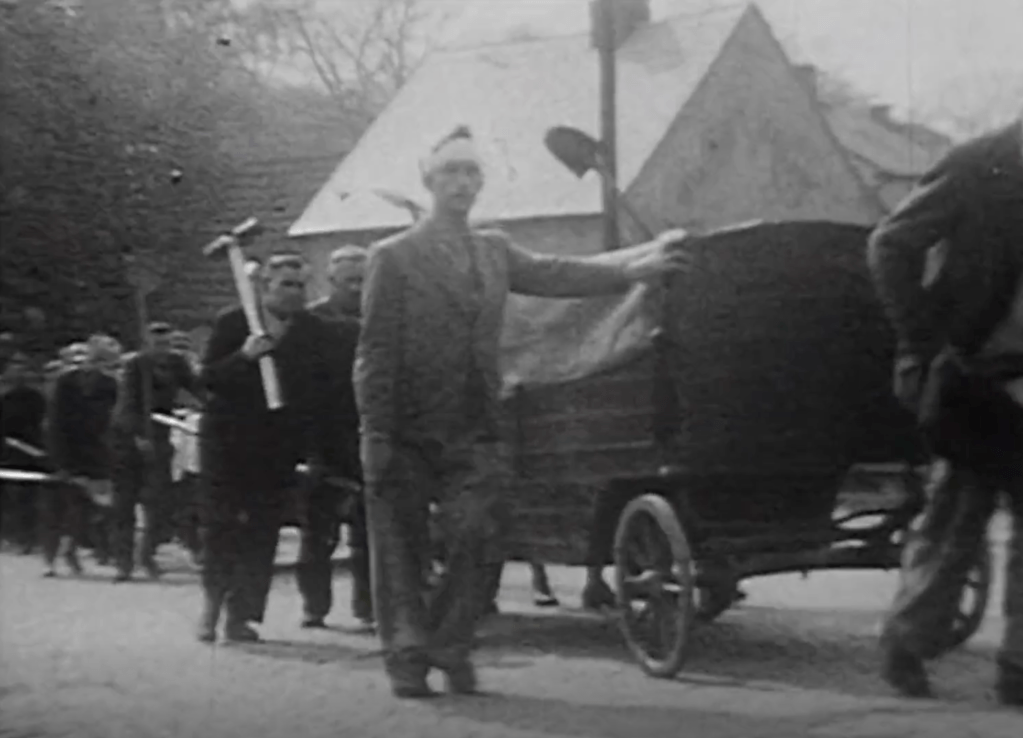
Before he was a maverick filmmaker, Samuel Fuller was a budding screenwriter who joined the Army once the United States entered World War II, serving with the 16th Infantry Regiment, 1st Infantry Division. On May 8th, 1945, two days before Victory in Europe Day (aka V-E Day) and the official end of the war, Fuller and his infantry liberated a German concentration camp in Falkenau, Czechoslovakia. Once the fighting ended, Fuller’s commanding officer ordered Fuller to grab his 16mm Bell & Howell movie camera (a gift from Fuller’s mother) and start filming. In roughly 20 minutes of black-and-white footage, Fuller documents the citizens of Falkenau (many of whom denied any knowledge of the camp’s existence) going into the camp and, upon military orders, picking up the dead bodies of the prisoners, dressing them, loading them onto a large wagon, taking the wagon across town to the cemetery, and giving the prisoners a proper burial. Reflecting on it over 40 years later, Fuller described the experience as “an impossible nightmare I’ll never forget”.
As of this writing, “V-E + 1” is the last NFR entry I’m covering about WWII, and without intending it, the film works as a somber coda to all the other NFR WWII films. After years of watching manipulative propaganda and fictionalized rabble rousing, “V-E + 1” provides a rare glimpse at what happens after a war. No celebrations, no triumphant music, just silent footage of survivors being forced to bury the dead. It was a sobering viewing experience for me; witnessing the weight of what was happening, as well as reflecting on everything I’ve learned about WWII in the last nine years of this blog. “V-E + 1” makes its case for NFR inclusion loud and clear, and I’m glad it has been inducted alongside its more patriotic contemporaries.
Why It Matters: No superlatives in the NFR write-up, just historical context, though there is mention of Fuller’s later filmography that “forced audiences to confront challenging societal issues”.
Other notes
I fully recommend watching the “V-E + 1” footage within the “Falkenau, The Impossible” documentary. While the footage itself is silent, it is presented within the documentary with running commentary from Samuel Fuller himself, chomping on his ever-present cigar and providing crucial context to the footage; giving names to the anonymous soldiers onscreen and reflecting on this traumatic moment in his life/world history. He also revisits the site of the concentration camp in what is now Sokolov, Czech Republic, vividly recalling the attack on the camp before he started filming. As powerful as the footage is on its own, having Fuller’s insight makes it all the more impactful.
Legacy
After the war, Samuel Fuller returned to Hollywood to continue his writing career. He eventually became a director, helming two more future NFR films: “Pickup on South Street” and “Shock Corridor”. Fuller would not make a movie about his wartime experience until 1980’s “The Big Red One”, which included a reenactment of the Falkenau concentration camp’s liberation. This experience led to Fuller finding and preserving the original 16mm footage now known as “V-E + 1”, which he dubbed “my first movie”.
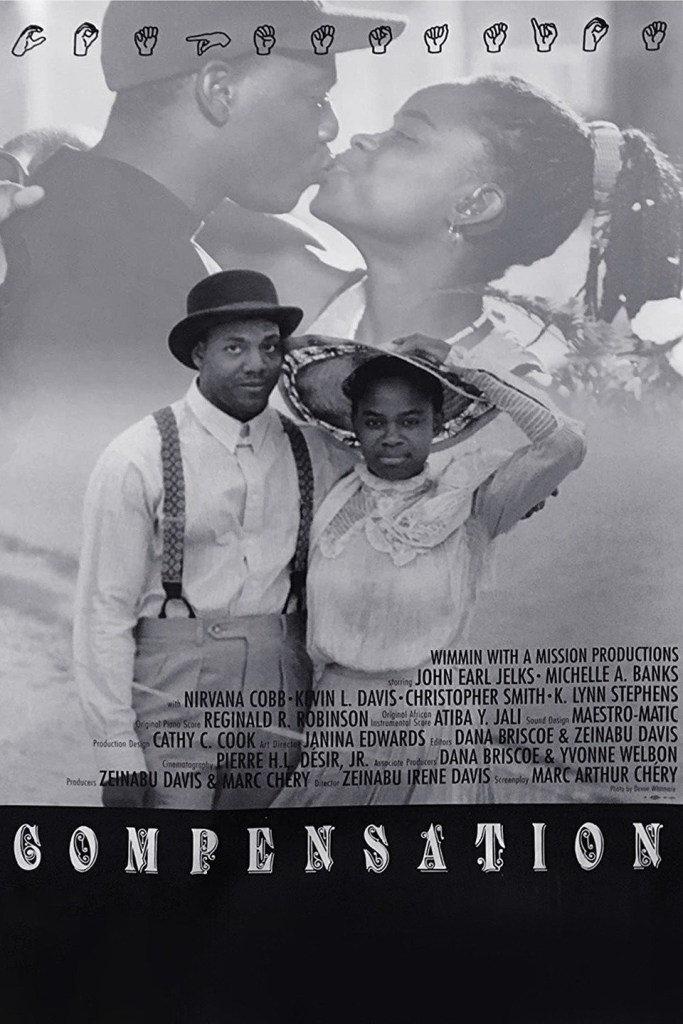
The Plot: Inspired by Paul Laurence Dunbar’s poem of the same name, “Compensation” tells two love stories in two different time periods about African-Americans in Chicago, both between a deaf woman and a hearing man. In 1910, educated Malindy (Michelle A. Banks) teaches illiterate migrant worker Arthur (John Earl Jelks) how to read, and falls in love with him, despite her friends and family insisting that Arthur is beneath her. In 1993, librarian Nico (also John Earl Jelks) learns ASL to woo free-spirited Malaika (also Michelle A. Banks), who doesn’t date hearing men. As foretold in the Dunbar poem, the “boon of Death” comes for both of our couples; Arthur contracting tuberculosis in 1910, and Malaika living with an HIV/AIDS diagnosis in 1993. But “Compensation” transcends its slightly melodramatic story beats to paint a unique portrait of being Black and deaf on either side of the 20th century.
Why It Matters: No superlatives from the NFR write-up, other than the film’s “unusual narrative approach”. The write-up is primarily a rehash of the story, with some additional context from NFPB chairwoman (and TCM mainstay) Jacqueline Stewart. Points deducted, however, from the write-up for misspelling screenwriter Marc Chéry’s first name. There’s also an interview with Zeinabu Davis conducted by the Library of Congress, plus a photo of Davis and Chéry celebrating their NFR induction.
But Does It Really?: As always, I’m looking for NFR titles that stand on their own unique piece of ground, and “Compensation” more than fits the bill. Unlike a lot of noisier NFR entries, “Compensation” is a quiet, contemplative movie; the kind of stripped down character study I’m always fond of, especially when it’s this well made. With its original perspective of the Black deaf community and its parallel timeline aesthetics (all masterfully shot in black and white), “Compensation” tells its story beautifully and compassionately. A yes for “Compensation”, the kind of underrated film the NFR has helped to highlight and celebrate through the years.
Shout Outs: Davis has cited fellow L.A. Rebellion/NFR movies “Daughters of the Dust” and “Killer of Sheep” as influences on this film. And thanks to a brief sequence of Nico and Malaika deciding which movie to see, we get glimpses of what was playing at your local movie theater in 1993, including “Jurassic Park” and a re-release of “Snow White and the Seven Dwarfs” (which I saw!).
Everybody Gets One: Originally intending to earn a master’s degree in African studies, Zeinabu irene Davis would get an MFA in film and video production from UCLA in 1989. As part of the second wave of African-American filmmakers in UCLA’s famous L.A. Rebellion, Davis’ initial short films centered around the hardships of Black women in both the past and present, with such titles as “Cycles” and “A Period Piece”. “Compensation” was Davis’ first feature film, a collaboration with her husband, Marc Arthur Chéry, whom Davis met when they were both students at UCLA. And yes, the I in Davis’ middle name irene isn’t capitalized. I don’t know why, but if e e cummings can do it, so can she.
Title Track: As mentioned throughout the movie, the title comes from the 1906 poem by Paul Laurence Dunbar, who is described within the film as “America’s Negro Poet Laureate” of the early 1900s. The text of the poem is displayed and spoken throughout the film, including a version set to music and interpretive dance!
Seriously, Oscars?: Although “Compensation” was filmed in 1993, it would not be completed and screened until 1999. The film got a handful of festival prizes, and received an Independent Spirit Award nomination for Best First Feature (Under $500,000), losing to…oh man, really? [Deep exhale] It lost to “The Blair Witch Project”. Yeah, I don’t like that any more than you do.
Other notes
“Compensation” came to be when Marc Chéry read the Dunbar poem (he was living near Dayton, Ohio at the time, where the historical Paul Laurence Dunbar House is located). At around the same time, Zeinabu Davis was working on a short called “A Powerful Thang”, in which dancer Asma Feyijinmi candidly talked about the loss of her friends and colleagues to HIV/AIDS. Davis and Chéry were intrigued by the parallels of the modern AIDS crisis and Dunbar’s death from tuberculosis at age 33, and Chéry started developing a screenplay about two love stories dealing with these two diseases.
While attending a grant panel in Saint Paul, Minnesota, Davis and Chéry saw a production of “Waiting for Godot” featuring local deaf actor Michelle A. Banks. They were so impressed with Banks’ performance, they approached her about starring in “Compensation”. Once she accepted the part, the entire script was re-written to include Banks’ experiences as a deaf person. Neither Davis nor Chéry had any personal experience with the deaf community, and immediately began conducting research, including spending time with the Black Deaf Advocates in Chicago. It blows my mind that this film’s deaf elements were not in the original screenplay. It’s a completely different (and arguably inferior) movie without them.
Speaking of research, you can tell that Davis and Chéry did a lot of it to present the 1910 sequences authentically. Due to budget constraints, very few locations could be dressed up to look period appropriate, so archival photos are used throughout to establish time and place. That explains why so many libraries and archives are thanked in the end credits.
The story of Malindy being segregated and eventually expelled from Kendall School of the Deaf is based on actual events that happened to the school’s Black students. This is one of the film’s rare instances of acknowledging the racism directed at our characters in either timeline. To be fair, this movie clearly isn’t interested in being about the struggles of Black characters living in a White world, but rather about the struggles of deaf characters living in a hearing world.
Both of our leading actors are terrific in their dual roles: appropriately restrained in 1910, more open and affectionate in 1993. Banks in particular is captivating, with her characters’ obvious lack of dialogue being supplemented by her effective body language and facial expressions. Speaking of, it’s good to know that between Malindy and Makaila, the eye-roll has existed for literal centuries.
John Earl Jelks is also quite good in this. It helps that Nico has a genuinely great rapport with the kids at the library, which will always endear me to any movie character. You can’t fake that.
Marc Chéry is a public librarian by trade, so of course the handsome leading man in his screenplay works as a librarian. Coincidentally, Chéry briefly worked for Dr. Carla Hayden when she was the acting head of the Chicago Public Library. It’s all connected!
Davis has stated that her favorite scene to shoot was the recreation of “The Railroad Porter”, the silent film Arthur and Malindy view at a local nickelodeon. “The Railroad Porter” was an actual silent film from 1912, allegedly the first with an all-Black cast and crew. Sadly, “The Railroad Porter” is a lost film, but Davis was able to faithfully reenact the film thanks to a detailed synopsis she found in her research. As you can imagine, this small part of the movie was the primary focus in the Library of Congress’ press release when “Compensation” made the NFR, to the point where I assumed it was a bigger part of the movie. Nope, just this one scene.
A shout out to R. Kelly on the radio? Noooooo! This movie was doing so well.
I didn’t know about the illness story beats going in, but I knew we were in trouble once Arthur started coughing. You don’t cough that loudly in a love story without it coming back later.
Among the films Mailaika and Nico consider seeing is “Sleepless in Seattle”, which I’m still surprised isn’t on the NFR. Speaking of other movies, later on Nico is at the L train station sitting in front of a poster for “Son in Law”, which I assume is the closest Pauly Shore will ever get to making the NFR.
The version of “Compensation” currently available through Criterion does an excellent job with the subtitles, which were supervised by Davis and Chéry for this release. Rather than just being standard closed captioning, the subtitles harken back to silent movie intertitles; fading in and out at different speeds, with occasional changes in font for emphasis. These choices help make the subtitles a part of the film viewing experience rather than any sort of distracting mandated accessibility.
Admittedly the film lost me a bit towards the end, when Malaika and Nico separate and Nico goes on a spiritual journey to connect with his African roots. It’s all just ambiguous enough that I couldn’t figure out what was happening, but Davis has said in interviews that she purposefully left this plot line’s ending up to viewer interpretation. So…well done I guess? Side note: Great sound mixing during the breakup montage; it’s a full-on cacophony after an hour or so of leisurely silence. It really wakes you up for the last act.
A few interesting tidbits in the credits. For starters, there are five credited ASL interpreters! Also I’m pretty sure they credit every background extra (which makes sense once you learn that almost all of them are the filmmakers’ friends and family). The Special Thanks section makes mention of both the Library of Congress and Gallaudet University, and there’s a line encouraging viewers to “[p]lease support public funding of alternative independent media!” Please let it not be too late for that.
Legacy
“Compensation” played the festival circuit in 1999, as well as Sundance in 2000. Outside of this original festival run, “Compensation” pretty much disappeared for the better part of two decades. In 2021, the good folks at Criterion (with support from the UCLA Film and Television Archive) gave “Compensation” a 4K resolution and made the film available on their streaming service, and eventually on physical media. Most of the critical praise “Compensation” has received has been in the last five years since its reemergence and subsequent NFR induction.
Although Michelle A. Banks has made very few on-camera acting appearances since “Compensation”, she has spent the last 30 years teaching and directing in the performing arts for both deaf and hearing children. Banks is currently the Artistic Director at the Visionaries of the Creative Arts (VOCA) in her native Washington D.C. John Earl Jelks continues acting on both stage and screen, receiving a Tony Award nomination in 2007 for his performance in August Wilson’s “Radio Golf”.
While neither Zeinabu irene Davis or Marc Chéry seem to have any recent film credits, they are both still active in the film community, giving plenty of interviews and lectures over the years about their experience making “Compensation”. Davis’ most recent film is 2015’s “Spirits of Rebellion: Black Cinema from UCLA”, and she currently teaches Communication at UC San Diego. Davis is also one of the few NFR filmmakers to have spent a day in the Criterion Closet.
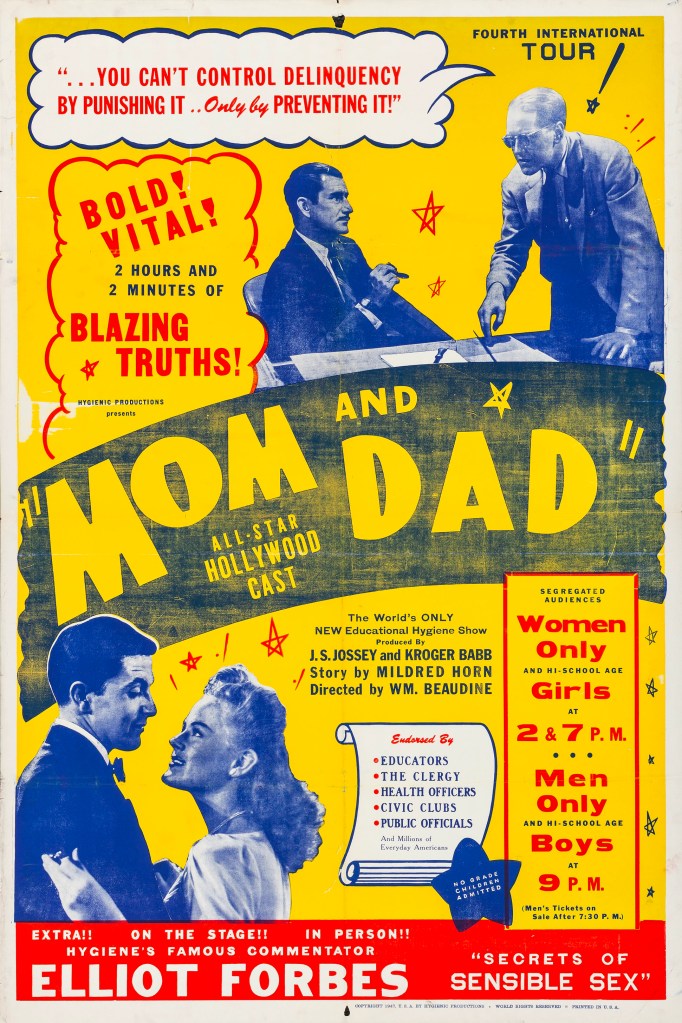
The Plot: Joan Blake (June Carlson) is a teenager whose parents have conflicting views on their daughter’s budding maturity; father Dan (George Eldridge) thinks Joan should go to dances and start dating boys, while mother Sarah (Lois Austin) wants to protect Joan’s virtue by refusing to acknowledge any of this. When Joan sneaks out of the house to go on a date with fast-talking new kid Jack Griffin (Bob Lowell), they end up at Lovers’ Lane doing something shameful off-screen. A month later, Joan learns that she’s pregnant with Jack’s baby, and that Jack has died in a plane crash. Worried about how her parents will react, Joan doesn’t know who to turn to. Ultimately, she confides in Mr. Blackburn (Hardie Albright), a teacher recently fired for talking about sex education in his class, who blames Mom and Dad for their children’s lack of knowledge and awareness. But all of this is just an excuse to show some very graphic sexual hygiene films, including multiple on-camera births!
Why It Matters: The NFR cites the film as “[t]he most successful sex-hygiene exploitation film of all time”, and an essay by film professor/exploitation expert Eric Schaefer is a tribute to the film’s producer,“America’s Fearless Young Showman” Kroger Babb.
But Does It Really?: This is definitely one of the NFR’s more bizarre entries. Not only is “Mom and Dad” the rare exploitation film on this list, it’s also representation of Kroger Babb, one of the more notorious and unabashed showmen in film history. Plus, thanks to the film’s frank and controversial discussion of pregnancy and venereal diseases, you’ll definitely learn something, so you have to give Kroger points for that. “Mom and Dad” has the unique qualities I’m looking for in an NFR title, and if you’re willing to stomach some of the sex ed footage in the film’s third act, it’s an unforgettable viewing experience.
Everybody Gets One: Howard “Kroger” Babb began his professional career as a sports writer before working as the publicity director for a theatrical circuit. In 1939, Babb joined Cox and Underwood, a production company specializing in roadshow presentations of exploitation films. Depending on which version you believe, Babb was either inspired to make “Mom and Dad” based on his experience promoting “Dust to Dust” (a Cox and Underwood acquisition about teen pregnancy), or after learning about high school girls in Burkburnett, Texas getting impregnated by officers from the nearby Sheppard Air Force Base. Either way, Babb founded his own production company (Hygienic Productions) and partnered with J. S. Jossey of Monogram Pictures to make “Mom and Dad” for as cheaply as possible. Among Babb’s shameless promotional tactics for “Mom and Dad” was having an advance team arrive into towns about to screen the movie and write letters of protest to local churches and clubs!
Wow, That’s Dated: Mainly all the euphemisms the film uses in lieu of actual scientific terms. It’s not sexual activity, it’s “student romances”. It’s not venereal disease, it’s “social disease”. And easily the most cringe-inducing, Joan’s not pregnant, she’s “in trouble”. Yikes.
Other notes
To help keep costs down, Babb assembled a team of behind-the-scenes talent from various Poverty Row studios in Hollywood known for being able to shoot an entire film in less than a week. Director William Beaudine (a silent film veteran famous for only shooting one take of a scene) completed production on “Mom and Dad” in six days on a budget of $65,000 (about $1.2 million today).
Due to different cuts mandated by censor boards over the years, there are multiple edits of “Mom and Dad”. The version I watched was an Academy Archive restoration from three separate prints, which as best I can tell is the most complete edit of the film known to exist. The only scene missing that I found in my research was the film’s prologue: A sing-along rendition of “The Star Spangled Banner”. Clearly the word “pandering” was not in Kroger Babb’s vocabulary.
Speaking of pandering, the film follows up the opening credits with a foreword attributed to the producers which announces the film’s thesis statement in no uncertain terms: “IGNORANCE IS A SIN – KNOWLEDGE IS POWER”. We won’t get rabble-rousing prologue text like this again until “Star Wars”.
The dance sequence at the beginning of the film is presumably an attempt to pad out the runtime in order to be distributed as a feature. In addition to the love triangle between Joan, her date Alan, and flyboy Jack, we get a song (“Where Shall We Dream Tonight?”), a jitterbug dance competition, and a group of acrobats! What does any of this have to do with sexual hygiene? Am I reading too much into some of these acrobatic positions?
Despite her leading role as Joan, June Carlson’s filmography didn’t really amount to a lot. In fact, “Mom and Dad” was one of Carlson’s last films before marrying movie producer Donald C. McKean and leaving showbiz to raise their children. As for the rest of the cast, I don’t have much to say, other than Mom sorta looks like if Danny Kaye played Cinderella’s Stepmother.
Lots of ‘40s phraseology in this one, including the traditional use of the phrase “making love”. This leads to the disturbing-by-today’s-standards line from Joan: “Alan couldn’t make love if his mother did want him to.” God this movie is weird.
When Joan and Jack sneak off to a nightclub for their forbidden date, we get another song (the vaguely suggestive “That’s What You Do”) that doesn’t serve the plot in any way. Alright, it’s feature-length! Move on!
Mr. Blackburn isn’t allowed to teach sex education because of a few protests from the local women’s club, led by Joan’s mother. Good thing we don’t let the suppressed morality of the vocal minority dictate rules and laws now, right? …Right?
Oh, and Mr. Blackburn’s actor Hardie Albright has another NFR connection: he’s the voice of Bambi during that movie’s “Twitterpated” sequence. Huh.
I didn’t like that Jack boy from the start. Always pushing himself on Joan and manipulating her into having sex at Lovers’ Lane. And then, once Joan gets pregnant, he dies in a plane crash? So he doesn’t have to deal with any of this? That fucker.
While the film does address such taboo subjects as underage sex and pregnancy, it’s all by implication. It’s a lot of people not finishing their sentences. “You mean she’s…”
During its original theatrical run, “Mom and Dad” had an intermission in which “Famous Hygiene Commentator” Elliot Forbes would appear in person in the theater to lecture the audience on sex hygiene. In reality, “Elliott Forbes” was a local actor helping Hygiene Productions sell two books on the subject: “The Digest of Hygiene for Father and Son” and “The Digest of Hygiene for Mother and Daughter”. These books were edited by Mildred Horn, the film’s screenwriter and common-law partner of Kroger Babb. Man, it was a lot easier to con people back then. Side note: In at least one predominantly African-American theater that played “Mom and Dad”, the lecture was given by Jesse Owens, the former Olympic athlete who was attempting to diversify as his athletic offers started to dry up.
The last third of “Mom and Dad” is definitely the hard sell, as Mr. Blackburn (now re-hired as the school’s sex education teacher) shows his students multiple educational shorts on the subject. We start off easy with an explanation of the female menstrual cycle (seen it) and how an ovum is fertilized by a sperm, but then “Mom and Dad” quickly becomes the second NFR title to feature an on-camera natural childbirth! It’s not as distressing as the one in “All My Babies”, but still tough to watch. This is followed by a second on-camera birth, this time via C-section. And just when you think it’s over, Mr. Blackburn shows another short graphically showcasing how syphilis and gonorrhea can destroy your body (including footage of both male and female sex organs effected by these diseases). “Mom and Dad” is in the “Pink Flamingos” category of NFR movies you shouldn’t watch right after a meal. It’s enough to make you choose celibacy (well…almost).
In the midst of my own difficulties viewing these sex ed films, I managed to laugh out loud when the narrator tells us that venereal diseases are studied by “technicians trained in the use of a microscope”. Did people in the ‘40s not know how easy it is to use a microscope?
Apparently there were two versions of this film’s ending: Joan gives birth to the baby and either a) the baby is stillborn or b) the baby is given up for adoption. I think I got the stillborn ending, but it’s spoken of very vaguely so I can’t tell for sure. Incidentally, the doctor delivering the news to Joan’s family is played by Francis Ford, older brother of John Ford and director of fellow NFR film “Unmasked”.
As Joan’s brother Dave thanks God for taking care of his sister, we dissolve to the final shot: an unidentified man at a desk addressing the camera and telling us to let the theater management know how much we enjoyed the film “by your applause”. [Shakes fist in air] Kroger!
Legacy
Despite not receiving a Production Code seal of approval and being banned in several states, “Mom and Dad” earned $16 million in its original theatrical run, making it one of the most financially successful films of the 1940s. Kroger Babb claimed that each of the film’s investors got a return rate of 63 times their investment.
“Mom and Dad” attracted its share of controversy, with Kroger Babb being sued multiple times (he claimed over 400 times) to prevent “Mom and Dad” from being shown in theaters, with Babb always citing the film’s educational value as his defense. In the late 1940s, Babb eliminated the educational shorts from “Mom and Dad” and re-released the film under the name “Side Road”. This trimmed version saw competition from such similar films as “Because of Eve”, “The Story of Bob and Sally”, and “Street Corner”, all of which were created to cash in on the surprise popularity of “Mom and Dad”.
Kroger Babb continued to produce and distribute movies for the next 25 years, although none of his later films ever equaled the success of “Mom and Dad”. Notable entries include “The Lawton Story” (about an Oklahoma town’s passion play), “One Too Many” (about alcoholism), and “She Shoulda Said No!” (which condemned marijuana a la “Reefer Madness”).
Among the filmmakers influenced by “Mom and Dad” was John Waters, which…yeah I should’ve seen that coming.
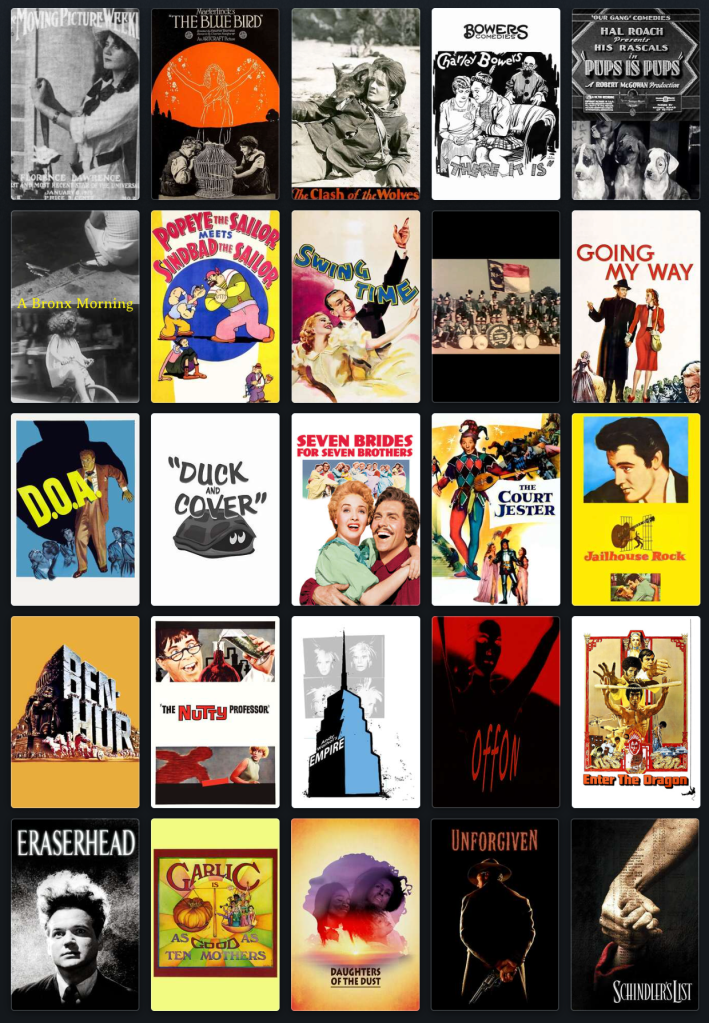
December 28th, 2004: The NFR cuts it really close and announces its Class of 2004 with only three days left in the year, bringing us to a grand total of 400 films! Having just finished watching all 25, let’s take a look back at the NFR Class of 2004:
There It Is (1928):“[Charley] Bowers’ surreal style of silent comedy is quite unique”
Pups Is Pups (1930): “An ‘Our Gang’ short should absolutely be on the National Film Registry, but this one?”
A Bronx Morning (1931): “I’m always willing to give a pass to documentaries, short films, or avant-garde pieces by influential filmmakers, and ‘A Bronx Morning’ is all three!”
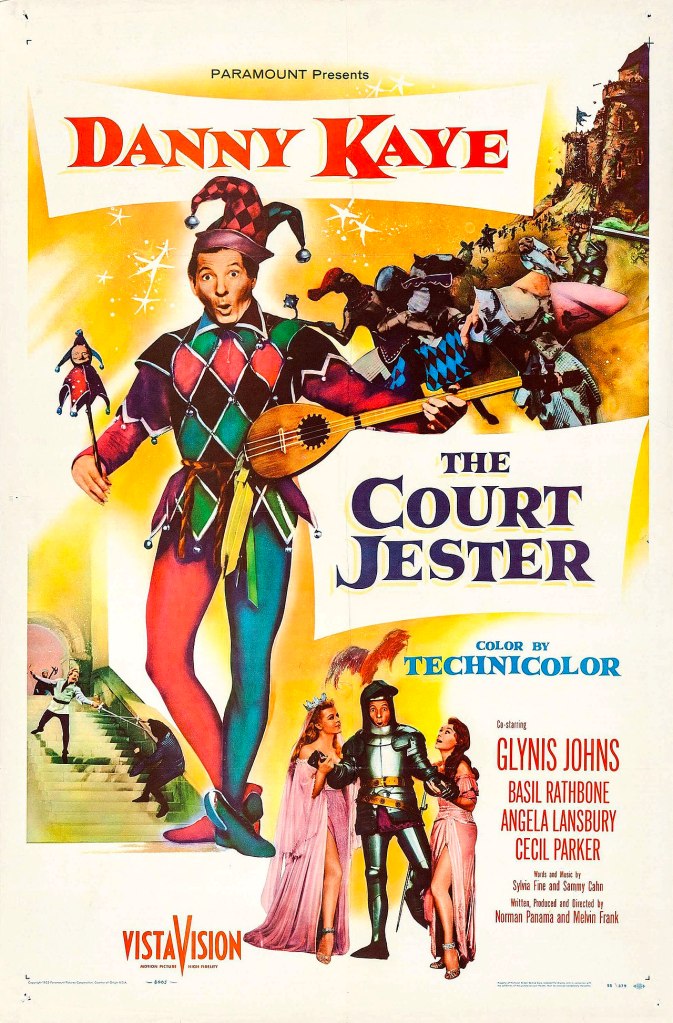
The Court Jester (1956):“isn’t as well remembered or celebrated as it once was, [but] I don’t begrudge one of [Danny] Kaye’s films making it onto the Registry.”
The NFR’s early 2000s were all about including films that represent artists and/or genres not yet on the list, and 2004 was their ultimate: “What’s not on the list yet?” year. Making their NFR debut this year were such important film figures as David Lynch, Jerry Lewis, Bruce Lee, Andy Warhol, Elvis Presley, Florence Lawrence, Danny Kaye, Rin Tin Tin, Our Gang, and Popeye the Sailor. Not the most iconic names on the list, but the NFR would feel incomplete without them. There’s still a few iconic movies, plus the recently pre-ordained classics “Unforgiven” and “Schindler’s List”, but this year is about adding some new faces to the line-up. Among those new faces is Julie Dash, the Registry’s first Black female director.
For the most part, my write-ups on these 25 films are positive, even if I didn’t enjoy the film (multiple entries get my “What is happening!?” designation). It helps that because these films represent artists not yet on the list, I can vouch for their inclusion from a historical perspective, if not through their continued entertainment value.
In my “Pups is Pups” post, I complain about this short not having any of the familiar “Our Gang” cast, but Carl “Alfalfa” Switzer shows up in “Going My Way”. That has to be a coincidence, right?
A few double-dippers this year covering several branches of filmmaking: Actor Robert Middleton, producer Pandro S. Berman, costume designer Edith Head, editor Ralph E. Winters, visual effects supervisor A. Arnold “Buddy” Gillespie, and composer Walter Scharf. Honorable mention: Popeye shows up twice thanks to his brief appearance as a cardboard cutout in “Kannapolis, N.C.”.
Not as many thematic double-dippers this time (a testament to the Class of 2004’s variety) but the ones I caught were: Catchy title songs, island living, non-actors in starring roles, dogs in key supporting roles, unrehearsed footage of children playing, overcomplicated plot lines, and problematic musicals with great distracting dance numbers.
In the same vein as “double-dippers”, my Class of 2004 write-ups contain a few shared elements. These include two posts where I show off my knowledge of San Francisco and the Bay Area, and another two where I bring up the Standard Movie Fight Procedure: All henchman or gang members can only attack your hero one at a time. And while plenty of my posts contain “Simpsons” references, two of my Class of 2004 posts reference the specific episode “A Star is Burns”. Makes sense, that’s a very movie-centered episode. And it’s the only reason I know who Eudora Welty is.
Speaking of favorite TV shows, several Class of 2004 write-ups reference “Mystery Science Theater 3000”, which inspired me to choose the show as the topic of my ninth anniversary post. On a related note, both “D.O.A.” and “Duck and Cover” have been parodied by Rifftrax.
Another runner in my write-ups: two instances of me bemoaning the Academy Awards’ lack of a Best Stunt Design Oscar category, which we’re finally getting in 2028. I can’t prove that my grumbling made it happen, but I can’t not prove it either.
When the Library of Congress announced the NFR Class of 2004, “Meet the Fockers” was number one at the weekend box office. Other notable films in theaters at the time include “The Aviator”, “National Treasure”, “A Series of Unfortunate Events”, and very recent NFR inductee “The Incredibles”.
Favorite of my own subtitles: Great Scot!, Jay and Silent Job, Not Your Father’s Father, A Nuclear and Present Danger, Kaye Turn, King in the Clink, Jerry & Hyde, and David Lynch’s Adventures in Babysitting. And if my “Unforgiven” subtitle – Old West Action – seems odd, here’s a hint: It’s an anagram. Definitely the first and last time I use one of those for the blog.
Shoutout to my beloved Knights of the NFR, who were responsible for getting “Lady Helen’s Escapade” digitized and available online. Thanks to them, I was able to watch all 25 films from the Class of 2004. Okay fine, 24 and 1/8th of the Class of 2004. I will finish you one day, “Empire”!
And continuing my own inability to satisfactorily conclude these “Year in Review” posts: I’ll follow the lesson I learned from “Clash of the Wolves” and end this post with puppies! Look at all these puppies! You can’t tell that this ending is anticlimactic because puppies!
Directed & Written by Norman Panama & Melvin Frank. Songs by Sammy Cahn and Sylvia Fine.
Class of 2004
The Plot: The throne of England has been usurped by King Roderick the Tyrant (Cecil Parker) over its rightful ruler, a baby with a royal birthmark on his posterior. The baby is being kept safe by the Black Fox (Edward Ashley) and his band of rebels, including Hubert Hawkins (Danny Kaye), the group’s minstrel who longs to fight alongside the Black Fox. While on a mission to protect the baby with the Maid Jean (Glynis Johns), Hubert and Jean hatch a plan for Hubert to infiltrate the castle posing as the king’s new court jester. There’s plenty of obstacles in Hubert’s path, including a battle with the villainous Lord Ravenhurst (Basil Rathbone), but all of this is secondary to the comedic antics of Danny Kaye. Also there’s something about a pellet with the poison in a chalice with a…a flagon from…a vessel…we’ll come back to that.
Why It Matters: The NFR write-up for “The Court Jester” isn’t very celebratory of the film, with the only superlatives going to the “lilting” songs and Basil Rathbone being his “reliably swashbuckling self”. The write-up also describes Danny Kaye as “mercurial”, which I guess in this context means lively and quick rather than the more negative definitions I associate with the word.
But Does It Really?: “The Court Jester” is on the NFR as representation of Danny Kaye, who while all but forgotten today, was one of the most beloved entertainers of the 20th century. As for the film itself, it’s funny in places, but the entertainment value primarily relies on how much you enjoy Kaye’s schtick, especially his penchant for complicated tongue-twisters. For me, it all wore thin after awhile, and not helped by how many unnecessary plot points and musical numbers are packed into this movie. While “The Court Jester” isn’t as well remembered or celebrated as it once was, I don’t begrudge one of Kaye’s films making it onto the Registry.
Everybody Gets One: Hailing from Brooklyn, David Daniel Kaminsky worked a number of odd jobs before serving as an emcee in the Catskills, where he started going by the stage name Danny Kaye. A vaudeville stint led to his breakout role in the Broadway musical “Lady in the Dark”, in which he performed his first patter song: “Tschaikowsky (and Other Russians)”. Kaye’s film career took off in the 1940s under contract with Samuel Goldwyn, with such films as “The Secret Life of Walter Mitty” and “Hans Christian Andersen”. “The Court Jester” was part of Kaye’s contract with Paramount, as was “White Christmas”, which finally made the NFR last week! Additionally, this film was Kaye’s second collaboration with Norman Panama & Melvin Frank, two former Bob Hope writers who had recently made the leap to directing and producing.
Seriously, Oscars?: No Oscar nominations for “The Court Jester”, though Danny Kaye did get a Golden Globe nomination for Best Actor in a Comedy, losing to Cantinflas in “Around the World in 80 Days”. Although Kaye never received an Oscar nomination in his entire film career, he won two special achievement Oscars: an Honorary Oscar in 1954 “for his unique talents”, and the Jean Hersholt Humanitarian award in 1981.
Other notes
“The Court Jester” was initially budgeted at $2.4 million dollars with a 48 day shooting schedule. By the time production wrapped the film was 28 days behind schedule and cost closer to $4 million dollars, making it the most expensive comedy ever made up to that point. “The Court Jester” was the second film under Kaye’s production company Dena Productions, named after his nine-year-old daughter.
We’re off and running with Kaye’s opening credits song “Life Could Not Better Be”. It’s mostly Kaye doing his schtick and interacting with the credits, but I see why they frontloaded this movie that way: we’re about to enter a long Kaye-less exposition dump once the film begins proper.
At this point in Basil Rathbone’s career, he was primarily a stage actor, and when a film did come along it was a thankless supporting part like in this or “The Magic Sword”. And while we’re here: Keep sucking in that gut, Rathbone.
There isn’t a lot of information on British character actor Cecil Parker, so instead let’s focus on the actor playing his daughter Gwendolyn: Dame Angela Lansbury! It’s always nice seeing Angie pop up on this list, but I don’t appreciate how many of her NFR entries are a waste of her immense talents. For every “Manchurian Candidate”, there’s a “Court Jester” or “National Velvet”.
Kaye’s first in-movie number is “Outfox the Fox”, which also prominently features…[deep exhale] Hermine’s Midgets. Unfortunate billing aside, this is the most people with dwarfism I’ve seen in a single NFR entry since “The Wizard of Oz”, so that’s a positive, right?
Glynis Johns gets the best entrance in this movie, swinging from a vine in the forest to greet the Black Fox. Knowing Johns for most of my life solely as Mrs. Banks, it’s fun to see her play a much more active part here as the woman doing all the actual work. My one grouse, she’s Danny Kaye’s love interest in this? It’s not even the 12-year age gap that bothers me so much as it is watching Danny Kaye do a love scene.
As I settled in with this movie and its overall vibe, I realized that “The Court Jester” is one of the last “general entertainment” kind of films that dominated in the 1940s, when all Hollywood movies had to appeal to a wide audience in a “something for everyone” kind of way. By 1956 this type of filmmaking wasn’t dead, but it was certainly dying. American film was starting to get more sophisticated in the 1950s, with comedies dealing more with modern issues rather than the old “Let’s put [name of comedian] in a [name of film genre]” template.
Showing up early on as the real court jester is…John Carradine? Given his stature in the industry, I assumed Carradine would have a bigger part: at the very least a return in the third act for some kind of “that man is an imposter, I’m the real jester” type deal. But nope: He shows up for one scene, gets knocked out by Glynis Johns, and that’s a wrap for John Carradine.
Hey hey hey, Danny, it’s 1956: you leave the foreign gibberish to Sid Caesar.
Apparently this is the movie where the exchange “Get it?” “Got it.” “Good.” originated from. I mean, it had to come from somewhere, and it gets repeated enough here that I could see how people picked it up.
Also making a welcome appearance in this movie: Mildred Natwick! I just watched “Barefoot in the Park” for the first time, so it was nice to see Natwick pop up here as Griselda, the kingdom’s resident witch. It’s not much of a part, but at least she’s allowed to be funny.
So Hubert changes in and out of Griselda’s hypnosis when anyone snaps their fingers? Even himself? That’s a hell of a design flaw. I can see why Griselda’s on the chopping block. Side note: Hollywood Reporter film critic Jack C. Moffitt claimed in his review that the hypnotism bit in this film was stolen from a routine he had written for 1937’s “Mountain Music” with Bob Burns and Martha Raye (though Moffitt did admit he stole that bit from a similar one in Charlie Chaplin’s “City Lights”).
“The Maladjusted Jester” isn’t the pivotal showcase it’s intended to be, but Kaye’s good with a tongue twister, I have to give him that. Shout out to the song’s lyricist: writer Sylvia Fine, aka Mrs. Danny Kaye.
Another big centerpiece that fell flat for me is the knighting ceremony, when Hubert is caught up in the knights’ drill routine. The knights are played by members of the Jackson Michigan Zouave Drill Team, who had recently performed their close-order drill formations on “The Ed Sullivan Show” and were cashing in on their 15 minutes of fame with their appearance here.
Like I said before, there is too much plot going on around here. I haven’t even mentioned Gwendolyn’s betrothal to Sir Griswold, or Hubert being mistaken for an assassin: there’s just no time, and none of it really matters. A lighthearted comedy like this should only have the bare minimum of plot points taking you from joke to joke, but the ratio is way off here. The film’s second act suffers the most due to serving as set-up for the third act’s big jousting tournament.
One thing I will say about Sir Griswold: he’s played by Robert Middleton, who also narrated “Duck and Cover“!
As a former ‘90s kid, you cannot have characters in a movie repeatedly say the phrase “mortal combat” without me either shouting it back or saying “Finish him” and/or “Fatality”.
We finally arrive at the film’s most famous bit: Hubert trying to remember that “The pellet with the poison’s in the chalice from the palace and the vessel with the pestle is the brew that is true.” It goes on for awhile, but admittedly it’s pretty funny, especially when the “flagon with the dragon” is thrown in and Hubert’s confusion spreads to other characters. Side note: This is the film’s second instance of alleged comedy plagiarism, with many critics noting the similarity between this bit and one from Bob Hope’s “Never Say Die (“There’s a cross on the muzzle on the pistol with a bullet…”). Like the aforementioned “Mountain Music”, “Never Say Die” also stars Martha Raye. Is she the Kevin Bacon-esque center of the comedy bit universe?
We got a lot of plotlines trying to get resolved during the film’s chaotic third act, but in the middle of it we get the film’s other highlight: the swordfight between Hubert and Lord Ravenhurst. This is a good time to mention that all three of Basil Rathbone’s NFR movies feature him in a climacticswordfight with our hero. Is this why we haven’t gotten a Rathbone “Sherlock Holmes” movie on the NFR yet?
Ah yes the classic NFR movie that ends with our hero flashing part of an infant’s rear end. How did this get past the censors?
Legacy
Despite some decent critical praise, “The Court Jester” only grossed $2.2 million at the box office, meaning it didn’t even recoup its initial budget, let alone the final one. In subsequent years, the film’s TV airings led to a reappraisal, and it’s now considered the best of Danny Kaye’s star vehicles.
“The Court Jester” still gets referenced from time to time, primarily “the pellet with the poison” and “Get it? “Got it.” “Good”, though I doubt that most people referencing the latter know what it’s from.
Norman Panama and Melvin Frank continued their creative partnership through the 1960s, and had successful solo writer/director careers after that. Of their later films, Frank’s “A Touch of Class” is the probably the best known.
Danny Kaye’s film career was wrapping up when “The Court Jester” was released, but he continued to be a welcomed presence on TV, including on his own variety show in the 1960s (with “Life Could Not Better Be” as its opening theme). Beyond his career in entertainment, Kaye’s most impactful work was his nearly 40 year association with UNICEF as their “ambassador-at-large”. Danny Kaye died in 1987 at age 76, with Sylvia Fine passing four years later at age 78.

 The Horse's Head