#714) The Public Enemy (1931)

#714) The Public Enemy (1931)

OR “Tommy Boy”

Directed by William Wellman

Written by Harvey F. Thew. Based on the unpublished novel “Beer and Blood” by John Bright and Kubec Glasmon.

Class of 1998

The Plot: Tom Powers and Matt Doyle (James Cagney and Edward Woods) are two street hoodlums in 1920 Chicago who have been committing petty crimes for local lowlifes since they were children. Once Prohibition goes into effect, the two are hired by bootlegger Paddy Ryan (Robert O’Connor) to be enforcers for his business, as well as that of mobster “Nails” Nathan (Leslie Fenton). As business thrives, Tom and Matt both become wealthy, though Tom’s older brother Mike (Donald Cook) disapproves of Tom’s line of work and urges him to go straight. As the mob turf wars of the 1920s escalate, so too does Tom’s lust for money, women, and power. Oh, and Jean Harlow’s in this too for a couple of scenes. Also, there’s a grapefruit that figures prominently at one point.

Why It Matters: The NFR calls the film “[r]aw and brutal”, singling out Cagney’s “incendiary star-making portrayal”, as well as the “fierce machismo” William Wellman adds with his direction. The write-up also correctly acknowledges that Jean Harlow’s performance “gives viewers little indication of the superstar she’d become”.

But Does It Really?: I guess so. “The Public Enemy” is one of those movies that’s not so undisputed a classic that its NFR induction seems inevitable, but it is popular enough that its absence from this list would seem conspicuous. As a standalone film The Public Enemy” neither over or underachieves but has enough exciting elements to hold your interest. This is all aided by the film’s historical significance as the introduction to James Cagney’s screen persona, as well as the concept of a grapefruit as a weapon. “The Public Enemy” holds its own alongside the other gangster movies of the time and has remained iconic enough to warrant a spot in the NFR.

Seriously, Oscars?: At the 4th annual Academy Awards, “The Public Enemy” received one nomination: Best Original Story (the long gone third screenplay category) for John Bright and Kubec Glasmon. They lost to the WWI drama “The Dawn Patrol”.

Other notes

  • You know right off the bat this movie’s going to be better than your average ’30s movie just by the credits. The cast is presented in specially filmed shots of them looking at the camera and smiling or nodding (think the opening credits of “The Love Boat”). We also get the intriguing credit “Brunswick Radios used exclusively”, possibly one of the first product placement credits in a movie. This is also one of those ’30s gangster movies that plays it safe by bookending the film with text saying that despite their depictions here, gangsters are in fact a “public enemy” that should not be celebrated but rather condemned and eradicated. That oughta satisfy your state censor board.
  • The story goes that Edward Woods and James Cagney were originally cast in each other’s parts, with Woods starring as Tom and Cagney in support as Matt. Shortly after production began, Wellman had them switch roles, and the rest is history. While this has been disputed, it would explain why the child actors playing their younger counterparts (presumably filmed before the switch) match this original casting; young Matt in particular looks a lot more like a young James Cagney than a young Edward Woods. By the way, the actor playing young Matt is Frankie Darro, who would go on to star in William Wellman’s “Wild Boys of the Road“.
  • Cagney is great in this, though for the life of me I have no idea what he’s saying. But it doesn’t matter because it’s fun watching him clearly relishing this breakout part. And even at the beginning of his career he was finding ways to sneak in a little hoofing into his pictures. Side note: This is not the movie where Cagney calls someone “You dirty rat.” He says that line in…oh wait, he never actually said it.
  • As Matt’s girlfriend and later wife Mamie, Joan Blondell is her usual charming screen presence, even in a thankless part like this. Mae Clarke fairs a little better as Tom’s girlfriend Kitty. Speaking of…
  • Like many a classic movie moment, the scene where Tom smashes a grapefruit into Kitty’s face has many people claiming it was their idea. William Wellman said that he came up with it while he was arguing with his wife during a grapefruit breakfast, producer Darryl F. Zanuck also claims credit for the moment, but both James Cagney and Mae Clarke attest that Cagney did it as a gag to amuse the crew, never thinking it would make the final cut. Regardless, the scene is the film’s most memorable moment, partly because up to this point there’s been a restraint in on-screen violence. And while we’re talking about this scene, can we acknowledge Cagney’s line right before the smash: “I wish you was a wishin’ well, so that I can tie a bucket to ya and sink ya.” That’s not how wishing wells work.
  • Finally, Jean Harlow! As Gwen, the woman Tom will leave Kitty for, Harlow doesn’t show up until about halfway through the movie, and like Joan Blondell before her, she doesn’t get much to do. Thankfully, Harlow’s breakout work at MGM was just around the corner. It’s worth noting that Wellman’s first choice for Gwen was Louise Brooks, the famous silent movie star synonymous with the flapper image. Having recently returned from Europe (making, among other films, “Pandora’s Box”), and reluctant to work in Hollywood again, Brooks turned the part down, a decision that is now considered one of the factors that led to her decline in stardom.
  • Once Tom and Matt take out their one-time associate Puddy Nose, the movie picks up steam and becomes everything we associate with gangster pictures. This scene is followed immediately with “Nails” Nathan being killed off-screen in a horse-riding accident, which leads to Tom buying the horse that killed Nathan and having it shot! I can just imagine Mario Puzo seeing this scene and making a mental note to take his own revenge-based horse murder even further.
  • Shoutout to Deveraux Jennings, the film’s cinematographer. The bulk of Jennings’ career was in the silent era (he was Buster Keaton’s cameraman), and his work in “Public Enemy” shows that he refuses to let these newfangled cumbersome sound cameras get in the way of his compositions. We get some wonderfully staged close-ups, as well as a memorable shot of Paddy’s car driving directly over the camera.
  • There’s a very racy scene when Paddy Ryan’s girlfriend Jane (Mia Marvin), seduces and takes advantage of a very drunk Tom while he’s laying low at her apartment. It’s quite daring for a ’30s movie, maybe too daring because it was one of three scenes cut from the film’s 1941 Code-era re-release. Another cut scene involves an effeminate tailor taking Tom’s measurements, which I thought was pretty funny. I’m glad that these scenes have been reinstated into the film proper, albeit in significantly poorer picture quality.
  • [Spoilers] The scene where Matt is gunned down in the street is the reason we need to end our reliance on coal. Also, I’m told that “The Public Enemy” (as well as other films of the era) used actual ammunition on screen. Based on my research, blank cartridges were invented in the early 1930s but wouldn’t have been readily available for a film production, and squibs wouldn’t be invented for another decade. I’m left wondering if this story is true. And if so, I have a lot of follow-up questions.
  • [Spoilers] The ending was semi-spoiled for me years ago, or so I thought. I was under the impression that the scene where Tom gets shot in the rain and laments “I ain’t so tough” as he falls to the ground was the final scene in the movie (along the lines of “Mother of mercy, is this the end of Rico?“). Not only is that not the last scene, but we learn Tom actually survived getting shot! The actual final scene is an inevitable conclusion for a movie of this era, but still contains a striking, unforgettable final image.

Legacy

  • “The Public Enemy” opened in spring 1931 and was a critical and commercial success. Since then, the film has stayed afloat in the public eye through re-releases in theater and eventually home video. “The Public Enemy” is widely accepted as one of the quintessential gangster pictures, as well as featuring a quintessential Cagney performance.
  • James Cagney became an overnight star with the one-two punch of this movie and fellow gangster pic “Smart Money” with Edward G. Robinson, released in summer 1931. He spent the next 30 years as a bona fide movie star, the following 20 years in retirement at his farm in Martha’s Vineyard, and then a final victory lap in Milos Forman’s “Ragtime” before his death in 1986 at age 86.
  • An animatronic of James Cagney from “The Public Enemy” was part of the Great Movie Ride at Disney-MGM Studios for many years. And with that, let me just check my notes here…yes, I have covered every NFR movie that was a set piece on that ride. The only one missing is the NFR-ineligible “The Good, the Bad and the Ugly”, but other than that I’ve got the whole set. This is second only to my 700th movie as my greatest accomplishment on this blog.

Before we go, allow me a brief tangent. In the summer of 2009, there was a movie called “Public Enemies” directed by Michael Mann and starring Johnny Depp as John Dillinger. Obviously, the only connection between this film and “The Public Enemy” is the title (taken from the 2004 book it’s based on) and the overall gangster aesthetic, but it gives me an excuse to talk about one of my all-time favorite movie-going experiences. I don’t remember a lot about the movie itself, but what I do remember is seeing it with my grandpa, who grew up in Chicago in the 1930s. The joy of that day wasn’t watching the movie but rather watching my grandpa watching the movie. The son of a judge, my grandpa knew about Chicago’s crime scene and, as any child rebelling against their parents would, idolized all the notorious gangsters of the era. When Depp’s Dillinger would outsmart and evade the police in the movie, I would look over at my grandpa and see that eight-year-old kid grinning from ear to ear as his hero escapes capture. Afterwards, my grandpa told me stories about growing up during the film’s setting, and about sitting on his front stoop hearing the news that Dillinger had been killed. That day at the movies was one of the last times I saw my grandpa, who died less than two years later. Although “Public Enemies” itself didn’t make much of an impression on me, it gave me the wonderful opportunity to see my grandpa relive his childhood, and for that I am eternally grateful.

#713) Jammin’ the Blues (1944)

#713) Jammin’ the Blues (1944)

OR “Thoroughly Modern Mili”

Directed by Gjon Mili

Class of 1995

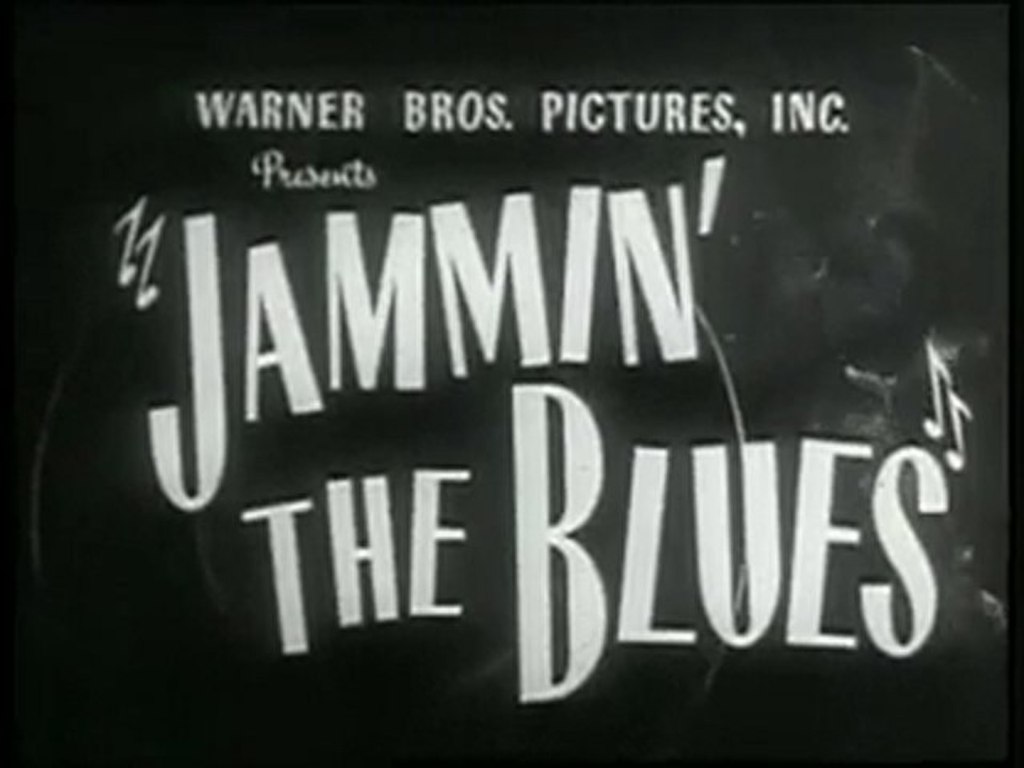
The Plot: Directed by Life magazine photographer and first-time filmmaker Gjon Mili, “Jammin’ the Blues” is a jam session between some of the jazz scene’s brightest talents (Lester Young and Illinois Jacquet – tenor sax, Red Callender – bass, Harry “Sweets” Edison – trumpet, Marlowe Morris – piano, “Big” Sid Catlett and Jo Jones – drums, Barney Kessel – guitar, John Simmons – double bass). After opening with the instrumental “Midnight Symphony” (written by Lester Young), the group is joined by Marie Bryant singing “On the Sunny Side of the Street”. Bryant then teams up with dancer Archie Savage to show off their genuinely impressive swing dancing skills during the titular “Jammin’ the Blues” (also written by Lester Young).

Why It Matters: The NFR write-up is mostly a rundown of the short, though they highlight the “evocative background” the lighting and sets give the piece. The write-up also erroneously states the movie is 20 minutes long (It’s 10, maybe they watched it twice?)

But Does It Really?: “Jammin’ the Blues” is a fun, quick entry in the NFR, but I kept asking myself, “Why this short? And why so early in the NFR run?” None of my research could help clarify why this film is so significant, other than its unique aesthetic and the creatives involved with it. I am willing to give “Jammin’ the Blues” a pass for NFR inclusion thanks to its depiction of a more raw form of jazz that the average moviegoer had never heard before, as well as representation of talent both in front of and behind the camera making one of their rare (and in some cases only) contribution to film.

Everybody Gets One: Gjon Mili emigrated to America from his native Albania in 1923, studying electrical engineering at MIT. At a time when photography was becoming an artform rather than just reportage, Mili experimented with various photography techniques, and in collaboration with Professor Harold Edgerton created his best-known work: photos taken with stroboscopic light, capturing several milliseconds in one photo (you’ve probably seen Mili’s shot of Picasso making a drawing with a flashlight). I’m not sure how Gjon Mili went from avant-garde photography to directing a short film for Warner Bros., but he certainly wasn’t the first or last photographer to make the pivot to film (see Gordon Parks), and he had taken enough photos of celebrities for Life by 1944 that I’m sure many an industry connection was made.

Seriously, Oscars?: “Jammin’ the Blues” was nominated in the category of Best Short Subject (One-Reel) but lost to the Paramount comedy short “Who’s Who in Animal Land”. You shouldn’t feel too bad for producer Gordon Hollingshead, though; he won later that night for the two-reel short “I Won’t Play”, his second of an eventual six Oscars!

Other notes

  • Shoutout to the film’s technical director Norman Granz, a legendary record producer who, among his many accomplishments, produced some of the first “jam session” albums to receive a wide release. I presume Granz was the liaison between the film’s musicians and Warner Bros.
  • My first thought before watching “Jammin’ the Blues” was, “Haven’t I watched this one for the blog already?”. Then I realized I was thinking of “Jam Session” with Duke Ellington: two very similar films from within two years of each other. When you’ve watched as many NFR films as I have, you’re going to experience the occasional case of déjà vu.
  • “Jammin’ the Blues” is one of the rare live-action shorts on the Registry produced by a major movie studio, and the even rarer one-off studio short on the list. I can only imagine what it would have been like seeing this before watching “Arsenic and Old Lace” or “To Have and Have Not”.
  • With one exception, all the extraordinary talent you see in the film is African American. The exception is Barney Kessel, who was filmed mostly in the shadows and had his hands dyed with berry juice for a few close-up shots of his guitar. I can’t give this film a full-on Blackface Warning, but I will give it a minor Black Hands Warning.
  • I do wonder how much of this film’s music was truly improvised. I imagine the solos shot in close-up could be riffed on the spot, but the film’s four day shoot surely led to some repetition for the performers.
  • The cinematography gets very artsy as we go along, with stylish compositions of the dancers, and the doubling/tripling/quadrupling of certain band members. While I’m sure Mili had a say in these artier shots, attention must be paid to this film’s cinematographer Robert Burks. A longtime member of the Warner Bros. special effects department, Burks got his first cinematographer credit with “Jammin’ the Blues”. Burks would go on to be Alfred Hitchcock’s longtime cinematographer, collaborating on some of his best films (“Rear Window“, “Vertigo“, “North by Northwest“) and winning an Oscar for his work on “To Catch a Thief”.
  • Of course the music is great, but I was bowled over by the dancing. Both Marie Bryant and Archie Savage had worked closely with legendary dancer and teacher Katherine Dunham (Savage was one of Dunham’s favorite dance partners), and it’s fun watching these two cut loose and swing!

Legacy

  • Gjon Mili made two more short films after “Jammin’ the Blues”: 1950’s “Improvisation” and 1954’s “Stompin’ for Mili”. Mili would continue with photography for the rest of his career, including as still photographer for a handful of Otto Preminger’s movies (including “Porgy and Bess” and “Anatomy of a Murder”). Gjon Mili died in 1984 at age 79, and his brief foray into film goes unmentioned in his New York Times obituary.

Listen to This: Of the film’s on-screen talent, the only ones I can confirm pop up in the National Recording Registry are Barney Kessel (Julie London’s “Cry Me a River”), Illinois Jacquet (“Jazz at the Philharmonic”), and Lester Young and Jo Jones (Count Basie’s “One O’Clock Jump”). Given how many of these musicians performed with some of the greats (Dizzy Gillespie, Duke Ellington, Frank Sinatra), I wouldn’t be surprised if more of them are playing in the background of other NRR entries.

#712) Betty Tells Her Story (1972)

#712) Betty Tells Her Story (1972)

OR “Change of a Dress”

Directed by Liane Brandon

Class of 2022

The Plot: In the category of movies that live up to their title, “Betty Tells Her Story” is indeed a film in which Massachusetts resident Elizabeth “Betty” Murray tells you a story from her life. Sitting in a comfortable chair in her living room, Betty recounts an incident a few years earlier in which she purchased a very expensive emerald-green dress for the Governor’s Ball in Connecticut, only to lose the dress when she accidentally left it on the trunk of her car and drove off. Halfway through this short, Betty has finished her story, but is asked by the filmmaker to tell it again. The second telling is strikingly different from the first, not so much in the details, but rather in how she tells it, focusing more on her feelings during the events. It’s a surprisingly deep exploration of the impossible physical expectations we put on women, captured by one of the pioneers of the women filmmakers’ movement of the early ’70s.

Why It Matters: Wow, someone really loves “Betty Tells Her Story” over at the NFR. The film gets a longer write-up than many of the Registry’s more iconic entries, being hailed as “classic” and “poignant”. The film’s historical place in the Women’s Movement is also mentioned. Added bonus: A photo of Liane Brandon with her official NFR inductees’ certificate!

But Does It Really?: I enjoyed “Betty Tells Her Story”. The first half is listening to an engaging storyteller with an amusing anecdote, and the second half suddenly becomes a much more personal confession. “Betty Tells Her Story” perfectly exemplifies this style of filmmaking the women’s movement was known for; intimate portraits of ordinary women, helping to add a personal connection and layers of humanity to the growing movement. I’m glad “Betty Tells Her Story” has found its spot on the NFR, and I can’t recommend it enough.

Everybody Gets One: Liane Brandon started out as a substitute teacher at Quincy’s Central Junior High, eventually becoming their full-time English teacher. On a dare from her students, Brandon assigned one of her classes to make a film, borrowing a 16mm camera from the school’s football team. Invigorated by the experience and appalled by some of the more performative aspects of the women’s lib movement, Brandon was motivated to film real women living their real lives, beginning with her 1971 short “Anything You Want to Be”. Brandon met Betty Murray while the two were serving on an educational advisory board in the early 1970s, and Betty would tell Liane amusing stories when they would grab coffee after the meetings. Brandon filmed Betty telling her dress story twice, planning to use only one take, but a viewing of the two back-to-back inspired her to include both takes.

Other notes

  • Both versions of Betty’s story are told in one uninterrupted take, with the camera occasionally zooming in or out. The zooming keeps things from being too static, but the cinematography is all you need to tell you, “Don’t worry about the visuals, listen to what she is saying.”
  • At one point Betty mentions being a teacher. I assume she’s an English teacher based on her excellent storytelling skills and choice vocabulary.
  • Betty recalls that the price of the second dress was $7.98 off the rack, which would be about $60 today. Betty never discloses how much the original dress cost, other than it was “three weeks’ pay”. Based on a couple of factors (average teacher’s salary in 1972, pay discrepancies for women, etc.), I’m estimating the cost of the emerald-green dress at $430, or $3200 today. But this is just me speculating; only Betty knows for sure.
  • You can tell immediately that the second telling is going to be different. Betty’s emotions from the story are much more front and center from the beginning. I wouldn’t be surprised if this was take two and she was still feeling the impact of telling the story the first time.
  • Honestly, I strongly recommend a viewing of this film. Betty is such an engaging storyteller, and comparing the two versions was a fun experience. By the time Betty laments about “a prettiness I never had”, you feel for her so much. As of this writing, “Betty Tells Her Story” is streaming on the Criterion Channel as well as on Kanopy (which I get for free with my library membership. Support your local library!)

Legacy

  • “Betty Tells Her Story” was distributed to libraries and film groups across the country through New Day Films, the distribution company co-founded by Brandon and fellow NFR filmmakers Julia Reichert and Jim Klein. It also played several film festivals and special screenings. One such screening at the Film Center in Chicago in 1973 was attended by critic Gene Siskel, who gave the film a glowing review. (Side note: Siskel’s review unfortunately focuses a lot on Betty’s weight. I get where he’s coming from, but save the fat shaming for Roger, Gene).
  • Liane Brandon would go on to direct two more influential shorts, 1980’s “Once Upon a Choice” and 1987’s “How to Prevent a Nuclear War”. She also continued teaching, moving to the University of Massachusetts in 1973 and teaching media and film production for 30 years. Although Brandon is retired from teaching and now focuses on still photography (primarily for PBS programs), she is open to the idea of making another movie.
  • Liane remained in contact with Betty Murray up until Betty’s death in 1991. According to Brandon, Betty would send Liane a Christmas card every year, signing it with some variation of “Call me, I’ll tell you another story.”
  • Upon learning that “Betty Tells Her Story” was to be added to the NFR, Brandon called the experience “overwhelming. I’m in a very select group.”

The NFR Class of 1994: I Opened Up My Eyes and Saw the Sign

November 15th, 1994: The Library of Congress announces the next 25 films on the NFR, which bumps up their total to 150 films. Coinciding with this induction’s 30th anniversary, I have watched all 25 films (well, 24 and a fraction. I haven’t seen every episode of “Exploits of Elaine”, but I’m still counting it). Here is the Class of 1994, plus links and blurbs from each of my write-ups:

  • A Corner in Wheat (1909): “vague enough that you can still apply its message today.” “You win this round, Griffith.”
  • The Exploits of Elaine (1914): “a placeholder pass”, “I do not have enough available footage to make the call.”
  • Hell’s Hinges (1916): “representation of William Hart, a forgotten legend of early cinema”, “There are worse ways to spend an hour.”
  • Safety Last! (1923): “the definitive Harold Lloyd film.”
  • Tabu: A Story of the South Seas (1931): “impressive cinematography…[but the] exoticizing of other cultures…makes for a difficult modern viewing.”
  • Freaks (1932): “The film’s bizarre subject matter and unforgettable imagery more than ensure the film’s longevity.”
  • Scarface (1932): “Not the quintessential ’30s gangster picture…[but] worthy of NFR recognition”
  • Snow-White (1933): “a Betty Boop cartoon should be included on the Registry, and I guess this one will do.” “Hey kids, wanna see the weirdest cartoon ever?”
  • Pinocchio (1940): “a landmark for both Disney animation and top-tier family entertainment.”
  • The Lady Eve (1941): “one of Hollywood’s definitive screwball comedies.”
  • Meet Me in St. Louis (1944): “still enjoyable, but one wonders if future generations will love it as much.”
  • Force of Evil (1948): “sits in the same ‘above-average’ column as…the other post-war noir of the era”
  • Louisiana Story (1948): “an important document about a certain era of bayou country that was dying out.”
  • The African Queen (1951): “a trip down the rivers of Africa with two of Hollywood’s greatest is a fun way to spend two hours.”
  • Marty (1955): “isn’t a bona-fide film great, but it’s the little movie that could, and still can.”
  • Invasion of the Body Snatchers (1956): “an iconic piece of ’50s science fiction for sure, but I found it…just okay.”
  • A MOVIE (1958): “the kind of experimental film you are encouraged to add your own layers to.” “There’s something for everyone!”
  • The Apartment (1960): “the last truly great Billy Wilder film” “one of my favorite films. Like, top five.”
  • The Manchurian Candidate (1962): “a film with staying power”, “may be more relevant now than ever before.”
  • The Cool World (1963): “helped me further appreciate independent filmmakers…but ultimately, it’s not my thing.”
  • Zapruder Film (1963): “a sad but important necessity in our film heritage.”
  • Midnight Cowboy (1969): “has a compassionate quality that ultimately supersedes its gloomy subject matter to be a captivating experience.”
  • Hospital (1970): “a frank yet neutral observation of an important American institution.”
  • Taxi Driver (1976): “an unforgettable film experience” “man alive does this movie live up to the hype.”
  • E.T. the Extra-Terrestrial (1982): “works on every level and leaves you with hope every single time.” “about as perfect as filmmaking gets.”

Other notes

  • While I couldn’t find any detailed contemporary articles about this year’s Registry inductees, it should be noted that 1994 was the year the Library of Congress started looking into this new thing called the internet to aid its preservation mission. The National Digital Library Program, which showcases millions of the Library’s digitized artifacts, launched on October 13th, 1994.
  • This has got to be the most downer bunch of movies in the NFR. Practically every movie has something unsettling or depressing about it. Murders, suicide attempts, child endangerment, exploitation of sex workers, gangs, invasions, political assassinations, to say nothing of how many of these are set in the seedier sides of New York City. Even family fare like “E.T.” and “Pinocchio” have their sadder/scarier moments. Is it any wonder I asked if this year’s voting committee needed a hug? Still, almost all these movies are iconic or important enough that I have to acknowledge their NFR worthiness.
  • When this year’s inductees were announced, “Interview with the Vampire” was #1 at the US box office, with future NFR films “Pulp Fiction“, “Forrest Gump“, “The Shawshank Redemption“, and “Clerks” playing in theaters. Man, 1994 was a great year for movies.
  • As far as I can tell, “Hospital” is the first entry in the NFR that was produced especially for television. While the NFR’s primary function is to preserve American film, a statement on their website permits them to occasionally consider television material (most notably this and “Thriller“). It helps that Frederick Wiseman, the director of “Hospital”, already had a film on the list.
  • In addition to “Hospital” director/ “Cool World” producer Frederick Wiseman, this year’s double-dippers include cinematographer Joseph LaShelle, actor John McGiver, and legendary makeup artist Dick Smith.
  • Thematic double-dippers (in addition to all the depressing subject matter listed above): cowboys, aliens, con artists, lonely single men in New York City, non-actors acting, Marilyn Monroe lookalikes, trick-or-treating on Halloween, and characters dying and being miraculously resurrected (this happens in no less than five of these movies). Also of note, “Manchurian Candidate” makes a brief reference to Disney’s “Pinocchio”.
  • Totally unrelated, but after re-reading my old posts for these movies, I counted two of them that link to my favorite clip of people from the early 1900s testing out their flying machines. I do love those clips. I think it’s because of their use in “Airplane!
  • Favorites of my own subtitles: Are You There God? It’s Me, a Cowboy, How Are Things in Bora Bora?, Sideshow Hell, Con Heir, How’s Bayou?, Crocs & Krauts, What If Pod Was One of Us, and Everybody Loathes Raymond.

Next up, the class of 1995, which cannot possibly be as depressing as this line-up of movies.

Happy Viewing,

Tony

#711) The Cool World (1963)

#711) The Cool World (1963)

OR “A Piece of the Action”

Directed by Shirley Clarke

Written by Clarke and Carl Lee. Based on the novel by Warren Miller and the play by Miller and Robert Rossen.

Class of 1994

“The Cool World” is very hard to track down (I’ll explain why later), but I was able to find an upload of the film here. This version is missing a bit of the opening, which is embedded below.

The Plot: Duke Custis (Rony “Hampton” Clanton) is a 15-year-old Black boy growing up in Harlem, and a member of the street gang the Royal Pythons. Duke’s dream is to be leader of the Pythons and a “big shot” in Harlem, which he feels he can achieve by purchasing a gun (or “piece”) from neighborhood lowlife Priest (Carl Lee). Filmed in a pseudo-documentary style, “The Cool World” chronicles Duke as he navigates the seedy sides of Harlem, the politics of gang leadership, and the futile struggle to escape this perilous lifestyle.

Why It Matters: The NFR calls the film a “stark semi-documentary” and cribs from Bosley Crowther’s New York Times review, in which he praises the film’s “pounding vitality” and “hideous visual truths”.

But Does It Really?: I appreciated “Cool World” more than I enjoyed it. As a film it’s fine, with a rough presentation augmenting the characters’ rough conditions, but ultimately, it’s not my thing. Still, watching movies like “Cool World” for the blog have helped me further appreciate independent filmmakers, especially those of this era where filmmaking equipment was much harder to come by. Shirley Clarke is one of the unsung heroes of the independent film scene, and I’m glad the NFR has made room for her.

Everybody Gets One: Born to a wealthy family in New York, Shirley Clarke started off as a dancer, studying with, among others, Martha Graham. In her mid-30s, Shirley became interested in film making, and her first short, 1953’s “A Dance in the Sun” documented the choreography of modern dancer Daniel Nagrin. She soon found herself in the same circles as fellow independent filmmakers/NFR directors Jonas Mekas, Lionel Rogosian, and Stan Brakhage, all of whom, along with Clarke and several others, founded The Film-Makers’ Cooperative in 1961 (which is still in operation today). Clarke’s first feature – 1961’s “The Connection” – was as controversial as the play it was adapted from, and its frank depiction of heroin addiction led to the film being banned in New York state. During production of “The Connection”, Clarke met actor Carl Lee, who would be her creative and romantic partner for the next 20 years.

Seriously, Oscars?: Like many an independent feature of the era, “The Cool World’ received zero Oscar nominations, but did better with European awards, in this case being nominated for the Golden Lion at the 1963 Venice Film Festival. At this point in Shirley Clarke’s career, she had already received her sole Oscar nomination for her 1959 short “Skyscraper”. Coincidentally, Clarke’s other 1963 feature, “Robert Frost: A Lover’s Quarrel with the World”, won the Oscar for Best Documentary Feature, though due to Academy rules at the time the nomination and award were given solely to the film’s producer, Robert Hughes.

Other notes

  • Before we go any further, “The Cool World” should not be confused with “Cool World“, that weird “Roger Rabbit” knock-off starring a young Brad Pitt. Rest assured at no point during this post am I referring to that movie.
  • It should be noted that among the creatives behind the original novel, its play adaptation, and this film adaptation, the only person of color is co-screenwriter Carl Lee. The novel is narrated by Duke and written entirely in deeply offensive “black” phonetics, and while the film’s dialogue is exponentially better, I still question its authenticity. Side note: the stage version of “Cool World” only played Broadway for two performances in February 1960, but its cast featured such up-and-comers as Billy Dee Williams (as Duke), James Earl Jones, and Cicely Tyson.
  • “Cool World” is also notable for being the first film produced by Frederick Wiseman, former law teacher and future documentarian. We’ll talk more Wiseman’s involvement in the “Legacy” section.
  • There’s a lot to take in during the film’s opening sequences, especially if you’re like me and did zero research prior to your viewing. This film’s documentary approach, with its shaky cam cinematography and overlapping dialogue, takes some getting used to. At one point I thought I was watching outtakes from “Shadows“. The opening sequence of Duke and his classmates on an end-of-year field trip is especially cacophonous. Thankfully, the pace slows down afterwards. Adding to the authenticity (and the film’s overall unpolished feel), most of the cast are non-actors, though no one’s unprofessional background stuck out to me in a way that detracted from the film.
  • Speaking of “before they were famous”, among the film’s professional actors are Clarence Williams III (Linc from “Mod Squad”) as Python leader Blood, and Gloria Foster (the Oracle in “The Matrix“) making the most of her limited screentime as Duke’s mother. And apparently Antonio Fargas (Huggy Bear from “Starsky and Hutch”) is also in this film, but I can’t confirm who he played. Fargas would have been about 17 during filming, maybe he’s one of the rival gang members?
  • Shout out to Mal Waldron, who composed the film’s jazz score, performed by the Dizzy Gillespie Quintet and expertly matching the film’s shifting moods.
  • Duke needs $75 for a gun, which adjusted for inflation would be about $770 today. Yikes. Too bad there aren’t any lawns for Duke to mow in Harlem.
  • And then we get LuAnne, Blood’s supposed girlfriend who for all intents and purposes is a sex worker, hanging out at the Pythons’ headquarters and offering her services for $1.50 (about $15 today). It works within the world of the movie, but it’s still icky if you think about it for too long. LuAnne’s performer Yolanda Rodriguez didn’t have much of a film career after “Cool World”, though she did produce a handful of projects in the 2000s.
  • Between LuAnne and Priest’s girlfriend (who seems to be auditioning for Miss Adelaide in “Guys and Dolls”) , I would have assumed this movie was directed by a man with some serious issues. Shirley Clarke once mentioned that she made films about other cultures and other races to avoid directly dealing with “the woman question”, so I suspect the objectified female characters in this movie are an offshoot of that, conscious or otherwise.
  • Shoutout to cinematographer Baird Bryant for his great work throughout the movie. While the outdoor scenes are your typical documentary-style shaky cam, the scenes inside cramped apartments make the most of their limited space, with creative compositions and blocking of the characters.
  • Noteworthy to me for its brief NFR connection is a sequence with Blood’s brother Douglas, who mentions that he was traveling with the Freedom Riders, or as Duke mistakenly calls it, the “free bus rides”.
  • I’m pretty confident that the Pythons could beat the crap out of the Sharks and the Jets. Now that’s a movie I’d want to see.
  • I liked the montage of Duke and LuAnne at Coney Island, with the two having a fun day and LuAnne seeing the ocean for the first time. It’s the movie’s last bit of levity before it all goes to hell. Plus all of the shooting games on the boardwalk emphasize the “gun equals manhood” toxic masculinity drilled into Duke his whole life. Bonus points to LuAnne/Yolanda for making the behind-the-back basketball shot in one uninterrupted take.
  • An interesting time capsule: the sign in the Pythons’ hangout that reads, “This house has NO fallout shelter”.
  • The climactic fight between the Pythons and the Wolves occurs on a playground; the symbolism is not hard to miss. The moment that really struck me was when Duke fatally stabs one of the Wolves, the boy’s dying words are “thank you.” This all concludes with Duke being driven away in a police car as we hear snippets of the conversations happening on the streets of Harlem, a sign of how insignificant the gang warfare really is compared to the rest of the world.

Legacy

  • “The Cool World” premiered at the Venice Film Festival in September 1963, but struggled to find a distributor for a general release, mostly due to its subject matter. Producer Frederick Wiseman ended up distributing the film himself under his company Wiseman Film Productions. “Cool World” opened in Paris in April 1964 and received its US release shortly thereafter. While the film was financially successful (by independent feature standards), critics had mixed reactions, with the LA Times write-up wondering aloud why this film wasn’t made by an African American director.
  • Shirley Clarke followed up “Cool World” with her other NFR film, the 1967 LGBT documentary “Portrait of Jason“. As funding for her movies became harder to come by, Clarke pivoted to making experimental films on the new video format, as well as teaching film and video production at UCLA. Shirley Clarke died in 1997 at the age of 78.
  • While Shirley Clarke’s filmography had started to become forgotten during her lifetime, she did live long enough to see “Cool World” make the NFR in 1994. Thankfully in more recent years there has been a renewal of interest in her films, largely due to “Project Shirley”, an undertaking by the good people at Milestone Films to restore and re-release all of Shirley’s films for future generations. Well, almost all of Shirley’s films…
  • “Cool World” producer Frederick Wiseman would go on to become a renowned documentary filmmaker, including “Hospital“, which was inducted into the NFR the same year as “Cool World”. Wiseman still owns the distribution rights to “Cool World” and for whatever reason will only license it out to schools for educational purposes, meaning the film is not readily available to the public, nor is it part of Milestone Film’s “Project Shirley”. Wiseman is 94 years old as of this writing, and still making documentaries! While I wish him continued good health, I look forward to “The Cool World” getting a proper restoration and release in…the 2030s?