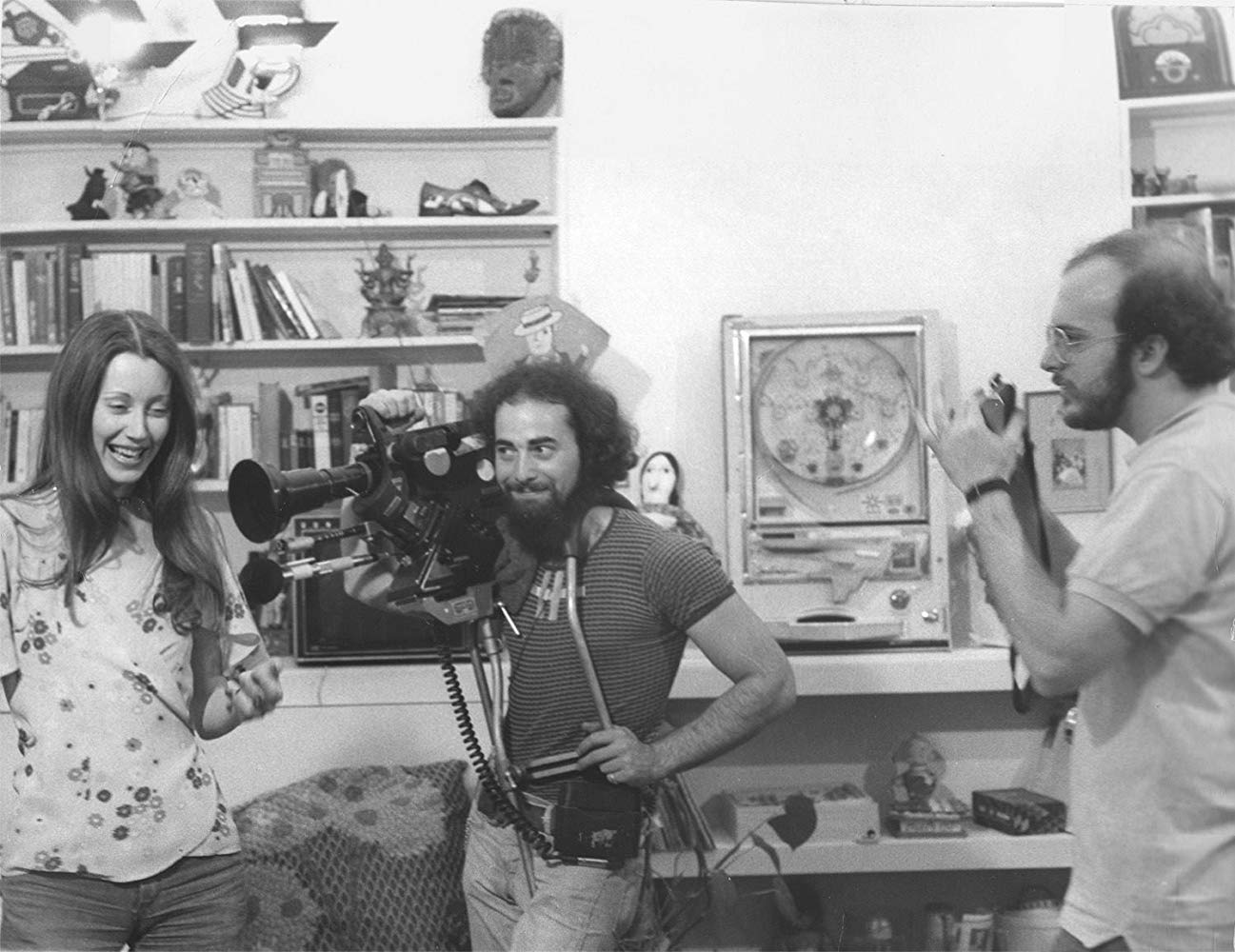
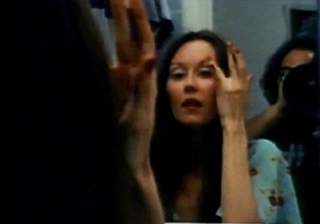
No film clips that can be embedded here, so…here’s another screenshot?
UPDATE: If you’d like to see this movie, check out the comments below for a message from “…No Lies” director Mitchell Block!
NYU student Mitchell Block takes cinéma vérité to a new and uncomfortable level in “…No Lies”. A filmmaker (Alec Hirschfeld) points his camera at a friend (Shelby Leverington) as she prepares to go out for the night. The conversation begins innocently enough, but takes a turn when the friend reveals that a stranger raped her the previous week. She describes the circumstances, as well as the lack of support from a witness and the police. The friend eventually tries to change the subject, but the cameraman keeps pressing her for details, even suspecting that the event never took place. In its brief running time, “…No Lies” quickly turns from run-of-the-mill student film to an unflinching look at an all-too-common issue.
I was a little apprehensive about covering “…No Lies”. For starters, rape and its victims are not topics I feel qualified to discuss (nor is it appropriate for me to write an irreverent blog piece about). Secondly, during my viewing I wasn’t sure if this film was actual cinéma vérité or scripted. Once I learned that the short was scripted (some releases include rehearsal takes), I was a bit upset. It seemed irresponsible for Block et al to make up a very real traumatic experience for a student film. The more I thought about it, however, the more I realized that “…No Lies” was eliciting a very emotional response from me. The kind very few films can. So, on that ground, I can give “…No Lies” a pass for NFR inclusion for its strong emotional resonance, its daring to bring conversations about rape to the forefront, and its representation of documentary producer Mitchell Block.
Shout Outs: The movie our protagonist is heading out to see is future NFR entry and film school staple “The Night of the Hunter”.
Everybody Gets One: Mitchell Block got his BA and MFA in film production at New York University. Shortly after “…No Lies”, Block founded Direct Cinema Ltd., which produces and distributes documentary films. Actor Shelby Leverington had a 40 year acting career starting with “…No Lies”. Although usually just a day player in film and TV, Leverington’s raw, nuanced performance in this film grants her the NFR status eluding many of the big name stars she has acted alongside. Cameraman Alec Hirschfeld would go on to be a cameraman for such NFR entries as “Mean Streets”, “Taxi Driver” and “The Terminator”.
Seriously, Oscars?: Although “…No Lies” didn’t receive an Oscar nomination, Block would eventually be nominated in 2010 for producing the documentary short “Poster Girl”. Block is also a member of AMPAS’ Documentary Screening Committee, which votes on which documentaries are shortlisted for Oscar consideration. Block’s membership has occasionally been considered a conflict of interest, especially when Direct Cinema productions make the cut.
Legacy
According to its NFR write-up, “…No Lies” has been viewed throughout the years by “nurses, therapists, and police officers.”
As previously mentioned, I am vastly underqualified to discuss rape and sexual assault. What I will say is that if you have been a victim, I believe you, you are not alone, and there is help and support for you.
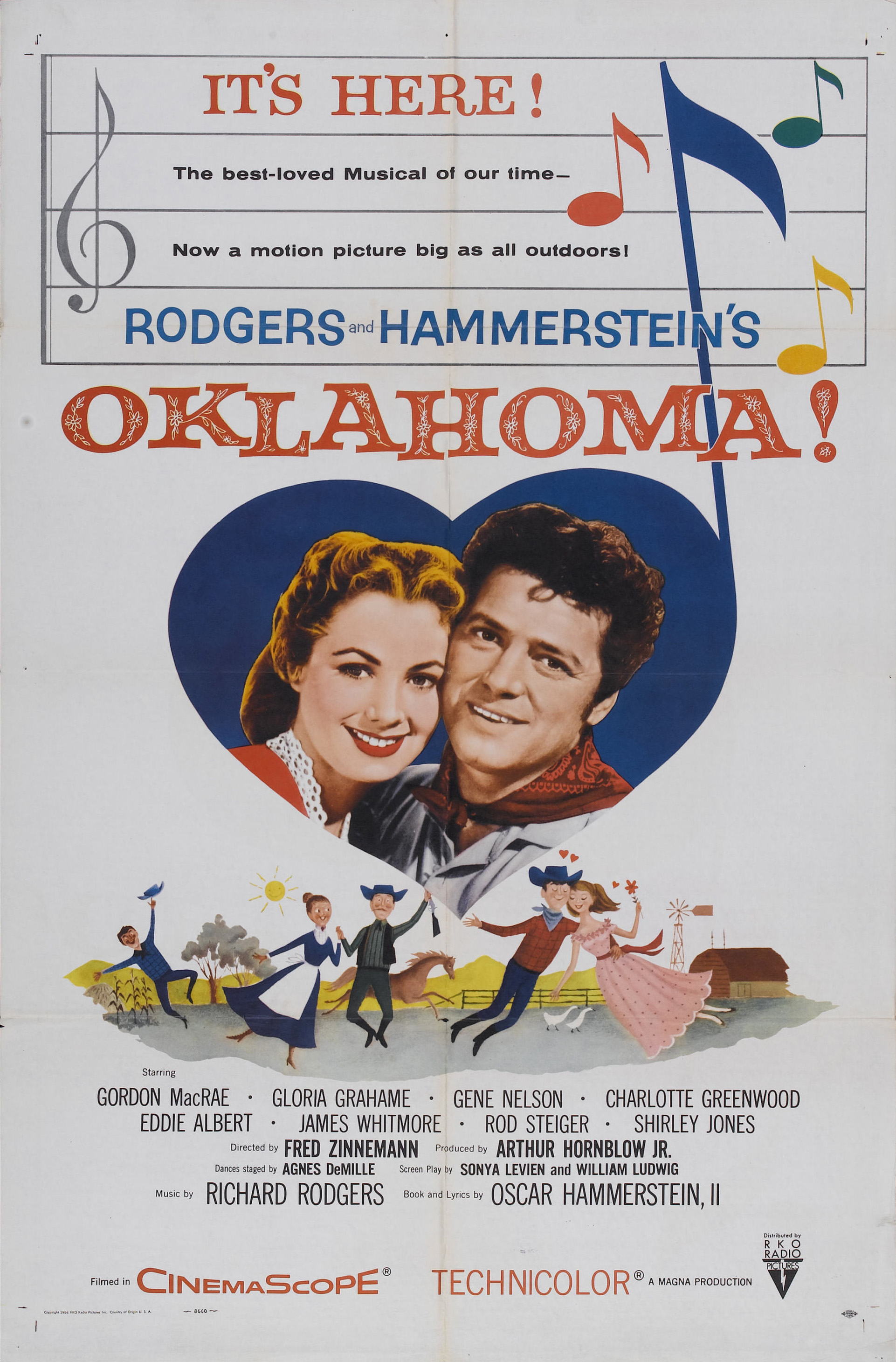
Written by Sonya Levien and William Ludwig. Based on the musical by Richard Rodgers & Oscar Hammerstein II, and the play “Green Grow the Lilacs” by Lynn Riggs. Score by Rodgers & Hammerstein.
Class of 2007
NOTE: “Oklahoma!” was filmed in TWO widescreen processes: CinemaScope and Todd-AO. This post is based on my viewing of the more commonly seen CinemaScope version.
The Plot: “Oklahoma!” is the story of farmers and ranchers on the eve of the Oklahoma territory becoming the 46th state in the union. Cowboy Curly (Gordon MacRae) pines for farmgirl Laurey (Shirley Jones), but is surprised when Laurey announces she’s going to the box social with creepy farmhand Jud Fry (Rod Steiger). This complicated love triangle takes several turns, as does one between cowboy Will Parker (Gene Nelson), the promiscuous Ado Annie (Gloria Grahame) and peddler Ali Hakim (Eddie Albert). Oh, and it’s a musical.
Why It Matters: The NFR praises the “literalized film treatment” and quotes choreographer Agnes De Mille’s take on the film: “It’s different, but I find it very beautiful to look at.” There’s also an essay by author and self-appointed film snob Phil Hall.
But Does It Really?: “Oklahoma!” is definitely a minor classic: it’s far from the greatest movie musical ever made, but it is a serviceable film adaptation that successfully retains the tone of the original show. The songs are, of course, delightful, and are aided by a first-rate cast and excellent on-location shots, but through no fault of its own, this film is a B+ effort lost amongst the A+ musicals already on this list. I guess what I’m trying to say is: “Oklahoma!”: Okay.
Everybody Gets One: At age 18, Gordon MacRae won a talent contest and landed a two-week singing engagement at the 1939 New York World’s Fair. This led to stage appearances, radio, and eventually a recording contract with Capitol Records. Though not his first movie musical, “Oklahoma!” was MacRae’s first leading role. He would reunite with Shirley Jones in 1956’s “Carousel” as a last minute replacement for Frank Sinatra.
Wow, That’s Dated: Eddie “Green Acres” Albert plays Persian peddler Ali Hakim. While he doesn’t go full brown-face, there is an attempt at a Middle Eastern accent that’s incredibly problematic. Plus it distracts from the show’s primary issues concerning women as property.
Title Track: Now that’s a title song! Fun Fact: Despite being the 11 o’clock number, there’s still about 10 minutes left in the show. Please remain seated.
Seriously, Oscars?: One of the biggest hits of 1955, “Oklahoma!” entered the 1956 Oscars with four nominations. The film lost Costume Design and Editing, but did pick up the prizes for Sound Recording and Scoring of a Musical Picture.
Other notes
Surprisingly, “Oklahoma!” was produced not by one of the major Hollywood studios, but by independent company Magna Pictures Corporation. Created to produce films in the new widescreen process Todd-AO, Magna enticed a reluctant Rodgers & Hammerstein to approve an “Oklahoma!” film adaptation when they offered the composers a level of creative control none of the studios would. To ensure a wide release, “Oklahoma!” was filmed in both the experimental Todd-AO format, and the then-more common CinemaScope format, resulting in two different (albeit very similar) versions of the film.
“Oklahoma!” was filmed on location in the state of…Arizona? Turns out the real Oklahoma had become too developed to accurately depict its pre-statehood, so most of the movie was shot in several towns in southern Arizona.
Part of this film’s appeal is successfully opening up the play. It helps that most of the play is set outdoors, and the production takes full advantage of their location shooting. Director Zinnemann also visualizes several of the lyrics throughout the film: at last we get to see the “surrey with the fringe on top” and the corn “as high as an elephant’s eye”.
Curly and Laurey are doing a variation of “He’s a jerk and she’s okay with it” called “He’s a jerk but the songs are so catchy!”
Wow, Gene Nelson can dance. Get it, Buddy!
Director Fred Zinnemann seems an odd choice given his previous films “High Noon” and “From Here to Eternity”, but his more realistic approach to filmmaking does help preserve the show’s darker elements. And thanks to Zinnemann, we get the unconventional casting of non-singers Rod Steiger and Gloria Grahame. Steiger gives some dimension to Jud Fry, and Grahame is…fine.
Shirley Jones makes her film debut as Laurey, and her lovely performance plants the seeds of a promising film career. And to think she’s only five years away from playing a hooker in “Elmer Gantry”.
“People Will Say We’re In Love” is one of my favorite songs ever, so even this generically staged, continuity-lax version gets a pass.
I can never get past “Pore Jud is Daid” as a plot point. Curly advises Jud to hang himself rather than take Laurey to a dance? That’s a real extreme solution. Not that Jud’s a saint either, but come on.
Timing is everything. The Dream Ballet in the original stage version (choreographed by Agnes De Mille) was revolutionary in its delve into a character’s psyche. While still technically impressive 12 years later, the film version is preceded by a similar ballet in “An American in Paris”. And like that dream ballet, this one goes on forever. I definitely took an intermission afterwards.
Most of the second act takes place at night, and was shot in-studio. The switch from the Arizona plains to a soundstage in Culver City is jarring, and slows down the film’s momentum.
So the main takeaway from this movie is that all men are the worst. Copy.
Gloria Grahame does this weird thing where she sorta pantomimes her lyrics. It’s distracting, but that being said, she does an excellent imitation of a crawfish.
Also a bit troubling is the show’s ending, in which an entire town bends the law so that the main character can get away with murder because nobody liked the guy he killed. Why does everyone remember this show as being so wholesome?
Legacy
The success of “Oklahoma!” encouraged Rodgers & Hammerstein to green light film adaptations of their other collaborations. The film versions of “King and I” and “South Pacific” have their supporters, but they all pale in comparison to “The Sound of Music”.
The original stage version of “Oklahoma!” is still performed across the country hundreds of times every year. The show has also had a few Broadway revivals, most recently in 2019 with a stripped down production that emphasized the show’s darker aspects.
Everybody spoofs “Oklahoma!”, though I will argue they are referencing the show in general rather than the film specifically. Regardless, here’s one of the more unusual tributes, courtesy of “South Park: Bigger, Longer and Uncut”.
Listen to This: The original Broadway cast recording of “Oklahoma!” was added to the National Recording Registry in 2003. Learn more from this essay by NRR staple Cary O’Dell!
The Plot: New York burlesque star Kitty Darling (Helen Morgan) sends her newborn daughter April to a convent in order for her to have a better life. Years later, the now grown-up April (Joan Peers) returns to live with Kitty, only to learn that she is now an alcoholic has-been with an abusive boyfriend named Hitch (Fuller Mellish Jr.). After an attempted assault from Hitch, April roams around the city, and has a whirlwind romance with sailor Tony (Henry Wadsworth). Come for the depressing storyline, stay for the innovative use of camera and sound.
Why It Matters: The NFR applauds “Applause” for its “audacious style”, even citing comparison to “Citizen Kane” for its “cinematic innovation”. The work of Mamoulian and the principal cast are highly praised.
But Does It Really?: “Applause” is by no means a classic, but I get why it’s on the list. At a time when most movies were dipping their toes into what was possible with “talkies”, “Applause” cannonballs into the deep end with overlapping tracks and on-location filming, both of which were considered impossible with this new technology. The appeal of “Applause” may be reserved for die-hard film geeks, but we’ll take it!
Everybody Gets One: Not their only NFR appearance, but shoutouts to director Rouben Mamoulian and star Helen Morgan. Born in Georgia (the country), Mamoulian found success directing for the London stage. He moved to America and directed the 1927 play “Porgy”, as well as its more famous musical version in 1935 (Ironically, he was fired from the subsequent film production). Helen Morgan also had theater roots; her fame as a torch singer in Chicago nightclubs led to the legitimate stage, and ultimately the role of Julie in the original cast of “Show Boat”, a role she reprised for two film versions. Sadly, like her character in “Applause”, Morgan was also an alcoholic, and died at the age of 41 from cirrhosis of the liver.
Wow, That’s Dated: The main dated aspects of “Applause” are its backstage peak at burlesque and its extremely abusive attitude towards women. Also, thanks to one consistent background character, this movie gets a BLACKFACE WARNING. Sorry, this segment doesn’t always get to be the fun one.
Seriously, Oscars?: “Applause” had the misfortune of premiering less than a month after the Stock Market Crash of 1929. This bad timing, mixed with an ad campaign that focused on Helen Morgan’s glamour, led to “Applause” being a flop with critics and audiences. At the 3rd annual Oscars, “Applause” received zero nominations (though the National Board of Review named it one of their top 10 films of the year). Paramount’s Best Picture contender that year was Ernst Lubitsch’s much more lighthearted escapist musical “The Love Parade”.
Other notes
In practice, I don’t research these movies in advance so I can come to my own conclusion as to how they made the list. “Applause” told me immediately why it was on here; the film’s usage of its soundtrack – starting with a silent empty street segueing to a marching band and ultimately the raucous crowd at the burlesque house – is downright revolutionary by 1929 standards.
Also revolutionary for 1929: tracking shots. While commonplace in the silent era, the clunky sound equipment now attached to a camera made tracking shots more awkward to orchestrate. Most early sound films opted to keep their cameras static and their action stage bound, but Mamoulian throws caution to the wind and moves his camera as freely as the silent era.
Mamoulian proves he’s also a master of visual storytelling. In an early sequence the necklace that young April is playing with fades into the rosary beads of the convent. This is followed later by a wipe from Kitty praising Hitch’s fidelity to Hitch cheating on her with another woman. Rouben knows exactly what he wants and how to get it.
The train station sequence showcases this film’s other trick to sound: film your sequence with a less cumbersome silent era camera, and synchronize the soundtrack in post.
Oooh, nice use of undercranking to make the streets of New York a little more hectic.
Where did April pick up that posh accent? Was Katharine Hepburn the mother superior at her convent?
“There’s only one way to treat [women], and that’s rough!” Oy. I think Hitch talks so fast so you lose track of every sexist thing he says.
Tony likes April’s name because it “sounds like a name out of a book”. Umm, does he think a calendar is a book? Conversely, Tony doesn’t like his own name because it makes him “sound like a wop bootblack.” Ahem.
“Applause” was filmed at the Kaufman Astoria Studios in New York, which explains why this film has more on-location shots than your typical Hollywood movie of the time.
The movie’s ending is particularly dark; this being pre-code and all even the good guys get to die. But the film’s tragic ending is fitting to the previous melodrama, and packs an appropriate punch.
Legacy
“Applause” disappeared after its initial run, but was rediscovered in the early ’60s by a new generation. I’m gonna guess TV repeats on the late show had something to do with it.
Rouben Mamoulian’s film career remained steady throughout the ‘30s and early ‘40s, directing future NFR entries “Love Me Tonight”, “Becky Sharp”, and “The Mark of Zorro”. Although his film career faltered after that, he did find success in the theater, directing the original Broadway productions of “Oklahoma!” and “Carousel”.
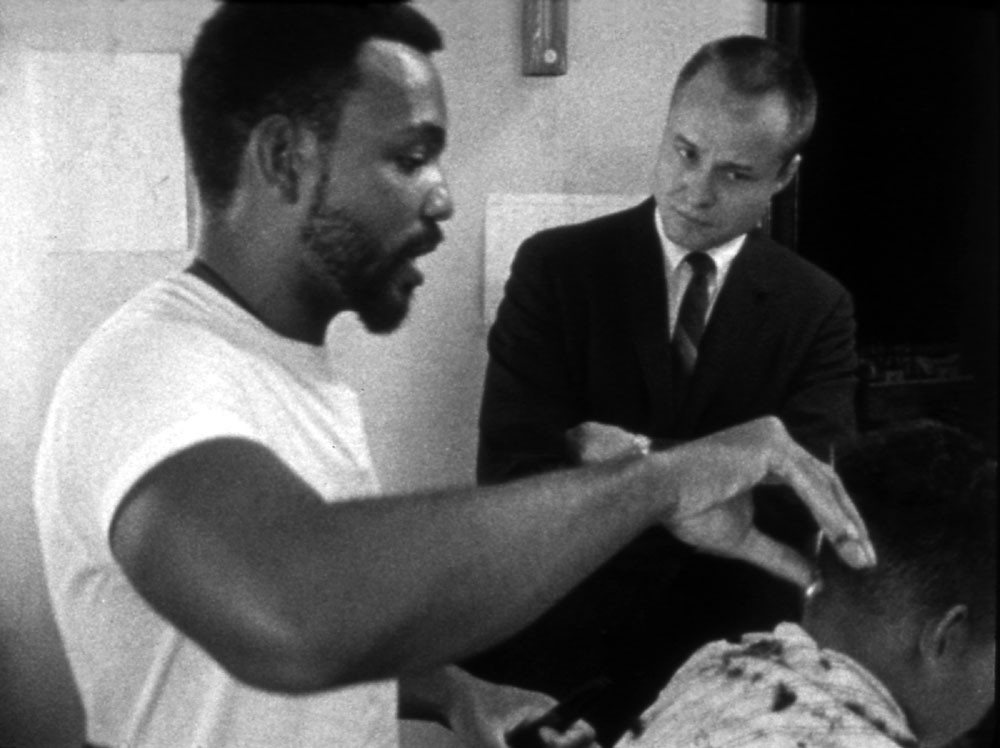
The Plot: It’s 1966 and racial tensions are running high in Omaha, Nebraska. Reverend L. William Youngdahl, the newly appointed minister of Augustana Lutheran Church, proposes that his all-white congregation reach out to the African-American Lutheran community in a series of integrated meetings. Thanks to the cinema verite approach of William C. Jersey and Barbara Connell, we witness the pushback Youngdahl receives from his congregation, who all support civil rights, but would rather not deal with it in their own church. Also on hand is a very vocal African-American community (including future politician Ernie Chambers) who aren’t too keen on helping the white community clean up their own mess.
Why It Matters: The NFR salutes the film’s cinematography (“some of the best observational ‘fly on the wall’ footage ever filmed”) and cribs from Fred Friendly’s praise of “the best civil rights film ever made”. There’s also a detailed essay by AMPAS documentary curator Ed Carter.
But Does It Really?: I definitely appreciated “A Time for Burning” more than I enjoyed watching it. While the film is an hour of mostly white people talking around their own prejudice, the film avoids the extremes of most civil rights documentaries. There are no cross-burning klan members or empowering activists to be seen, just ordinary people trying to make sense of the changing political world around them. There are more entertaining documents of this era out there, but “A Time for Burning” offers a more realistic approach with its share of current-day parallels. A pass for “A Time for Burning” and its NFR inclusion.
Everybody Gets One: Bill Jersey was commissioned by Lutheran Film Associates to create a film that would help church members understand and deal with the social issues of the day. Jersey choose Omaha’s ongoing racial tensions because he wanted to show America that civil rights issues existed not just in the south, but in America’s heartland. Barbara Connell was hired as Bill Jersey’s secretary, but Jersey recognized her potential as a filmmaker and brought her along for the shoot. “Burning” was Connell’s first film.
Seriously, Oscars?: After being broadcast on the soon-to-be-extinct NET station, “A Time for Burning” had a brief theatrical run, and was nominated for a Best Documentary Oscar. The winner that year – “The Anderson Platoon” – tackled another important social issue of the day: the Vietnam War.
Other notes
It’s never good when your city is so well known for its civil disorder it has its own Wikipedia page. Shortly after filming of “Burning”, two separate race riots occurred in Omaha during the summer of 1966. “Burning” captures a city just before it reaches the boiling point.
The black barber who appears throughout the movie is Ernie Chambers. His steadfast refusal to let the white citizens off the hook is your first tip that this isn’t going to be your feel-good-in-hindsight take on civil rights. In 1970, Chambers was elected Senator to the Nebraska State Legislature, and is the longest serving state senator in Nebraska history.
The unavoidable problem with this movie is that it’s all talk, no action. Yes, what is being discussed is important, but it’s hard to engage with a movie that is several scenes of people talking around the issue. The fact that there was ultimately no action that came from these talks makes the viewing experience even more frustrating.
Also not helping: the film’s white protagonists look and sound like the salesmen from “Salesman”.
I purposefully don’t do a lot of research before viewing these films, so that I can just be in the moment with the film. Imagine my surprise when not only does Augustana Lutheran fail to integrate, but Reverend Youngdahl is asked to resign! The ending is spent with the remaining congregation justifying their decision not to meet with Calvin Memorial Baptist. Only church member Ray Christensen stands by the reverend after his resignation. When told that the African-American community’s day will come, Christensen prophetically asks, “How many days are left?”
Legacy
Sadly, Barbara Connell died in a car accident in 1972; “Burning” was her only film as a director.
Bill Jersey continues to make documentaries to this day. Past subjects have included former Chief Justice Earl Warren, the legacy of Jim Crow laws, and fellow NFR movie “Amadeus”.
Although Pastor Youngdahl’s initial efforts failed, Augustana Lutheran created a similar outreach program in 1968 with Project Embrace. Over 50 years later, the program and the church are still going.
The Plot: The citizens of an old west town place a bounty on a pack of wolves that terrorize their cattle, especially the pack’s leader Lobo (Rin Tin Tin). When Lobo gets a cactus thorn in his paw, he is rescued by borax prospector Dave Weston (Charles Farrell) and the two immediately bond. But rival prospector/claim jumper William Horton (Pat Hartigan) plans to take Dave’s claim, as well as his girlfriend May Barstowe (June Marlowe). Can Lobo be tamed in time to truly be man’s best friend?
Why It Matters: The NFR calls Rin Tin Tin’s Hollywood origins “one of the greatest stories in film history” and gives a very generic summary of the plot. There’s also an essay by Rin Tin Tin biographer Susan Orlean. And if that name sounds familiar, it’s the same Susan Orlean who wrote “The Orchid Thief” and was played by Meryl Streep in “Adaptation”.
But Does It Really?: Oh sure. “Clash” is on this list to represent Rin Tin Tin, the dog star of the silent era, and forerunner to Lassie. Besides, there aren’t a lot of movies on this list that center around animals, and “Clash” is a quick, harmless, fun adventure with Hollywood’s favorite German shepherd. A pass for “Clash of the Wolves”.
Everybody Gets One: While serving with the US Air Service in WWI, Lee Duncan rescued a German shepherd and her five puppies during the Battle of Saint-Mihiel in September 1918. He kept two of the puppies and named then Rin Tin Tin and Nanette, after two good luck charms that French children often gave to American soldiers. By the early 1920s, Duncan had taught Rin Tin Tin a wide variety of tricks (including leaping great distances) and was determined to get the dog into show business. Rin Tin Tin made his film debut in 1922’s “The Man from Hell’s River” and became a star in 1923 with “Where the North Begins”. Over the next decade, Rin Tin Tin made 27 films and two serials. His films were so successful he even rescued the struggling Warner Bros. Studios from bankruptcy.
Seriously, Oscars?: “Clash” predates the Oscars by two years, but Rin Tin Tin has a curious Oscar connection. For years there was a rumor (perpetuated in Susan Orlean’s book) that when the ballots were tabulated for the first Oscars in 1928, Rin Tin Tin received the most votes for Best Actor. The Academy, embarrassed by the prospect of giving this prestigious new award to a dog, opted to name runner-up Emil Jannings the winner instead. A 2017 article by Academy member Bruce Davis finally puts this rumor to rest. Although Jack Warner nominated the dog as a joke, his was the only vote for Rin Tin Tin.
Other notes
We have another title debate: Some sources call the film “The Clash of the Wolves”, while others omit the “The”. When in doubt, I go with the film itself, where the title is simply “Clash of the Wolves”.
Wow, that’s an epic opening. We start with a forest fire, followed by a very cinematic entrance from Lobo as the fire silhouettes his iconic profile.
As evident by the film’s somewhat clunky editing, Rin Tin Tin is taking offscreen directions from Lee Duncan. But then again, isn’t that what all silent movie actors were doing?
Shoutout to the entire human cast, saddled with the thankless job of playing supporting roles to a dog. Charles Farrell was two years away from starring alongside a real person (Janet Gaynor) in “7th Heaven”, while June Marlowe was a few years shy of playing Mrs. Crabtree in the “Our Gang” shorts.
Even by silent movie standards, Charles “Heinie” Conklin is a bit over-the-top as comic relief Alkali Bill. Turns out Conklin has bit parts in several NFR films: he was cast by Chaplin in both “The Gold Rush” and “Modern Times”, and appears in such early sound classics as “All Quiet on the Western Front”.
As in many of Rin Tin Tin’s films, the German shepherd is cast as a half-dog, half-wolf. According to Susan Orlean, the rest of Lobo’s pack were played by “an assortment of German shepherds, huskies, coyotes, and wolves.”
These actions sequences are pretty tough on Rin Tin Tin. We’re still 55 years away from PETA; hopefully someone’s looking out for his wellbeing.
Speaking of, I presume Warner Bros. had a stunt department at the time, but whoever’s getting attacked by Lobo, I hope they’re wearing padding.
The nice thing about dog movies is that they age far better than normal. Dogs don’t really change much over the years, so their stories have a bit more universality to them. Rin Tin Tin was also aided by starring in silent films, whose dialogue and story could be easily translated to different languages around the world.
Sadly, not a lot of old timey phraseology in this film’s intertitles, except for “making love”, used here in its original context meaning to woo or be amorous with. It adds some confusion to such lines as “Have you ever seen this tenderfoot making love to my daughter?”
Yeah you can definitely see the string manipulating Rin Tin Tin’s tail. Also be on the lookout for a fake paw that he presses against a window at one dramatic moment.
These filmmakers knew the secret to successful moviemaking: no matter what, end your film with a shot of adorable puppies. I had some issues with the movie but look at those cute puppies!
Legacy
Rin Tin Tin died in 1932 at the age of 98 (in dog years). Rin Tin Tin Jr. continued his father’s legacy in a series of films throughout the ‘30s. Future generations of Rin Tin Tin would play the part in such endeavors as television and yes, even radio.
The current Rin Tin Tin is a 12th generation descendent of the original dog, and makes public appearances ranging from pet owenership awareness to tributes to the original Rin Tin Tin.
“Clash of the Wolves” is one of only six Rin Tin Tin films still known to exist. Although “Clash” was never lost, the only available print for many years was a 16mm version used for television. A 35mm print was discovered in South Africa in 2003, and made the NFR one year later.



 The Horse's Head