#452) Tarzan and His Mate (1934)

71ApknoG5xL._AC_SL1000_

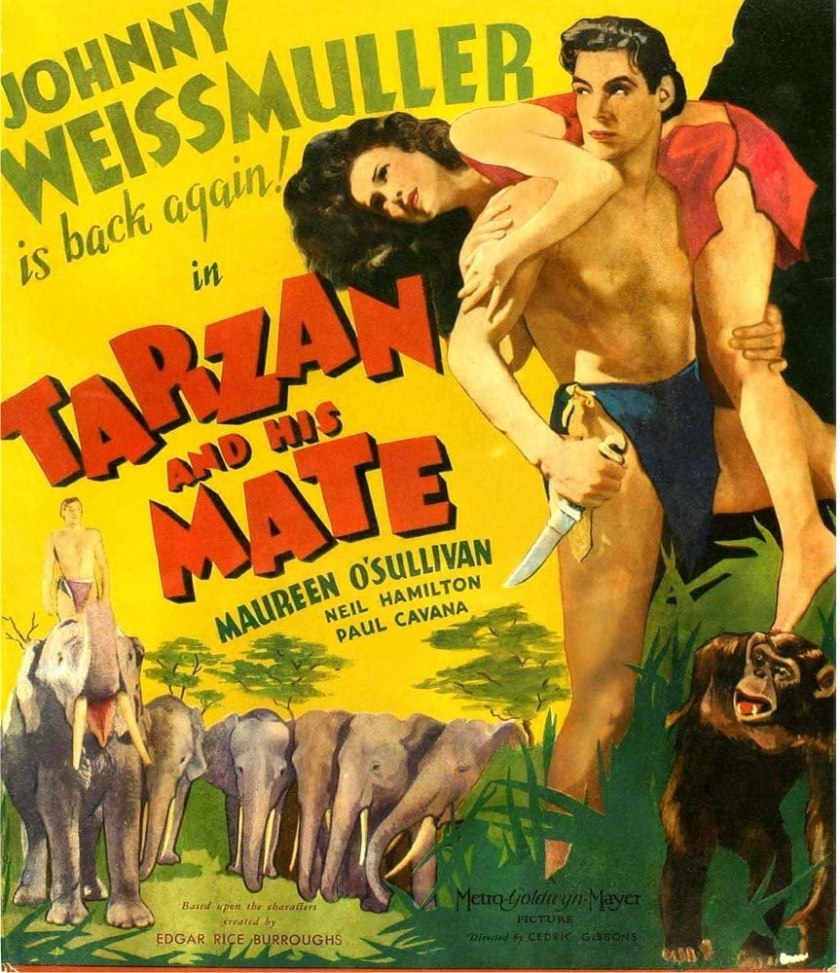
#452) Tarzan and His Mate (1934)

OR “Tumble in the Jungle”

Directed by Cedric Gibbons (and Jack Conway & James C. McKay. More on this later)

Written by James Kevin McGuinness. Based on characters created by Edgar Rice Burroughs.

Class of 2003

Thanks, Katrina!

The Plot: Johnny Weissmuller is Tarzan, the famous literary hero raised by apes in the jungles of Africa. Two years earlier in a previous film, this Tarzan met the civilized Jane (Maureen O’Sullivan), who opted to stay behind and live with Tarzan and his chimpanzee sidekick Cheeta (Himself). Now, Harry Holt (Neil Hamilton), the former business partner of Jane’s father, has returned with Martin Arlington (Paul Cavanagh) on a mission to steal ivory from an elephant graveyard. This plot is held up by plenty of action, lots of animals, a bit of surprisingly risqué chemistry between the two leads, and an embarrassingly large amount of cultural appropriation.

Why It Matters: The NFR gives the film its due as “generally considered the finest in the [Tarzan] series”, and mentions its “rather steamy” production issues.

But Does It Really?: An MGM Tarzan movie should be on this list, and “Tarzan and His Mate” checks off all the boxes. Its depiction of African tribes is downright offensive, and adding a sequel to this list over its predecessor leads to some “Son of the Sheik” style confusion, but overall this Tarzan is a perfect representation of the overall series. No argument for its NFR inclusion, just plenty of concerns over its increasingly problematic elements.

Everybody Gets One: When nine-year-old János Weissmüller contracted polio, his doctor recommended he take up swimming for his health. As an adult, the renamed Johnny Weissmuller competed in the 1924 and 1928 Olympics, earning five gold medals for swimming and breaking several world records along the way. By the early 1930s, Weissmuller was modeling for BVD swimwear and taking acting gigs, leading to a seven-year contract with MGM. The surprise success of 1932’s “Tarzan the Ape Man” catapulted Weissmuller to stardom, and he played Tarzan for 16 more years.

Wow, That’s Dated: Despite being predominantly colonized by European nations in 1934, Africa was (and is) several distinct nations with diverse people and cultures. But Hollywood wasn’t ready for that, opting to depict the continent as one big undeveloped country. With its generic, offensive stereotyping of native tribes, it’s movies like “Tarzan” that set the Civil Rights movement back for decades.

Seriously, Oscars?: None of the 12 Johnny Weissmuller Tarzan films received any kind of Oscar attention. Fun Fact: This movie’s director Cedric Gibbons designed the original Oscar statuette, and would go on to win his own creation 11 times!

Other notes 

  • It’s odd to think that the character of Tarzan hasn’t been around all that long. The first Tarzan story appeared in pulp magazine “The All-Story” in 1912, with the novel “Tarzan of the Apes” published in 1914. The first film came four years later with silent film star Elmo Lincoln in the title role. Tarzan was only 20 years old when MGM started making their films, and author Edgar Rice Burroughs lived to witness the entire Weissmuller era!
  • After the success of 1932’s “Tarzan the Ape Man”, sequel talks between MGM and Burroughs began immediately. Weissmuller and O’Sullivan reprised their roles, and director W. S. Van Dyke was set to return as well, co-directing with legendary production designer Cedric Gibbons. Van Dyke was re-assigned, leaving Gibbons to direct solo. Unhappy with Gibbons running behind schedule and over budget, MGM replaced him with Jack Conway and James C. McKay, with most of the film recast and reshot. Despite over 1000 film credits, “Tarzan and His Mate” is Cedric Gibbons’ sole directorial effort.
  • Despite all the backstage hassles, the film overall is not only cohesive, but treats the subject matter with total seriousness. There are a few light moments, but the film is grounded in the reality of living in the jungle and the dangers inherent.
  • Wow, this movie must have raided every zoo in Los Angeles County. Elephants, chimpanzees, zebras, a rhino; that must have been a logistical nightmare, to say nothing of the smell.
  • I enjoyed Maureen O’Sullivan’s lively, playful performance, but I just don’t see why a sophisticated woman like Jane would live in a jungle with a primate like Tarzan. But then again, this is what most women feel like they do when dating men anyway.
  • And now the reason we’re all here: Produced just as the Hays Code was being implemented, “Tarzan and His Mate” features a nude swimming scene between Tarzan and Jane (although Maureen O’Sullivan is using a body double). It’s excessive but never tasteless, and caused the boys at the Production Code to throw a fit. The Code demanded that the censored version with a fully clothed Jane be implemented during its theatrical run, and the original version disappeared for over 60 years.
  • I love that Jane has her own version of the Tarzan yell that is essentially the Bat-Signal.
  • Speaking of, Neil Hamilton would go on to play Commissioner Gordon in the 1960s “Batman” TV series.
  • Seriously though, why would Jane choose this life for herself? Her love for Tarzan cannot be enough to justify almost being attacked by animals every five minutes.
  • Despite its obvious flaws (and alarming mistreatment of animals), the film does advocate for animal rights and anti-poaching. Now if only this film practiced what it preached, or at least cared about the native African characters as much…
  • The climactic animal attack goes on forever, but is an impressive feat of stunt work, editing, and special effects. Kudos to everyone involved.
  • There’s one male lion in this movie, and I have to assume it’s Leo. He earned his paycheck that week.

Legacy 

  • “Tarzan and His Mate” was the second of six Weismuller/O’Sullivan Tarzan films for MGM. In 1943, the series and Weismuller headed over to RKO for six more outings (O’Sullivan had left the series to raise her family). The series got a little more farfetched with each entry, the final one being 1948’s “Tarzan and the Mermaids”.
  • Many filmmakers have taken a crack at the Tarzan legend over the years. Robert Towne’s more faithful adaptation earned his dog an Oscar nomination (long story), but as per usual, it’s the Disney version that most people are familiar with.
  • Interestingly enough, the Weissmuller Tarzan films helped perpetuate Tarzan as a primitive, monosyllabic simian, a far cry from the more articulate, sophisticated man of the original Burroughs novels. And while we’re at it, at no point does Weissmuller ever say “Me Tarzan. You Jane“.
  • MGM’s “Tarzan” series is the second movie I’ve covered this week that was represented on The Great Movie Ride at Disney World. Dear God do I miss that ride.
  • And of course, Weissmuller’s Tarzan yell (allegedly a spliced-together recording of a soprano, an alto, and a hog caller) is the cultural shorthand for Tarzan, and is often emulated in both parodies and straightforward adaptations.

Further Listening: Not really connected to anything, but I’ve had The Kinks’ “Apeman” stuck in my head during this post’s writing process. It’s a good song, but someone please help.

#451) Alien (1979)

81lrPEEJ2WL._AC_SL1500_

#451) Alien (1979)

OR “Baby on Board”

Directed by Ridley Scott

Written by Dan O’Bannon (with uncredited rewrites from David Giler and Walter Hill). Story by O’Bannon and Ronald Shusett.

Class of 2002

The Plot: Somewhere in the future, the spaceship Nostromo is returning to Earth after extracting ore from a distant planet. The crew (Tom Skerritt, Sigourney Weaver, Veronica Cartwright, Harry Dean Stanton, John Hurt, Ian Holm, Yaphet Kotto) receive a transmission from a nearby moon, and they land to investigate. The moon contains several eggs, one of which hatches and attacks Kane (Hurt). The alien makes its way onto the ship, where it starts murdering the crew one by one. And in the midst of this haunted house in space is the kernels of one of Hollywood’s longest running film franchises.

Why It Matters: The NFR’s writeup for “Alien” is more a critique than a synopsis. Praise is given to Scott, art designer H.R. Giger, the cast, cinematographer Derek Vanlint and composer Jerry Goldsmith, though does point out that the film as a whole is “not particularly original”. Ouch.

But Does It Really?: Oh of course. The film’s first act is incredibly slow by today’s standards, but it ramps up to an intense subversion of what science fiction films can be. Ridley Scott confidently creates the world and populates it with impressive practical effects and great actors, with Sigourney Weaver giving a breakout performance at the center. There’s no way the National Film Registry could ignore a movie as iconic, as memorable, or as perennially exciting as “Alien”.

Shout Outs: Dan O’Bannon has cited “The Thing From Another World” and “Forbidden Planet” (among others) as influences, with Ridley Scott adding “Star Wars” and “2001” as his inspiration. And of course, the film was infamously pitched as “Jaws in Space”.

Everybody Gets One: Of the main cast, this is the only NFR appearance for British mainstays John Hurt and Ian Holm, though with the latter I can’t imagine that will remain the case for much longer. And special mention to Bolaji Bedajo, the 6’10” Nigerian artist who was hired to wear the Alien costume, his unique frame helping to camouflage the “man in a suit” approach.

Wow, That’s Dated: The only major giveaway is the ship’s technology, which is  a combo of early computers and early VCRs. This was, however, intentional to suggest that the Nostromo is an older ship.

Seriously, Oscars?: One of the biggest hits of the year, “Alien” received two Oscar nominations. The film lost Art Direction to “All That Jazz“, but did win for its Visual Effects. Not only was Ridley Scott not nominated for Best Director, but 40 years and four nominations later he is still Oscar-less. Seriously, Oscars?

Other notes

  • You can find minute detail on every aspect of “Alien” online, but we’ll keep things simple here. After making the low-budget sci-fi film “Dark Star“, Dan O’Bannon dreamed of a large-budget alien movie with a scarier, more convincing alien. Collaborating with Ron Shusett, O’Bannon completed the first version of “Alien” and pitched it to several studios. The film was almost made by Roger Corman before being optioned by Brandywine, a company with connections to 20th Century Fox. The screenplay received a massive re-write from new producers David Giler and Walter Hill, though O’Bannon received sole credit in the final film. Director Ridley Scott came on board thanks to his debut film “The Duellists“, and his extensive storyboarding convinced Fox to double the film’s budget.
  • Major kudos to the screenwriters, who purposefully wrote the characters as gender neutral. Ripley was originally written as a male, but thanks to some open-minded casting and a committed performance from Sigourney Weaver, you can’t imagine anyone else in the role.
  • Even in the future, there are strict quarantine procedures. “If we break quarantine, we all die!” What did we do wrong?
  • The most impressive thing about “Alien” is how little actually happens in the first half of the movie. It’s all set-up, but it has a lovely tension that never draws attention to itself, but continues to build throughout. The first major death doesn’t happen until an hour into the movie, and boy is it worth the wait.
  • Spoilers: This is apparently one of 43 films John Hurt made in which his character is killed on-screen. What a legacy.
  • The film’s other impressive masterstroke: never revealing the full alien in one shot. You only get them in snippets; a close-up here, a cutaway there. In addition, the whole film does an excellent job of giving the ship an escalating sense of claustrophobia and darkness, providing the alien plenty of plausible hiding spots. And of course, shoutout to H.R. Giger and his team for their impressive, and very Freudian, alien design.
  • Poor Veronica Cartwright; first “The Birds“, now this. Meanwhile, her sister is one of the Von Trapp children…
  • For me the most interesting thing about the movie is how Ripley emerges as the hero. She starts out as another crew member with some animosity towards her co-workers, but at no point does the movie announce that she will be the protagonist. Ripley rises to the occasion, and becomes the strong yet realistically flawed female lead that all female protagonists strive to be.
  • Another subversion that will relieve most filmgoers: the cat survives. You’re the real hero, Jones!

Legacy

  • “Alien” was a hit, though the sequels were held up by a lawsuit after Fox claimed that the film didn’t make a profit. “Aliens” arrived in 1986 with a new director (James Cameron), and enough iconic moments and imagery for me to occasionally nominate it for NFR consideration.
  • Since “Aliens”, there have been two direct sequels (“Alien 3” & “Alien: Resurrection”), two prequels that allowed Ridley Scott to revive abandoned concepts from the first movie, and two films in which Alien gets into a custody battle with Predator over their eight-year-old son (at least I think that’s what “Alien vs. Predator” is about…)
  • Every Ridley Scott movies is required to have multiple cuts for fans to fight over, and “Alien” received one in 2003. While the “Director’s Cut” features some reinstated footage, Scott also used the opportunity to streamline the whole film,  making its runtime shorter than the original cut! Scott later admitted that the “Director’s Cut” was a marketing ploy, and that his initial cut is “perfect”.
  • “Alien” has been prone to so many parodies over the years. Bonus points are always given if you can get an original cast member to participate, so John Hurt’s cameo in “Spaceballs” takes the prize.
  • Also worth mentioning are the times Sigourney Weaver has voiced a ship computer with ulterior motives. See “WALL-E” and “Futurama”.
  • This is typically where I make a joke about a Fox movie now being a Disney movie and suggesting an inappropriate theme park tie-in, but Disney has beat me to it. Disney actually bought the theme park rights to “Alien” in the early ‘80s with the hope of basing a thrill ride on the film. The idea never came to be, but “Alien” did make an appearance in The Great Movie Ride.
  • And last, but far from least: Shoutout to Barbara Gips (wife of the film’s poster designer Philip Gips) for coining the film’s tagline, “In space no one can hear you scream.”

#450) The Evidence of the Film (1913)

Screen Shot 2020-05-07 at 8.26.05 PM

#450) The Evidence of the Film (1913)

OR “Caught on Camera’s First Episode”

Directed by Lawrence Marston and Edwin Thanhouser

Class of 2001

The Plot: A dishonest broker (William Garwood) plots to steal $20,000 in bonds, and frames an innocent film studio messenger boy (Marie Eline) for the crime. But what the broker doesn’t realize is that he committed his crime while a film crew was shooting outdoors, and the messenger boy’s sister (Florence La Badie) – a film editor for the studio – finds the footage of the broker. Turns out these newfangled “motion pictures” can help solve crimes too! This changes everything!

Why It Matters: The NFR write-up is an overview of the long-gone Thanhouser Company, with praise to founder/co-director Edwin Thanhouser’s “command of visual storytelling that rivals D.W. Griffith’s.” There’s also an essay by Edwin’s grandson Ned.

But Does It Really?: Like many of the early shorts on this list, “Evidence of the Film” is on here a) for what it represents and b) because it was a “lost film” for many years. On its own the film is unmemorable save for the then-novelty ending, but “Evidence” is one of the sole survivors from the short-lived Thanhouser Company film library. As a historical document, “Evidence” is a reminder that the early years of filmmaking were filled with studios that fell as quickly as they rose, and not just the handful of filmmakers we remember now. “Evidence” is on here purely for its historical significance, but that makes it no less worthy than some of the list’s more popular entries.

Everybody Gets One: Thanhouser Company was founded in 1909 in a converted skating rink in New Rochelle, New York. As the aforementioned essay explains, Thanhouser had a lot of interplay with other studios of the day, including Mutual Film and D.W. Griffith. One of the biggest stars of Thanhouser was Florence La Badie, seen here as The Film Editor, who tragically died in a car accident just weeks after leaving the studio. 

Wow, That’s Dated: This film’s plot hinges on the profession of delivery boy, as well as the untapped potential of film technology. Also, that $20,000 heist would be over $500,000 today!

Other notes 

  • Is no one going to acknowledge that the Messenger Boy is played by a girl? Marie Eline was a mainstay at Thanhouser, even dubbed “The Thanhouser Kid”, so why not just make the character female?
  • If nothing else, this film shows just how many women worked behind the scenes as film editors even back in the 1910s. These women paved the way for the likes of Margaret Booth, Anne V. Coates, Thelma Schoonmaker, and Sally Menke, to name just a few.
  • Of course film as evidence is the real hero of this story, but it helps that The Broker is a very dumb criminal. 

Legacy

  • Thanhouser had a successful first few years, but then the studio was hit with several problems. Within a few years Thanhouser was sold to Mutual Film, had its main studio destroyed in a fire, and was run by a series of indecisive leadership before being liquidated in 1920. Of the over 1000 films made by Thanhouser, less than 60 survive. 1912’s “The Cry of the Children” would also make it into the NFR in 2011.
  • As previously stated, “The Evidence of the Film” disappeared and was deemed lost, until discovered in 1999 on a projection booth floor in Superior, Montana. The fact that the film made the National Film Registry two years later is not a coincidence.
  • And of course, this is the film that presaged security cameras, and the hilarity that ensues from that footage.

450 films: it’s not so much a milestone as it is a checkpoint before 500. Anyway, thanks for reading!

Tony 

#449) Shaft (1971)

MV5BMGY2MDFlMTAtODU3NS00MDkxLThiMTItMTBlMDliNmMwOGQxXkEyXkFqcGdeQXVyMjI4MjA5MzA@._V1_

#449) Shaft (1971)

OR “Stop! Or This Mother Will Shoot”

Directed by Gordon Parks

Written by Ernest Tidyman and John D.F. Black. Based on the novel by Tidyman.

Class of 2000

The Plot: Richard Roundtree is John Shaft, the black private dick that’s a sex machine to all the chicks. Shaft is summoned to the office of Harlam’s organized crime boss Bumpy Jonas (Moses Gunn), who hires Shaft to track down his kidnapped daughter Marcy (Sherri Brewer). Shaft uses his connections with the police department as well as with other gangs to track down the kindappers, learning in the process about an all-out race war the local Mafiosi is planning. Luckily, Shaft is the cat that won’t cop out when there’s danger all about.

Why It Matters: The NFR praises the film’s “vibrant life”, highlighting Gordon Parks, Richard Roundtree, and composer Isaac Hayes.

But Does It Really?: It’s far from a perfect movie, and the blaxploitation genre is a tricky one to discuss through a modern lens, but if you’re willing to go along with it, “Shaft” manages to still be a fun ride 50 years later. In an era dominated by anti-heroes and racial oppression, Shaft tows the line as a strong African-American lead who talks back to the white establishment, solves the mystery, and gets the girl (several girls, actually). Everything about “Shaft” has remained iconic after all these years, from Richard Roundtree’s performance to Isaac Hayes’ unforgettable opening number. No argument here for the inclusion of “Shaft” on the NFR.

Shout Outs: One of Bumpy’s henchmen calls Shaft “Snow White”. Plus be on the lookout for “MASH” and “Patton” playing on a double bill.

Everybody Gets One: Richard Roundtree was one of the first members of New York’s Negro Ensemble Company, and “Shaft” was his first starring role in a movie, and only his second film! Although he will always be John Shaft, Roundtree has spent the last 50 years working in both film and television.

Wow, That’s Dated: “Shaft” is one of several NFR entries that highlight the gritty, dirty New York of the 1970s, to say nothing of the complex race relations of the immediate post-Civil Rights era.

Title Track: Isaac Hayes auditioned to write the score for “Shaft” by composing the opening sequence. The producers loved Hayes’ submission, and he got the job. The opening theme was originally an instrumental, and MGM requested that Hayes write some lyrics. Hayes jotted down the lyrics in 20 minutes, and the rest is history.

Seriously, Oscars?: “Shaft” was an unexpected hit, and saved MGM from bankruptcy (for the time being). Isaac Hayes received two Oscar nominations for the film; he lost Original Score to Michel Legrand for “Summer of ‘42” (seriously, Oscars?), but “Theme from Shaft” won Best Song, making Hayes the first African-American to win the award. Hayes’ performance of the song on the Oscar telecast is still considered one of the best musical numbers in Oscar history (low bar, but still…).

Other notes

  • “Shaft” is a total 180 from Gordon Parks’ other NFR entry; the gentle coming-of-age drama “The Learning Tree“. Parks said he chose “Shaft” as his next film to prove to studio heads that he could direct a wide variety of films. Parks’ single greatest artistic choice was casting a black actor as Shaft (the character was white in the original novel). This was a conscious effort by Parks to “appeal to a black urban audience, along with contiguous white youths.”
  • What can I say about that opening? Roundtree makes the simple act of walking look impossibly cool, and Hayes’ song amps everything up. Side Note: Look for a copy of Essence Magazine in the newspaper stand. The magazine was co-founded by…Gordon Parks! Man, he had a finger in every pie!
  • Speaking of, Parks’ former life as a photographer comes through in the film’s distinctive but never distracting cinematography, courtesy of cinematographer Urs Furrer. Like Hayes’ score, Furrer’s camera always presents Shaft as a man on the move.
  • Shoutout to Off-Broadway legend Moses Gunn, giving a nice noir touch to Bumpy Jonas.
  • This movie does not shy away from the complexity of Shaft working within a predominantly white police force. Part of Shaft’s relatability is his outsider status to everyone in this movie: the black characters feel he’s sold out to the white characters, and the white characters refuse to see him as their equal. It’s a tricky line to walk, but Roundtree covers it without evoking false sympathy for the character.
  • Stage actor Rex Robbins plays Rollie, one of the first openly gay characters in a mainstream movie. Sure, he’s a one note stereotype, but in the age of “The Boys in the Band” this is as good as it gets.
  • The rescue mission finale may be a bit extreme, but it’s also a lot of fun. You’ve spent all this time with Shaft and seen what he’s up against, and this all culminates in a very satisfying ending.

Legacy

  • While not the first blaxploitation movie (Hey there, “Sweet Sweetback”), “Shaft” was the first to have crossover success, and greatly influenced the genre. Many will look to the work of Pam Grier and Melvin Van Peebles, but I, as always, will single out “Blacula”. It’s the King of Cartoons, you guys!
  • “Shaft” received two immediate follow-ups, both with Roundtree reprising his role. Like many a sequel to a classic movie, “Shaft’s Big Score!” and “Shaft in Africa” saw diminishing returns compared to the original.
  • Richard Roundtree also returned to play Shaft in the 1973 TV series of the same name. The subject matter was toned down for primetime CBS, and the series was cancelled after seven episodes.
  • “Shaft” has had not one, but two soft reboots. The 2000 update (also called “Shaft”) saw Samuel L. Jackson as the nephew of Richard Roundtree’s Shaft. The 2019 update (also called “Shaft”) saw Jesse T. Usher as the son of Samuel L. Jackson’s Shaft, and the grandson of Richard Roundtree’s Shaft (retconning their relation in the 2000 film). Neither of these reboots caught on with moviegoers.
  • And of course, Isaac Hayes’ career skyrocketed following the success of “Shaft”, and while he had an over 30 year run as a composer and musician, he is probably best remembered as Chef from “South Park”.

Listen To This: Unsurprisingly, the original soundtrack of “Shaft” is on the National Recording Registry. The Registry’s write up calls the album “as innovative and exciting as the film”, and includes an essay by Blaxploitation expert Josiah Howard. Right on.

Further Viewing/Listen To This, Too!: Gordon Parks’ son, Gordon Parks Jr., also made a popular, influential blaxploitation film: 1972’s “Super Fly”. The film itself has yet to make the Registry, but its soundtrack made the National Recording Registry in 2018.

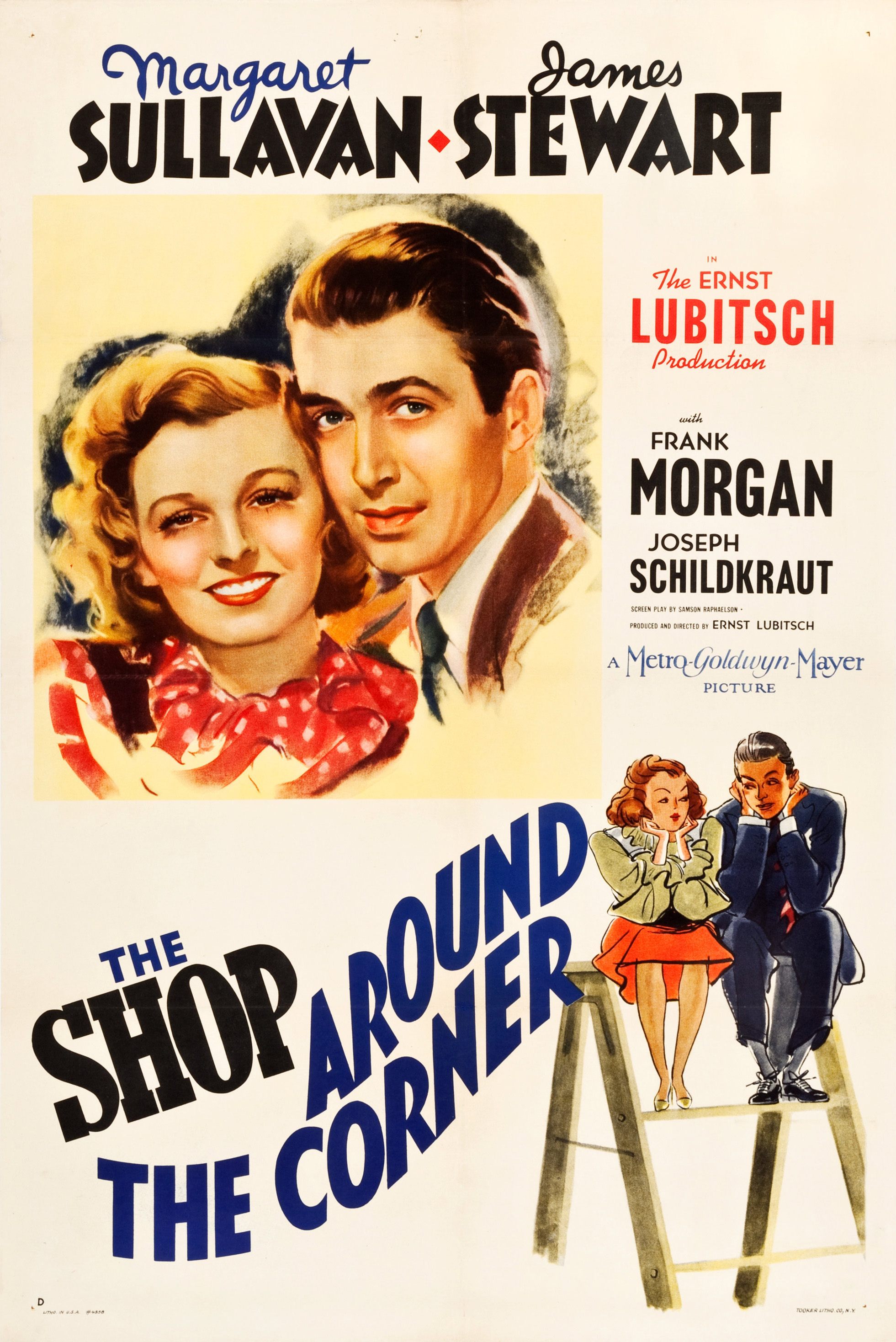
#448) The Shop Around the Corner (1940)

5535EB5C-C8DD-4AF2-8541-02351A56E4E6
#448) The Shop Around the Corner (1940)

OR “Love at First Draft”

Directed by Ernst Lubitsch

Written by Samson Raphaelson. Based on the play “Parfumerie” by Miklós László.

Class of 1999

The Plot: The shop of the title is a leathergoods store in Budapest, Hungary run by Hugo Matuschek (Frank Morgan). New hire Klara Novak (Margaret Sullavan) impresses everyone except longtime employee Alfred Kralik (James Stewart), and the two constantly clash. What neither of them realizes is that they are each other’s anonymous pen pals, trading love letters that begin with a simple “Dear Friend”. As Matuschek gets ready for a busy holiday season, Alfred and Klara learn to respect each other at work, while continuing to fall for each other over their correspondence. It’s a classic rom-com setup that can only be improved by the Lubitsch touch.

Why It Matters: The NFR calls the film one of Lubitsch’s “most enduring work” and gives a rundown of plot and subsequent remakes. There’s also an essay by writer and film expert Kevin Bahr.

But Does It Really?: “Shop Around the Corner” is definitely a minor classic, but still a wonderfully enjoyable film. The film’s ‘90s remake is better known today, and while it comes close, it can’t top this film’s genuine warmth and wit. “Shop” isn’t an essential in film history, but its pleasant presentation, as well as its ongoing legacy, has ensured it a welcomed spot on the Registry.

Everybody Gets One: Stage actor Margaret Sullavan only agreed to sign with the film studios (“jails” as she called them) on the condition she could continue to pursue the theater as well. Despite much acclaim (and an Oscar nomination for 1938’s “Three Comrades”), Sullavan only made 17 films in her lifetime, four of them with James Stewart, whom Sullavan helped turn into a star. She could be temperamental (allegedly she was the only person Louis B. Mayer was afraid of), and her later tragedies have overshadowed her filmography, but thankfully “Shop Around the Corner” survives and helps preserve a brief yet important acting career.

Wow, That’s Dated: Well obviously the concept of being anonymous pen pals through snail mail, as well as the gender politics of the ‘40s. And this time on “We Suck at Inflation”: Albert’s monthly salary of $200 a month would be $3600 today!

Seriously, Oscars?: Despite the healthy Oscar turnout for Lubitsch’s previous film, “Ninotchka”, “The Shop Around the Corner” was completely ignored at the 1941 ceremony. My guess: the movie’s January release sunk its chances. MGM’s Best Picture contender that year was “The Philadelphia Story”, which would earn James Stewart his only competitive Oscar.

Other notes

  • A sign of Margaret Sullavan’s star power at the time: she gets top billing over Jimmy Stewart, whose star-making turn in “Mr. Smith” was released during this film’s production.
  • The cast is filled with the kind of rich supporting players you come to expect from the classic studio films. Frank Morgan is giving as flustered and touching a performance as he does in “The Wizard of Oz”, and Joseph Schildkraut’s brown-nosing Ferencz Vadas is a full 180 from his Oscar-winning turn in “The Life of Emile Zola”. And special mention to Lubitsch regular Felix Bressart, who looks like an older Groucho Marx.
  • This movie does an excellent job of portraying the oft-frustrating world of customer service. From impossible customers to complex co-worker relationships and cryptic bosses, working retail has not changed too much in 80 years.
  • This entire film takes place in Budapest’s famous “No Accent” district.
  • Margaret Sullavan has an excellent grasp on this movie’s dialogue; she makes it come across as genuinely clever, rather than spouting a screenwriter’s honed wit. And if she can sell the movie’s musical cigar box, she could sell a pen to Leonardo DiCaprio!
  • In one early scene, Jimmy Stewart and Frank Morgan do the perfect synchronized double take. Forget the Oscars, give them an Olympic medal.
  • Best line in the movie: “Keep the change, send your boy to college.”
  • Things take a dark turn as Mr. Matuschek learns of his wife’s infidelity and attempts suicide. Wasn’t there a love story in this movie? I guess I should have expected this darkness within a comedy from the man who would bring us “To Be or Not To Be”.
  • The joy in the movie is watching Jimmy Stewart interact with Margaret Sullavan once he finds out she’s his pen pal. Each scene plays out with these two characters’ predicaments perfectly defined, making for a nuanced, fun viewing.
  • Klara corrects Albert on his error that Emile Zola wrote “Madame Bovary”. Perhaps Vadas can recommend a few Zola titles.
  • The best shot in the movie is the wonderfully cinematic shot of Klara finding an empty PO box, filmed from behind the PO box, focusing solely on Klara’s hand as she reaches in. It’s lovely.
  • As expected, Jimmy Stewart’s natural sweetness helps smooth his character’s rough edges. Albert could have definitely been a bigger jerk if played by someone else.
  • I didn’t realize Jimmy Stewart has another Christmas movie. And this one spends more time in the holiday season than just the last 10 minutes.
  • “The Shop Around the Corner” ends the way all good movies should end, with Jimmy Stewart showing off those gams!

Legacy

  • While the original play of “Parfumerie” seems to have disappeared, its musical adaptation lives on. Just before penning their career defining “Fiddler on the Roof”, Jerry Bock & Sheldon Harnick composed “She Loves Me”, which still enjoys revivals over 50 years later.
  • MGM, always quick to remake a story they already owned, turned “Shop Around the Corner” into the 1949 Judy Garland musical “In the Good Old Summertime”. The story is transplanted to Chicago, and offers a brief uncredited film debut by three-year-old Liza Minnelli.
  • But the film’s most memorable remake came in 1998, with Nora Ephron’s “You’ve Got Mail”, starring Meg Ryan and Tom Hanks (aka his generation’s Jimmy Stewart). The story became about two rival bookstore owners who bond anonymously over the internet. Ah, we were so innocent then.

Further Reading/Viewing: Margaret Sullavan’s daughter Brooke Hayward (a successful actor in her own right) wrote the 1977 memoir “Haywire” about her mother and their difficult family life. The book was a bestseller, and is considered far superior to the “Mommie Dearest”-style tell-alls of the time. “Haywire” was later turned into a TV movie starring Lee Remick and Jason Robards.