#689) Apollo 13 (1995)

#689) Apollo 13 (1995)

OR “Moon for the Missed-Their-Shot Men”

Directed by Ron Howard

Written by William Broyles Jr. & Al Reinert. Based on the book “Lost Moon: The Perilous Voyage of Apollo 13” by Jim Lovell and Jeffrey Kluger.

Class of 2023

The Plot: In April 1970, Apollo 13 becomes the latest NASA mission to the moon in the wake of 1969’s historic Apollo 11. After a few last-minute changes, the crew for the Apollo 13 mission are Commander Jim Lovell (Tom Hanks), Command Module Odyssey pilot Jack Swigert (Kevin Bacon), and Lunar Module Aquarius pilot Fred Haise (Bill Paxton). Lovell in particular is excited to finally fulfill his dream of walking on the moon, having orbited around it on Apollo 8. After a successful launch, a routine check of the oxygen tank stirring fans causes an electrical short, which depletes most of the ship’s oxygen and power. With the guidance of Mission Control in Houston led by Flight Director Gene Kranz (Ed Harris), the moon mission is aborted, and a race against time begins to get the astronauts back to Earth before they run out of oxygen. In other words: Now the story of several astronauts who lost power, and the Mission Control who had no choice but to bring them home. It’s “Apollo 13”.

Why It Matters: The NFR throws a ton of superlatives at everyone involved with “Apollo 13”, including Ron Howard’s direction (“equally meticulous and emotional”), the cast (“talented”), the script (“well-paced”), and the special effects (“crafty”).

But Does It Really?: I had never seen “Apollo 13” before this viewing, and I really enjoyed it. With “Apollo 13” Ron Howard takes an oft-overlooked bit of American history and turns it into an exciting, dramatic crowd pleaser. Key to this success is Howard’s balancing of technical and historical accuracy without compromising the human elements, keeping those of us with zero NASA knowledge engaged by these real people in real peril. “Apollo 13” also made me nostalgic for the kind of big-budget, well-crafted, non-IP studio movie that rarely gets made nowadays (outside of something like “Oppenheimer”). With its exceptional roster of talent both in front of and behind the camera, “Apollo 13” is a movie that works on every front and has stuck around long enough in pop culture that its NFR inclusion is more than justified.

Shout Outs: A quick reference to “2001” by Jim while inside the Odyssey, which makes sense.

Everybody Gets One: Ron Howard is already on the NFR as an actor, but this is his first Registry movie as director. Even in his child actor days Howard knew he wanted to direct, so in 1976 when Roger Corman approached the 22-year-old Howard about starring in the car movie “Eat My Dust!”, Howard agreed on the condition that Corman finance his directorial debut “Grand Theft Auto” (Corman also pops up in “Apollo 13” as a congressman touring NASA). After a run of TV movies, Howard returned to theatrical film in the 1980s with such hits as “Splash”, “Cocoon”, “Willow”, and “Parenthood”. Howard signed on to “Apollo 13” after his longtime business partner Brian Grazer secured the film rights to “Lost Moon”. Also making their NFR debuts are the movie’s screenwriters: William Broyles Jr. (former Marine Corps officer and creator of “China Beach”) and Al Reinert (director of the Apollo documentary “For All Mankind”).

Wow, That’s Dated: A credit that could only exist in the ’90s: “Vocal performance by Annie Lennox”.

Seriously, Oscars?: One of the biggest hits of the year, “Apollo 13” received nine Oscar nominations, one behind that year’s eventual Best Picture winner: “Braveheart”. “Apollo 13” lost in seven categories to seven different movies, but did win in two categories: Film Editing and Sound. The biggest outcry was reserved for Ron Howard, who did not receive a Best Director nomination.

Other notes

  • Our opening exposition dump comes courtesy of trusted news anchor Walter Cronkite, narrating a recap of NASA and the Apollo missions up to 1969. It’s the movie’s first bit of nostalgia, in this case for a time when you could trust your news anchor. Cronkite also re-recorded some of his original Apollo 13 news coverage for the film.
  • It must feel like you’ve won the lottery when Tom Hanks agrees to play you in a movie. As Jim Lovell, Hanks gives him a degree of charm and charisma that only he possesses as an actor. Hanks has subsequently brought that movie star appeal to such historical figures as Walt Disney, Fred Rogers, and Colonel Tom Parker (okay, maybe Parker’s a bad example).
  • I won’t go into every difference between the actual Apollo 13 mission and the film version. Suffice it to say that like many a historical movie, the main details are accurate, with some events streamlined or dramatized for a clearer narrative. Among the bigger divergences is the portrayal of Jack Swigert, who in real life was nowhere near as green as Kevin Bacon’s portrayal. In fact, the real Swigert wrote the malfunction procedures for NASA’s command modules, including the Odyssey. Side note: Despite his popular distinction as “Center of the Movie Universe”, this is only Kevin Bacon’s second NFR appearance (the other is “Animal House“).
  • Gary Sinise doesn’t get a heck of a lot to do as grounded pilot Ken Mattingly, but Sinise was offered any role he wanted and picked Mattingly, so I guess he knows what he’s doing. I’m just glad that Lieutenant Dan kept his word to Forrest Gump.
  • It’s hard not to watch this movie without making the inevitable comparisons to “The Right Stuff“. It helps, however, that the two movies are more companion pieces than direct remakes, each covering neighboring but different eras in NASA history. As best I can tell, the only historical figure in both movies is Deke Slayton, one of the original Mercury Seven astronauts and later NASA’s Chief of the Astronaut Office. Slayton is played by Scott Paulin in “Right Stuff” and Chris Ellis in “Apollo”.
  • Your movie isn’t set in the late 1960s until you play Jefferson Airplane’s “Somebody to Love”. It’s the law.
  • The launch sequence gave me genuine chills. Much like the send-off scene in “Titanic“, Howard conveys the sense of awe and wonder of this historic launch, mixed with the tension and uncertainty of the crew’s later problems.
  • This movie’s Mission Control is White Guy Character Actor Central. Led by the always great Ed Harris in a commanding yet understated performance, you also get the likes of Marc McClure, Joe Spano, Christian Clemenson, Loren Dean, Xander Berkeley, and Clint (brother of Ron) Howard. Special mention to Jim Meskimen, the real-life son of Ron Howard’s former TV mom Marion Ross. Does that make them stepbrothers?
  • Clint’s not the only member of the Howard family in this movie. Ron’s mother Jean plays Jim’s mother, Ron’s father Rance is the minister watching the mission with the Lovells, and among the background extras the night before the launch are Ron’s wife Cheryl and their then-14 year old daughter Bryce Dallas Howard.
  • Everything about this movie is A+, but the special effects are outstanding. Most early ’90s CG tends to stick out nowadays, but the effects of the modules in space still hold their own. This movie is also famous for partially filming in a reduced-gravity aircraft for several shots of the astronauts floating inside the modules. By the way, “Apollo 13” was Oscar-nominated for its Visual Effects, but you know what it lost to? “Babe”. That’s right, the talking pig movie. Seriously, Oscars?
  • This movie’s most iconic line is a prime example of Screenplay Adaptation 101. In real life, Lovell repeated Swigert’s communication to Ground Control, “Houston, we’ve had a problem”. The screenplay punch-up is Jim alone telling them, “Houston, we have a problem”, a more dramatic version of the same thing.
  • Shoutout to Kathleen Quinlan, who gets more to do as Marilyn Lovell than all the wives in “The Right Stuff” combined. Most of Quinlan’s performance is reacting to updates on her husband’s mission, but she nails it, giving the movie its beating heart. Quinlan’s first movie role was in “American Graffiti“, and I’m glad Ron remembered his old castmate.
  • I don’t know why, but the fantasy sequence of Jim walking on the moon reminded me of that moon song Ernie used the sing on “Sesame Street”. Anyone else?
  • The movie’s other iconic line, Kranz’s declaration that “Failure is not an option”, was created specifically for the film. The screenwriters interviewed flight controller Jerry Bostick (played in the movie by Ray McKinnon) about his experience during Apollo 13. Bostick informed them that during this entire mission, “we just calmly laid out all the options, and failure was not one of them.” The real Gene Kranz liked the line so much he used it as the title of his memoir.
  • Serving as a wonderfully cinematic counterpart to the launch sequence, the re-entry of the Odyssey is wonderfully tense. Even with the knowledge of how it ended in real life, I caught myself holding my breath, with an immediate cathartic exhale once we finally hear from the astronauts. Also, keep an eye out for the real Jim Lovell as the captain of the USS Iwo Jima who shakes movie Jim Lovell’s hand.
  • Nice workaround with the obligatory epilogue text; Tom Hanks narrates it in character as Jim, giving us a rundown of what happened to everyone, and wondering if we will ever get back to the moon. Who wants to break it to him that the only people going to the moon nowadays are self-indulgent tech billionaires having the most expensive mid-life crisis ever?
  • I’ve said it before and I’ll say it again: Where were the “Hidden Figures” ladies during all of this? I bet they would have solved this whole thing in about 20 minutes.

Legacy

  • Ron Howard’s directing career has steadily continued over the last 30 years with such films as “How the Grinch Stole Christmas”, “Frost/Nixon”, the underrated “EDtv”, and “A Beautiful Mind” which won him his Best Director Oscar.
  • Tom Hanks would go on to play another real-life pilot who helps land a vehicle in a life-or-death situation in 2016’s “Sully”.
  • While NASA has never done another Apollo-level mission to the moon, we did get the Mission: Space ride at EPCOT, which features Gary Sinise in the pre-show, so that’s something.
  • Clint Howard would spoof his own “Apollo” performance in all three “Austin Powers” movies. “In many ways, the Big Boy never left, sir. He’s always offered the same high-quality meals at competitive prices.”
  • “Apollo 13” still gets mentioned quite a bit in pop culture, with one of the more recent homages coming from none other than Bryce Dallas Howard. A terrific director in her own right, Ms. Howard has helmed – among other things – an episode of “The Mandalorian” which has a re-entry scene that is almost shot for shot the “Apollo 13” re-entry scene.
  • The film’s main legacy is, of course, the quote “Houston, we have a problem.” Anything even vaguely connected to astronauts and/or space travel has referenced that line. Heck, I’ve quoted it on this very blog!
  • Perhaps the film’s biggest unintentional impact on our culture: In 1997, computer scientist Reed Hastings returned his Blockbuster-rented VHS of “Apollo 13” six weeks late, accruing a $40 late fee. Theorizing there must be a better way to rent movies, he and co-worker Marc Randolph created a video rental-by-mail system they dubbed “Netflix”. And now you know the rest of the story!

Further Viewing: “Marooned”, John Sturges’ drama also about three astronauts potentially stranded in space, released four months before the Apollo 13 mission (In fact, “Marooned’ won the Oscar for its Visual Effects four days before the Apollo 13 launch). It’s the movie that gave Marilyn Lovell nightmares about her husband’s mission, as depicted in “Apollo 13”.
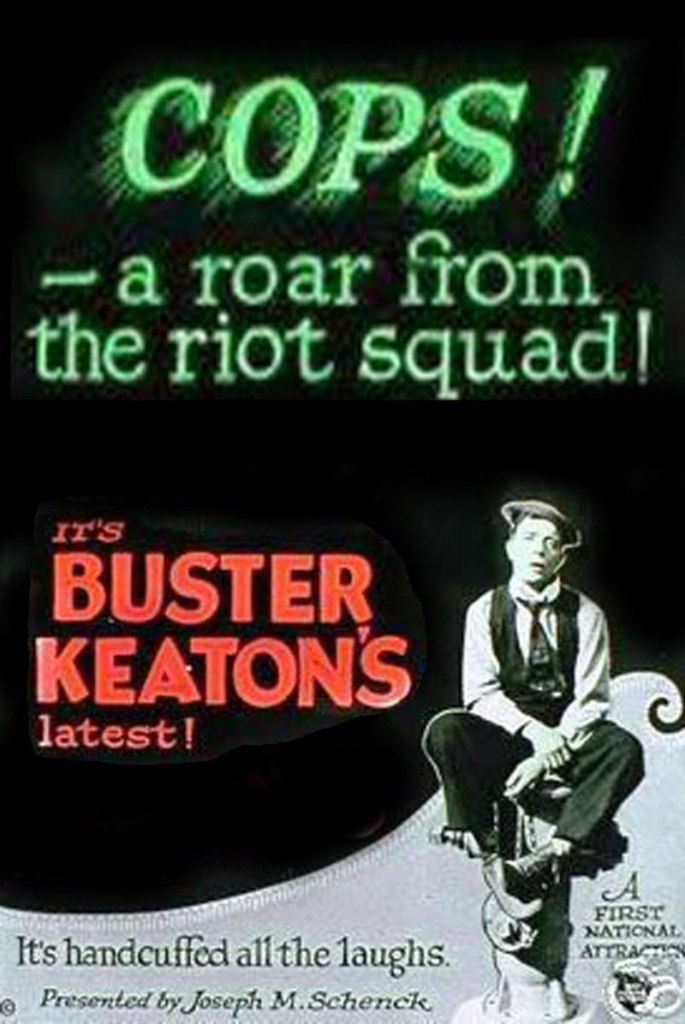
#688) Cops (1922)

#688) Cops (1922)

OR “Law & Disorder”

Directed & Written by Buster Keaton and Edward F. Cline

Class of 1997

The Plot: Buster Keaton plays – as usual – a lovelorn sad sack trying to woo a young woman (Virginia Fox), who won’t be with him until he has become “a big business man”. Within a few short scenes, Keaton steals a rich man’s wallet, is conned into buying furniture from a seemingly destitute man (Steve Murphy), buys a horse and carriage that aren’t for sale, gets mistaken for a mover by the man who actually owns the furniture (Joe Roberts), crashes a policemen parade, sets off a bomb, and is chased through town by hundreds of cops. And all in 18 minutes!

Why It Matters: The NFR calls it “one of Buster Keaton’s best short films”, praising his “popular blending of athleticism and his unique stone-faced comedic style.” An essay by AMPAS archivist Randy Haberkamp is a love letter to the short, with an encouragement to see it on a big screen as intended.

But Does It Really?: I’ll try not to make this another gushfest, but this may be the funniest short I’ve gotten to watch for this blog. Keaton has quickly become my favorite of the silent film comedians, and “Cops” once again delivers a generous helping of his trademark inventiveness and laugh-out-loud gags. There’s definitely a lot of Keaton on the Registry (five features, two shorts, plus his cameo in “Sunset Boulevard“), but “Cops” shows us just how good he was right from the start. No argument from me for the NFR inclusion of “Cops”.

Wow, That’s Dated: The one joke that I needed to have explained to me is when Buster accidentally takes his horse to a “Goat gland specialist”. This is a reference to John R. Brinkley who was – according to the first sentence of his Wikipedia page – “an American quack.” Brinkley’s claim to fame was promoting the use of goat glands to cure erectile dysfunction, which got him nationwide notoriety despite the abundance of scientific evidence proving this procedure was a load of crap. Brinkley came to Los Angeles in 1922, so the reference to him in “Cops” is extremely topical.

Other notes

  • A quick word on Buster Keaton: Buster was born to vaudeville-performing parents, and by the time he was three was recruited to join the act, learning how to perform comedy (both verbal and physical) at a young age. By the late 1910s, the slow death of vaudeville (mixed with his father’s alcoholism) threatened to end the Keaton family’s act, and Buster knew a career pivot was in order. While in New York, Buster met Roscoe Arbuckle, who convinced a reluctant Buster to act in short comedy films. Arbuckle’s producer Joseph Schenck was so impressed with Keaton that in 1920 he gave Keaton his own independent film unit: Buster Keaton Productions. From 1920 to 1923, Keaton wrote, directed, and starred in 19 shorts. The first was fellow NFR entry “One Week” in 1920, and “Cops” was the twelfth.
  • Interestingly, Buster Keaton is credited here as “Buster” Keaton. Born Joseph Keaton (like his father), he earned the nickname “Buster” as a child (the word “buster” has had several meanings at various times; its usage here could be to describe an extraordinary occurrence, a bad fall, or a very sturdy child). It’s interesting that someone felt the need to put Buster in quotation marks, as if to tell audiences, “Don’t worry, he has a Christian name, too.”
  • While it’s easy to give Keaton all the credit, we can’t forget his collaborator Edward F. Cline. Cline started off as a gagman for Mack Sennett and was hired by Keaton to work with him once he got his own production unit. The two co-wrote and co-directed all of Keaton’s shorts, as well as his first feature, “Three Ages”. Post-Keaton, Cline had a successful solo directing career, including several films with W.C. Fields. Cline and Keaton reunited in the 1950s when Keaton made the move to television.
  • I’ve been holding off writing about “Cops” in more detail because what is there to say? I found the whole thing unequivocally funny. The opening bit with the wallet? Funny. Keaton buying a horse and taking the family’s stuff? Hilarious. Keaton inventing a turn signal with a boxing glove and accidentally punching a cop? Side-splittingly funny. It all works. Well, except the goat gland bit that had to be explained to me. But now even that part is funny…in theory.
  • Admittedly, things slow down a bit in the middle, but once Keaton wanders into the police parade and inadvertently sets off a bomb, the short goes into full Keystone Cops mode. This also prompts the best line in the short: “Get some cops to protect our policemen!”
  • I won’t spoil the ending, but it’s a fun twist for an old comedy short. Just watch it. Seriously, the whole thing is only 18 minutes and very easy to find online. What else are you doing?

Legacy

  • Within a year and a half of “Cops” being released, Keaton would make the jump to feature films, with his first feature – “Three Ages” – being released in September 1923.
  • As with most of Buster Keaton’s other iconic works, “Cops” is primarily remembered as part of the collective Buster Keaton filmography rather than as an individual entity. If you’ve seen one clip from this movie, it’s either Keaton being chased by a mob of police officers (as seen in “Precious Images“) or quickly grabbing hold of a moving vehicle and being whisked away (a bit emulated in many a film and TV show since).
  • And finally, “Cops” is of no relation to “COPS” the FOX TV show. But hey, it’s a good excuse for me to play “Bad Boys”. 

“Cops” was filmed on location with the men and women of Buster Keaton Productions. All fictional protagonists are innocent until proven guilty in a court of law.

#687) Fuentes Family Home Movies Collection (c. 1928 – c. 1938)

#687) Fuentes Family Home Movies Collection (c. 1928 – c. 1938)

OR “Deep in the Heart of Tex-Mex”
Filmed by Antonio & Josefina Fuentes

Class of 2017

My thanks to the Texas Archive of the Moving Image (TAMI) for preserving these home movies. You can view them on the TAMI website.

The Plot: Filmed in the border town of Corpus Christi, Texas, the Fuentes family home movies are…well, home movies. As portable cameras were starting to become more accessible, Antonio and Josefina Fuentes spent the 1920s and 1930s documenting various holidays and trips, almost all of them with their adorable kids running around being cute. At face value these home movies are no different than many other families of the time, but historically they showcase a Mexican-American community forming and growing on the border of the Lone Star state.

Why It Matters: The NFR calls this collection “a priceless snapshot of time and place” that are “among the earliest visual records of the Mexican-American community in Texas”.

But Does It Really?: I was definitely on the fence about this one. We have plenty of home movies on this list already (heck, there’s another home movie filmed in Texas on the list), do we need another one? But as usual, my research led me to the Center for Home Movies, which features an essay by TAMI founder Dr. Caroline Frick that makes a compelling argument for this collection’s inclusion. As with so many movies on this list, the Fuentes family home movies are on the NFR not for what they are, but what they represent: in this case a documentation of a Mexican-American community in a Texas border town in its early stages, presented in a positive light, free from the harmful stereotypes of mainstream media. A very slight pass for “Fuentes Family” on the NFR, but I think I’ll take a break from home movies for a while. 

Everybody Gets One: Once again, my thanks to the Frick essay which has the most thorough information about the Fuentes family I could find online. Born in Montemorelos, Nuevo León, Antonio Fuentes moved to Texas some time in the early 1900s, settling in Corpus Christi in the 1910s. While working as the town’s Mexican consulate, Antonio met Josefina Barrera, and the two married in 1918. They had five children: Ruben, Ophelia, Mercedes, Antonio Jr., and Carmen, all of whom show up in the home movies. At some point in the late 1920s, Antonio purchased a Pathe Baby 9.5mm camera, one of the first portable and affordable movie cameras, and started filming his family.

Other notes

  • All told, the Fuentes family home movies are six reels totaling 16 minutes in runtime. The Frick essay mentions that there are 15 reels, but all my other research indicates that the Fuentes collection is just the six films available online. I’m grateful for how short this collection is (compared to the other home movies on this list) but who knows; This may turn out to be a placeholder post after all.
  • Interestingly, almost every film ends with the Pathe logo. Was it imbedded into their film stock? Or was it added after the film got processed?
  • Thanks to the Fuentes documentation of Christmas morning 1928, this movie qualifies for my “Die Hard Not Christmas List“. Always fun to give that an update.
  • A good chunk of these home movies is devoted to the 1929 4th of July parade in downtown Corpus Christi. Among the local organizations represented with floats and/or marchers are two Mexican-American civil rights groups: The League of United Latin American Citizens (LULAC), and the Order of the Sons of America. The appearance of LULAC is especially interesting, considering that it had only been founded five months earlier (but I guess that early publicity worked: they’re still around). Antonio and Josefina were active with LULAC throughout their lives, as well as other local civic organizations, including Obreros y Obreros, which also shows up in one of these parades.
  • No home movie collection would be complete without some vacation footage, in this case the Fuentes family’s 1938 trip to Antonio’s parent’s ranch in Montemorelos. While Corpus Christi wasn’t exactly a hustle-and-bustle metropolis at the time, the ranch visit is a nice change of scenery, with all sorts of chickens, horses, cows, and other livestock roaming around.

Legacy

  • Antonio and Josefina Fuentes continued to be active members of the Corpus Christi Mexican-American community until their deaths in, respectively, 1988 and 1993. In 1992, their daughter Mercedes Fuentes Peck donated their papers to the Special Collections and Archives at Texas A&M University-Corpus Christi, with their home movies being donated in 1995.
  • In 2002, the Texas Archive of the Moving Image was founded by University of Texas, Austin Associate Professor Caroline Frick to collect and preserve all film pertaining to Texas. Among these films is, of course, the “Fuentes Family Home Movie Collection”, which has been digitized thanks to TAMI’s collaboration with Texas A&M. Not-so-coincidentally, Dr. Frick was an “at-large” member of the National Film Preservation Board in 2017, and is no doubt the reason these home movies made it into the NFR.

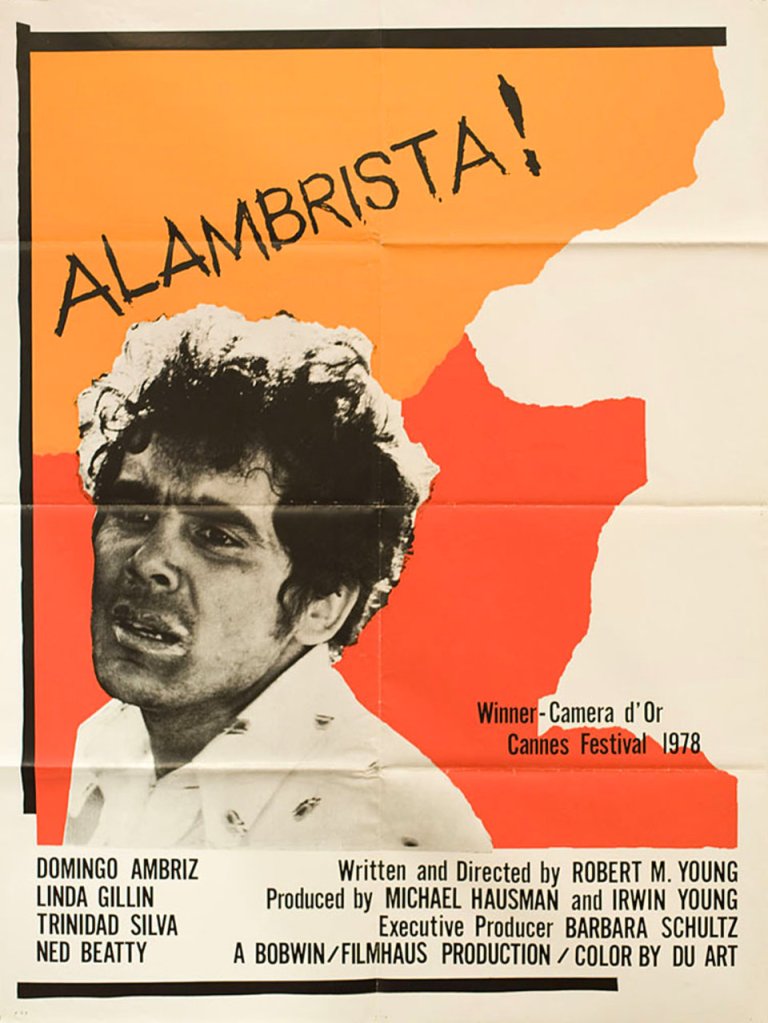
#686) ¡Alambrista! (1977)

#686) ¡Alambrista! (1977)

OR “Las Uvas de Ira”

Directed & Written by Robert M. Young

Class of 2023

The Plot: Upon the birth of his daughter, Roberto (Domingo Ambriz) leaves his home in Michoacán, Mexico to illegally cross the border into the United States and find work to support his family and farm. His travels through California highlight the never-ending struggles of immigrants in search of the American dream and a better life. Among his adventures are hitchhiking with fellow immigrant Joe (Trinidad Silva), an extended stay with White waitress Sharon (Linda Gillen), sudden appearances by “La Migra” that keep Roberto on the run, and even an offer of scab work in Colorado from the shady Anglo Coyote (Ned Beatty). Shot in a documentary style, “¡Alambrista!” is a realistic, unapologetic look at what it takes to make it in America, and the humanity underneath an issue that still strikes a chord in this country almost 50 years later.

Why It Matters: The NFR praises the film’s “powerful, emotional story”, calling it “as relevant today as it was on its 1977 release, a testament to its enduring humanity.” There’s also a detailed essay by film professor Charles Ramírez Berg (actually it’s his essay from the film’s 2012 Criterion release, reprinted with permission).

But Does It Really?: One of my first notes reads “I’m hooked”. From the very beginning, “¡Alambrista!” grabbed me and never let go. This is the kind of movie I’m looking for in the NFR; the lesser-known pieces of art crafted by pure passion and a unique perspective. The best movies are eye-openers, and forgive me and my privileged White bubble, but “¡Alambrista!” opened my eyes to an illegal immigrant’s perspective that didn’t evoke fake sympathy or stand on a soapbox: it just said, “This is what it’s really like, and how you feel about it is up to you.” I’m delighted that “¡Alambrista!” is on the NFR and available for viewing (go Criterion Channel!), and I can’t recommend it enough.

Everybody Gets One: Not his only NFR appearance, but let’s highlight Robert M. Young for a minute. After studying chemical engineering at MIT and English literature at Harvard, Young turned his filmmaking hobby into a career, working on educational shorts in the ’50s and various pieces for the news show “NBC White Paper” in the ’60s. In 1973, Young directed the documentary short “Children of the Fields” about a family of migrant workers, and his experience (and subsequent research on illegal immigrants) inspired him to write “¡Alambrista!”. Young’s other NFR work includes as writer and cinematographer of the Civil Rights era drama “Nothing But a Man“, and as one of the writers of the IMAX movie “To Fly!“.

Wow, That’s Dated: Not a hell of a lot, sadly. Outside of the occasional payphone or aggressive sideburns, there’s very little in this movie to remind you it’s the ’70s and not the present.

Title Track: A few things about this title. 1) The on-screen translation is “The Illegal”, though Young’s original translation was “The Fence-Jumper”. 2) The film ends with a title song that gives a very detailed recap of the entire movie (specific characters and events are mentioned in the lyrics). And 3) This is the only movie on the list with an inverted exclamation mark, which I was excited to learn how to type on my keyboard. Turns out this old dog can still learn some new tricks.

Seriously, Oscars: No theatrical run for “¡Alambrista!”, and therefore no Oscars. The film did, however, pick up a few festival prizes, including the Cannes’ inaugural Caméra d’Or award for best first feature.

Other notes

  • I feel obligated to mention that this film about a Mexican immigrant is written and directed by a White man from New York. While many articles I read pointed this out, practically everyone who has worked with Young cites his intense research and unwavering passion to depict his films as honestly as possible. And to his credit, the final film doesn’t feel – for lack of a better term – “White”. It’s not Hollywoodized or filled with forced sentimentality, nor does it shoehorn in any White savior narrative (though Sharon comes close). I cannot describe the film’s aesthetic beyond that it all feels very real; a difficult feat to pull off regardless of your director’s ethnicity. Also, totally unrelated, but I think it’s amusing that Robert Young gave his protagonist a variation on his own name.
  • Young’s documentary background shows up in full force in this movie. The film is shot completely in hand-held, shaky-cam style, giving the movie its grounded realism. While this approach has become gimmicky over the years, in “¡Alambrista!” it feels fresh and organic; it helps you immediately accept the reality of the situation.
  • The border crossing scenes in this movie are a tense viewing experience, which leads me to believe that an actual present-day crossing must be 1000 times worse.
  • The first “La Migra” raid scene is another highlight. I love how the camera also appears to be hiding from the cops, as if it too is afraid of getting arrested. And while we’re talking about this scene: Is a sax solo really the best choice to underscore an immigration raid? It sounds like a Benny Hill sketch.
  • As Joe, Trinidad Silva brings a welcomed levity to the movie, teaching Roberto how to smile and order “ham, eggs, and coffee”. I’m just glad the guy from “UHF” was capable of a more nuanced performance. Silva left us much too soon.
  • One of Joe’s observations about Americans is “The gringos, they always cross their legs.” As God is my witness, I was sitting with my legs crossed at the exact moment he said that. What can I say, Joe’s got my number.
  • And then Joe mentions that he and Roberto are traveling to Stockton for work, and my jaw practically hit the floor. This is the second movie on the 2023 list that is partially set in my hometown of Stockton, California, although I can’t find anything to confirm that “¡Alambrista!” actually filmed in Stockton. I am once again pleasantly surprised that another movie on this list has a Stockton connection.
  • Among the many lessons NFR movies have taught me over the years: Never, everever hitchhike. Only bad things will happen if you are hitchhiking or pick up a hitchhiker while driving (That being said, this movie and “It Happened One Night” are the exceptions that prove the rule).
  • That is Edward James Olmos in an early film role as one of the drunks yelling at the immigrants lining up for migrant work. This is Olmos’ sixth film on the Registry, and his third entry in three consecutive years. I assume this is all part of an initiative to get every Edward James Olmos movie on the Registry. Side note: The other drunk in the scene is Julius Harris, who I remember as Ivan Dixon’s alcoholic father in “Nothing But a Man”.
  • I like the scenes between Roberto and Sharon, in which they are both trying to connect despite the major language barrier between them, and eventually succeeding (at least on a physical level). I assume Sharon trying to teach Roberto how to say “apple pie” is a metaphor for American assimilation or something like that.
  • Oh my god, this guy at the diner won’t stop talking! I think it’s meant to be comic relief, but really I just need this guy to shut up. Also, that actor is Jerry Hardin, longtime character actor and father of Melora Hardin, aka Jan from “The Office”.
  • The scene where Sharon tries to help Roberto wire money to his wife is just great. It’s the scene where Sharon finally learns that Roberto is married, and both actors play it perfectly: Sharon concealing her pain in public, Roberto either coldly aware or blissfully unaware (Ambriz plays it a bit cryptically).
  • Ah norteña music, we meet again.
  • Oh right, Ned Beatty’s in this, appearing briefly in two scenes I imagine he knocked out in one day of shooting. I suspect Beatty’s work here was part of his “Never turn down work” mantra, hence why he shows up in every ’70s movie. Fun Fact: At the time “¡Alambrista!” was released, Beatty had just received an Oscar nomination for his supporting turn in “Network“, no doubt adding a bit of prestige to this film.
  • [Spoilers] The last chunk of the movie throws a lot of curveballs at the last minute. First, we get the stuff with Roberto’s dad, a subplot I genuinely forgot about. Then Roberto finally snaps in the only bit of capital A acting that Domingo Ambriz is required to do. But most memorably for me, the final scene is Roberto witnessing a pregnant woman going into labor at the US/Mexico border, happy that her newborn is healthy and – more importantly – born in America. My analysis on the final scene: the American dream of an immigrant making a new life in this country is long gone. Only those born here have a chance to thrive. I admit it’s a downer interpretation, but then again, we live in real downer times. At least we have this peppy end credits music to play us out.

Legacy

  • “¡Alambrista!” premiered on KCET (LA’s PBS affiliate and one of the film’s producers) in the fall of 1977 and played a few film festivals afterwards. Despite positive reviews, the film more or less disappeared after a few more PBS airings. In the early 2000s, aided by academics David Carrasco and Nicholas J. Cull, Robert Young released a director’s cut of “¡Alambrista!” as part of an educational package about Mexican immigration sold to schools. This cut – the only widely available version – is dedicated to “the spirit of Trinidad Silva”.
  • According to the Ramírez Berg Criterion essay, “¡Alambrista!” led to the second wave of Mexican American filmmaking, which focused more on narrative features about the Mexican American experience rather than documentaries or shorts. Among this second wave are “El Norte“, “La Bamba“, and “Stand and Deliver“; all of which have been inducted into the NFR.
  • Apart from Ned Beatty and Edward James Olmos, most of this cast never got another role as substantial as their work in “¡Alambrista!”, appearing in bit parts in movies and episodic television over the next few decades. Coincidentally, both Domingo Ambriz and Trinidad Silva appear in Steve Martin’s “The Jerk” in 1979, though I don’t recall them having any scenes together.
  • Robert Young would continue directing for the next 35 years, bouncing back and forth between narrative films and documentaries. He even directed five episodes of “Battlestar Galactica” starring his frequent collaborator Edward James Olmos. We’ll meet up with Young (and Olmos) again when I cover “The Ballad of Gregorio Cortez“. Sadly, Young died just a few days before my viewing of “¡Alambrista!” at the age of 99.

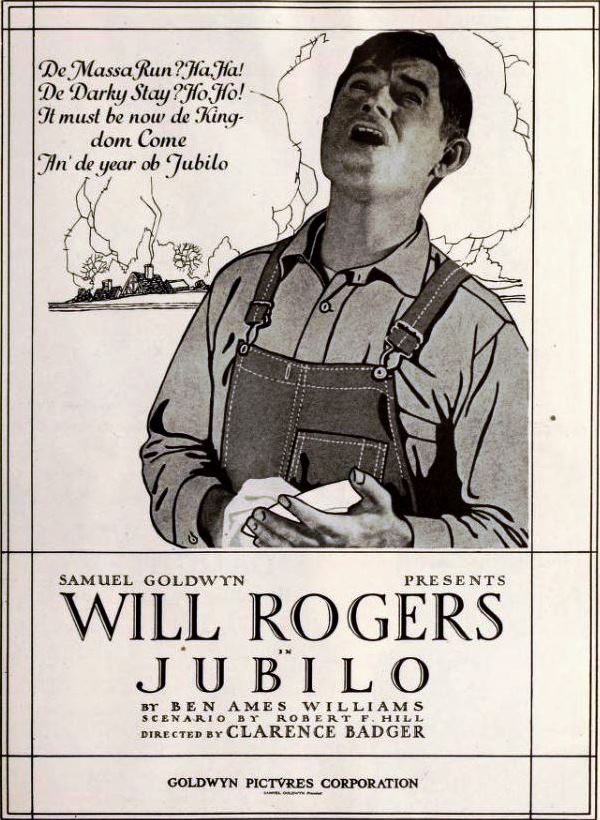
#685) Jubilo (1919)

#685) Jubilo (1919)

OR “Danger! Danger, Will Rogers!”

Directed by Clarence G. Badger

Written by Robert F. Hill (with an assist from Will Rogers). Based on the serial by Ben Ames Williams.

Class of 2021

The Plot: Jubilo (Will Rogers) is a hobo aimlessly wandering Oklahoma with an endless array of homespun witticisms. After witnessing a train robbery and not wanting to be noticed by either the robbers or the local sheriff, Jubilo lays low at the farm of Judge Jim Hardy and his daughter Rose (Charles K. French and Josie Sedgwick). Despite his aversion to actual labor, Jubilo agrees to work as a farmhand in exchange for food and shelter. While in town, Jubilo encounters Bert Rooker (Jim Mason), who he recognizes as the leader of the train robbers. When he learns of Bert’s plan to frame Judge Hardy for the robbery, Jubilo must learn to be unselfish and help his fellow man, as well as his fellow man’s cute daughter that he’s taken a liking to.

Why It Matters: The NFR really felt the need the justify this film’s inclusion, giving us a lengthy paragraph about Rogers’ stage and screen career, as well as the popularity of his films with critics, audiences, and even Erich von Stroheim! The NFR also highlights Rogers’ standing as “a multiracial member of the Cherokee nation” (both of his parents were of Cherokee descent), because for modern NFR picks, diversity is the name of the game (not a criticism, just an observation).

But Does It Really?: When I covered “State Fair” I questioned its NFR standing as representation of Will Rogers and vowed that “the second another one of his movies makes the list [‘State Fair’ is] getting a reevaluation.” Well here we are, five years after making that claim and 2 ½ years after “Jubilo” made the list (I’ve been busy, okay?). “Jubilo” is the star-vehicle for Will Rogers that “State Fair” isn’t, but I’m still not convinced it’s the right choice for this list. “Jubilo” is not Rogers’ most iconic film, being virtually forgotten until its NFR induction. On top of that, reading Rogers’ trademark one-liners via intertitles isn’t the same as getting to hear him deliver them as he did on stage, radio, or his later sound films (though to be fair, most of his audience in 1919 would have known him primarily from his various print columns). Still, “Jubilo” is a well-made movie and holds up reasonably well a century later. Maybe if “Jubilo” and “State Fair” held a joint spot in the NFR I’d be satisfied.

Wow, That’s Dated: The NFR’s extended write-up on the movie explains its most topical joke: When Hardy’s car breaks down, Jubilo quips, “No wonder he didn’t get into the Senate, with everyone owning one of these.” My instinct was correct: Jubilo is referring to Henry Ford, the automobile titan who unsuccessfully ran to represent Michigan in the U.S. Senate in November 1918.

Title Track: Worst. Title Song. Ever. Jubilo gets his name from the Civil War-era song “Kingdom Coming”, in which slaves celebrate their upcoming freedom as a day of jubilee (or “jubilo” in the song’s super-racist approximation of a Black dialect). If you want an idea of just how bad these lyrics are, the refrain is printed in the film’s poster at the top of this post. And trust me, it gets worse.

Other notes

  • Before I go any further, a huge tip of my hat to my fellow NFR-obsessed colleague over at “Registering the Registry” for writing the only thorough essay on “Jubilo” I could find online. “Registering” clearly enjoyed delving into Will Rogers’ career, with the post increasingly being written in a Rogers-esque folksy manner. Keep up the good work, Gargus!
  • “Jubilo” originated as a serial in The Saturday Evening Post in June and July of 1919. The film adaptation was released that December, allowing me to once again marvel at just how quick the turnaround was with silent films. Allegedly there was no script, with the actors reading the short story and improvising their lines, but I don’t know if I believe that. What I do know is that Will Rogers definitely had a hand in re-writing some of the intertitles to better match his writing style.
  • “Jubilo” was Will Rogers’ third movie, and the earliest known to still survive. It was also his second of an eventual 14 collaborations with director Clarence Badger, the first was “Almost a Husband”, released just two months before “Jubilo” in October 1919. Once again, the turnaround on these things, I tell ya.
  • Well, this movie wastes no time getting started. The title cards play over a shot of Jubilo waking up in a field and starting his day, and then he immediately witnesses the train robbery. We got less than an hour, let’s keep it moving!
  • Speaking of title cards, many of the intertitles feature some beautiful artwork, often showing us what is being mentioned by the characters (an illustration of Rose’s pie, etc.)
  • It should be noted that Will Rogers does zero rope twirling in this movie. Heck, he barely does any humorous one-liners. Clearly the Will Rogers film vehicle had not been perfected in 1919.
  • For a movie that is often labeled a comedy, there sure isn’t a lot of comedy. Aside from a few funny lines, the film’s only bit of comic schtick is a scene where Jubilo tries to milk a cow. It starts off as funny, and then turns into borderline animal abuse.
  • One of Judge Hardy’s horses has the same large white mark on its rear end as one of the horses at the train robbery, which makes Jubilo suspicious of his new employer. That story again: Our first plot point involves a horse’s ass.
  • Also, the Judge Jim Hardy of this movie is of no relation to the Judge James Hardy from those Mickey Rooney movies. In fact, the play that the Andy Hardy film series is based on wouldn’t be written for another decade.
  • Sheriff Punt is played by Willard Louis, who looks like if Charles Durning played W.C. Fields (which would have been great casting in another movie). The sheriff comes by to inspect Hardy’s “white-rumped” horse, a phrase that continues to tickle me just right.
  • The actor playing Bert Rooker is credited here as Jim Mason, though for most of his career he would go by James Mason – not to be confused with the British James Mason that would become a big movie star in the 1950s. In fact, Jim’s film career was virtually over by the time James started acting in England in the 1930s.
  • Line that made me laugh out loud: “The barn wins by two-thirds majority.”
  • Shout out to cinematographer Marcel Le Picard. The camerawork in “Jubilo” isn’t particularly artistic or revelatory but compared to other films of the time it’s well shot with a sharp eye for composition. Le Picard would continue to work as a Hollywood cinematographer for the next 30 years, almost exclusively for B movies at various Poverty Row studios (he worked with both the Bowery Boys and the East Side Kids!).
  • This movie has not one but two fight scenes! The first one is Judge Hardy beating Jubilo for his laziness, but the other is a much more entertaining barroom brawl between Jubilo and Bert. You can’t fully hate any movie with a barroom brawl.
  • There’s a lot of subtle hinting throughout the movie about Bert’s past connection to the Hardys, and I admit that it helped keep me engaged with this movie as it went on. No spoilers, but the eventual reveal is a fun twist in an otherwise predictable movie.
  • Judge Hardy may be the best shot in any movie I’ve ever seen: He fires his gun from underneath his overalls!
  • This movie ends with Jubilo and Rose singing “Kingdom Coming” together, which is always an odd choice for a silent movie.

Legacy

  • I can’t find anything to confirm if “Jubilo” was a hit when released, but according to the NFR, “Kingdom Coming” became Will Rogers’ theme song because of its use in this film. So, there’s that.
  • Will Rogers reprised his role as Jubilo a handful of times; first in a pair of shorts for Hal Roach: 1923’s “Jus’ Passin’ Through” and 1924’s “Jubilo Jr.” (one of the “Our Gang” shorts), and then one last time for the film’s 1932 sound remake “Too Busy to Work”.
  • Among the many other film adaptations of Ben Ames Williams’ work is another future NFR inductee: the 1945 noir classic “Leave Her to Heaven“.
  • Clarence G. Badger would go on to direct two more NFR movies: “Hands Up!” with Raymond Griffith and “It” with Clara Bow. Badger and Rogers would work together on 12 more films over the next three years, with such amusing titles as “The Ropin’ Fool”, “Jes’ Call Me Jim”, and “Cupid the Cowpuncher”.
  • But of course, this film’s main legacy is the beginning of Will Rogers’ brief but successful film career, abruptly ending with his tragic death in 1935. Among Rogers’ other movies are the aforementioned “State Fair”, as well as “A Connecticut Yankee”, which I still think would work better as his NFR pick.

Bonus Clip: I have somehow gone two Will Rogers posts without mentioning “The Will Rogers Follies”, which played Broadway in the early ’90s and waved the flag for American musicals amid the dominance of Britain’s mega-musical imports. Here’s the always great Keith Carradine as Rogers, a role he has reprised from time to time.