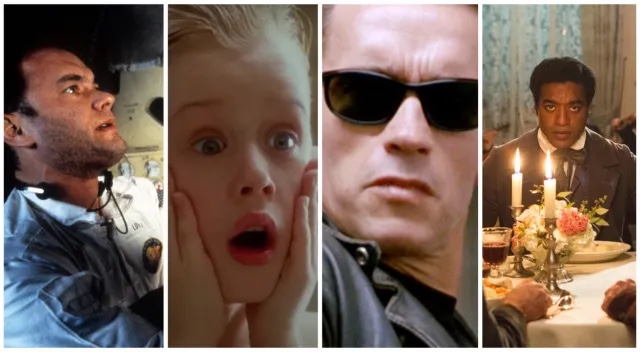
National Film Registry day is seriously becoming more and more like Christmas morning for me. I’ve been up since about 4:30 this morning because, to quote a very niche Disney World commercial, I was too excited to sleep. This year’s selections for the Registry definitely did not disappoint, and I’ve enjoyed spending time today learning about each film while injecting emergency caffeine into my system. Here at last is the NFR Class of 2023 in chronological order:
A Movie Trip Through Filmland (1921)
Dinner at Eight (1933)+
Bohulano Family Film Collection (1950s-1970s)
Helen Keller: In Her Story (1954)
Lady and the Tramp (1955)+
Edge of the City (1957)
We’re Alive (1974)
Cruisin’ J-Town (1975)
¡Alambrista! (1977)
Passing Through (1977)
Fame (1980)+
Desperately Seeking Susan (1985)
The Lighted Field (1987)
Matewan (1987)
Home Alone (1990)*
Queen of Diamonds (1991)
Terminator 2: Judgment Day (1991)+
The Nightmare Before Christmas (1993)*
The Wedding Banquet (1993)
Maya Lin: A Strong Clear Vision (1994)
Apollo 13 (1995)
Bamboozled (2000)
Love & Basketball (2000)
12 Years a Slave (2013)*
20 Feet from Stardom (2013)
* Movies I nominated this year
+ Movies I have nominated in previous years
Other notes
Three of my 50 nominated movies made the cut this year, a step up from last year’s two, and more or less my yearly average. According to the NFR press release, 6,875 titles were submitted by the public this year, so getting three on there is pretty damn good.
Maybe I’ve just been doing this for too long, but I look at this year’s crop and I think “Yep, that’s an NFR list”. As usual, the board makes an eclectic selection of list-worthy movies, but nothing really sticks out to me as a surprise. These are all movies that are either justifiably iconic, made by filmmakers with previous entries, or highlight independent and experimental work. The only one that surprised me in a good way was “20 Feet from Stardom”, a movie I enjoyed when I saw it 10 years ago and look forward to revisiting.
Of the less-familiar titles, the one that intrigues me the most is the “Bohulano Family Film Collection”, filmed by a family from my hometown of Stockton, California. I’m genuinely curious to see what Stockton looked like before my time (my family moved there in the late ’80s), and equally curious to find out if I have any six-degrees-of-separation from this family. It’s astonishing to me that my hometown is getting some recognition on this list beyond “Cool Hand Luke” and that one shot in “Raiders of the Lost Ark“.
Also noteworthy is “¡Alambrista!” the only one of Representative Joaquin Castro’s 27 submissions to make the cut. I don’t know how I feel about getting more of my submissions on this list than Representative Castro’s much more publicized selection.
It’s nice to see Helen Keller represented via her Oscar-winning documentary, though I worry this really messes up my chances of getting “The Miracle Worker” on this list. I’ll keep fighting for you, Patty Duke!
As best I can tell, the only double-dippers from these movies are actors Catherine O’Hara and Alfre Woodard. Amazingly, this is the first NFR representation for either of them. Welcome to the club!
Congratulations to Damon Wayans, the first Wayans brother on the NFR (although his sister Kim made the cut last year). And apologies to Marlon Wayans, who I predicted would be the first Wayans brother to make the list. Clearly, no one on the NFR board is ready to re-watch “Requiem for a Dream”.
Not to gripe too much about what didn’t make the cut, but the NFR has once again excluded any of Jane Fonda’s filmography, and her current NFR total remains at 0. I’m beginning to think there’s a conspiracy behind all of this. Is she being kept off the list because she was married to Ted Turner? Hasn’t she atoned for that yet?
And finally, I know that in the grand scheme of things with all of the horrible atrocities happening in the world right now, my little movie blog “don’t amount to a hill of beans”. That being said, if reading any of my posts has given you even a moment of respite or happiness, I’m grateful to have added a little bit of good into the world. Thanks for your continued support, and my wish for 2024 is peace and freedom.
Written by Mark Fergus & Hawk Ostby and Art Marcum & Matt Holloway. Based on the Marvel Comics characters created by Stan Lee, Don Heck, Larry Lieber, and Jack Kirby.
Class of 2022
The Plot: Tony Stark (Robert Downey Jr.) is a billionaire weapons manufacturer for the US military, equally famous for his genius inventions and playboy lifestyle. While in Afghanistan to demonstrate his latest missiles with his friend Lt. Col. James Rhodes (Terrence Howard, for now), Stark is injured in an attack and captured by a terrorist group that wants him to build one of his missiles for them. Supported by fellow captive Dr. Ho Yinsen (Shaun Toub), Stark instead designs a technologically advanced suit of armor to escape. The experience is a life-changer for Stark, who vows that Stark Industries will cease making weapons, much to the dismay of company manager Obadiah Stane (Jeff Bridges). With the help of his assistant Pepper Potts (Gwyneth Paltrow), Stark continues to refine the suit, with an aim at using it to help civilians. The press dubs this mysterious new superhero Iron Man, a name – and a franchise – that sticks.
Why It Matters: The NFR calls the film “a superhero film that transcends and elevates the genre”, praising the work of Favreau, Downey, and the effects and production design teams. The write-up also includes a quote from Marvel Studios president Kevin Feige, who declares that the movie’s NFR standing proves that “it has stood the test of time”. Dude, it’s only been 15 years. Cool your jets.
But Does It Really?: It was only a matter of time before the Marvel Cinematic Universe (MCU) made the National Film Registry (NFR), and as the one that started it all, “Iron Man” is a natural choice. I saw “Iron Man” for the first time in 2012, and it was odd all these years later re-watching this movie under the lens of “significant American film”, and equally weird trying to treat this as the stand-alone movie it would have been in 2008, rather than as a small part of a larger movie experience. That is, however, a point in favor of this film’s legacy: It changed how we watch movies, especially big potential franchises. On its own, “Iron Man” is a fun outing boosted by Robert Downey Jr.’s immediately likable performance. The film can be a bit slow-going at times, but ultimately its emphasis on Tony Stark rather than excessive world-building makes it more palatable for a wider audience (including this one with only a passing knowledge of Marvel). “Iron Man” succeeds at being a superhero origins movie that puts its characters first, and its inclusion in the NFR is – to quote another undying franchise – the first step into a larger world.
Shout Outs: Look closely when Pepper downloads the files from Tony’s computer: a document pertaining to Obadiah Stane is labeled “MSC Lebowski“.
Everybody Gets One: A USC film graduate and a lifelong Marvel fan, Kevin Feige joined Marvel Studios in 2000 and quickly rose in rank from associate producer to co-producer to President of production in 2007. During the early to mid-2000s Marvel had licensed out the film rights to its various characters to other studios (X-Men to Fox, Spider-Man to Sony, etc.) and wanted to make its own movies. Recognizing that Marvel still owned the film rights to its Avengers characters, Feige pitched an ambitious film project: multiple stand-alone films starring individual characters that would culminate in an Avengers film with everyone, creating a shared universe akin to the Marvel comics of the ’60s. Iron Man was selected first because Marvel had just gotten the film rights back from New Line Cinema. Also making their NFR debuts are director Jon Favreau (another self-professed Marvel geek), and actors Robert Downey Jr., Gwyneth Paltrow, and Terrence Howard.
Wow, That’s Dated: All of Iron Man’s Vietnam origins of the 1960s were transplanted to 2000s Afghanistan. Plus a reference to MySpace and a cameo by Jim Cramer of “Mad Money”.
Title Track: The Black Sabbath metal classic “Iron Man” plays during the end credits of this movie. For the record, the song had nothing to do with the character, as no one in the band had any knowledge of American comic books. Plus keep an ear out for the “Iron Man” animated series theme song a few times in the film.
Seriously, Oscars?: Second only to “The Dark Knight” at the box office, “Iron Man” received two Oscar nominations: Sound Editing and Visual Effects, losing to, respectively, “Dark Knight” and “The Curious Case of Benjamin Button”. Also worth noting that Robert Downey Jr. received an Oscar nomination that year not as Tony Stark, but rather for his supporting turn in “Tropic Thunder”; a performance that I assume hasn’t aged well at all.
Other notes
Ultimately this movie succeeds due to Robert Downey Jr.’s charming performance. Tony Stark is a womanizing asshole, but Downey manages to keep the character endearing and fun to be around. At this point in his career Downey was more famous for his very public struggles with drug addiction than any of his on-screen performances. Casting Downey as Iron Man was a huge leap of faith, but Favreau stood by his choice, feeling that Downey’s real-life struggles mirrored Tony’s perfectly. The result is a character that fits the performer like a glove, and one you instinctively root for to succeed. Side note: Downey has been sober since 2003.
A reminder that Jon Favreau also directed “Elf”, and cast himself here in the supporting role of Tony’s bodyguard Happy Hogan.
It’s so weird seeing Gwyneth Paltrow in this movie. Known for awards-bait period pieces in the ’90s, Paltrow seems out of her element playing a less-dimensional character in a modern superhero movie and being forced to keep up with Downey’s ad-libbing. On the plus side, Paltrow reportedly took the role because it filmed 15 minutes from her home, meaning she could be with her kids during the shoot. And I’m sure those paychecks helped get Goop off the ground.
Shaun Toub doesn’t get the credit he deserves for his performance as Yinsen, the man that helps Tony Stark create the Iron Man suit and basically motivates Stark’s 180 towards good. In a movie with flashy effects and a big movie star at its core, Yinsen/Toub injects some much needed calmness into the proceedings.
Funny to think of Tony Stark as essentially a modern-day Scrooge; the heartless businessman who has a revelation that leads to a life of do-gooding. I’m sure if Dickins had lived long enough he would have turned Scrooge into some sort of superhero with an expanded universe and a cool suit.
This character evolution/denouncement of war profiteering brought to you by Burger King: Have It Your Way.
Jeff Bridges’ overall filmography tends to get overshadowed by The Dude, but you forget what range the man has. As Obadiah Stane, Bridges reminds us he can play both the warm father figure and the ruthless villain just as well as a stoner detective. I also love that the photo of younger Stane during the opening montage is Bridges from “Tucker: The Man and His Dream“; the closest that movie is ever getting to the NFR.
Here’s how good Downey is: the man has great chemistry with robots. Watching Tony Stark have endearing banter with a silent mechanical arm is like watching Fred Astaire dance with a hat rack. His talent elevates everyone (and everything) around him.
Shoutout to Paul Bettany as the voice of JARVIS, Tony’s AI butler. I don’t think anyone could have predicted that a two-hour recording session Bettany did as a favor for Jon Favreau would one day lead to his performance in Marvel’s surprisingly touching meditation on grief.
Of course it isn’t a Marvel movie without a Stan Lee cameo. Marvel’s creator and public figurehead makes his NFR debut being mistaken for Hugh Hefner at a Stark Industries function.
Everyone’s favorite ironic-in-hindsight line: Rhodes, upon seeing that Tony made an extra suit; “Next time, baby.” No offense to Terrence Howard, who I respect for stepping away from the sequels when offered a pay cut, but any role gets an upgrade when played by Don Cheadle.
Stane’s Iron Monger is basically an evil version of The Iron Giant. Fun Fact: For most of the climactic fight sequence the Iron Monger suit is an actual suit! The legendary Stan Winston helped create the physical Iron Monger suit, one of his final film projects before his death in June 2008.
In the end, “Iron Man” is basically the pilot episode for all that will come later. They’re still working out the kinks of a “Marvel movie”, but you see the potential. Oh, and there’s a S.H.I.E.L.D. reference at the end for anyone who cares about that.
Legacy
“Iron Man” marked the beginning of what is now called Phase One of the MCU. Over the next four years audiences got “The Incredible Hulk”, “Iron Man 2”, “Thor”, and “Captain America: The First Avenger”, with all of them (plus Black Widow and Hawkeye) teaming up to fight evil in 2012’s “The Avengers”. While the MCU is still going strong over a decade later, it’s maybe going a little too strong, as the increasingly complicated mythology and abundance of media has caused a bit of viewer fatigue. Personally I tapped out sometime after “Civil War”, though I remember liking “Black Panther”.
Further Viewing: The other 2008 Marvel movie: “The Incredible Hulk”…the Edward Norton one, not the Ang Lee one. Released one month after “Iron Man”, the film features a cameo by Robert Downey Jr. as Tony Stark, the first bit of connective tissue to the MCU. It’s never explained, however, why Edward Norton turns into Mark Ruffalo after this movie.
And with that unnecessarily condescending Edward Norton reference (déjà vu), we round out Year Seven of The Horse’s Head. We’ll be taking a breather for the holidays, but there will be an update once the Class of 2023 is announced, with new posts resuming in January. As always, thank you for continuing to check out this blog and- wait there’s another scene after the credits? Is that Samuel L. Jackson? OH MY GOD HE’S NICK FURY THEY’RE DOING THE AVENGERS THEY’RE DOING THE AVENGERS AAAAAHHHHH!!!!!!
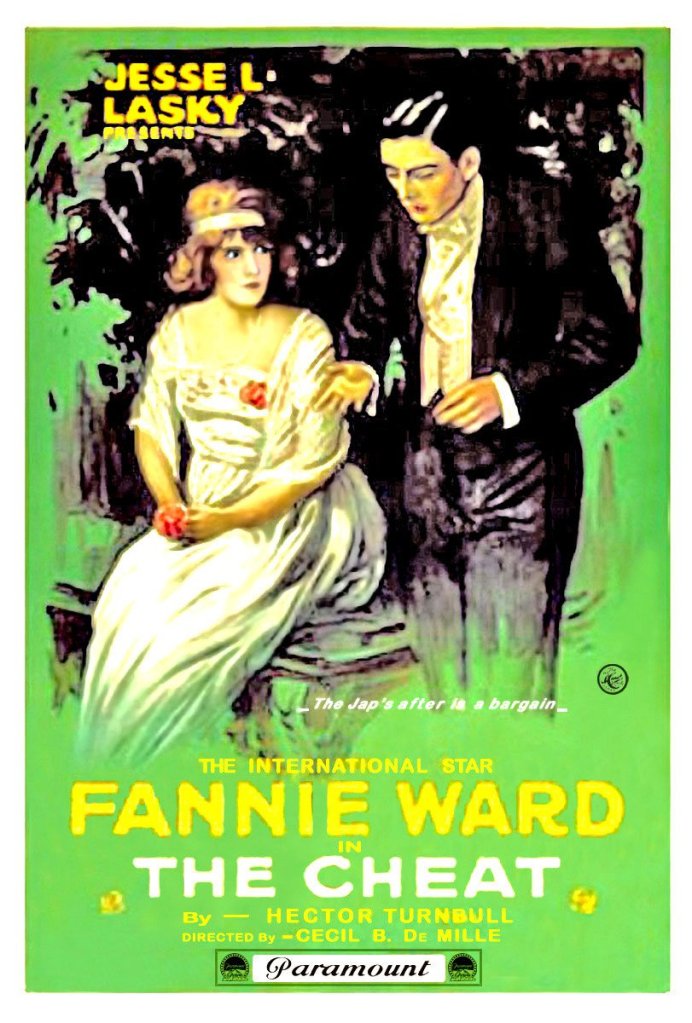
NOTE: The only surviving version of “The Cheat” is a 1918 re-release of the movie. More on this version’s importance later on.
The Plot: Socialite Edith Hardy (Fannie Ward) loves spending money on her extravagant lifestyle, even though that money belongs to her husband Richard (Jack Dean), who can’t pay off her debts until his stock investment comes through. Acting on a hot tip from one of Richard’s colleagues, Edith places $10,000 raised by her local Red Cross chapter for Belgian refugees into a new stock that will double her money. The next day, Edith learns the tip was a fake and that all her money is lost. Horrified, Edith goes to Japanese Burmese ivory merchant Hishuru Tori Haka Arakau (Sessue Hayakawa) for help. Haka agrees to loan Edith the money, in exchange for a sexual dalliance the next day. What follows is a small melodrama about three people directed by the man who will one day bring us epic spectacles with a cast of thousands!
Why It Matters: The NFR says the film features “some of the silent era’s most potent plot twists and elaborate production design”. The write-up also praises Sessue Hayakawa’s “subtle yet menacing” performance.
But Does It Really?: I didn’t realize until researching this film how underrepresented Cecil B. DeMille is on the NFR; with only this and “The Ten Commandments” making the cut (plus his acting cameo in “Sunset Boulevard“). DeMille is such an important name in the history of American film that one of his early successes should be on the list, but “The Cheat” feels like an odd choice, especially considering how early into the NFR it made the cut. “The Cheat” is the kind of moralistic melodrama I’ve come to expect from the 1910s; hardly the kind of film I’d associate with Cecil B. DeMille, and certainly not my first choice to represent him. “The Cheat” is one of those NFR movies that seems to have skipped the line; it’s deserving of its NFR status for sure, but more as the kind of “I guess” choice the NFR would make in the 2010s after selecting all of DeMille’s essentials, and certainly not in the same class as “It Happened One Night” and “Godfather Part II“.
Everybody Gets One: By 1915, Fannie Ward had been a popular stage actress for many years, her perpetually youthful looks giving her an extended life as a leading lady. It was also around this time that Fannie married her second husband, fellow actor Jack Dean, and the two accepted an offer to come to Hollywood and make films with Lasky Players. “The Cheat” was the second film for both Fannie Ward and Jack Dean, and their earliest surviving film.
Wow, That’s Dated: Adjusted for inflation, the $10,000 dollars Edith owes would be over $300,000 today. Those poor Belgians.
Other notes
First off, a little bit about Cecil B. DeMille. Born to a family of theater performers, DeMille started off as, naturally enough, a theater performer. Acting gave way to directing for the stage, and a screening of “Les Amours de la reine Elisabeth” in 1912 inspired a pivot to the new medium of film. Along with his theater colleagues Jesse L. Lasky and Samuel Goldwyn, DeMille cofounded the Jesse L. Lasky Feature Play Company, which would one day become known as Paramount Pictures. “The Cheat” was one of many films DeMille helmed in his first few years of making movies; it’s one of 13 films he made in 1915 alone! Fun Fact: The B in Cecil B. DeMille stands for Blount; his paternal grandmother’s maiden name (his maternal grandmother Cecilia was honored with his first name).
Both Fannie Ward and Jack Dean are clearly stage actors. Their performances are playing to the back of the house, especially Dean, gesticulating like crazy and wearing a little too much makeup. On the other hand, you have Sessue Hayakawa being one handsome bastard who knows how to make love to the camera.
This all being said, watching Sessue turn into a creep towards Fannie is very unpleasant. Damn you, Yellow Menace!
One thing I noticed during this movie is that the dates are way off. All of the film’s events supposedly happen within the span of a few days, but Haka’s check is dated in June, Richard’s check is from September, and the newspaper headline before the trial is from April. I guess they really didn’t care about continuity back then. To be fair, nobody in 1915 thought that 108 years later some dude would be able to watch and analyze this movie on a screen in their home.
So the moral of all this is don’t be impulsive? The closest this thing gets to a moral is an intertitle that quotes Rudyard Kipling: “East is East and West is West, and never the twain shall meet.” Not only is that thoroughly disappointing, but now I got “Buttons and Bows” stuck in my head.
A bit of foreshadowing to DeMille’s later spectacles is the third act courtroom scenes, which have a gallery packed with extras. And their ensuing lynch mob really showcases the kind of organized chaos that would become DeMille’s hallmark. There’s your cast of thousands.
[Spoilers] Richard claims that he shot Haka when he takes the stand in order to protect Edith, who actually shot Haka. After he is found guilty, Edith hysterically confesses to the shooting, the judge dismisses the verdict, and Richard is set free. Now I’m no fancy city lawyer, but shouldn’t Richard at the very least be fined for perjury? Whatever, you can have your happy ending, Cecil.
Legacy
“The Cheat” premiered in December 1915, and was an immediate hit with everyone – except for a large portion of the Japanese American community. Los Angeles based newspaper Rafu Shimpo objected to this film’s portrayal of its sole Japanese character as evil and manipulative, and waged a campaign against the film. When “The Cheat” was re-released in 1918, intertitles were re-written to make Japanese merchant Hishuru Tori into Burmese merchant Haka Arakau. Despite these changes, the film was banned in Japan and England, though did surprisingly well in France.
“The Cheat” received three remakes: a 1923 version with Pola Negri (now unfortunately lost), a 1931 version with Tallullah Bankhead, and a 1937 French version with Sessue Hayakawa reprising his role from the original 22 years later!
In 1921, French composer Camile Erlanger’s opera based on “The Cheat” – “La Fortaiture” – premiered in Paris (sadly, this was a posthumous premiere; Erlanger died in 1919). “La Fortaiture” is the first opera to be based on a film scenario, making “The Cheat” indirectly responsible for whatever movie turned musical is on Broadway right now. Let’s see, right now we’ve got “Aladdin”, “Lion King“, “Back to the Future“, “Some Like It Hot“, “Moulin Rouge!”…and coming up we’re getting “The Notebook” and “Days of Wine and Roses”. What a legacy.
Neither Fannie Ward or Jack Dean’s film careers lasted too much longer after “The Cheat”, though they stayed married until Dean’s death in 1950. As for Sessue Hayakawa, he became the film’s breakout star, but an increasing typecast as a sexually dangerous heavy (along with rampant anti-Asian sentiment in Hollywood) led to his departure from American film, returning for such later classics as “The Bridge on the River Kwai” and “Swiss Family Robinson”.
But of course, the biggest career boost from “The Cheat” was for Cecil B. DeMille, who spent the next 40 years producing bigger and bigger movies, culminating in his final, most famous movie: 1956’s “The Ten Commandments”.
Further Viewing: A selection of DeMille’s better known titles that have yet to make the Registry: “The Ten Commandments” (the 1923 version), “The King of Kings” (the 1927 version), “Cleopatra” (the 1934 Claudette Colbert version), “Samson and Delilah” (the 1949 version), and “The Greatest Show on Earth” (the…only version).
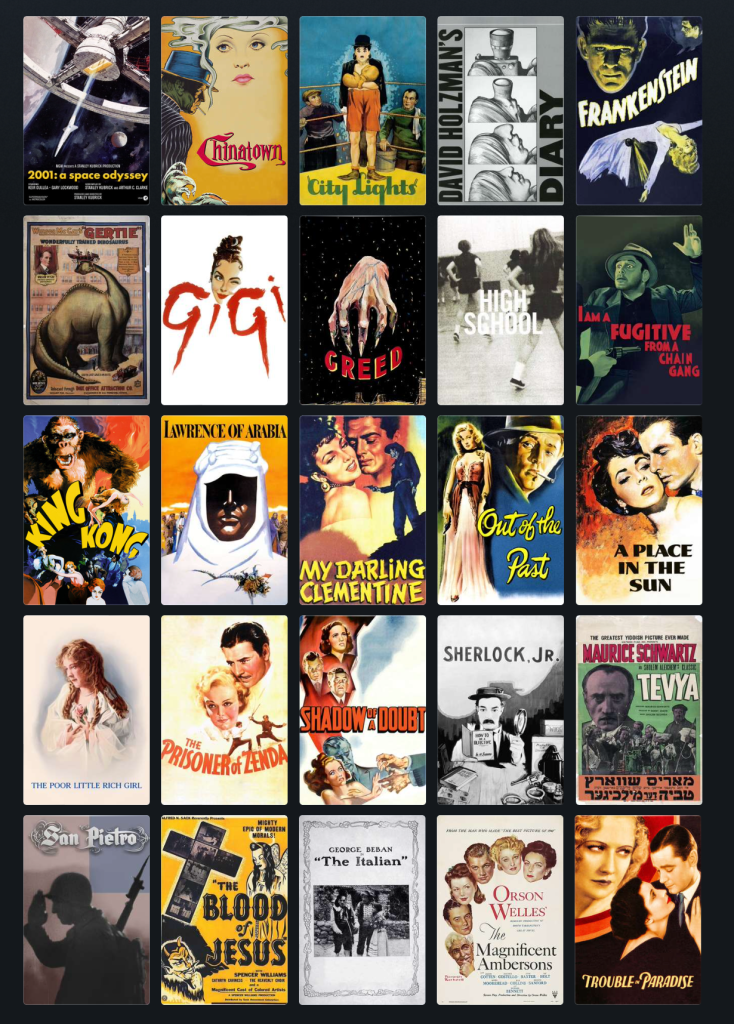
September 26th 1991: The National Film Registry announces its next (and potentially final – more on that later) batch of 25 films for induction. Having just finished watching the last of these 25 for this blog, it’s time to reflect on them as a collective viewing experience. Once again, here is your NFR Class of 1991:
The Battle of San Pietro (1945) [“the first World War II documentary to be included in the National Film Registry, and its frank visuals are still a tough act to follow.”]
With this roster of films, we start to see the NFR make a transition of sorts. There’s still plenty of iconic heavy hitters in this round (“King Kong”, “Frankenstein”, “2001”, etc.), but we also start getting more obscure films from outside of Hollywood (“Tevya”, “Blood of Jesus”, “David Holzman’s Diary”). We also start seeing our first repeats, with Chaplin, Keaton, and Lubitsch each getting another film on the list. Most noteworthy for me are films like “I Am a Fugitive…”, “Place in the Sun”, and “Gigi” that may have been obvious choices in 1991 but whose reputations have faded over the last 32 years and probably wouldn’t crack anyone’s top 75 today. Proof that any film’s status as a classic isn’t a permanent designation.
Other notes
The overall thing I noticed with my own writing on these posts is that I include a caveat for almost every movie (It’s great, but…). It’s the beginning of a long run of NFR movies that understandably make the cut based on their reputation or historical importance, but don’t necessarily hold up on a modern viewing.
According to the LA Times’s article about the NFR induction, the initial National Film Preservation Act that kickstarted the Registry expired that month (September 1991). The act was renewed in June 1992, meaning that for a solid nine months these 75 films might have gone down as the only films in the Registry.
At the time of the 1991 announcement, future NFR entry “The Silence of the Lambs” was wrapping up its nearly eight months long theatrical run. “Boyz n the Hood”, and “Thelma & Louise” had finished their runs at this point, and “Beauty and the Beast” would open in November. The sequel to a future NFR entry was number one at the weekend box office: “Freddy’s Dead: The Final Nightmare”.
This year’s double dippers include actors Joseph Cotten, C. Aubrey Smith, and Tim Holt (!), Actor/Director John Huston, screenwriter Michael Wilson, and composers Bernhard Kaun, Alfred Newman, and Dimitri Tiomkin.
This year’s thematic double dippers: Animated protagonists/title characters, extreme historical liberties, love triangles, movies drastically cut without their director’s approval, extended fantasy sequences, roadshows with an intermission, intertitles that spell out accents phonetically, Noir (both original and neo), people lost in the desert, and characters singing “The Man Who Broke the Bank at Monte Carlo”.
My favorites of my own subtitles: The Least Happy Fella, Who Wants to See a Millionaire?, Thief Encounter, Ape Fear, The Heir Apparent Trap, Fiddle Me This, Secrets & Liz, Ooh-La-Wha?, and [Citation Needed]: The Motion Picture.
A fun bit of useless trivia: According to the film version of “2001”, HAL 9000 was created in January 1992, so he made the NFR four months before he was born!
And finally, because I have no other place to put it, here’s a note I deleted from the “King Kong” post, but it still makes me laugh so I’m including it here. For the scene where Kong rips out part of the el train track, I originally had a fake quote from “12 Angry Men”: “According to the old man’s testimony, the train came roaring by his window, he heard the boy yell at his father ‘I’m going to kill you’, and then the whole track was destroyed by a giant ape.” I know it’s a deep cut, but it still tickles me.
The class of ’92 and NFR’s 100th movie will be coming up early next year. Until then, stay safe and happy viewing.
Written by Michael Wilson and Harry Brown. Based on the novel “An American Tragedy” by Theodore Dreiser and the play by Patrick Kearney.
Class of 1991
The Plot: George Eastman (Montgomery Clift) hitchhikes from Chicago to upstate New York to work for his wealthy uncle Charles (Herbert Heyes) at his factory. Lonely and isolated from the high society of his family, George begins a romantic relationship with his homely but loving co-worker Alice Tripp (Shelley Winters). When George is finally invited to an Eastman social event, he immediately falls for glamorous socialite Angela Vickers (Elizabeth Taylor). The two begin their own affair as George tries to call things off with Alice, only to learn that Alice is pregnant. With Alice threatening to expose his affair to the Eastmans, George does the honorable thing and…plots to murder Alice by drowning her in the middle of a lake? Well this certainly took a turn.
Why It Matters: This is definitely one of the NFR’s weirder write-ups. There’s the usual plot recap and production rundown, but then it goes on a tangent about how modern audiences find the film “slow-paced and lacking in depth or social relevance.” I’ll never understand when the NFR doesn’t support its own choices.
But Does It Really?: “A Place in the Sun” is one of those movies where I get why it’s on the list, but I also get why it’s not as revered as it once was. Every individual element of the film works; the direction, the cinematography, the performances, but overall it just didn’t make a collective whole for me. What was praised as a quality drama in 1951 comes across as a muddled melodrama in 2023. “A Place in the Sun” is on the list as an Important Movie of its day and its NFR standing is warranted, but over the decades it continues to lose its “classic movie” luster. Its “place in the sun”, if you will. You won’t? Okay, I’m sorry.
Title Track: Paramount did not like the idea of another remake of “An American Tragedy”, seeing as their 1931 film version was such a bomb that even Theodore Dreiser disowned it. Part of Paramount’s compromise with George Stevens was that his version couldn’t be titled “An American Tragedy”, and Stevens’ associate producer Ivan Moffat successfully pitched the title “A Place in the Sun”.
Seriously, Oscars?: “A Place in the Sun” received nine Oscar nominations, second only to “A Streetcar Named Desire” in total nomination tally. “Place” tied eventual Best Picture winner “An American in Paris” for most wins with six, including Best Director, Screenplay, and Edith Head’s fourth (of an eventual eight) win for Costume Design. Clift lost Best Actor to Humphrey Bogart in “The African Queen” and in a definite no-contest competition, Shelley Winters lost Best Actress to Vivien Leigh as Blanche DuBois.
Other notes
You can sense right off the bat that this is a movie based on a book. The first few scenes have an episodic feel to them and pack in a lot of details; the two tell-tale signs of a novel source material. The original book is over 800 pages, and the movie is surprisingly faithful, save for the omission of the opening chapters about Clyde’s (renamed George for the movie) upbringing in Kansas City and his criminal past.
I enjoyed all three of this film’s lead performances. Montgomery Clift is a compelling screen presence as always, even if I don’t fully understand George’s motivations. Clift finds a perfect scene partner with fellow Actors Studio alum Shelley Winters, and the two have a very natural chemistry together in their early scenes. And while the character of Angela doesn’t have a lot to do other than be an idealized woman, Elizabeth Taylor is giving a winning, effortlessly charming performance, and her chemistry with Clift is palpable (it is no surprise the two became lifelong friends during filming). Side note: Elizabeth Taylor was 17 when she made this movie. 17! She was 12 when she filmed “National Velvet“, and that five year span includes what I can only describe as the most generous puberty ever.
Shoutout to Anne Revere in the brief but pivotal role of George’s religious mother Hannah. A proud member of the Communist party and equally proud critic of the House Un-American Activities Committee, Revere was blacklisted in 1950 (“Place” was filmed in 1949) and wouldn’t appear in another movie until 1970’s “Tell Me That You Love Me, Junie Moon”.
The scene of George and Angela professing their love for each other feels like the quintessential Classic Hollywood love scene: big close-ups of the stars (with Liz being filmed with the softest lens) as Franz Waxman’s score swells in the background. It’s a stirring cinematic moment; now if I only gave a damn about any of these characters.
The stigma of illegitimacy brushes up against the Production Code in the scene where Alice visits her doctor and the two imply a conversation about abortion without ever directly saying the word. The Code’s one mandate about the scene was changing Alice’s line “Doctor, you’ve got to help me” to “Somebody’s got to help me.” The whole scene is so subtle and oblique that I had to double-check that they were in fact talking about abortion.
My favorite unintentionally funny moment in the movie is the dramatic music cue when George and Alice see that the courthouse they want to get married in is closed for Labor Day. Speaking of, does this scene make “A Place in the Sun” the quintessential Labor Day movie? I can’t think of any other movie in which a major plot point happens during/because of Labor Day.
[Spoilers] Alice’s drowning in the lake is a suspenseful moment, though maybe not as impactful as it should be. I feel like George has given her enough red flags that she should know getting on a boat with him is a terrible idea, no matter how much she still loves him. Also I’m confused: I thought Shelley Winters was an excellent swimmer.
Oh right, Raymond Burr is in this. It’s no wonder that Burr’s dramatic turn here as a rather theatrical District Attorney would one day win him the plum role of Perry Mason.
Burr’s opening statement in the court claims that George committed an act that has “broken every commandment”. Every commandment? I counted three, maybe four if you consider George’s love for Angela a form of coveting.
The movie and novel are both based on a real-life murder in 1906 which, like this movie, ended with the boyfriend being convicted and sentenced to the electric chair. And this is in 1908; the electric chair hadn’t been around that long. Hell, electricity hadn’t been around that long! Anyway, my point being that if you know anything about the source material you know that this will not end well for George. The one upside to this ending is that the Reverend who visits George in his cell is a rare substantial on-camera role for veteran voice actor Paul Frees! You expect the Reverend to start talking about “Moose and Squirrel” or “999 happy haunts” at any moment.
Legacy
“A Place in the Sun” premiered at the Cannes film festival in April 1951 before its general release that August. The film was one of the biggest hits of the year and received a heap of critical praise, with Charlie Chaplin calling it no less than “the greatest movie ever made about America”. Though given Chaplin’s own experience with America in the early ’50s that may not have been a compliment.
Elizabeth Taylor’s strapless dress from the movie briefly became a fashion statement, becoming a very popular prom dress in 1952. And that’s the closest this movie has to any iconography.
As the NFR will tell you, “A Place in the Sun” has started to lose its standing in the pantheon of great movies. Case in point: “A Place in the Sun” came in at number #92 on the AFI’s 1998 list of 100 greatest movies, and then disappeared from the 2007 updated list. Modern references to the film are only in passing, and the last big parody was 50 years ago by Carol Burnett. It fascinates me when a movie that was part of our pop culture for so long virtually disappears without a trace.